

Hey👋 if you’ve teleported into this piece from our 2025 annual review, you’re in the right place. If you’ve stumbled onto this from our website, or because someone sent it to you, you should probably check out that piece first.
Eitherway, here’s a few quick paragraphs on what you’re about to dive into -
What is this thing?
For the last couple of years, on 1st January, we basically create an unpublished draft on Substack that becomes a dumping ground for ideas, articles, blogposts, tweets, memes etc that we intend to weave into our essays through the course of the year. The idea is to create a bank of reference material that we can pick from to supplement whatever we’re working on.
This year we decided to clean up this draft a little bit and publish it for wider consumption. It’s a year’s worth of material so don’t be surprised if you get carpal tunnel scrolling to the bottom.
Similar to the question we pose to a roster of India’s most thoughtful investors at the end of every year, this is designed to be a database of ‘visual evidence’ about things that we think are worth paying attention to. 90% of this list is probably relevant to people investing in India or operating in India or looking for a window into India. 10% is just stuff we found notable or funny.
What is the best way to make use of this?
Essentially our hope is that every time you scroll, you should find something interesting to chew on. There’s no order to this list, and you definitely don’t have to finish all of it. But if you’re looking to pick up signals on where India is heading (based on what crossed our timeline in 2025) you’ll probably enjoy this.
Feel free to use this to inform your own work/theses/writing/content/reporting. Please credit the people we’ve cited. And if you thought this was useful, do us a solid and share this with someone you think would also find this useful.
And if you like this kind of thing, subscribe to Tigerfeathers to make sure you don’t miss the next one👇
Three last orders of business -
Firstly, a special shoutout to a few people and accounts who appear multiple times on this list. This includes Manish Singh, Dharmesh Ba, Sajith Pai, Anmol Maini, Rahul Mathur, Data for India, Indian Tech & Infra, among others who count as exceptional curators, reporters, commentators and analysts on India and the Indian tech ecosystem.
Secondly, if you appreciate this format, we did a similar compilation last year specifically focused on writing, audience-building, storytelling and the creative process. Check that out here:

Thirdly, if you enjoy bite-sized, nutrient-rich coverage on India, check out our sister-brand Runtime on YouTube, Instagram, X and LinkedIn, which features video updates of the coolest things happening in Indian tech every day of the week.

And with that said, let’s get on with it -
1. India invisible
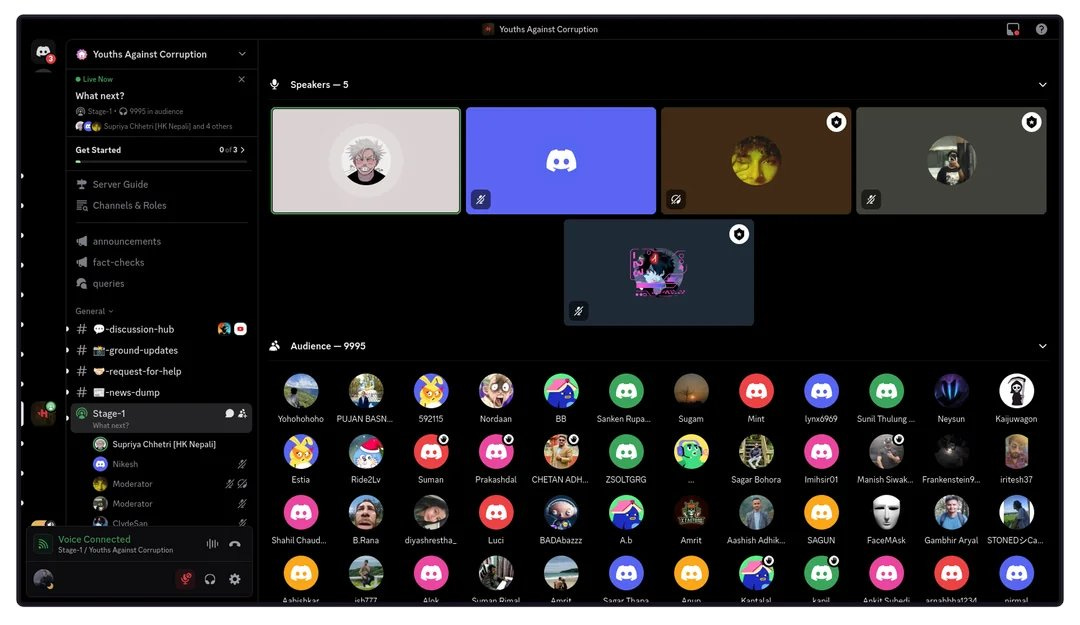
2. “Gen Z in Nepal are now using Discord to decide the country’s future”
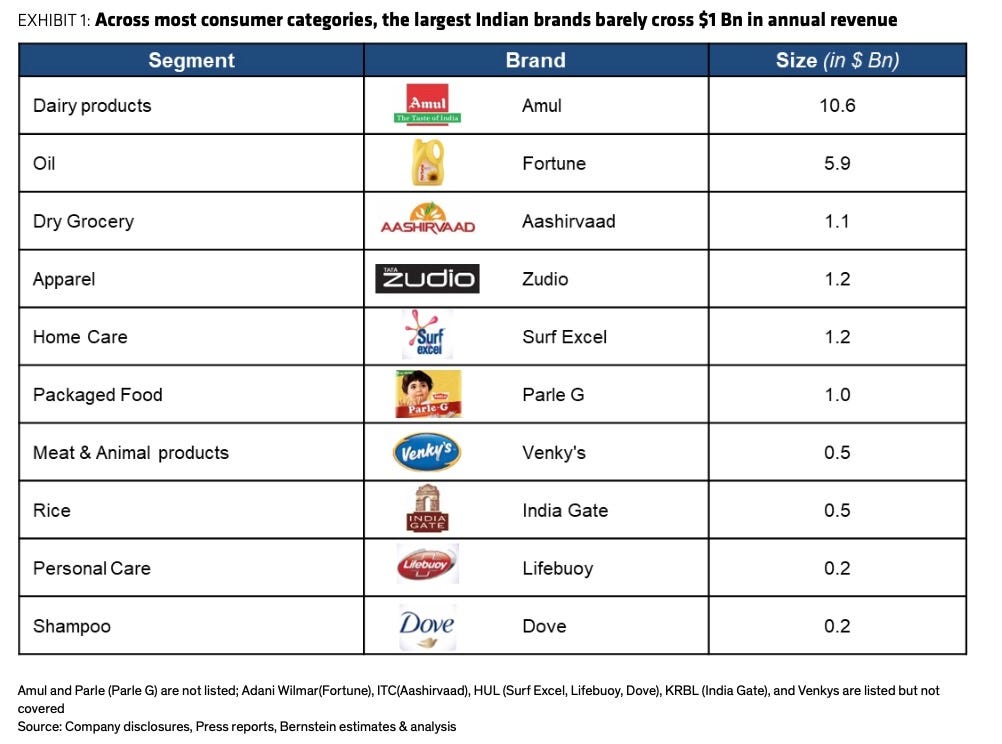
3. India - a “land of Lilliput brands”
Per Manish Singh -
“Only eight large-scale consumer brands generate $1 billion or more in annual revenue.
The top 10 largest listed FMCG firms collectively hold only about a 4% of the addressable market.”
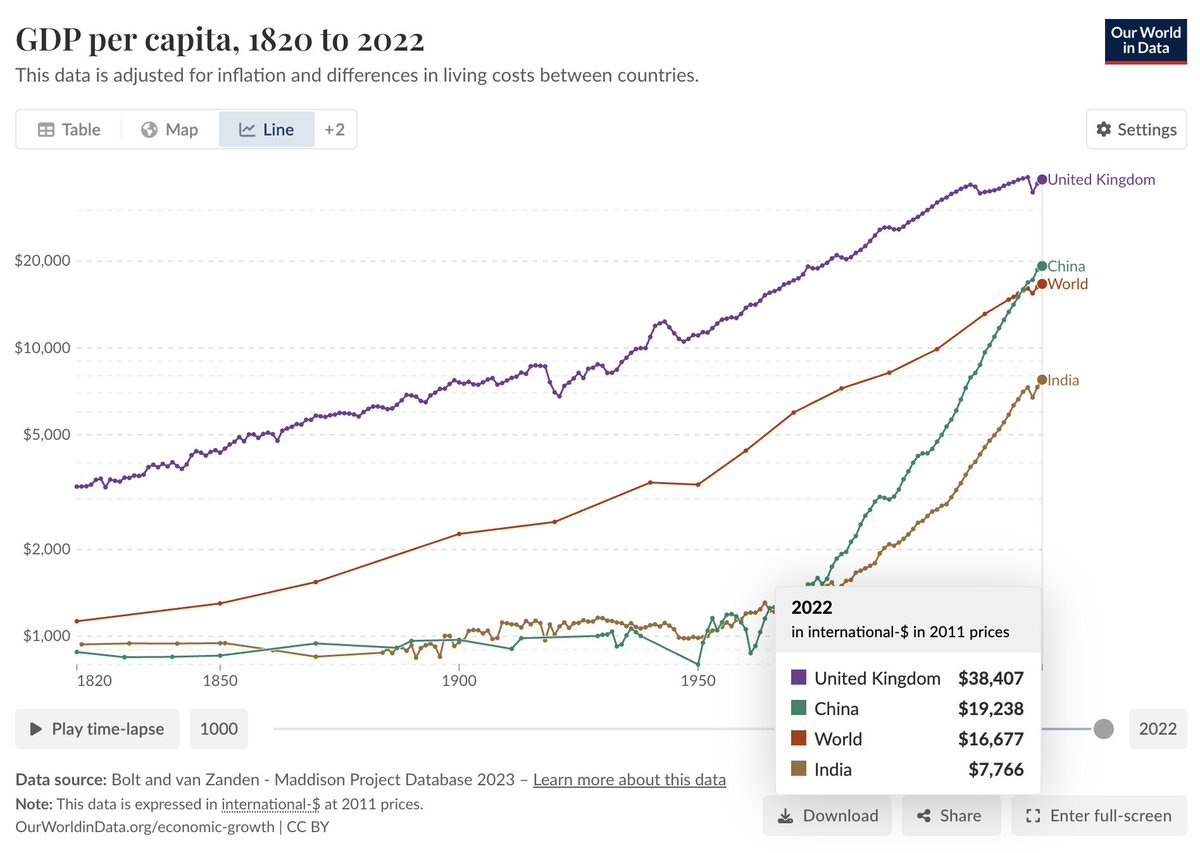
4. “A 200-year economic history of the world.”
Per Harsh Gupta Madhusudan -
“The single most important fact of the last half century has been convergence, which is only likely to accelerate going forward.”
5. We enjoy activities that saturate our field of view

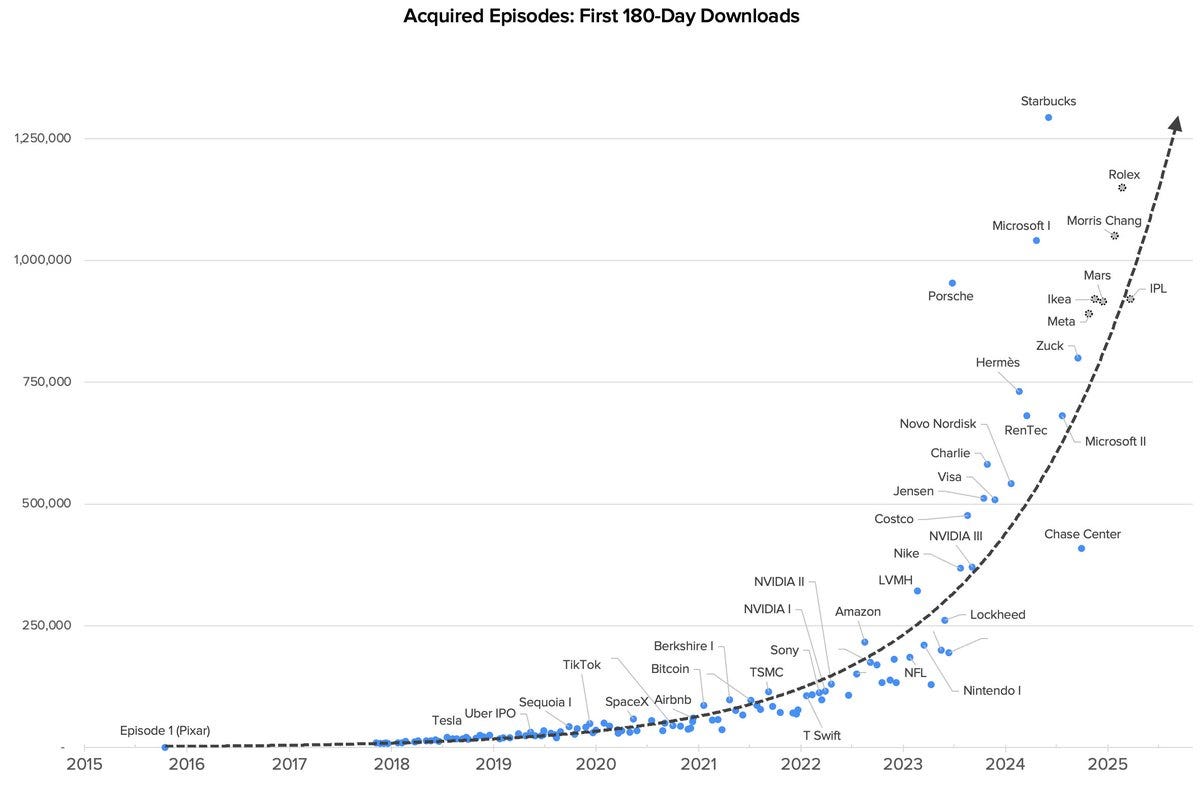
6. 10 Years of the Acquired Podcast - the power of compounding
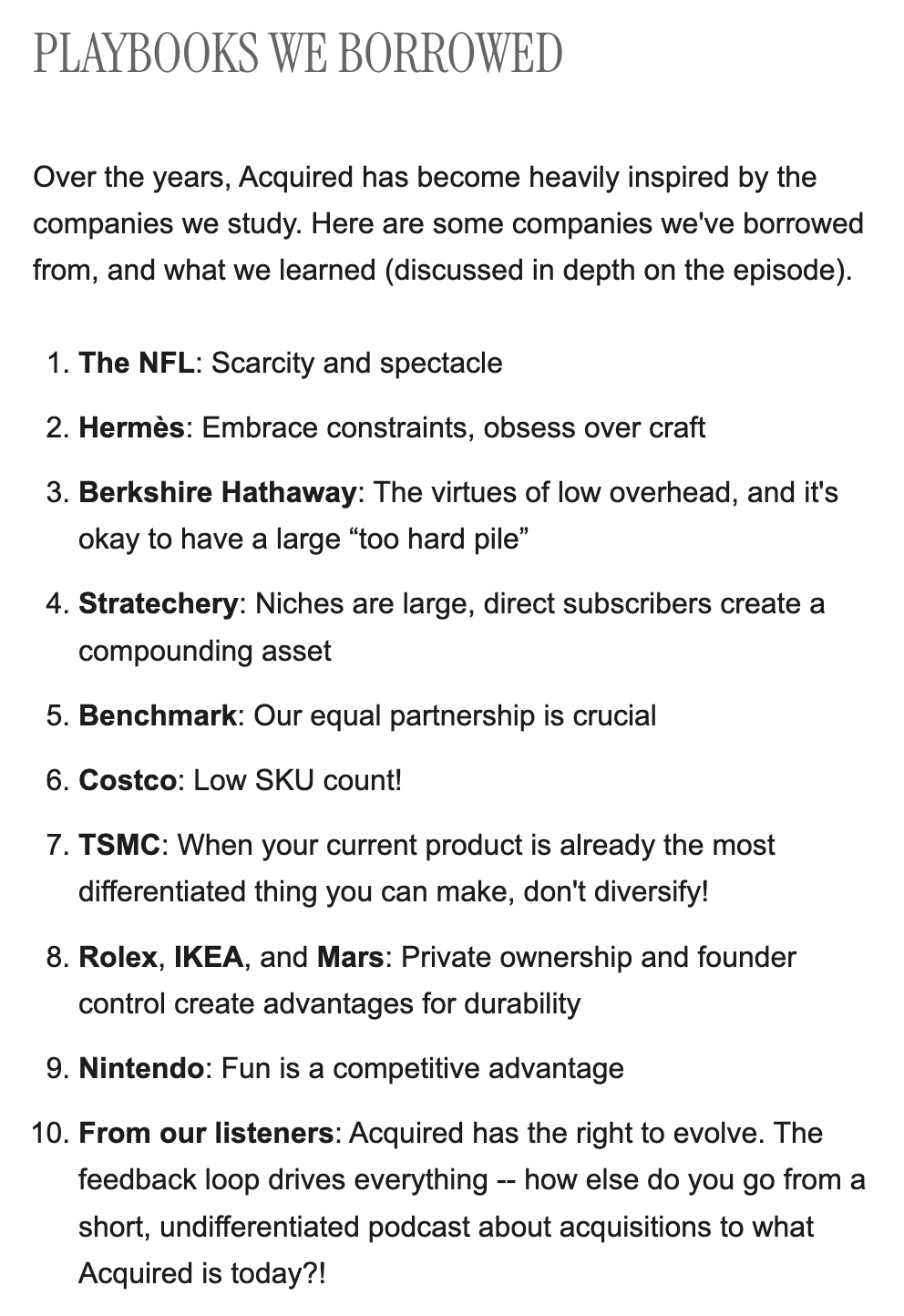
Bonus - the Acquired Playbook:
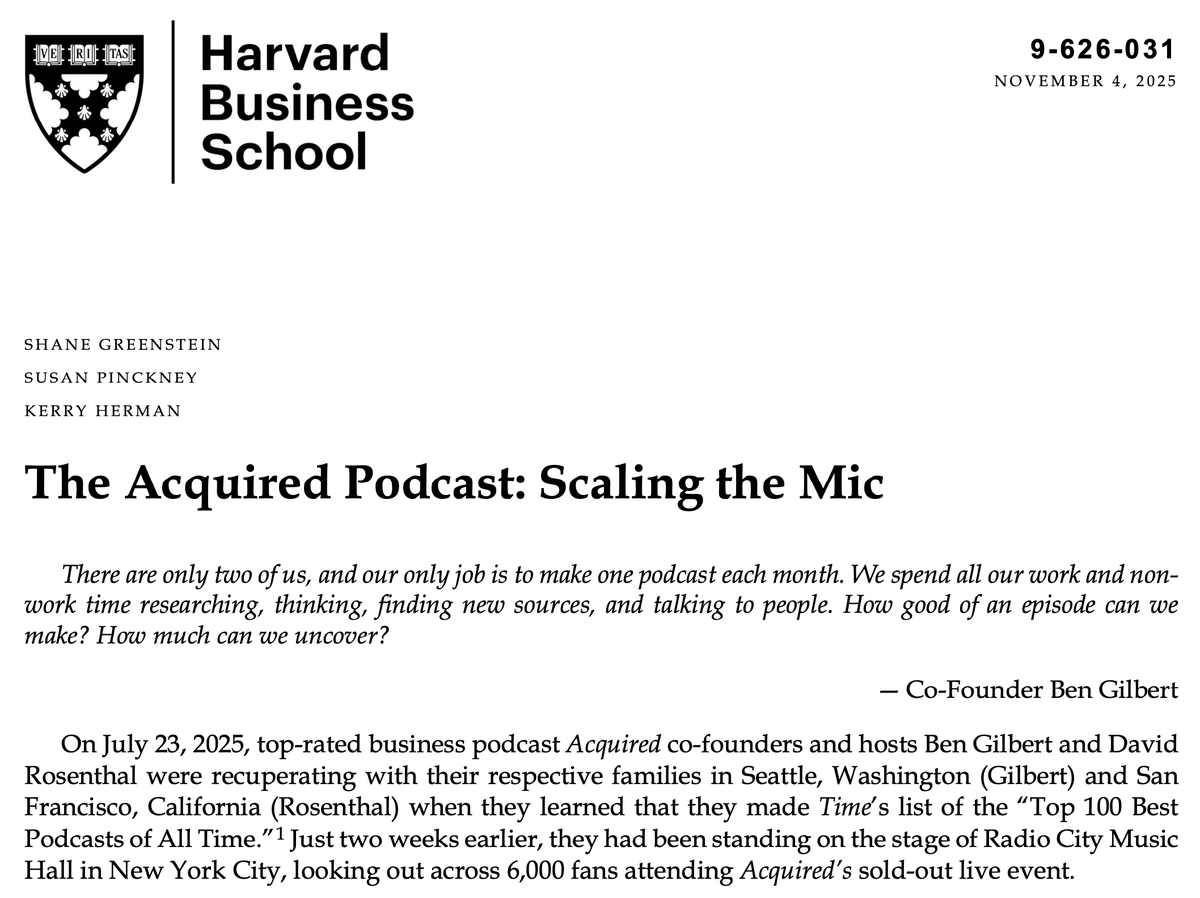
Also a neat flex to have your podcast be the subject of an HBS case study -
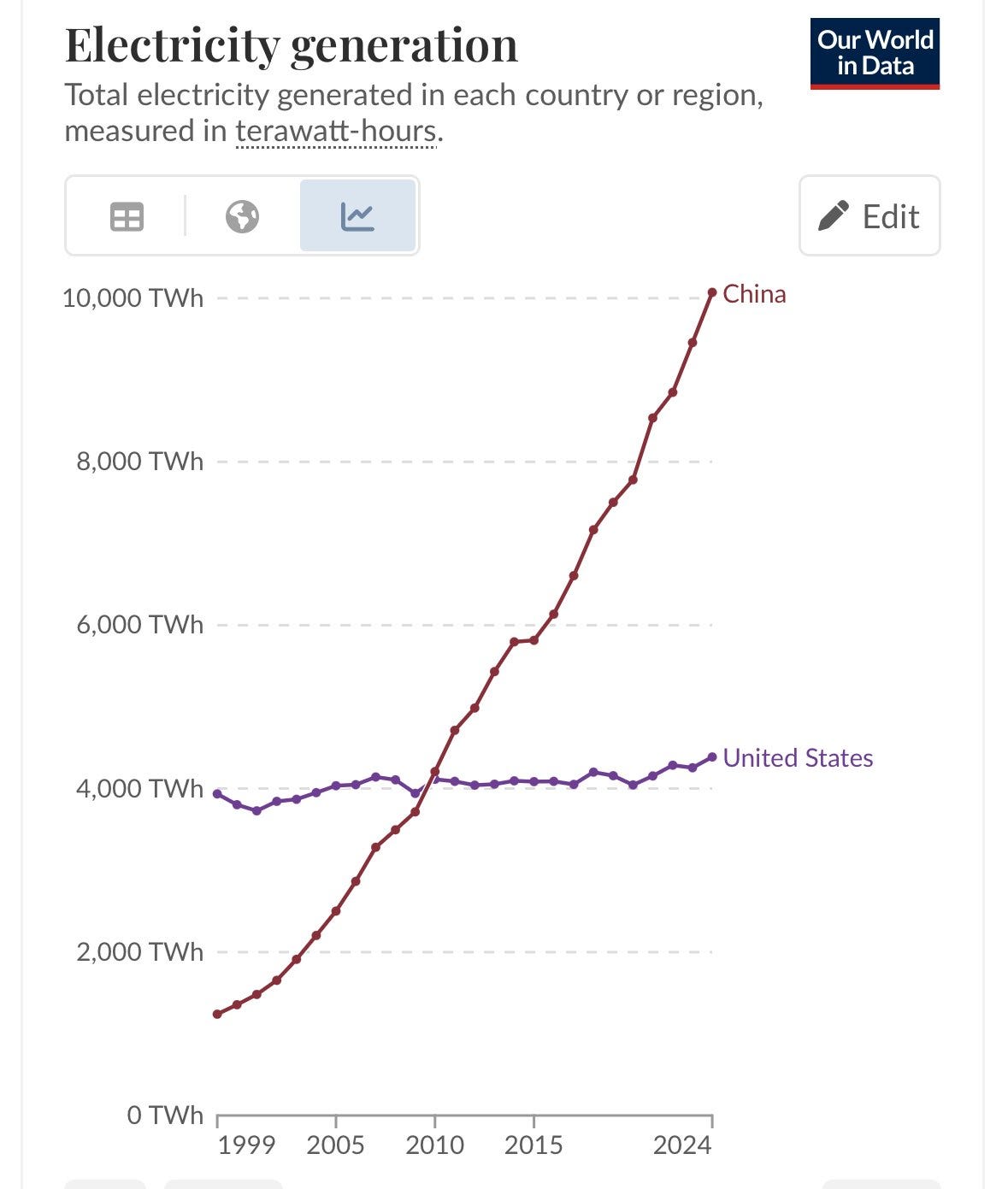
7. Electricity Generation - “the most important chart in the world right now”
“China is on track to install ~20 times more solar in 2025 than the United States.”
8. Second order effects of GLP-1’s
Per Manish Singh -
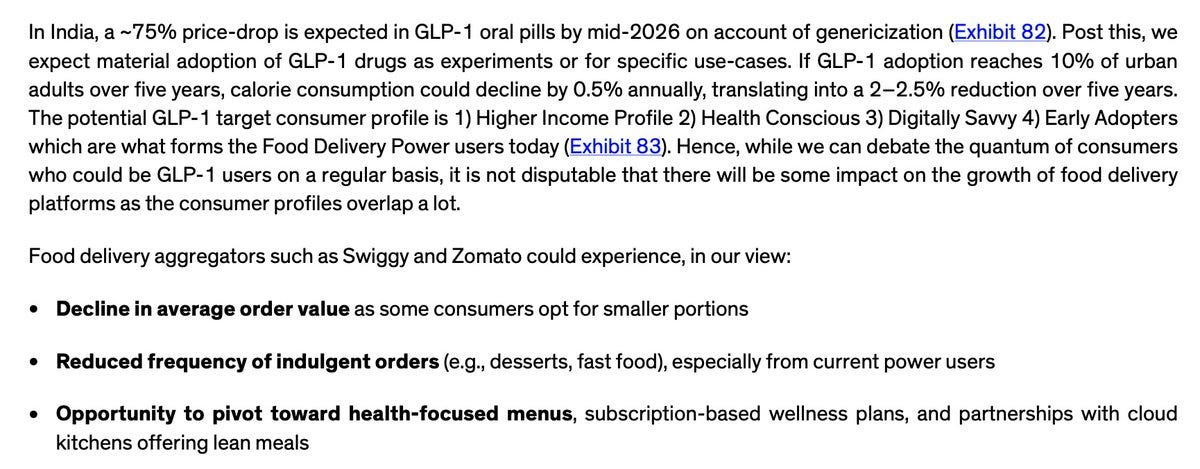
“A key threat to India’s food delivery “cash machine” isn’t competition, but generic GLP-1 drugs set for genericization in mid-2026, writes Bernstein.
The target consumer for these drugs is the same “power user” profile that drives the food delivery business.”
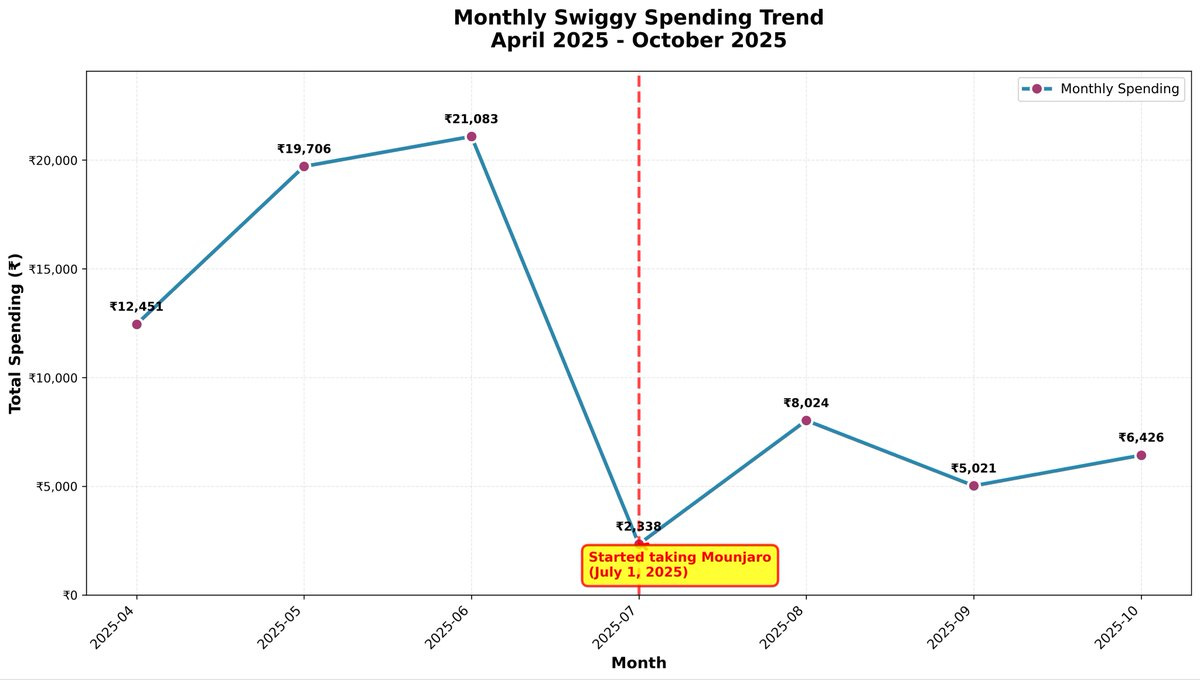
…and a supporting piece of anec-data from Ankit Sawant on his “Swiggy Food Ordering data pre and post Mounjaro”
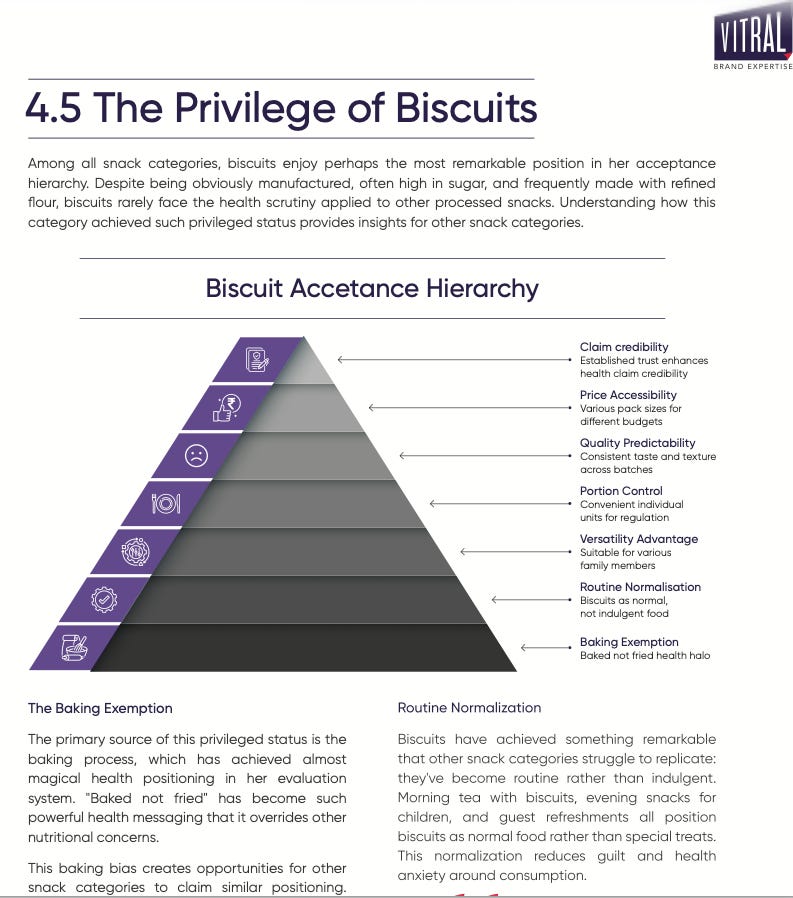
9. “Biscuit Privilege”
Per Sajith Pai -
“Customers especially the ‘Lady of the House’ dont buy on health grounds. Rather health claims should “give her the confidence to defend, not reasons to buy”. Fascinating.”
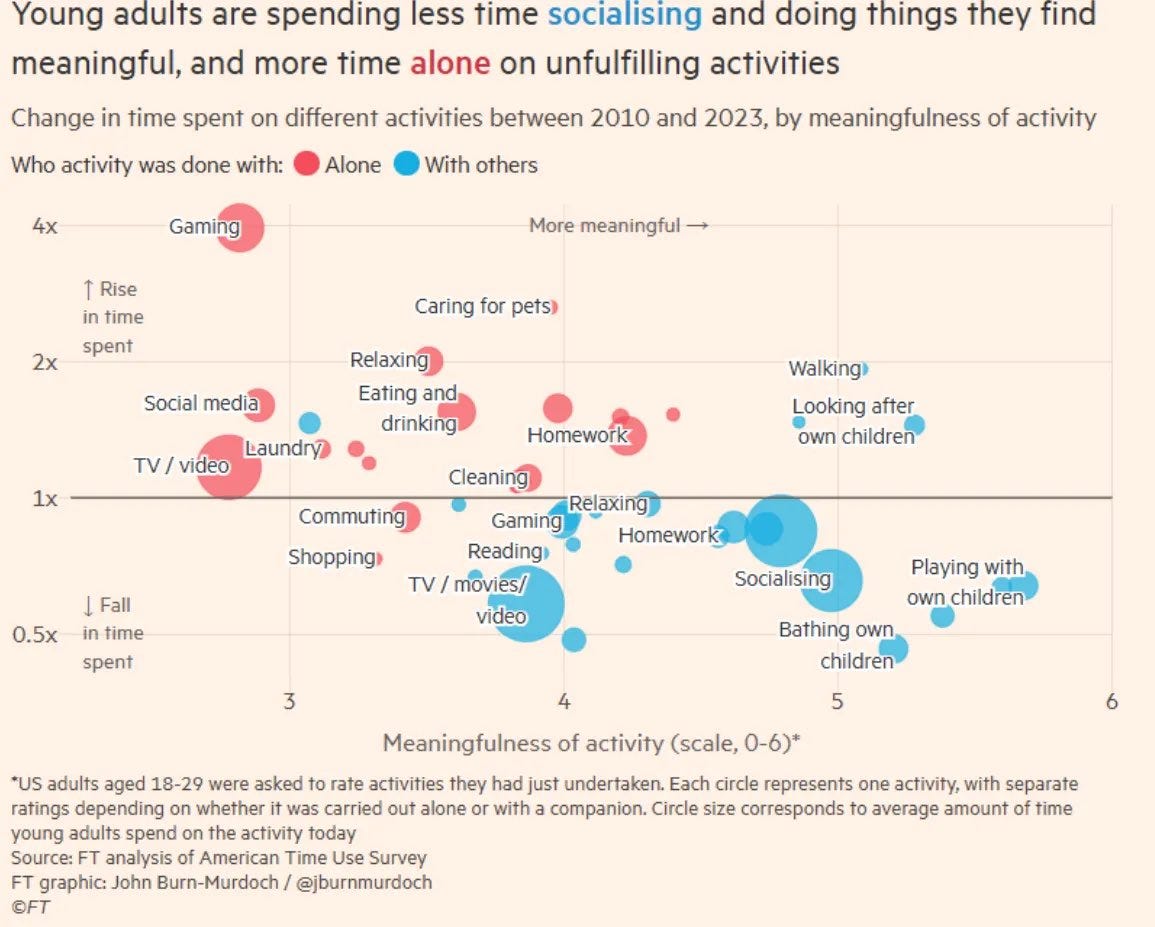
10. The anti-socialising of young adults
11. The most-watched videos in Youtube history
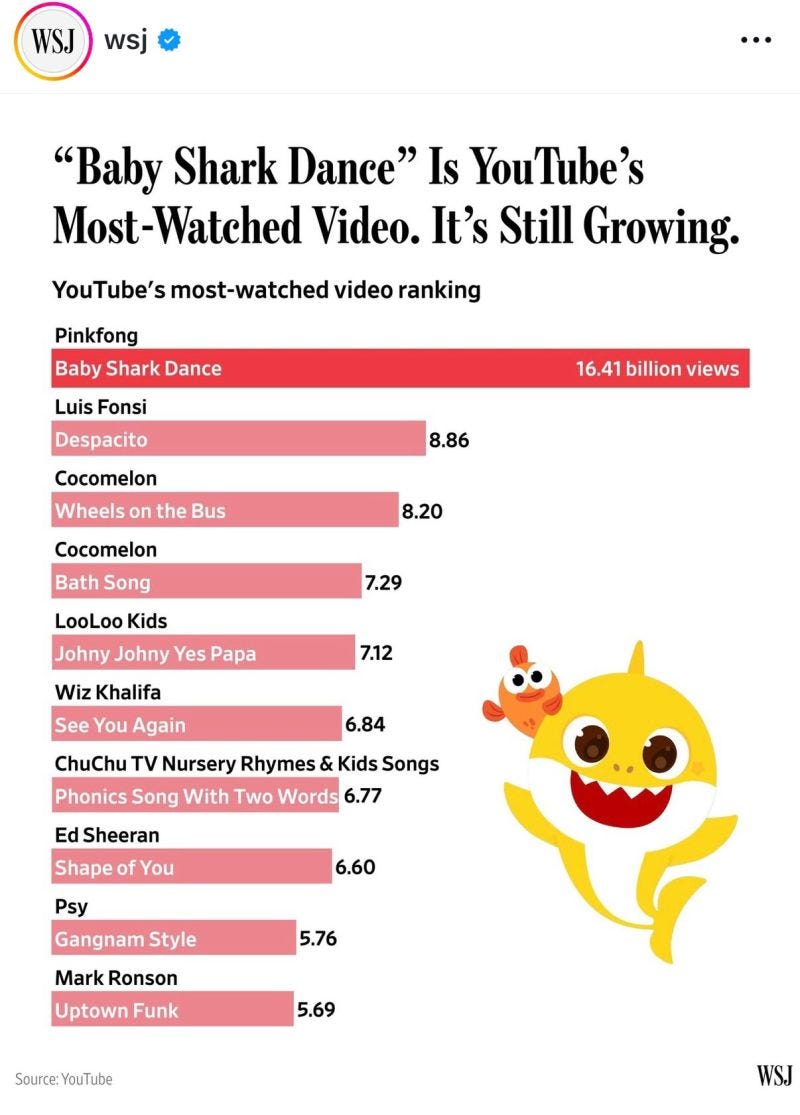
Per Pooja Jauhari -
“This chart tells a story many underestimate: out of the top 10 most-viewed videos in YouTube’s entire history, 6 are children’s IPs.
Kids’ content doesn’t just get views – it builds habit, love, and trust at a scale no other category comes close to. When a character becomes part of a child’s daily life, that IP becomes a universe of its own. That is the real flywheel.
Content → Trust → Product → Everyday Life.”
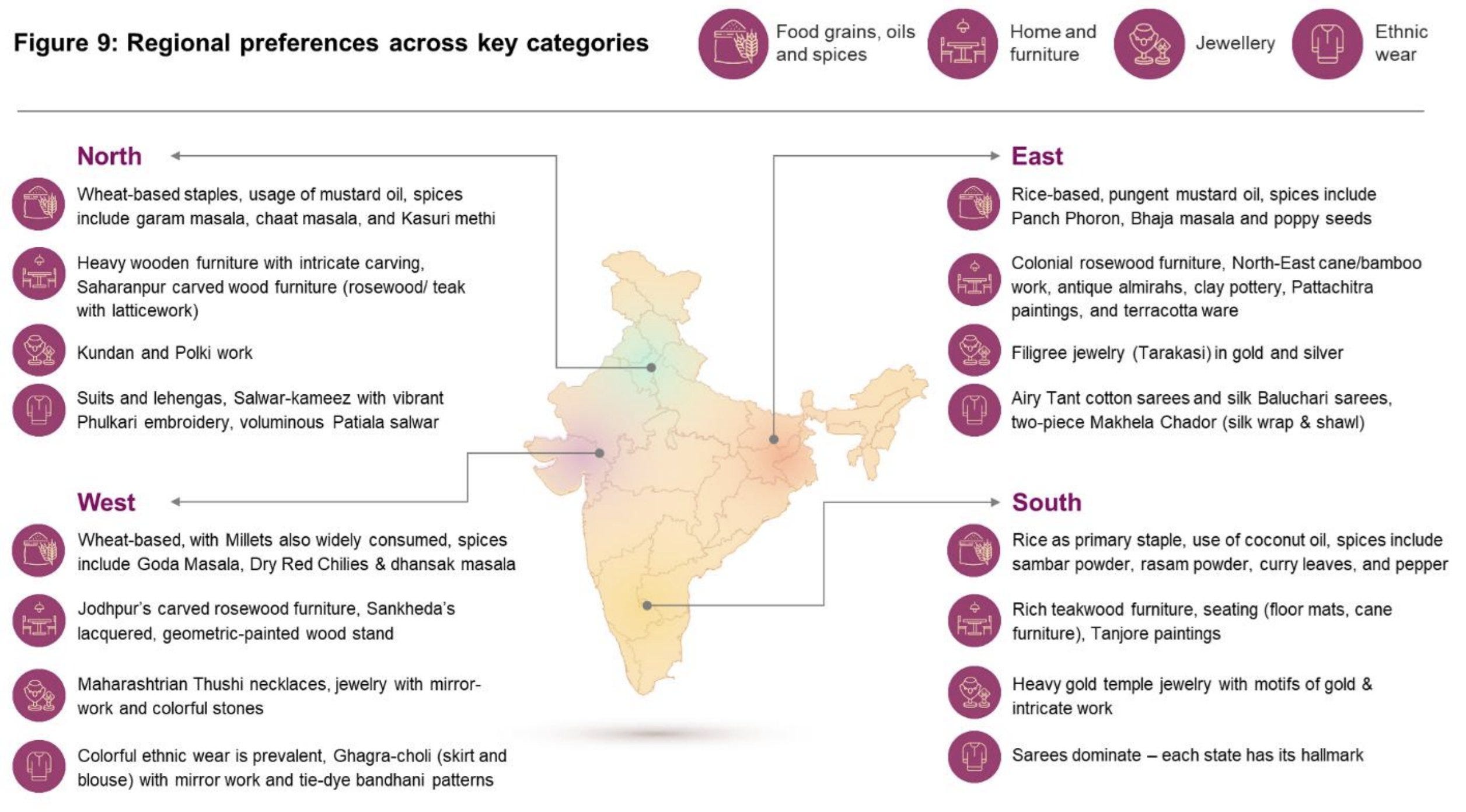
12. Split of regional consumer preferences in India (via Meesho’s DRHP)
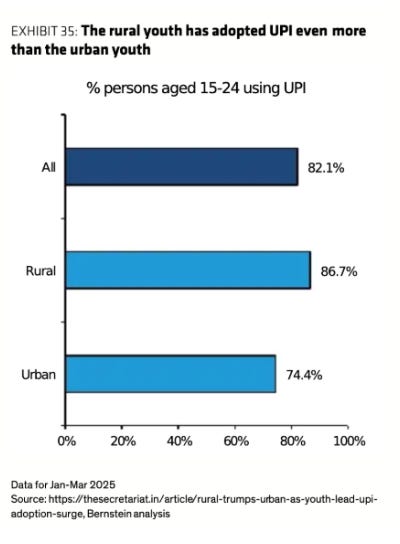
13. UPI adoption for rural vs urban youth
Per Arjun Malhotra -
“Spent the weekend going through Bernstein’s latest report. A stat that deserves more attention is rural youth outpacing urban youth in UPI adoption.
That shouldn’t make sense. Urban areas have better internet, more smartphones, stronger digital infra. So why does rural youth lead in UPI adoption?
Here’s what I think is happening:
1/ Urban youth has options. Rural youth has UPI or nothing.
When you grow up with credit cards, debit cards, net banking, and wallets as backup options, UPI is just another payment method.
But for rural youth who never had functional banking infra nearby, UPI isn’t competing with alternatives - it’s the first financial tool that works in their context.
2/ WhatsApp made this inevitable.
Rural India’s internet experience is essentially WhatsApp. When payments suddenly live inside the app you’re already spending hours on daily, adoption doesn’t have a huge learning curve. Urban youth juggles dozens of apps.
Rural youth lives in one ecosystem, making payment integration seamless rather than disruptive.
3/ They’re not just using UPI - they’re earning through it.
Look at what rural youth actually does: delivery partners, resellers, service providers. Urban youth uses UPI to pay for things, but rural youth uses it to get paid.
When your income depends on instant digital settlement, adoption becomes survival, not convenience.
4/ The trust barrier was lower because the skepticism never existed.
Urban youth watched their parents navigate banking frauds and payment failures for decades. Rural youth skipped that entire cycle of financial skepticism.
UPI arrived as their first digital payment experience with no baggage of “what could go wrong.”
The story here isn’t rural youth adopting technology. It’s technology, finally building something that didn’t require rural youth to become urban to participate.”
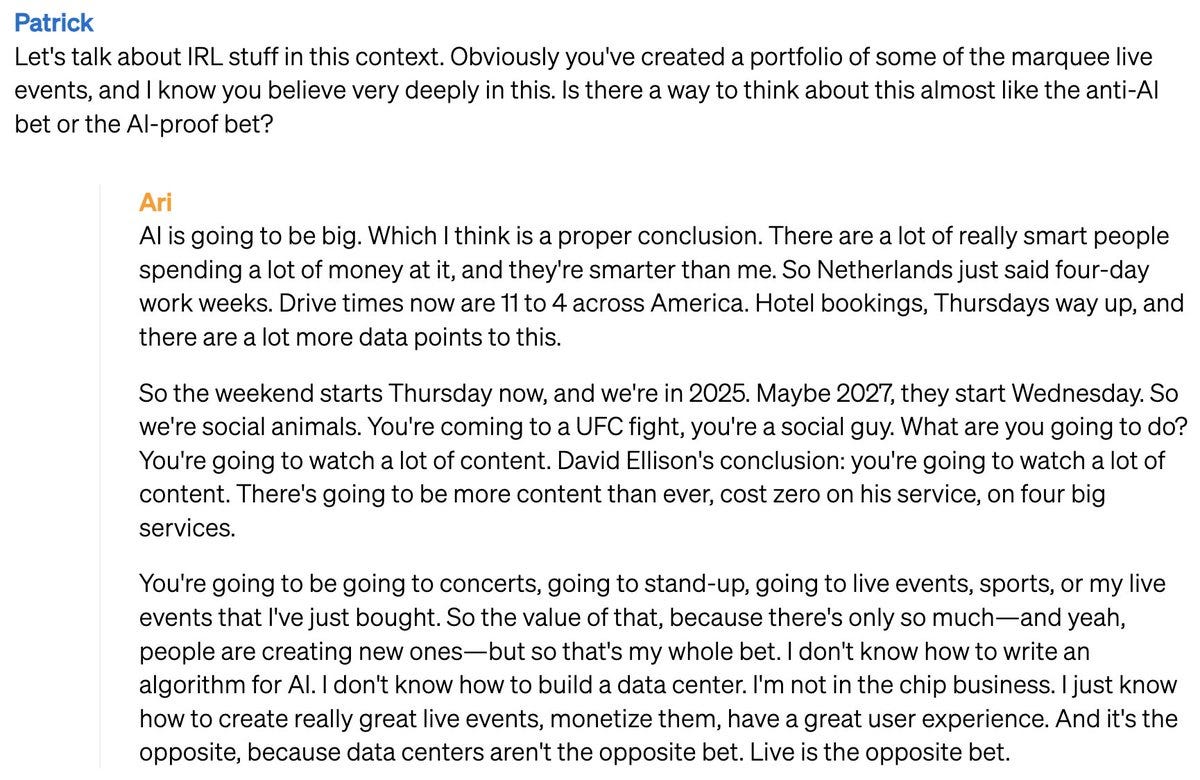
14. On live experiences as the “Anti-AI Bet”
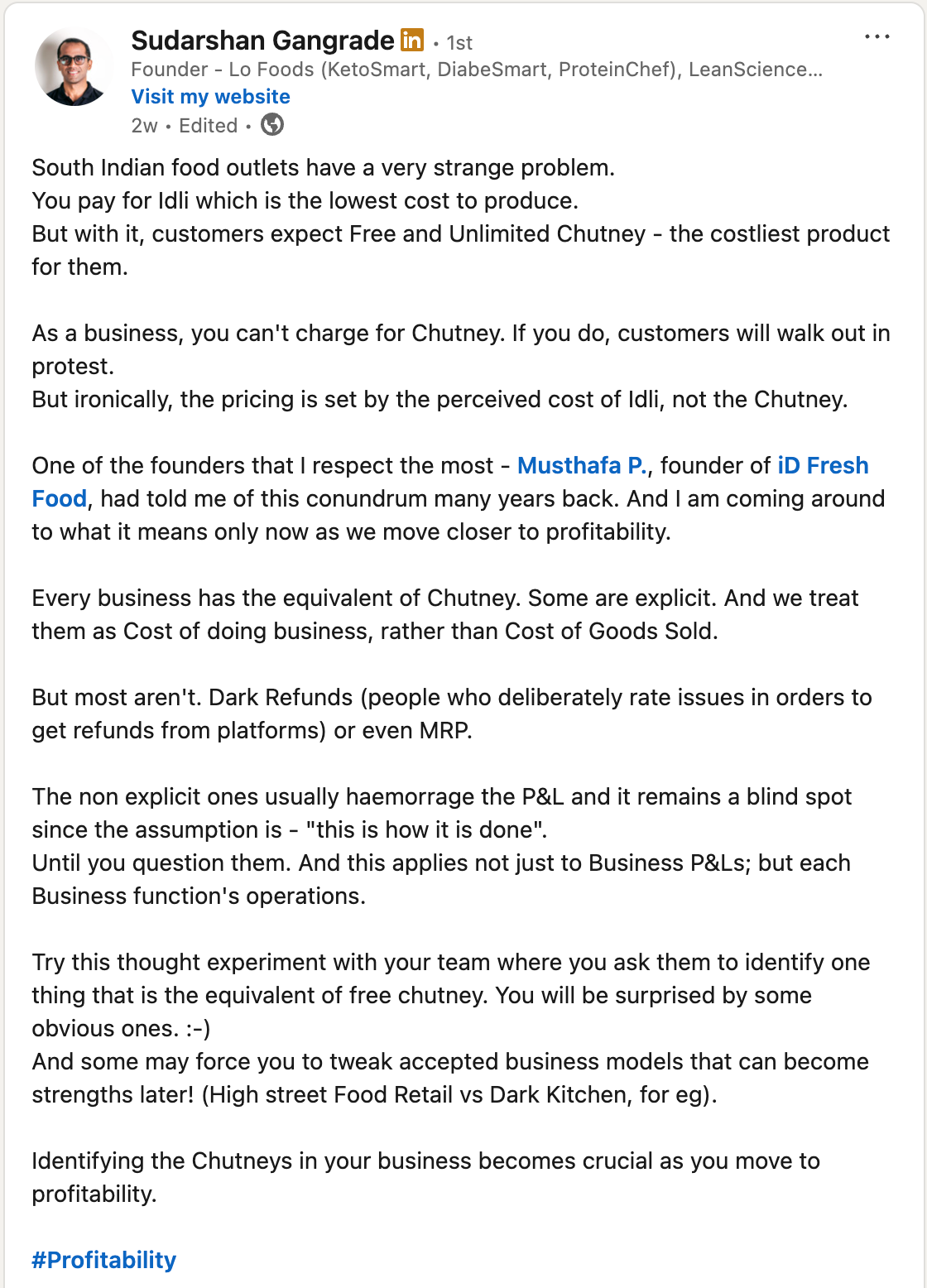
15. ‘Chutney Profitability’
An idea we really loved from Sudarshan Gangrade -
16. Manufacturing units in India
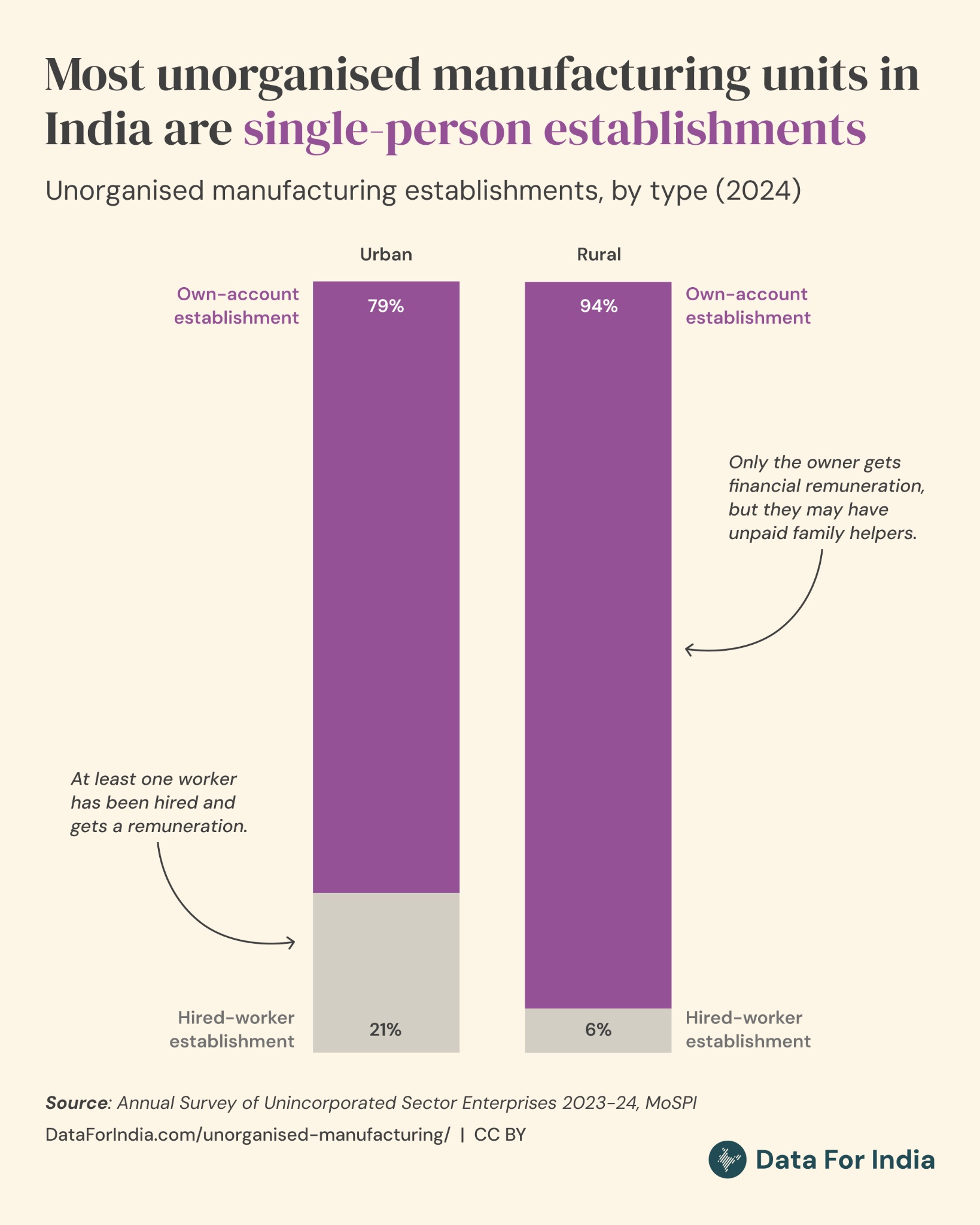
Per Data for India -
“Manufacturing activity in India takes place in two broad ways: organised manufacturing that happens in factories, and unorganised manufacturing which is typically at a small scale and family-run.
There are 20 million unorganised manufacturing establishments in India as of 2024. In comparison, there are only about 200,000 factories.
The majority of India’s manufacturing workforce is in the unorganised sector, but unorganised manufacturing establishments contribute only 12% of the gross value added (GVA) in the manufacturing sector. GVA is the total value of all goods and services produced in a country.
Most of the establishments in unorganised manufacturing are run by a single person. More than four in five establishments (a little less than 18 million) are own-account establishments. In own-account establishments, only one person (the owner) gets financial remuneration from the activity, but they may have assisting family members who do not get paid (unpaid family helpers).
Only one in five (less than three million) unorganised manufacturing enterprises are hired worker establishments, meaning that apart from the owner, there is at least one worker who has been hired and gets a remuneration.”
Check out Abhishek Waghmare’s piece on Unorganised Manufacturing for more.
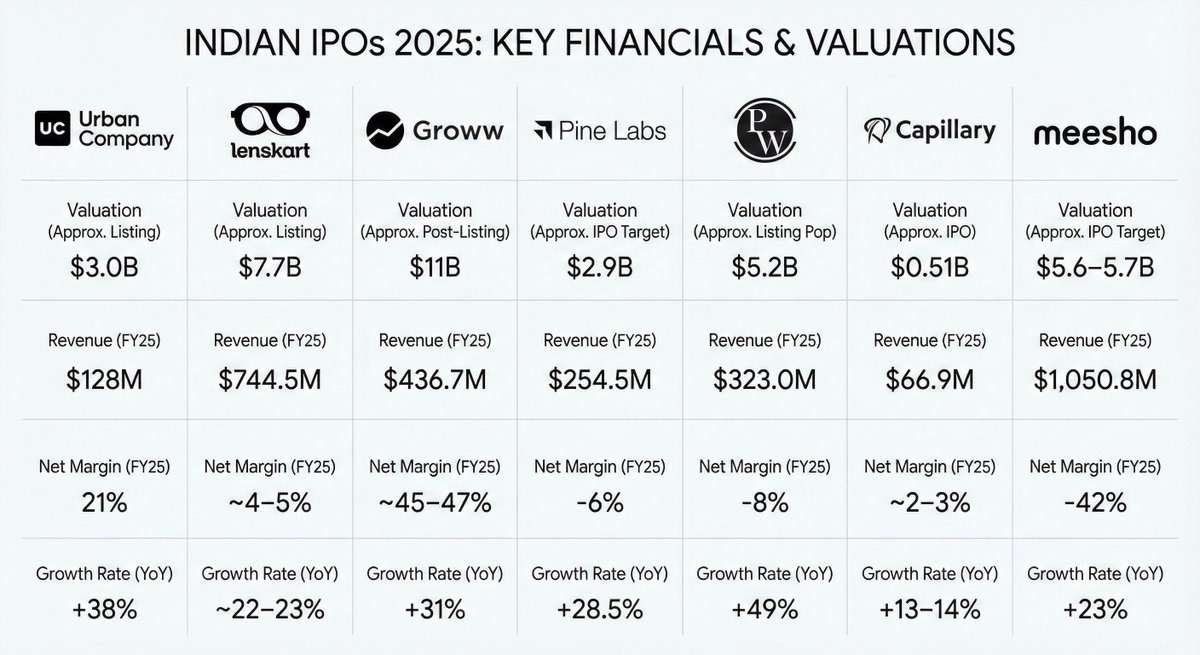
17. The Indian IPO market in 2025
Per Deedy Das -
“The Indian IPO and venture capital markets this year are more lucrative than the US.
— Companies trade much higher than they would in the US
— Valuations aren’t off by far from US
— Funds can own ~20% at IPO which is unheard of
Hopefully this means more VC funding in India!”
18. Growth catalysts for Indian e-commerce
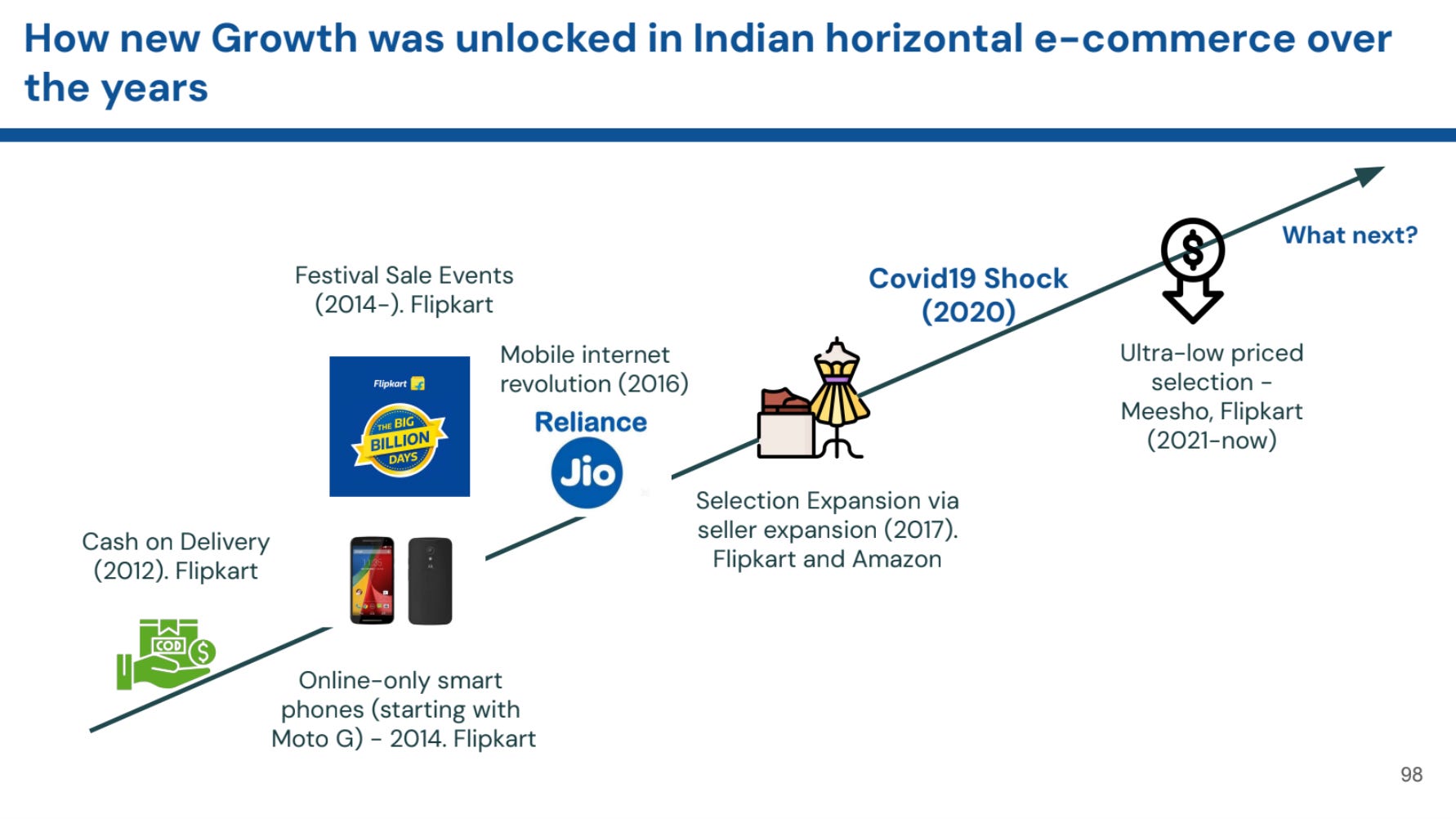
Source - ‘India Internet Commerce Report - Deep Dive’ by Joel Modestus
19. The changing design paradigm of ecomm home pages
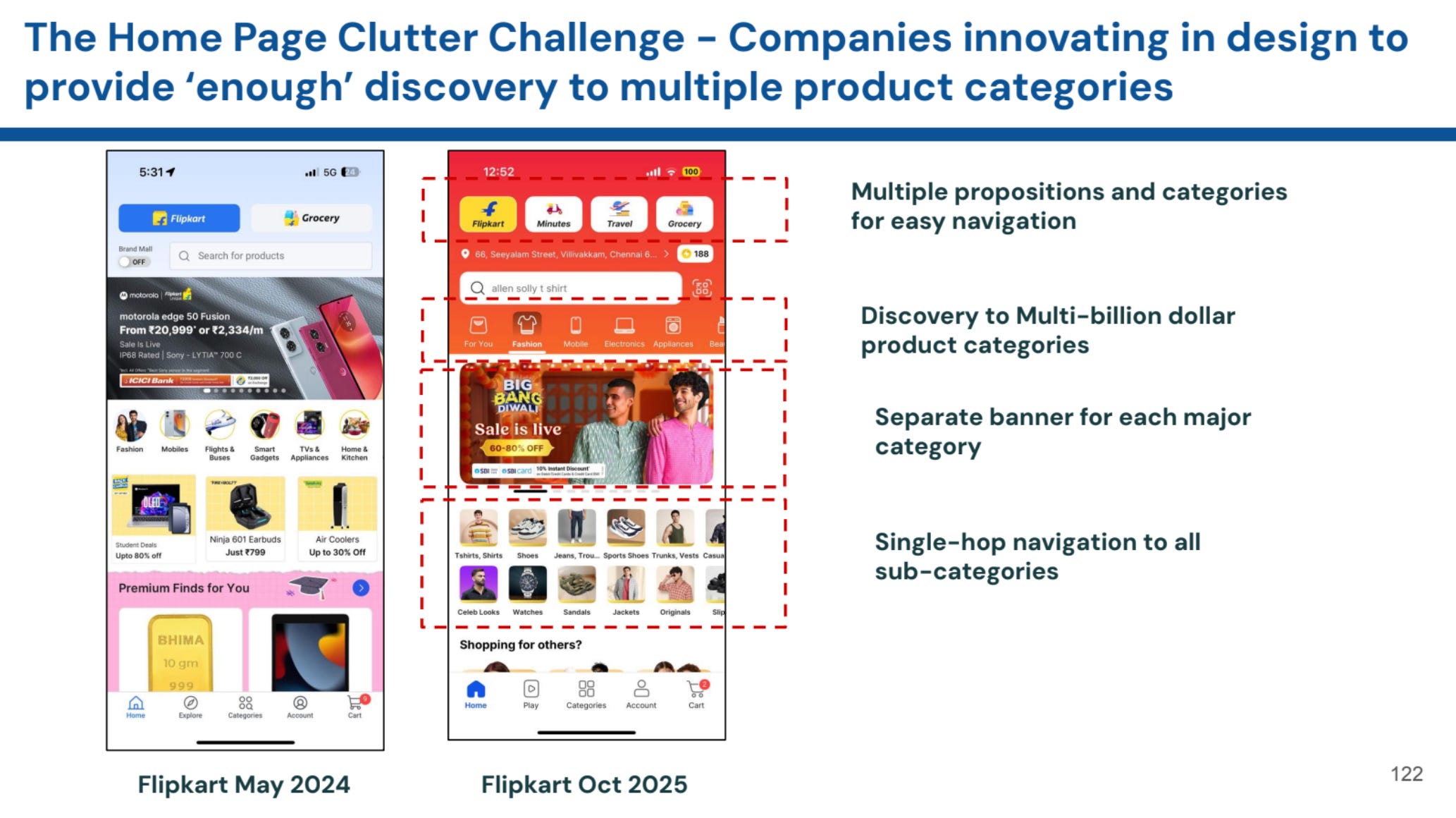
Source - ‘India Internet Commerce Report - Deep Dive’ by Joel Modestus
20. Time spent on social media
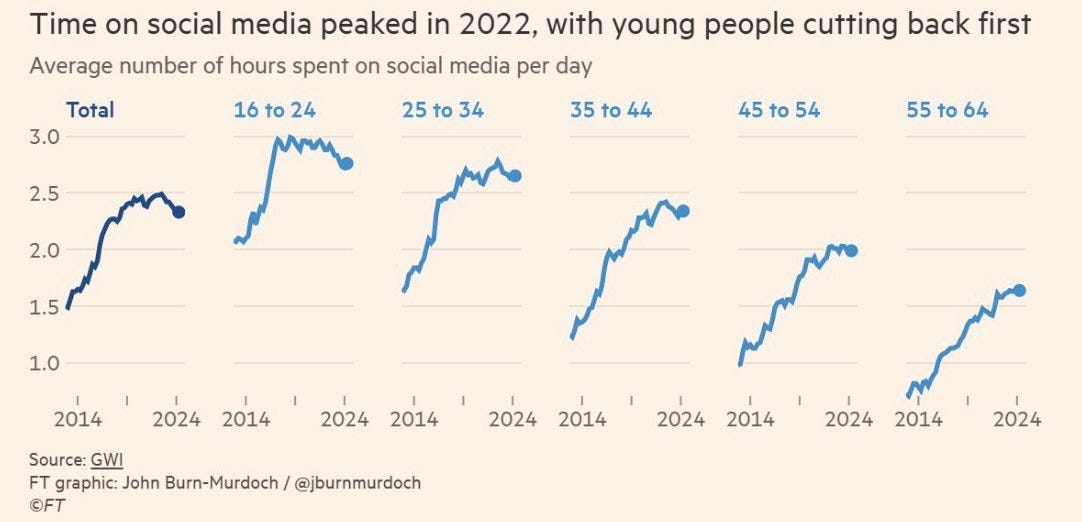
Per Greg Isenberg -
“THIS chart is the CLEAREST signal of where the internet is heading.
social media time is SHRINKING for the first time in HISTORY, and young people are leading the pullback.
Brainrot is OUT.
they grew up online, saw the full cycle of social platforms, and learned early that endless scroll doesn’t make you happier or smarter.
they’re the LEADING indicator. their parents will follow in 3-5 years.
AI slop is the nail in the coffin…”
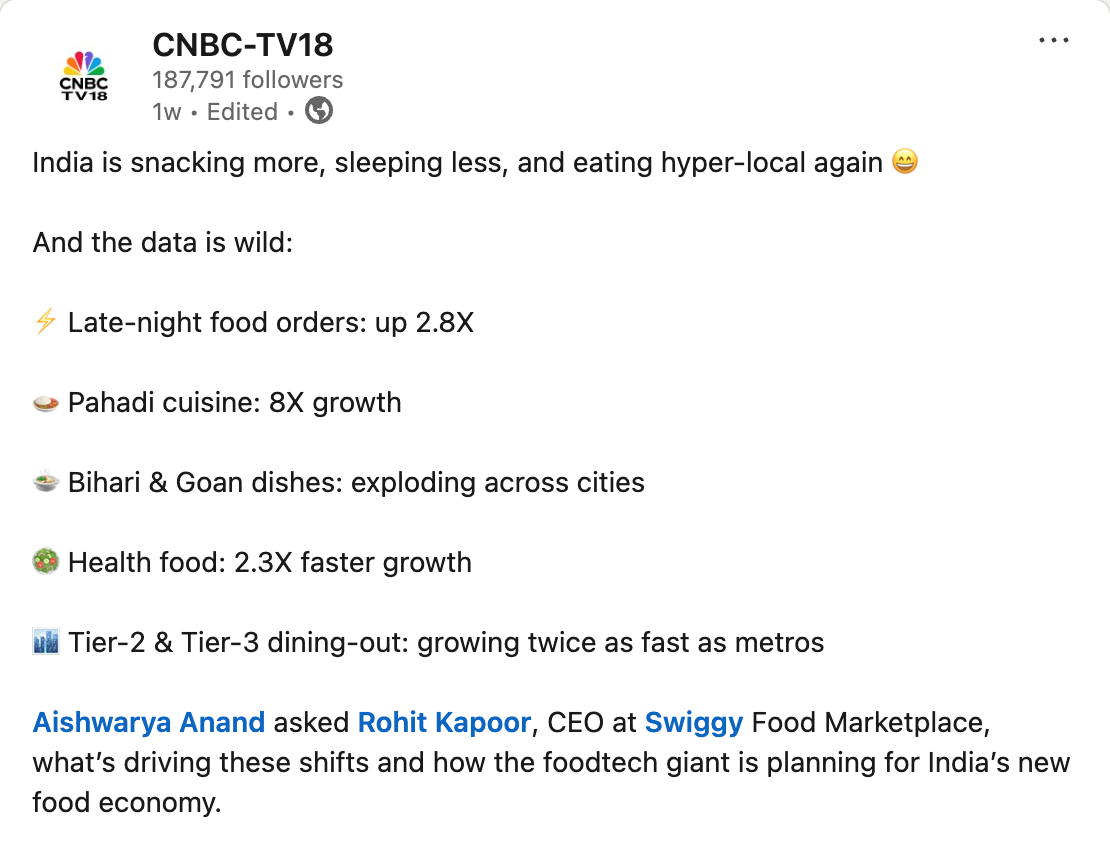
21. A snapshot of Indian snacking habits
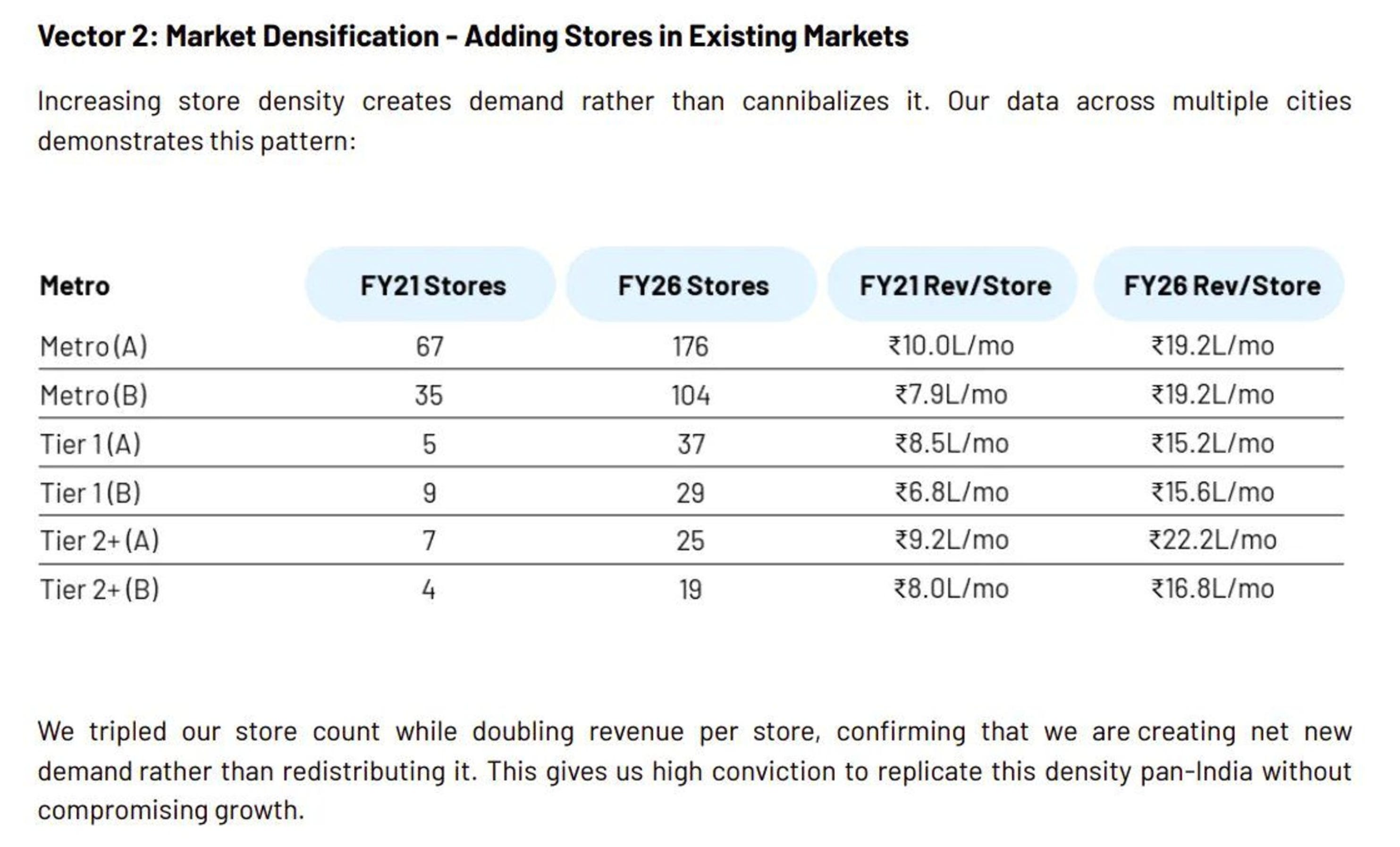
22. Lenskart - increasing store density increases demand rather than cannibalising it
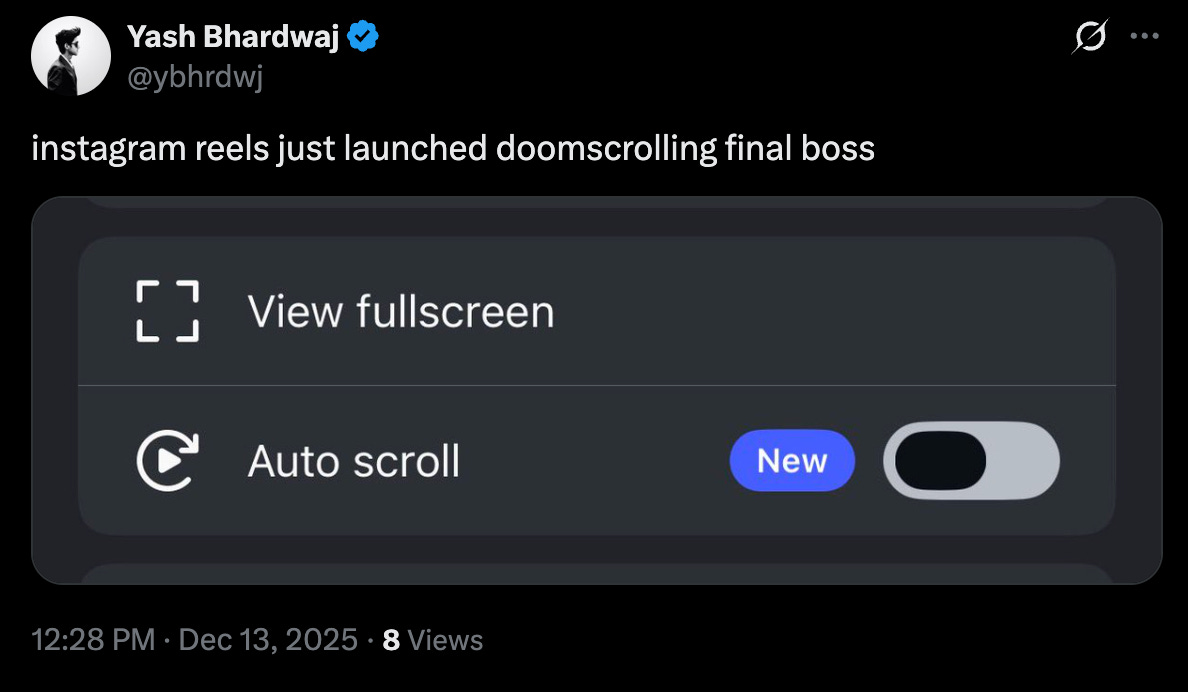
23. The final boss of doomscrolling
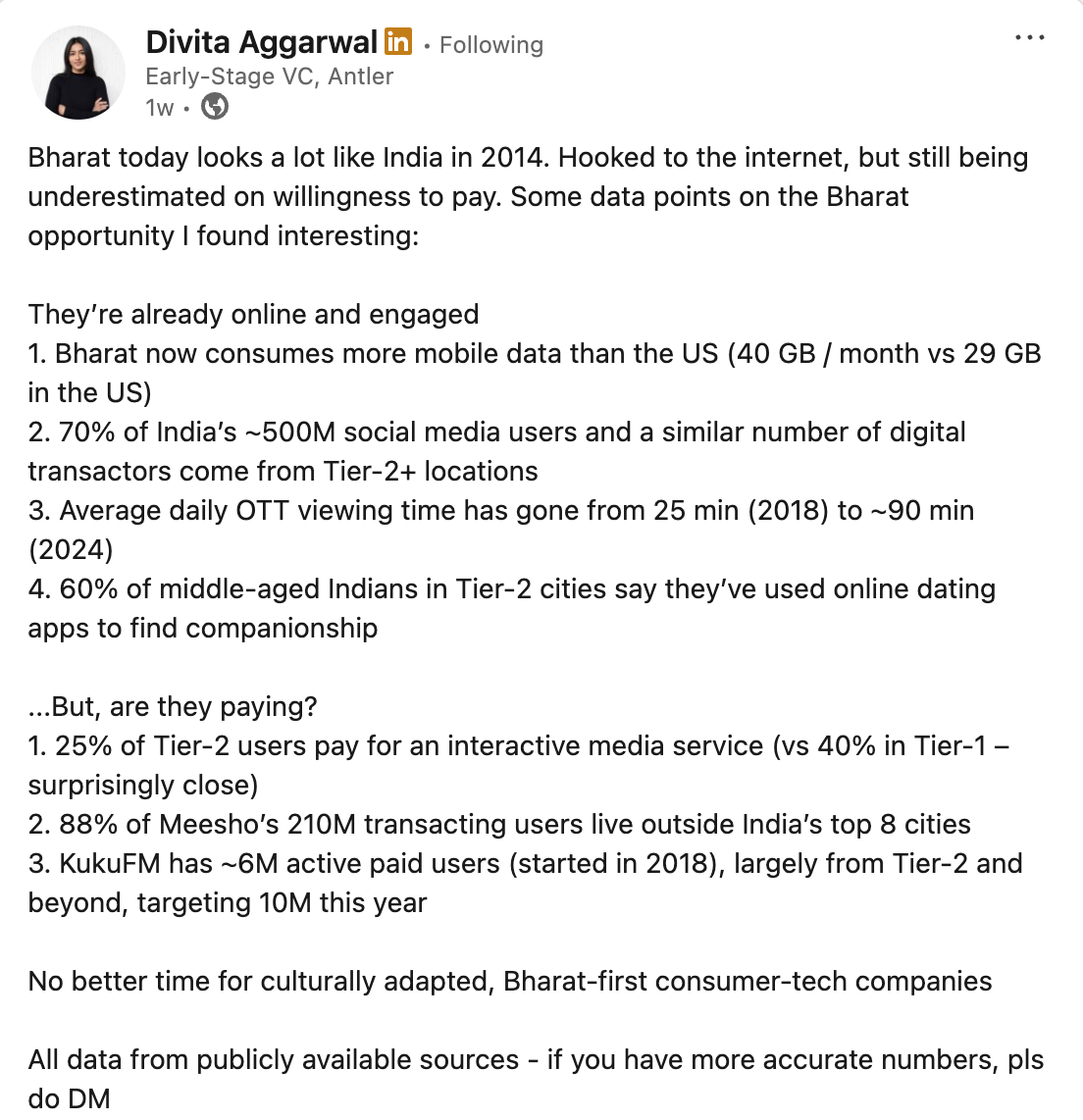
24. Bharat (2025) vs India (2014)
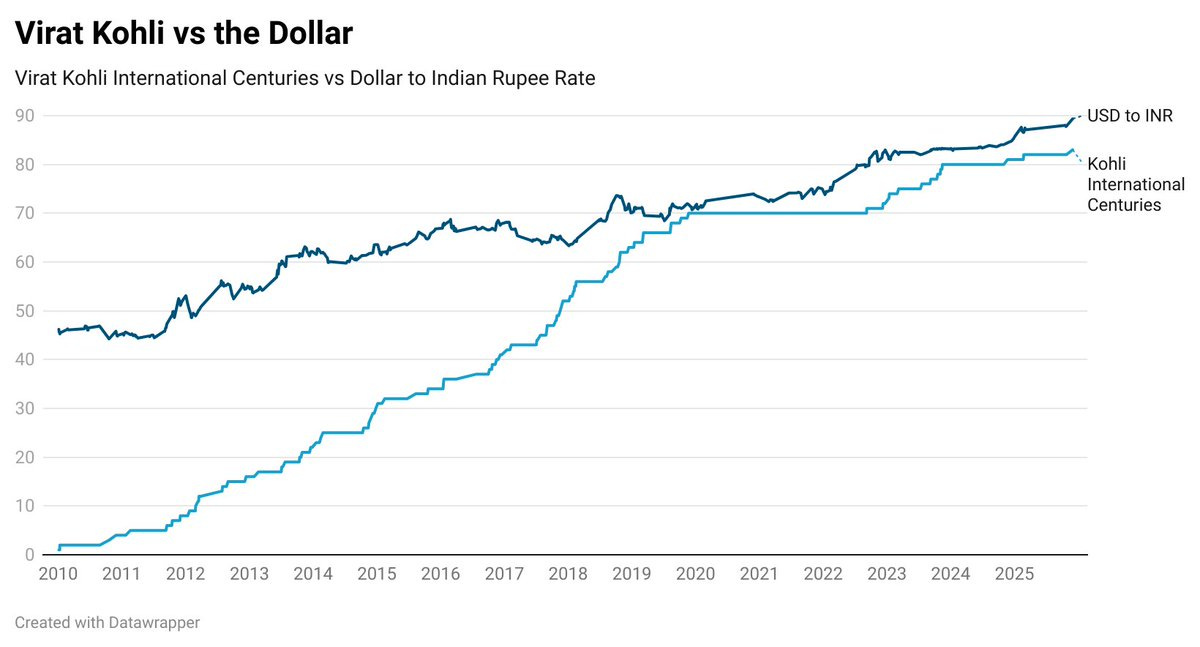
25. Virat Kohli vs The Dollar
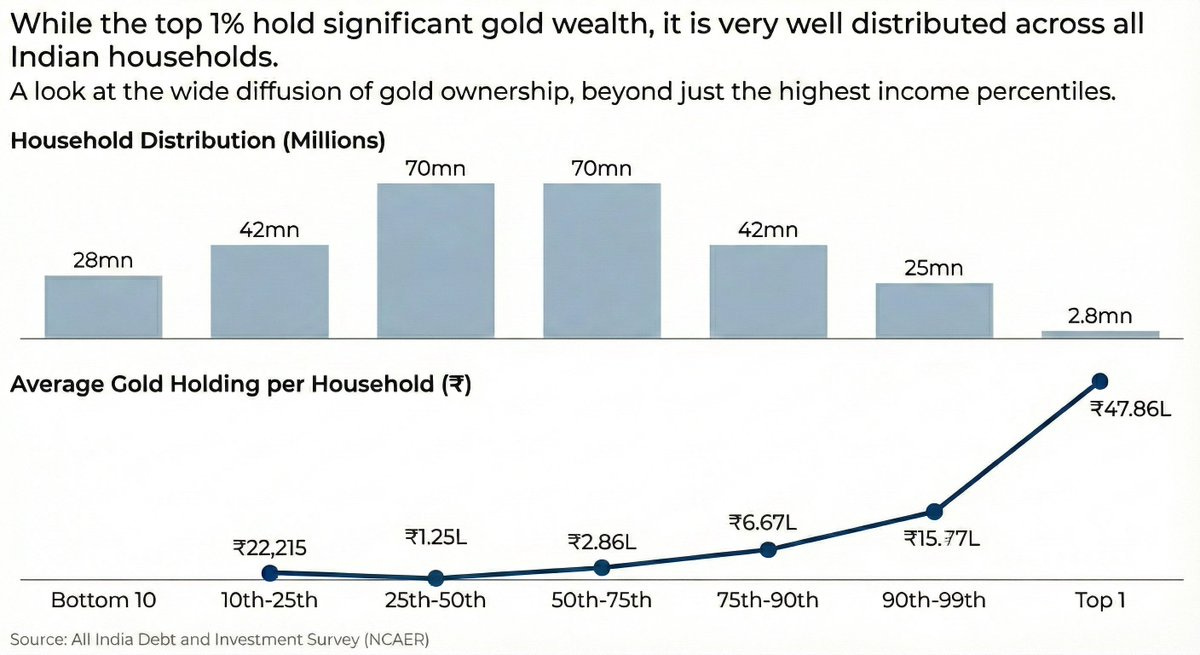
26. The distribution of gold held by Indian households
Per Deepak Abbot -
“It’s a well known fact that Indian households have gold worth $3trillion but it’s often assumed only few rich household have all the gold. In fact Gold is the only asset which is well distributed among all households in India unlike FDs, MFs, equity etc.”
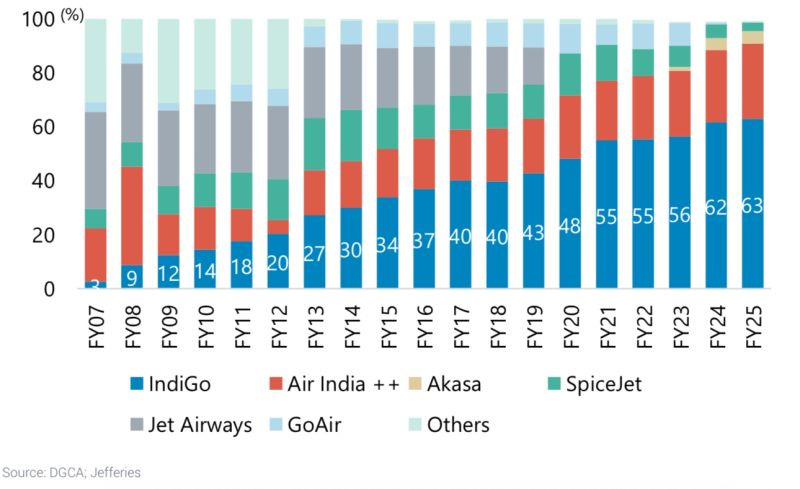
27. Indigo market share
Per Sajith Pai -
“Such a fascinating chart. Indigo has never, i repeat never, lost marketshare since it launched. It is amongst the best run companies in India today, (and that too in a tough sector where it is hard to make money) though what happened over the past few days is a tragedy. Let us hope they overcome it.”
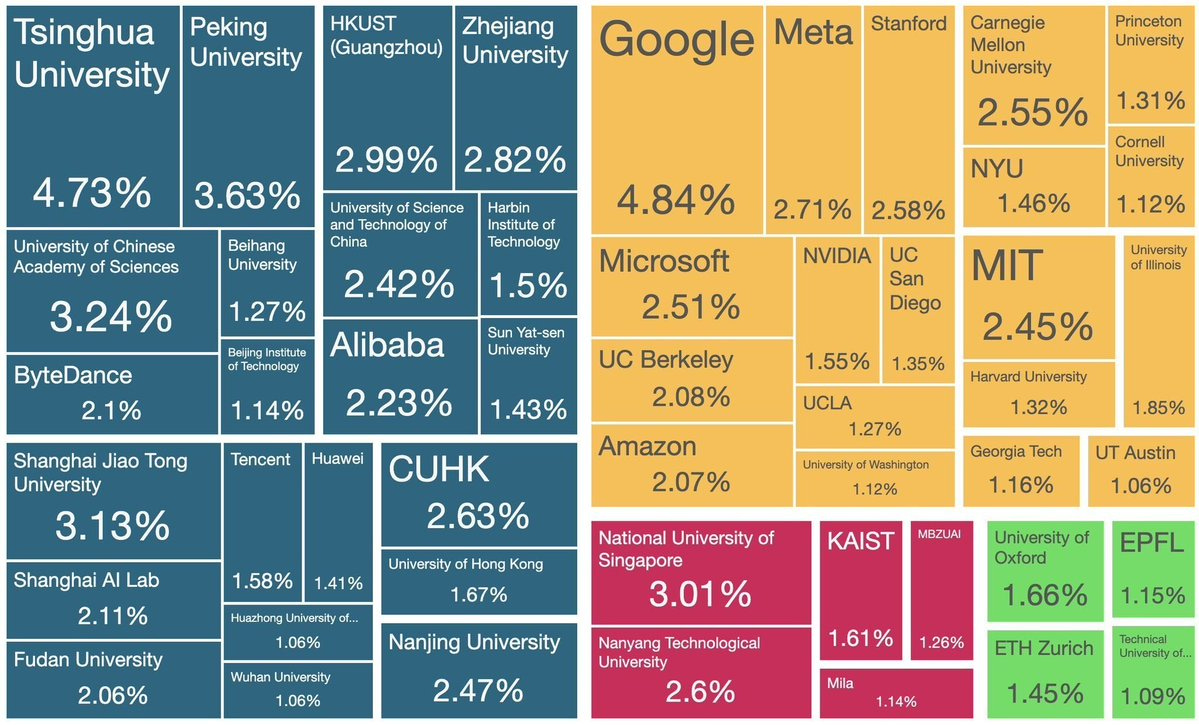
28. India’s lagging contribution to AI research
Per GDP -
“Code RED for India - only paranoids survive.
India is nowhere in Neurips 2025 in San Diego. World’s largest AI research conference. Below is leaderboard of sorrow for India. India Universities are nowhere to be seen…”
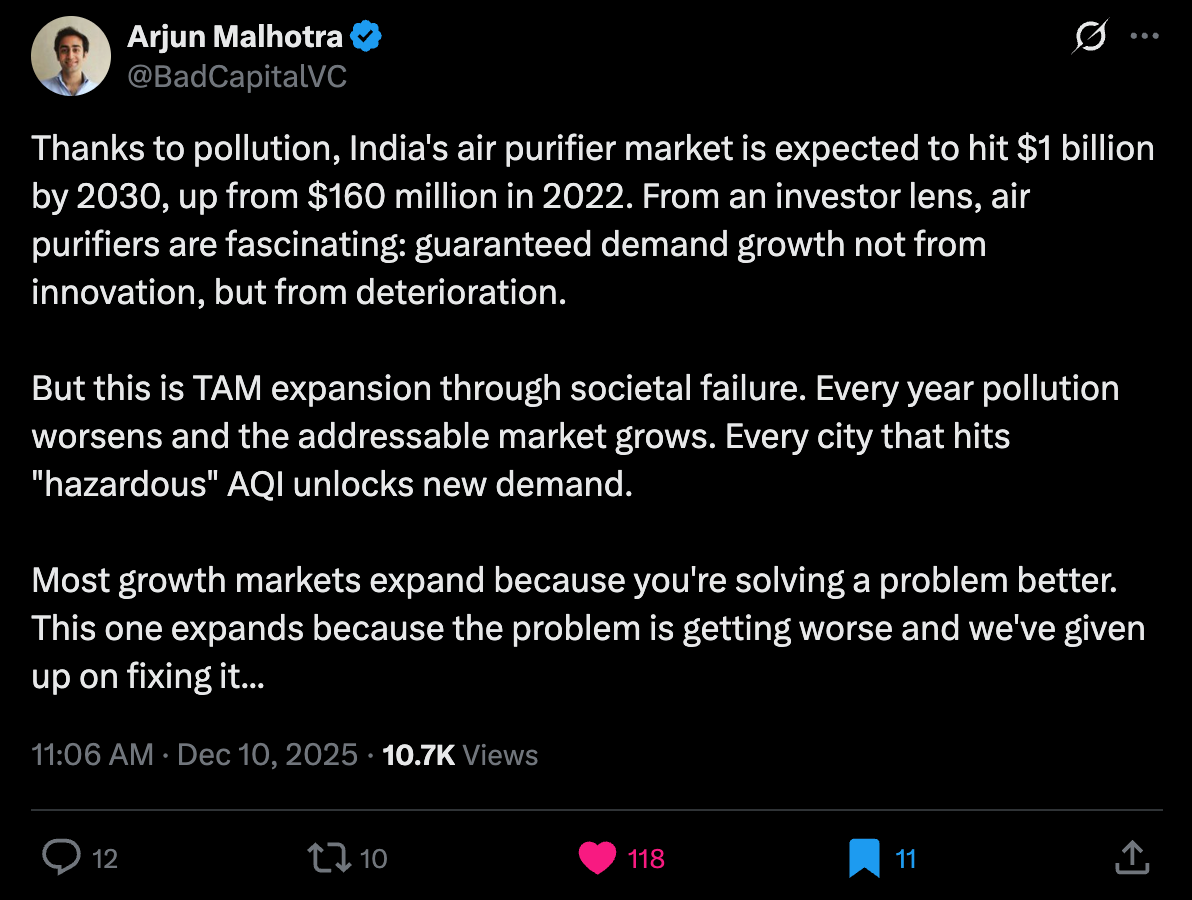
29. India air purifier TAM
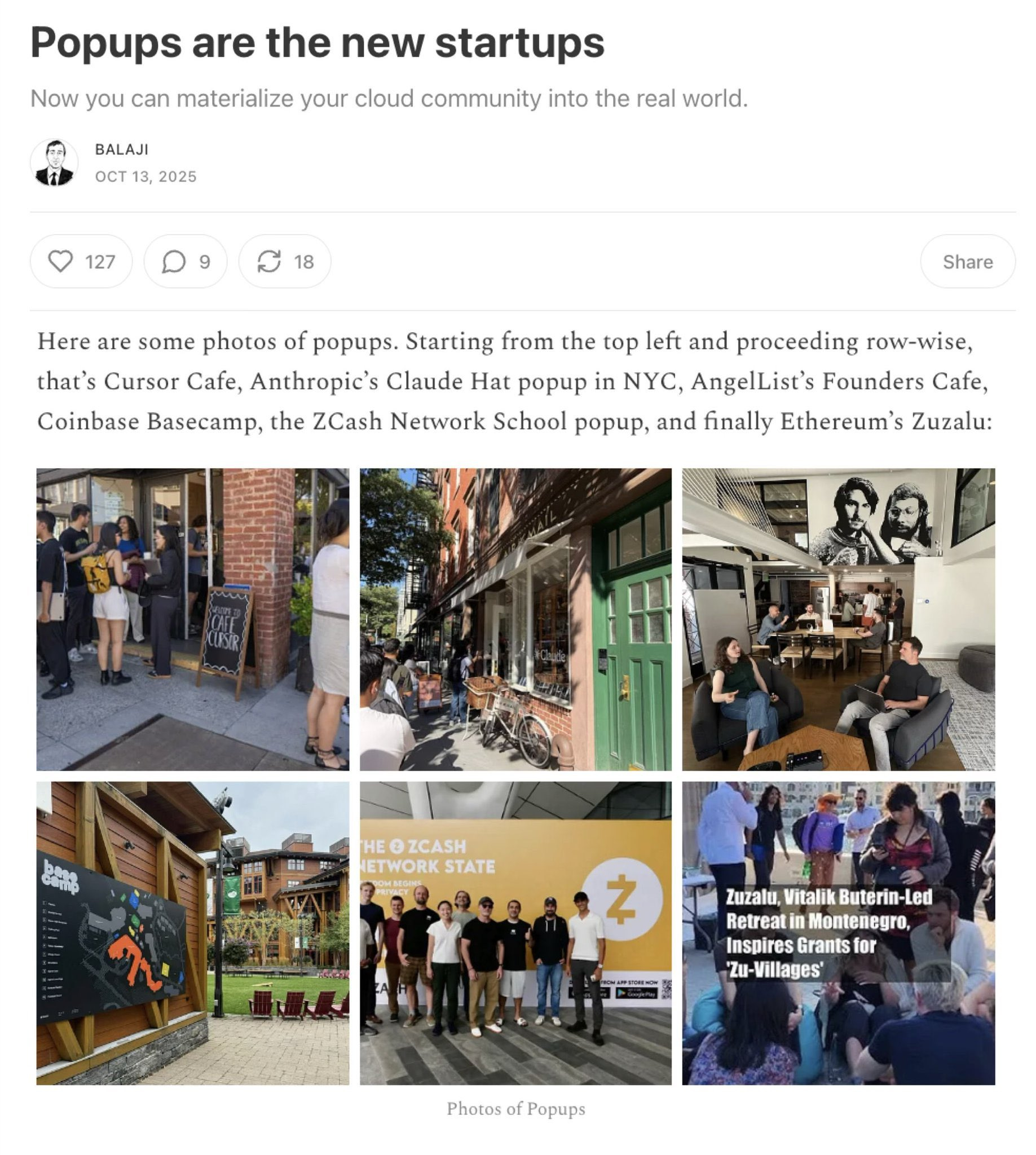
30. Popups are the new startups
Per Balaji -
“Popups are the new startups.
And IRL is the new URL.”
31. The India Thesis
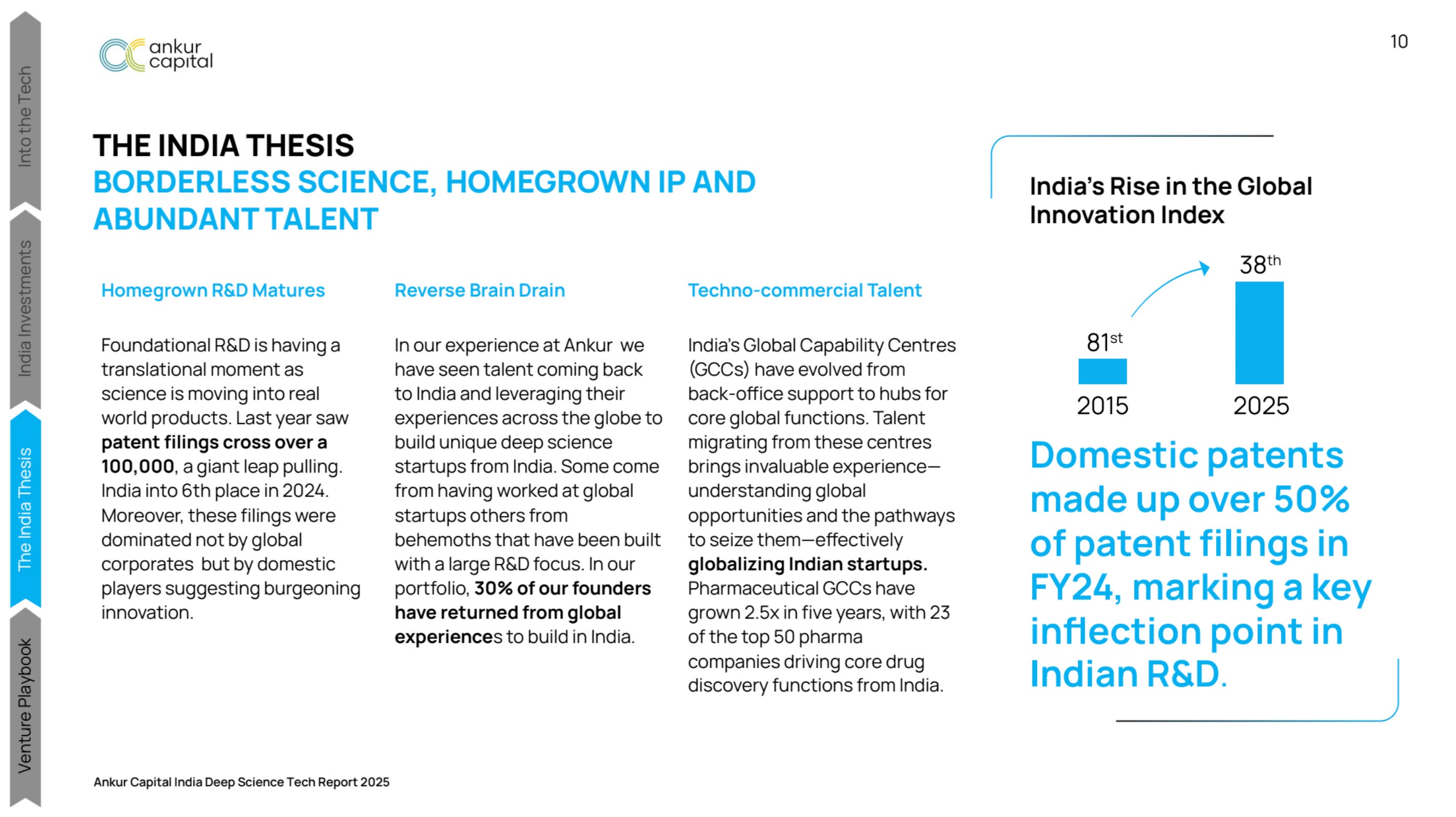
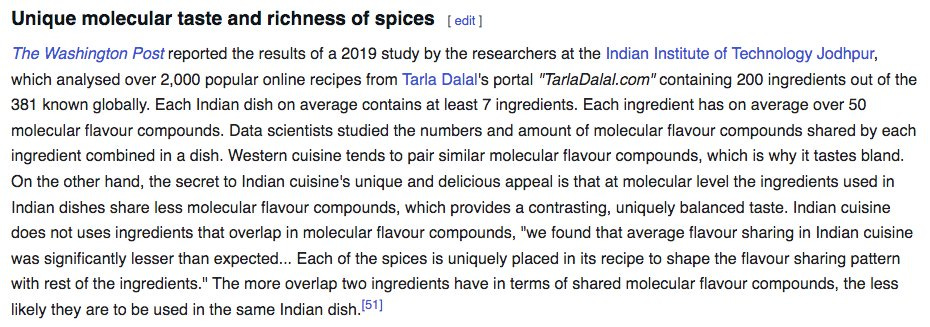
Source - ‘India Deep Science Tech Report 2025’ by Ankur Capital
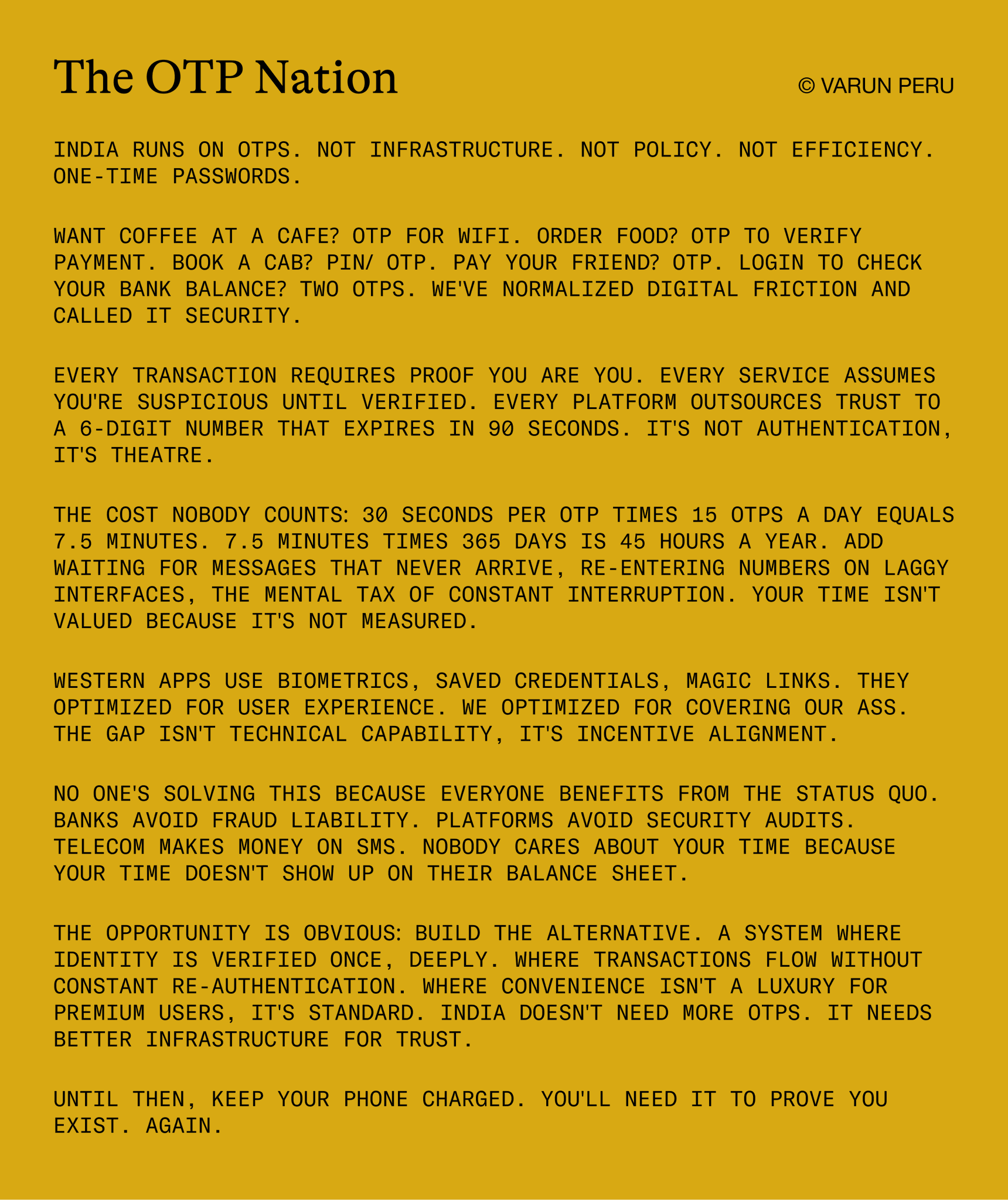
32. India runs on OTPs
33. Lectures on Tap
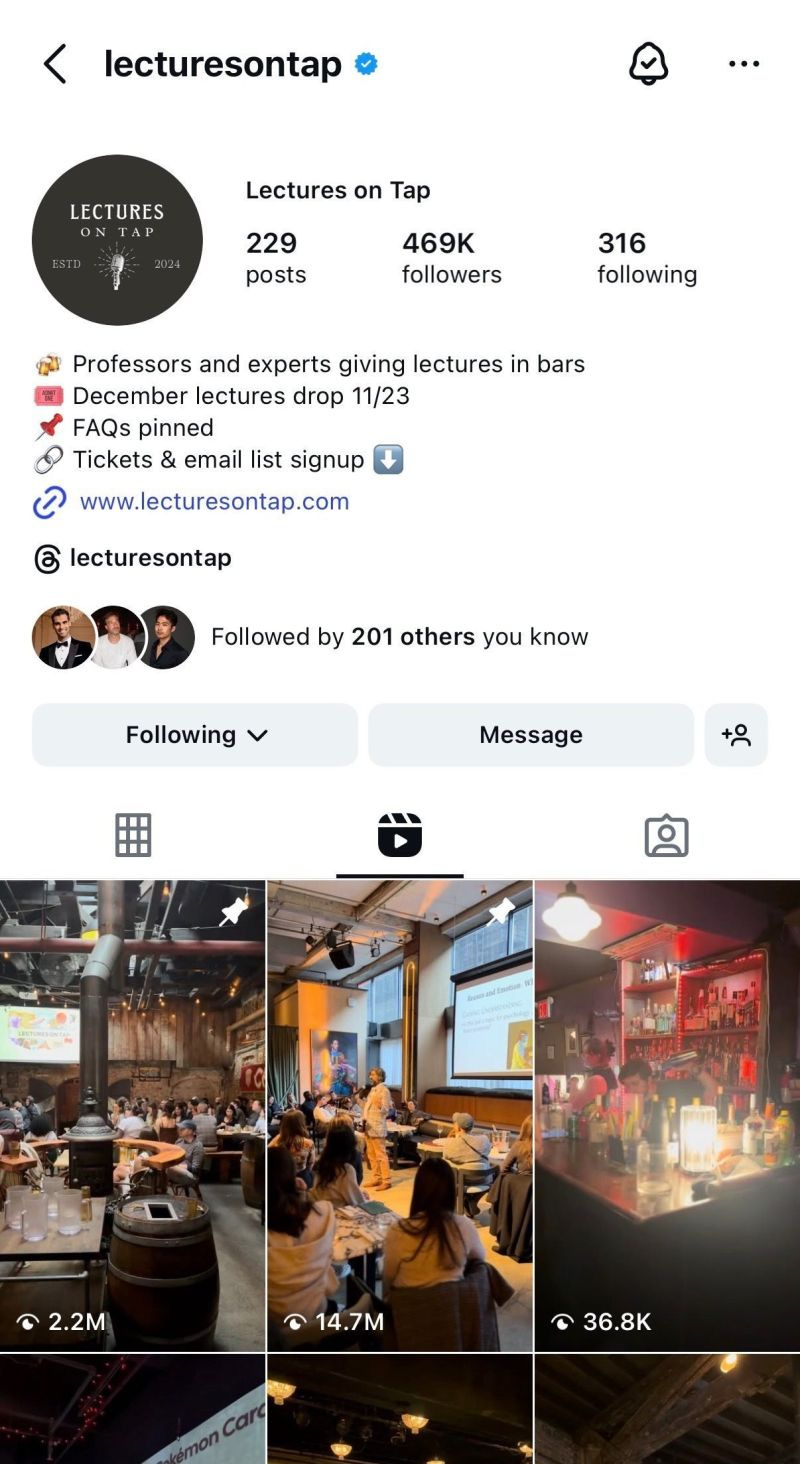
“I’m OBSESSED with this business. I’ve been following them for over a year - way before they blew up.
What it is:
- Professors and experts giving lectures inside bars
- Topics ranging from psychology to astrophysics to philosophy
- Tickets are $40, and you get to meet other people and learn something new
The appeal is clear - you show up, grab a drink, learn something new, and meet curious like-minded people
After a month of trying, I still haven’t been able to snag a ticket. It’s constantly sold out
From what I can tell, the whole thing is bootstrapped
They run 300+ events a year
They likely don’t pay venues anything
Tickets are $40
And with the right team, this becomes a beautifully efficient business
I don’t know the owners, but I’m guessing they’re doing $2M-$3M in revenue at ~80% gross margins. It’s an amazing lifestyle business.
But when you scale this nationwide, it can easily become a $20M+ business
And more importantly, I believe this is what the future of IRL experiences looks like
People are tired of digital everything
They want in-person, physical, analog - real events with real people
Events like this are going to explode in the next few years. Hundreds will pop up
And I think there might even be a venture-scale opportunity here”
34. ‘The $10 Trillion GDP Question: Is India Inc Ready to Compete for Global Market Share?’
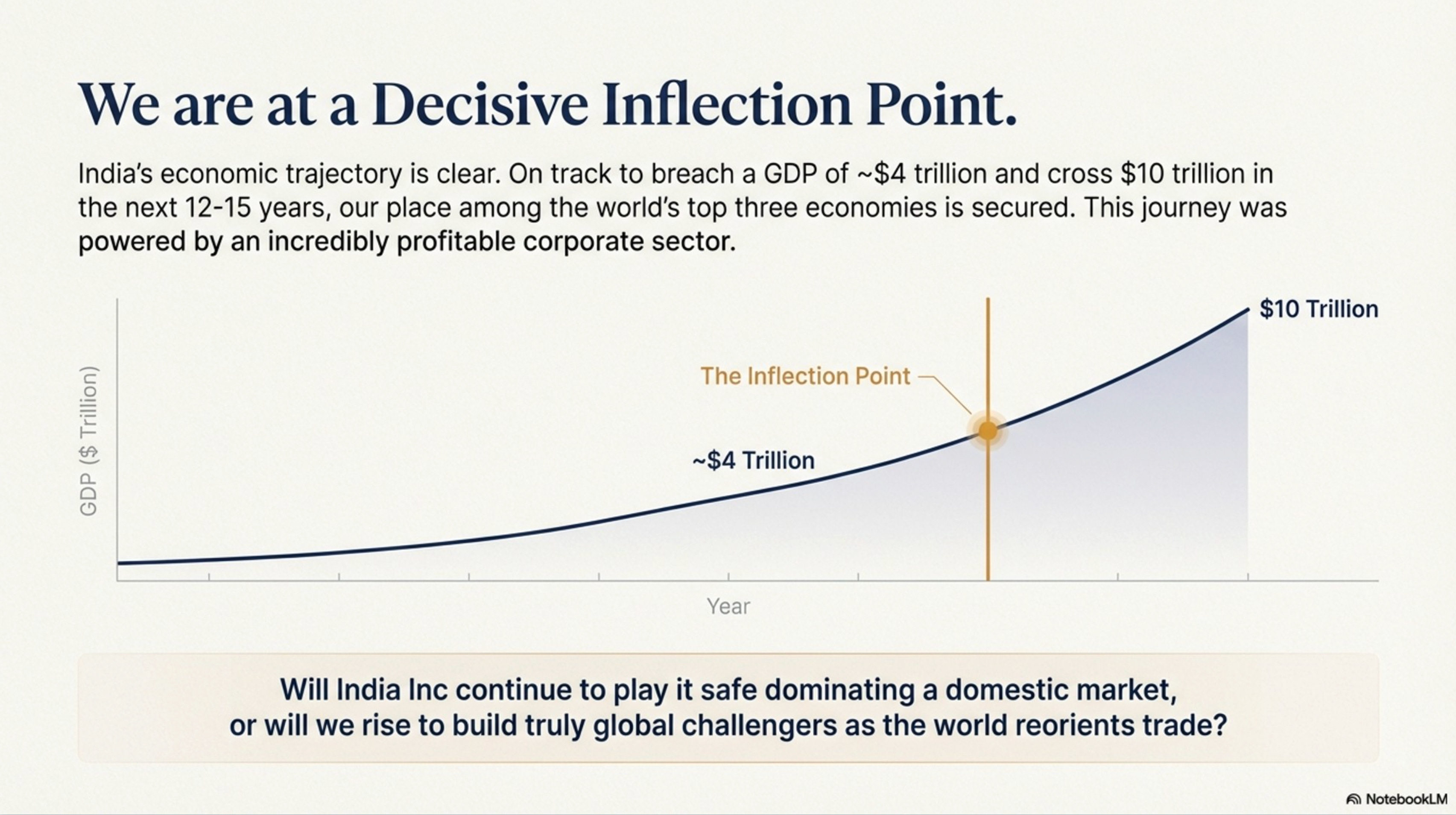
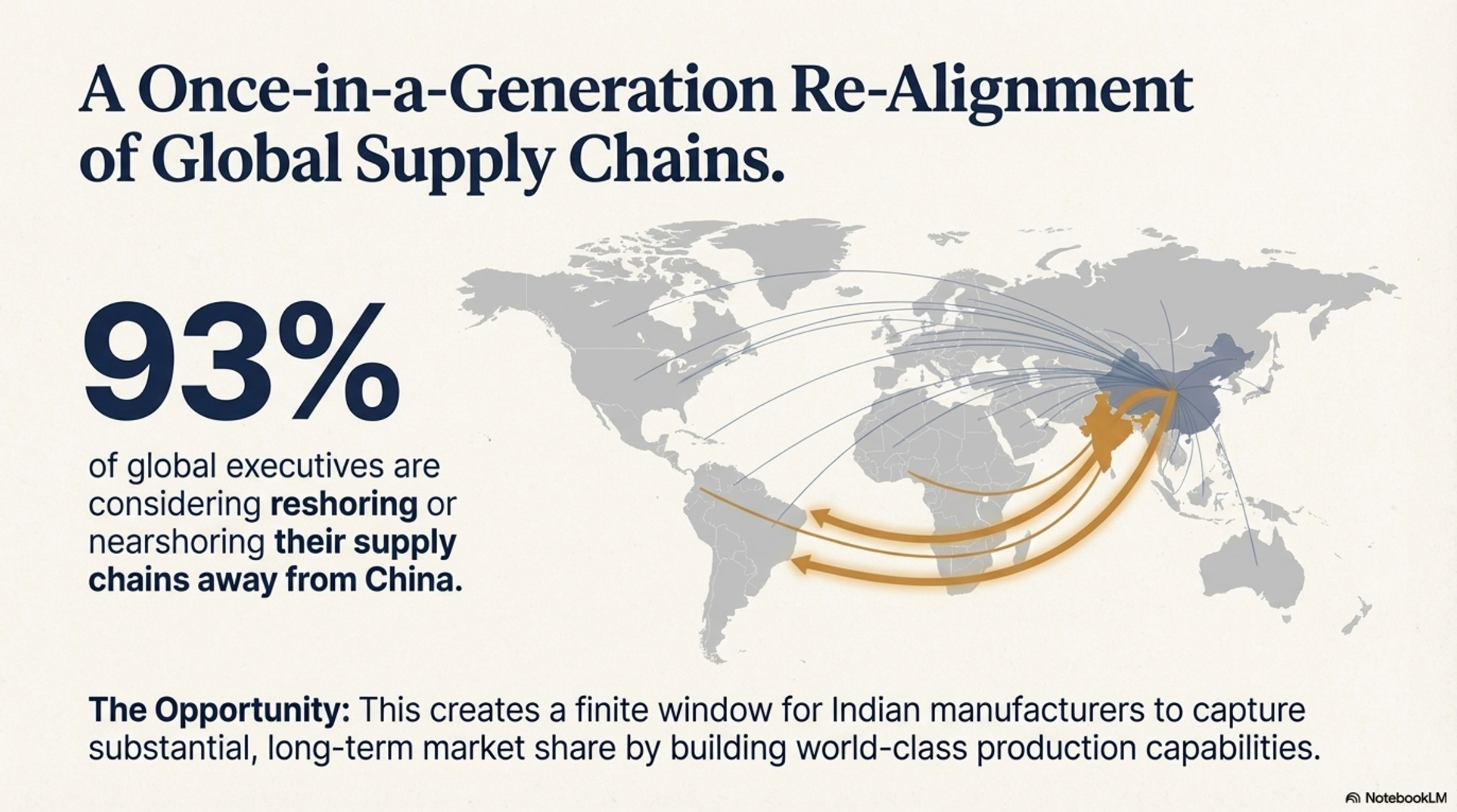
35. The inflection point for Indian robotics
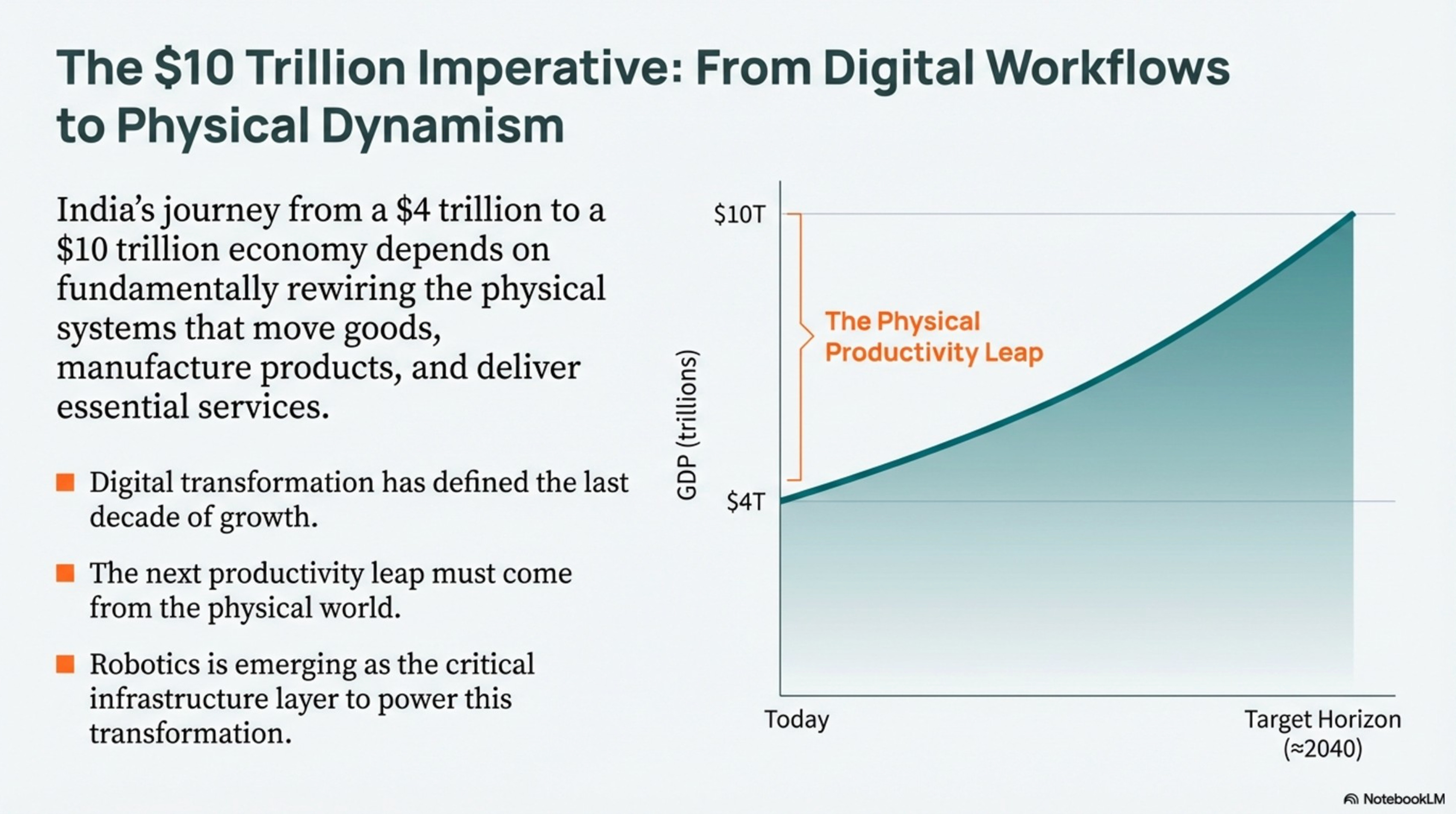
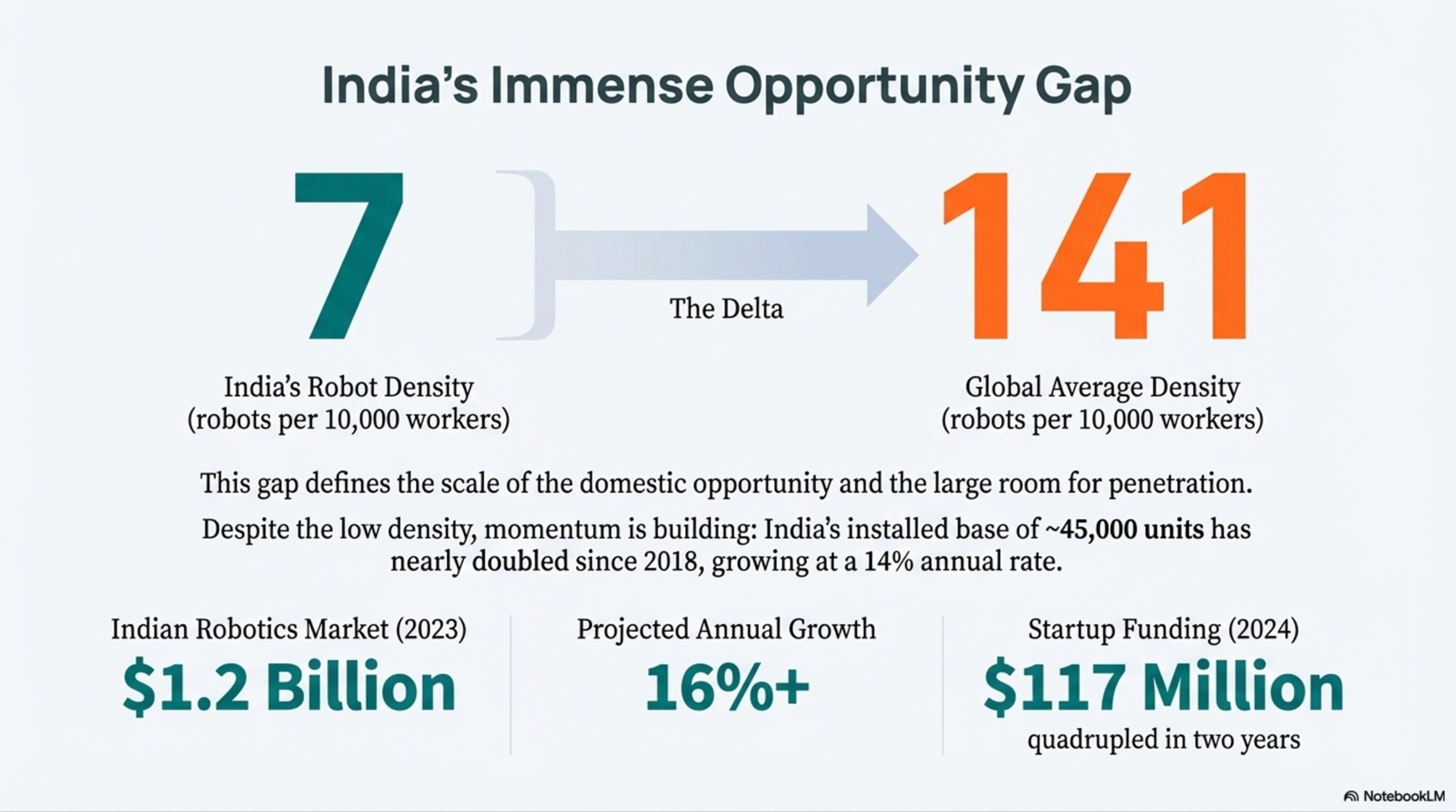
36. “The best time to invest in a company…”
Per Ayush Pranav -
“The best time to invest in a company is when it’s most in violation of a popular narrative”
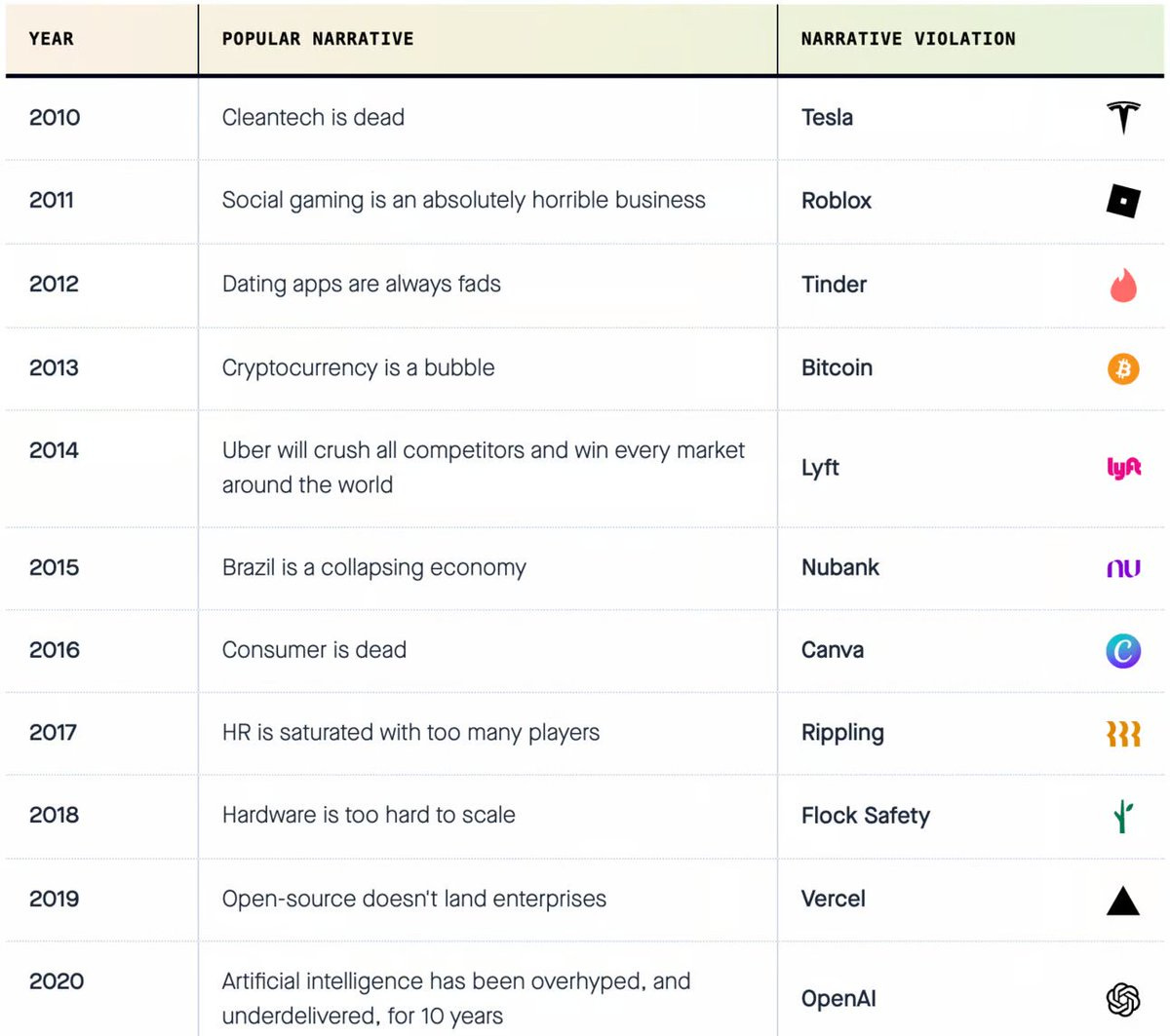
37. AI and the Catfish Effect
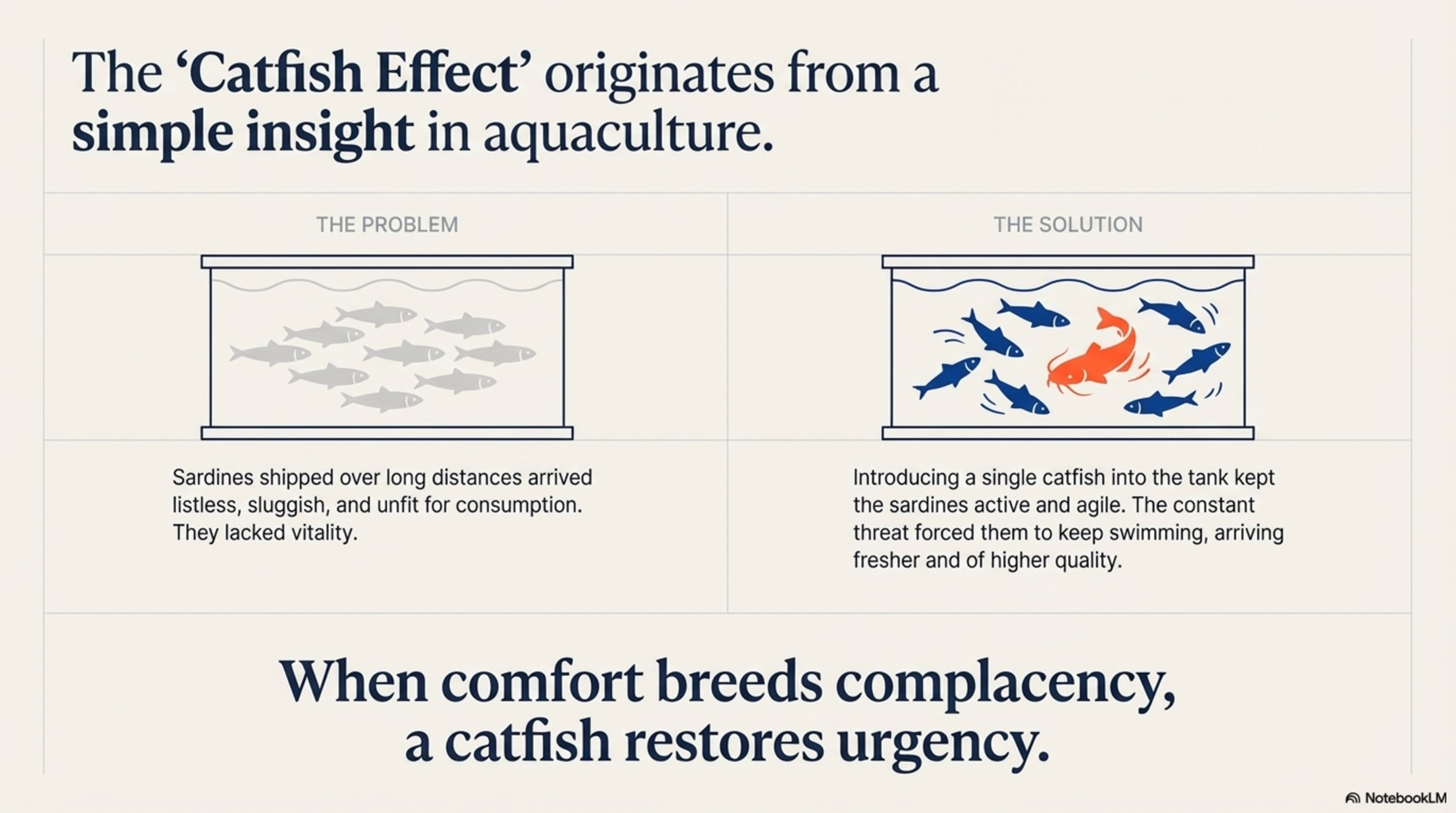
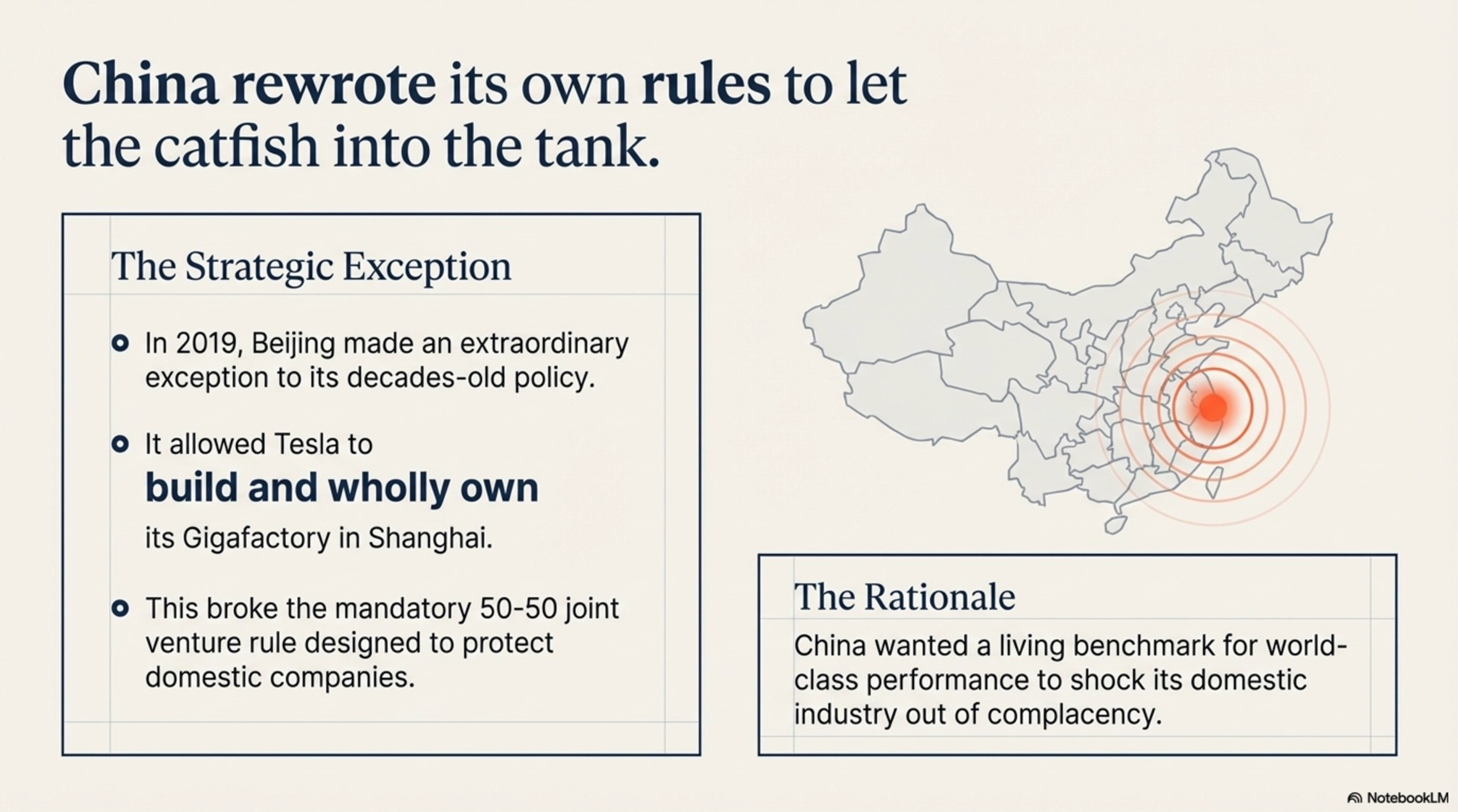
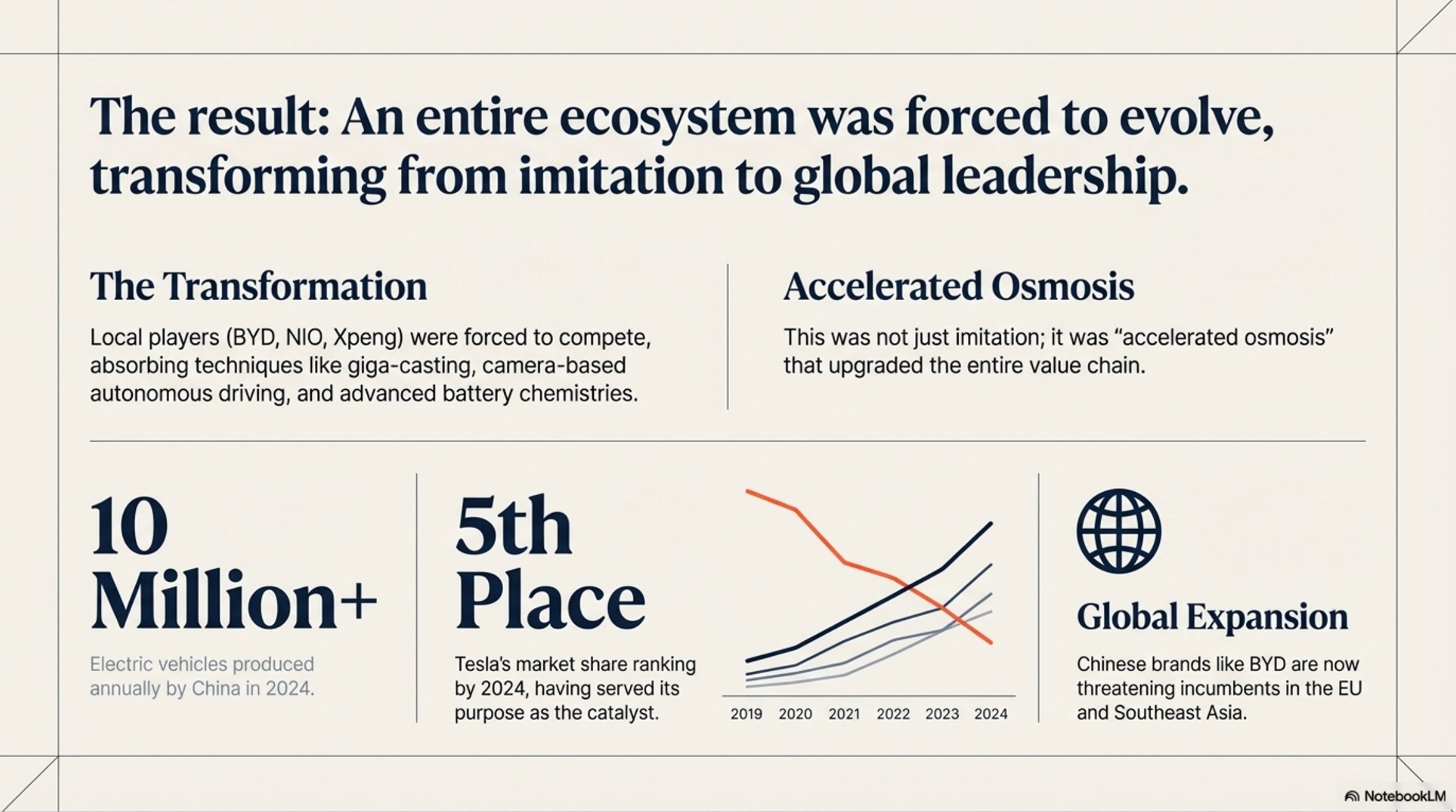
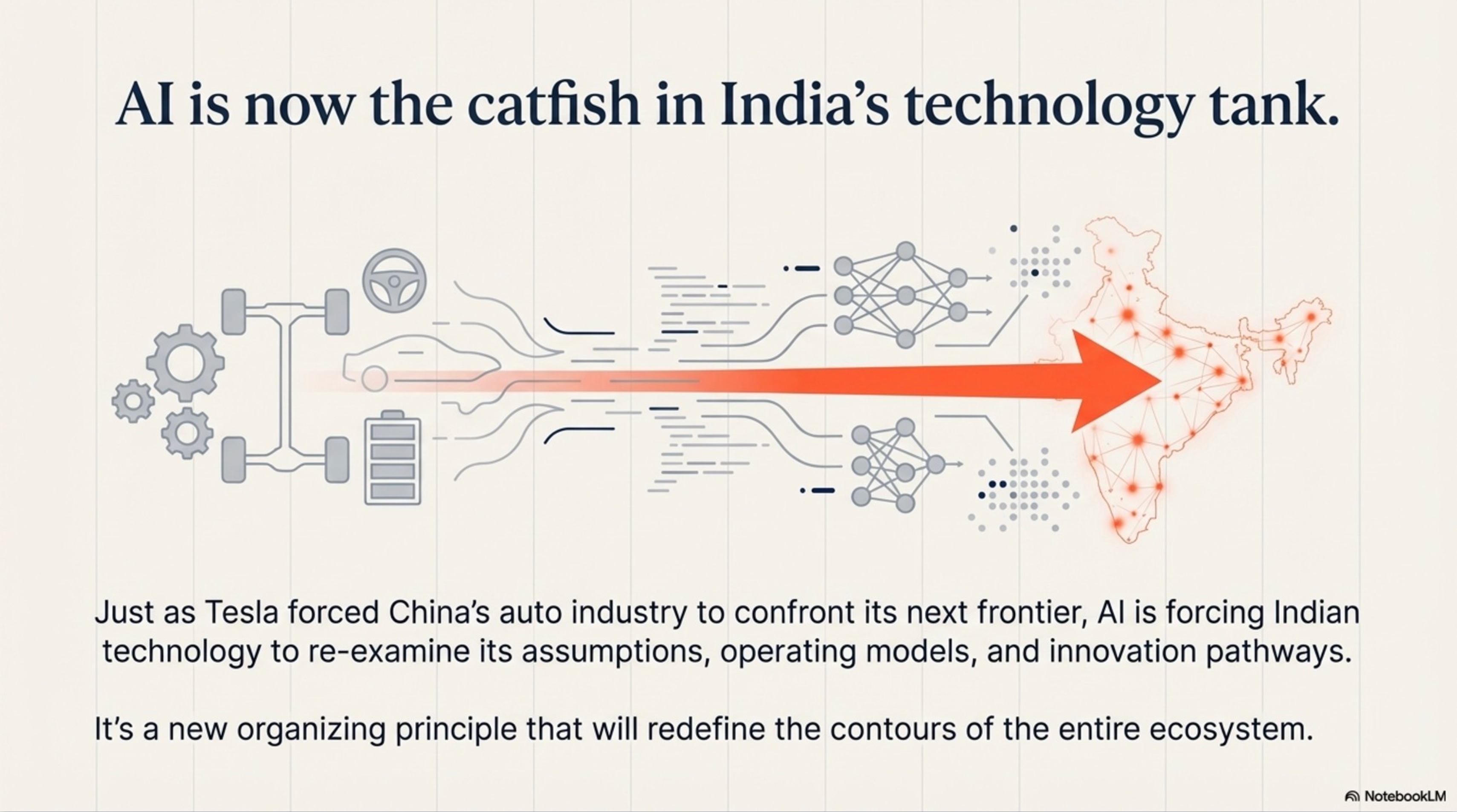
Source - Pranav Pai / 3one4 Capital
38. In praise of unfavourable conditions

39. A confluence of AI, robotics and physical goods

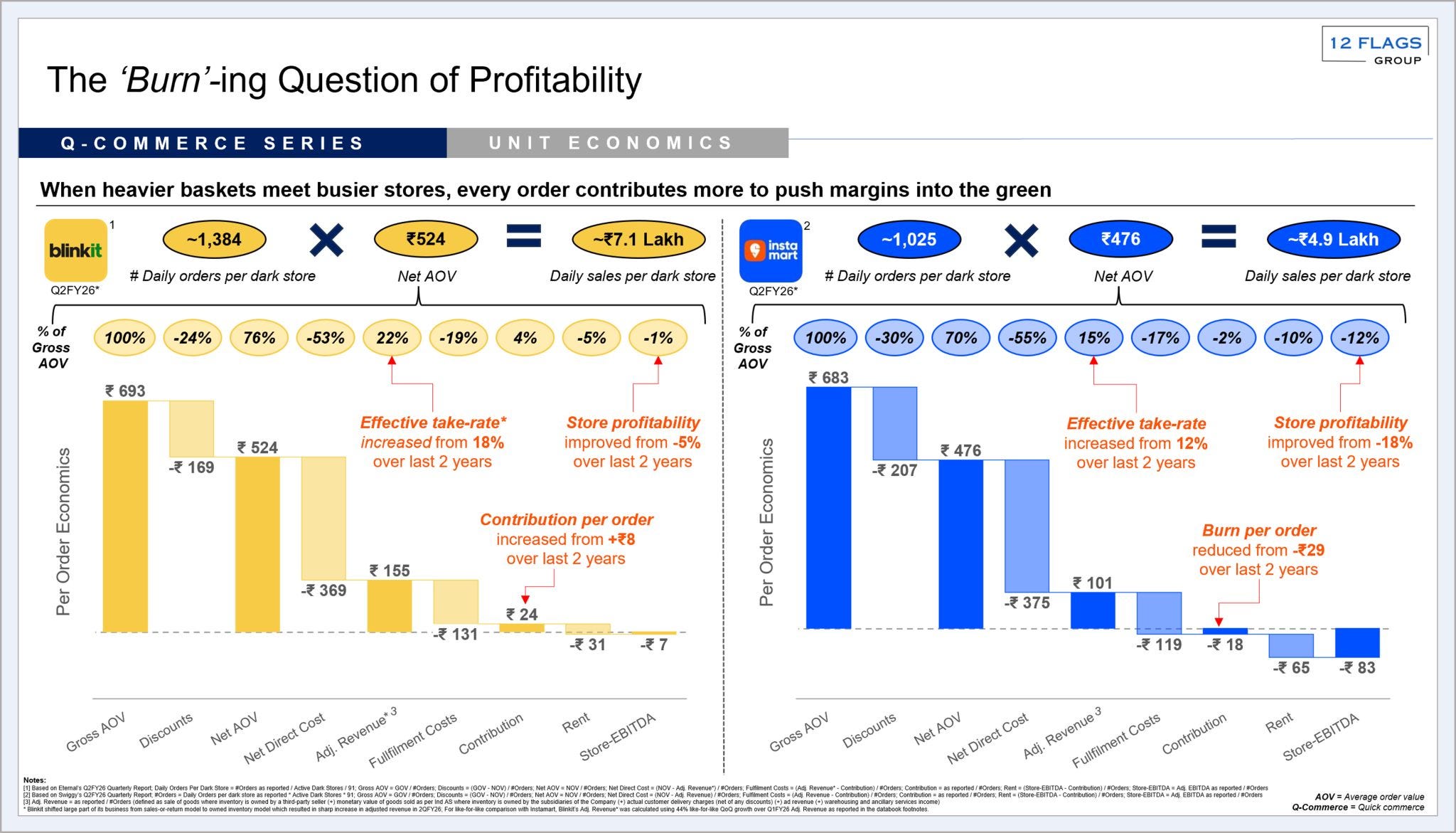
40. The “Burning” question of quick commerce profitability
41. The Slopification of the Feed
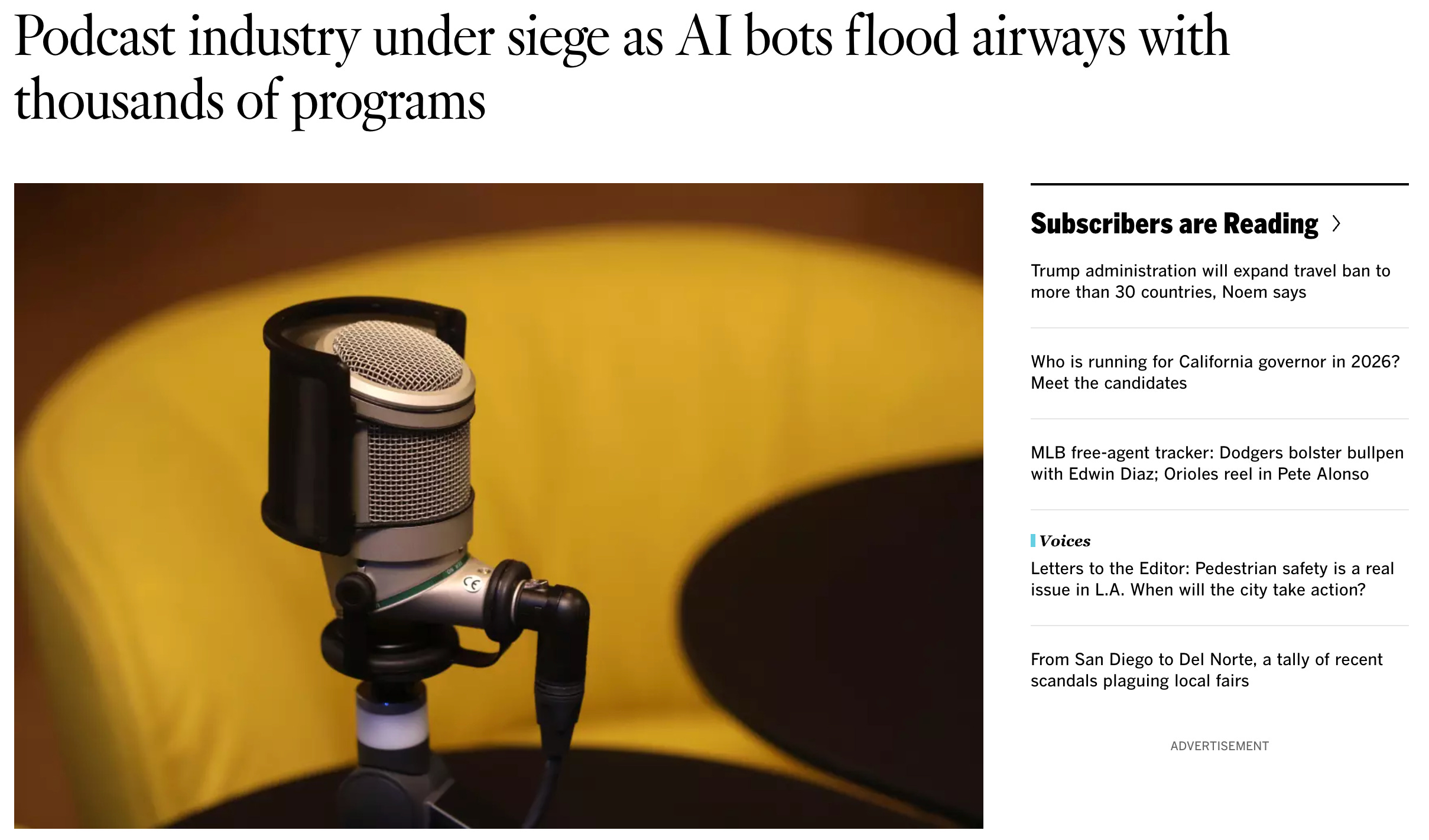
Per Nilesh Christopher -
“A Los Angeles company produced 200,000 AI podcast episodes, in certain weeks this output represented 1% of all podcasts published on the internet.
Instead of a studio searching for a specific “hit” podcast idea, it takes just $1 to produce an episode so that they can be profitable with just 25 people listening. They have build a roster of more than 100 AI personalities whose characteristics, voices and likenesses are crafted for podcast audiences.
They use a network of 180 AI agents that spots a trending personality and create two episodes, complete with promo art and a trailer. When Charlie Kirk was shot, its AI immediately created two shows called “Charlie Kirk Death” and “Charlie Kirk Manhunt” as a part of the biography series. Across Apple and Spotify, the company has now garnered 400,000 subscribers.
“Our content was coming up, really dominating the list of what people were searching for,” the CEO said.”
Another on what this looks like -
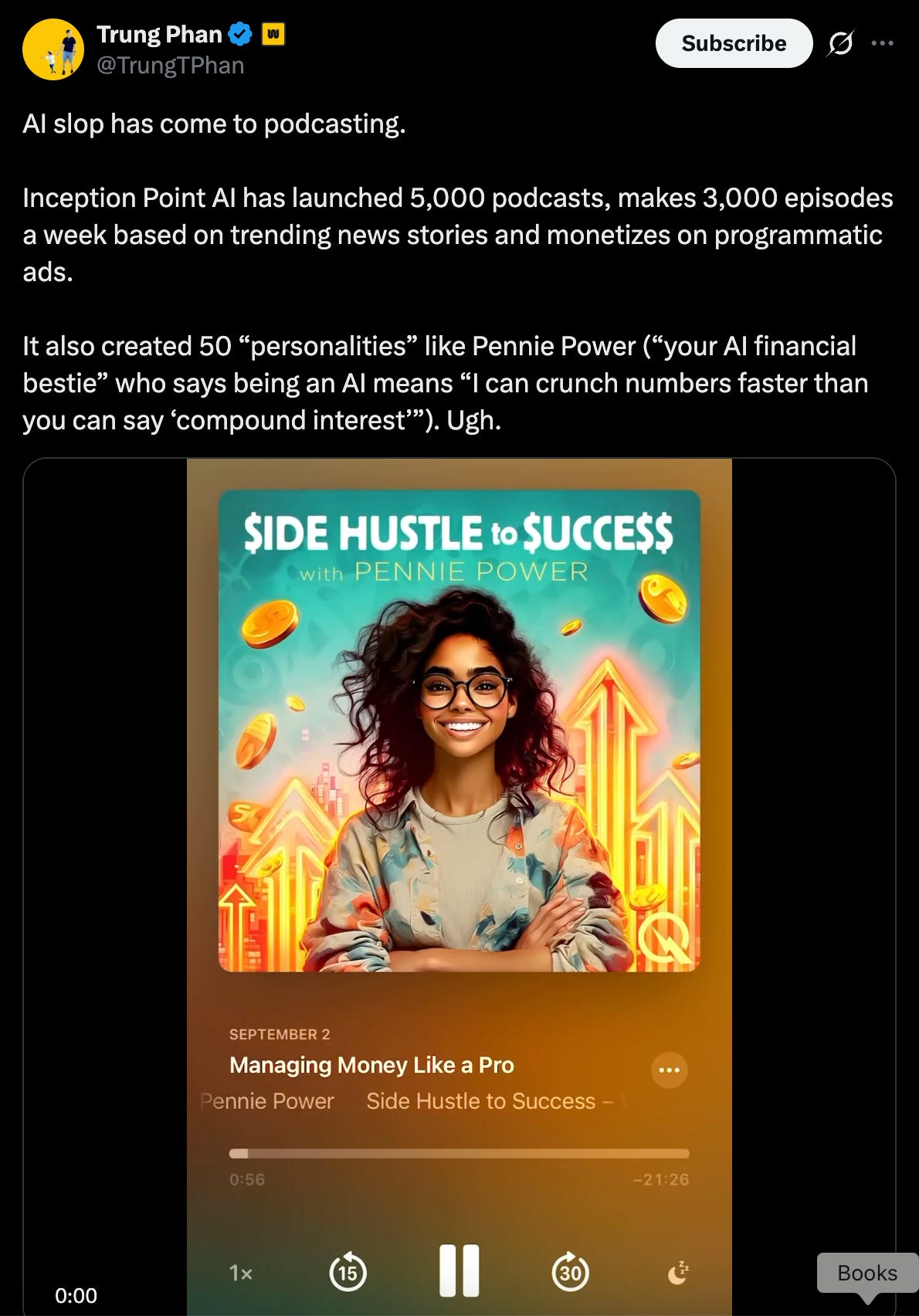
Also this on AI influencers -
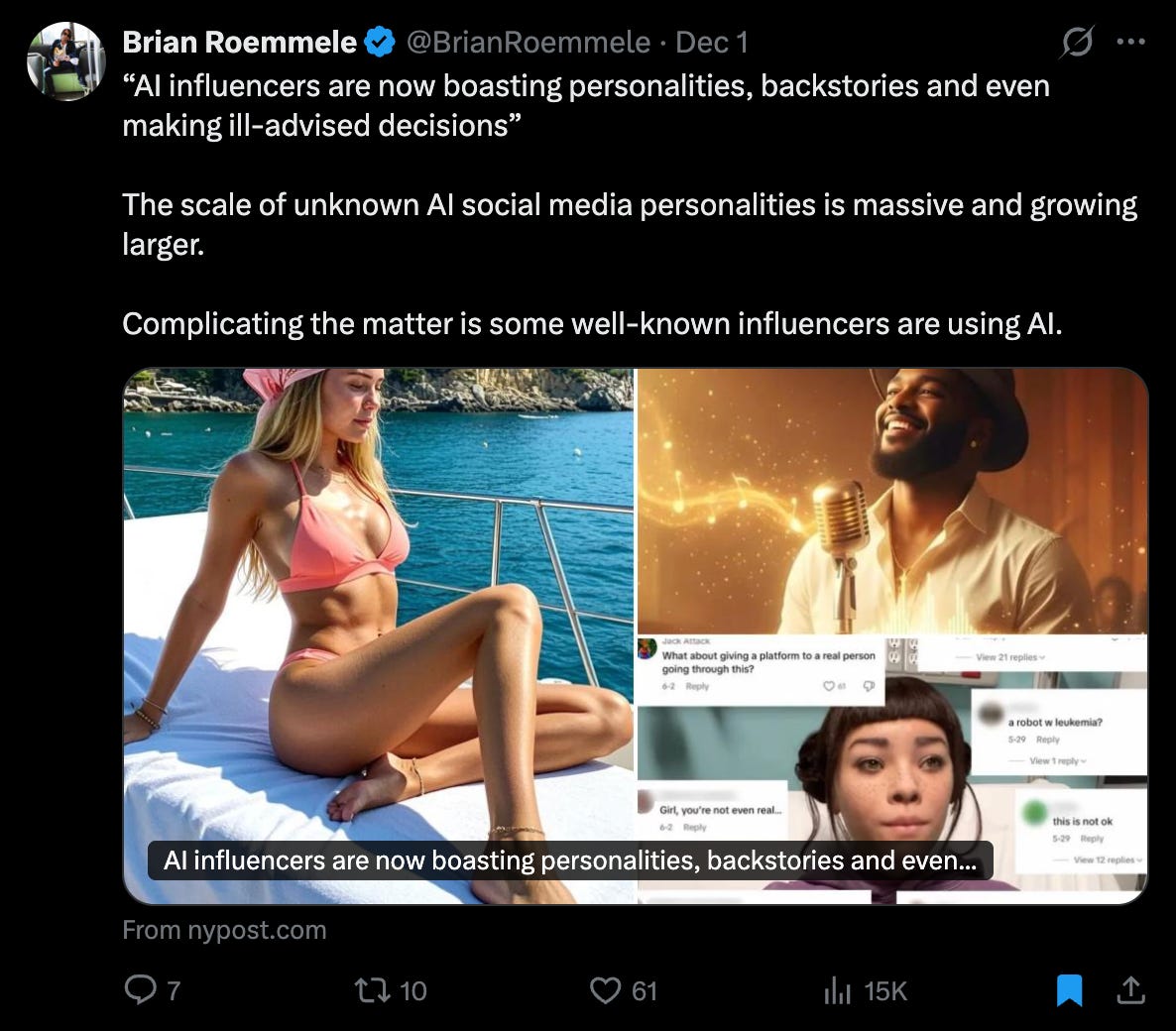
And this on AI singer success -

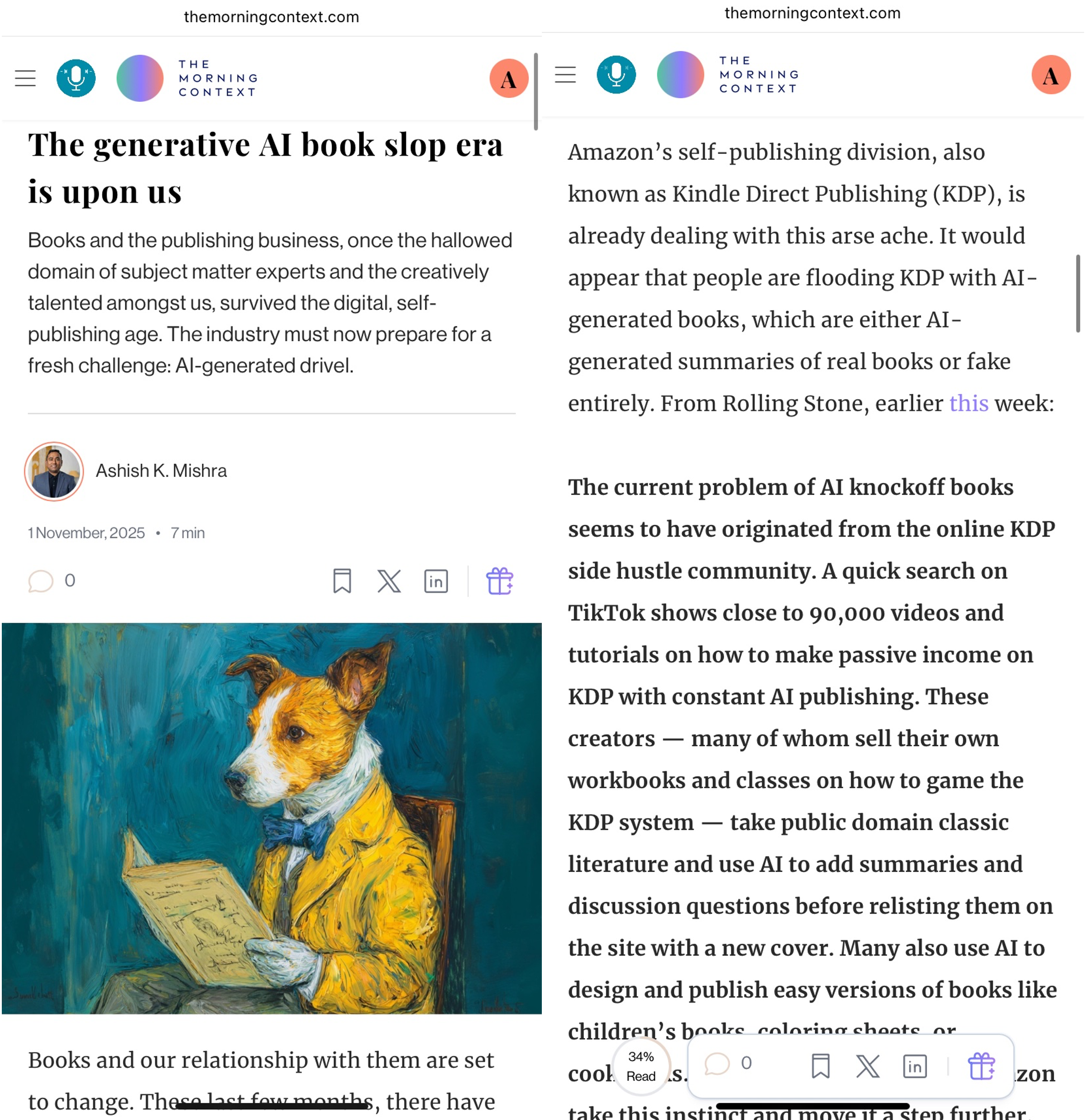
And this on AI generated writing making its way into books (h/t Ashish Mishra) -
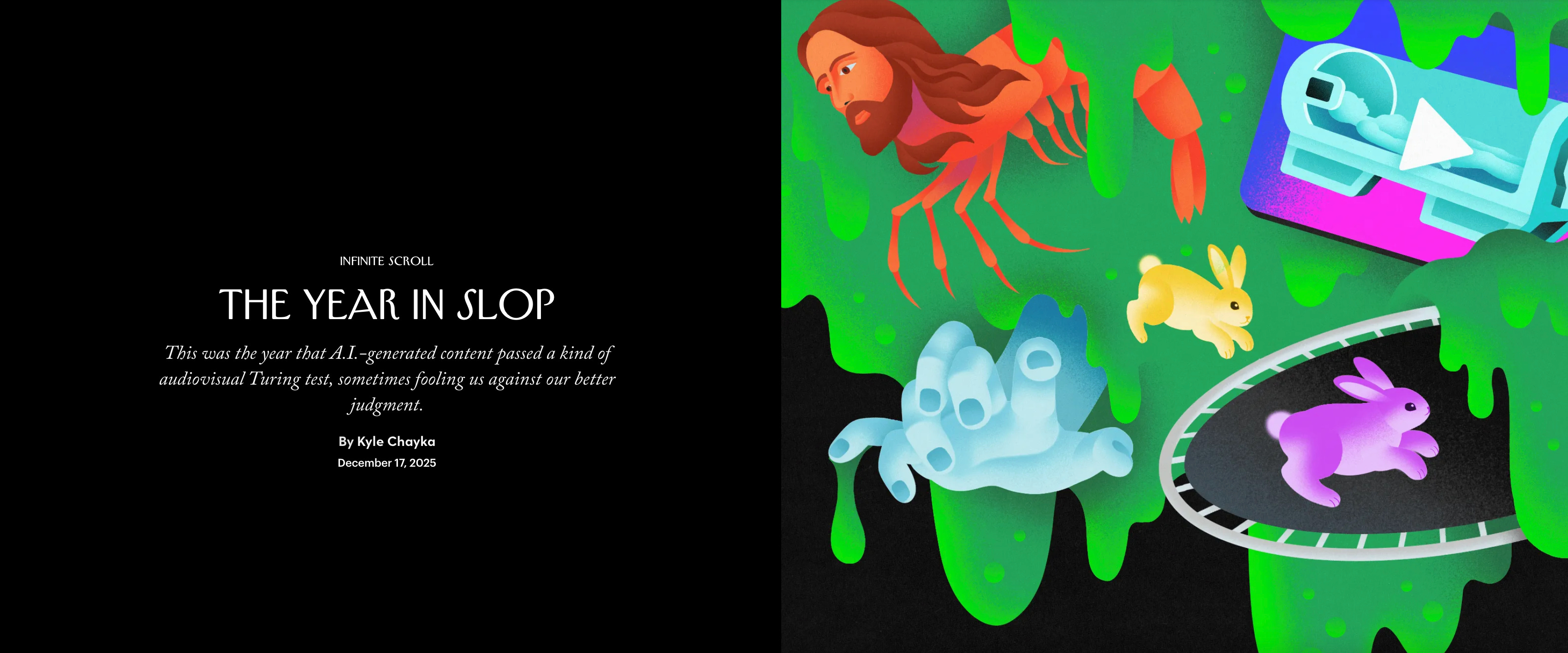
Bonus - check out the New Yorker’s 2025 retrospective on ‘The Year in Slop’ -
42. Instant noodles on Quick Commerce

Per Sanjeev Srivastav -
“Two Korean brands - Nongshim and Samyang - together control 24% of the entire instant noodles category on Blinkit, as per a report from Datum Intelligence.
Surprisingly, Korean noodles contribute to 34% of the total noodle sales across India’s top 30 cities !
Their penetration in Tier 2 markets like Dehradun (44%) & Ludhiana (41%) - the top 2 markets for them on Blinkit - seems counterintuitive to the notion that global food trends should move from metros to smaller towns. In fact, they move simultaneously.
The market leader - Maggi - commands almost 35% of the noodles category on the platform. However, just 5.4% of their sales comes from Korean variants. Leaders can be shaken too?”
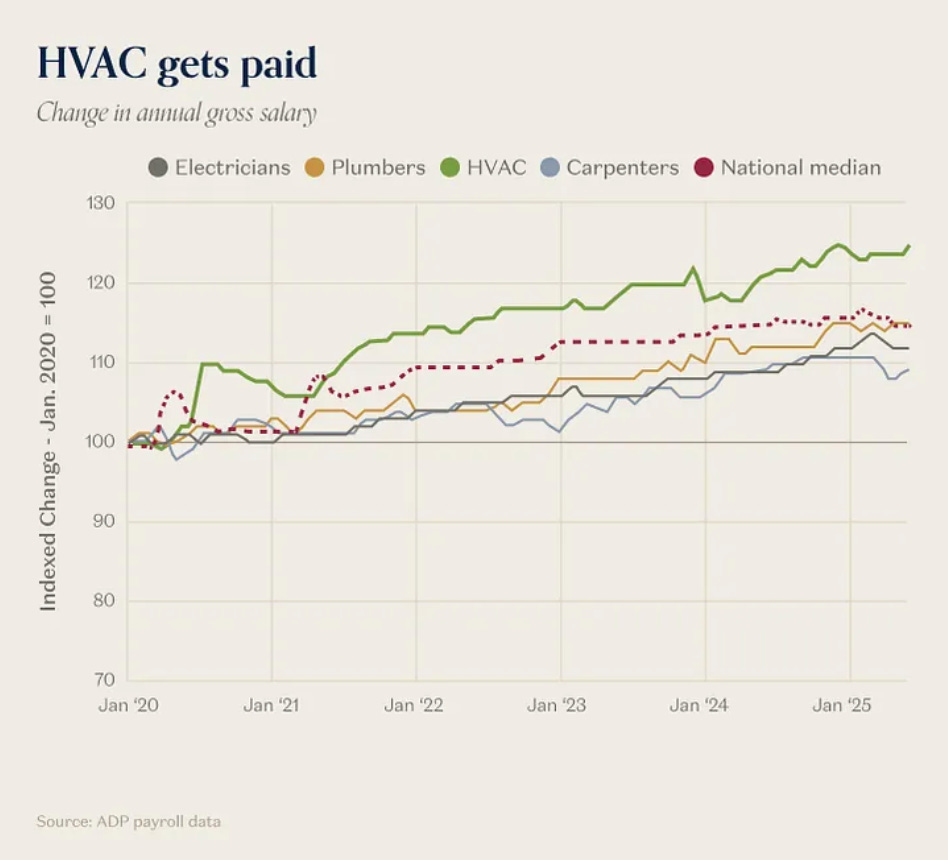
43. “Why AC is cheap, but AC repair is a luxury” - Alex Danco
“If you live in the United States today, and you accidentally knock a hole in your wall, it’s probably cheaper to buy a flatscreen TV and stick it in front of the hole, compared to hiring a handyman to fix your drywall. (Source: Marc Andreessen.) This seems insane; why?
Well, weird things happen to economies when you have huge bursts of productivity that are concentrated in one industry. Obviously, it’s great for that industry, because when the cost of something falls while its quality rises, we usually find a way to consume way more of that thing - creating a huge number of new jobs and new opportunities in this newly productive area.
But there’s an interesting spillover effect. The more jobs and opportunities created by the productivity boom, the more wages increase in other industries, who at the end of the day all have to compete in the same labor market. If you can make $30 an hour as a digital freelance marketer (a job that did not exist a generation ago), then you won’t accept less than that from working in food service. And if you can make $150 an hour installing HVAC for data centers, you’re not going to accept less from doing home AC service.
This is a funny juxtaposition. Each of these phenomena have a name: there’s Jevons Paradox, which means, “We’ll spend more on what gets more productive”, and there’s the Baumol Effect, which means, “We’ll spend more on what doesn’t get more productive.” And both of them are top of mind right now, as we watch in awe at what is happening with AI Capex spend.”
Read the rest of the piece here
44. Substack Power Law
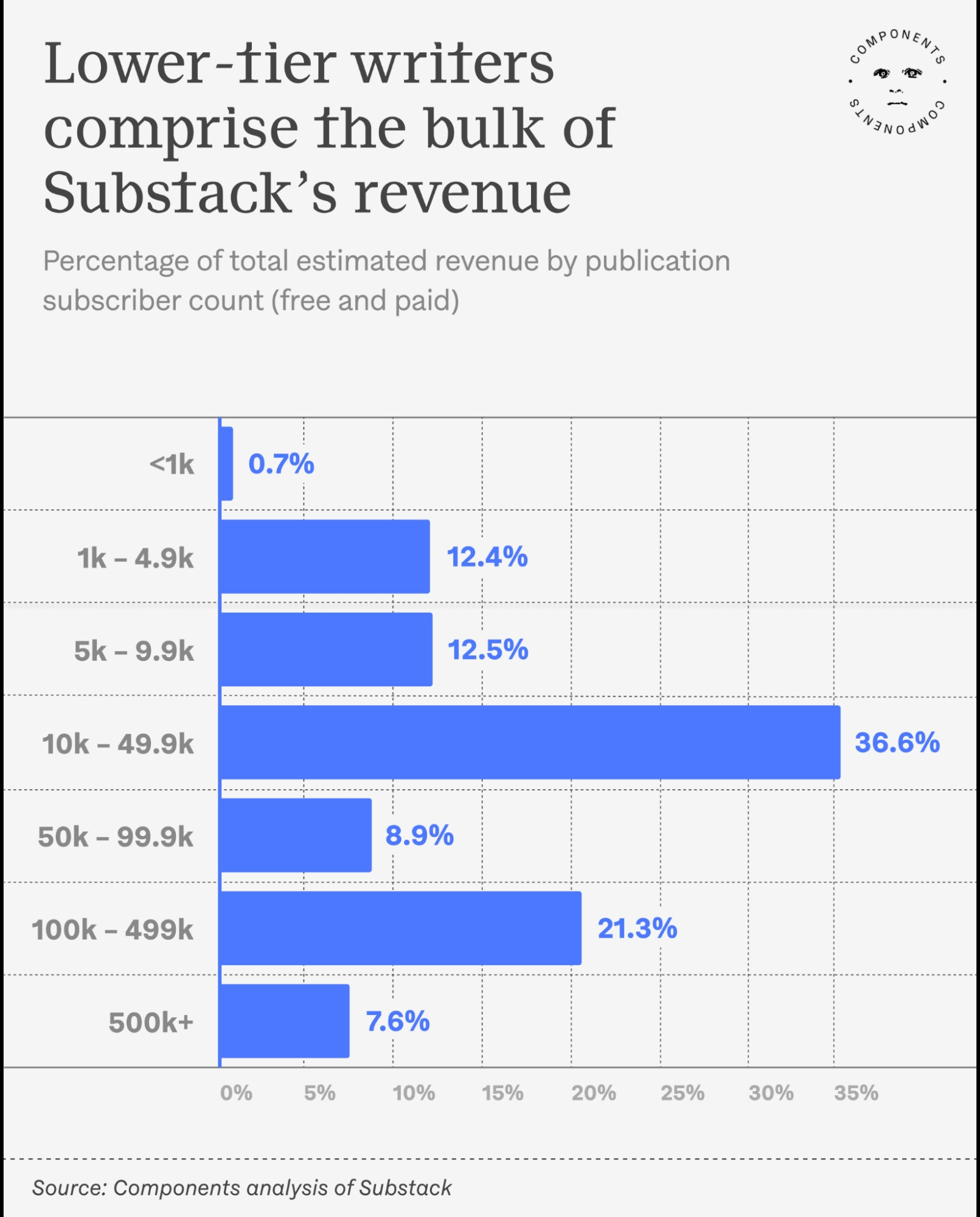
Per Gurwinder Bhogal -
“Unlike other platforms, Substack has avoided the usual power law effects in which the biggest accounts generate the lion’s share of attention & money. It’s a welcome sign Substack is not optimizing for mere attention but for genuine interest.”
45. “‘Affluent India’ comprises ~60mn consumers, and is growing by double digits”
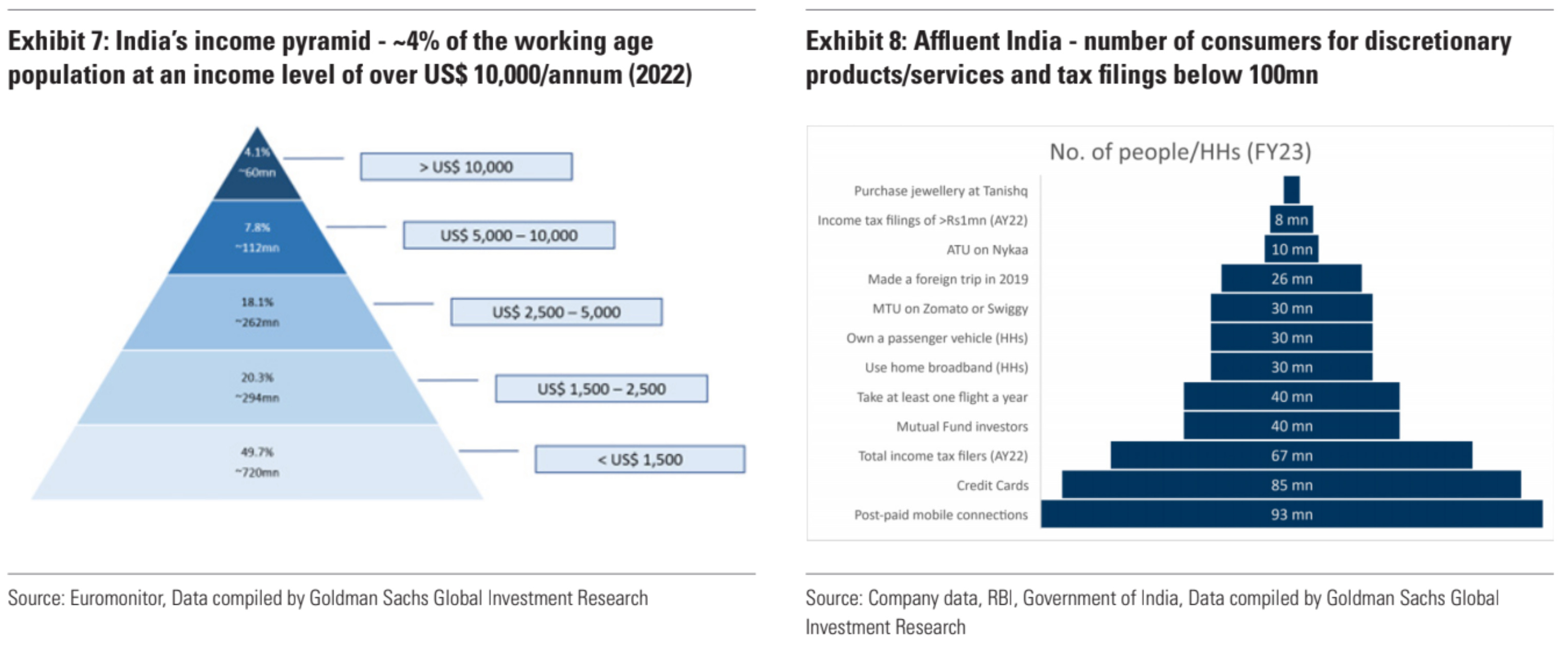
Source - ‘The Rise of Affluent India’ by Goldman Sachs
46. McDonalds India - thinking of chicken
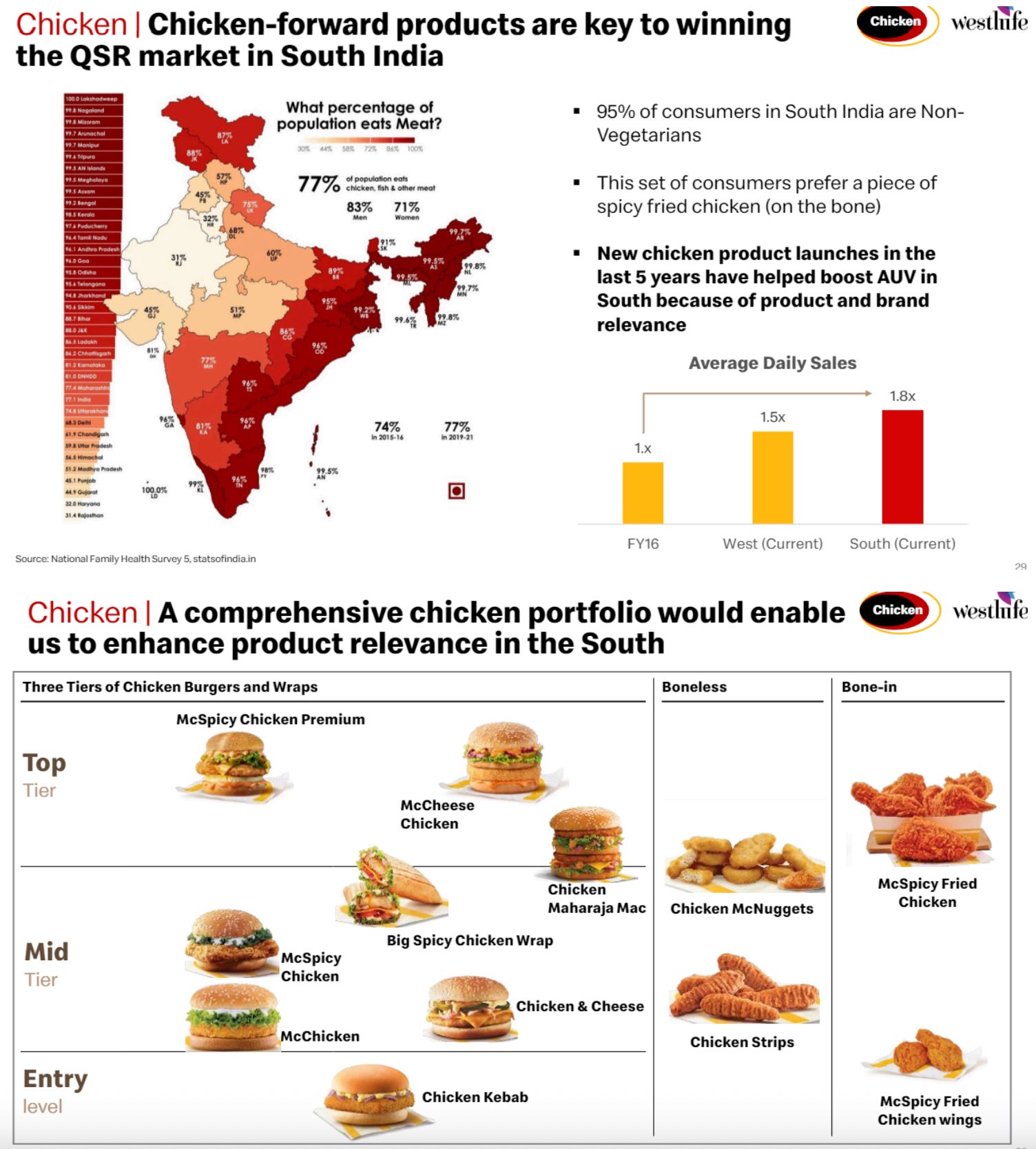
Source - India QSR Memo by Raas Partners
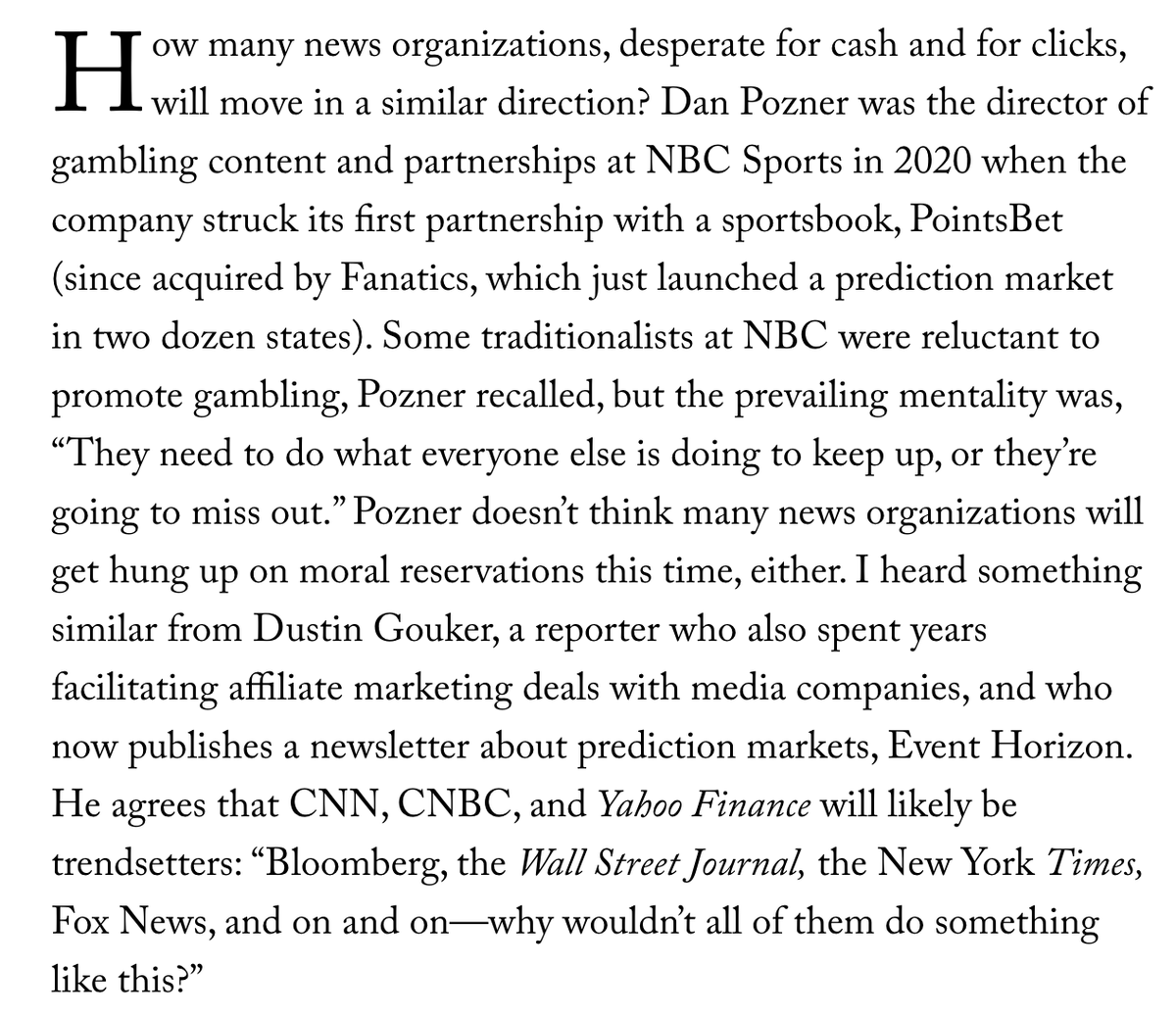
47. The arrival of prediction markets into mainstream social/financial discourse
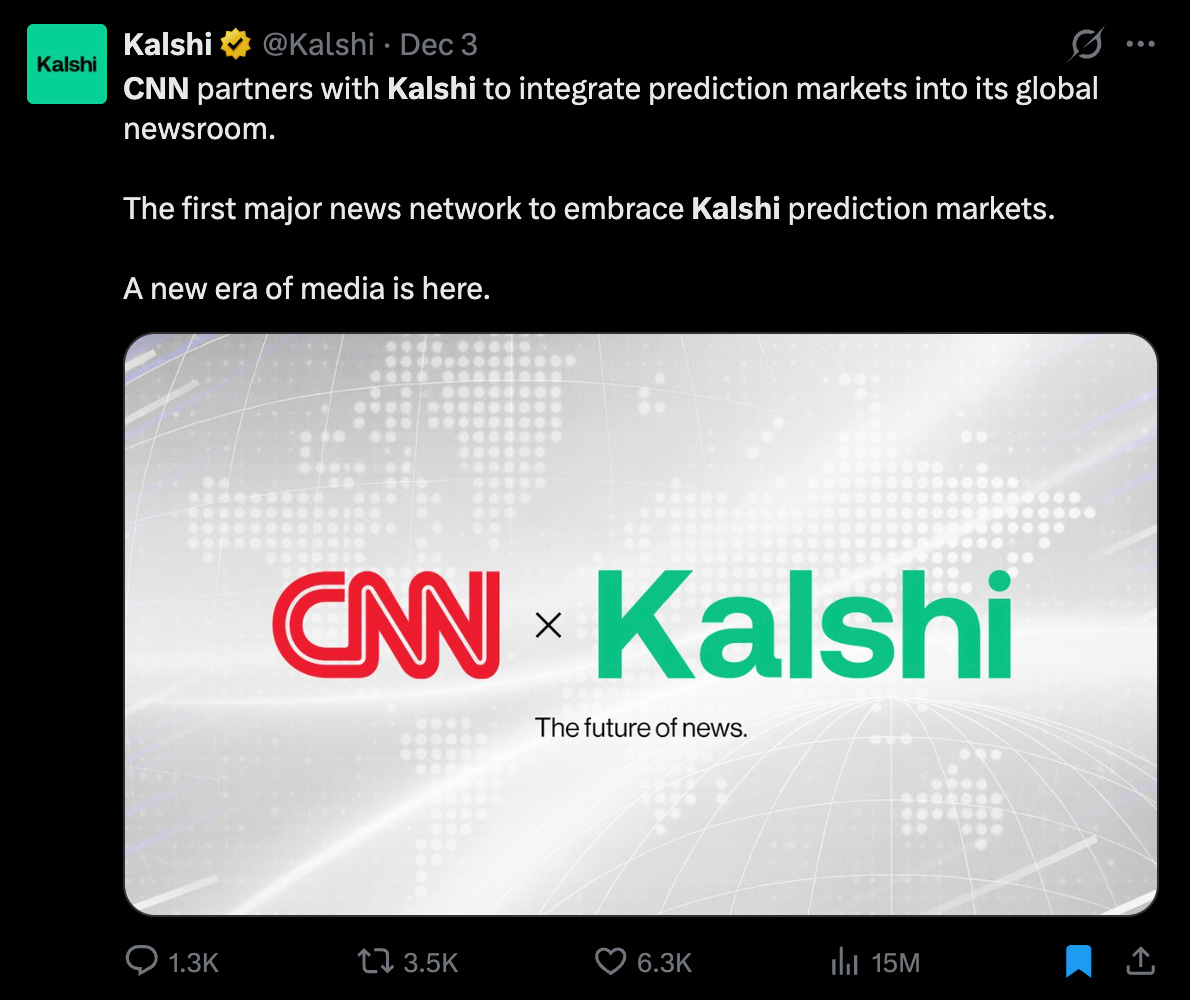
Plus this New Yorker piece from Danny Funt -
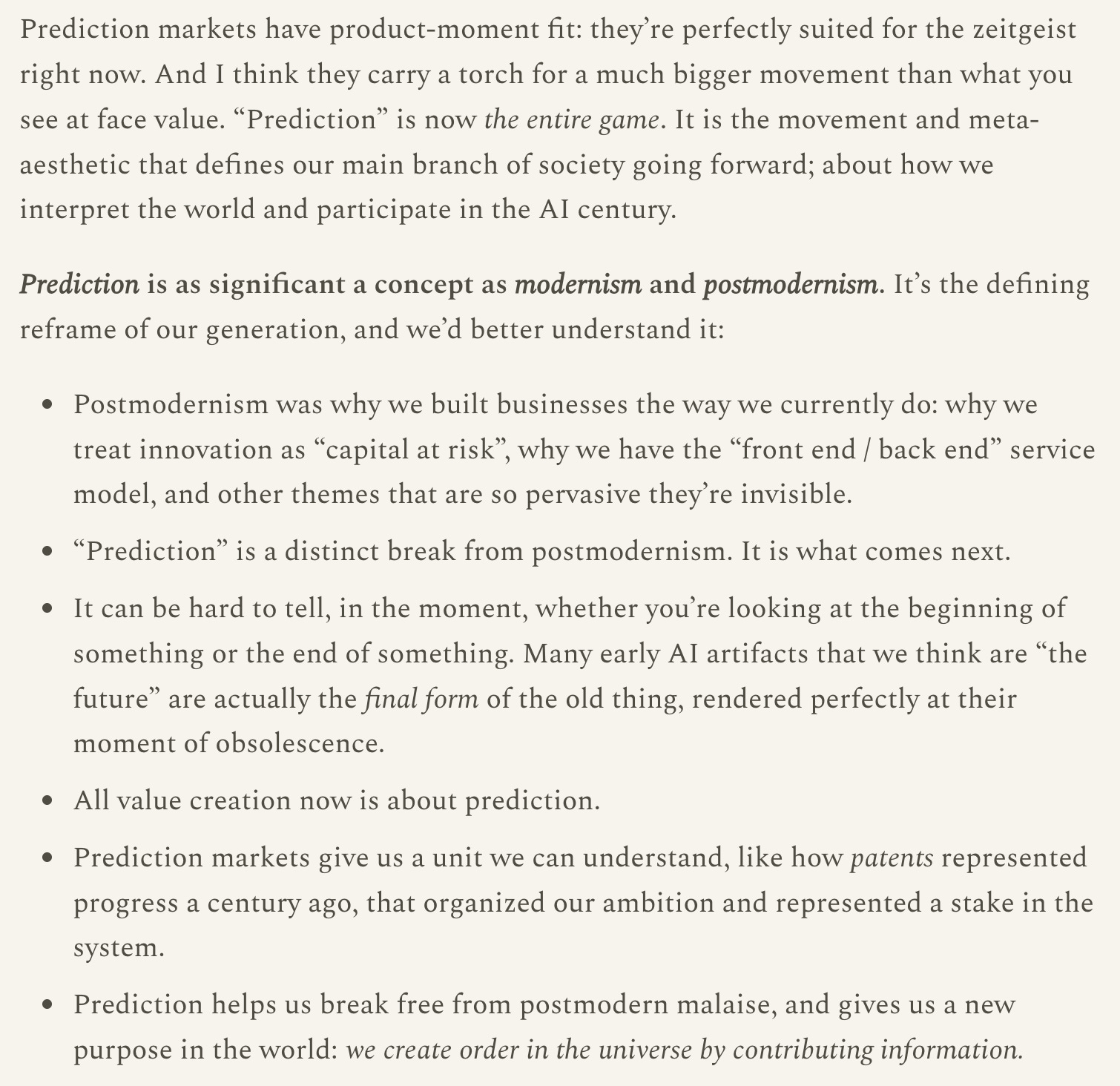
And this awesome piece from Alex Danco on ‘Prediction: the Successor to Postmodernism’ -
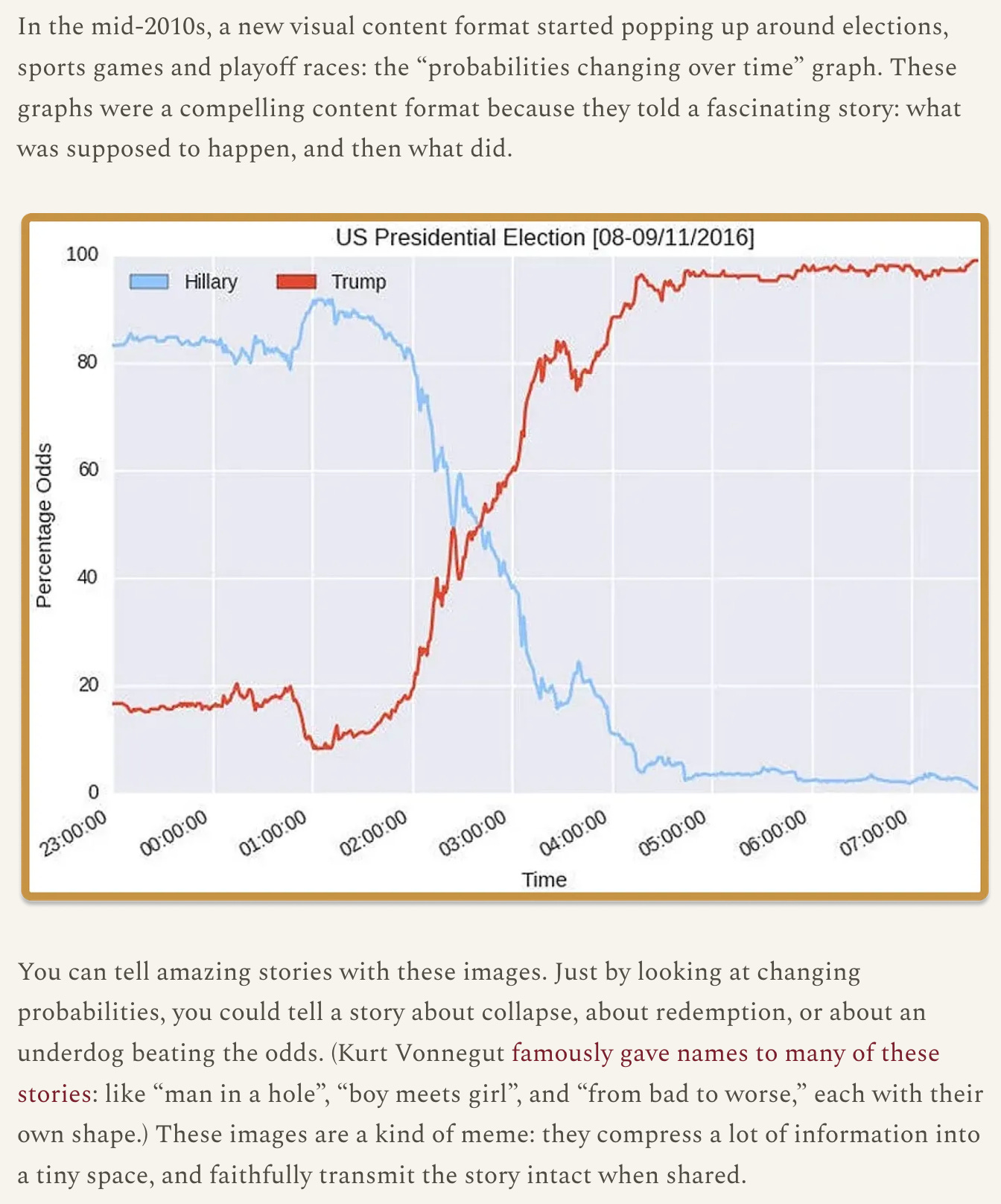
And this other piece from Alex Danco on Prediction Path Screenshots as a New Kind of Meme
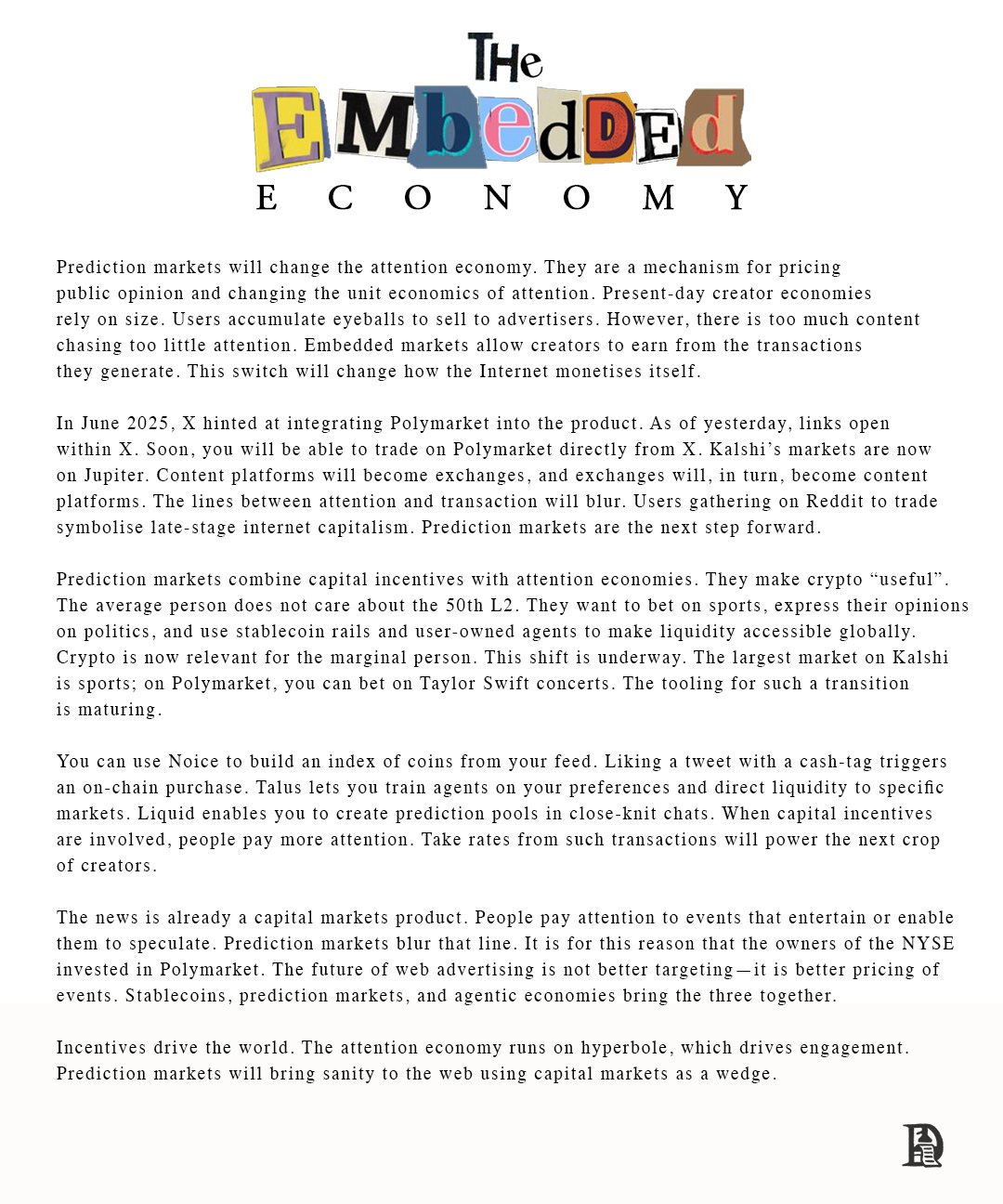
And this last piece from Joel John on how “Prediction markets, stablecoins and agentic finance will blend to change how the web monetises itself.”
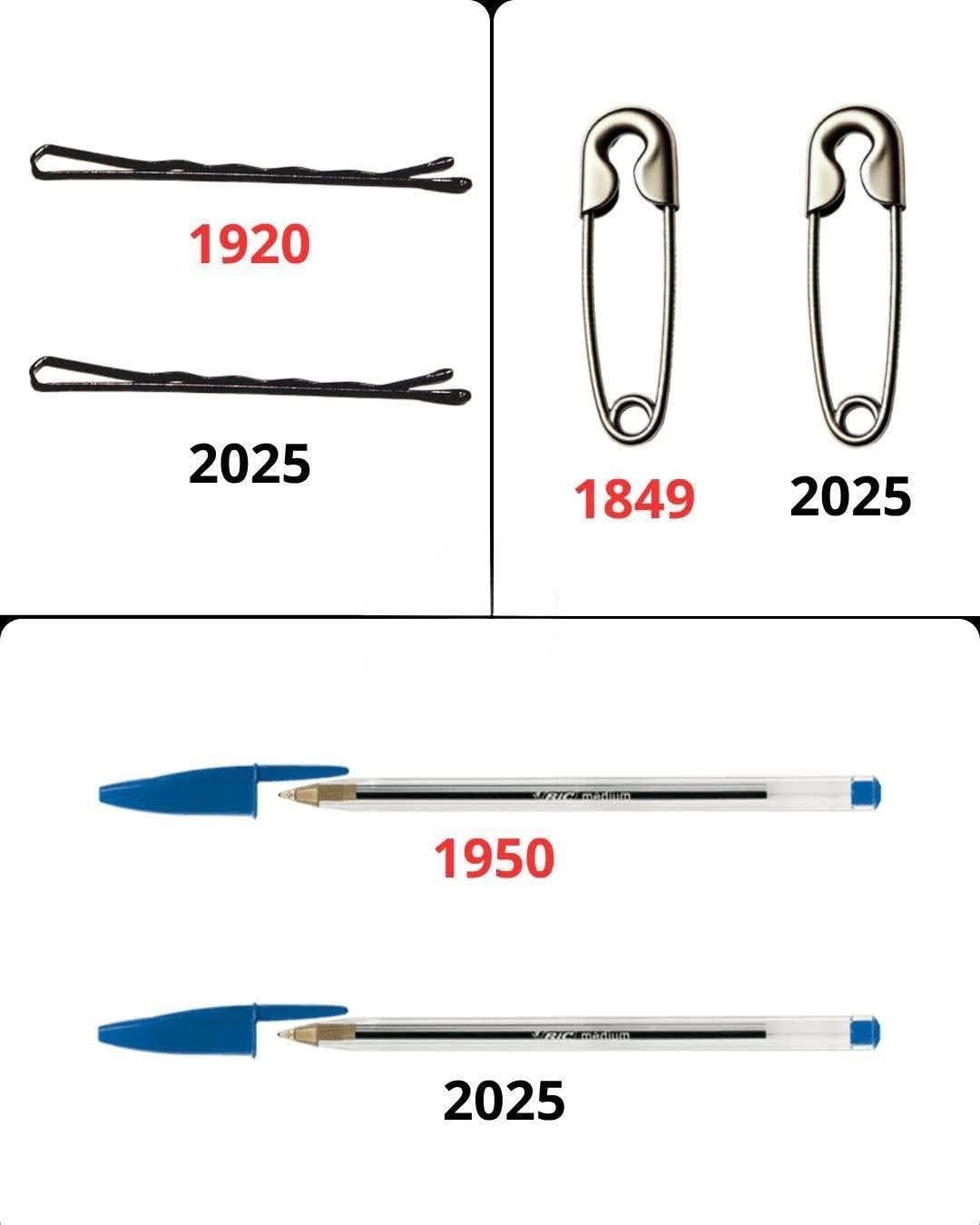
48. “What other tech has reached its final form?”
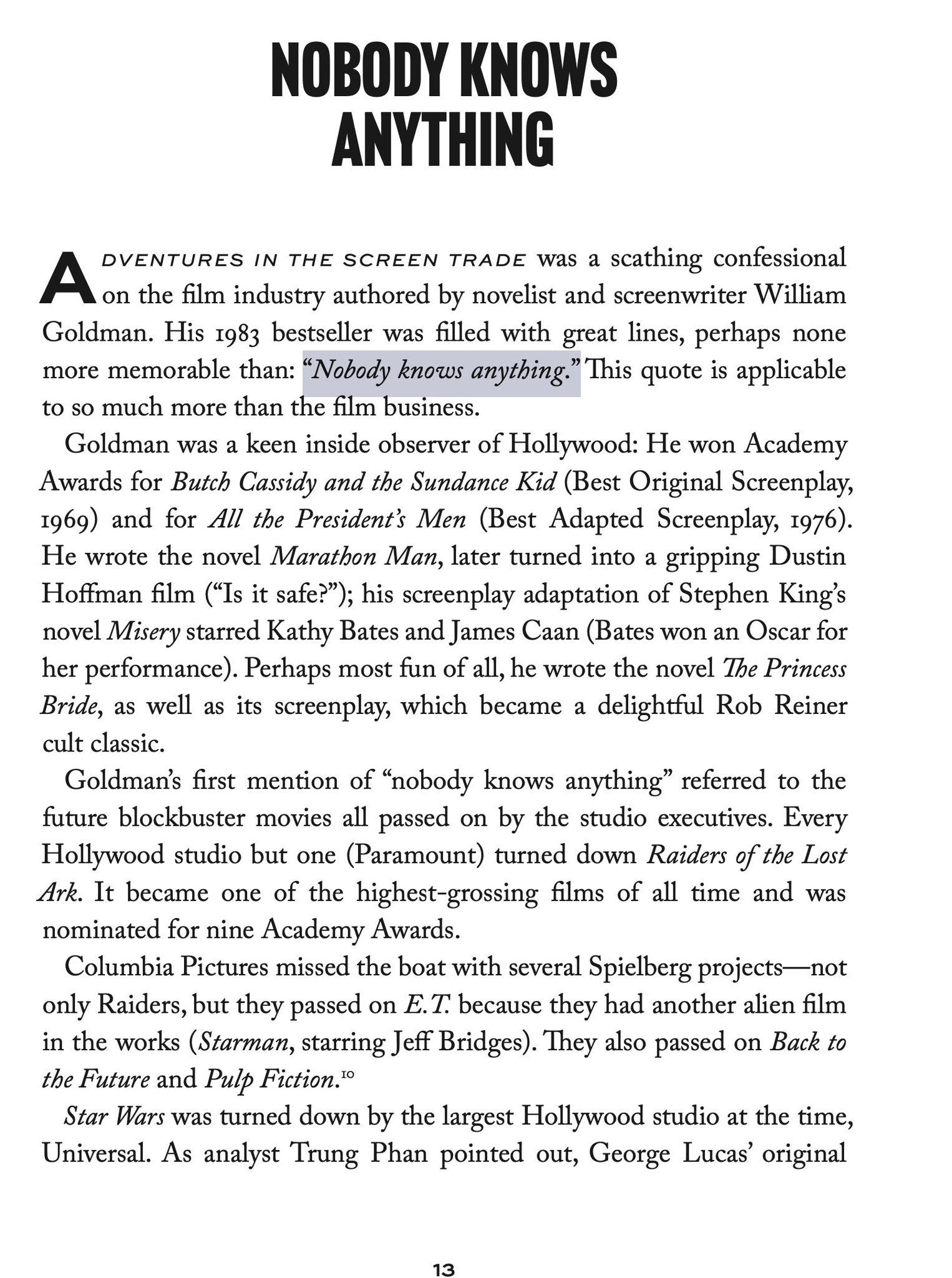
49. “Nobody knows anything”
Per Barry Ritholz -
“One of the greatest aphorisms of all time comes from William Goldman.
“Nobody knows anything.”
Professionals in the film, music, TV, stock markets & economics reveal this everyday; they reiterate it with every prediction...@tferris
Chapter Two, “How NOT to Invest”:”
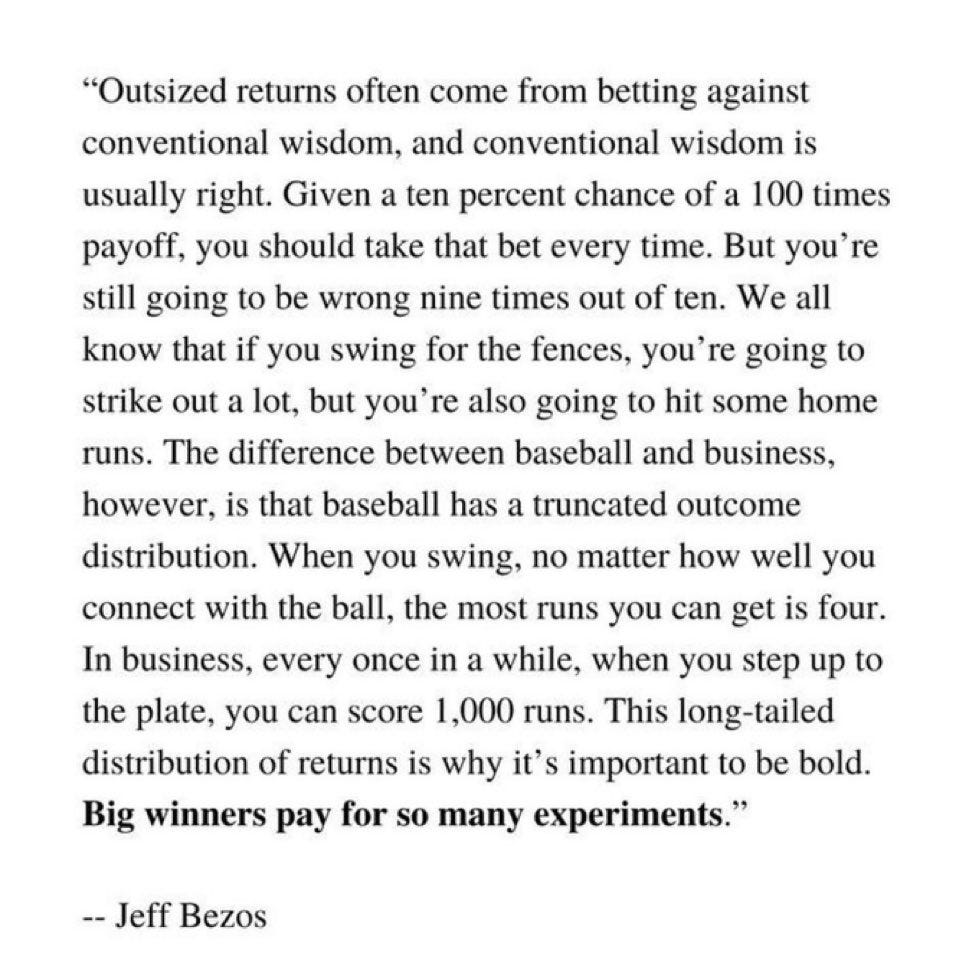
50. Bezos on swinging for the fences
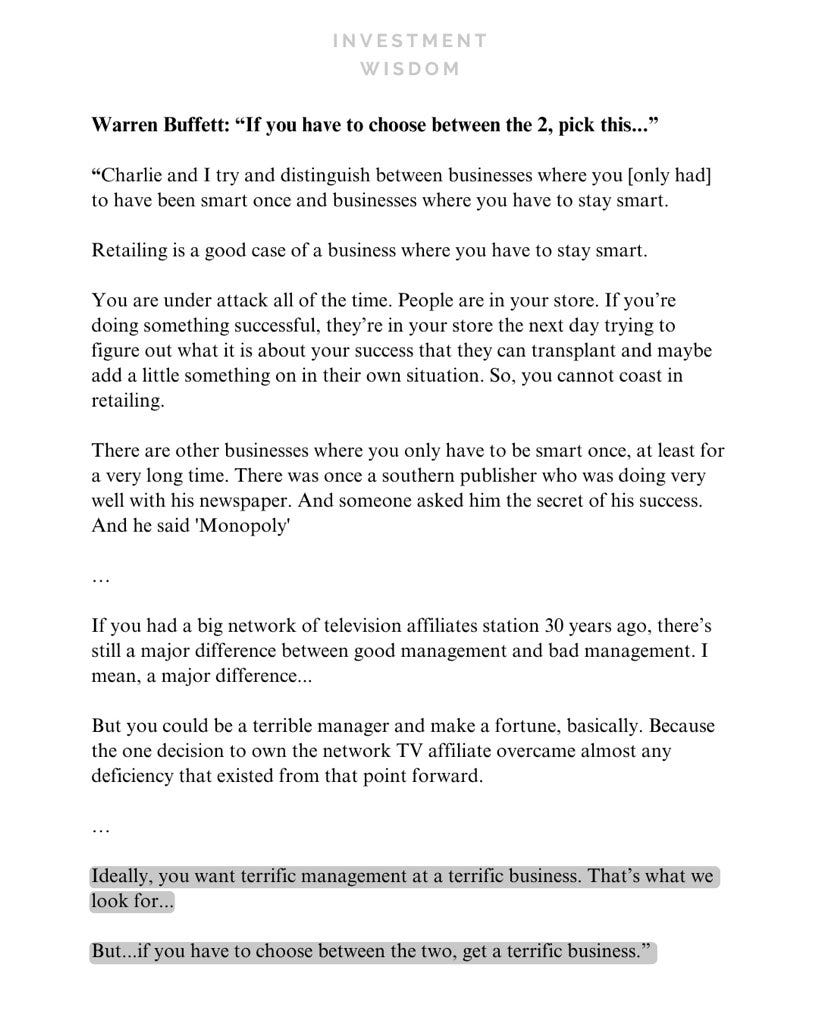
51. Smart once vs Stay smart
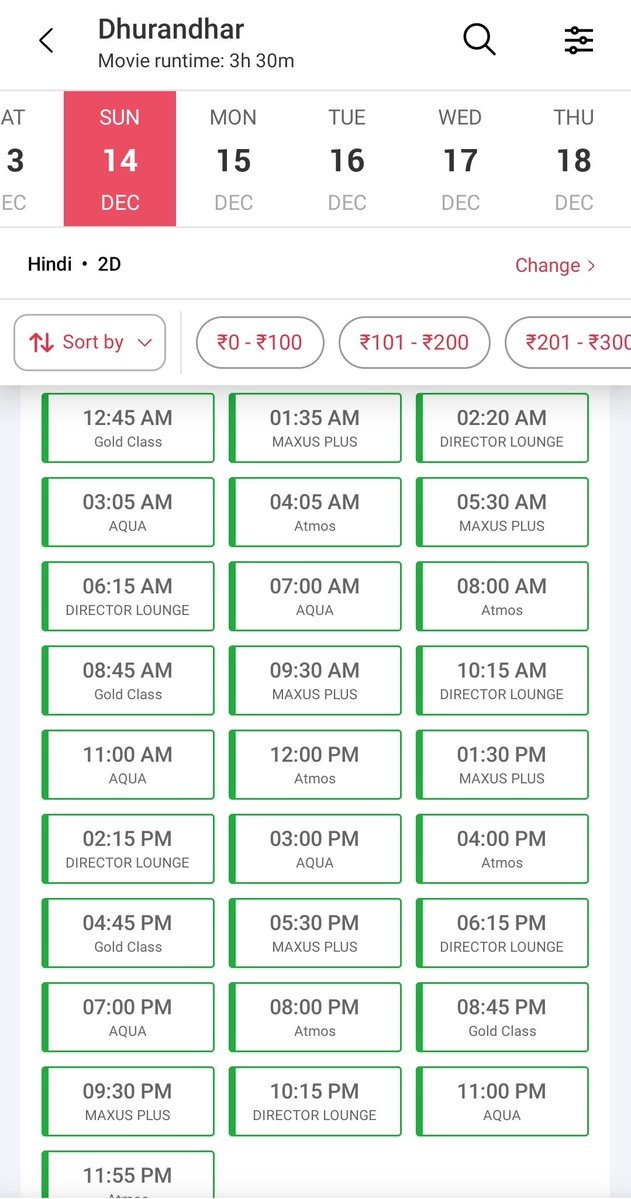
52. The indomitability of Dhurandhar
Per Palash Kulkarni -
“Look at those show timings. A three and a half hour film. Dhurandhar is a legit culture-shifting storm.”
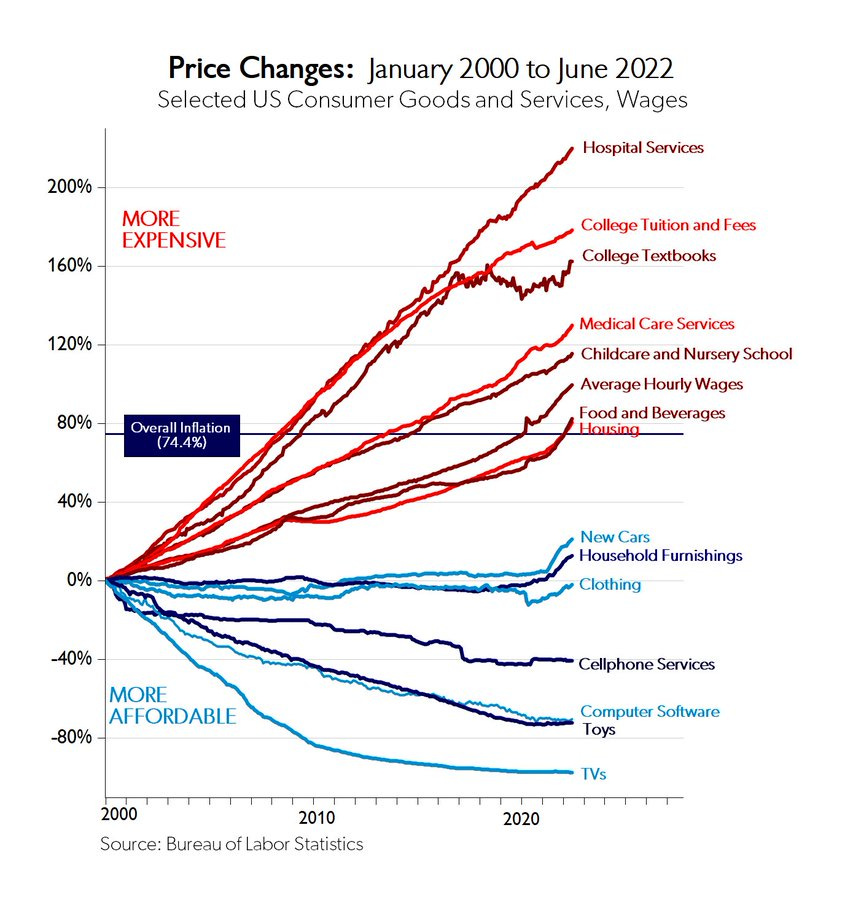
53. “The optimists and pessimists both have a point…”
Per Peter Hague -
“The optimists and pessimists both have a point, to an extent. What I keep coming back to is this chart.
Western societies have profoundly buggered up the supply of critical goods and services, whilst at the same time producing a technological cornucopia.
Trick is to make the red stuff behave more like the blue stuff. This is both a technological and a political problem.”
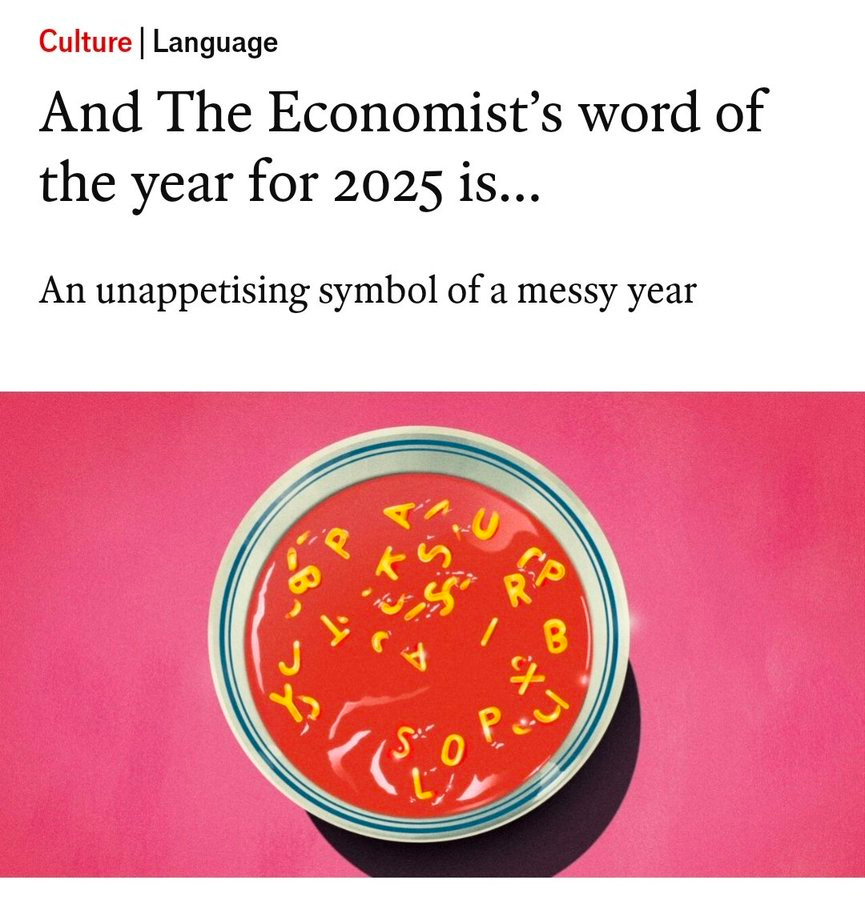
54. The Economist’s word of the year
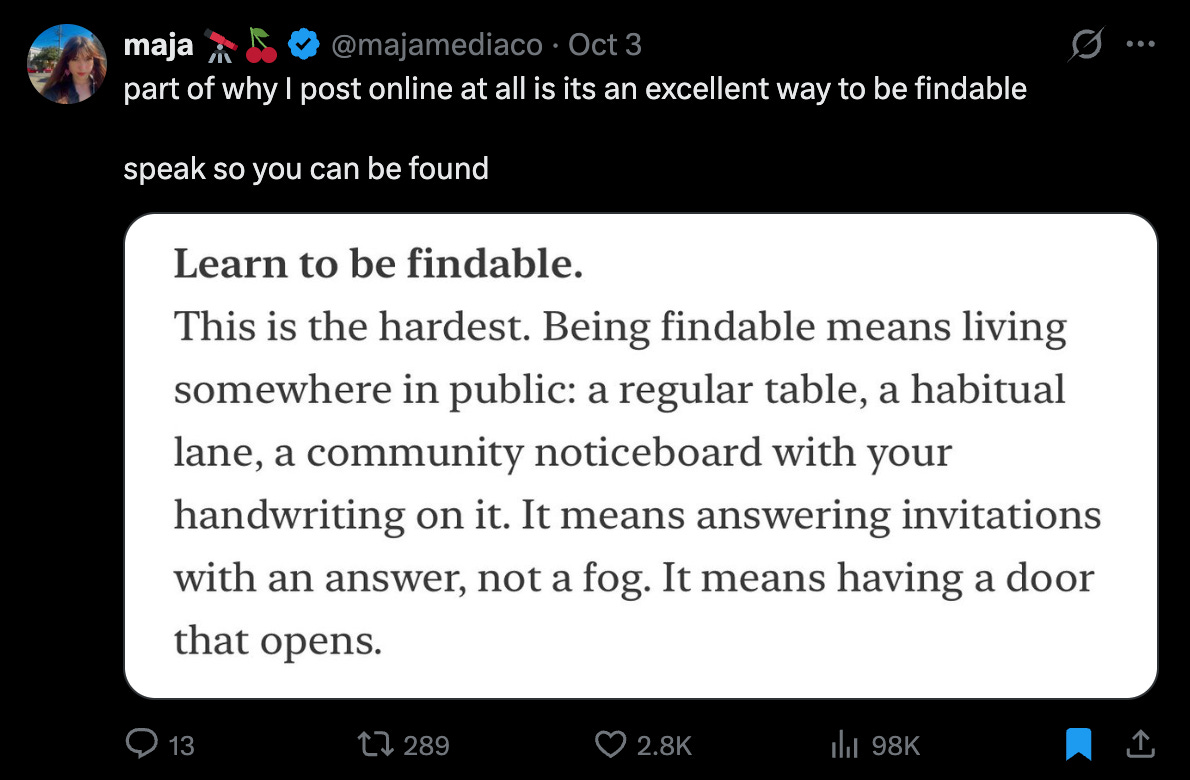
55. Being ‘findable’
56. The architectural “flattening” of JP Nagar
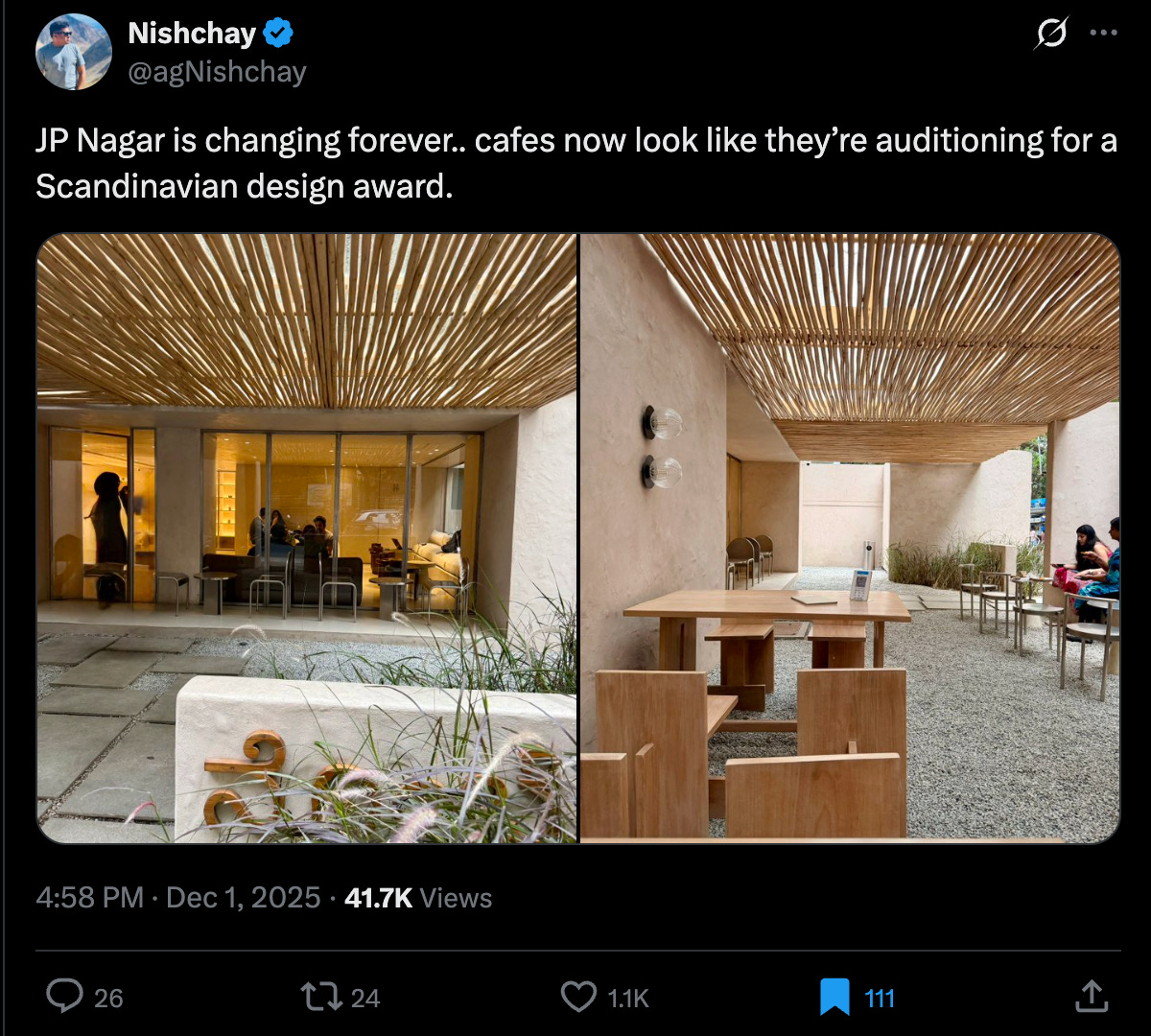
Bonus - this piece from David Perell from a few years ago that explores why this is happening.
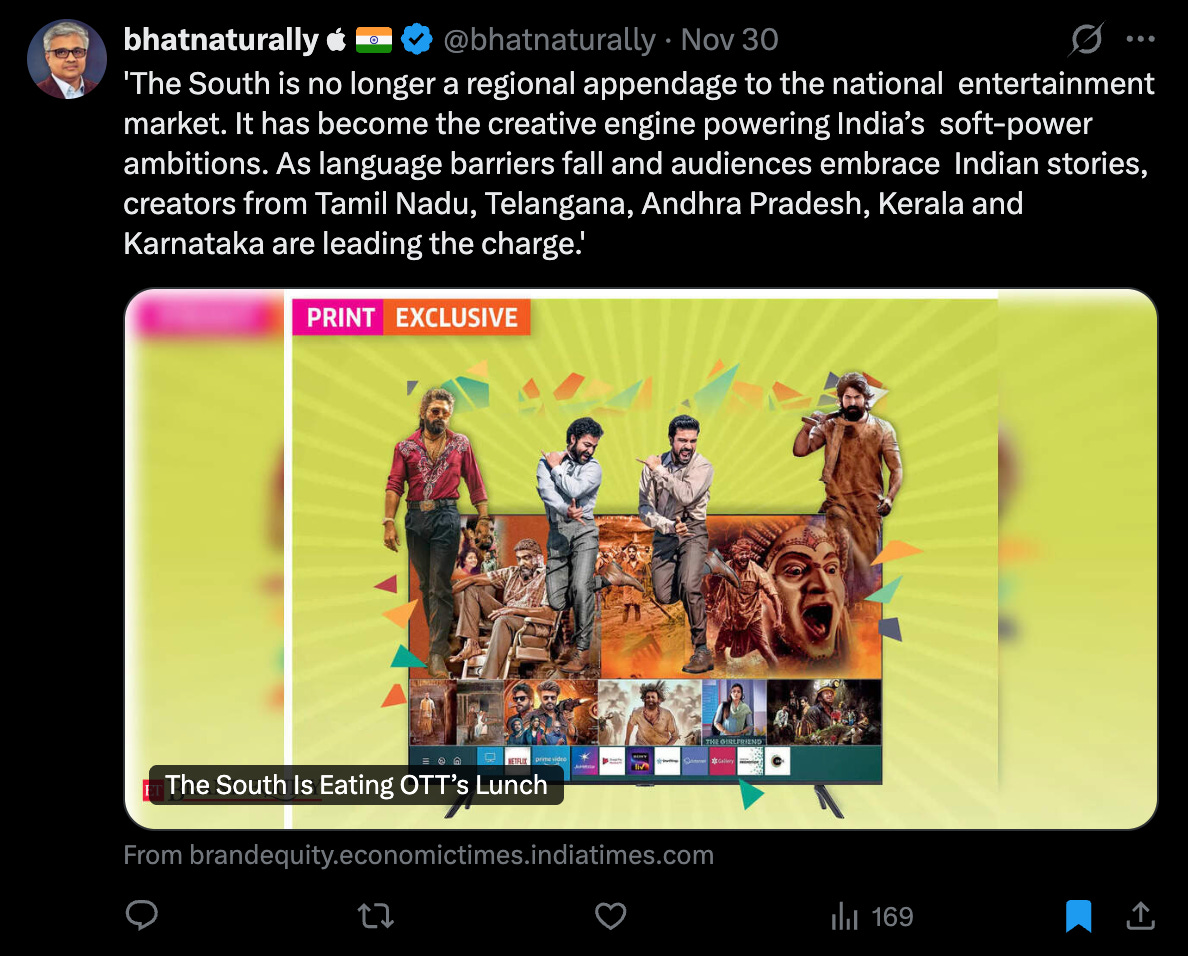
57. India’s South as its storehouse of soft power
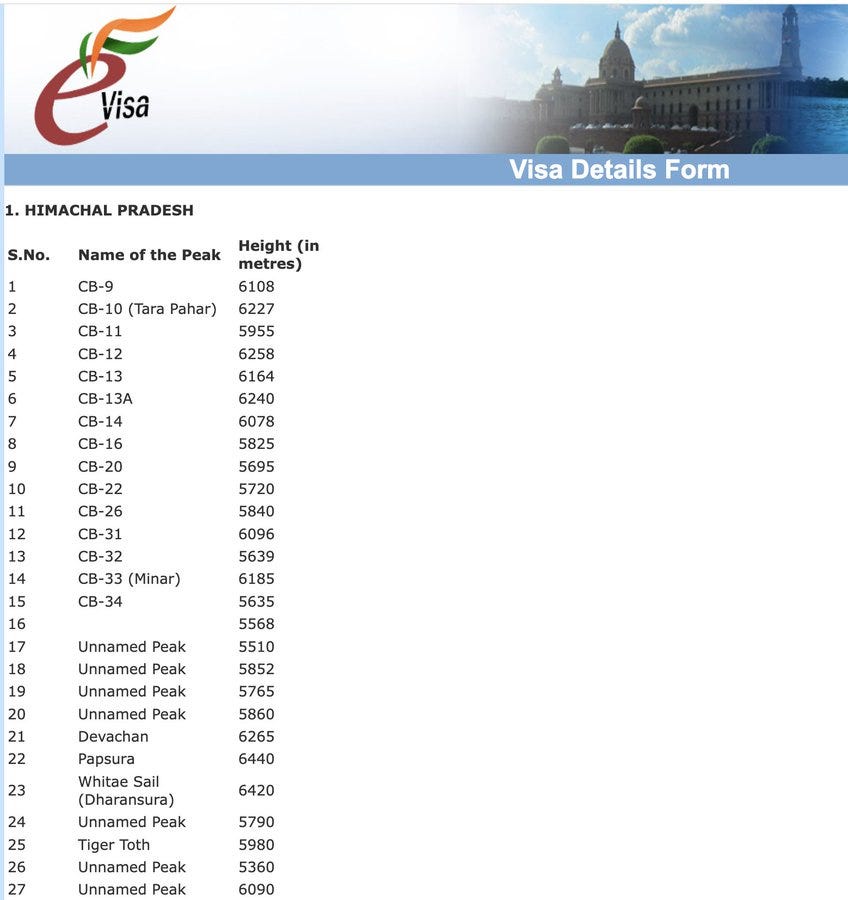
58. The absurdity of applying for an Indian e-visa
Per Raymond Russell -
“(1) I love India
(2) Anybody who applies for an e-visa to India knows the website is always comically, profoundly, embarrassingly broken
It looks like it was written in 2003, kicks you out randomly without saving your work, won’t charge your credit card until your nineteenth attempt
But this is a new one—halfway through the business visa application, it displays a list of the tallest peaks in each Indian state??
Come on folks, I’m just trying to invest in your country!”
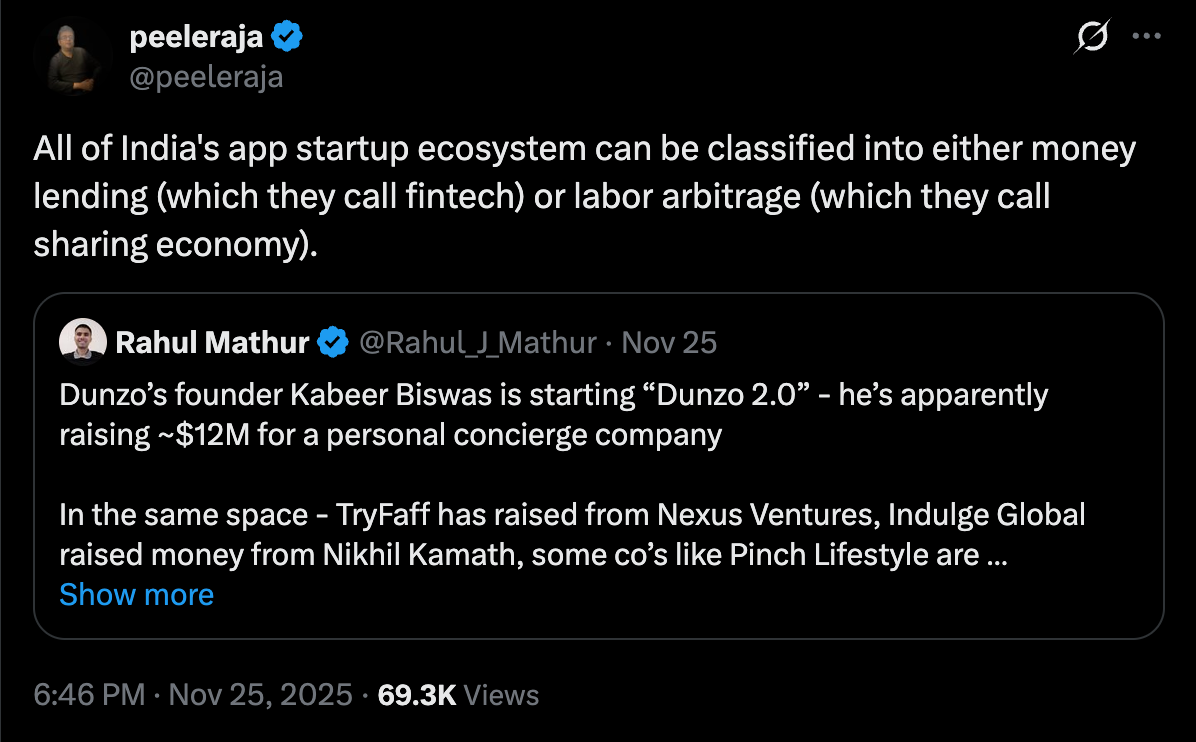
59. A reasonably spicy take
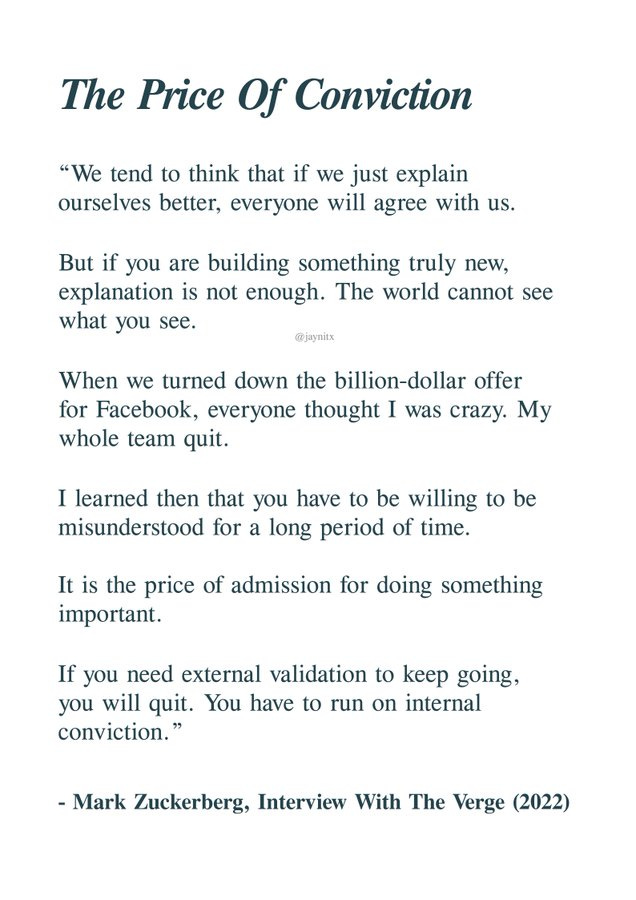
60. The Price of Conviction
61. Netflix and Fast.com

Per Pankaj -
“story behind “why netflix built http://fast.com is brilliant.
so, netflix had a massive fight with ISPs around 2014-2016. ISPs were slowing down netflix on purpose. they wanted more money from netflix
customers got bad streaming. but ISPs just blamed netflix.
netflix had to pay comcast, verizon, at&t and time warner for direct connections to their networks.
but in 2016, they launched fast dot com, clever part - It’s not testing your general internet speed. It’s testing your speed to netflix’s servers specifically. so when someone complained about buffering, netflix could say “run fast dot com.” If it’s slow, the ISP is the bottleneck.
suddenly millions of people had a tool to prove their ISP was the problem
ISPs couldn’t hide anymore.
netflix positioned themselves as the transparent good guys fighting for customers while ISPs looked like greedy monopolies
they solved a pr problem and a customer service problem with one simple website
I guess, that’s how you win a corporate war”
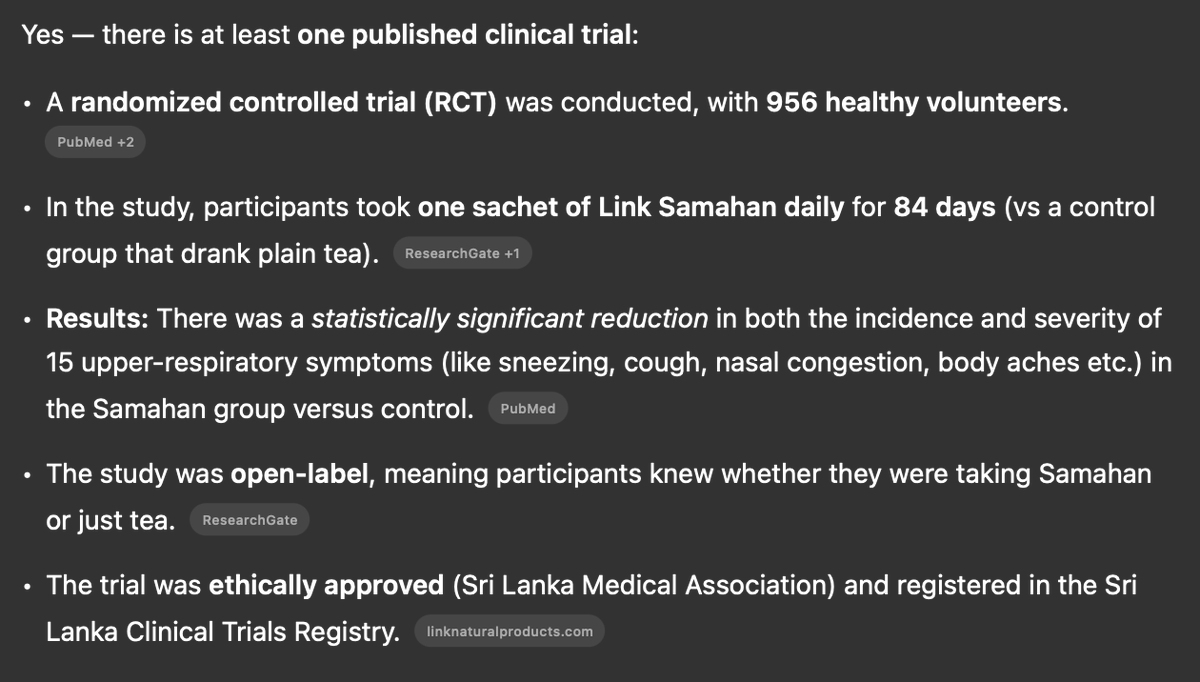
62. The (Sri Lankan) Origin of Samahan
Per Adithya Venkatesan -
“TIL: Samahan is a Sri Lankan Ayurvedic herbal drink”
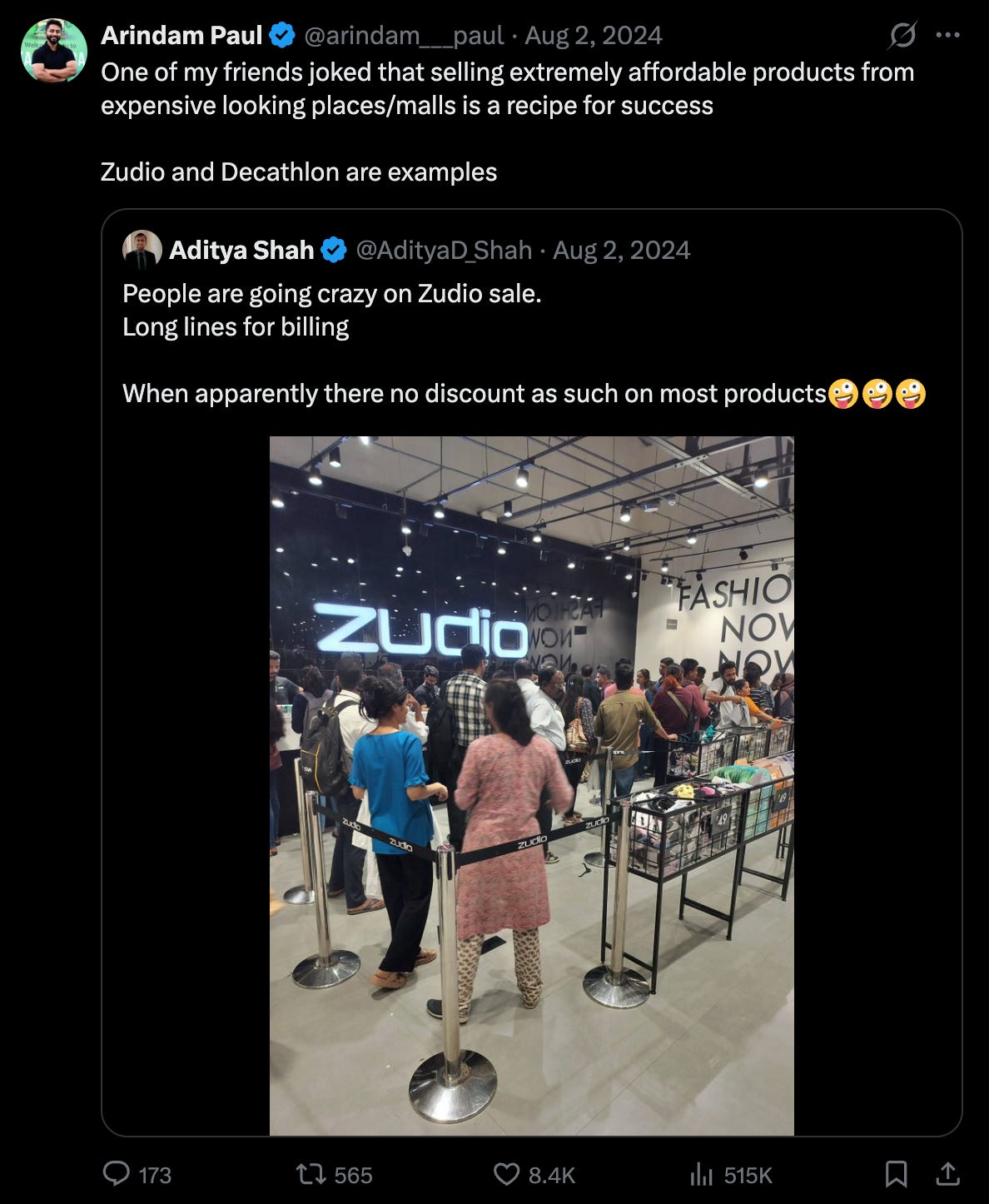
63. The recipe for success in India
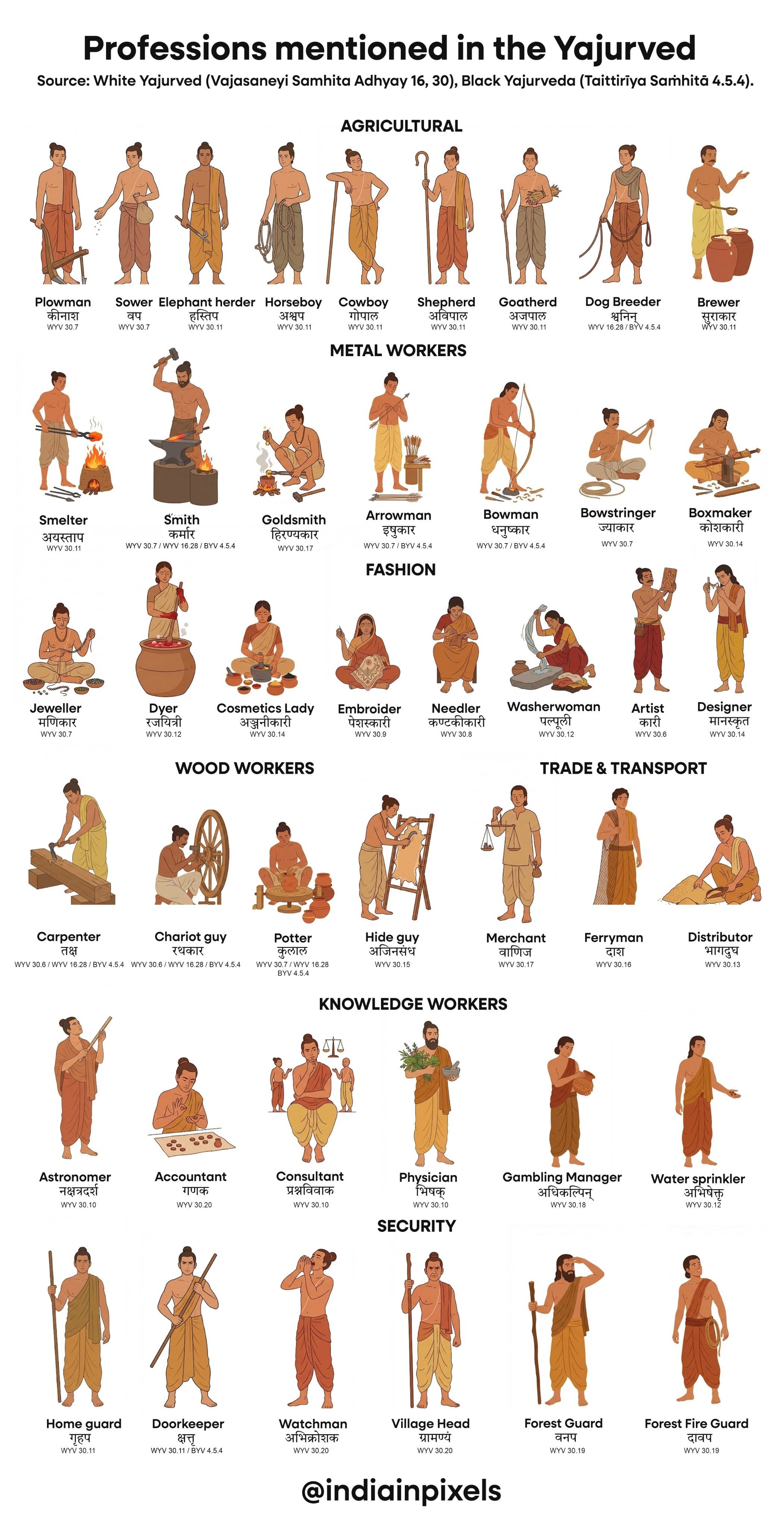
64. “Professions mentioned in the Yajurved”
65. On the dangers of the reel economy
Per Paras Chopra -
“Stop watching short-form videos.
Meta-analysis of ~100k people shows how it is associated with decreased cognition and increased stress + anxiety.
I know this is correlation, not causation but ask yourself - do you feel great after a session of consuming reels/shorts?”

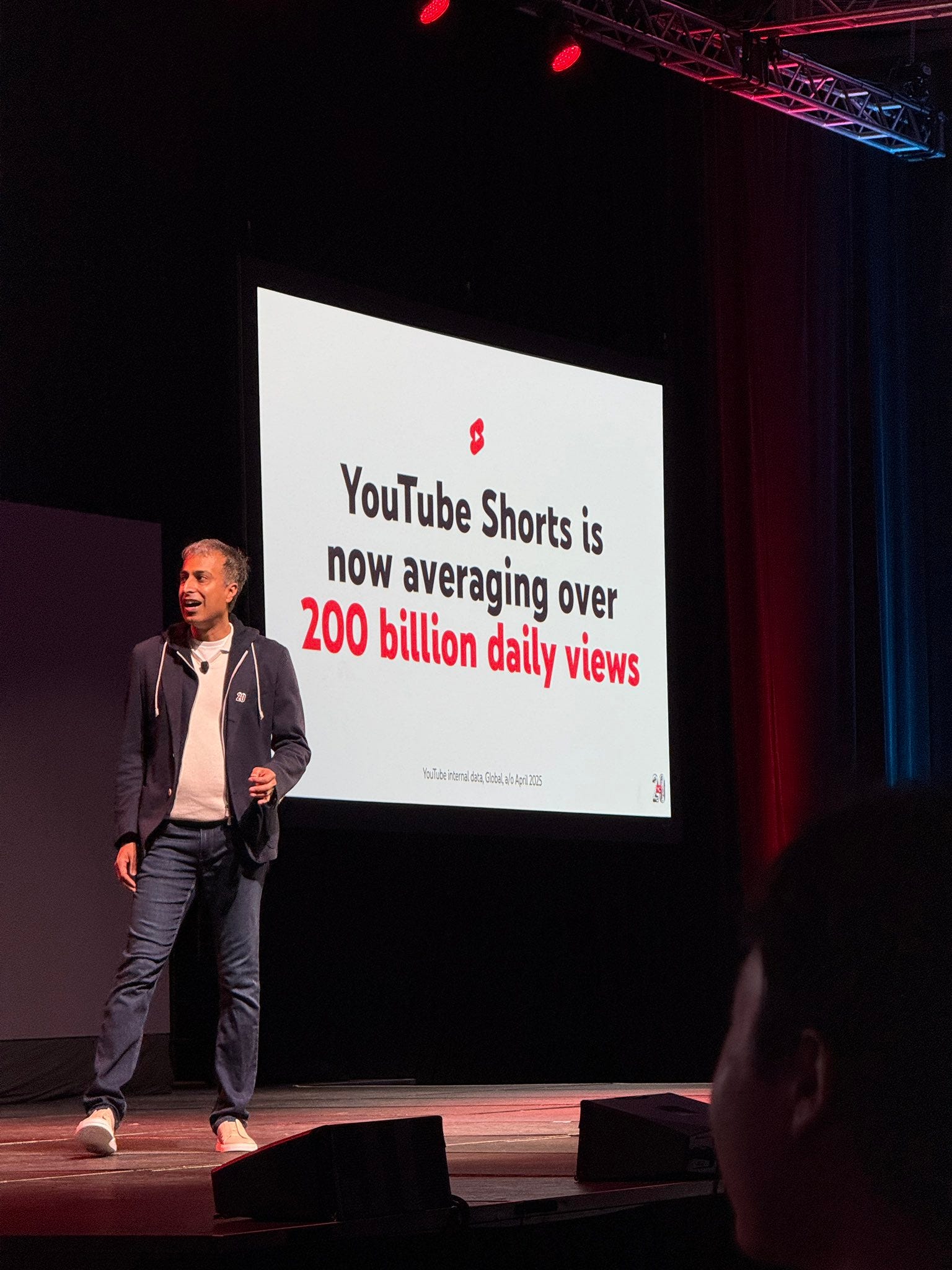
But just to keep things balanced -

Which may actually be understated -
66. India Ecommerce - Race for the last mile
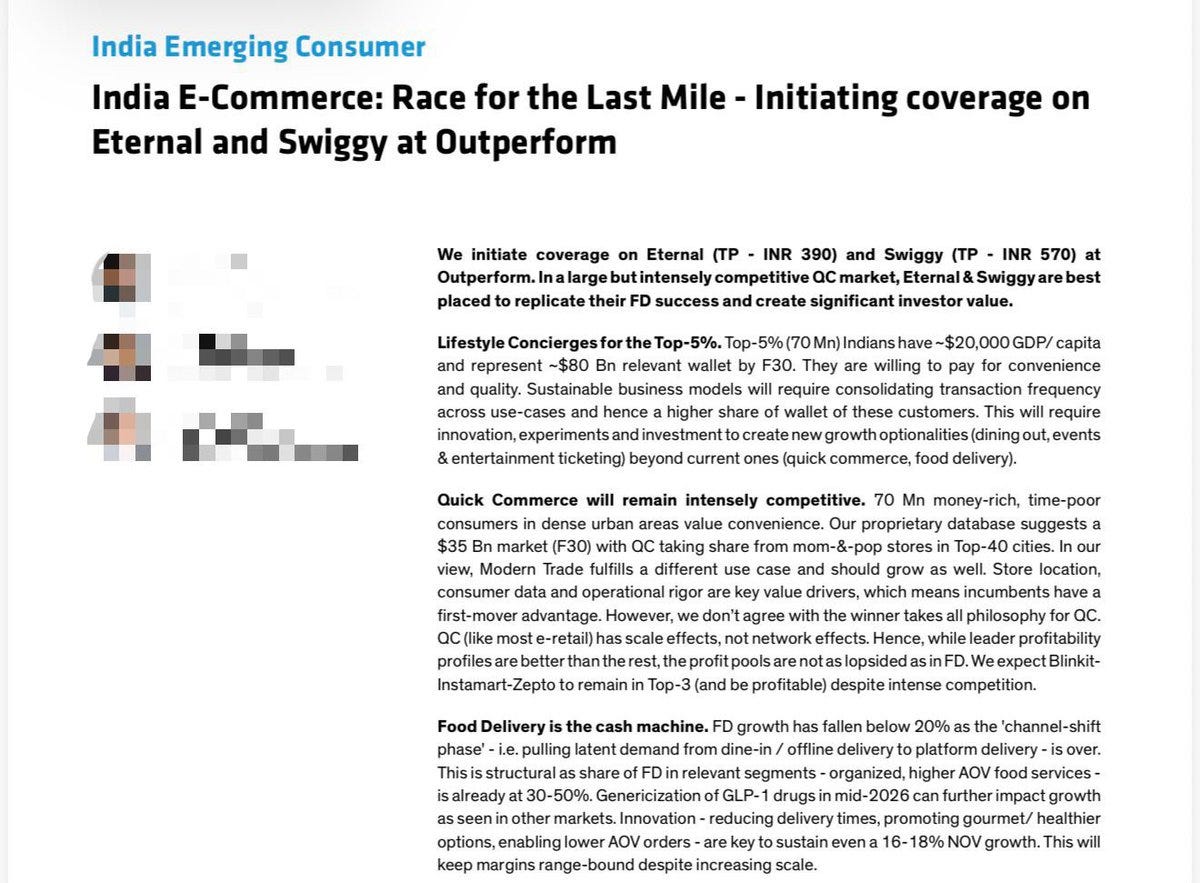
Source - India Ecommerce Race by Bernstein
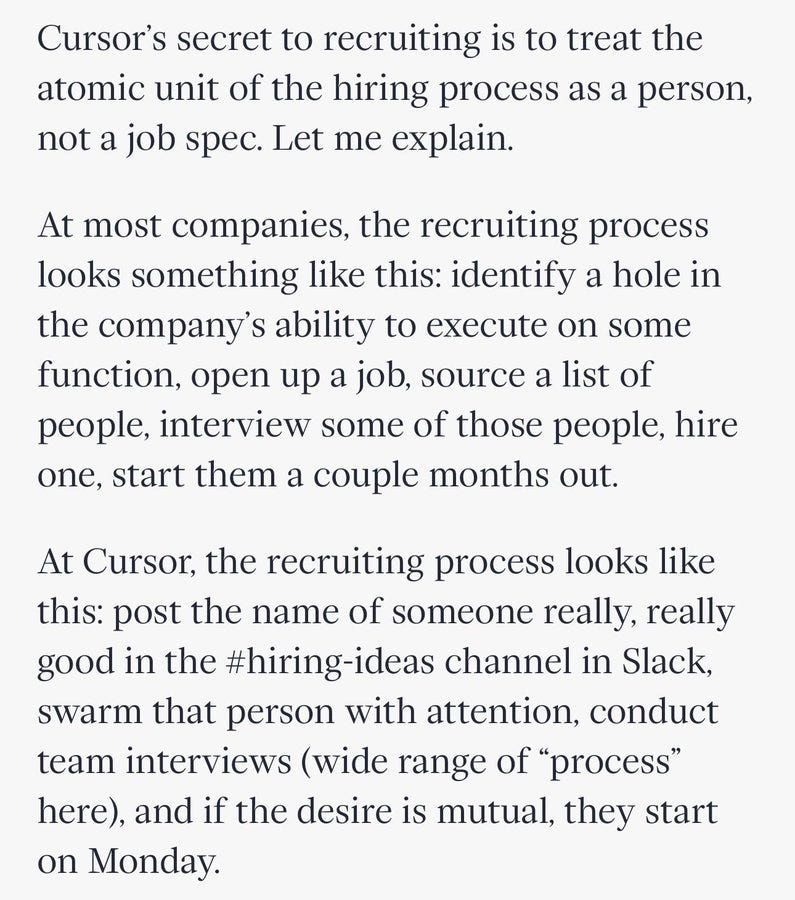
67. The Cursor hiring process
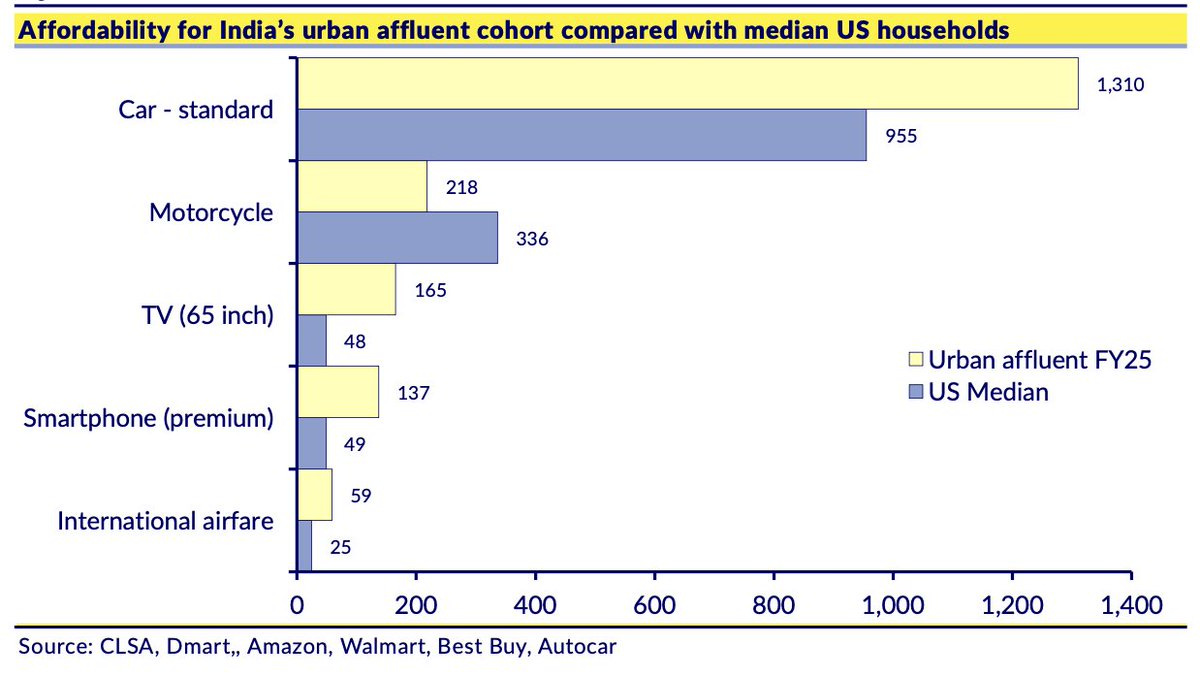
68. Hours of work needed to buy big ticket items
Per Manish Singh -
“Hours of work needed by India’s “urban affluent” and median U.S. households to buy big-ticket durables and travel.”
69. The arrival of Bhajan Clubbing

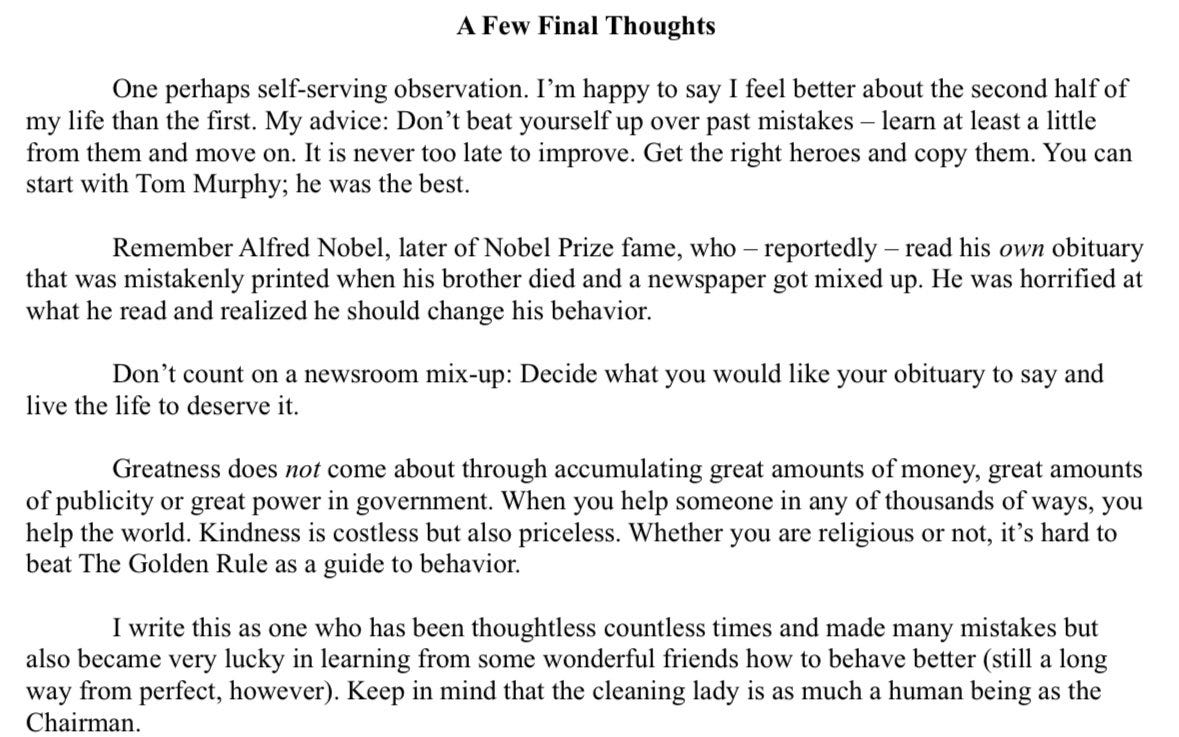
70. Buffet’s final letter to Berkshire shareholders
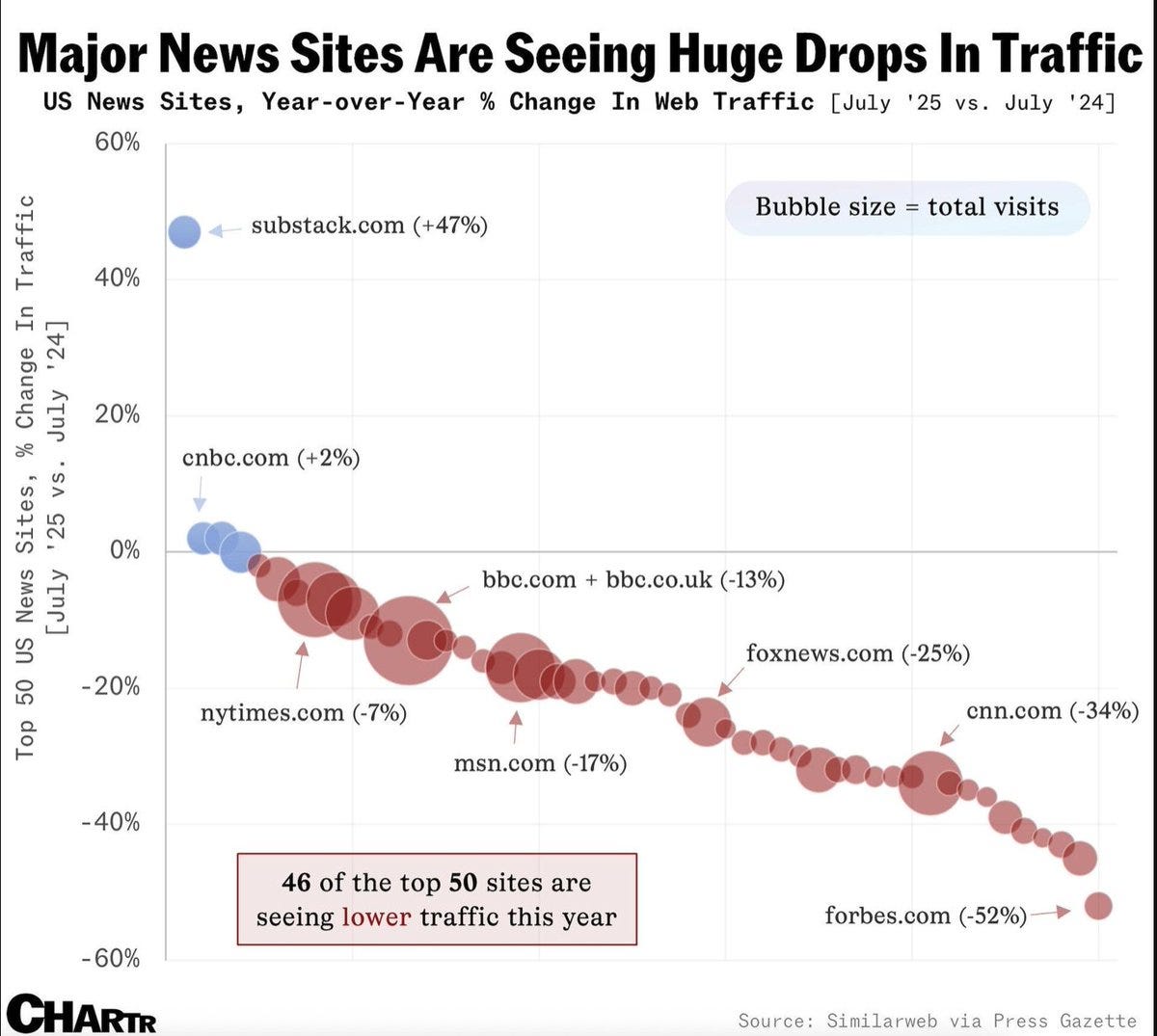
71. Major news sites seeing drops in traffic
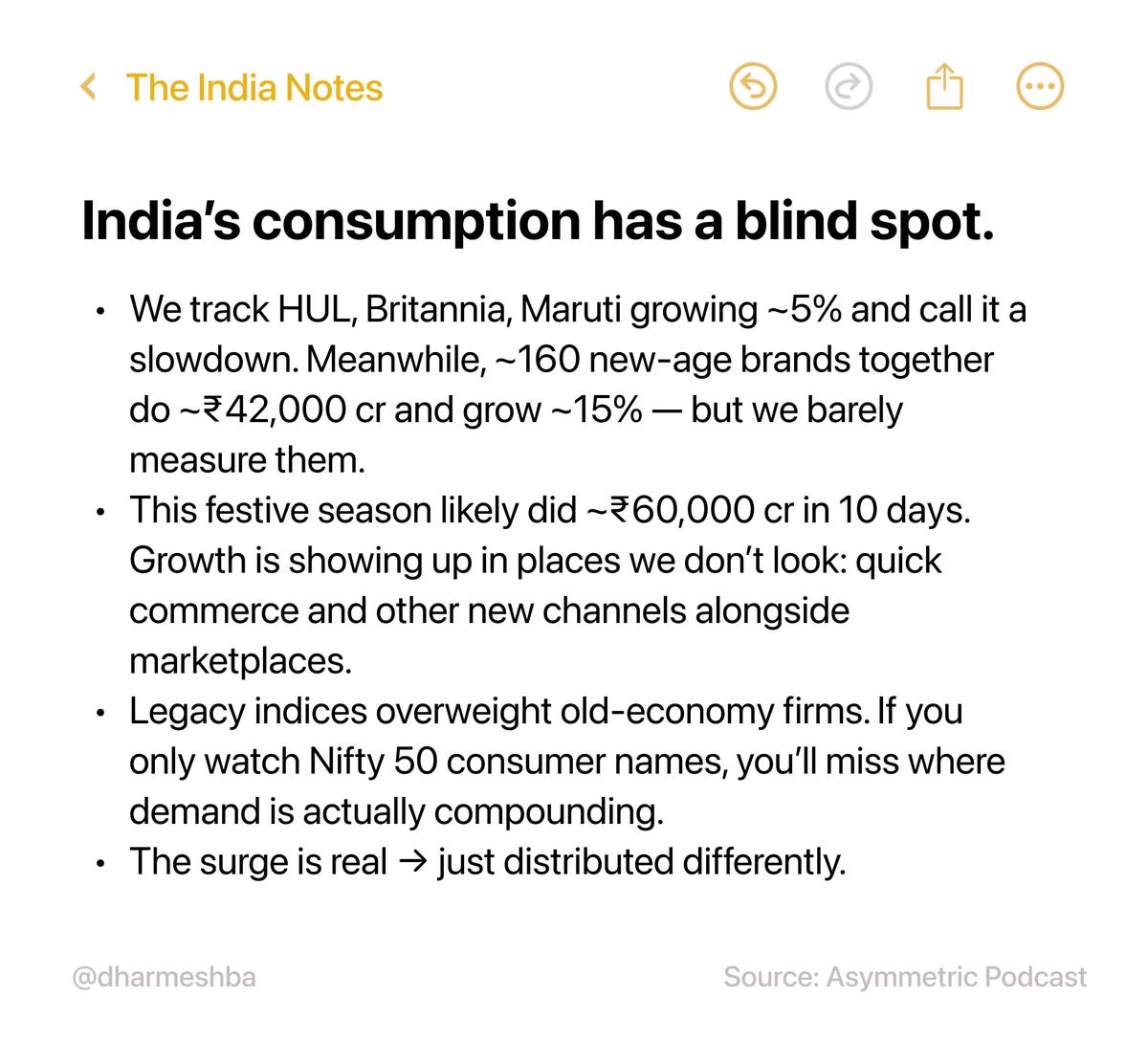
72. “India’s consumption has a blind spot”
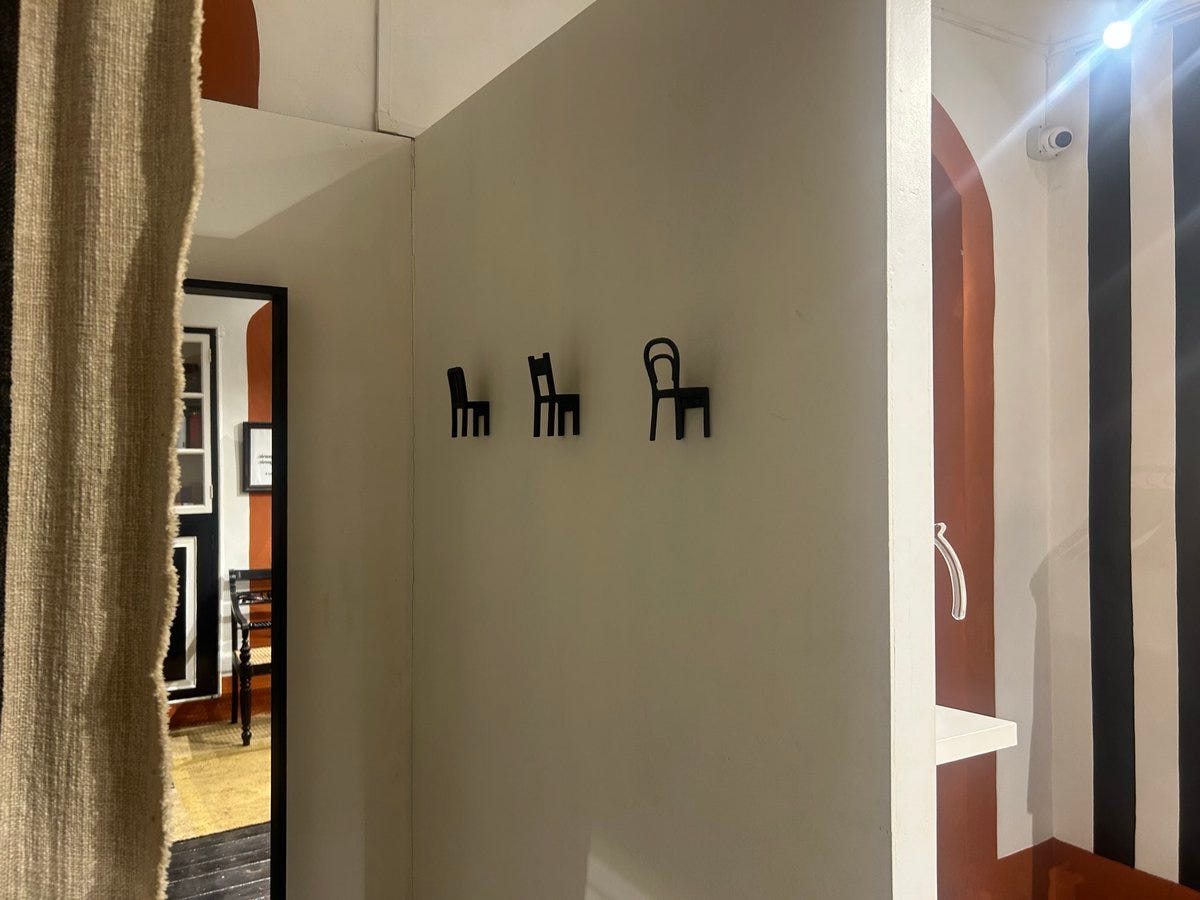
73. Thoughtful design
“Changing room hooks in a studio in Panjim” (h/t @Kulfei)
74. On Bharatiya Aesthetics

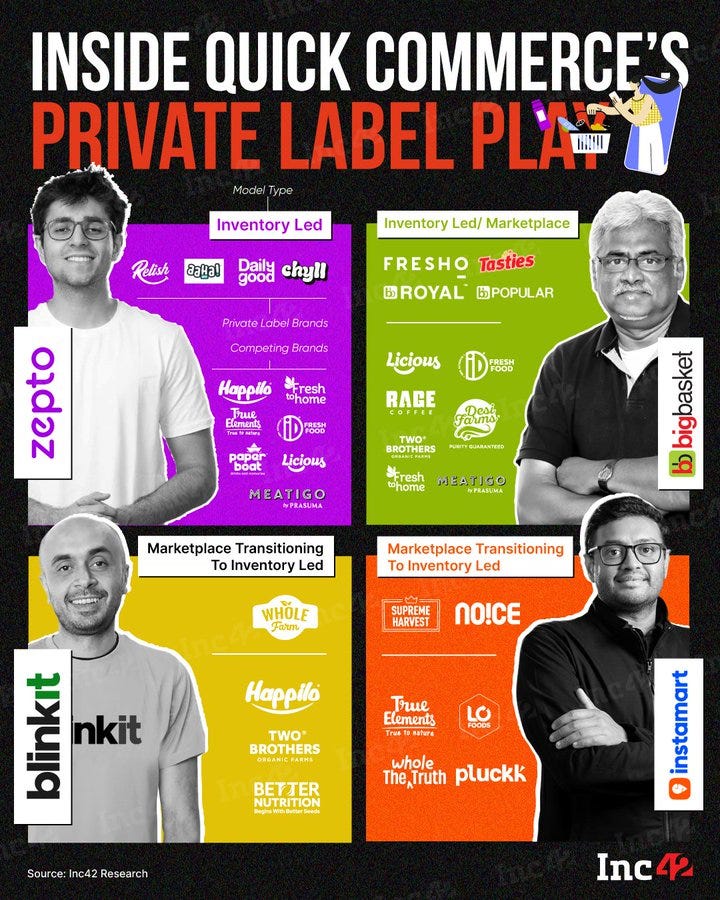
75. Private label quick commerce plays
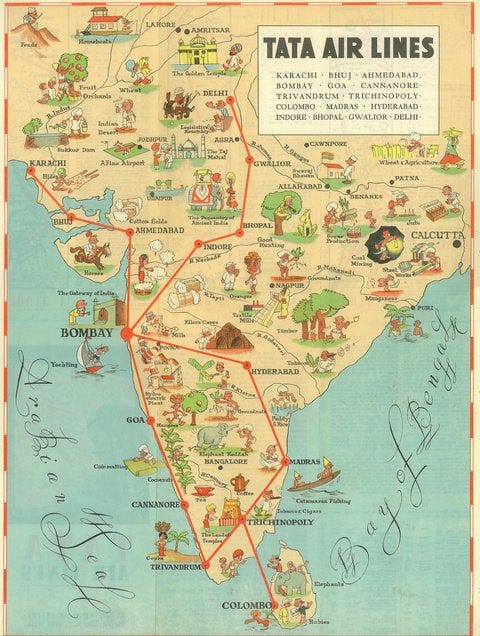
76. Tata Airlines route map from 1939
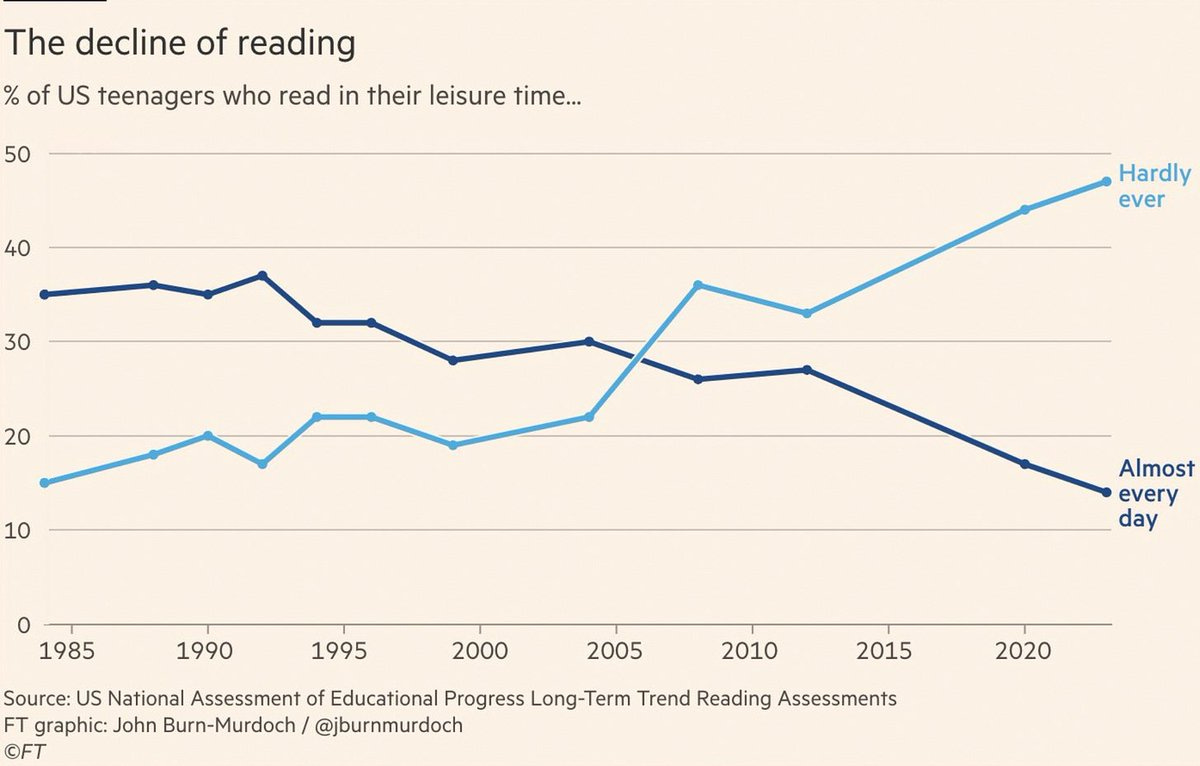
77. The decline of reading
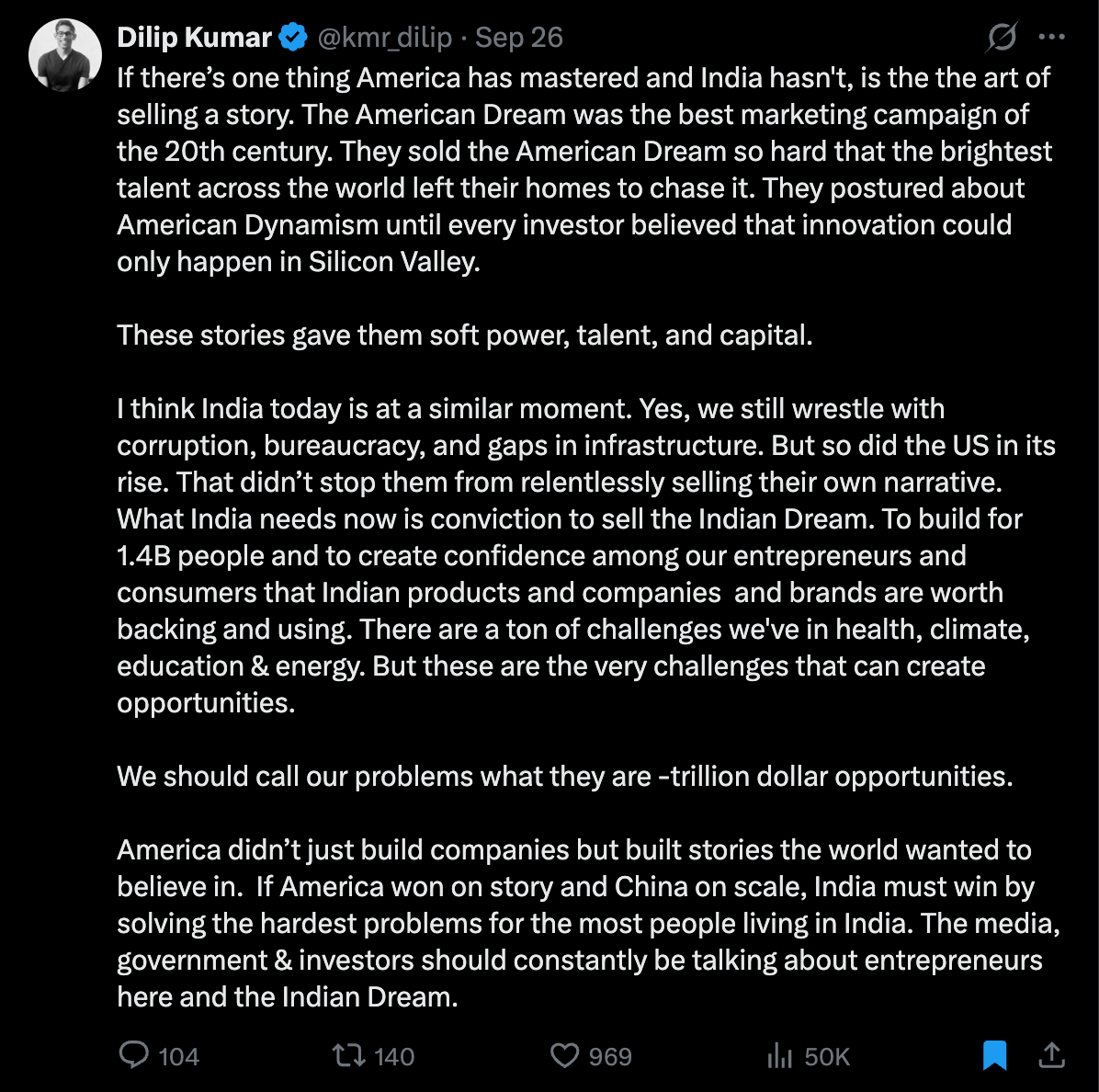
78. The need for an ‘Indian Dream’
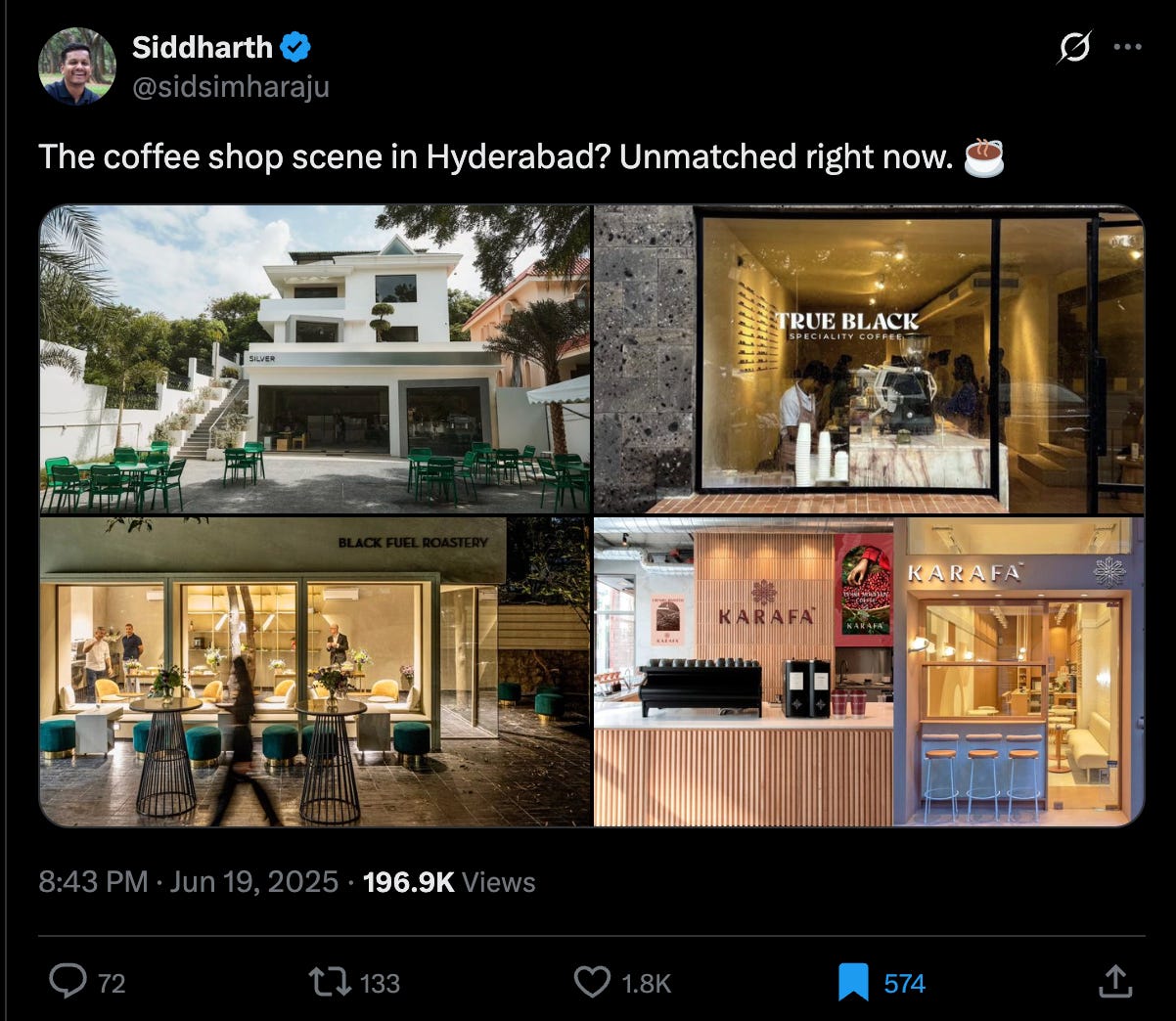
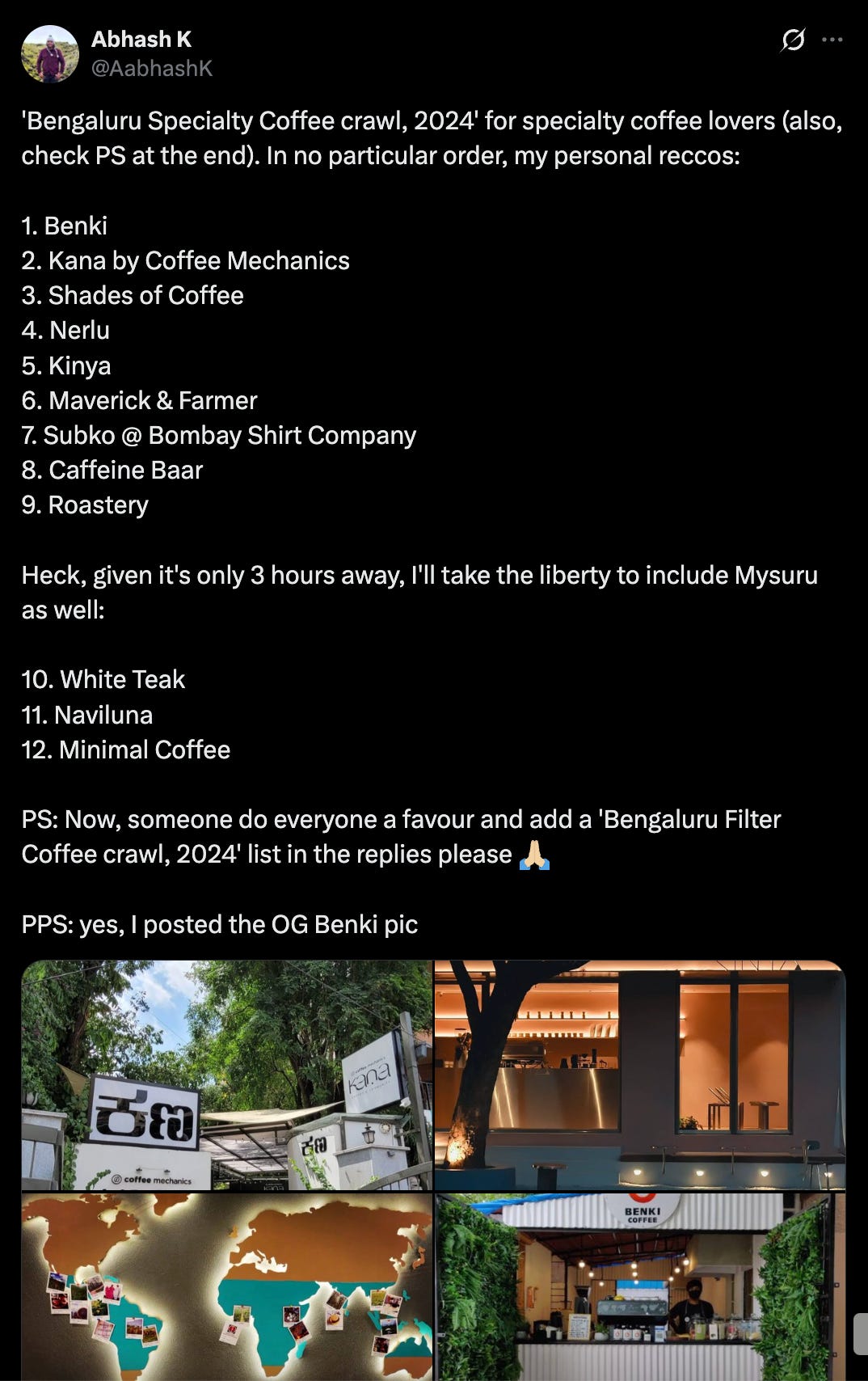
79. Speciality coffee - having a moment
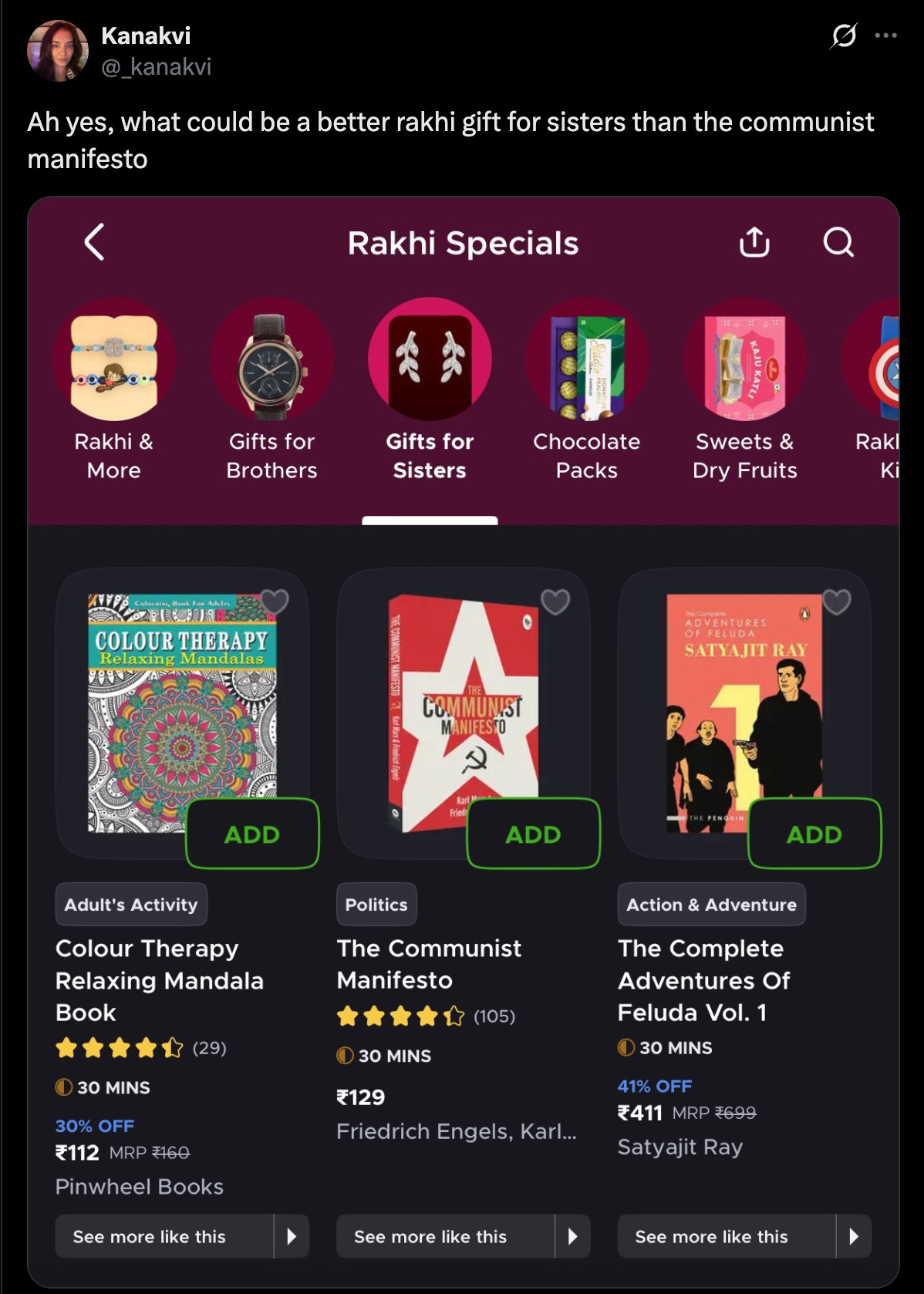
80. Quick commerce listings - becoming unhinged
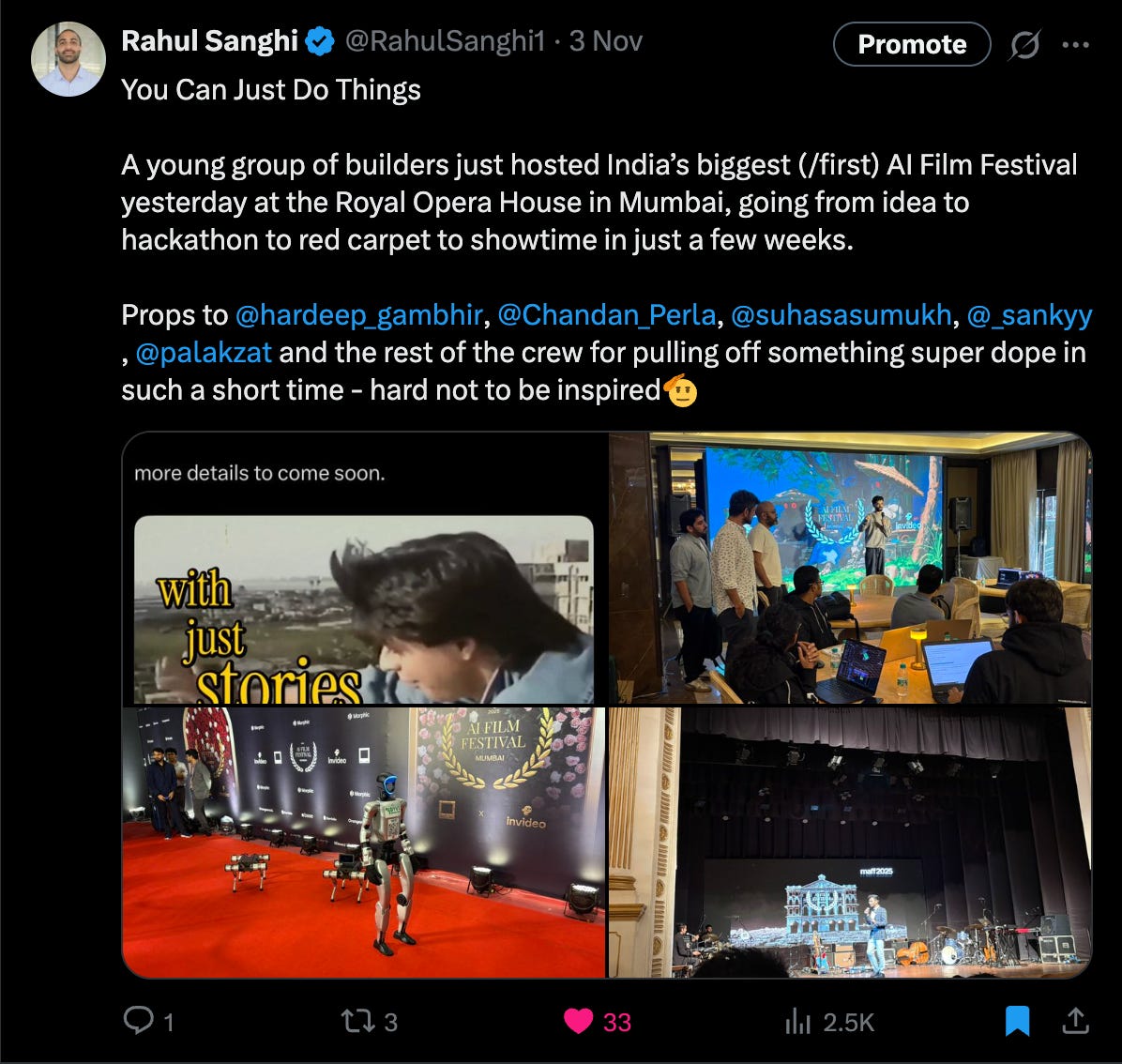
81. The story of India’s first AI film festival
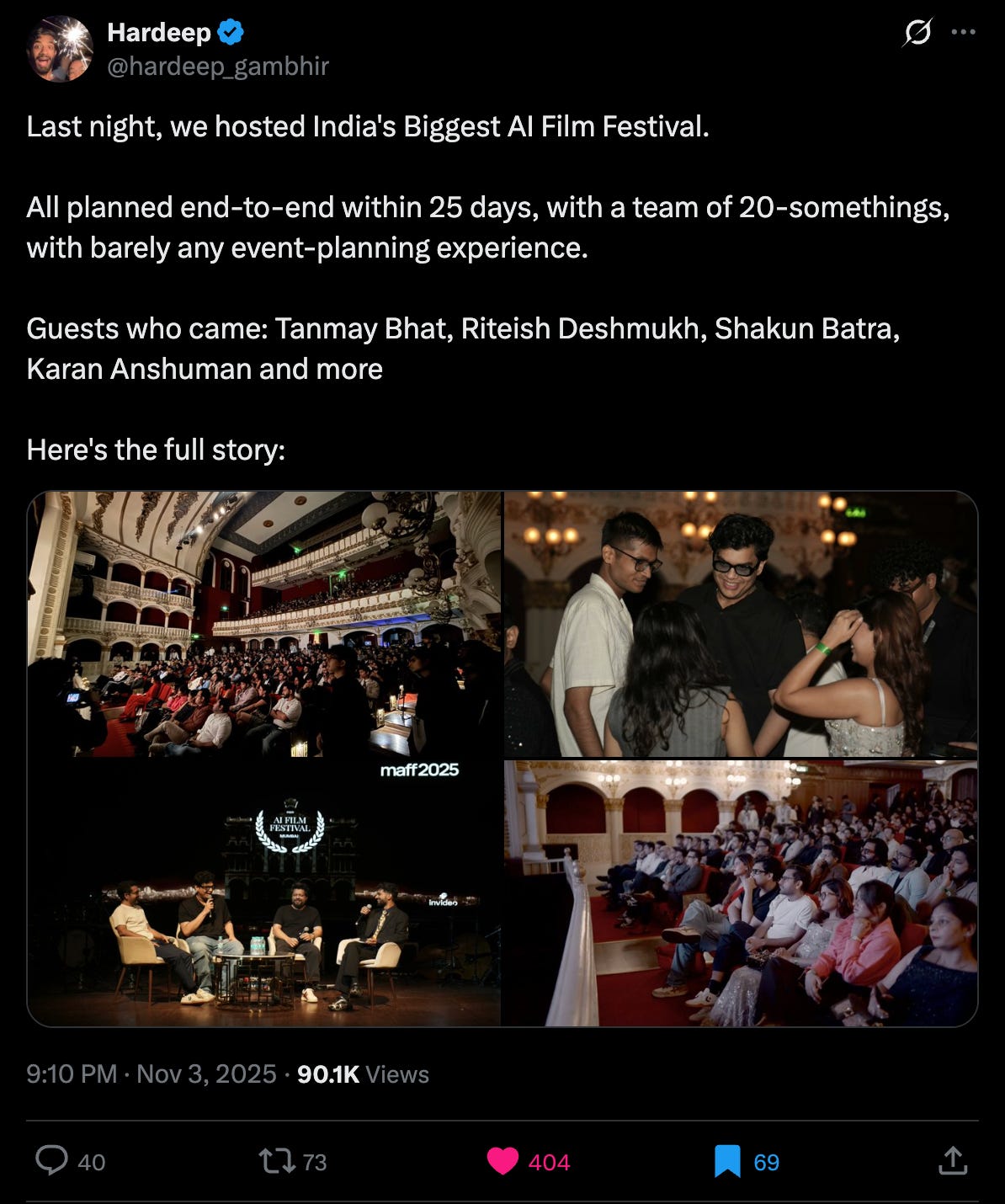
Plus some shots on location -
82. The second bhatoora

Per Parminder Singh -
“There’s no better proof that life is unfair than the second bhatoora. Think about it - both bhatooras start off as equals. The second could easily have been the first. But fate intervenes.
By the time you’re done with the first, three things happen:
1. You’re already full.
2. 300 calories of guilt are whispering in your ear.
3. The second one has gone limp.
You still eat it, but half-heartedly. No oohs, no aahs - just quiet resignation.
The second bhatoora did nothing wrong. It simply suffered from bad timing - and fades away unappreciated.
So next time someone preaches about karma or fairness, ask them - what about the second bhatoora?”
83. India1 buying preferences
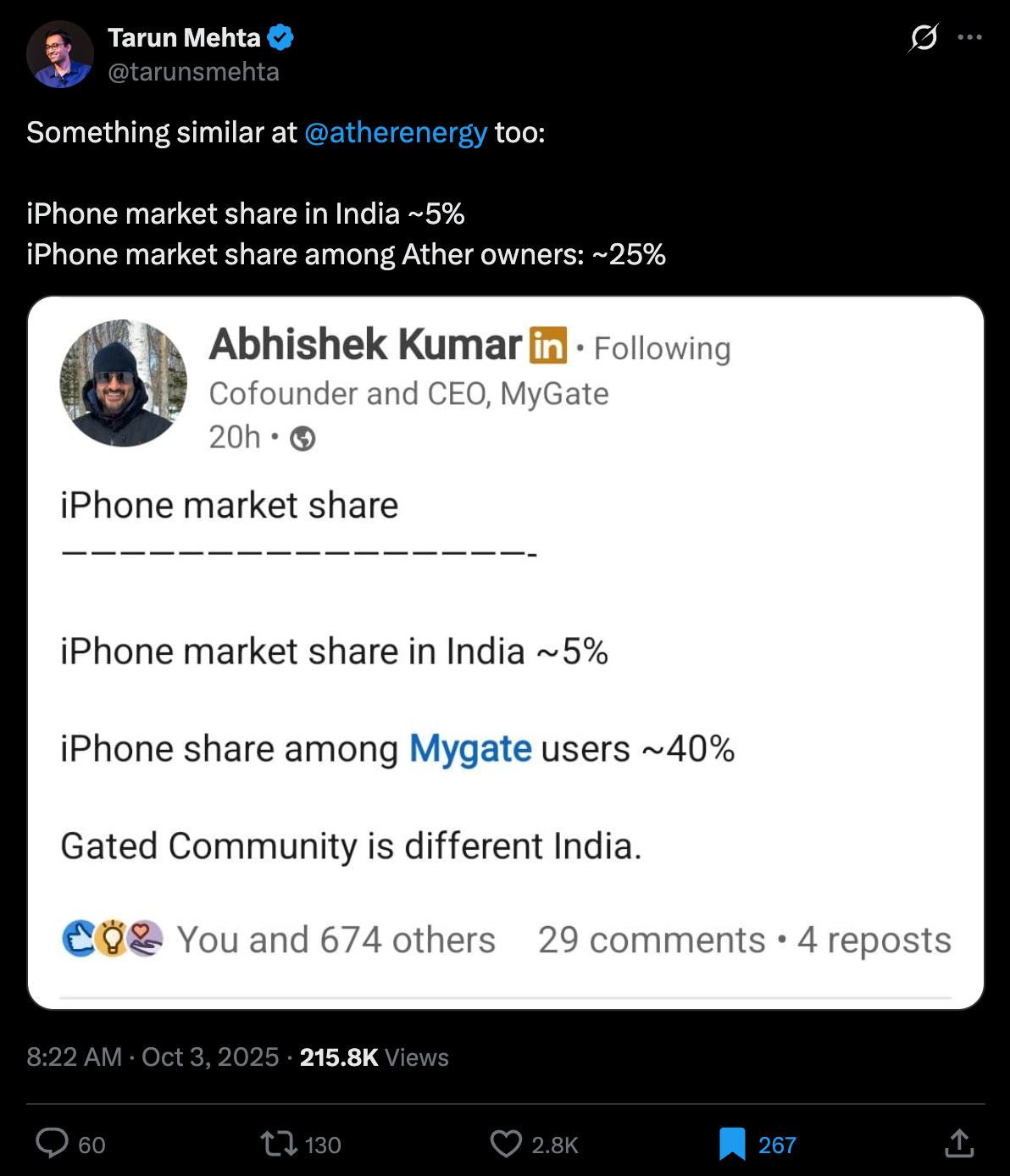
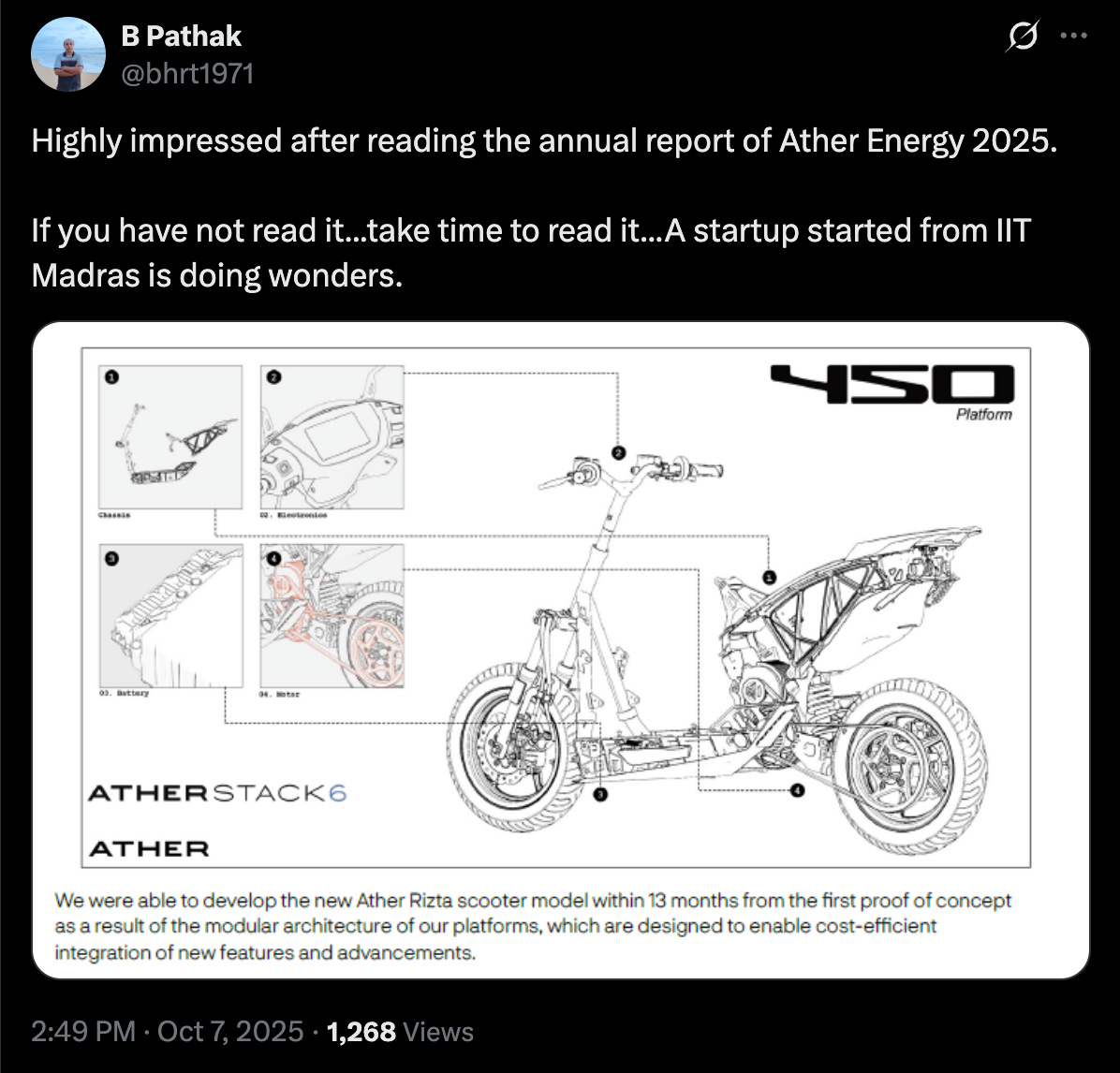
Bonus - Ather’s Annual Report (read it here)
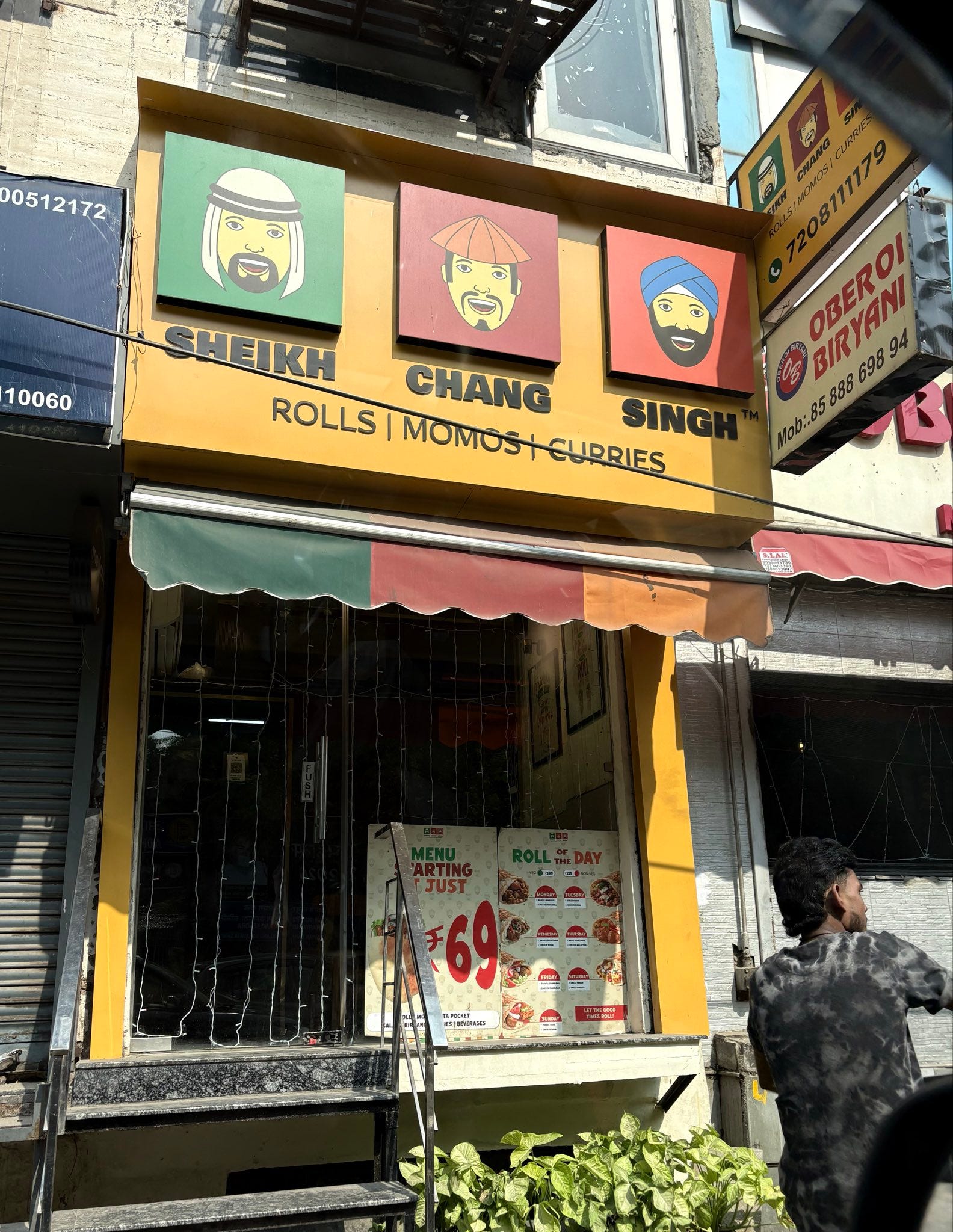
84. “Delhi is a city written by the writers of family guy”
85. Blackstone CEO on “Where To Invest”
86. The Origin of Monaco (Biscuits)
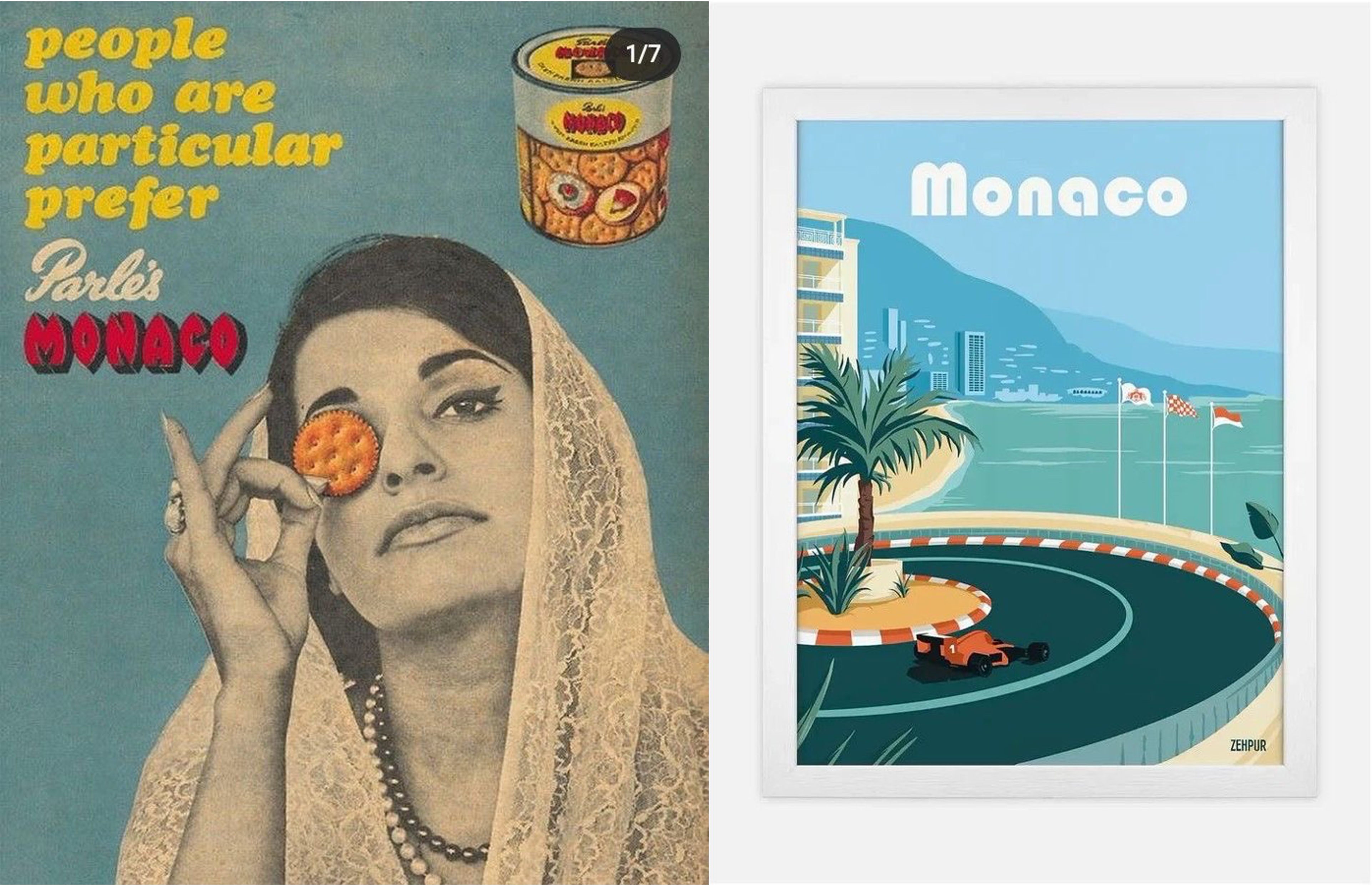
Per Tara Deshpande -
“Well into my 20’s I thought these delightful salted biscuits were named after a country on the French Riviera. Only to discover that two brothers Mohanlal and Nathalal conjoined their names, added Co for company and Monaco was born in 1942 in Vile Parlé, as far from the Mediterranean as was possible.
No party for decades was complete without Monaco canapés. Topped with processed cheese and dots of tomato ketchup, their sophisticated geometry put the O in SOBO long before it was even a thought.
BTW -crush some Monaco and use it instead of breadcrumbs over macaroni and cheese. Thank me later.”
87. The rapid rise of Mounjaro

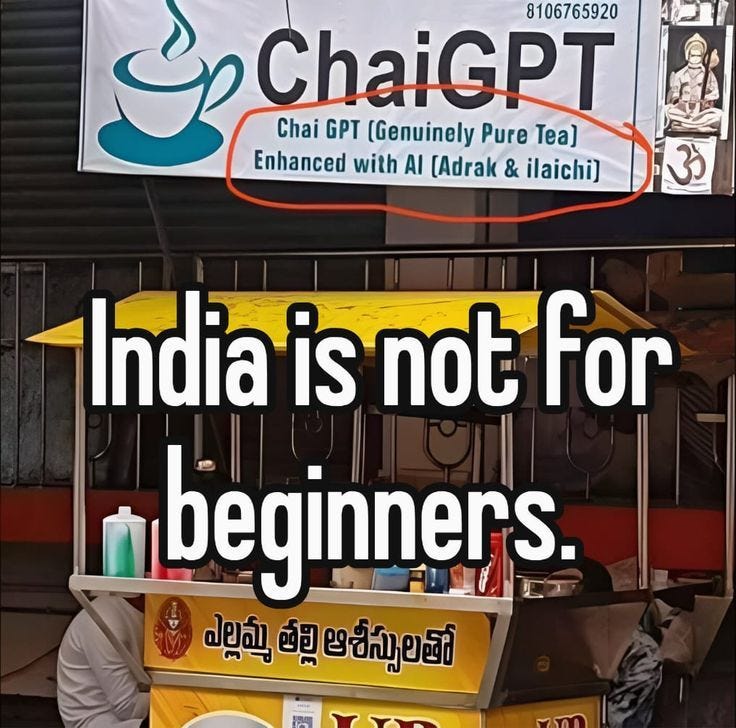
88. India is not for beginners
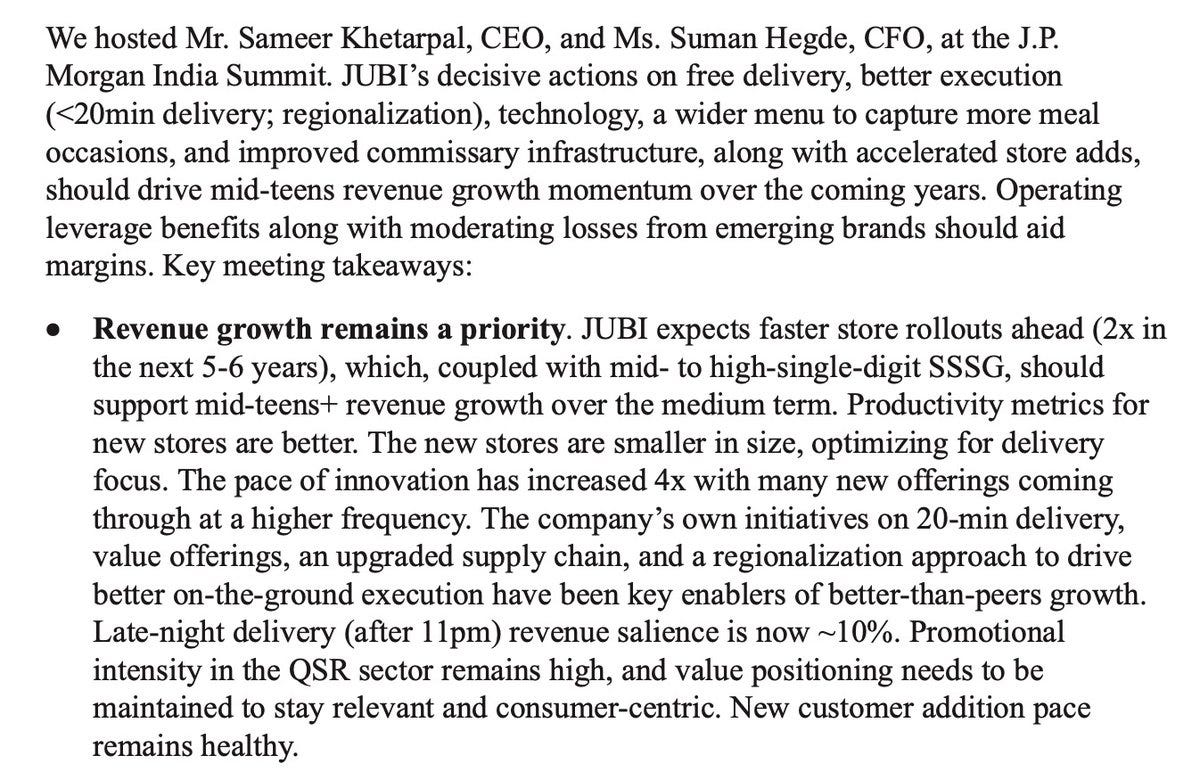
89. “Domino’s India franchisee generates about a tenth of its revenue after 11pm.”
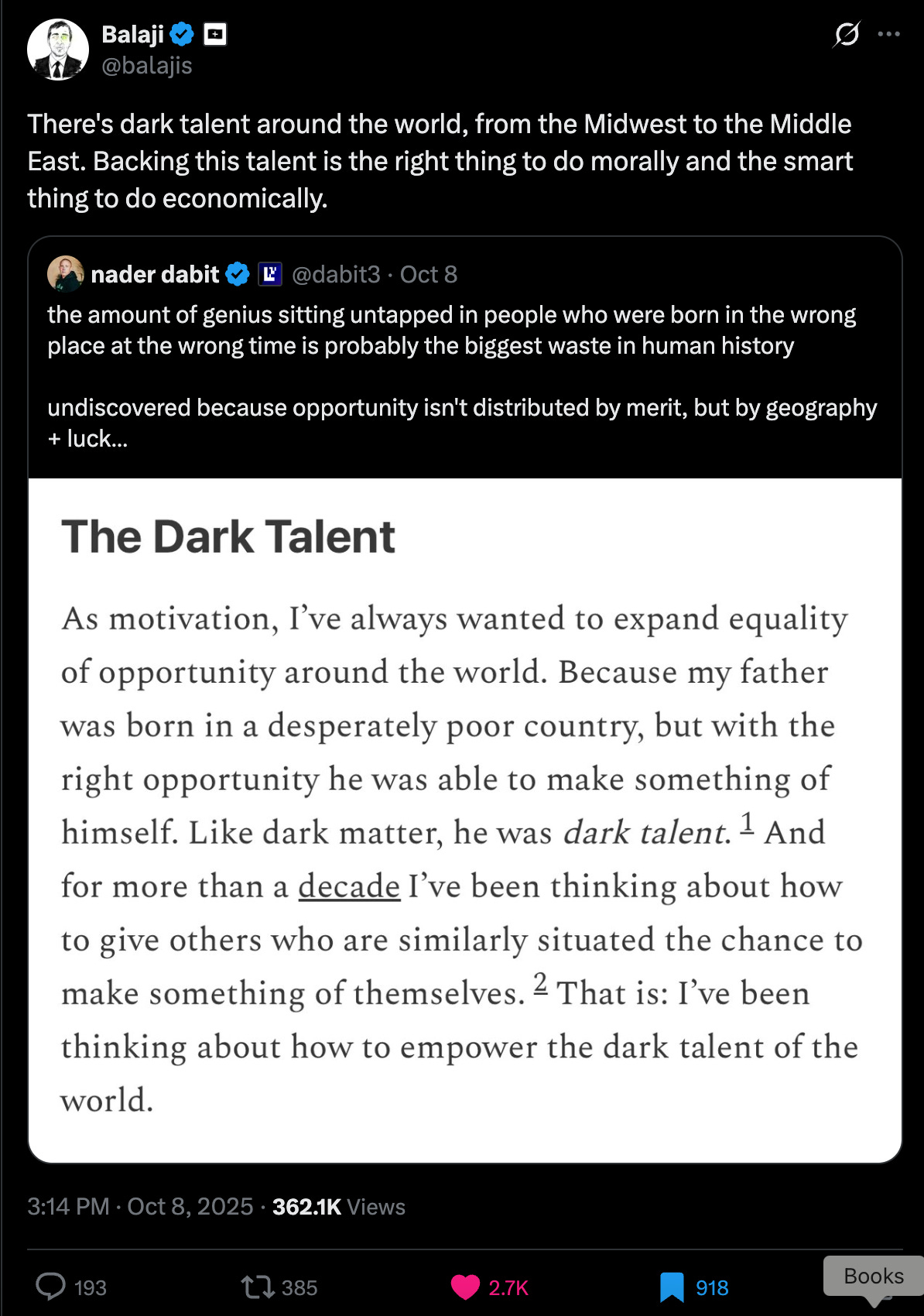
90. On ‘Dark Talent’
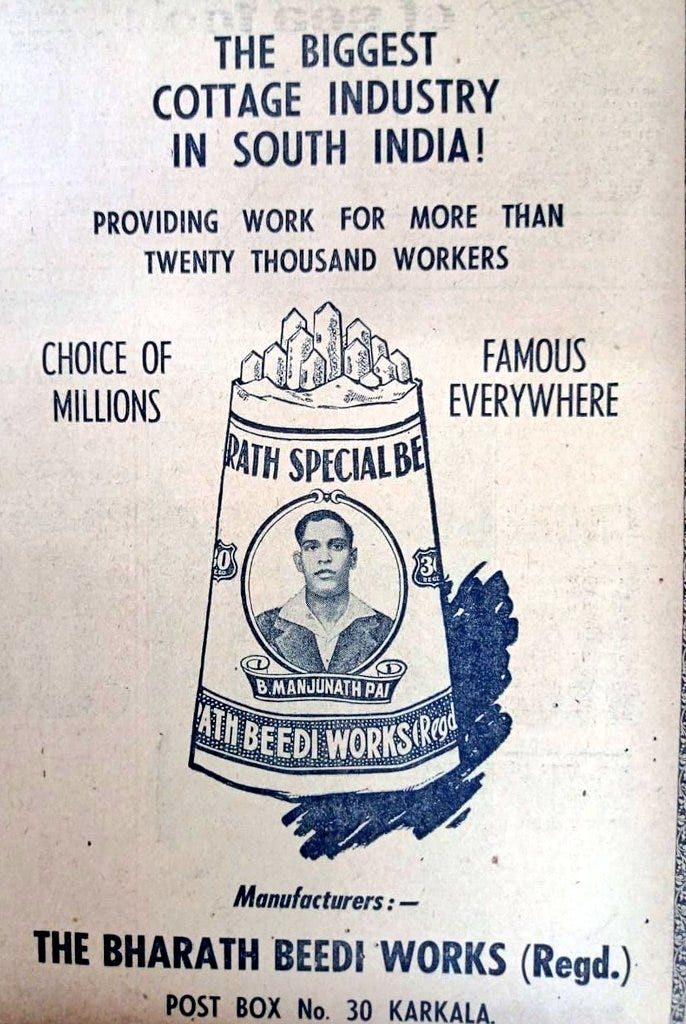
91. “In 1960s Beedi Manufacturing Was The Largest Cottage Industry In South India”
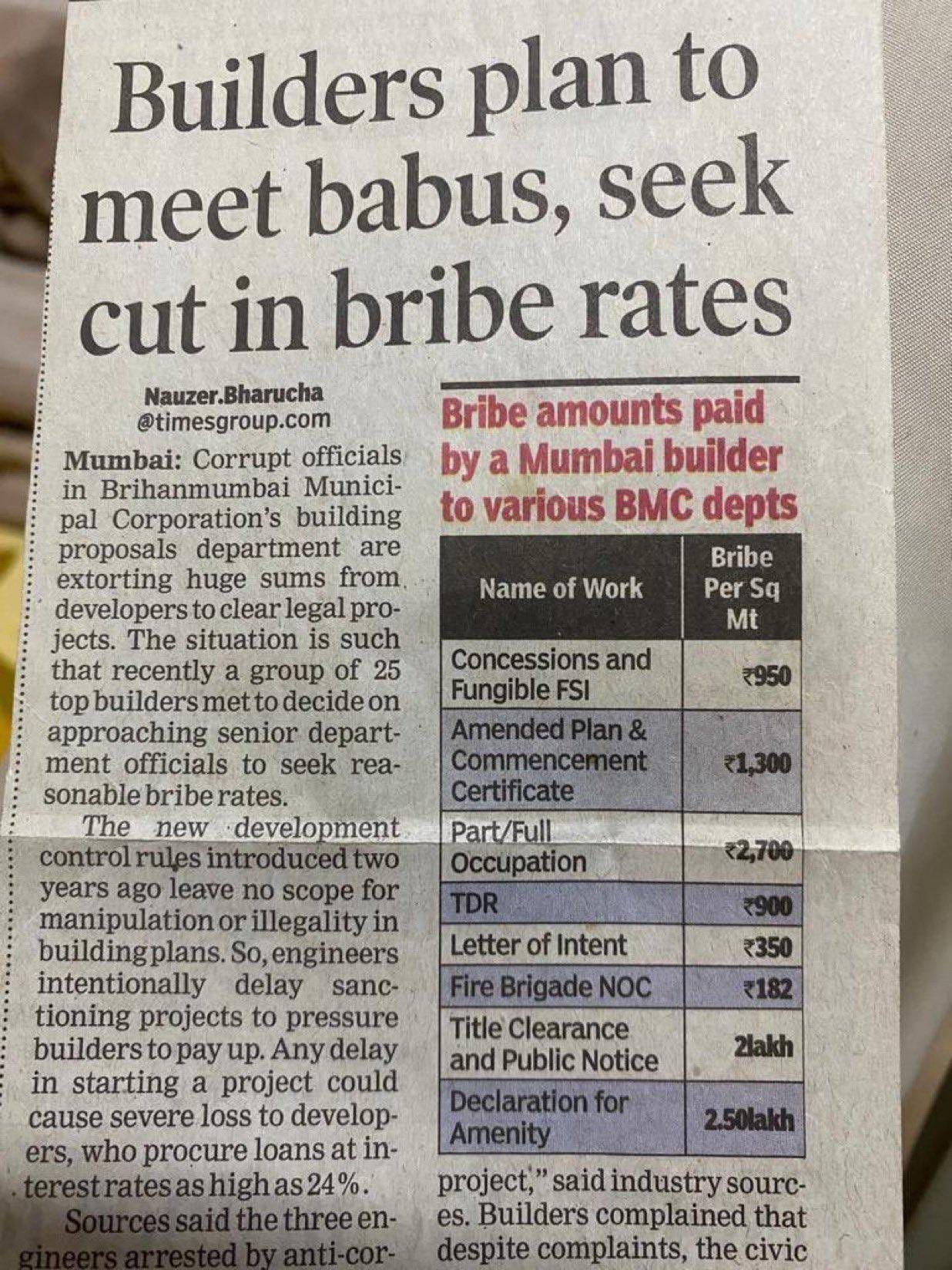
92. A sad state of affairs
93. “This place is just four hours away from Bangalore”
IYKYK

94. On ‘AI native distribution channels’
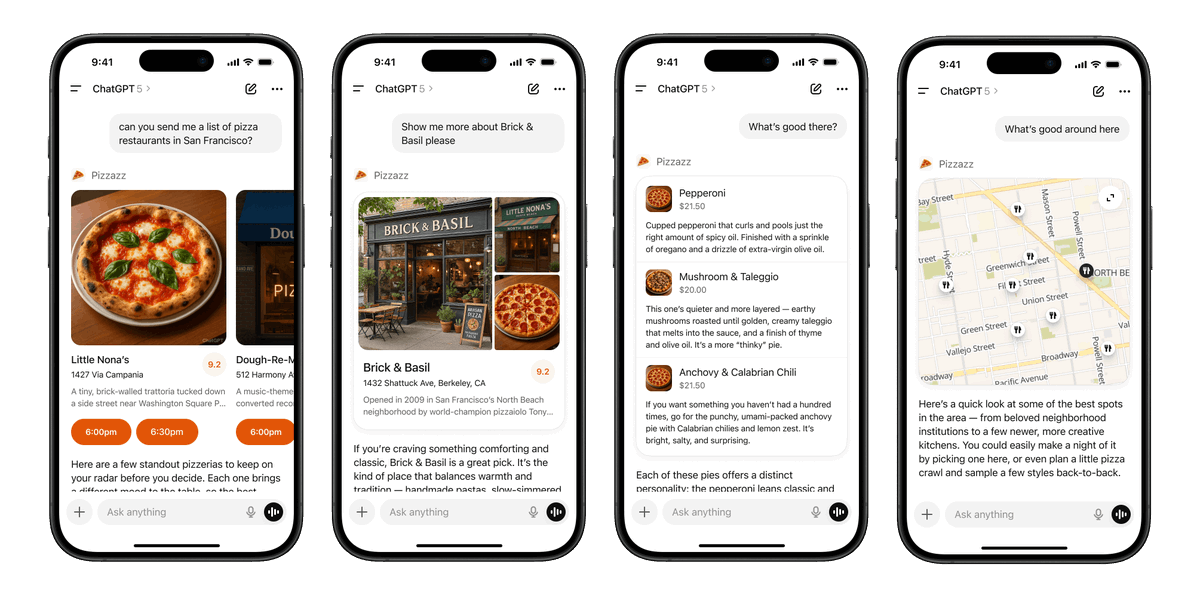
Per Anish Acharya -
“An open question was answered today - “what will the AI-native distribution channel be?”
It looks like ChatGPT will be that channel with 800M active users + the Apps SDK.
This is likely as important as Steve Jobs announcing the app store in March of 2008 ...”
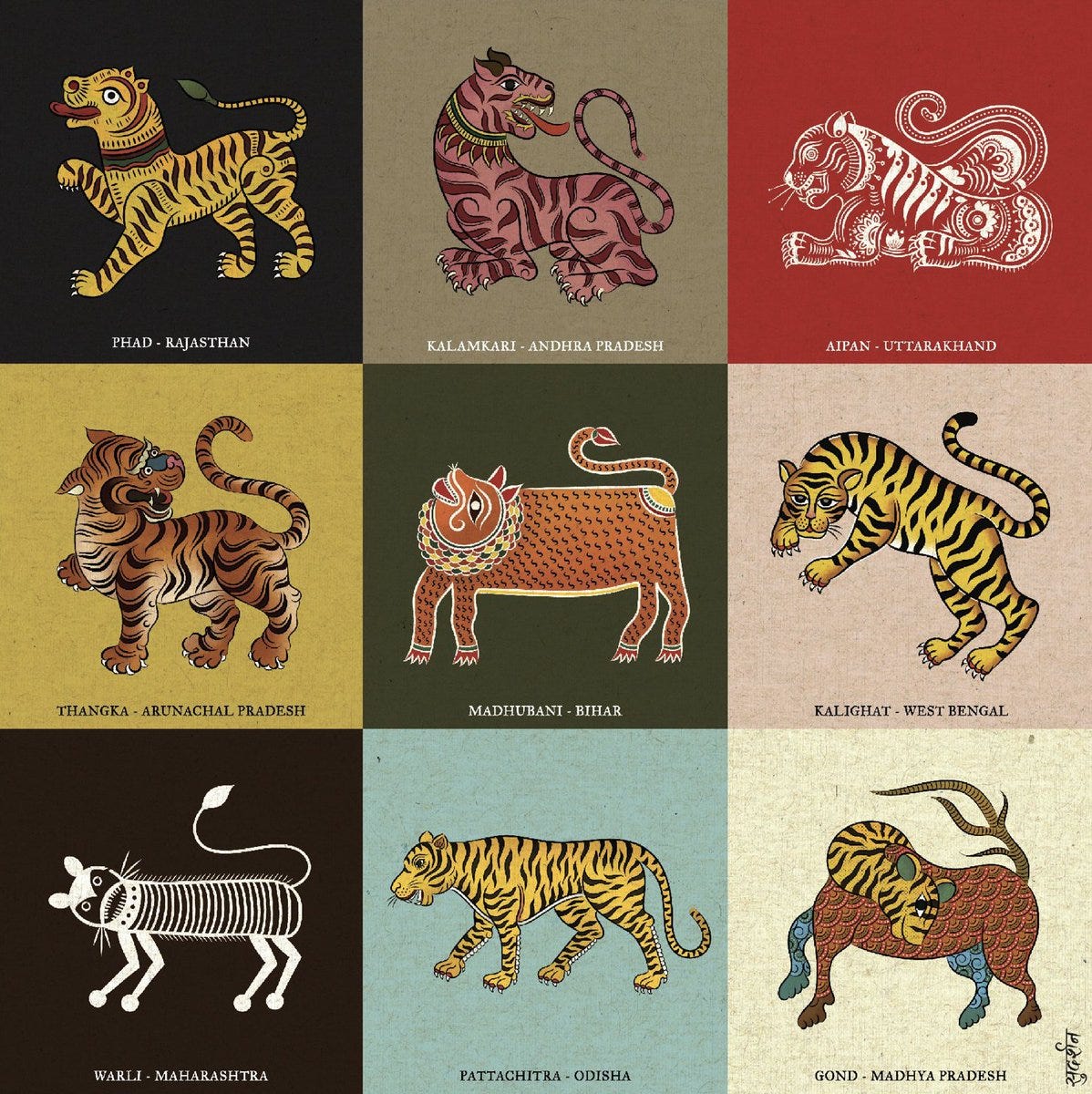
95. “9 tigers from 9 different Indian folk art forms preserving 9 age-old ways of looking at and living with the tigers.”
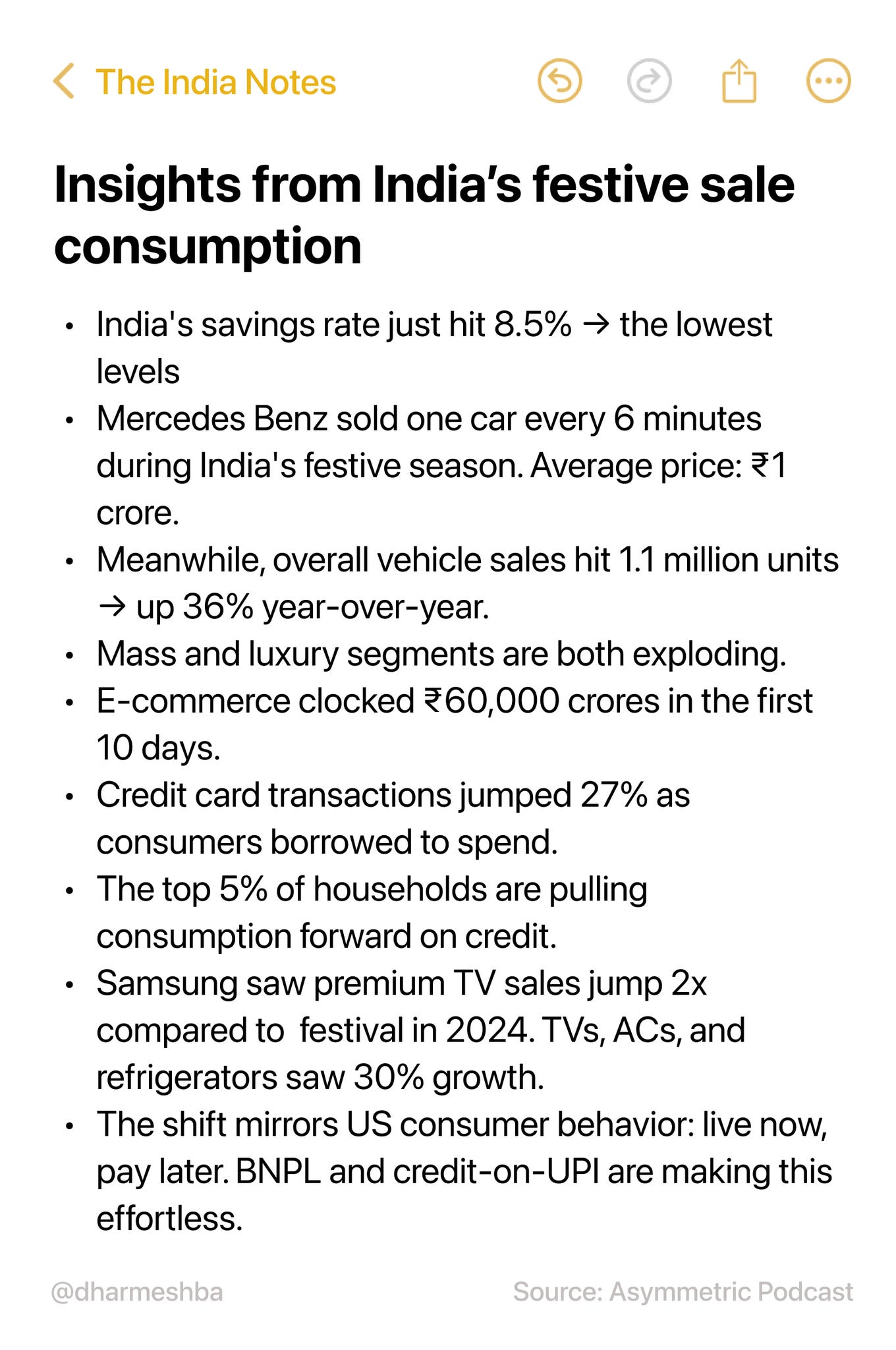
96. “Insights from India’s festive sale consumption”
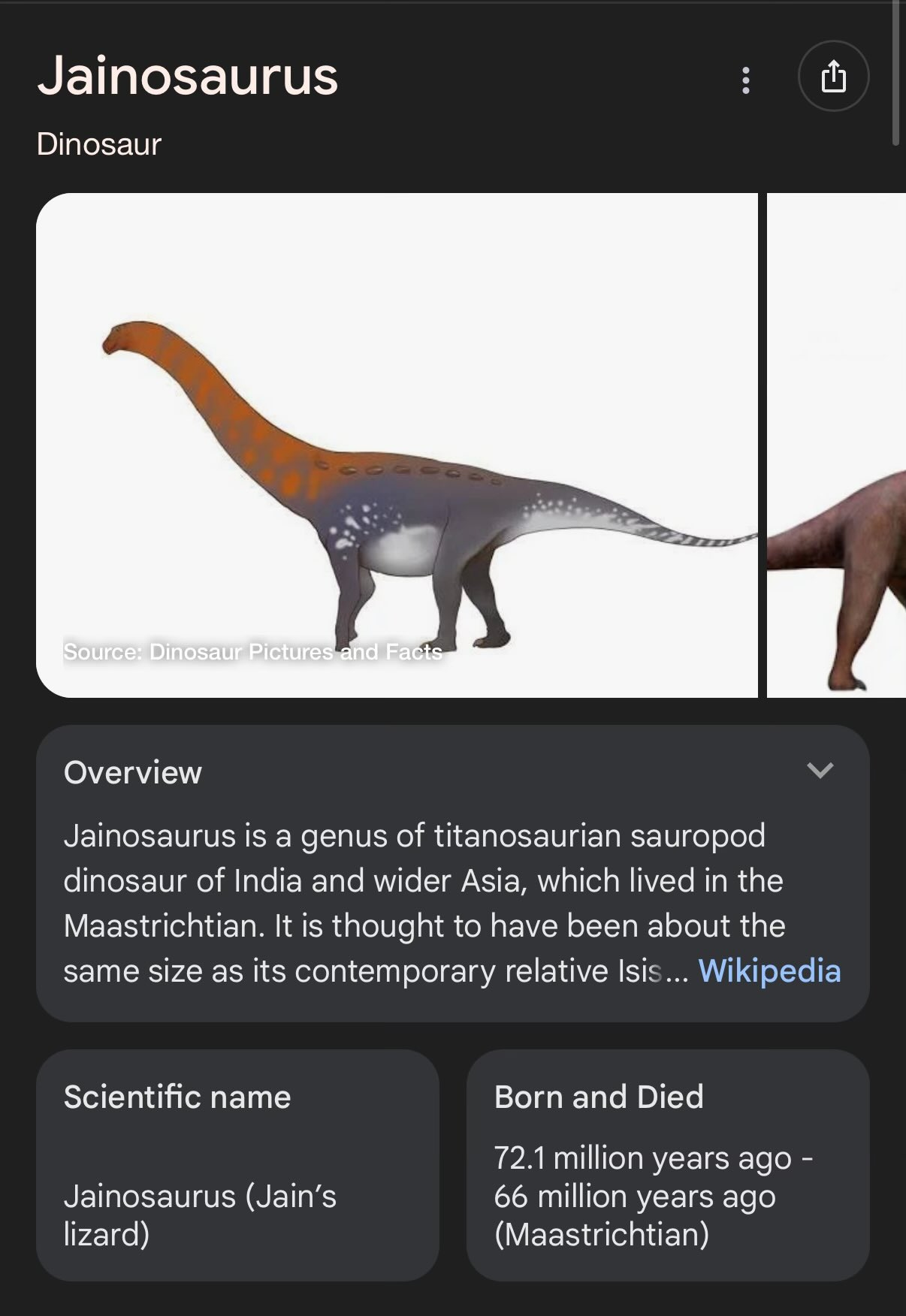
97. “Of course there’s a herbivore dinosaur called JAINosaurus”
98. “2000 years of Indian Economic History...in 20 tweets”
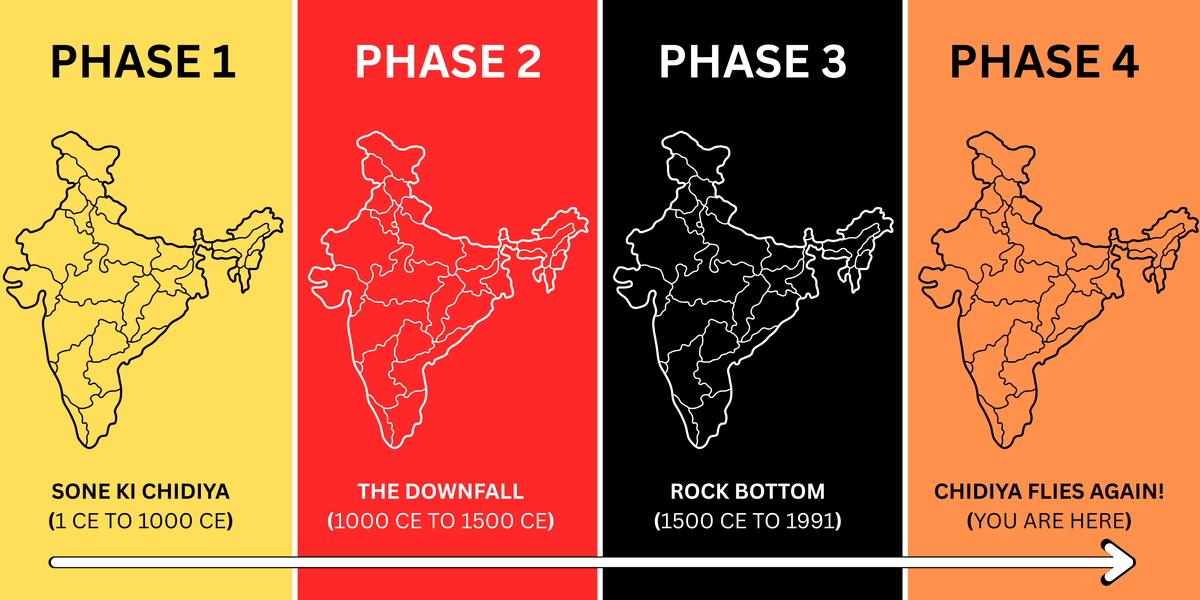
Courtesy of Amish Tripathi, dive in here
99. “If we lose this, we do not have a future at Ford”
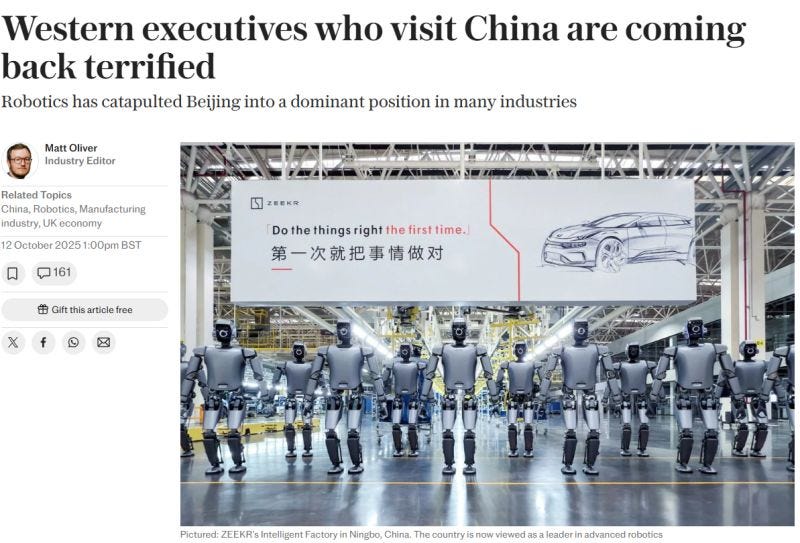
Per Zane Hengsperger -
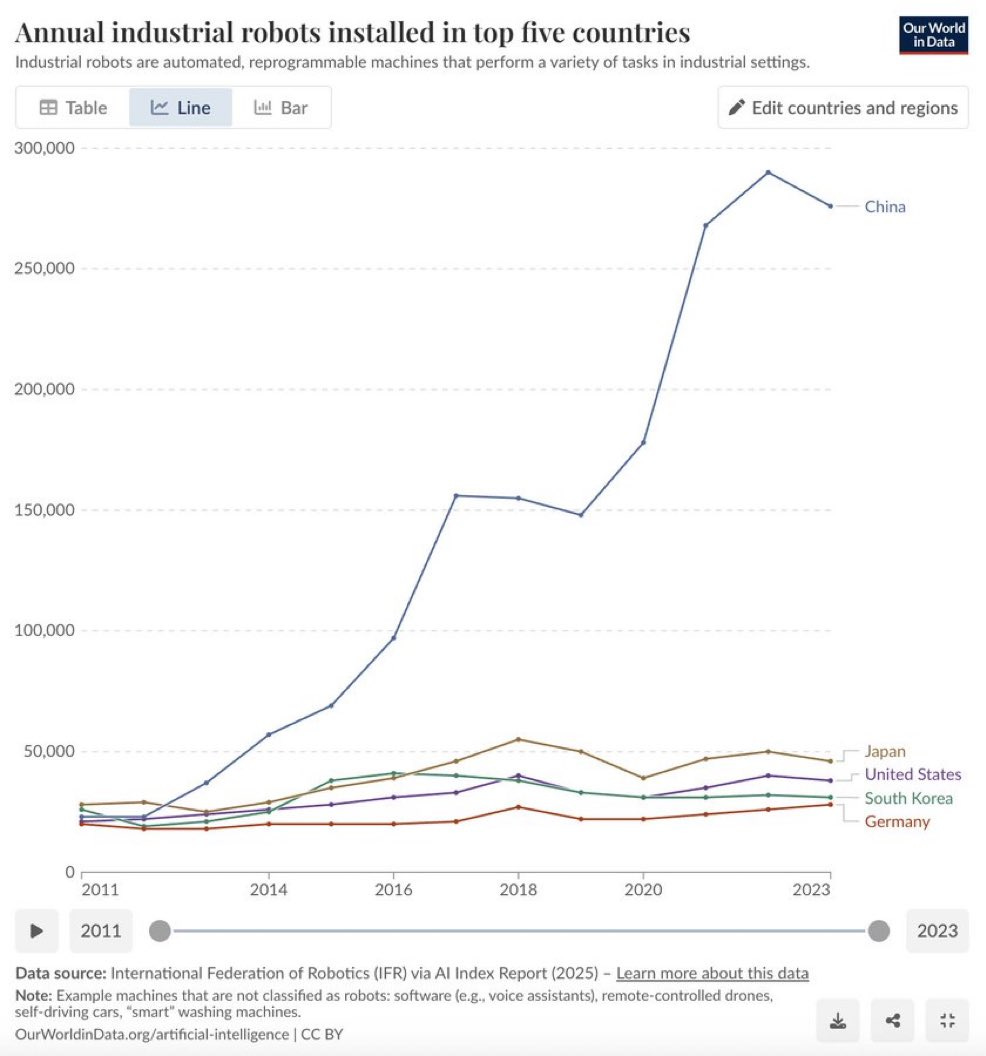
“If we lose this, we do not have a future at Ford,” says Jim Farley, CEO at Ford
China added 295,000 industrial robots last year.
The US? 34,000. The UK? 2,500.
Operation warp speed reindustrialization go go go.”
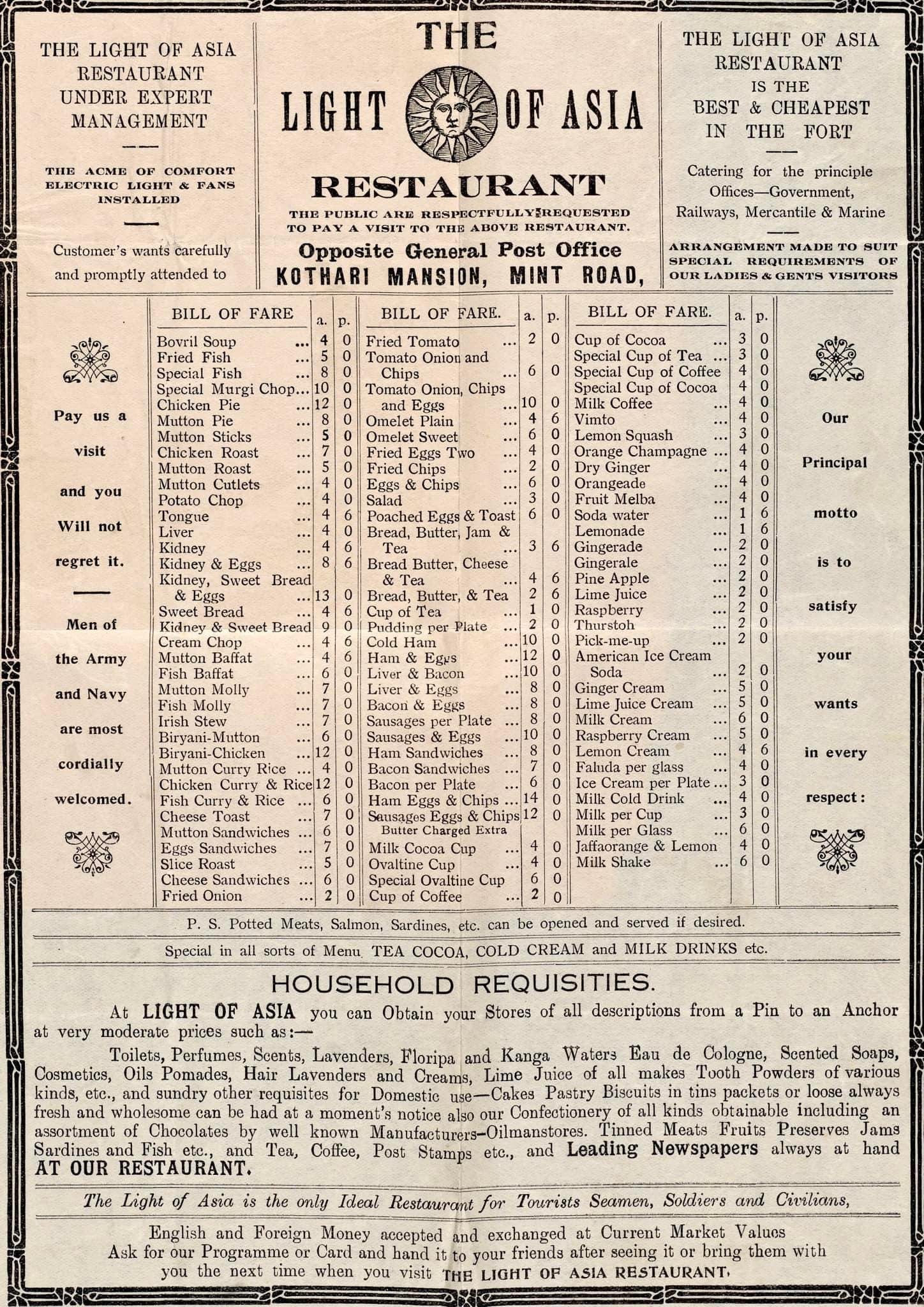
100. “Menu from the Light of Asia Restaurant. Mumbai, India in 1935.”
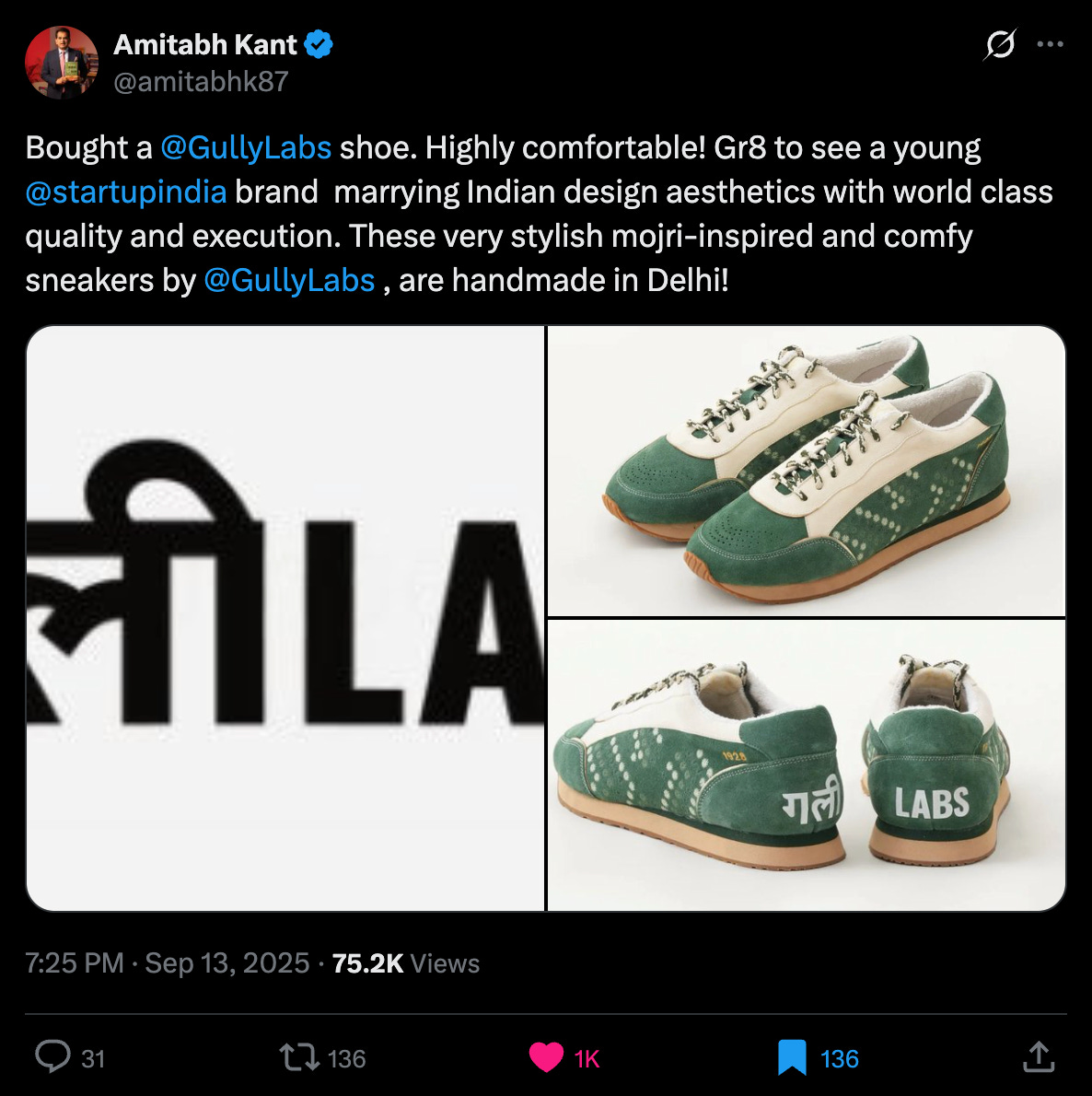
101. The former CEO of Niti Aayog saluting the work of one of India’s emerging culture setters
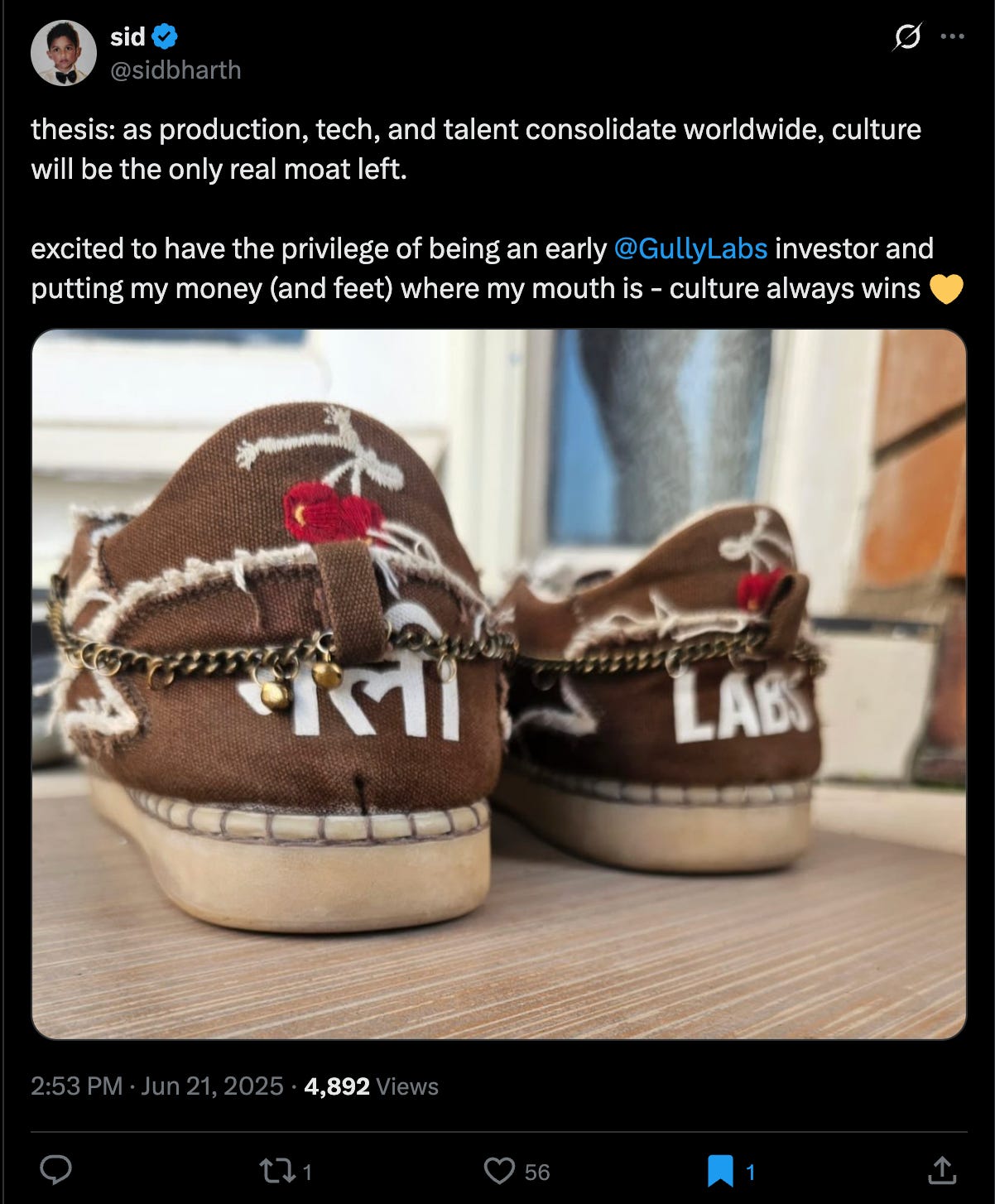
And more praise for Gully Labs from @sidbharth
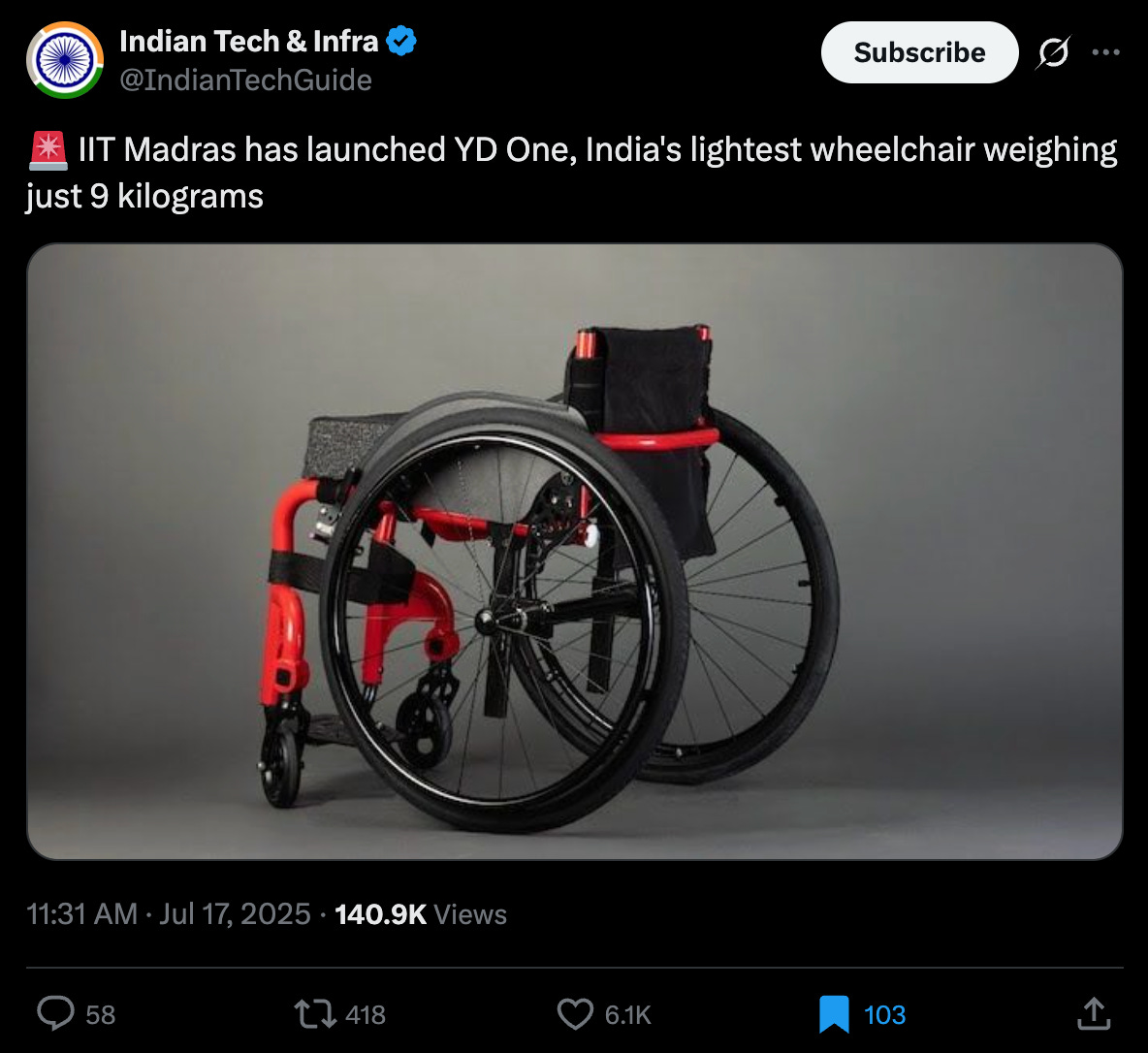
102. YD One
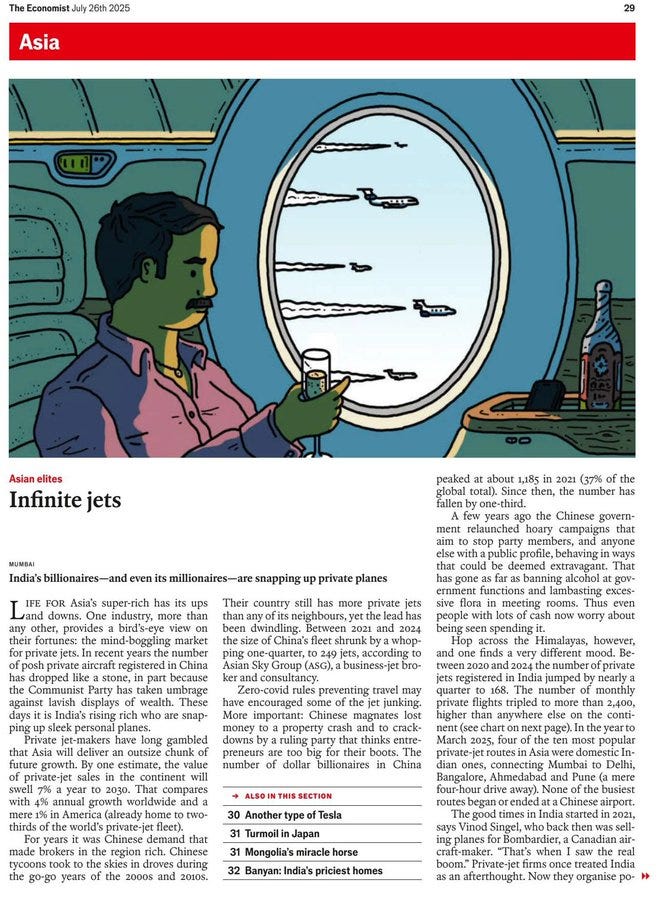
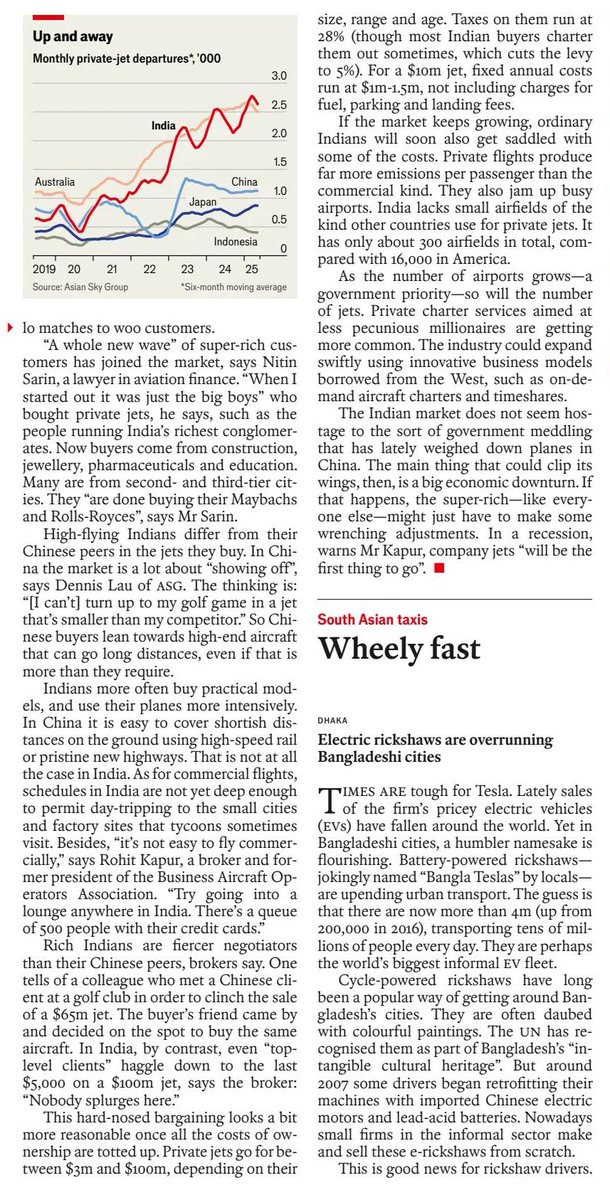
103. “India suffers not because the average Indian is mediocre, but because the Indian elite is mediocre. Instead of lifting all, they create little bubbles for themselves.” (h/t Diva Jain)
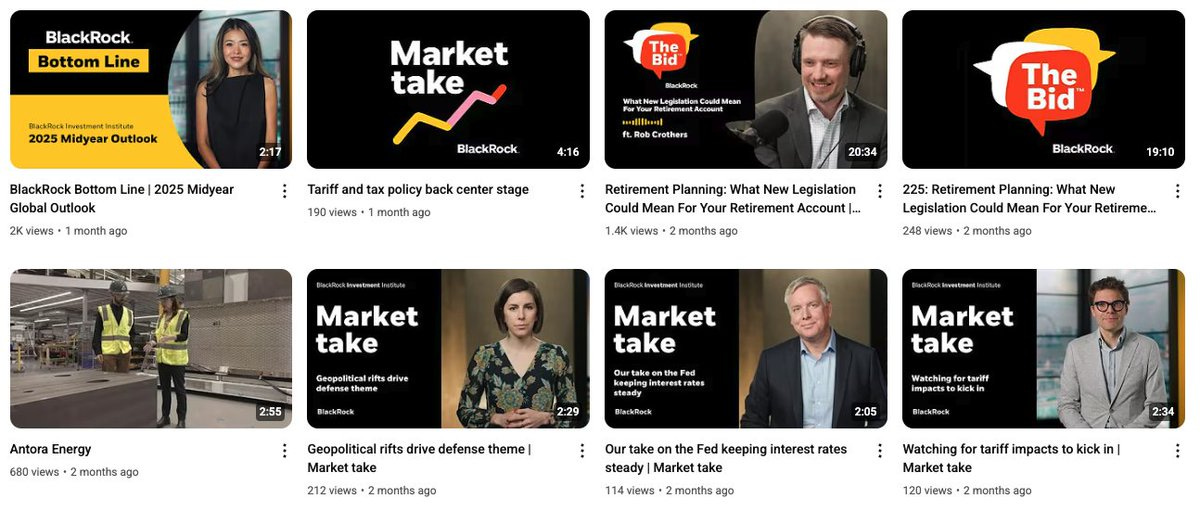
104. Content is hard
Per Jon Wu -
“thinking about how much money is spent on content no one watches
blackrock is the largest asset manager in the world
they’re rumored to spend $1m+ a year on youtube, and generating a whopping 114 views on videos”
105. “Incredible things are happening in the protein market”

106. “bhujia cos are going global much sooner than our deeptech cos. surely a good reason to continue investing in them :)”

107. The explosion of micro dramas
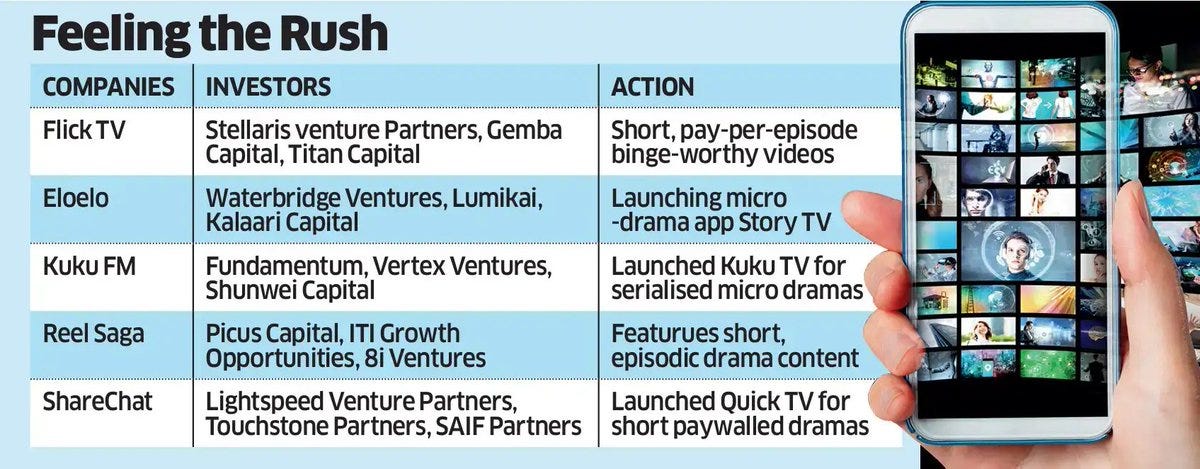
Per ETtech -
“Investors are betting big on short, binge-worthy micro-dramas as India’s next entertainment wave. Unlike user-generated content on Instagram Reels or YouTube Shorts, these are professionally produced with high-quality visuals and serialised, mobile-first storytelling.
Alongside startups such as Flick TV, Eloelo, Kuku FM, Chai Shots, and ReelSaga, larger digital platforms like Amazon, ShareChat, and Zee Entertainment Enterprises (ZEE) are also stepping into the micro-drama market to meet growing demand.
The big challenge now is figuring out how to monetise the format. Some platforms are testing a pay-per-episode model with micropayments, while others plan to introduce monthly and quarterly subscription tiers.”
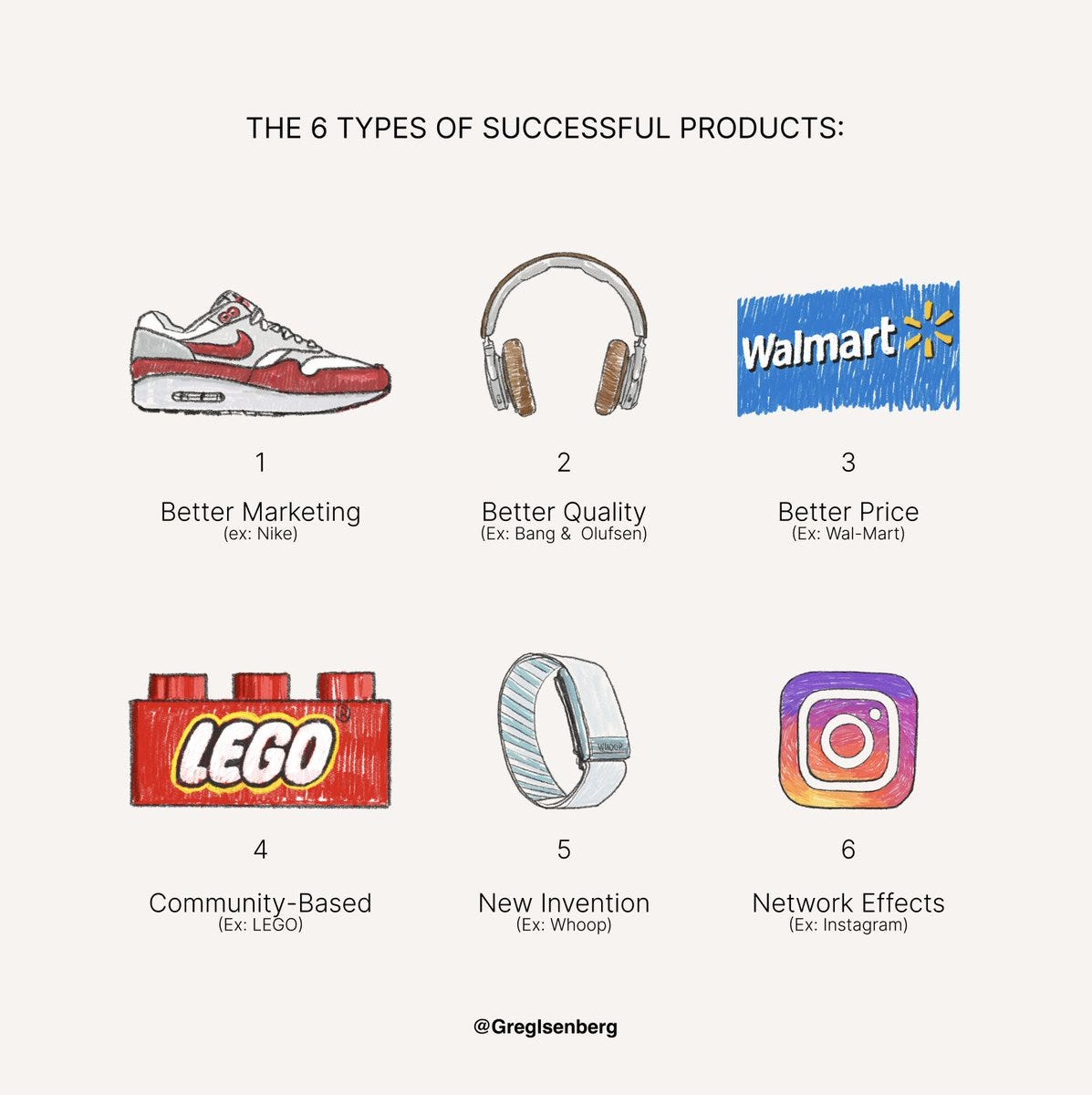
108. “There are 6 types of successful products”
109. “japanese posters of om shanti om”

110. “Majority of GTA 6 developers are Indians.”

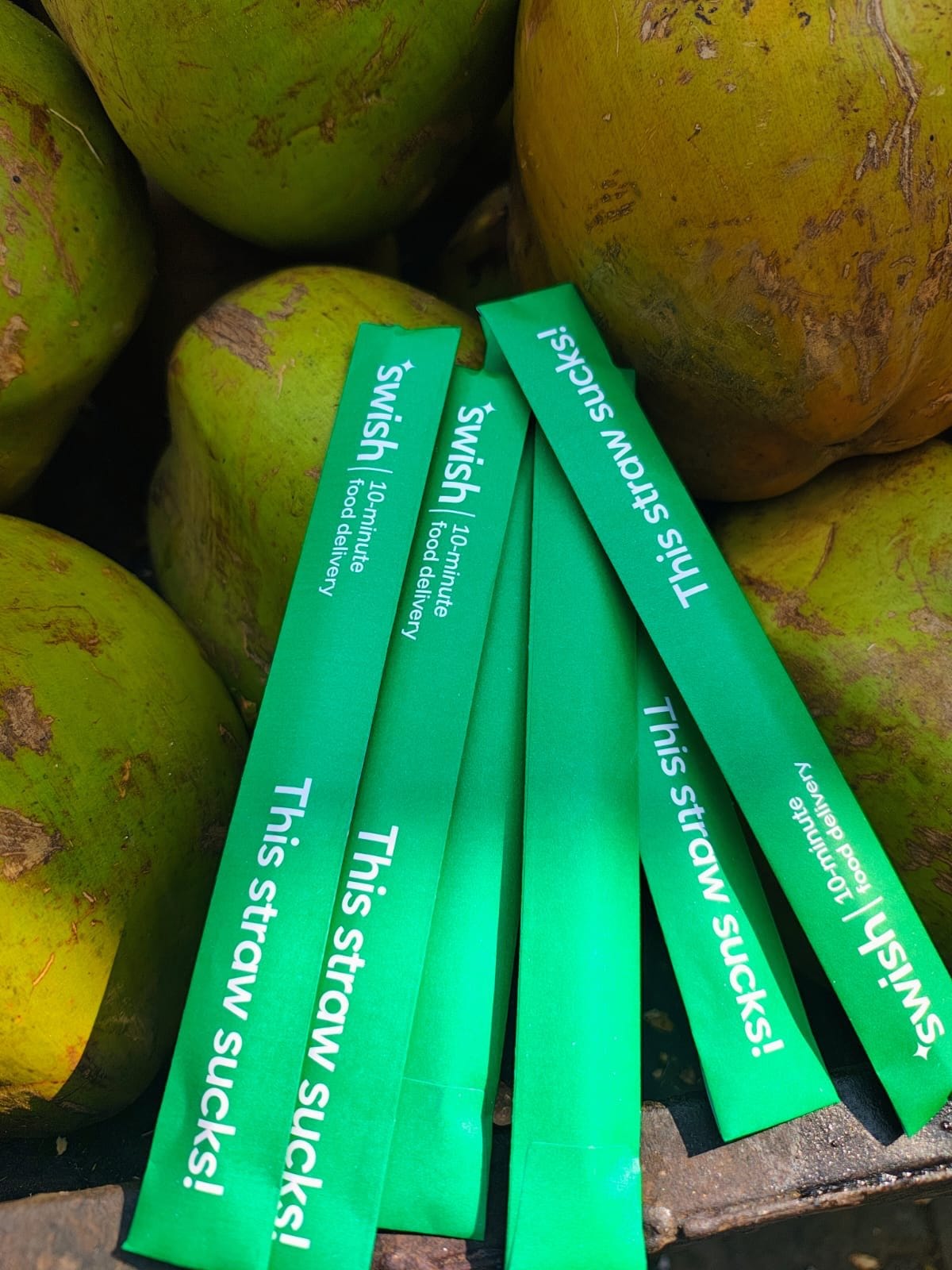
111. Quick commerce guerilla marketing
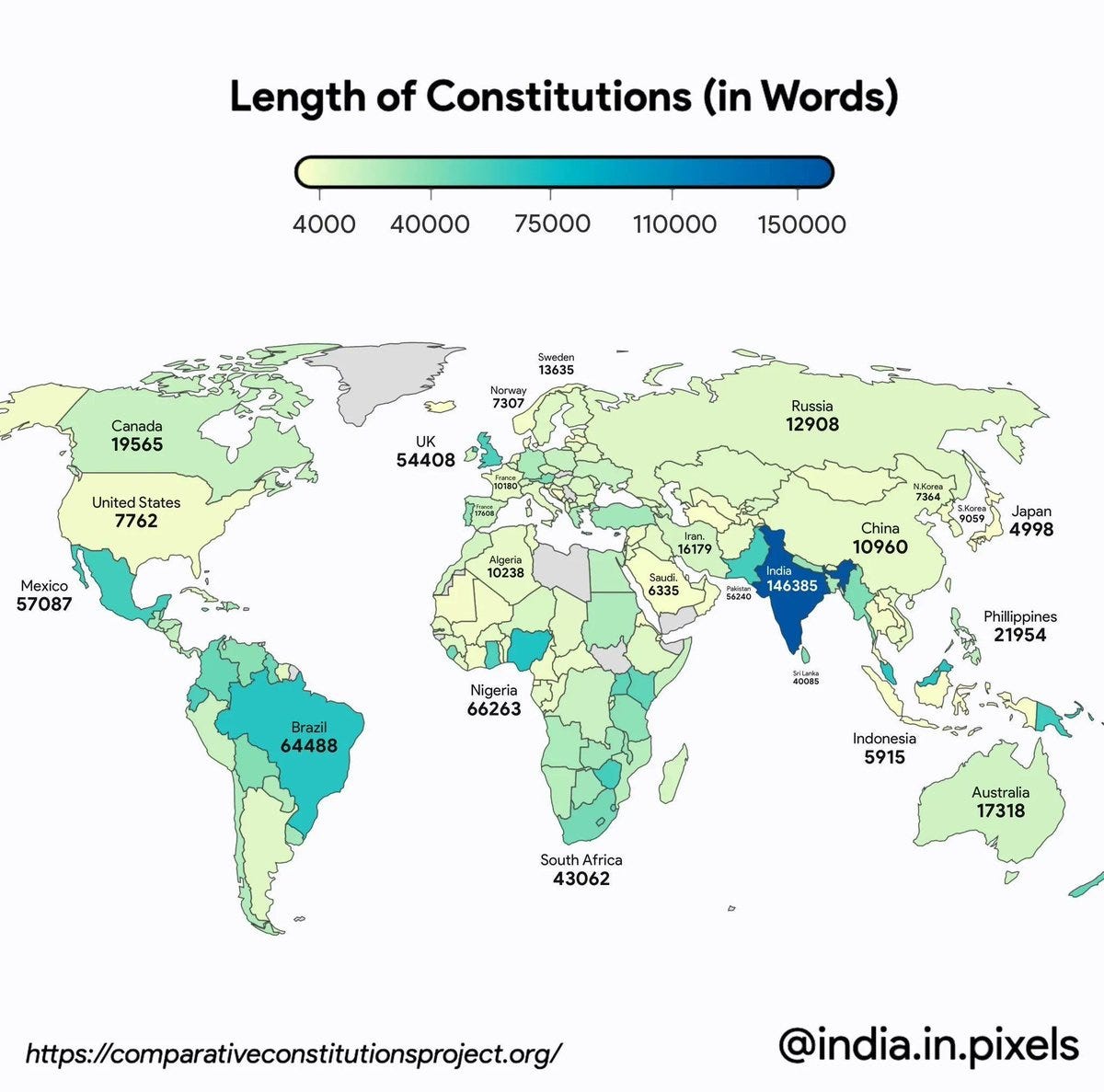
112. “Congratulations to India for having the longest constitution in the world”
113. Indian culture - ready for the world

114. “Why Indian food hits different, brought to you by science”
115. Too real
116. In praise of entrepreneurship

117. “Every Indian shop”

118. TV Ownership in India
Per Data For India -
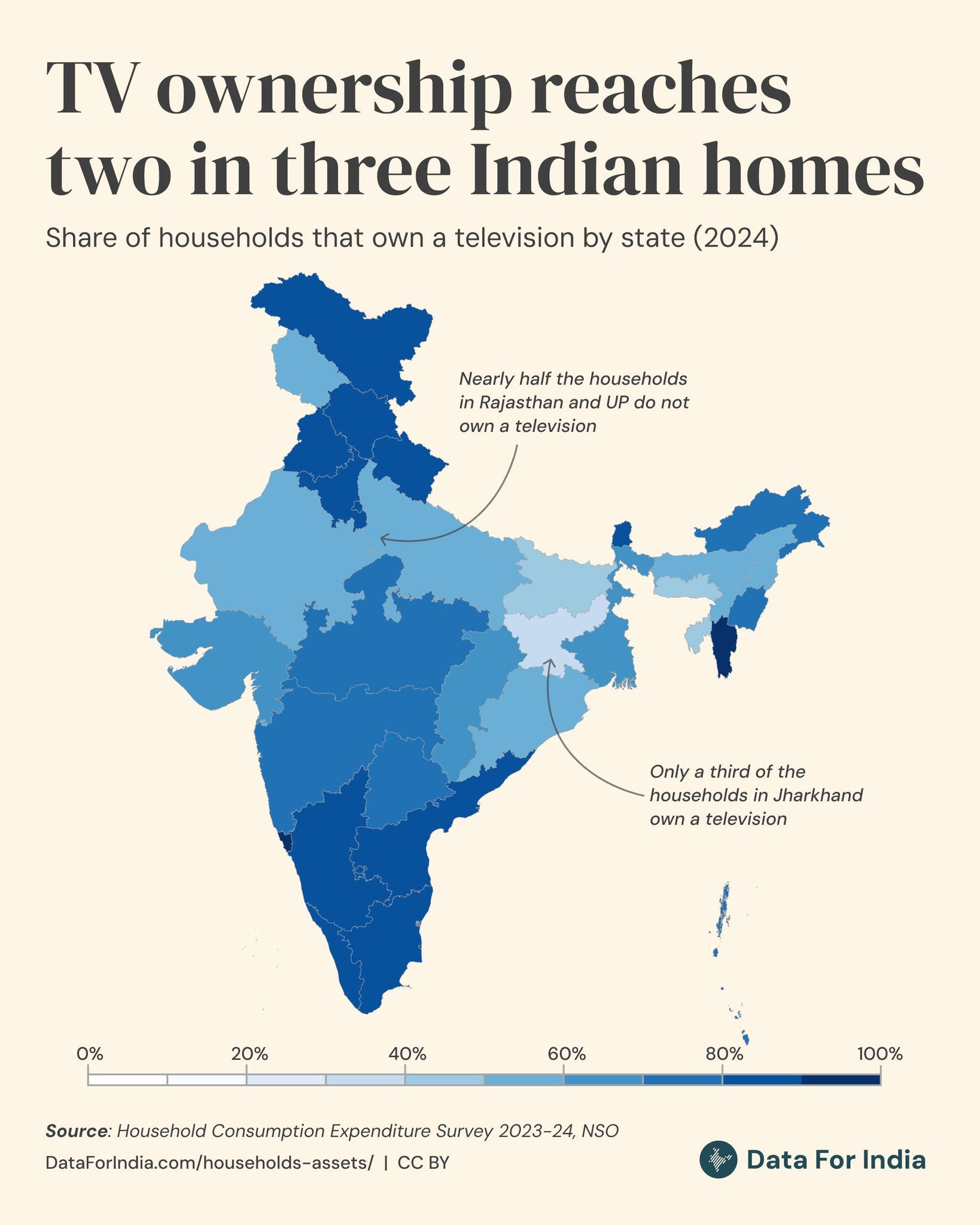
“Measuring the ownership of physical assets--like a TV, refrigerator, or washing machine--often helps understand the economic situation of a household. The Household Consumption Expenditure Survey by the National Statistics Office does exactly that, asking Indian households if they possess any among a list of household assets.
The most widely owned of these assets in India is the television. Two-thirds of Indian households owned a television in 2024. This translates to a little more than 200 million Indian households with a TV in their homes.
In the early 1990s, just 10% of Indian households owned a television. TV ownership grew rapidly since, but the pace of growth has fallen in recent years, suggesting that household ownership of TVs is nearing saturation.
States in the north and the south with higher per capita incomes have a considerably higher ownership of TVs. Even among the poorest 20% of urban Indians, over half now own TV.
How does the ownership of other household assets like refrigerators, washing machines or air conditioners look?”
Read Abhishek Waghmare’s piece on Households assets in India for more.
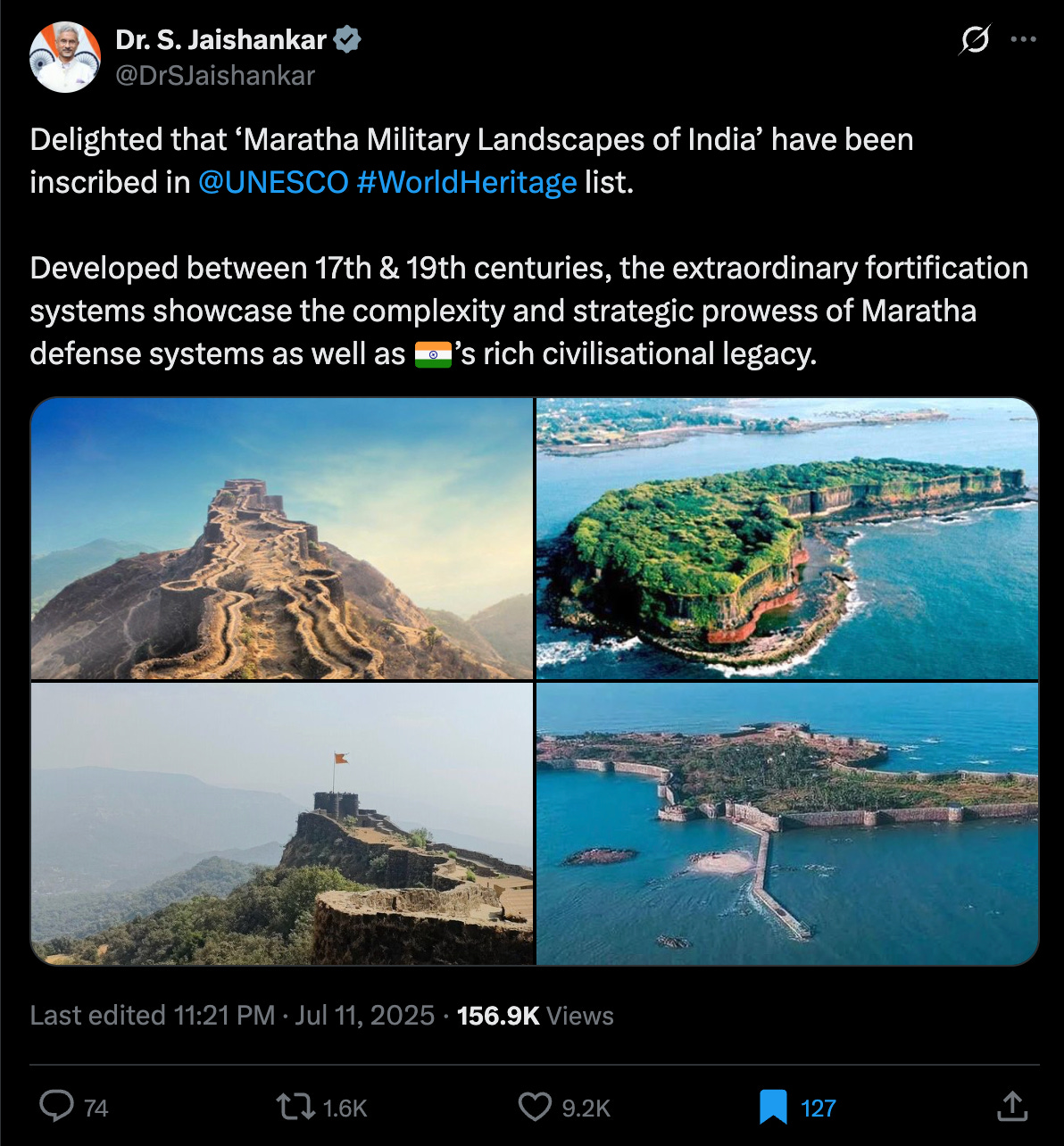
119. ‘Maratha Military Landscapes of India’
120. On market corrections
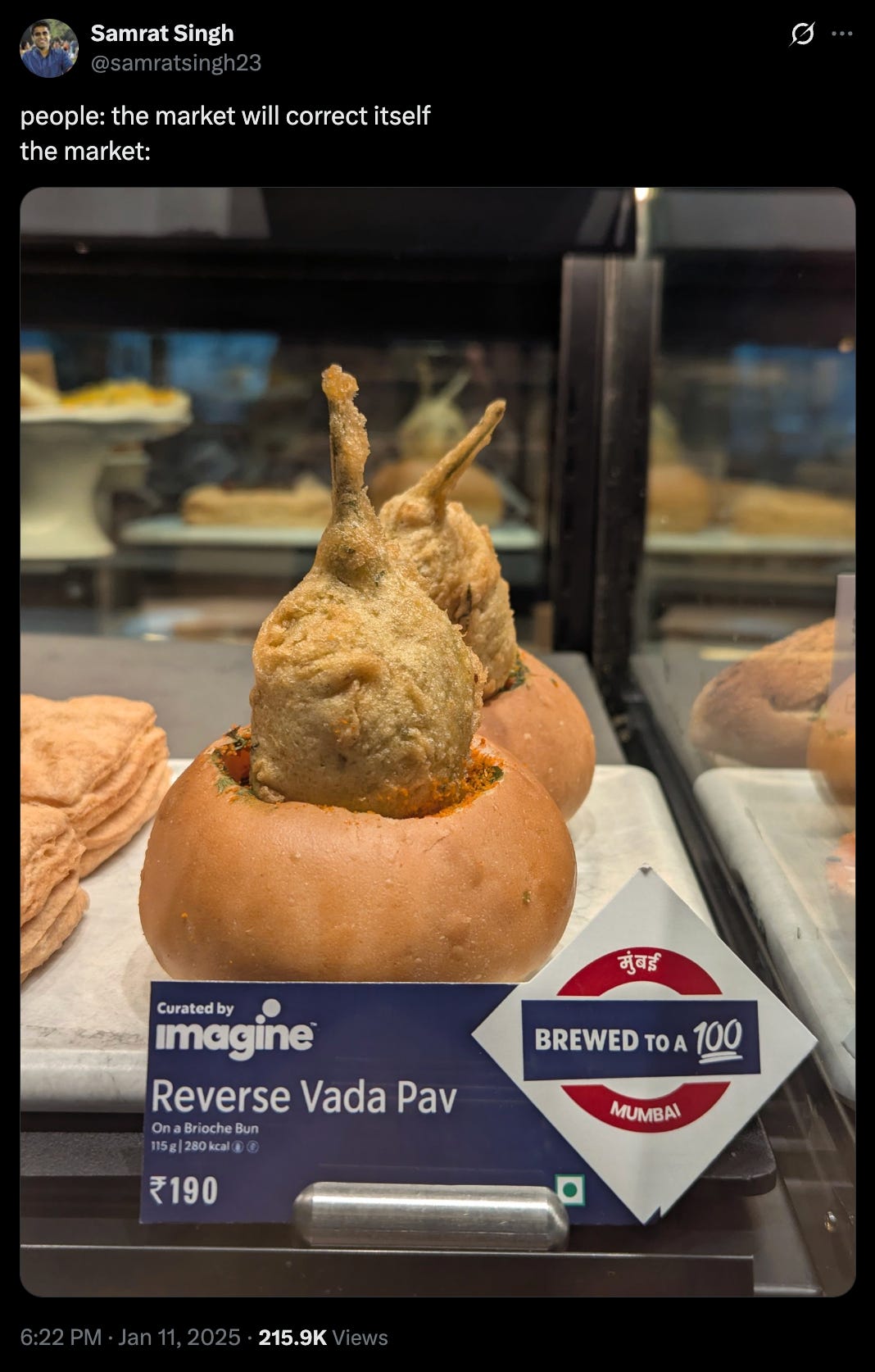
121. “A single map to help explain India”
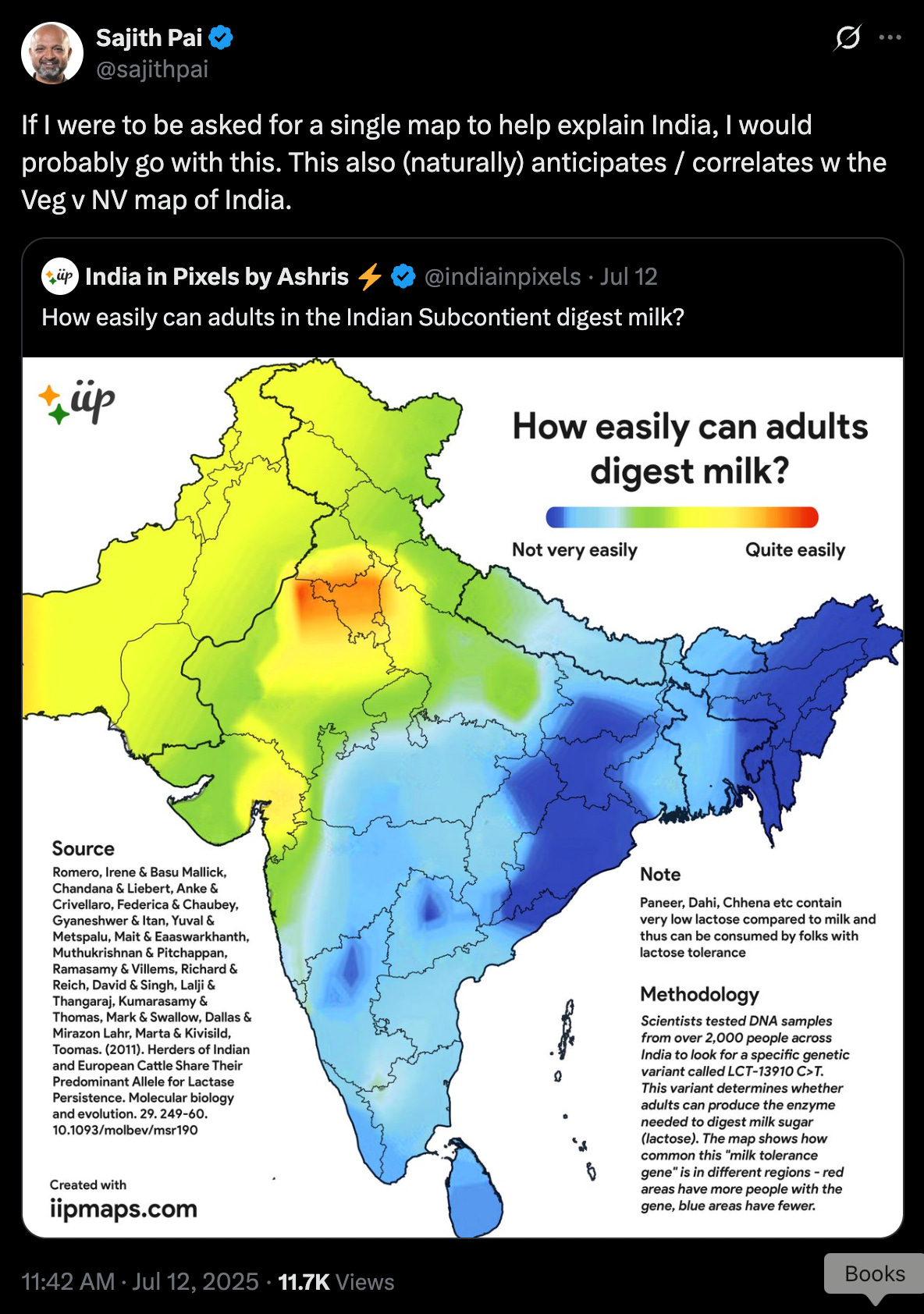
122. The world’s largest fast food and drink chain
Per Sheel Mohnot -
“Mixue, a Chinese Boba company that started life as a single street stall IPO’d yesterday with a $14B market cap.
Now they have 46,000 locations (more than Starbucks or McDonalds), opening 21 locations PER DAY since 2019.”
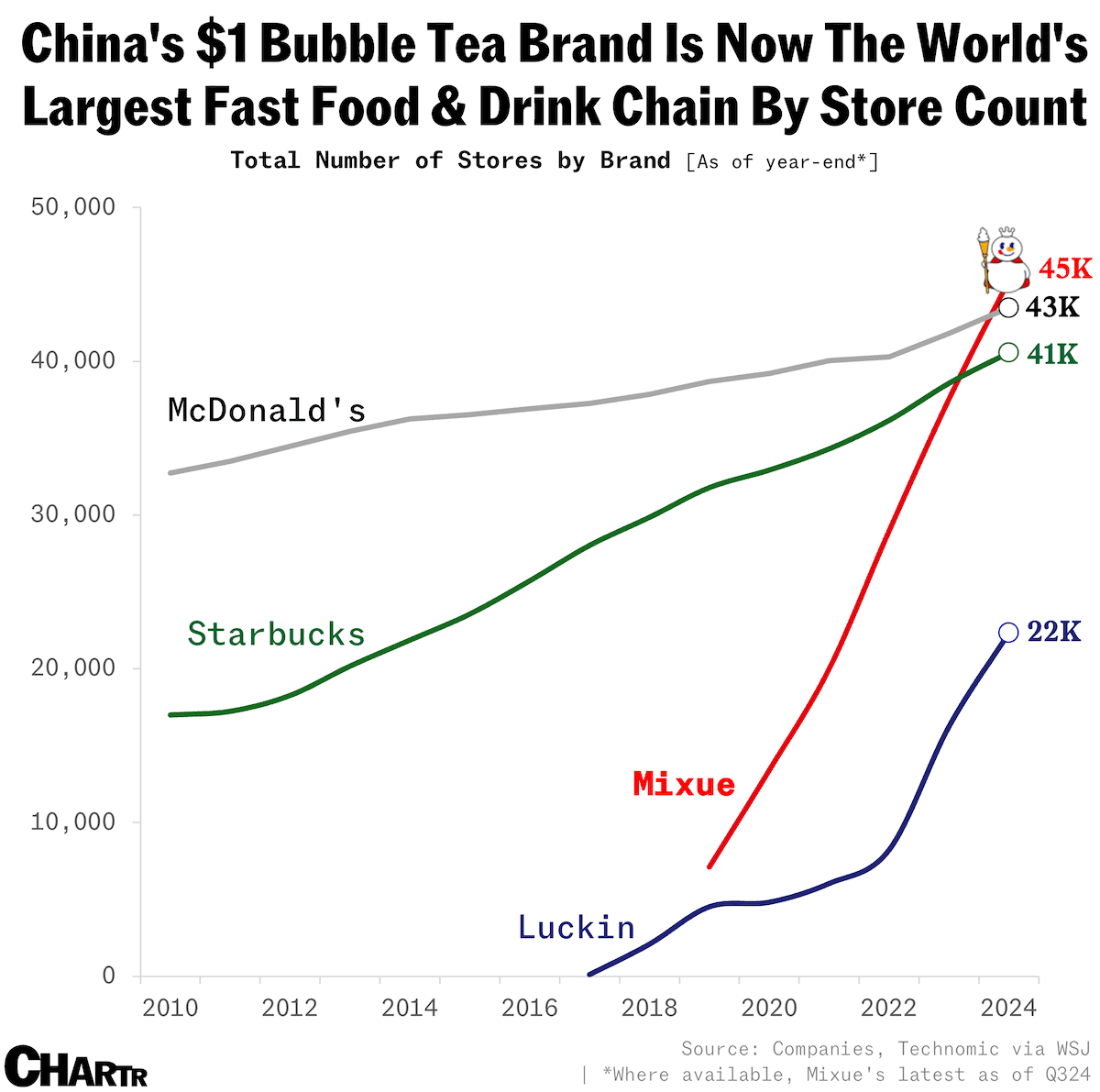
123. "I don’t want to hear nonsense that India doesn’t innovate”
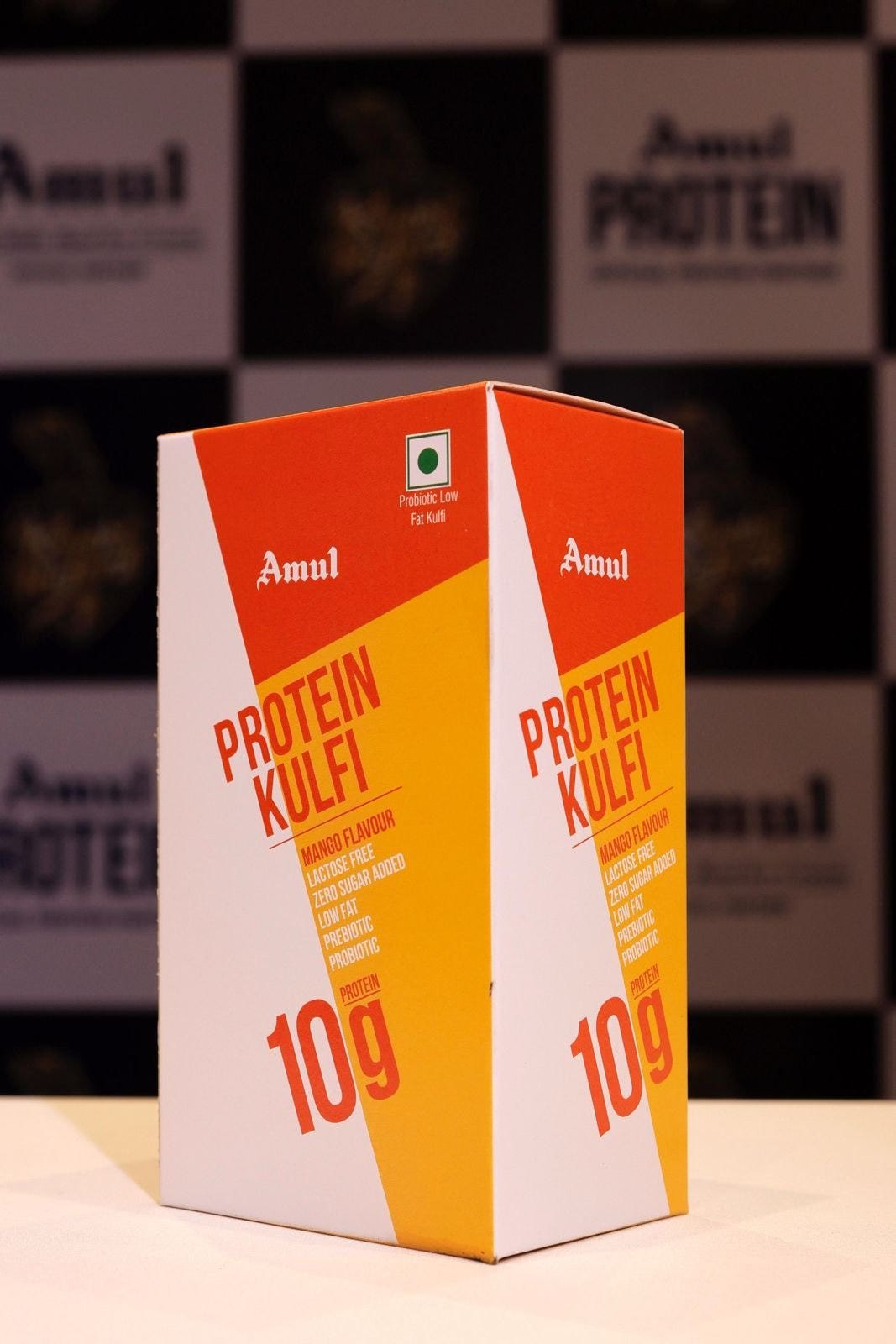
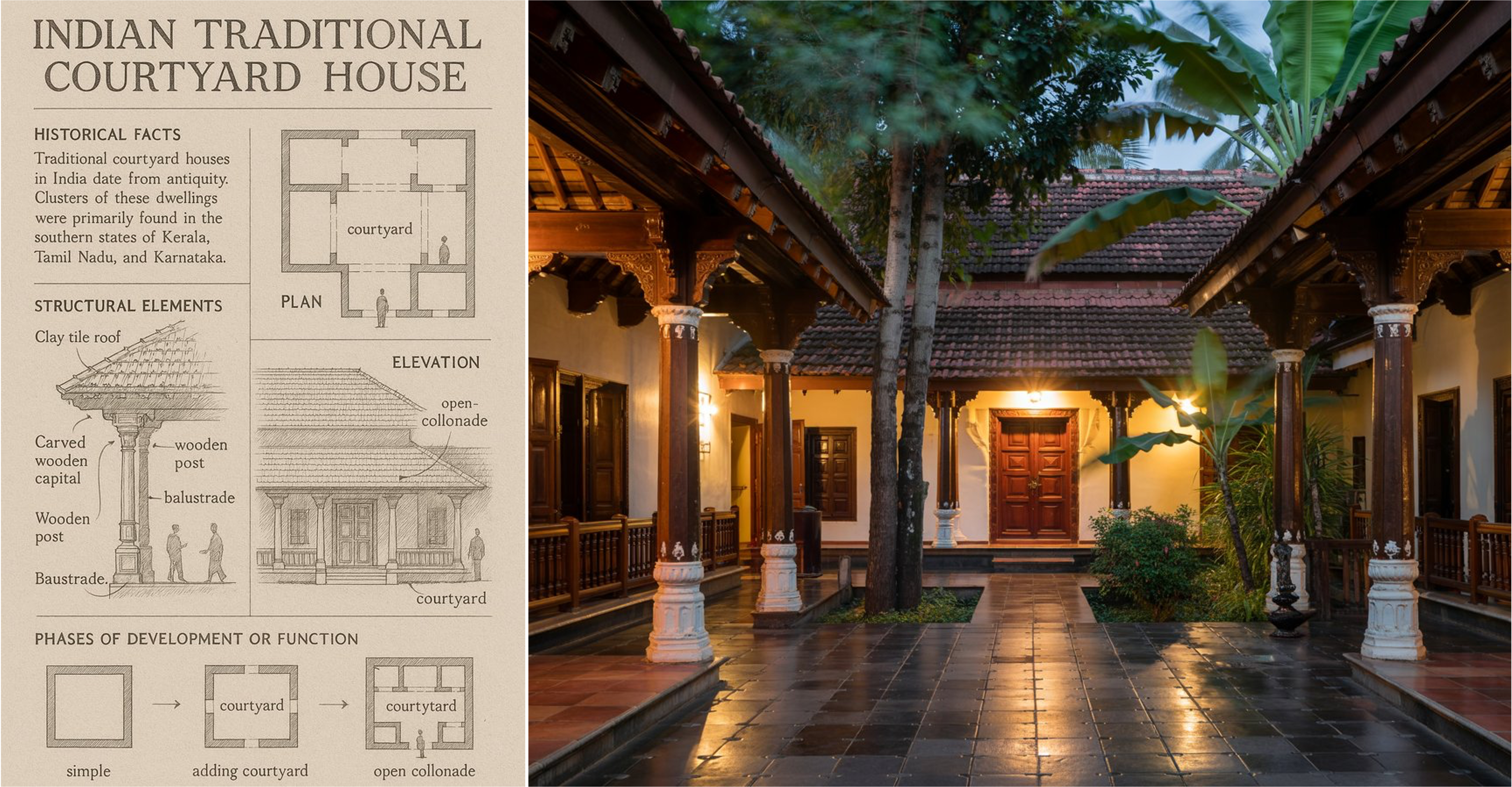
124. “Indian Traditional Courtyard House - Best Kept Secret, render”
125. “9 Types of Vegetarians in India”
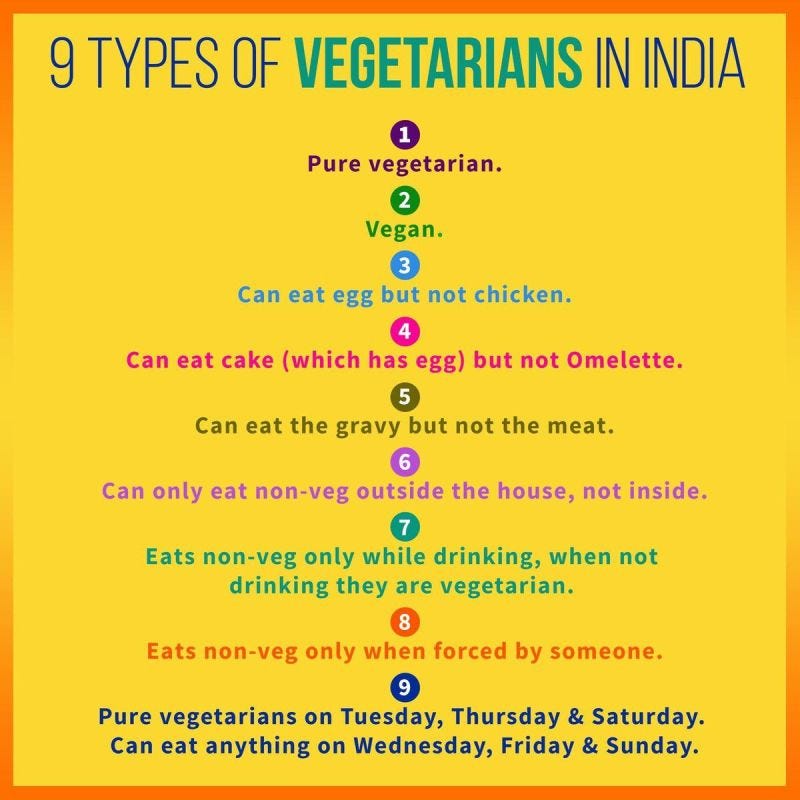
Per Shuchi Pandya -
“Someone shared this image with me on a WhatsApp group recently and I thought it was hilarious! But it also got me thinking about India’s hyper heterogeneity.
Marketers love calling India a diverse market.
That word is too soft.
India isn’t just diverse, it’s hyper-segmented.
If something as simple as “vegetarianism” fractures into nine identities, imagine what happens in how we consume fashion, beauty, food, dating, or travel.
And therein lies the challenge for new age brands. Traditionally good brands have tapped into a universal sentiment or emotion, but whom do you build for when Indians have so many multi-faceted dimensions to their identity. The same Indian consumer has both generalised and extreme behaviours - which make him or her easy to convert but not very easy to retain. The solution for brands then lies in finding not “mainlands” but “islands” of customers.
For example, one customer island could be “working women who live in a nuclear family and love coffee”. While another one could be “unmarried working women who own their own business”.
What we often recommend to our brands is to segregate their consumers into these “islands” and then create “mainland” use cases for the product which make it easier for positioning across mini cohorts. (Let me know if you’re keen on seeing some case studies, and I can post about it!)
It’s a combination of hyper fragmentation and generalised functions/trends that makes building for India both complex and fascinating.”
126. “a16z’s plan for domination”
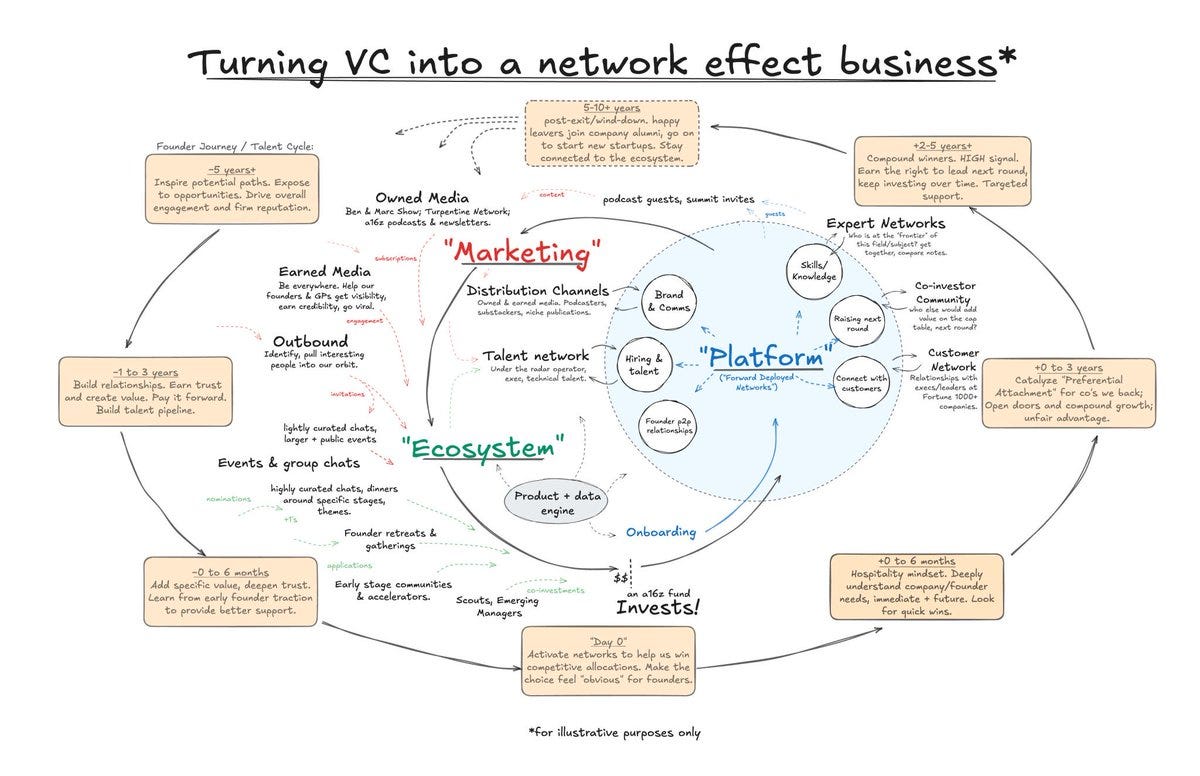
Per Andrew Yeung -
“This is @a16z’s plan for domination.
It’s the reason they’re the world’s #1 venture capital firm with $56B under management.
They didn’t just build a fund ... they built an ecosystem
Instead of only offering capital, they built:
• Owned media – podcasts, newsletters, and social channels that help founders build visibility and distribution.
• Private founder circles – curated chats, communities, and events that offer real support through the lonely founder journey.
• Talent communities – pipelines of top operators and executives for founders to hire.
• Expert networks – advisors and specialists who help with product, strategy, and diligence.
• Investor networks – trusted and valuable co-investors for founders to round out their cap table.
You’ll notice the two forces driving all of this: media and networks.
Today, capital is abundant ... especially for the top founders.
The top venture firms aren’t competing on money anymore.
They’re competing on what’s scarce: attention and community.”
Bonus - everything in a16z’s New Media manifesto that seeks to turn the firm into “the F1 Pit Crew of Venture” -
On the craft of storytelling
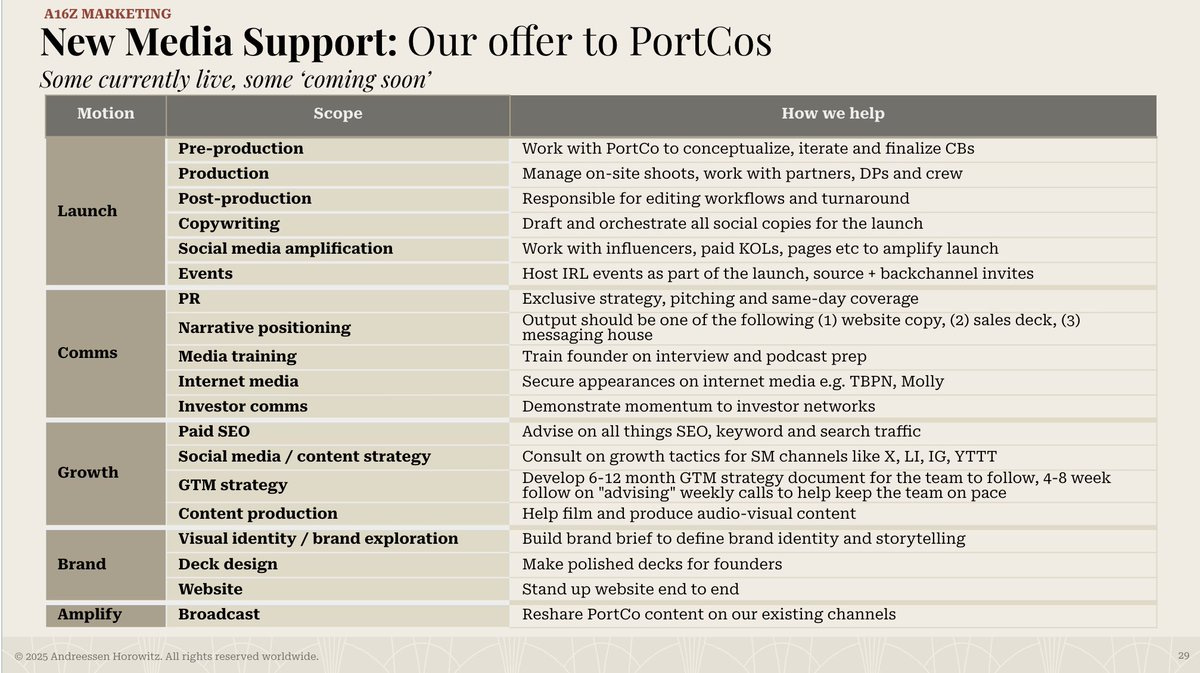
And why they exist
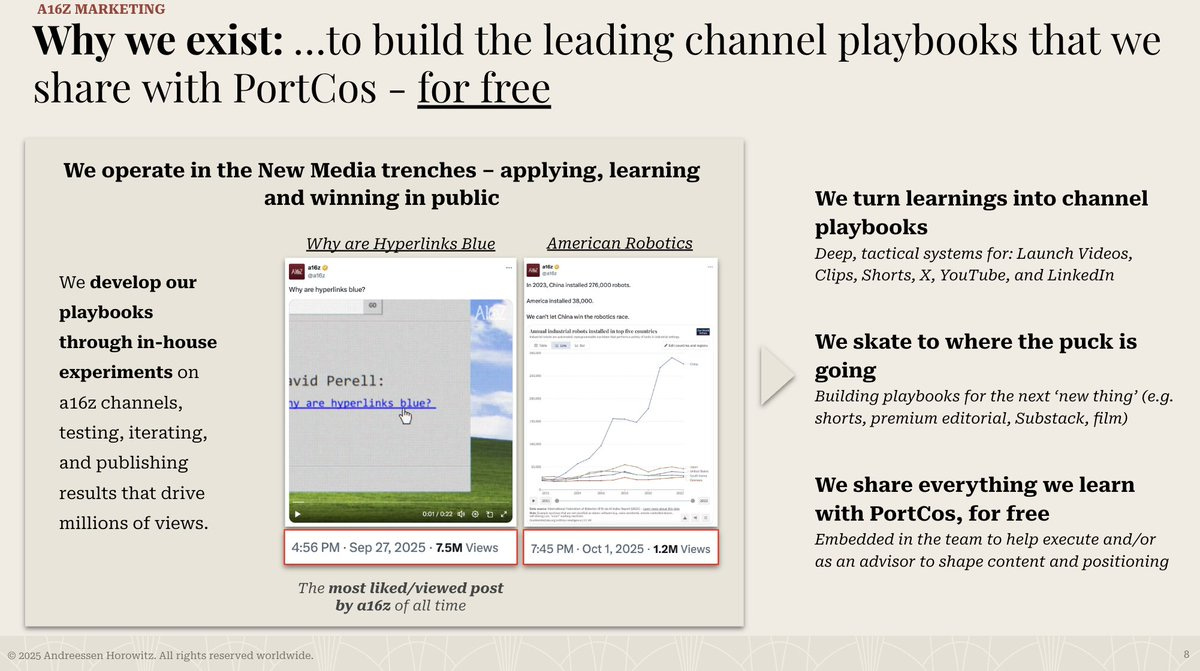
And how they support founders
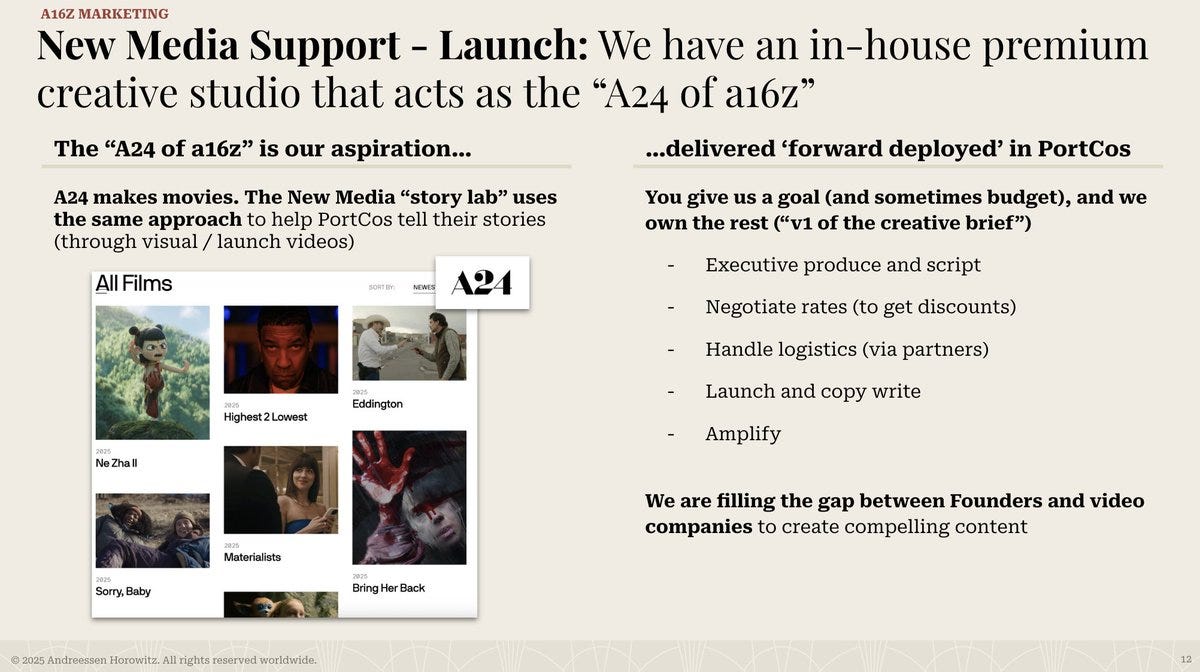
And ‘Launch as a service’
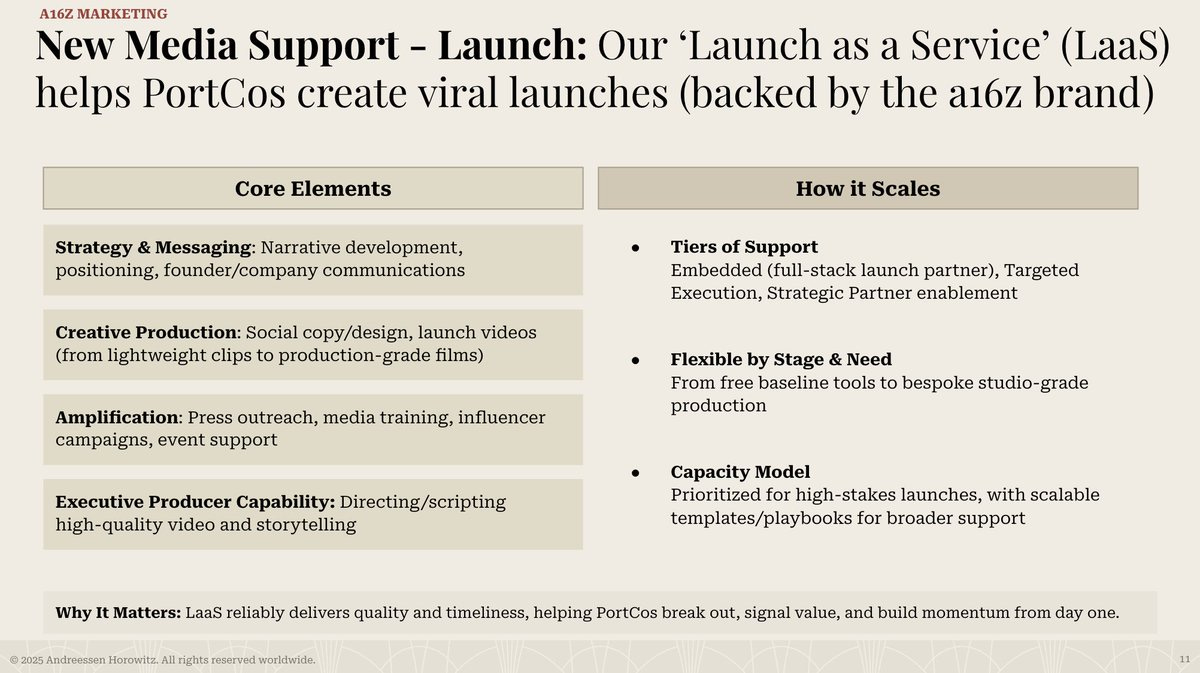
And launch packages
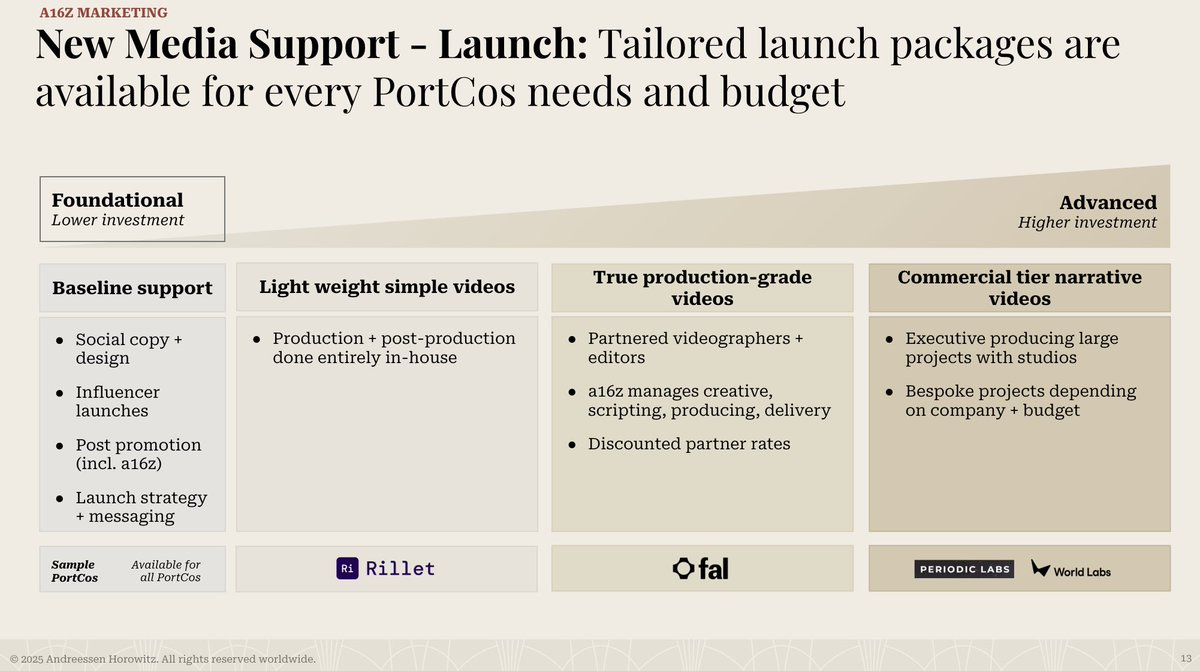
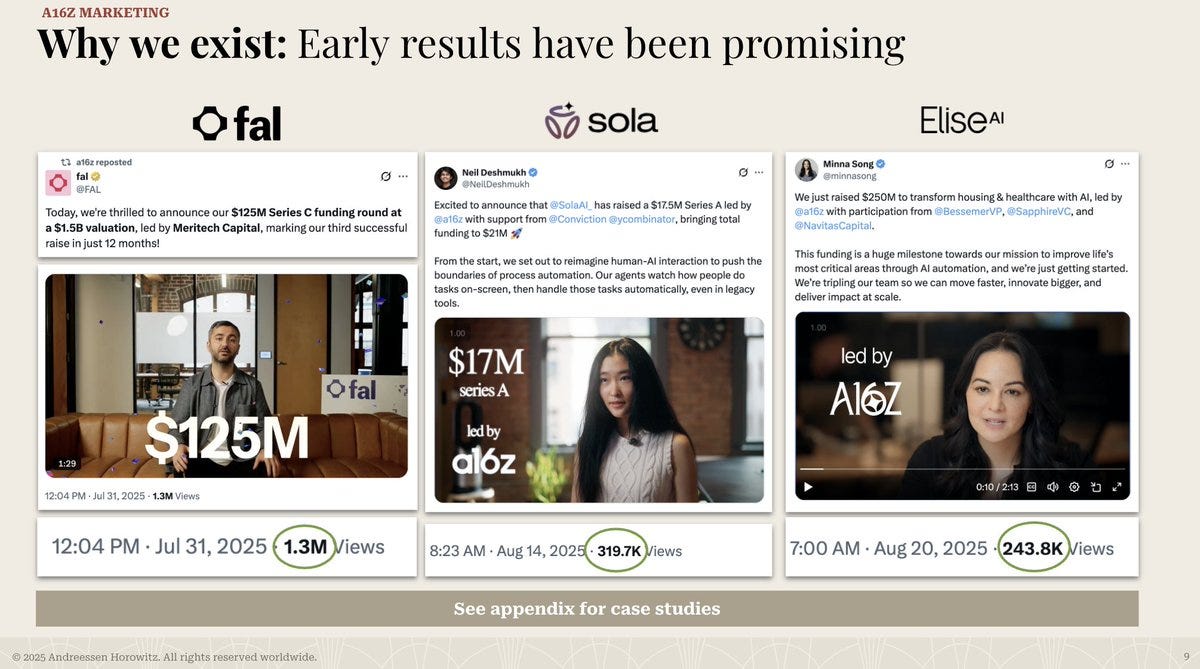
And early results
127. On Bharat focused consumer apps
Per Deedy Das -
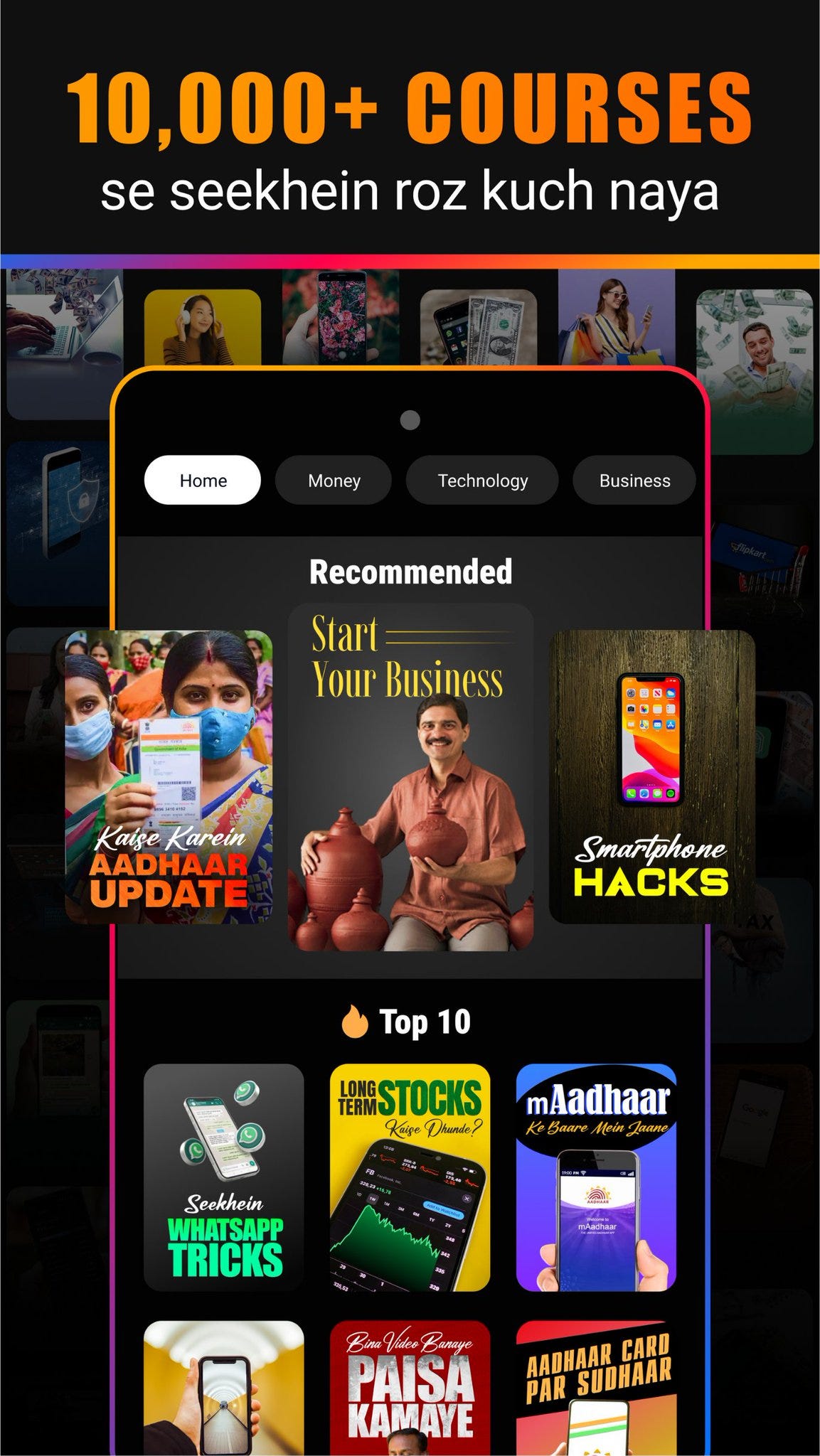
“There’s an Indian short video-based learning app with $50M in ARR that isn’t just a US copycat app.
It has
— 1M+ subscribers
— #1 in India Android App Store
— 50M+ downloads
— great penetration in tier 2/3 cities
It’s called Seekho. Fantastic study in emerging consumer markets.”
And Hiral Goyal -
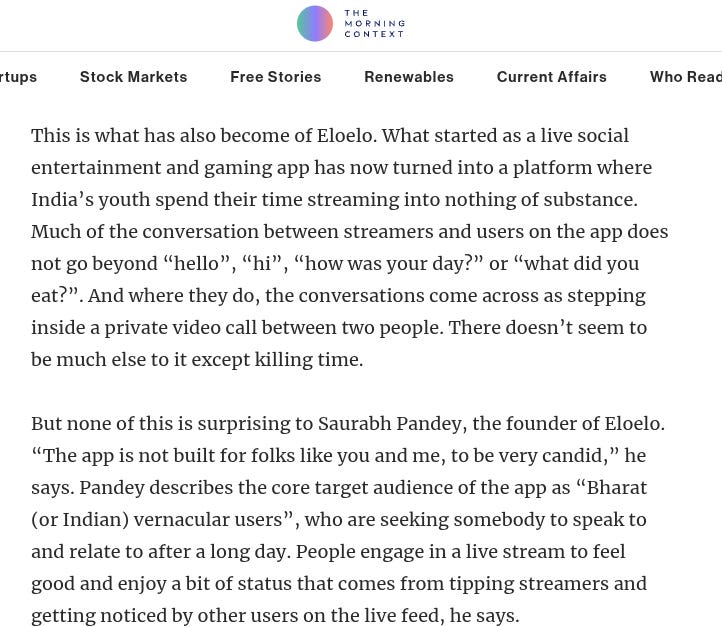
“Eloelo spent years trying to find the right product to start monetizing. Only to fall back on lonely Indians looking for someone to speak to and willing to pay for it.”
128. Everyone’s got an astrology app
Per Vivek Raju -
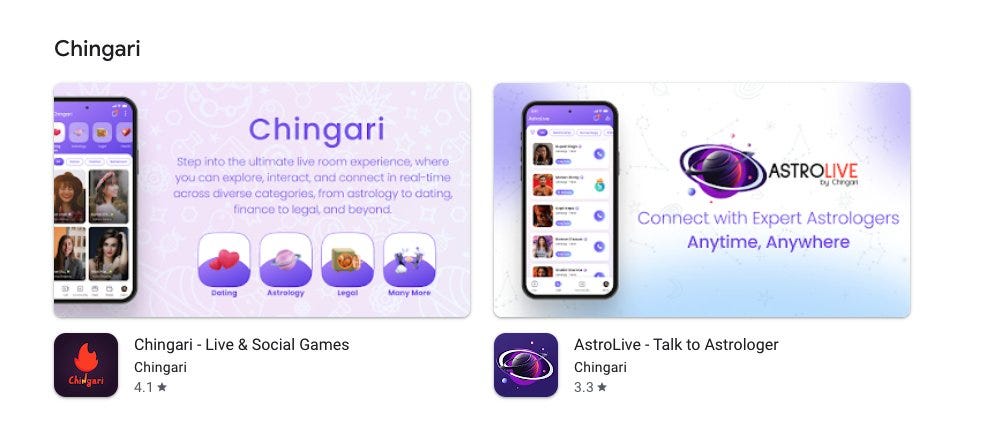
“Chingari also has an Astrology app.
Lots of tech players now - heated space.
- Astrotalk
- Astroyogi
- Vaya
- Vama
- AstroLokal (by Lokal)
- InstaAstro
- Taaraka (AI astrologer)
Incidentally, the recent startups aren’t the first ones to bring tech to astrology. There are already 2 big players (1M+ users)
- AstroSage (launched 2004)
- Ganesha Speaks (launched 2003)”
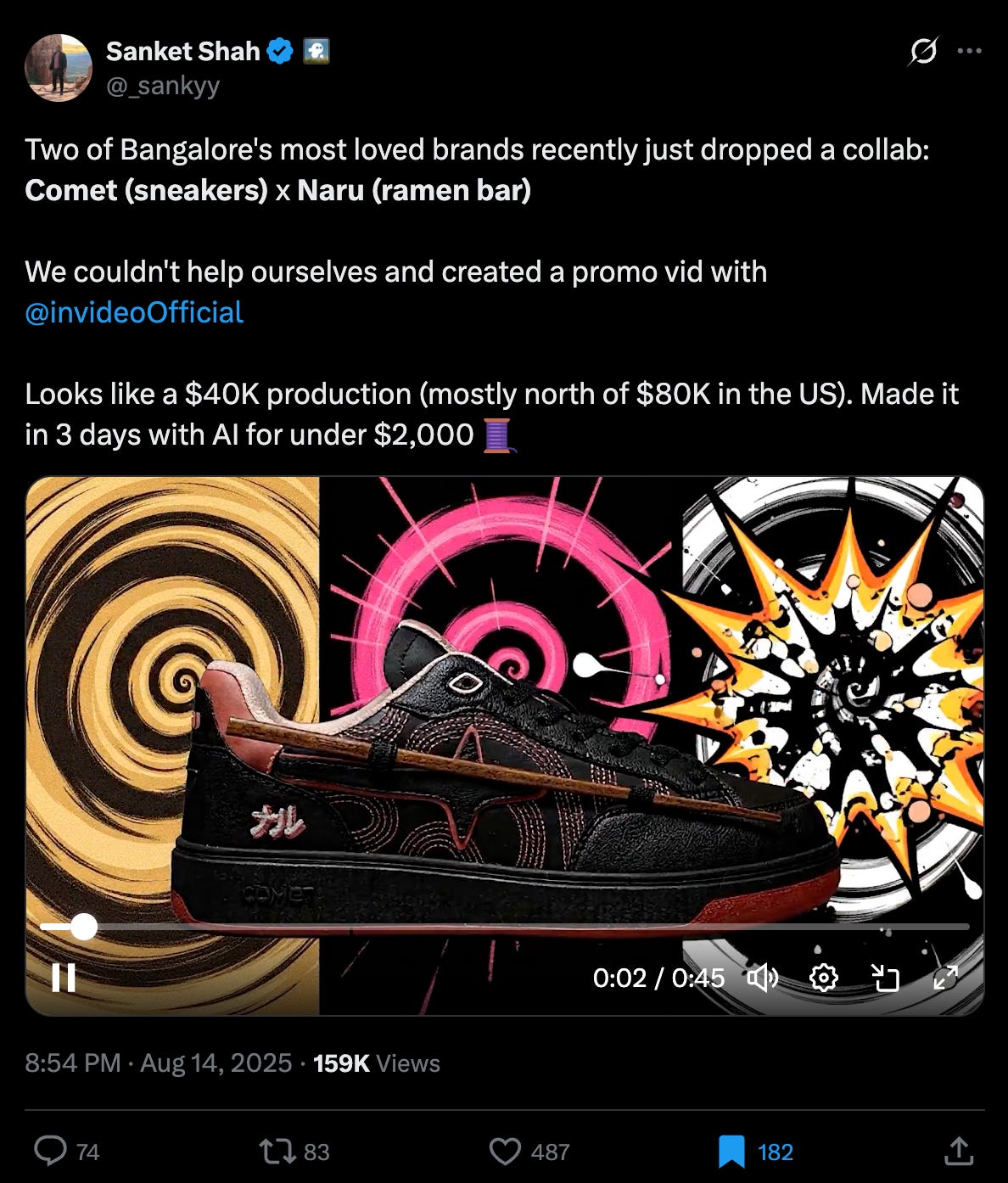
129. Comet X Naru (feat Invideo)
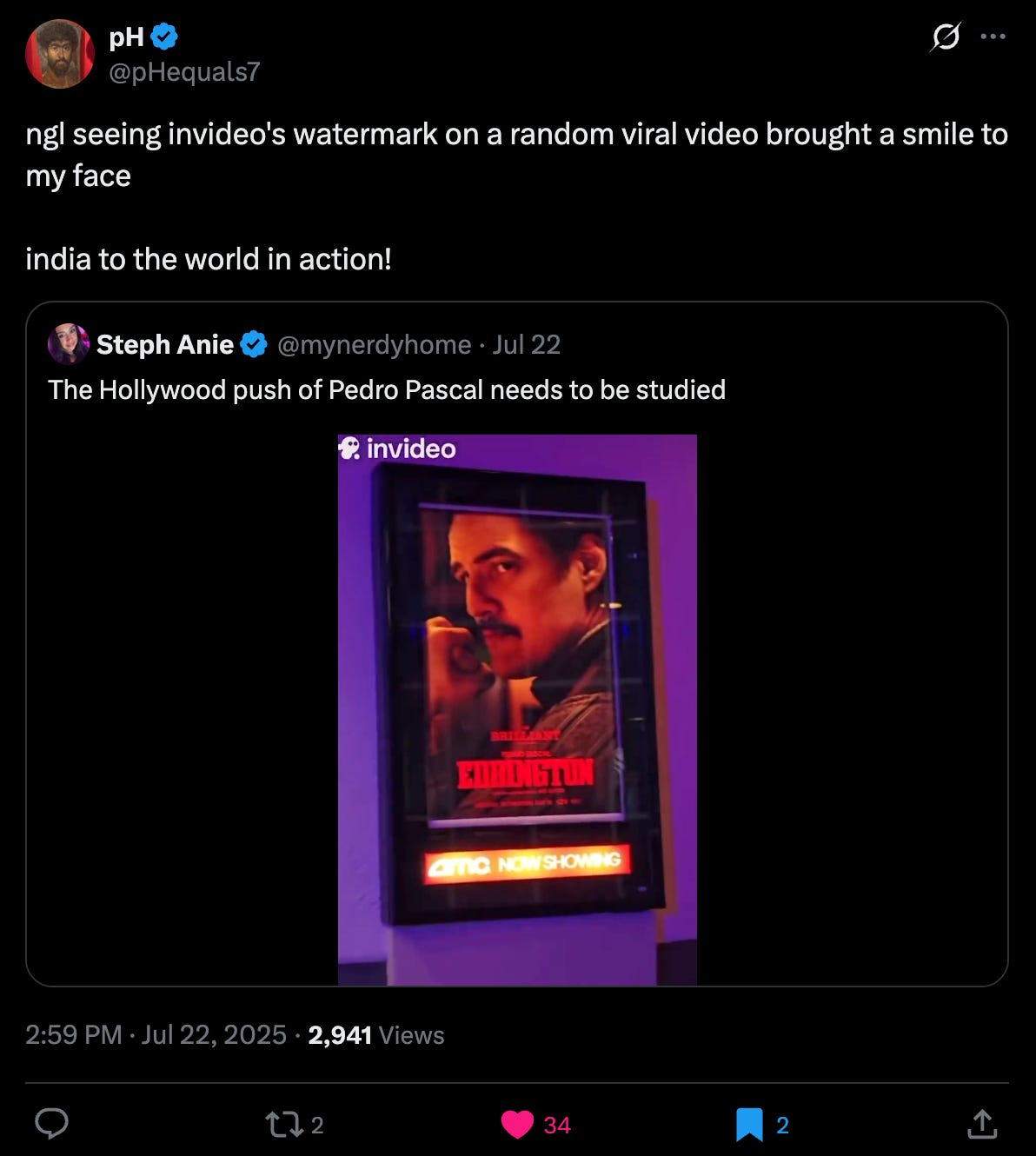
Bonus - the Invideo watermark making it onto trending global videos
130. The Indian wedding apparel market (h/t Stocktwits India)
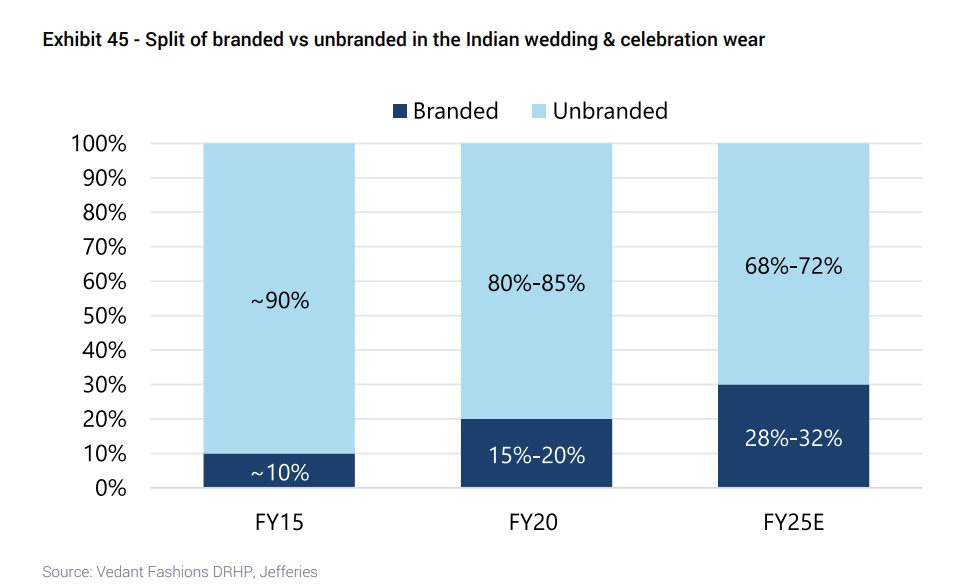
According to Jefferies, the ₹1 lakh crore wedding apparel market, which has largely been an unorganized sector until now, is rapidly shifting towards branded apparel. In FY20, the share of branded clothing was 15-20%, but by FY25, it’s expected to reach 30%.
Here are three companies that could benefit the most from this shift, a thread
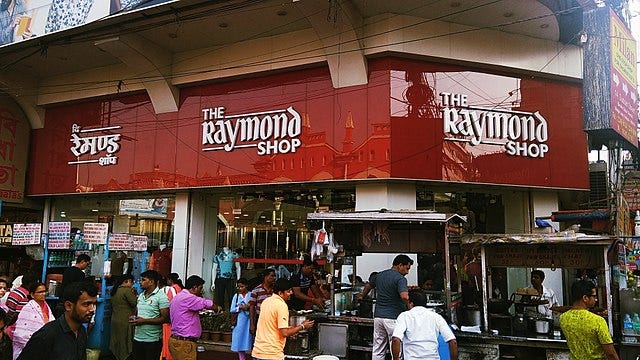
1) Raymond Lifestyle
The company is the largest player in the organized men’s wear wedding market, with ~40% of its topline coming from marriages alone! To capitalise on upcoming demand, Raymond plans to expand its ethnic store network from 114 stores in FY24 to 300+ by FY27.
Motilal Oswal says its ‘Ethnix’ store revenue potential is Rs 1,000 cr over the next three years! Yes, we know the stock isn’t listed just yet, but chairperson Gautam Singhania says it will next week after its recent demerger.
2) Vedant Fashions
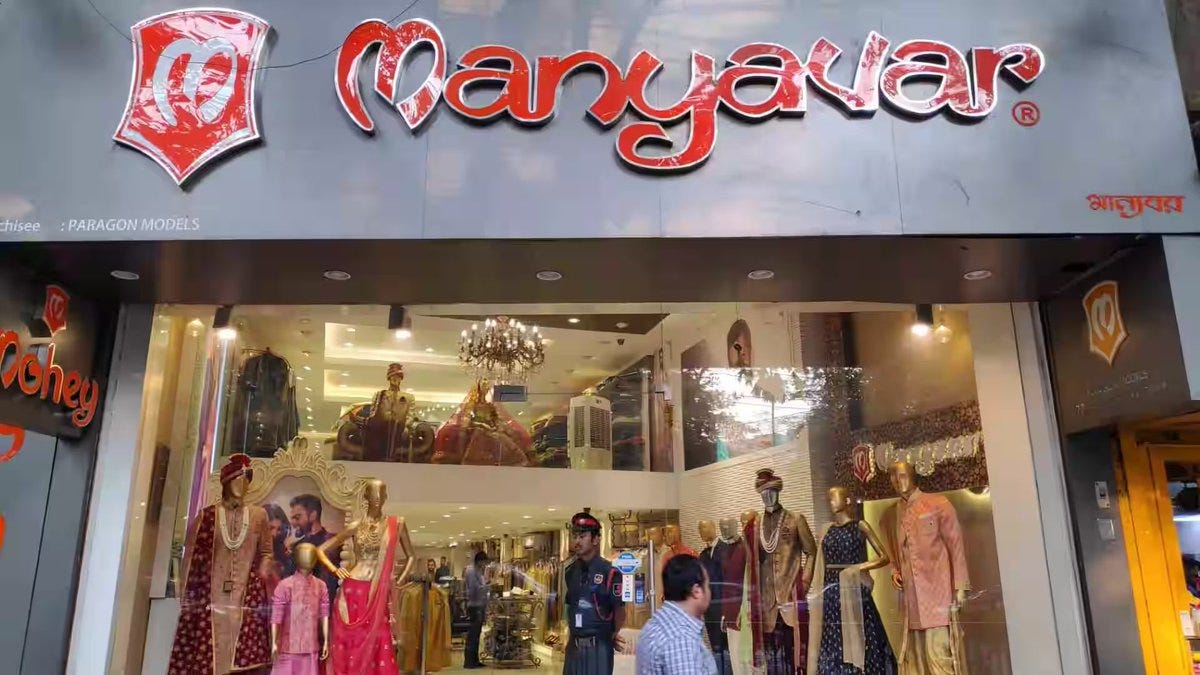
The overall market leader in the ‘Indian celebration wear’ segment, the company’s revenue has grown at a CAGR of 15% over the last decade. It has the first-mover advantage, having launched ‘Manyavar’ way back in 1999.
Fun fact: Its margins are a LOT higher than every other listed retailer, coming in at 41% in FY23 vs 13% for Trent. Finally, unlike Raymond, it also caters to women with its Mohey brand.
3) Aditya Birla Fashion & Retail
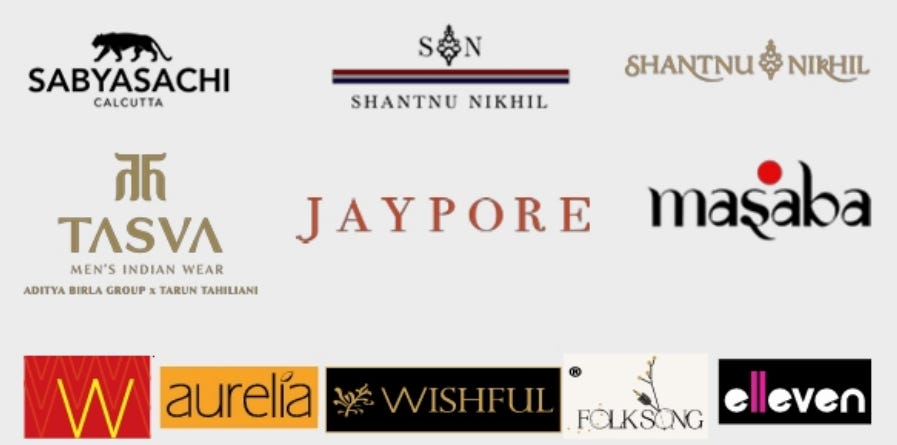
Aditya Birla Fashion has a huge range of ethnic wear lines, mostly acquired through buyouts. Crucially, it has a leader position in the luxury segment, where outfits sell for Rs 5 lakh a pop, through its Sabyasachi line.
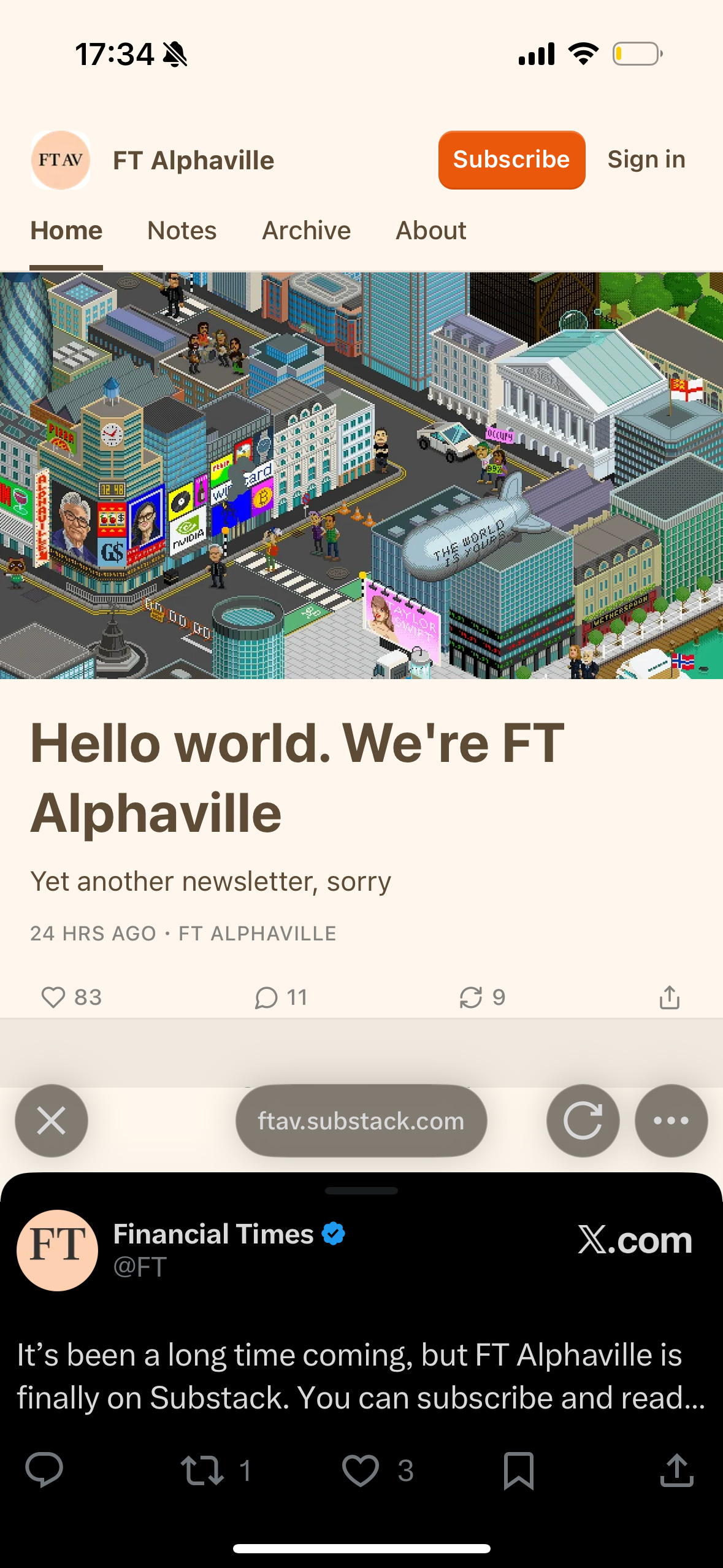
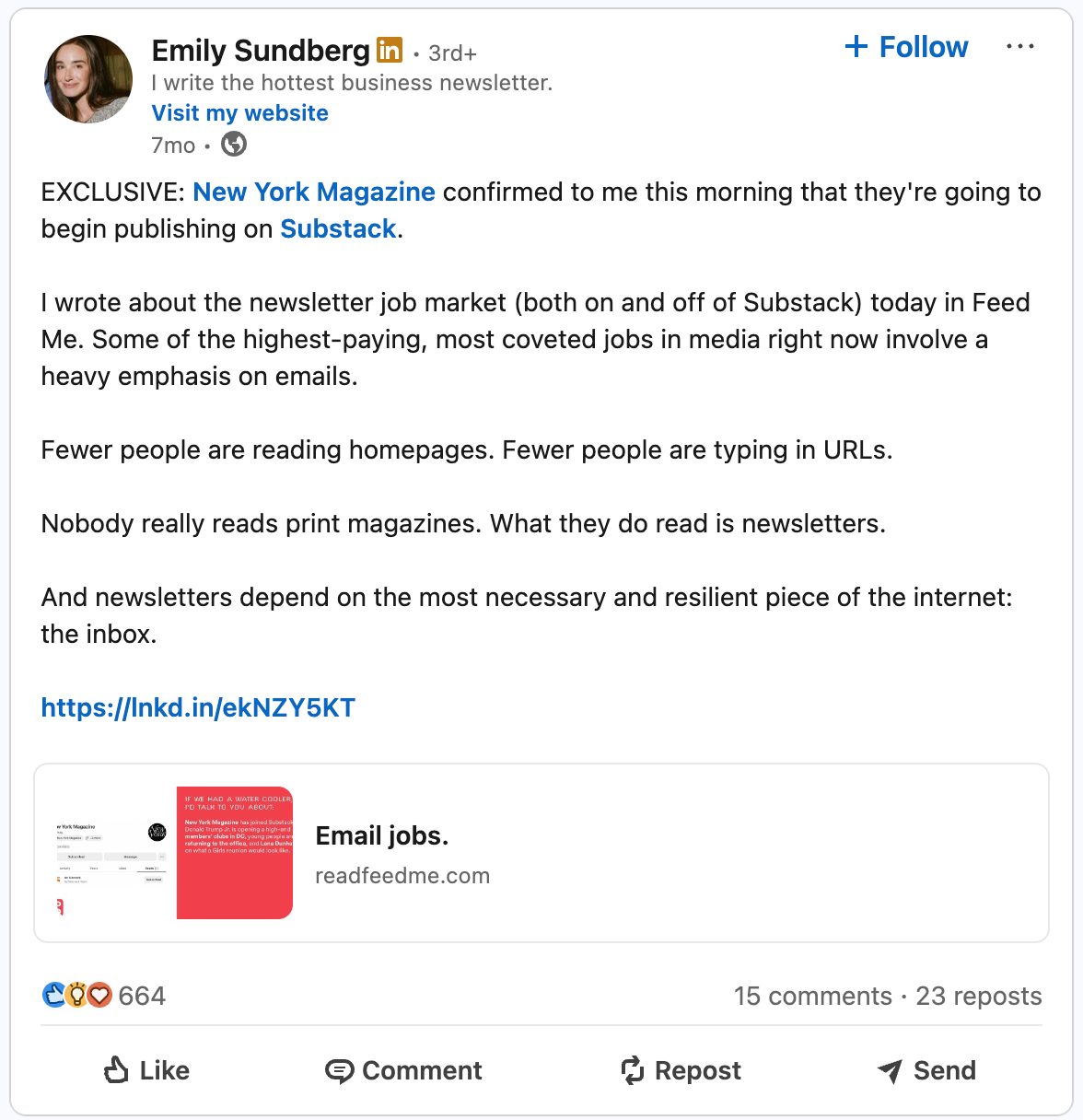
131. The cementing of Substack as both pillar and enabler of the modern media ecosystem


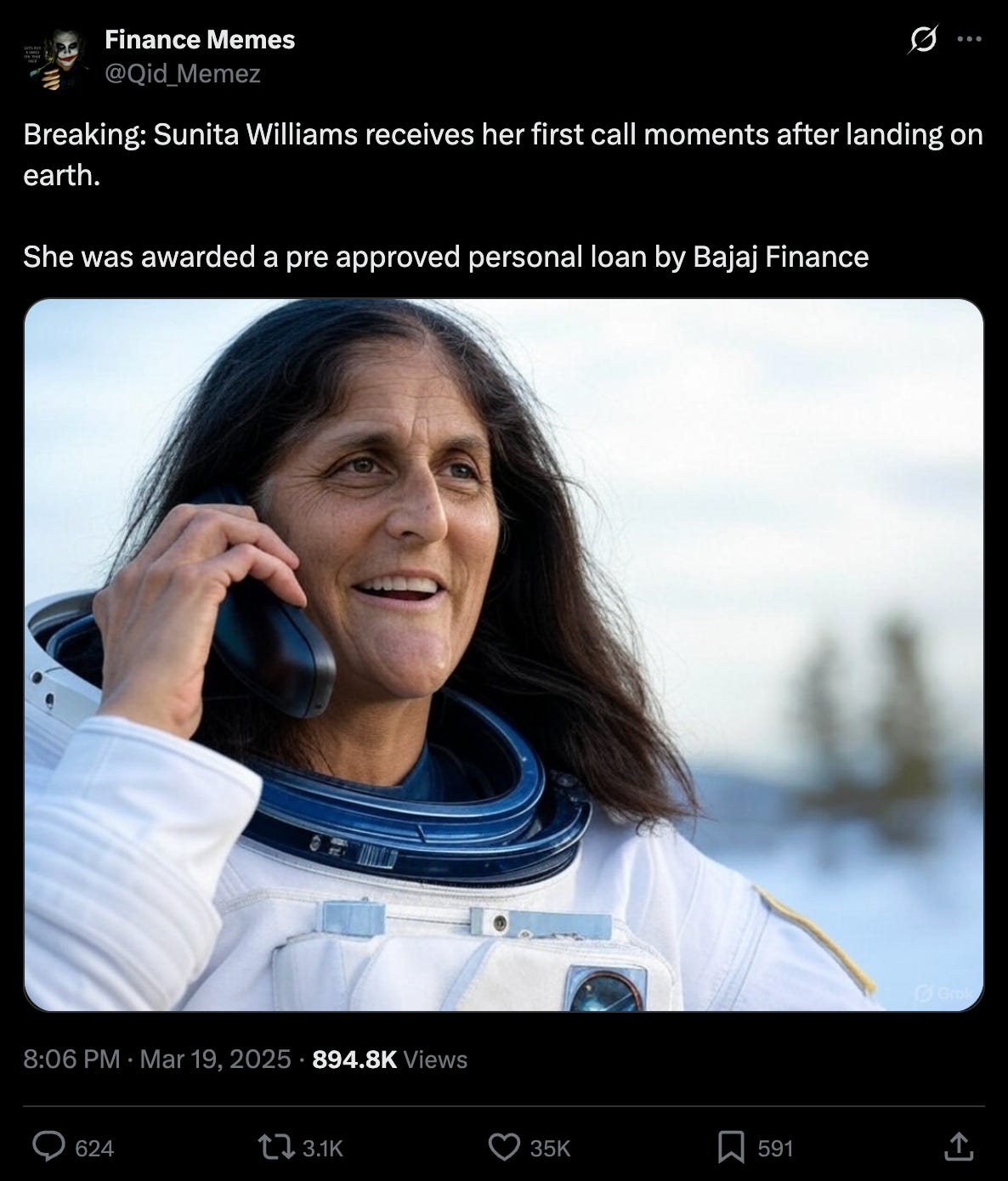
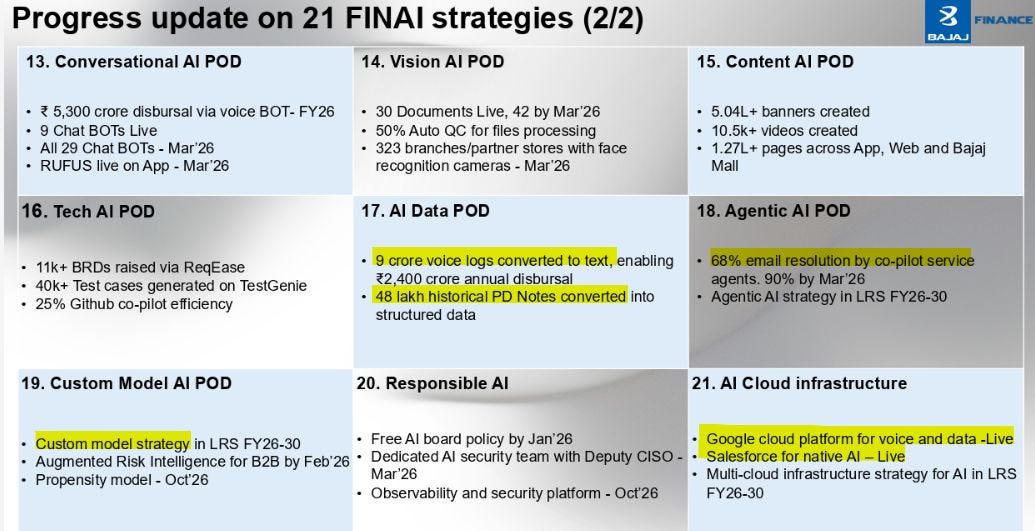
132. Bajaj Finance AI workstreams (h/t Rahul Mathur)
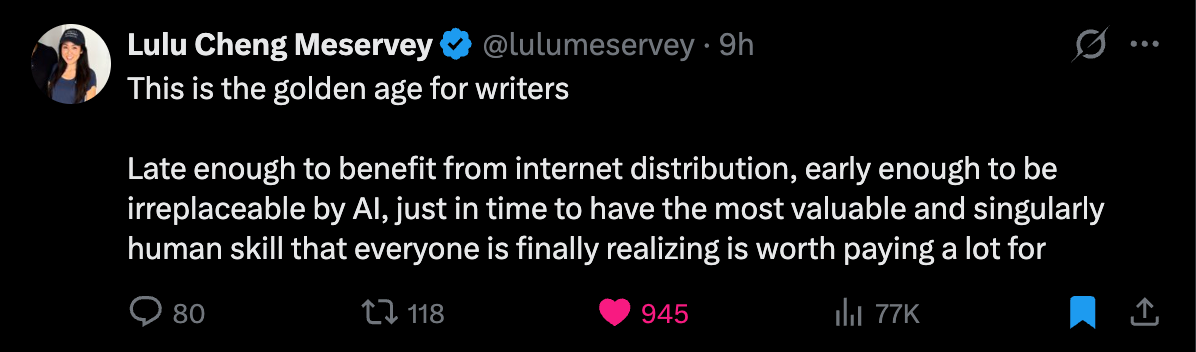
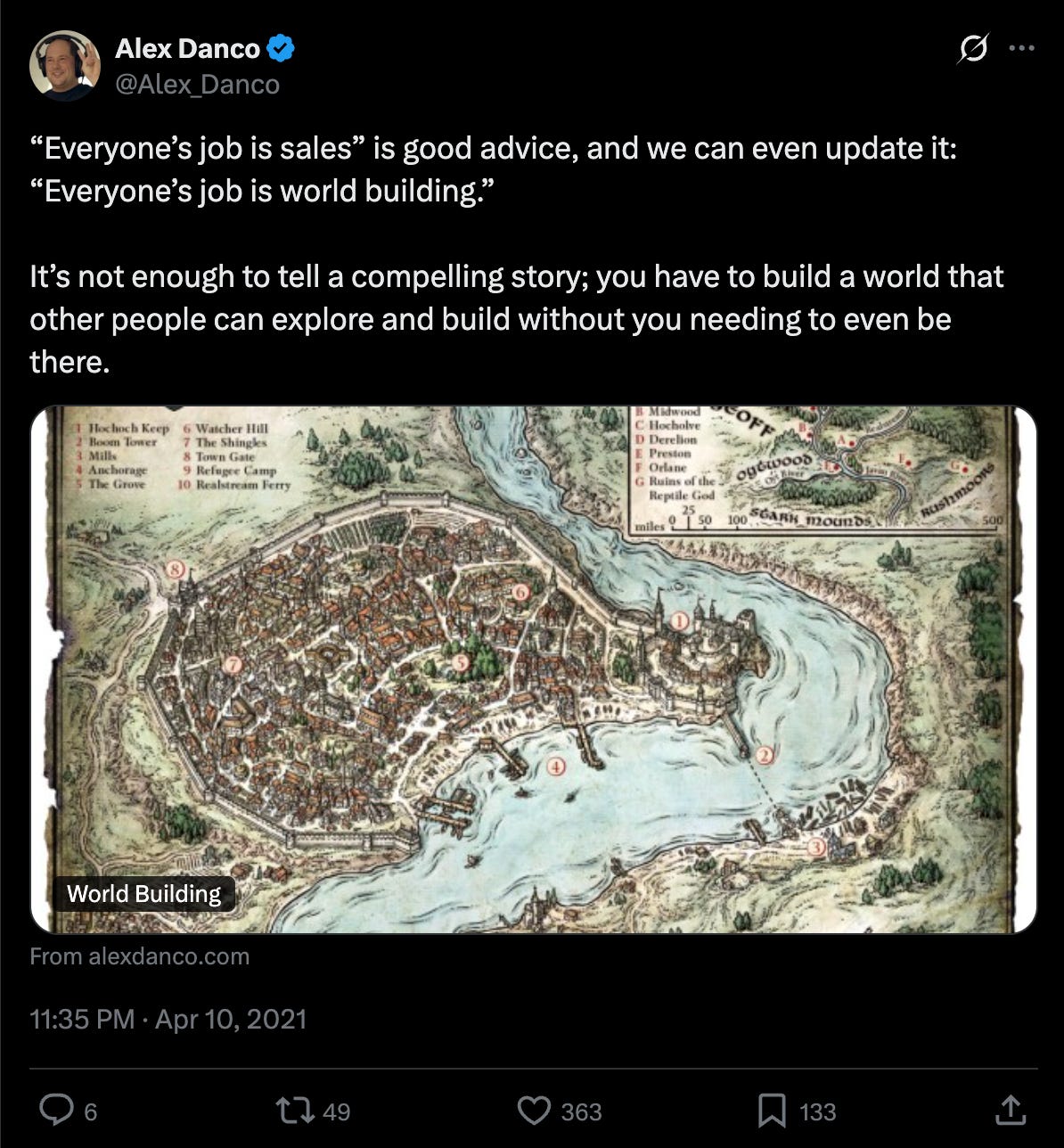
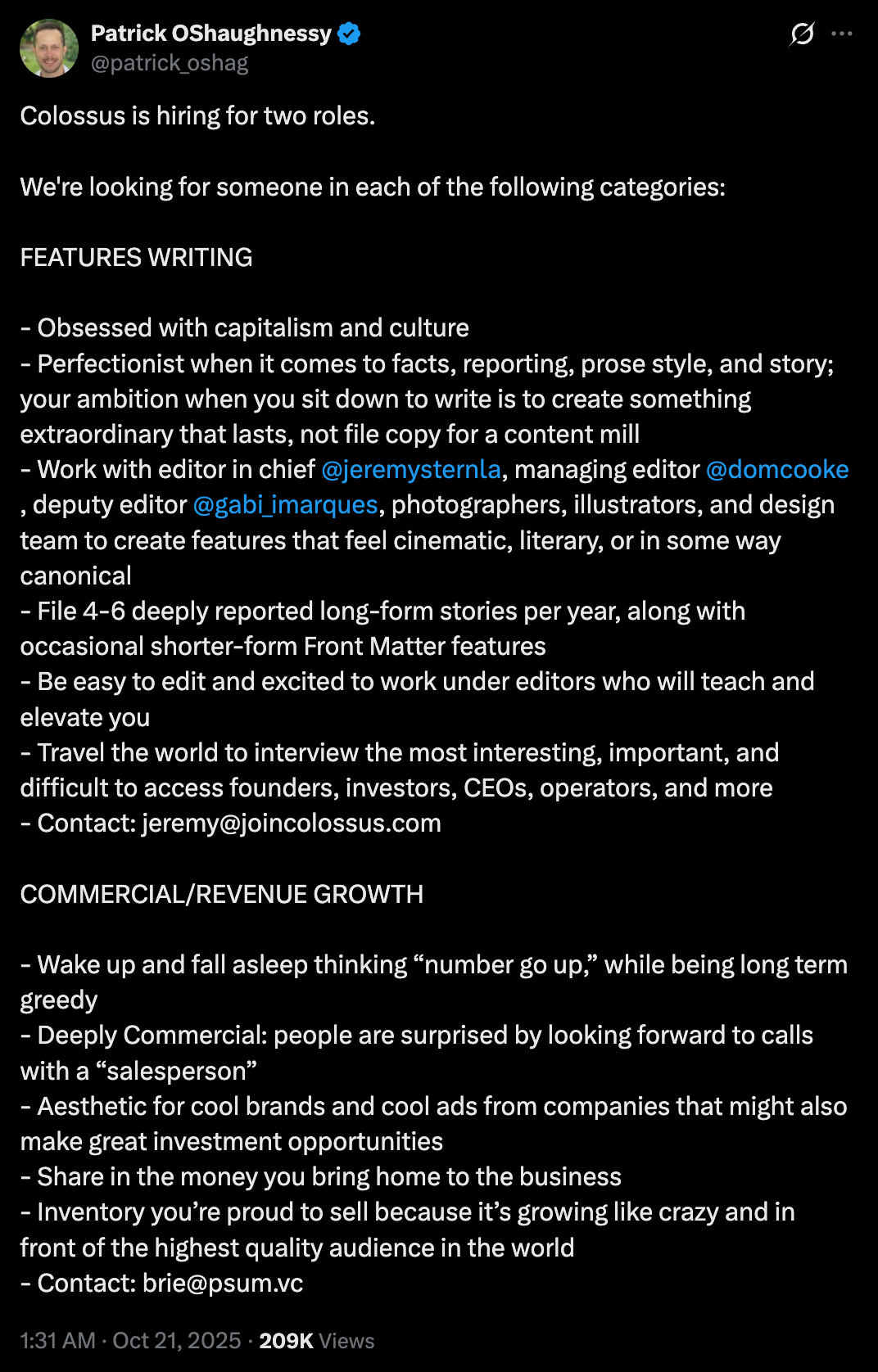
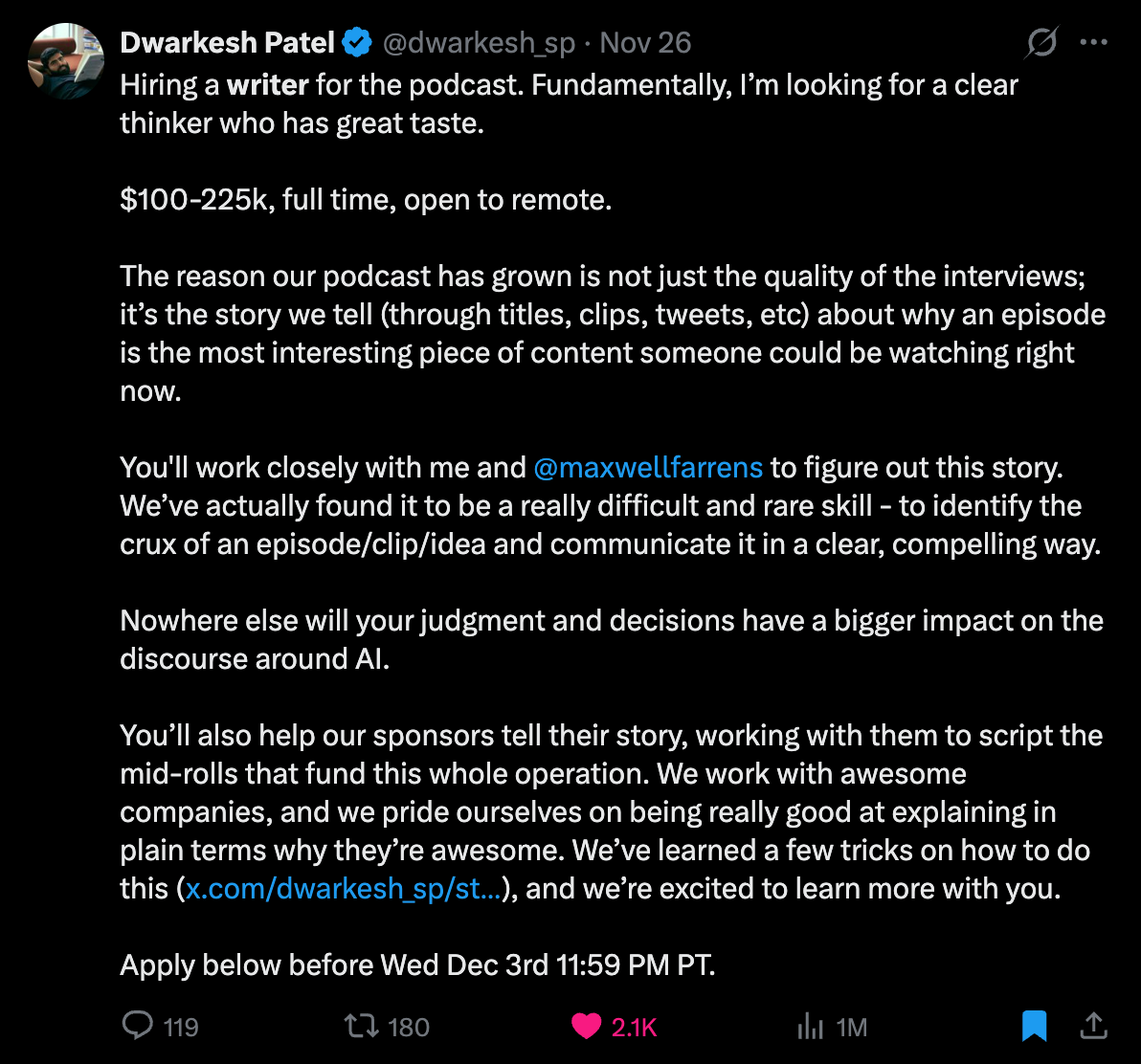
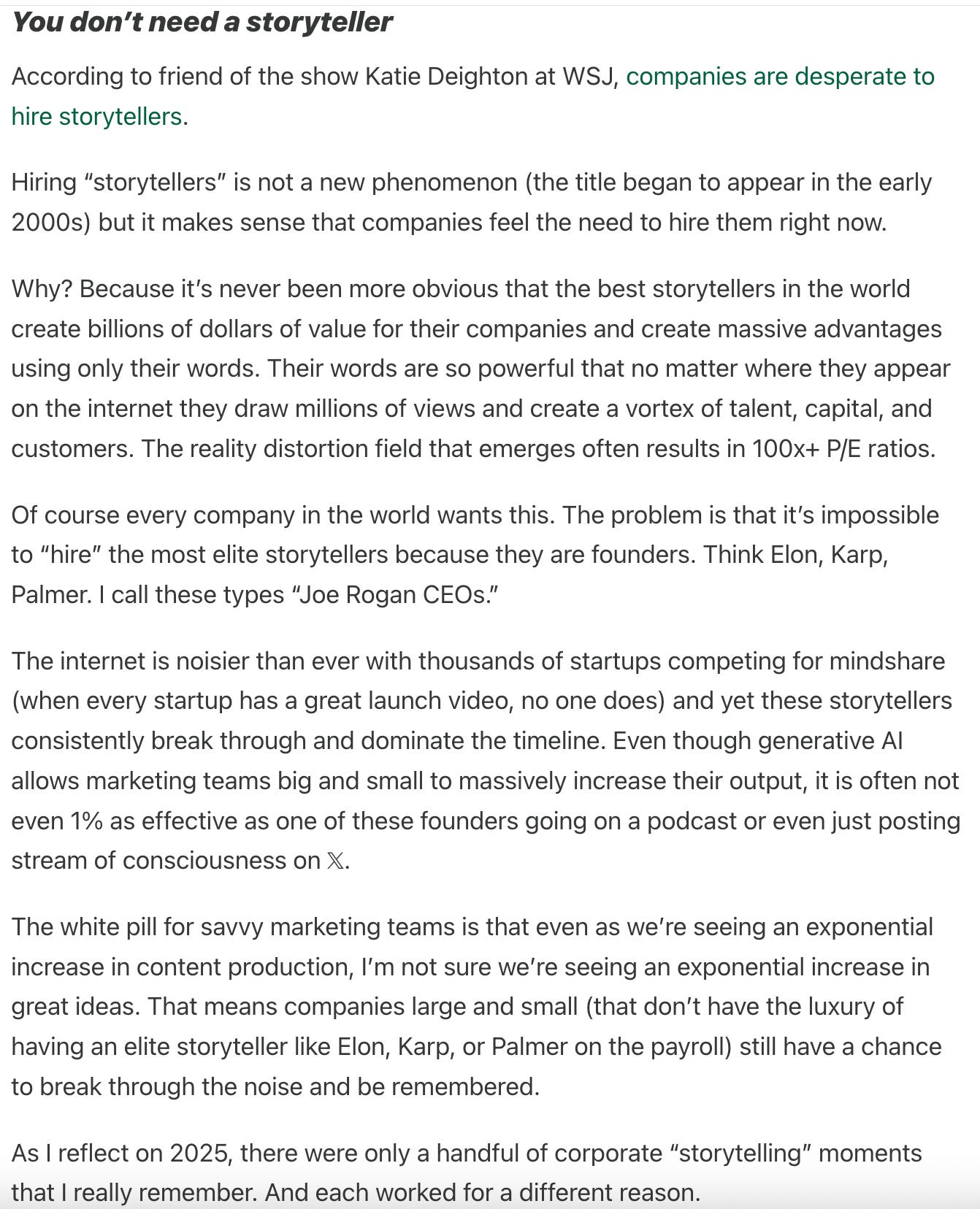
133. Storytelling, world building, and writing - firmly in the spotlight

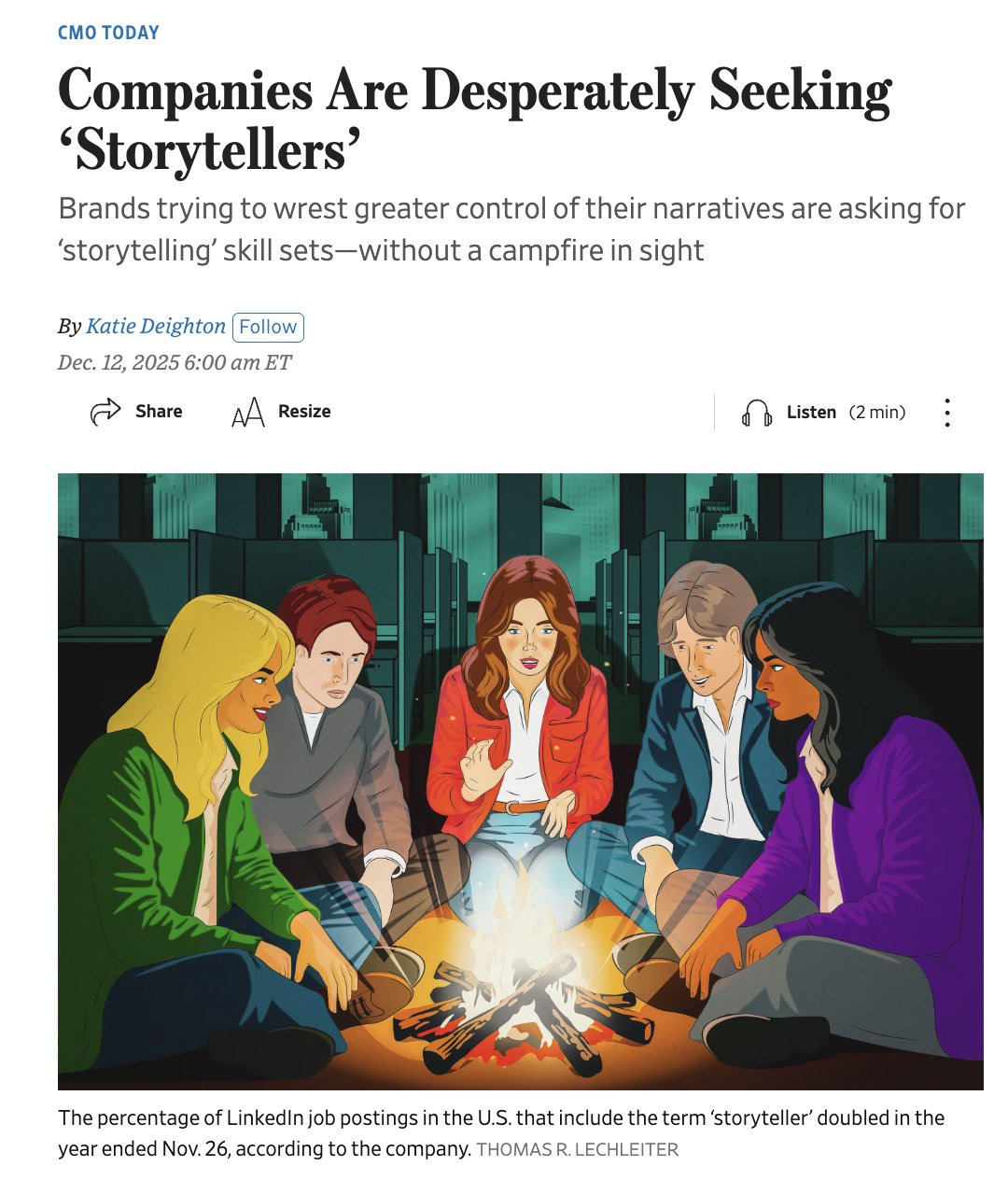
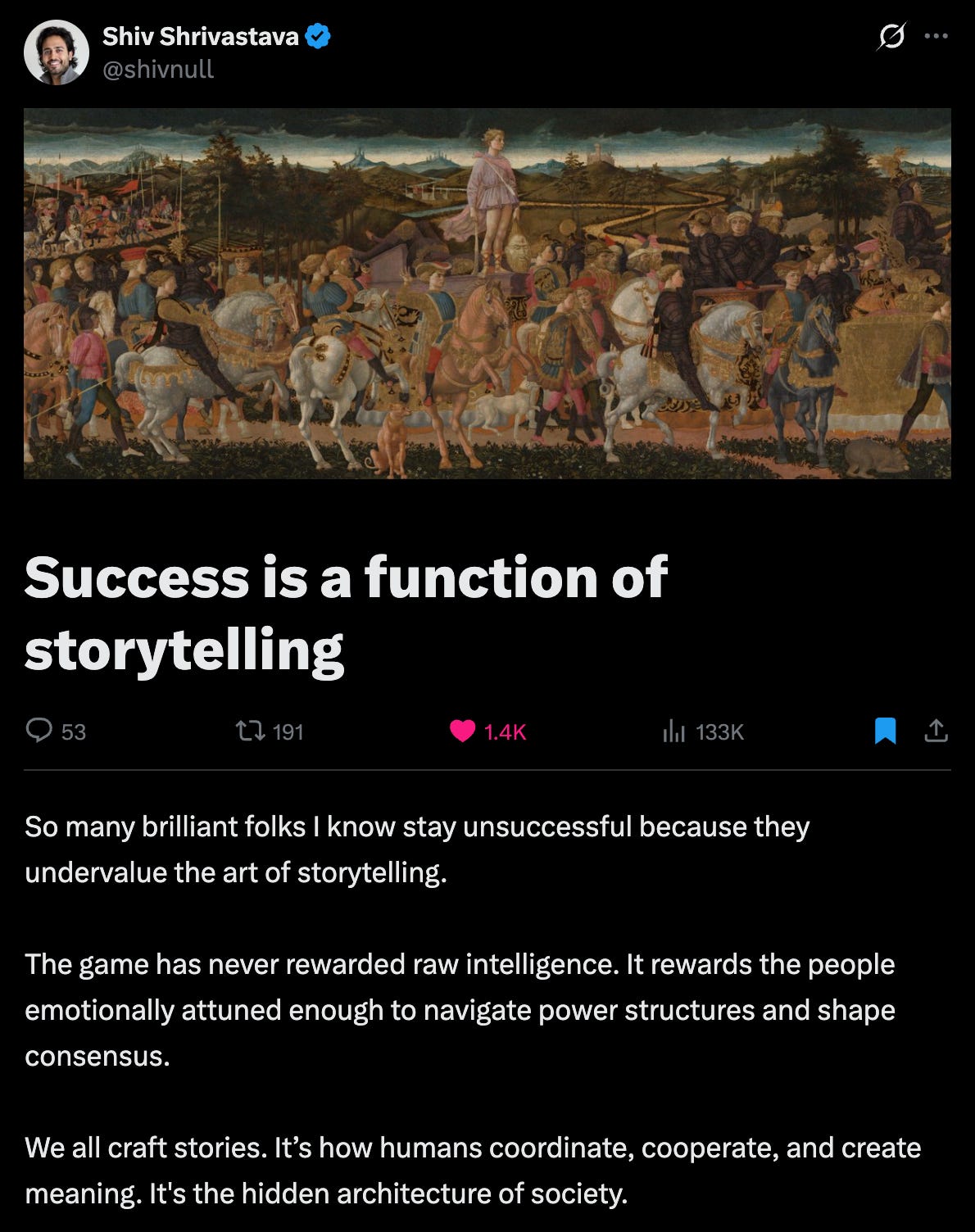
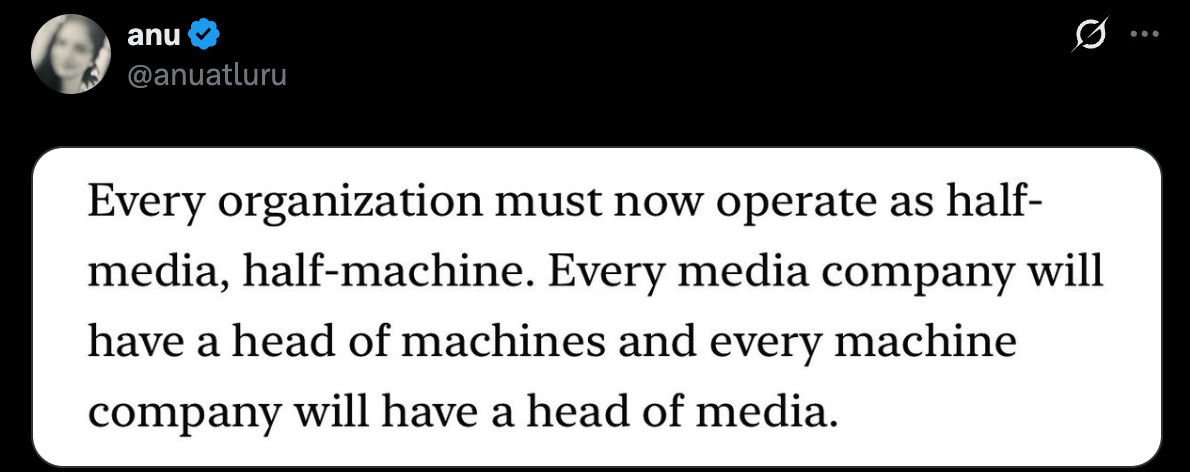
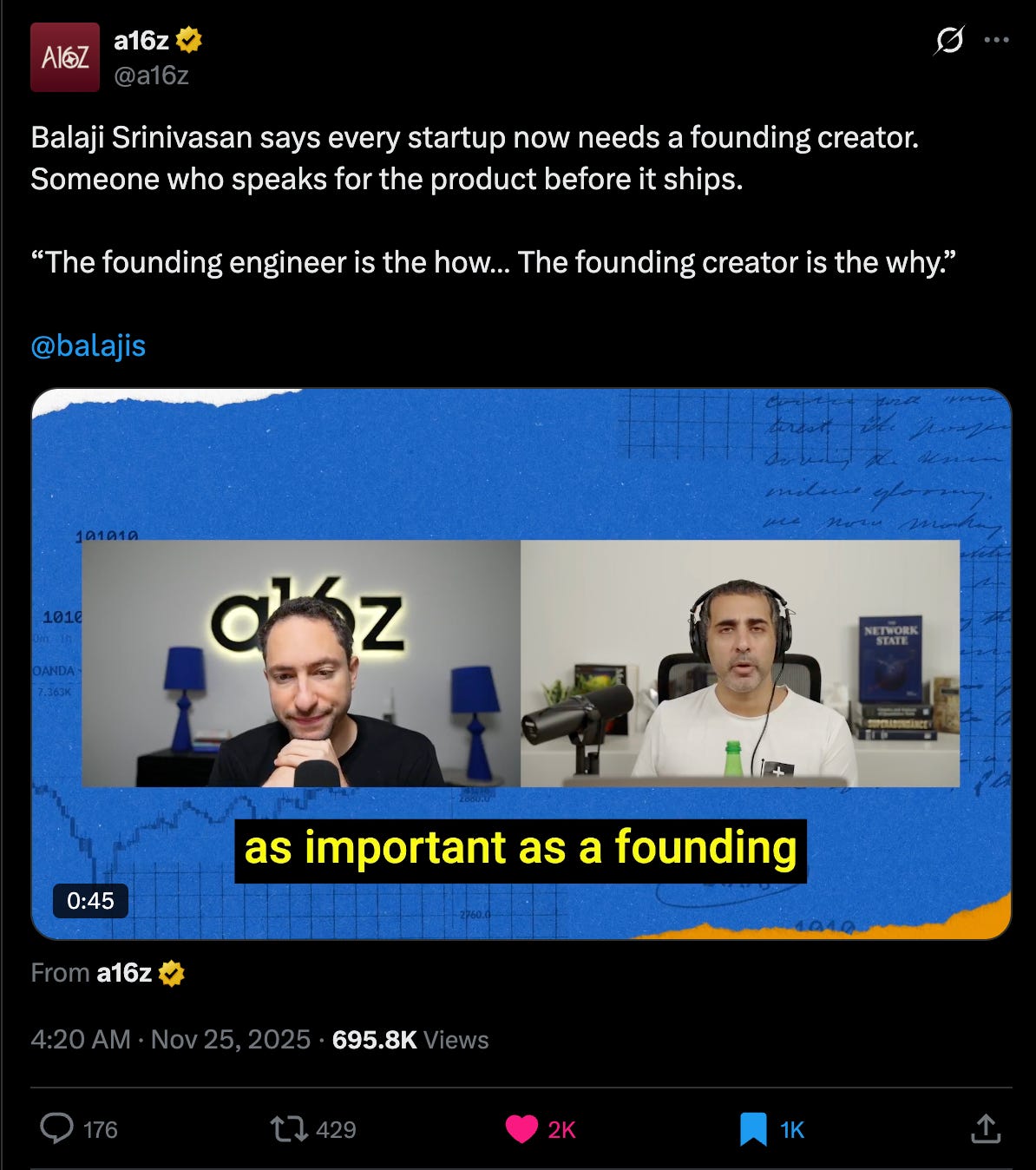
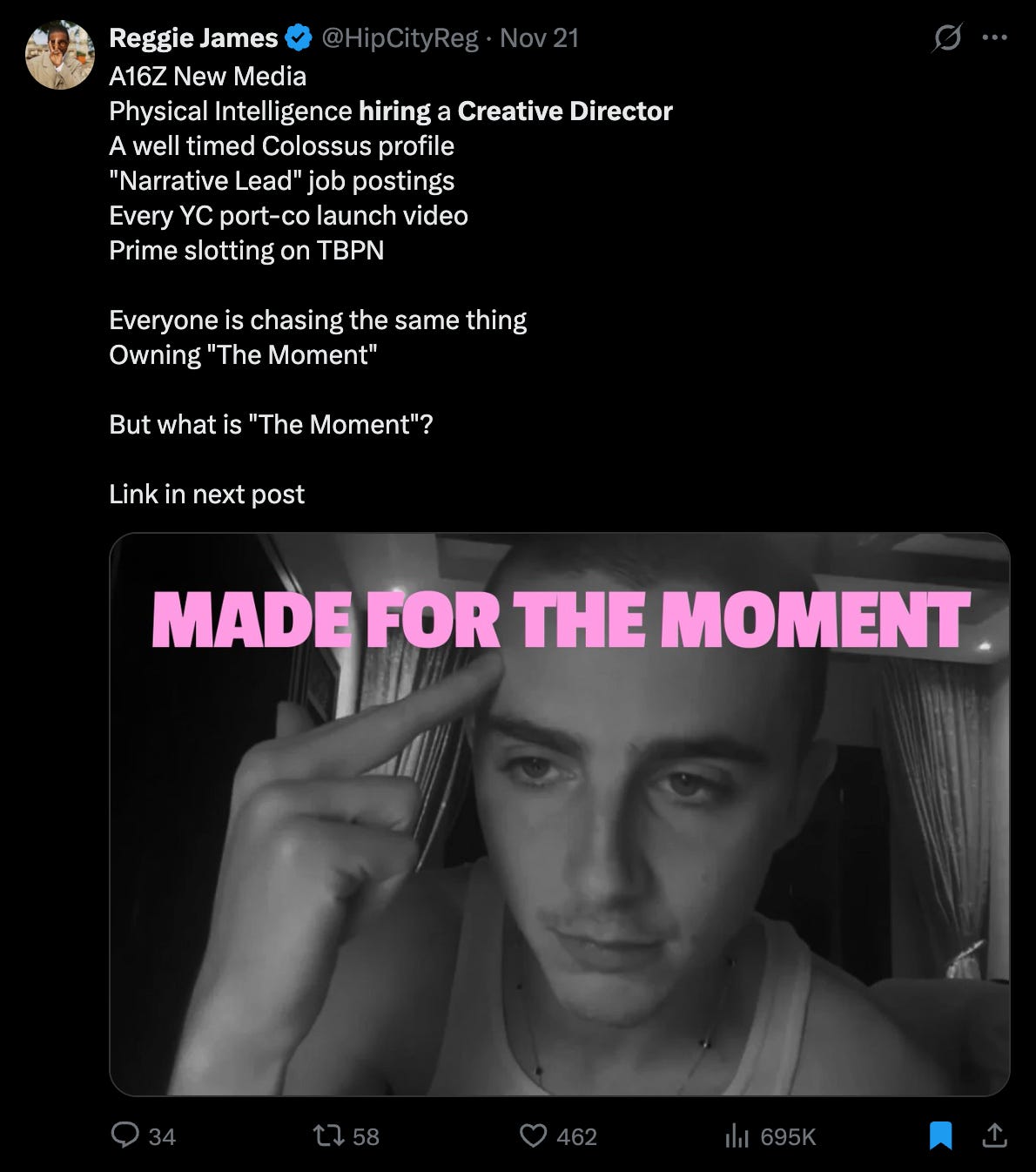
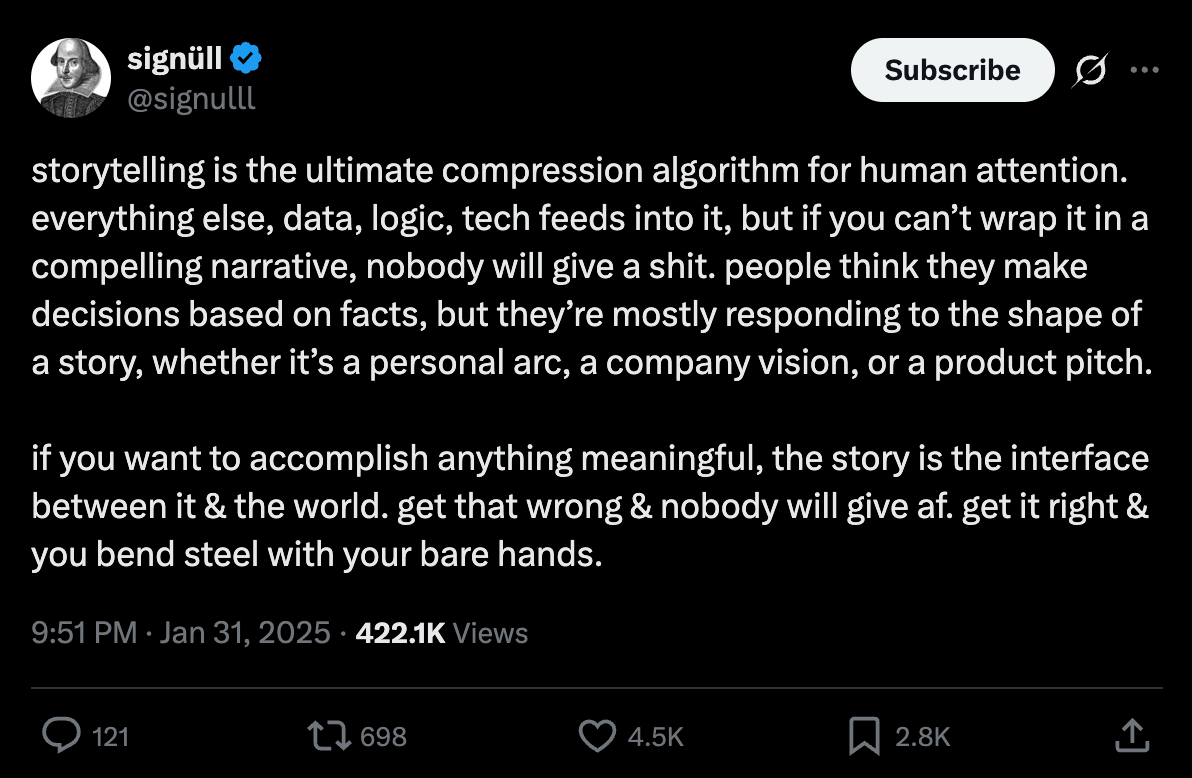
From TBPN’s Jordi Hayes -
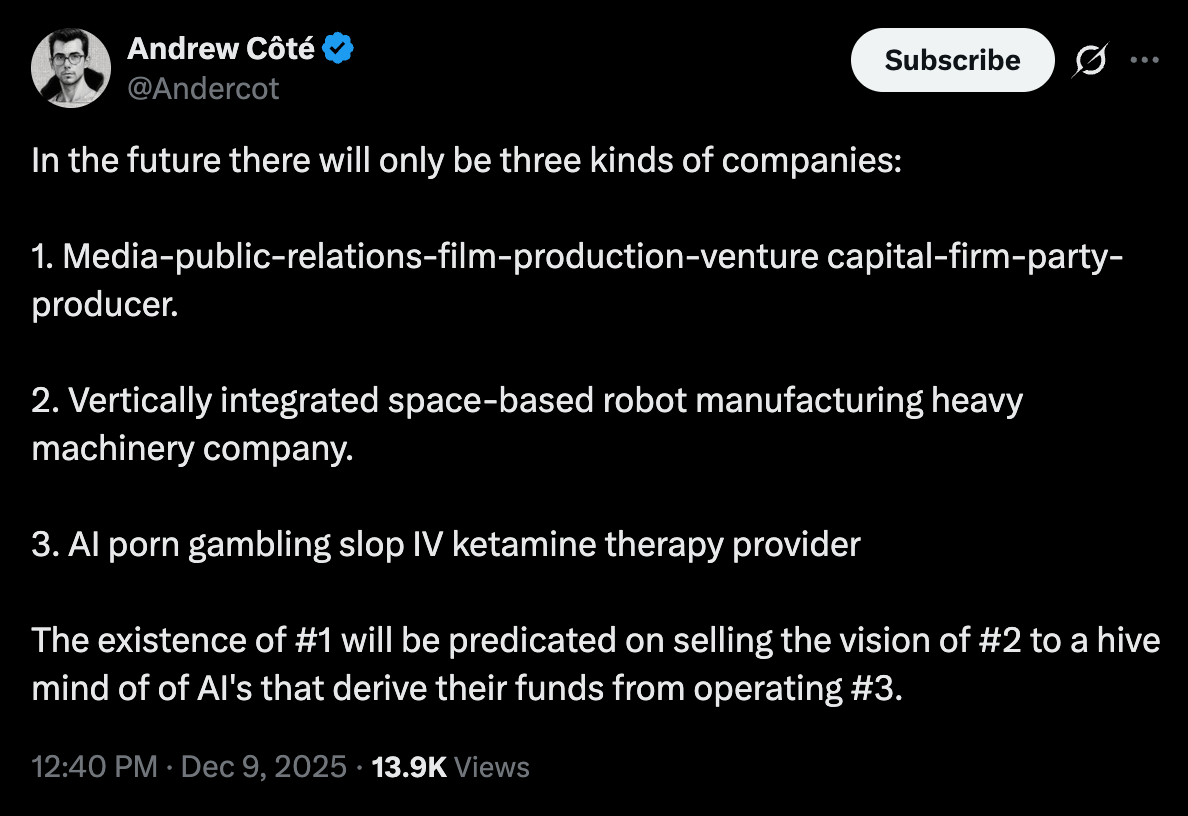
134. “In the future there will only be three kinds of companies”
135. “The bar is just unfairly high.” (h/t @manasjsaloi)
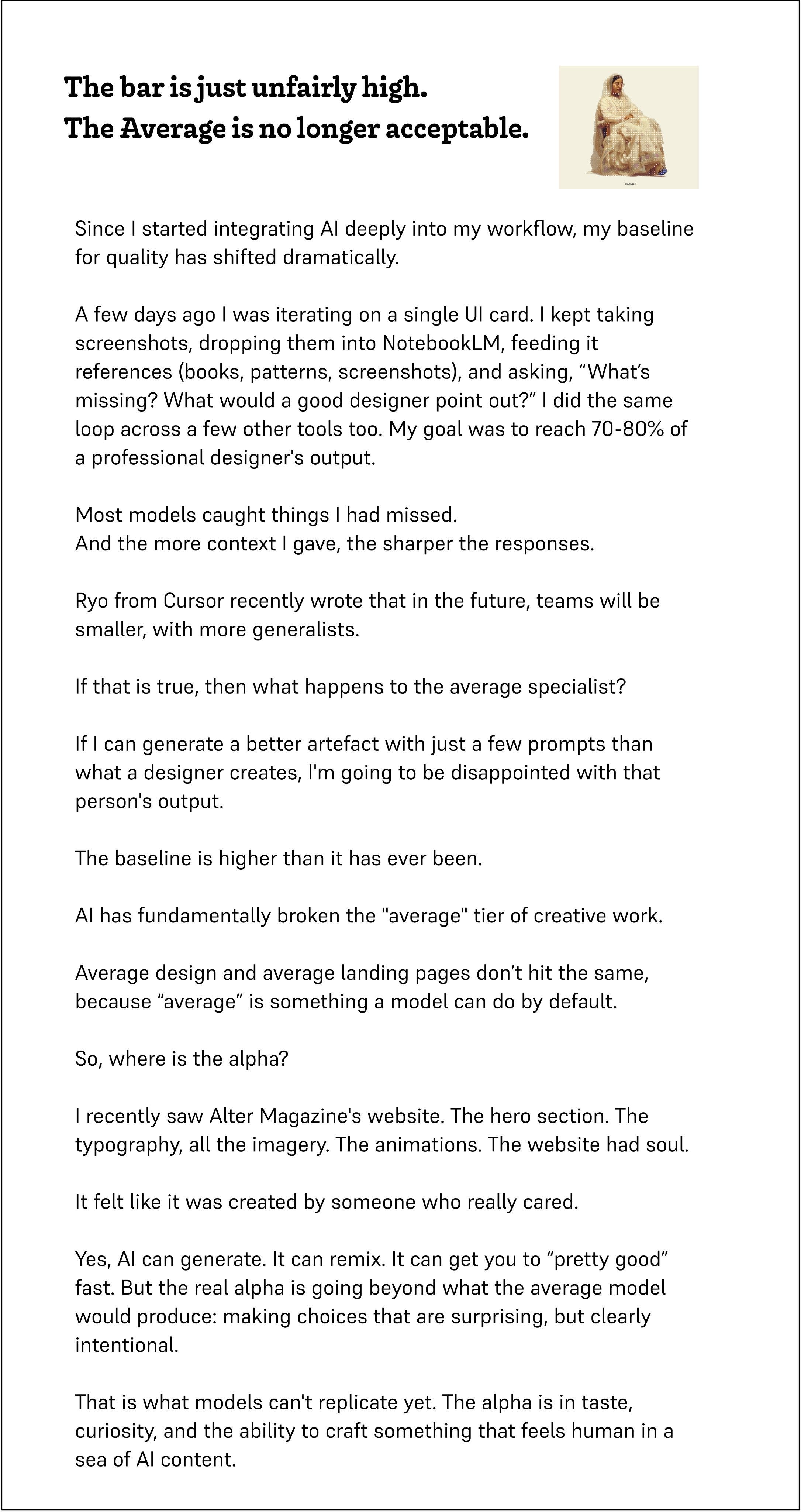
136. Delhi - record holders on 15th December (h/t World of Statistics)
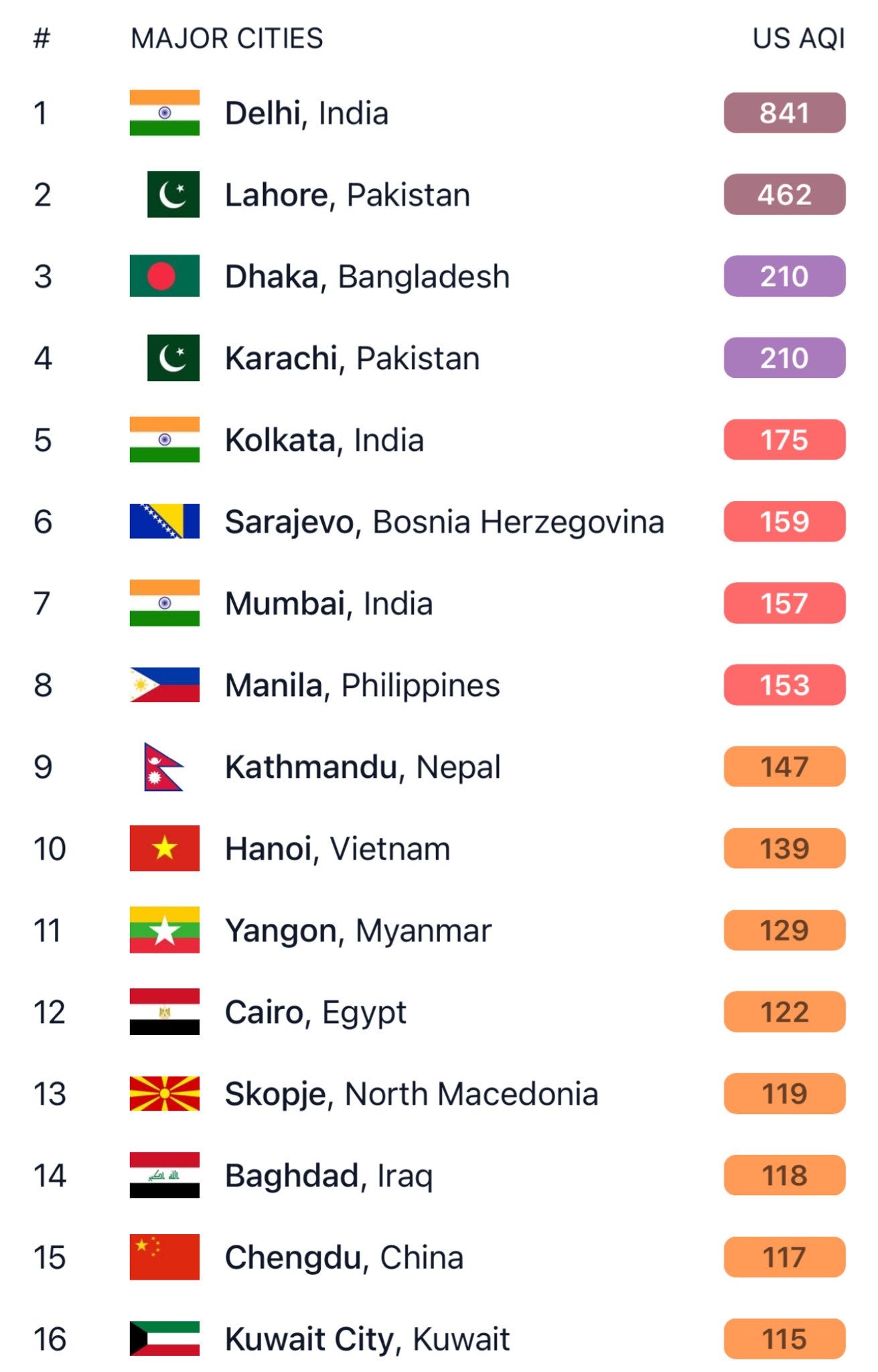
137. “Prediction: By 2030, every company will need to become a media company.” (h/t Codie Sanchez)
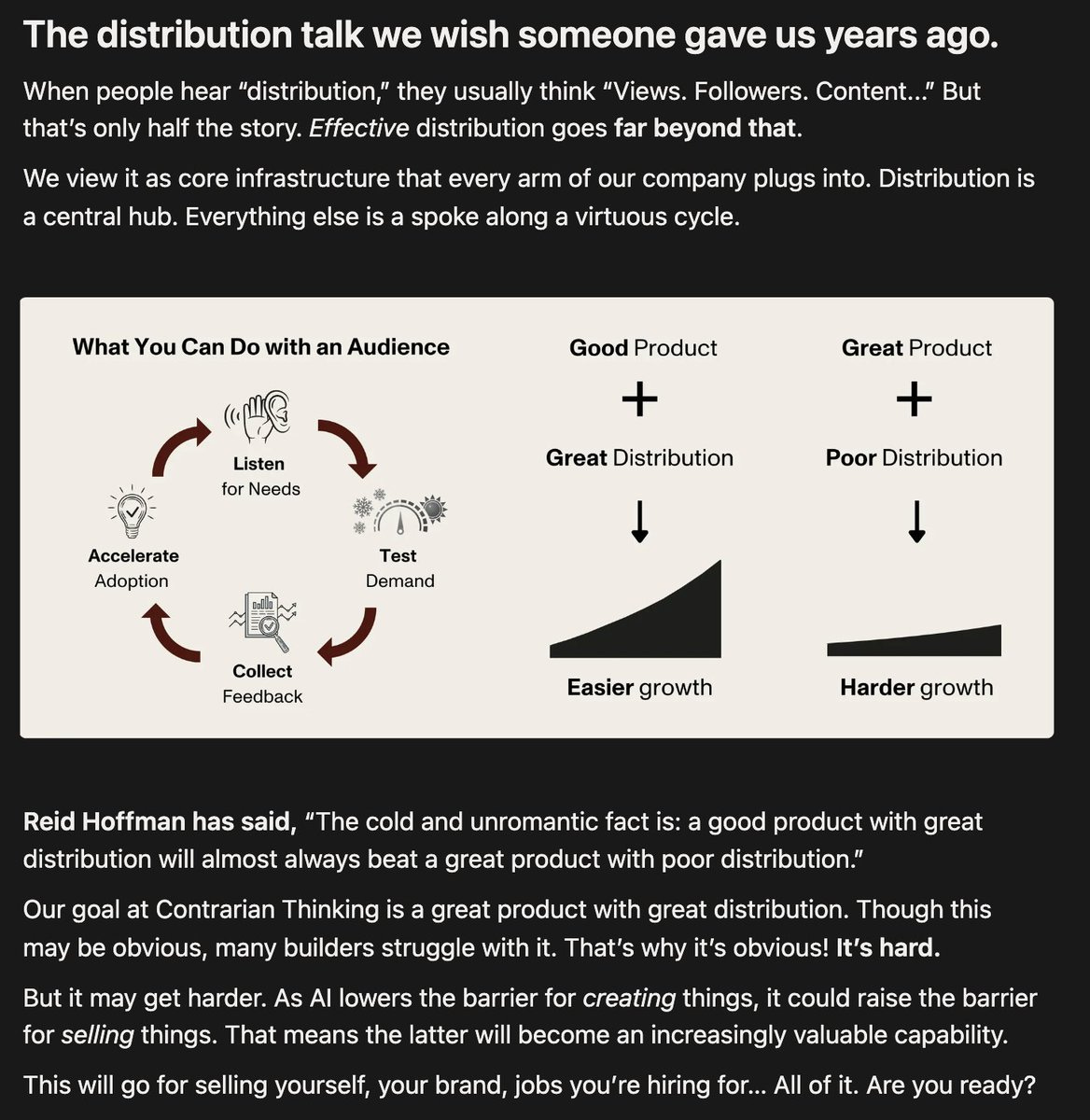
More on the ‘Law of Distribution: How We Turn Attention Into Money’ here.
138. The GCC Shift
Per Lakshmisha K S -
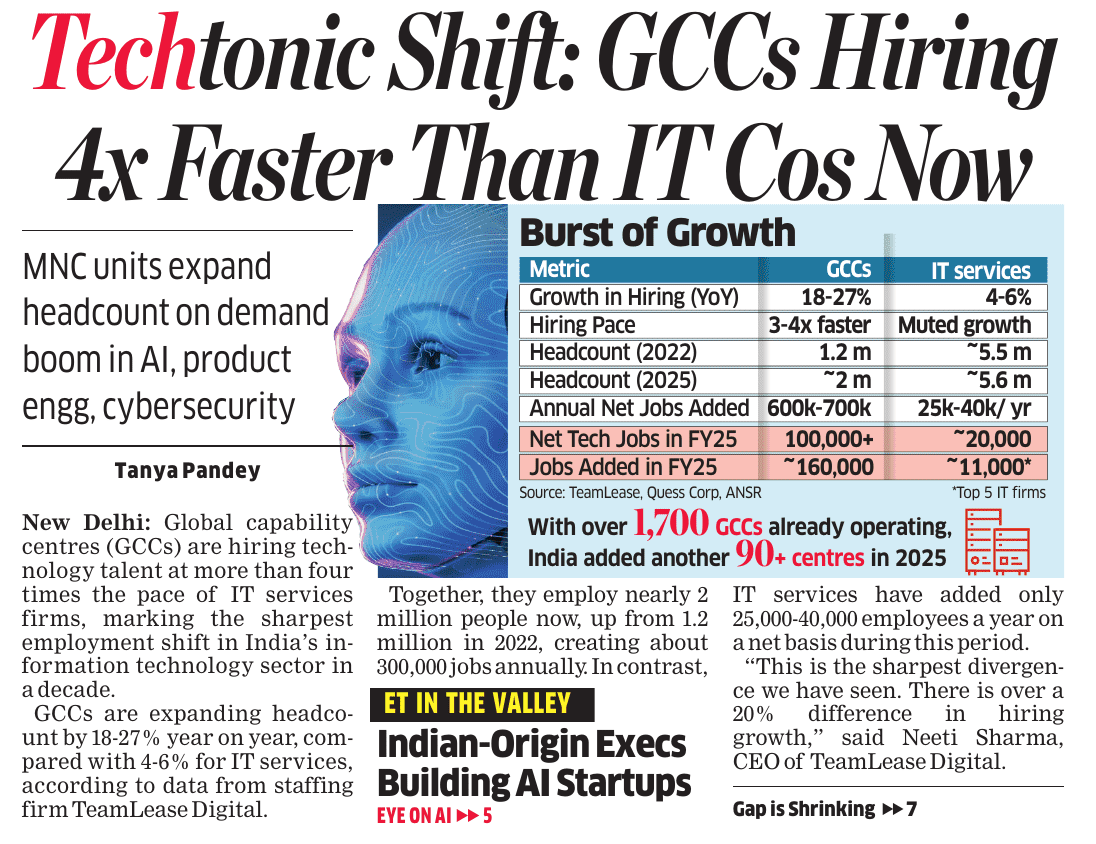
“Techtonic shift in India IT jobs: GCCs are hiring 4x faster than IT services. GCC headcount is growing 18–27% YoY vs 4–6% for IT firms, creating ~160k jobs in FY25 alone, driven by AI, cloud & cybersecurity demand.”
139. Performance of public venture funded tech cos vs NIFTY50 (h/t Shreyans Salecha)
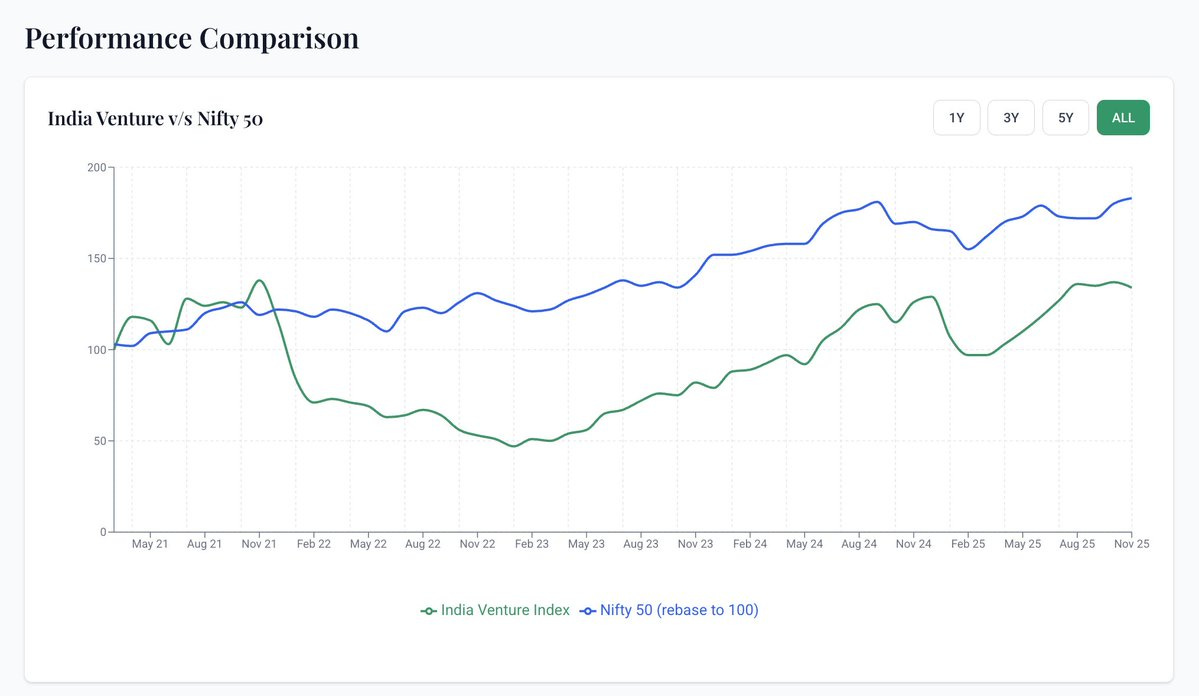
Track the performance here - india-venture-index.vercel.app
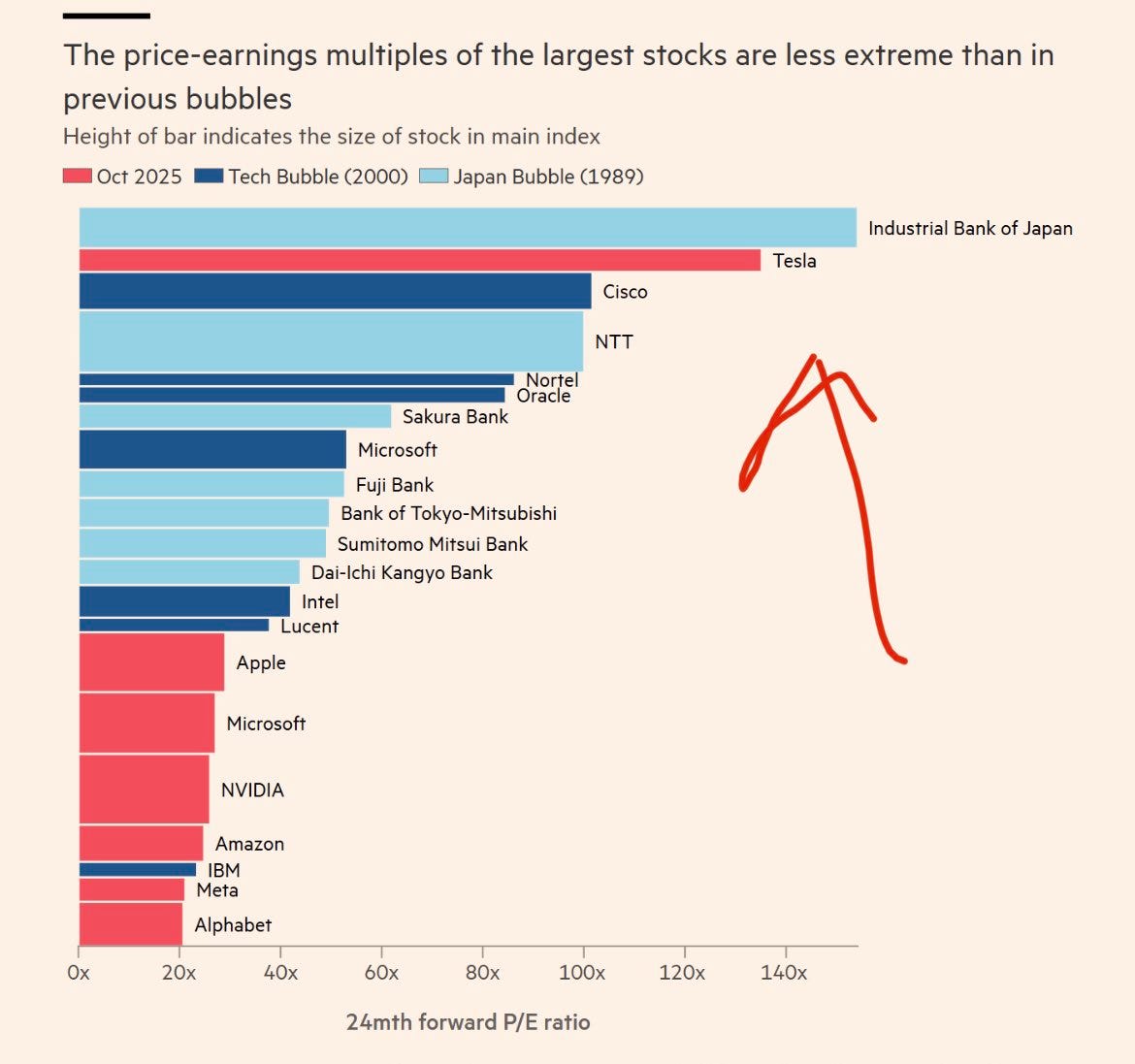
140. “We’re not in a bubble” (h/t Boycott Tesla)
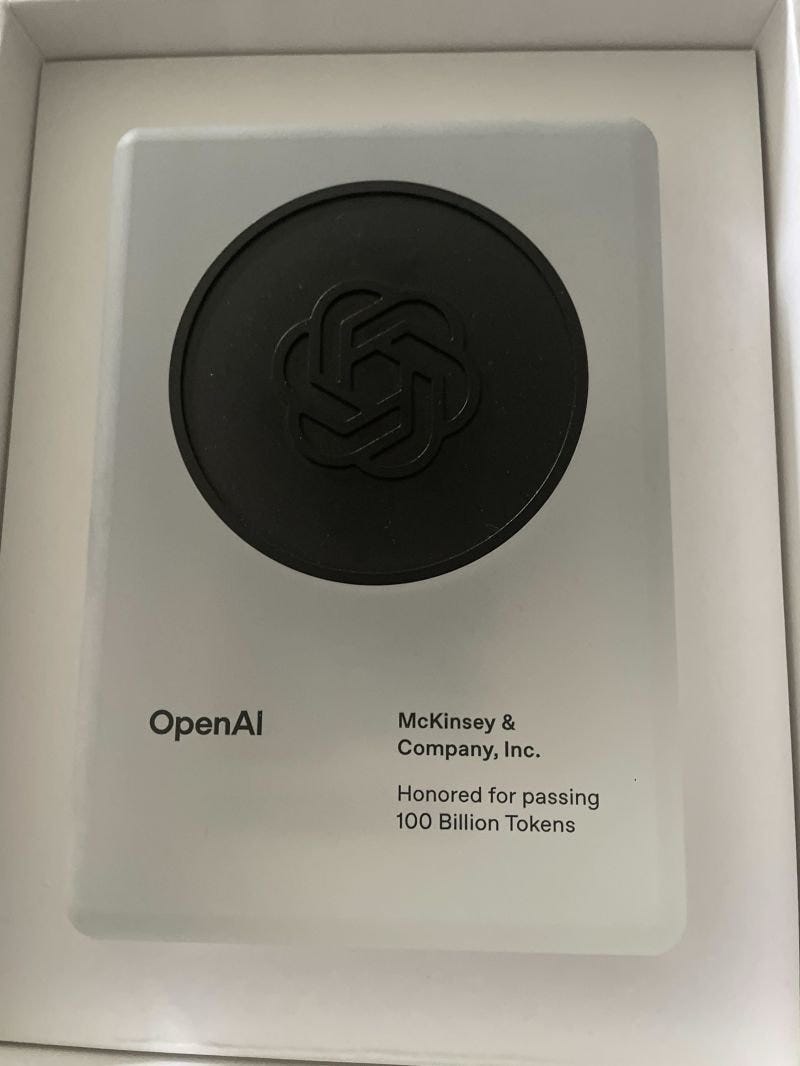
141. McKinsey as a ChatGPT super user (h/t wanderlust)
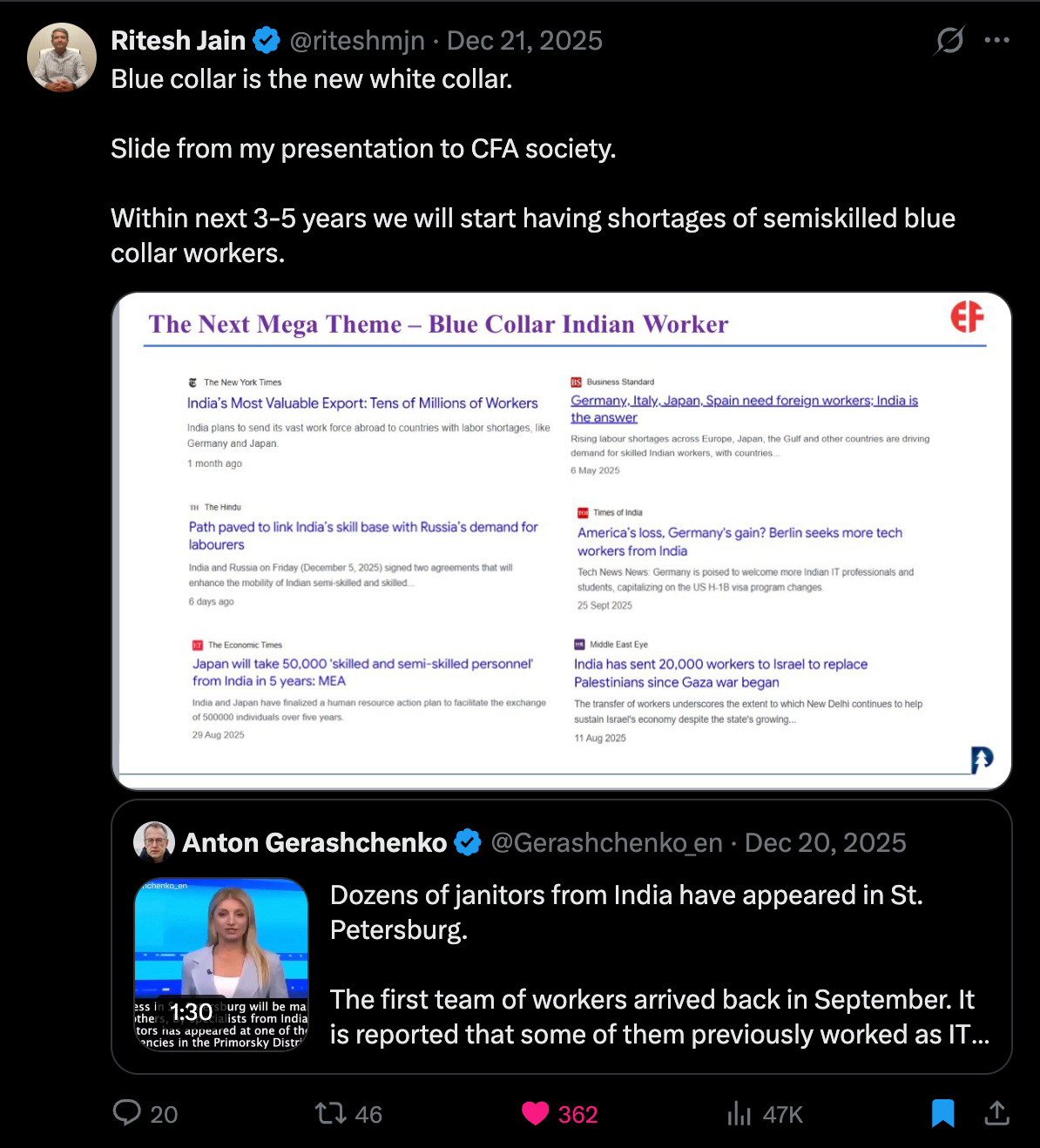
142. “Blue collar is the new white collar”
143. India’s Missing Middle
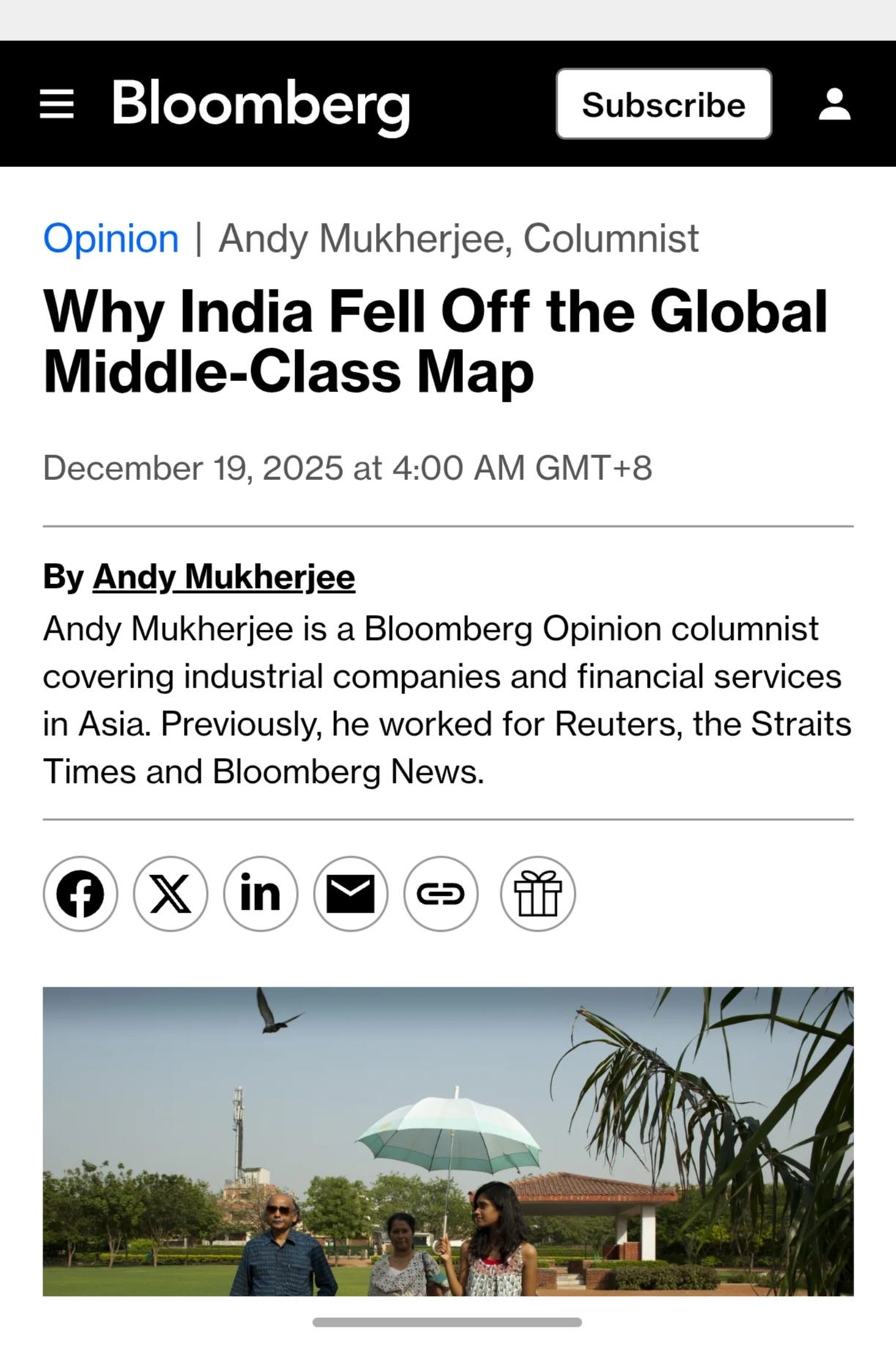
From Asim Ali -
"Those at the bottom of the pyramid..(make) deliveries for 10-minute quick commerce. While it’s no stepping stone to a middle-class life, it’s all that there is for the youth: The return on an additional year of schooling is lower than not just China, but also Sub-Saharan Africa"
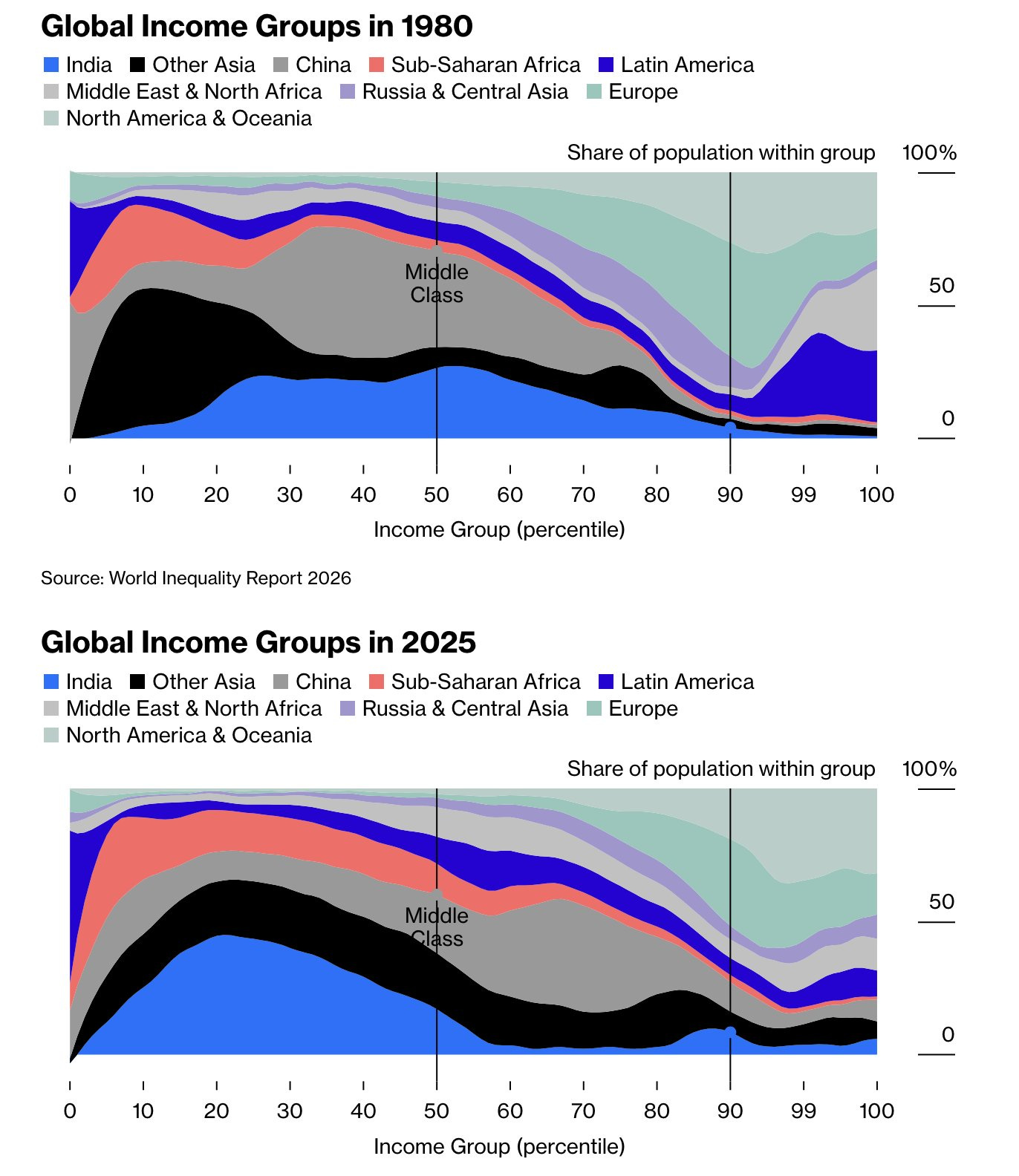
Analysis from @Ignis_Rex -
“India’s Missing Middle: A Society Without Values Cannot Create Prosperity
India’s absence from the global middle-class map is not a statistical anomaly—it is the logical consequence of a society that has never been built on principles, values, or institutions that sustain prosperity.
Bloomberg’s recent analysis rightly points out India’s fading presence in the global middle-income bracket. But the deeper truth is this: India is not merely unequal; it is structurally incapable of producing a middle class.
A Hollow Growth Story
For decades, India has been celebrated as “the next big market.” Economists and investors have projected a rising consumer base, a demographic dividend, and a vibrant democracy. Yet the reality is starkly different. India’s economy is polarized between a tiny elite and a vast underclass. The so-called middle class is a mirage—fragile, precarious, and dependent on patronage rather than merit.
Unlike China, which built factories, infrastructure, and disciplined institutions to lift hundreds of millions into middle-income status, India has relied on slogans, subsidies, and rent-seeking. The result is an economy where luxury malls flourish for the elite, while the majority struggle for subsistence. There is no broad-based demand, no stable middle-income consumer, and no genuine ladder of upward mobility.
Why Inequality Is Entrenched
India’s inequality is not simply economic—it is cultural and institutional.
- Caste and tribalism: Social hierarchies remain rigid. Meritocracy is suffocated by caste privilege, nepotism, and political favoritism.
- Corruption as culture: Rules are bent, contracts ignored, and corruption normalized. In India, dishonesty is not an exception—it is the operating principle.
- Absence of civic values: Societies that sustain a middle class are built on trust, accountability, and respect for law. India has none of these. Institutions are hollow, enforcement is arbitrary, and opportunism is the only ethic.
- Protectionistic policy that punish foreign manufacturers and brands for being successful in the Indian market and dare to compete successfully against local heroes. India normally used tax and custom procedures to harrass these foreign companies.
Why is value and principle important for a society? Without values, inequality becomes entrenched. Without principles, institutions collapse into corruption. And without institutions, there can be no middle class.
The Mirage of Democracy
India’s defenders point to its democracy as a safeguard. But democracy without values is merely populism. Elections are won through caste arithmetic, handouts, and manipulation. Policy is reactive, incoherent, and designed to appease factions rather than build institutions. The middle class, which in other societies acts as a stabilizing force, is too weak to play that role in India. Instead, politics amplifies division and entrenches inequality.
Global Implications
India’s failure to build a middle class has consequences beyond its borders.
- Economic fragility: Without a strong middle-income base, India’s growth story is unsustainable. Domestic demand will remain polarized, vulnerable to shocks, and incapable of driving global markets.
- Geopolitical weakness: India cannot credibly claim to rival China when it lacks the social and economic foundation of a middle class.
- Investor caution: For global capital, India offers opportunities at the top and bottom of the pyramid—but the broad consumer market that sustains long-term investment is missing.
Conclusion
India’s missing middle is not a temporary setback—it is the inevitable outcome of a society that has never embraced values of fairness, merit, or accountability. Until India confronts its cultural and institutional dysfunction, it will remain a deeply unequal society, incapable of producing prosperity for the majority of its people.
The world must stop indulging the fantasy of India as a rising middle-class power. The reality is harsher: India is a society without principle, and therefore without a future middle class.”
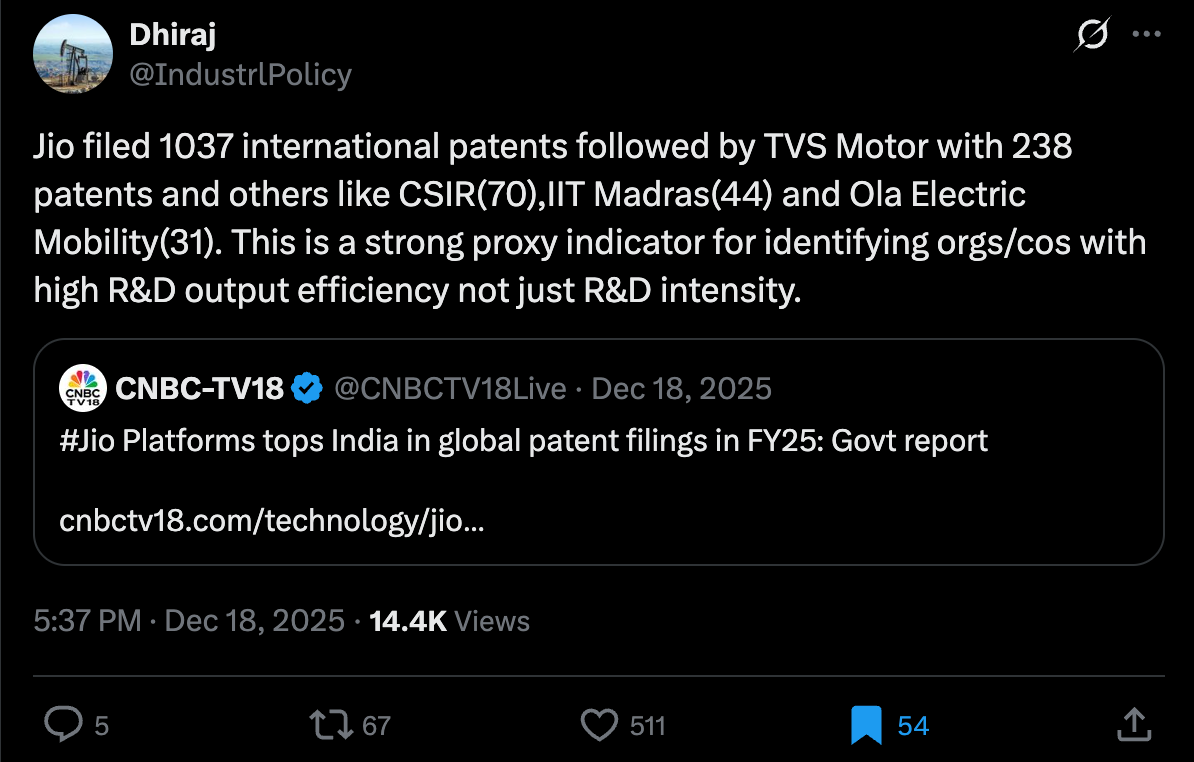
144. India Inc patents filed in FY25
145. Swiggy X Kearney food trends report
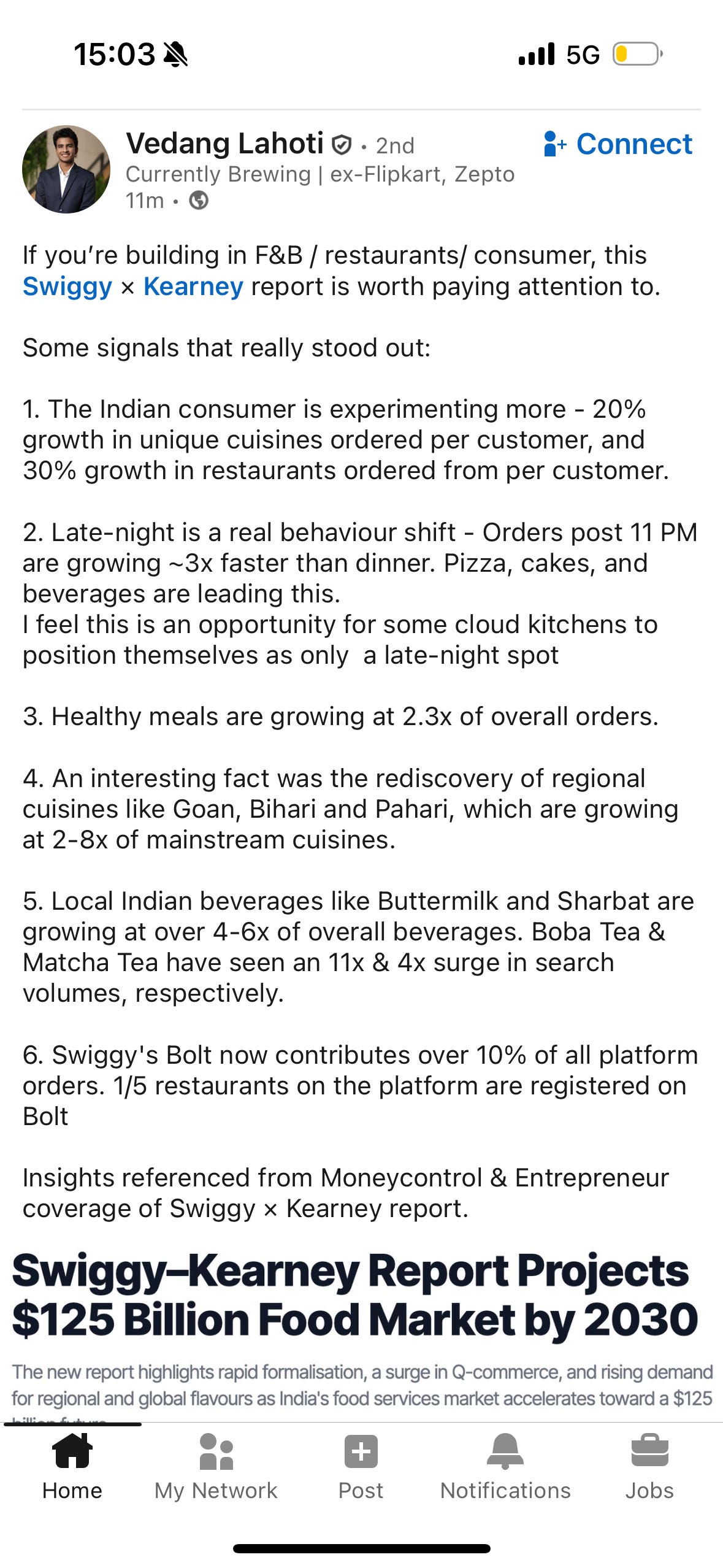
Link to report snapshot here
146. India’s art market
Per Madhav Chanchani -
“You can define the Indian art scene as before Kiran Nadar and after Kiran Nadar, nobody has come on the scene like her”
Nadar outbid everyone to buy MF Husain's Untitled (Gram Yatra) for $13.8 million at a New York auction earlier this year.
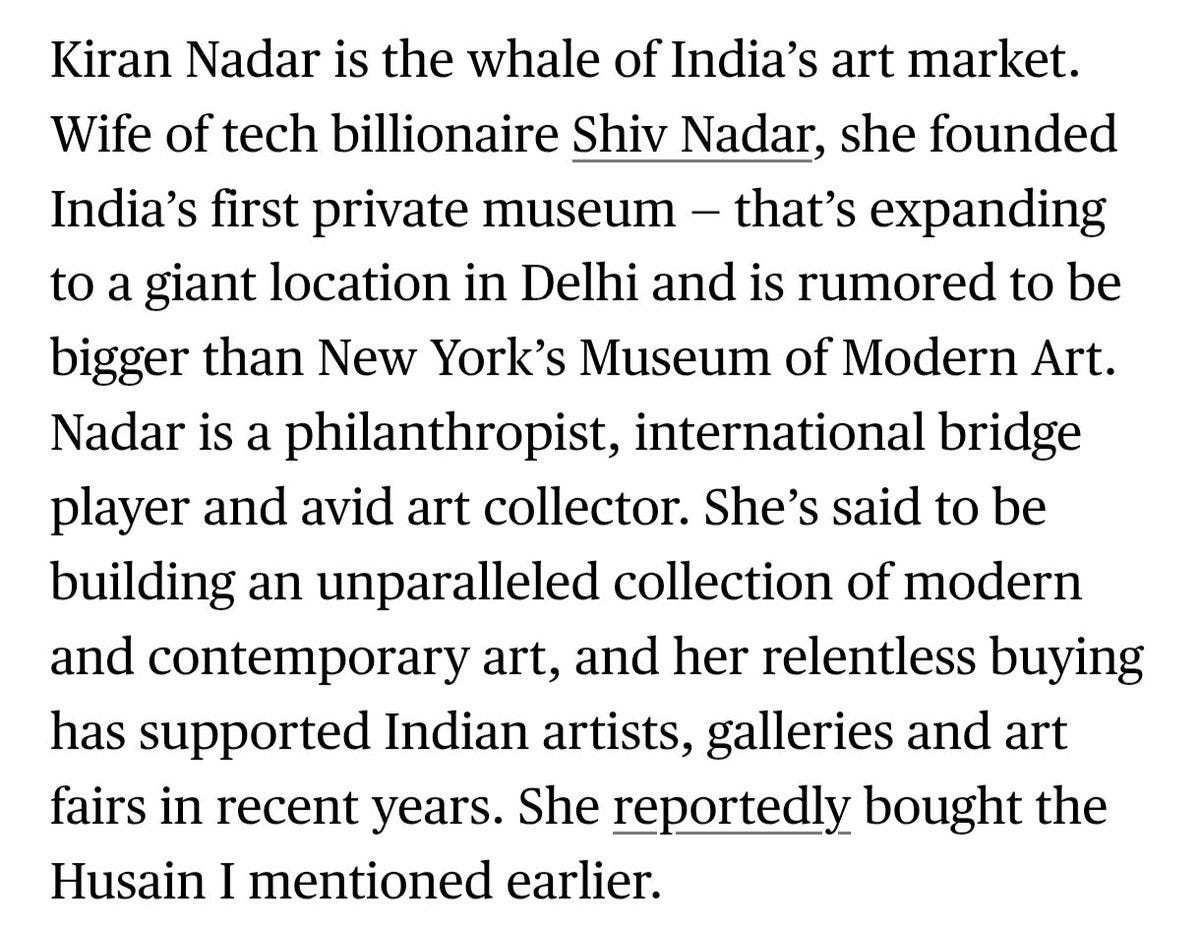
Link to the article here
As always, if you made it all the way here and you thought this was a good use of your time, it would mean a lot to us if you took a couple of seconds to share this post.

Fantastic
Excellent compilation of data from such a wide variety of topics. Great work. Keep it up