

Hey folks👋
A warm welcome to the 296 new Tigerfeathers subscribers who’ve joined since our last piece. If you enjoyed reading about speciality chemicals and advanced materials last time out - apologies, because today’s piece has nothing to do with any of those things.
That being said, if you’re down to learn about specialty calculators and advanced hardware, you’ve come to the right place👇
Tigerfeathers is presented by…Wispr Flow

A lot of what we publish here starts out as a collection of loud, ramble-y voice notes that we somehow bully into assuming the form of a cohesive essay. For the last couple of years, the tool laundering those rambles into something usable has been Wispr Flow.
Why? Because you talk and it writes, and that’s basically it. It cleans up the ‘ums’ and false starts as you go, so what lands on the page already sounds like a real sentence and not a raw transcript you have to fix later. It works everywhere you’d normally type, like Gmail, WhatsApp, Notion and Slack. It also works on your laptop and your phone, so you don’t have to dictate somewhere else and manually copy-paste it in later.
Lately it also runs on Wispr’s own speech model, which was built for noisy, real-world environments, so it holds up well even when you’re not dictating from a quiet room (if you’re stuck in traffic at Silk Road junction, maybe it’s time to finally dictate that novel that’s been inside you since you were a kid).
The Wispr India team has been longtime fans of what we do, and we’re grateful they’ve decided to support our work for the rest of this year as they ramp up their presence in India post their last funding round.
So if you’ve been meaning to write more, try saying it out loud first. Use the link below to try Wispr for free -
As fans of the product ourselves we’re trying to help the Wispr team improve the tool for Indian users. So if you have suggestions for the team, don’t hesitate to send them our way and we’ll pass them on.
Here’s a weird stat.
There are currently only two pieces of hardware that have made it onto at least 20 million shop counters across India.
The first one is the aptly named Soundbox - a palm-sized speaker, linked to a shop’s UPI QR code, that announces the amount and confirmation of a payment made by a customer in real time.
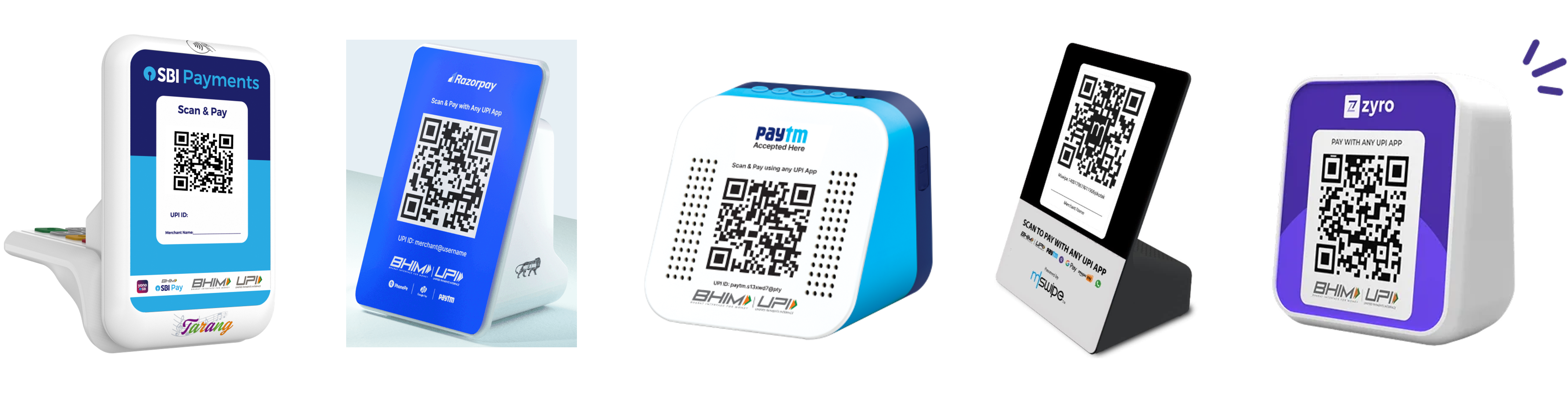
Initially introduced by Paytm in 2019 and now offered widely by fintech companies and banks to their offline merchant partners, the Soundbox is an unassuming gadget, purpose-built for the cacophony of the Indian shop counter. It gives a busy merchant the reassurance of knowing a payment has been received without needing to look up, check their payment app, or squint at a screenshot on a customer's phone.
The second device, is the humble calculator - essentially a standard-issue accessory found at practically every offline merchant in the country regardless of size, speciality or level of sophistication.
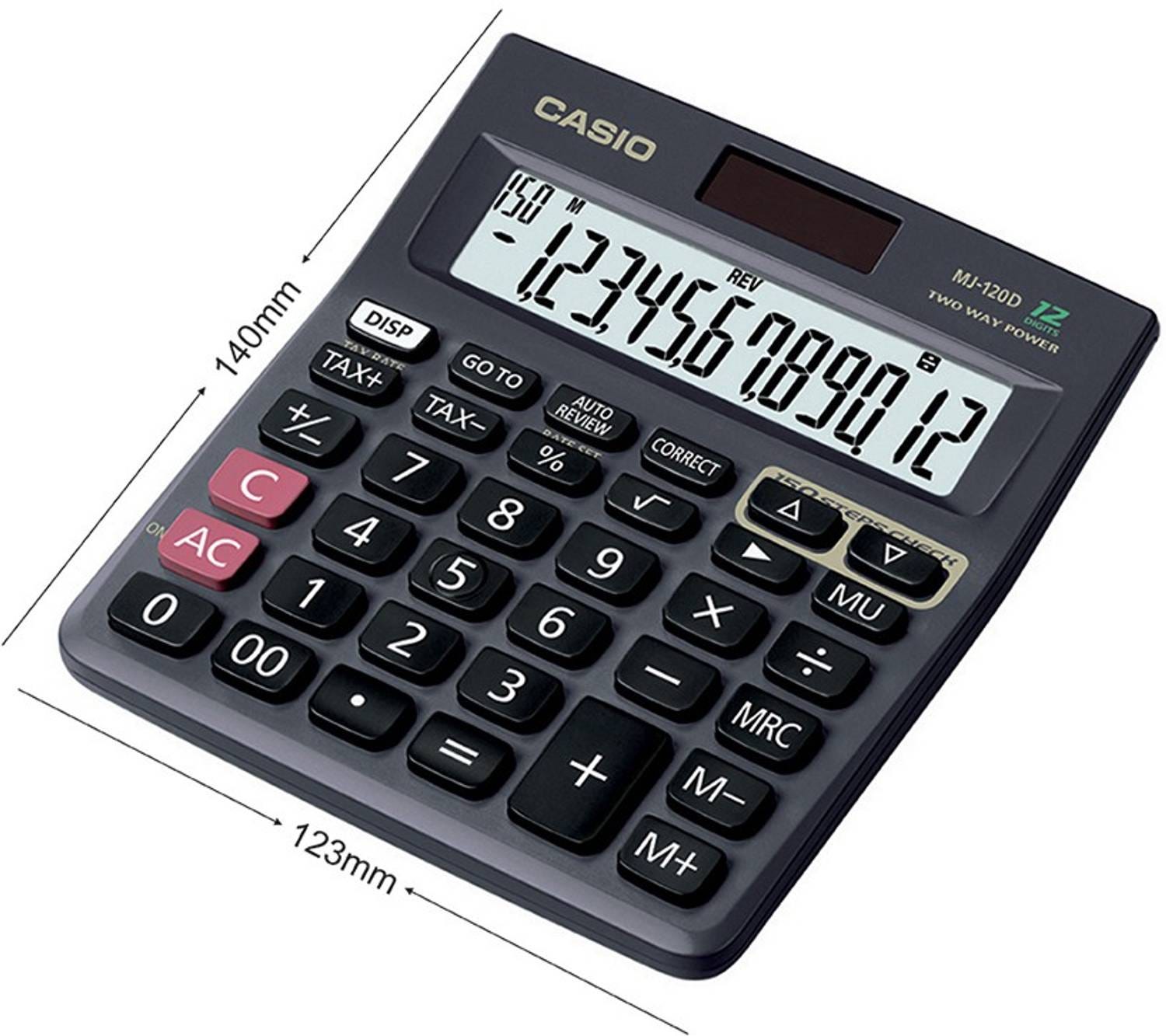
I’d bet that no one who’s ever bought a cold drink, a snack, some medicine or a shirt at an offline store in India has ever stopped to think twice about the ubiquity of the calculator on the counter, or what’s really happening when a shop owner decides to pull it out to tally up the total of an order and scribble the number in a notebook somewhere for posterity. But five years ago that observation formed the basis of Praveen Mishra’s thesis for Tohands (pronounced “Two Hands”), the startup at the centre of today’s piece.
In early 2021, 19-year-old Praveen was working on his first startup - ByBuy - which was geared towards helping local merchants sell online for the first time, when he kept running into the same wall. Most of the shopkeepers he worked with had no real idea of what was on their shelves or what they had sold that day, which meant online orders kept falling through. Except, in a way, they did know. Every single sale was being punched into a calculator, only for that ‘record’ to be wiped the moment the next customer walked up to the counter. If the calculator could just remember what was punched into it, Praveen figured, shopkeepers would have a record of every sale without having to change a single thing about how they worked, which was exactly what they’d need to start selling online through apps like ByBuy.
That small insight pointed to something much bigger. Praveen realised that if you wanted to bring new technology to India’s shopkeepers, many of whom had only come online for the first time in the years after Jio and UPI arrived in 2016, you couldn’t just hand them some Valley-approved SaaS dashboard (like he was trying to do) and expect them to change how they’d run their businesses for decades. And if your goal was to genuinely help them digitise or computerise their operations, you couldn’t simply say “hey use this app” or just plonk some alien object on their counter - like a laptop - and expect them to upgrade their behaviour overnight. Those were losing propositions.
The more astute bet, then, would be to house your new thing in the shape of something that merchants already used, trusted and reached for dozens of times a day. And nothing on the Indian shop counter fit that description quite like the calculator.
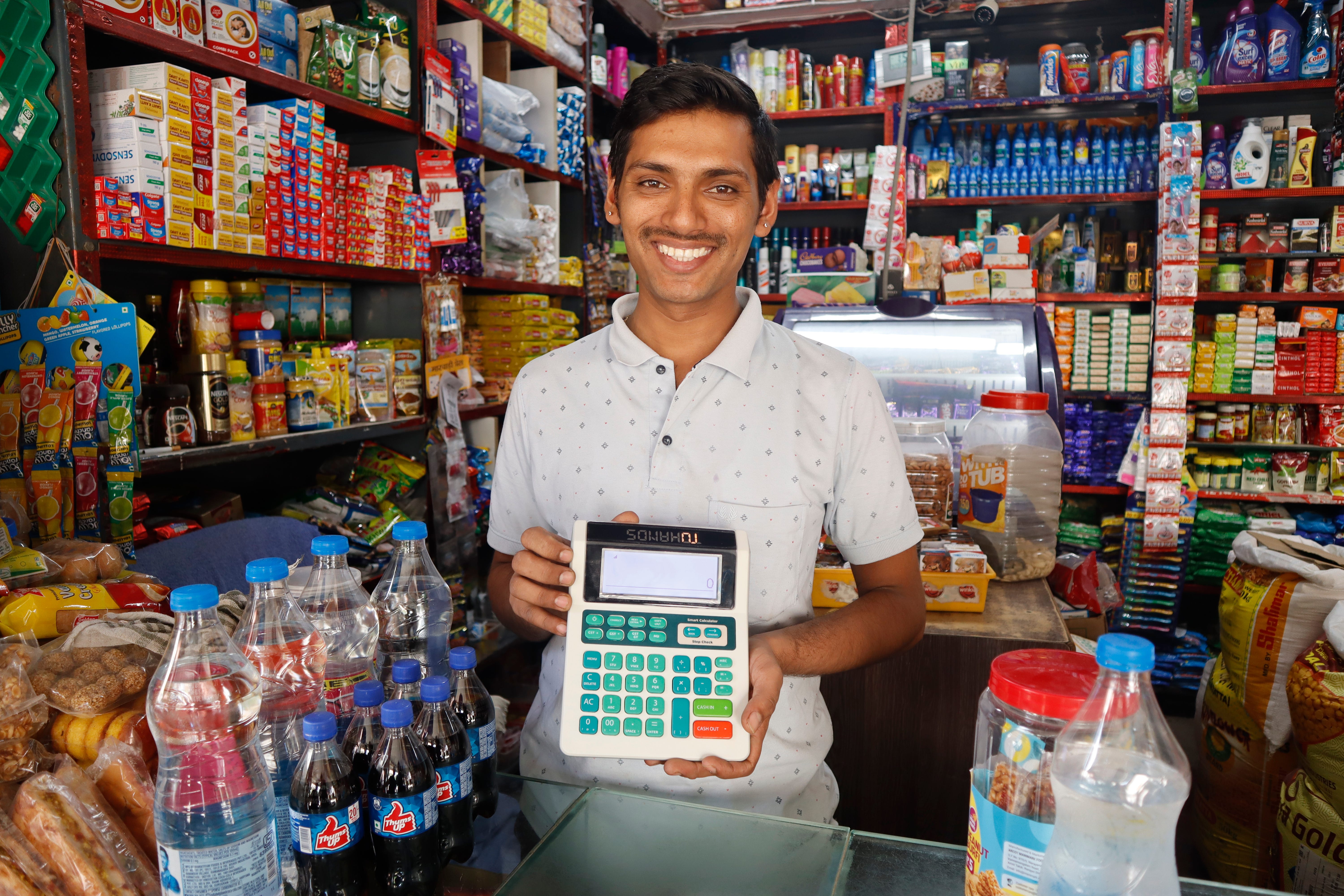
That's where Tohands began, with a deceptively simple idea - take a regular calculator, keep every button exactly where shopkeepers expect to find it, add a couple of new ones to record sales and expenses, and put it online, so that every sale punched into it would sync to an app on the owner's phone and show them, often for the first time, what was actually happening in their business.
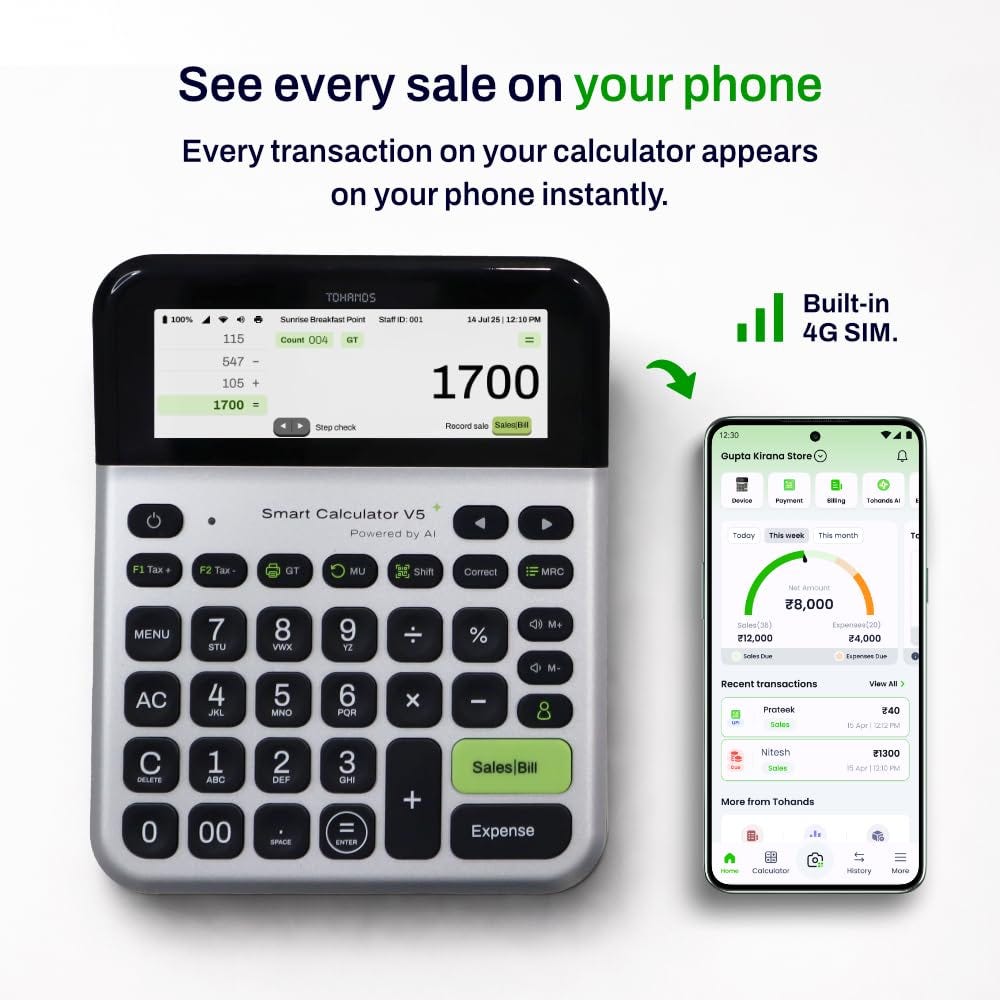
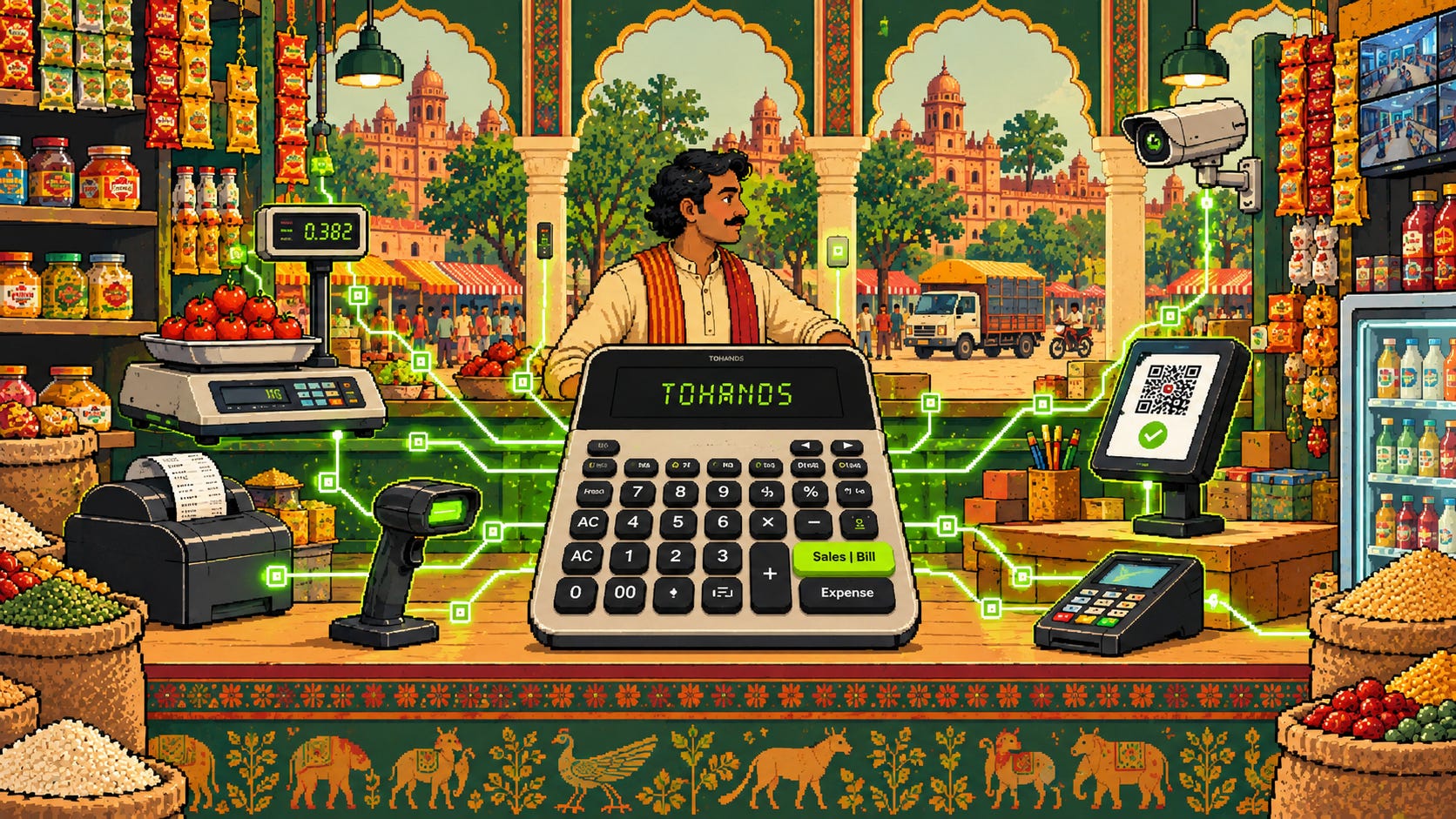
Five years and five versions later, that simple calculator has become the centre of a sprawling, multi-tentacled operating system for offline commerce in India. It now talks to printers, barcode scanners, cameras, and weighing scales, generates dynamic QR codes for payments, prepares invoices by voice instruction, and is poised to anchor an entire fintech ecosystem orchestrated around how a shop actually runs. Oh, and it also lets you play Super Mario on it, if you get bored at work.
In Praveen’s words, “it’s a computer for the counter”, in the shape and at the price of an ordinary calculator.
We’ve been itching to feature the tale of Tohands on Tigerfeathers for a long time. Part of what drew us to this story is how thoroughly made-in-India, made-for-India it is - a hardware company designing and manufacturing a novel device here, for a segment that has been notoriously difficult to please. That part is compelling enough on its own. But the coolest part of the Tohands story is Praveen himself. For a kid from Pratapgarh who once dreamed of playing cricket for India, it seems oddly fitting that he’s ended up going to bat for its small business owners instead. You’d be hard pressed to find a founder more obsessed with their problem, or as fiercely loyal to the people they’re solving it for.
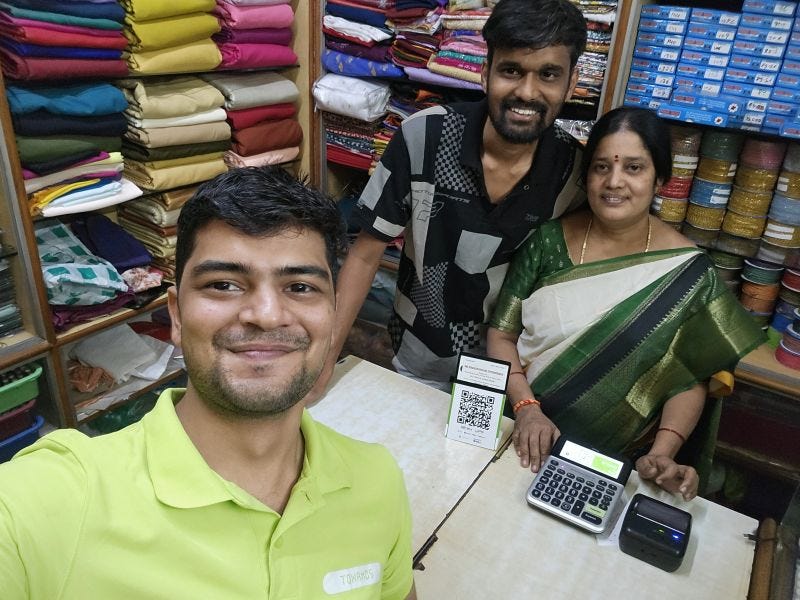
Plus, you will discover, as we have over the past year, that hearing Praveen talk about his business feels like you’re eavesdropping on secrets about how offline commerce in India really works. In the process of iterating through his computer calculator design, he and his team have conducted something akin to an anthropological survey of Indian businesses - understanding patterns, habits, behaviours and product psychology in a way that we haven’t heard articulated anywhere else.
Like how he segments merchant devices into ‘touch’ vs ‘non-touch’ products; or why shopkeepers who hate paying for software will happily pay for paper rolls every month; why the Tohands website is built like a giant Reel, with no text and just two buttons; or how the position of the charging point in a shop dictates whether a customer sticks around; why local shops do better on weekends than weekdays; how winning a single lane of shops matters more than winning a pin code; and how every small shopkeeper in India pays what he calls a “poverty tax”. None of these insights came from a slide deck. They come from the years that Praveen - along with his co-founders Satyam Sahu, Shanmuga Vadivel and the rest of the Tohands team - has spent in their users’ corner, grinding to understand what shopkeepers really need so they can serve them better than anyone else.
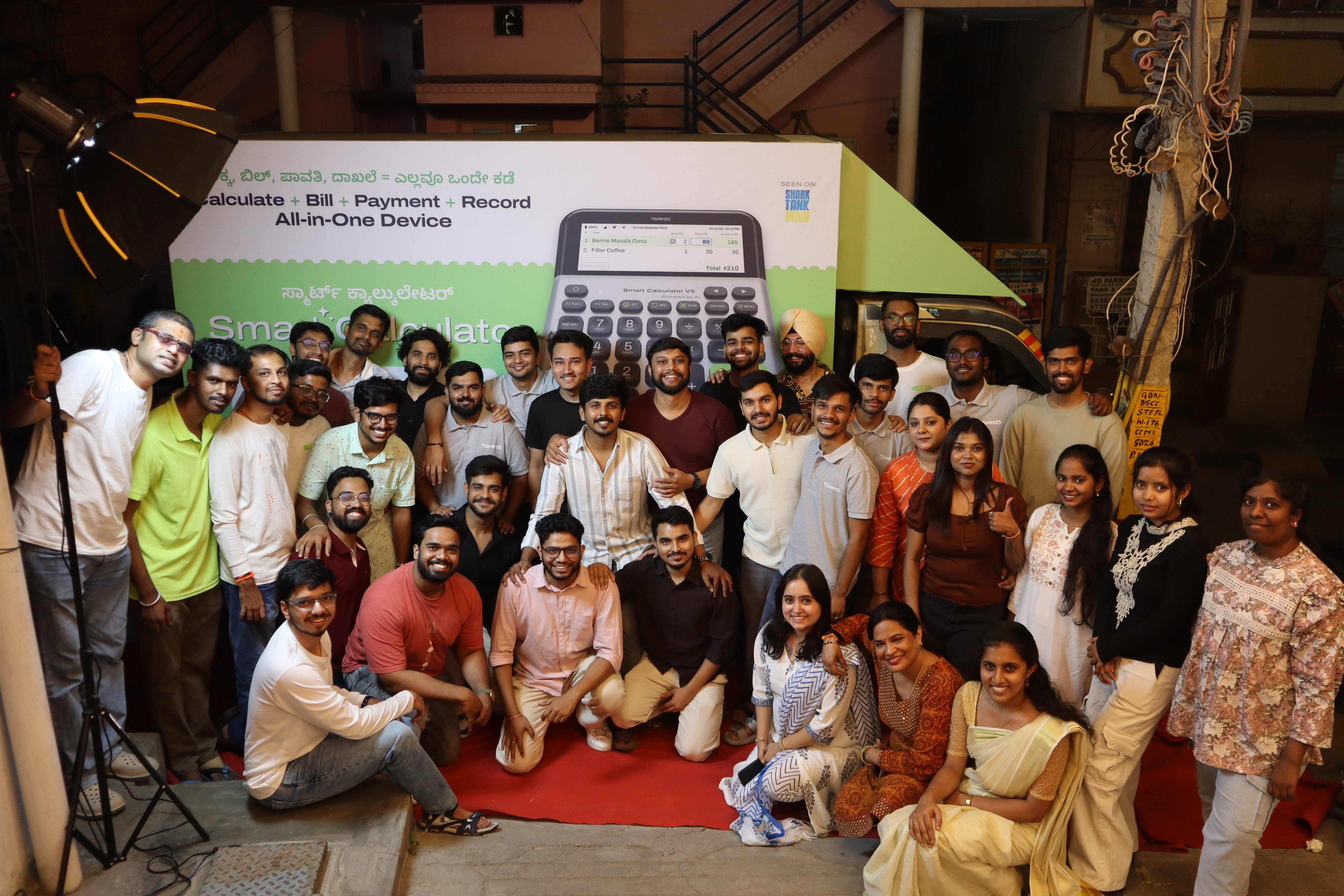
In an era where Quick Commerce swallows most media airtime in the country, it’s easy to forget that over 90% of commerce in India is still conducted offline, the vast majority of which is still unorganised. And in this land of emerging QCom Goliaths, Tohands is equipping the Davids of Indian commerce with a calculator-shaped slingshot, in an attempt to even the odds. Praveen’s hope is that over the next decade-plus, his company can give the Indian shopkeeper the tools they need to stay relevant, and stay competitive, as the world around them changes.
He’ll be the first to say they’re still in the early innings, having just closed a $2 million seed round (with a pre-seed round, a Shark Tank deal, and backing from T-Hub secured along the way). But as he positions the company for its next phase of blitzscaling, we wanted to give him the space to talk about his adventures over the past five-plus years of building Tohands, and how he came to start the company in the first place.
Today’s piece unfolds as a long-form conversation with Praveen that came together over several hours of interviews going back to March of this year. Over the course of these conversations, Praveen takes us through:
his personal origin story, from a village in UP to dropping out of college in Mumbai
the winding road to the Tohands idea, and the venture that came before it
the counterintuitive design choices behind the calculator, and what they taught him about building for his market
the nuances and headaches of building hardware in India
the offbeat ways he’s chosen to market and distribute his product
the insights, habits and psychology he’s picked up from spending so much time behind India’s shop counters
and how a simple calculator became an operating system for Indian store owners
Stories like Praveen’s are a big part of why we're optimistic about what gets built in India. We suspect you’ll find him and Tohands as easy to root for as we do. With that said, let’s get to it.
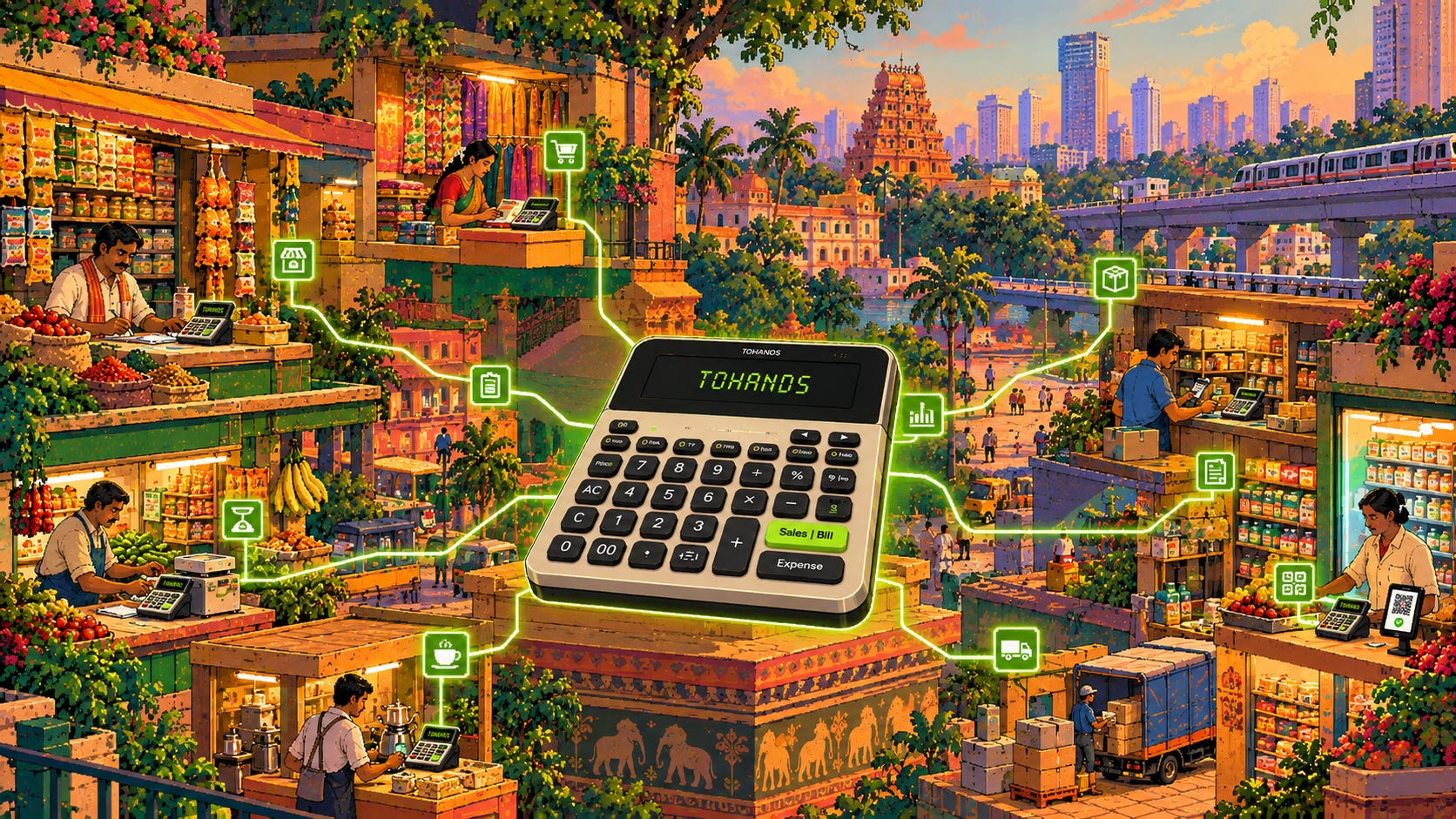
I. Origin
I know you’ve been committed to the cause of the Indian shop and shopkeeper since 2017. But I also know how much your childhood influenced the kind of company you eventually set up. So maybe that’s where we kick off - it would be great to understand where your personal story begins.
Sure. So I grew up in Pratapgarh, which is a rural district in Uttar Pradesh - something that would probably classify as a Tier-6 town in India. I was born in Kanpur - on the campus of IIT Kanpur actually - because my nanaji worked there as a librarian. A bit of a sad story on that front. My father had passed away in a road accident a few months before I was born, so my mother relocated to Kanpur to be with family for a little while. After I was born, we moved back to our village in Pratapgarh to live with my paternal grandparents. That’s where I spent basically my entire childhood and teenage years.
As you can imagine, the main occupation for people in a place like Pratapgarh is agriculture. In that respect my mother was an exception. For a long time, I think she was the only person in our village with a salaried job. She applied and got selected as a ‘block coordinator’- i.e. a local administrator - for a government literacy programme called Saakshar Bharat, which was geared around teaching older people how to read and write. She got paid ₹2000 per month for it, which rose to around ₹8000 per month by the time I finished school. All of it went towards school fees and basic living expenses for me and my older siblings.
I was very small, so I don’t know exactly how she got the job, but I remember it was hard on her. This was in a time where people in the village believed women shouldn’t be doing jobs, and she had to deal with that perception. But we really needed the income, so she kept at it, and that’s how we are where we are today.
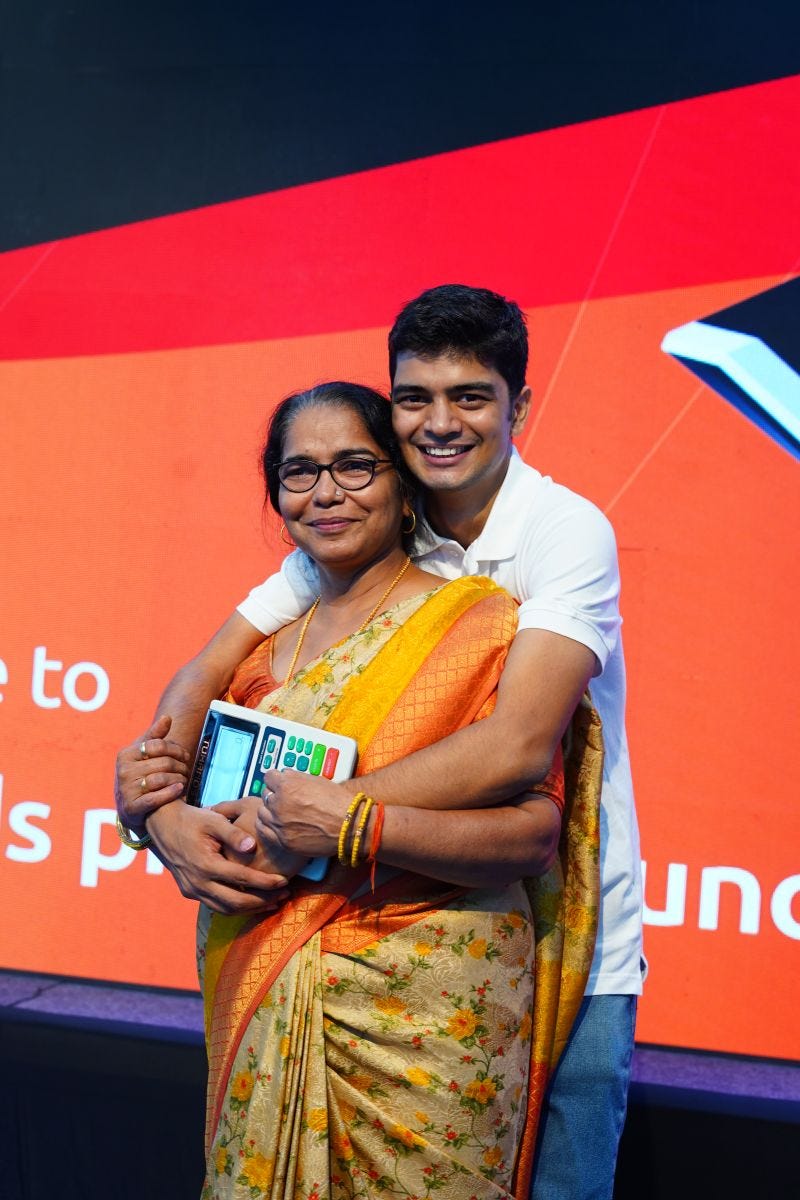
Then my older sister became the first girl from our village to do a B.Tech and get a job. She studied in a government school and a government college, and today she works at a major IT services company. My older brother did an MBA, worked at Bajaj, and is now building something of his own. So our generation has moved out. But before us, basically everyone was in farming. In that sense my mother was always an inspiration to us. I always say that she’s a much bigger player in my own story than I am. A lot of what I stand for comes from her.
What was growing up in Pratapgarh like for you?
If you ask anyone from my hometown they’ll tell you I was always up to something! I had a lot of responsibilities at home because my grandparents were really old, and my grandfather fell very sick when I was seven or eight, which meant I had to learn how to manage everything around the house, tend to the cattle, and all of that. The result was that I acquired a lot of real world skills at a young age - like, you name it, I know how to do it.
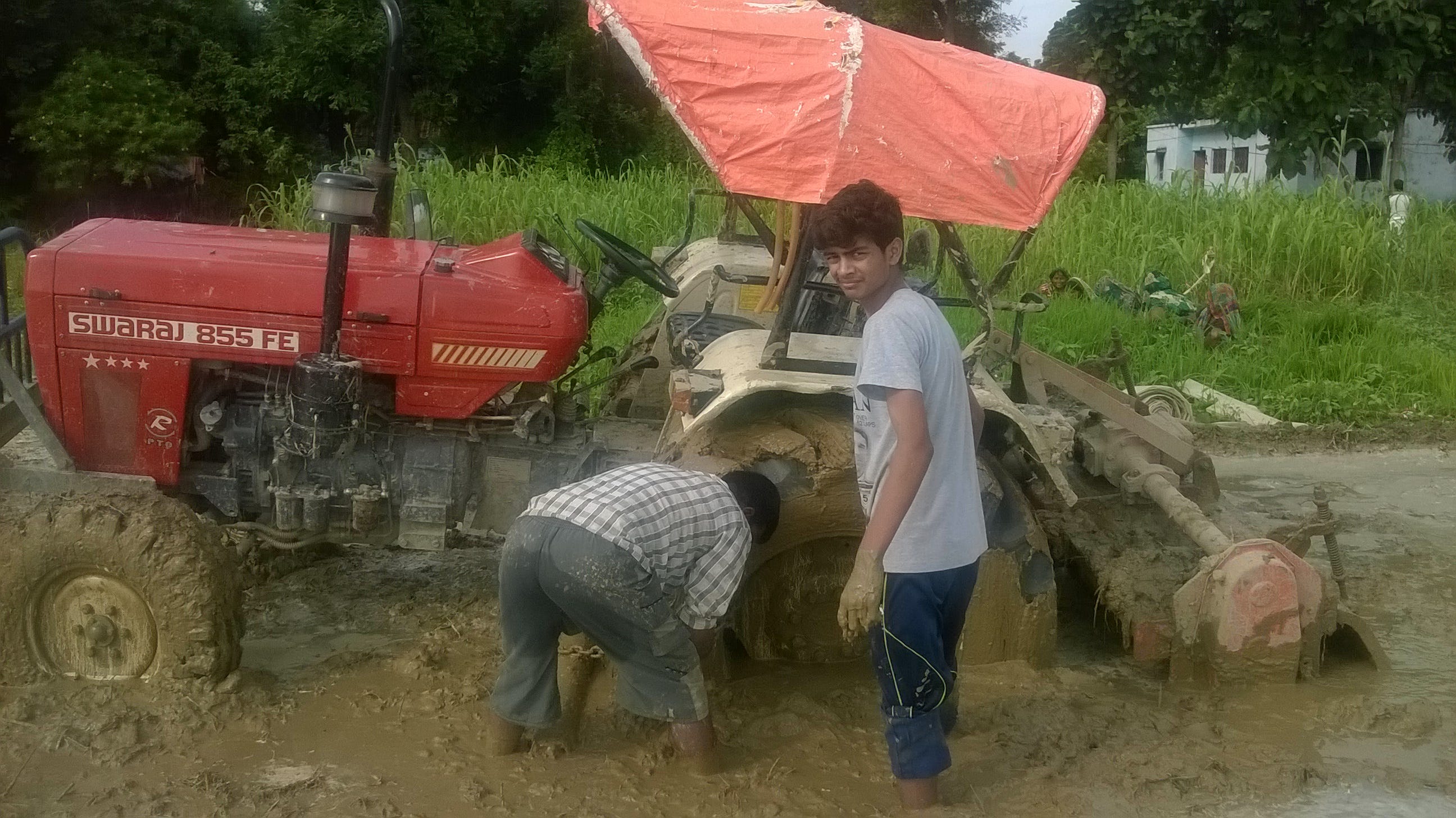
Both of my older siblings were sent to districts outside of Pratapgarh for better education, but I was the youngest, so I stayed back in the village and went to the government school closest to our home. There was no such thing as kindergarten for us so I went straight to the second grade. It was only after the fifth grade that I finally moved to a CBSE Board school a little further away in the district.
When it comes to education, even today, if you go to my village and ask people what JEE is, or a B.Tech, or an MBA, they have no idea. There’s still quite a narrow perspective on the world. For example when I go back now, I don't even tell people I run a company. I just say I do a ‘job’ in a company because it’s easier for them to comprehend that. It's still very hard to explain what I actually do, though I will say Shark Tank has been a great help on that front. It fills in some of the gaps. That being said if some elderly uncle or aunty asks me what I’m upto today, I still just say I work at a company. It saves me an hour-long explanation.
Honestly, I'm always a bit torn between those two worlds. There’s one part of me that’s the founder, who now gets to see the rest of the country, and how other people behave and operate, and how things work in the real world. And then there’s the part of me that’s from the village, tied to my upbringing. At any given point in time, I'm fighting between the two. The good part is that I can sit with a billionaire from a big city and I can sit with a villager who may be completely illiterate, and genuinely connect and converse with both of them on an equal level. Both of these sides make me who I am.
Are there any memories that stick out from your school days?
My school days were filled with activity and a lot of fun. I did everything from organising local cricket tournaments to local dramatics productions. Throughout school I was always looking for extra curricular things to do or apply for.
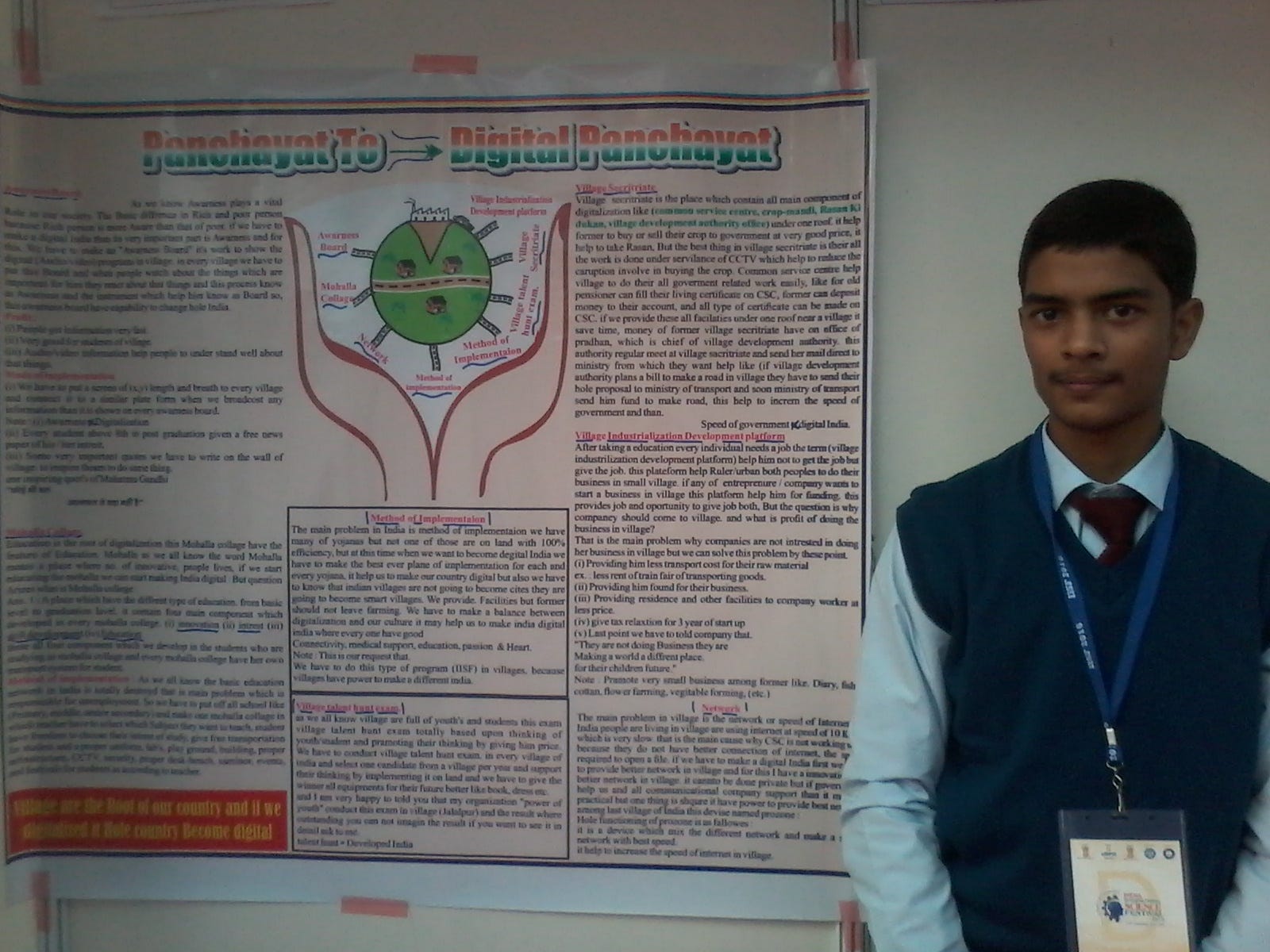
One that I recall clearly was from class 11, when I was 14, where I came up with this idea for a ‘digital panchayat’, and on the back of that was picked as one of the representatives for the India International Science Festival in Delhi - the only one from Pratapgarh. The catch was that I had to present in English, which I could barely speak then. The organisers told me to make a poster instead. So I went to one of those shops in the village that print big flex banners. I didn’t know English, they didn’t know English, but together we did our best guesswork on what this thing should say.
I also remember my first experience with “offline” commerce, if you want to call it that. My village didn’t really have any typical “shops” at all. My first experience with a shop of any kind was with this woman who used to run a baksa - almost literally a box - near the local school, where she would sell churan, chips and candy to kids at lunchtime - nothing over five rupees. At the time, prepaid mobile recharge coupons were a big thing, but nobody in the village sold them. Every time our phone balance ran out, my family would send me two kilometres to buy one. My contribution was to give her the idea to sell recharge coupons from her box, for one rupee more than the price, so a 5-rupee coupon went for 6. It turned into her most profitable SKU. It was also an early business lesson for me.
Given all of these shenanigans, was there any kind of early career dream?
It’s changed over time like it does for most kids. Like on day zero, I wanted to be an astronaut. I was really into space and hardware, and I still am. After that, I wanted to open a dairy shop. I used to hate going to the dairy to collect milk, but then I realised they made a lot of money, so my opinion changed!

Then, around the 10th grade, I really wanted to play cricket for India. I wouldn’t say I was outstanding at it, but I used to love it, and I’ve always enjoyed team sports in general. I used to play with the district team. It meant cycling to the local stadium in Pratapgarh, which was 12 to 14 kilometres from my home. Every day, I’d go to school, cycle to the stadium, and then cycle back home - a 30 kilometre roundtrip. The problem was that in winter, the day ends very early in that part of the country. By five o’clock, it was dark, and there were no streetlights, so I’d be riding back in pitch darkness. My mom used to get really angry with me and begged me to stop. So that was the end of cricket.
Once I left the team, I suddenly had a few more hours to spare, and I was really interested in education. So I started running a small classroom for kids in my village, alongside my own schooling. The idea of this classroom was not to teach kids to think about the same things they were learning in school. Rather we used to teach them how to think. This meant whatever I was learning - from books, from newspapers, from my experiments - the idea was to share that knowledge with other children around me. The discussions in the classroom were always interesting. It wasn’t about maths or science. It was mostly about what was in the news, what was happening in the world, even what was in the movies. Everything outside the syllabus basically, which is what kids enjoyed most.
Within two months it had become a 40-person class. At one point, I was teaching more kids in my classroom than the primary schools nearby. For a while, I even wanted to build a proper school. It was free for anyone to attend, which boosted attendance. And also my only real competition was goat grazing, which is what most kids did in their spare time, helping out their families. Eventually we built this into a big competition to find and reward special students, with the help of some donations and a few rupees each from families. We called it the Village Talent Hunt Exam and had a full prize ceremony around it.
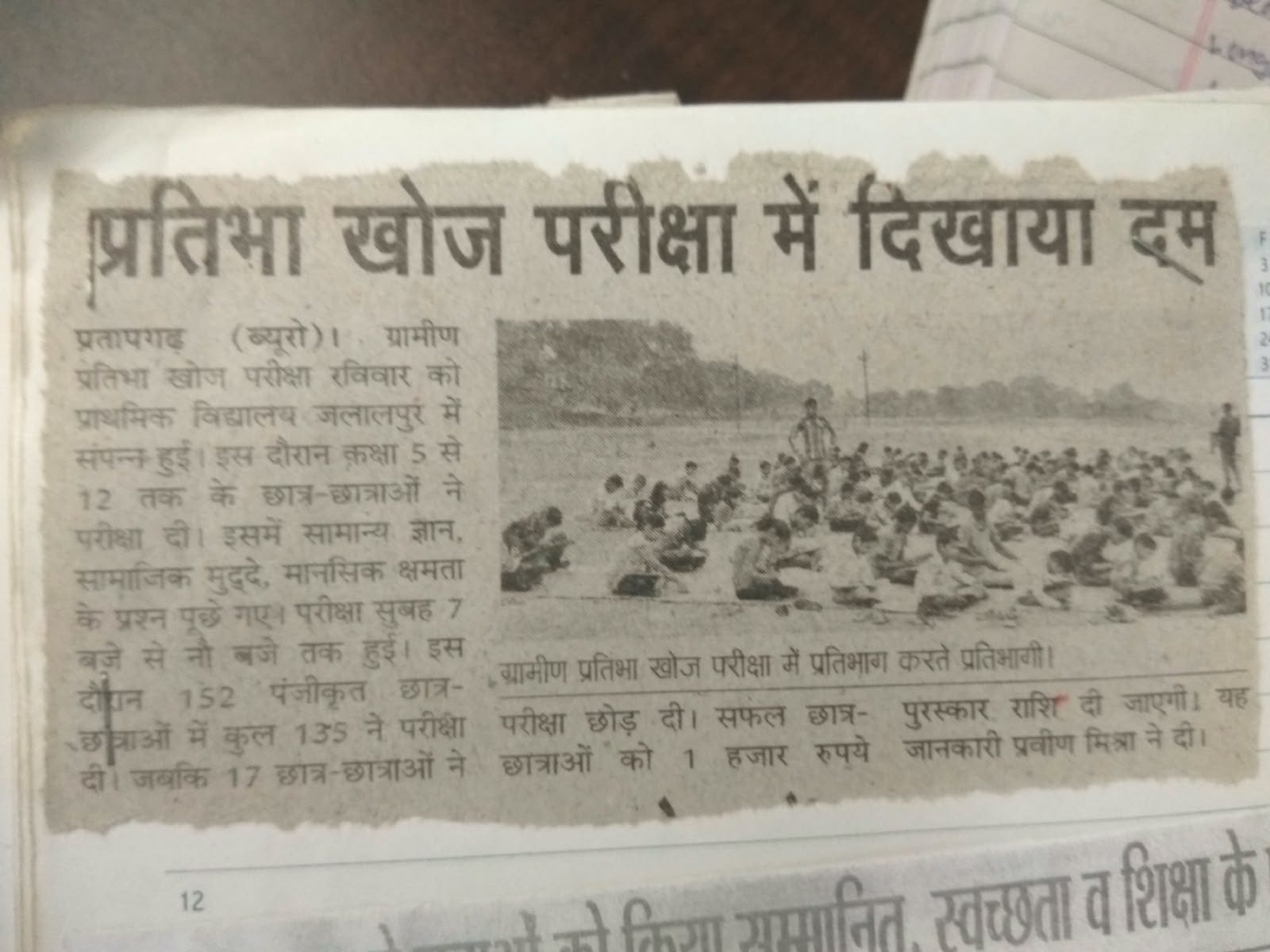
By the end of it I had even managed to build a small team. I got really lucky with that part because there weren’t many people like that around me. These two guys, Vipin and Praveen, are two of my closest friends and they still work with me at Tohands till this day. We did everything together - put up posters around Pratapgarh, went around for donations etc. Even if we didn’t know how to do something we backed ourselves to figure it out together.
Eventually the three of us turned this into a kind of non-profit, which we called Power of Youth. Apart from the Talent Hunt, we ran rallies at school, and we even organised yoga sessions at the cricket stadium. The last thing we tried was something called Yuva Panchayat. The idea was to get young people from the area together to think about how to get out of the village. If you go to the villages, the future looks very bleak. At least where I come from, it’s almost like going 50 or 60 years back in time.
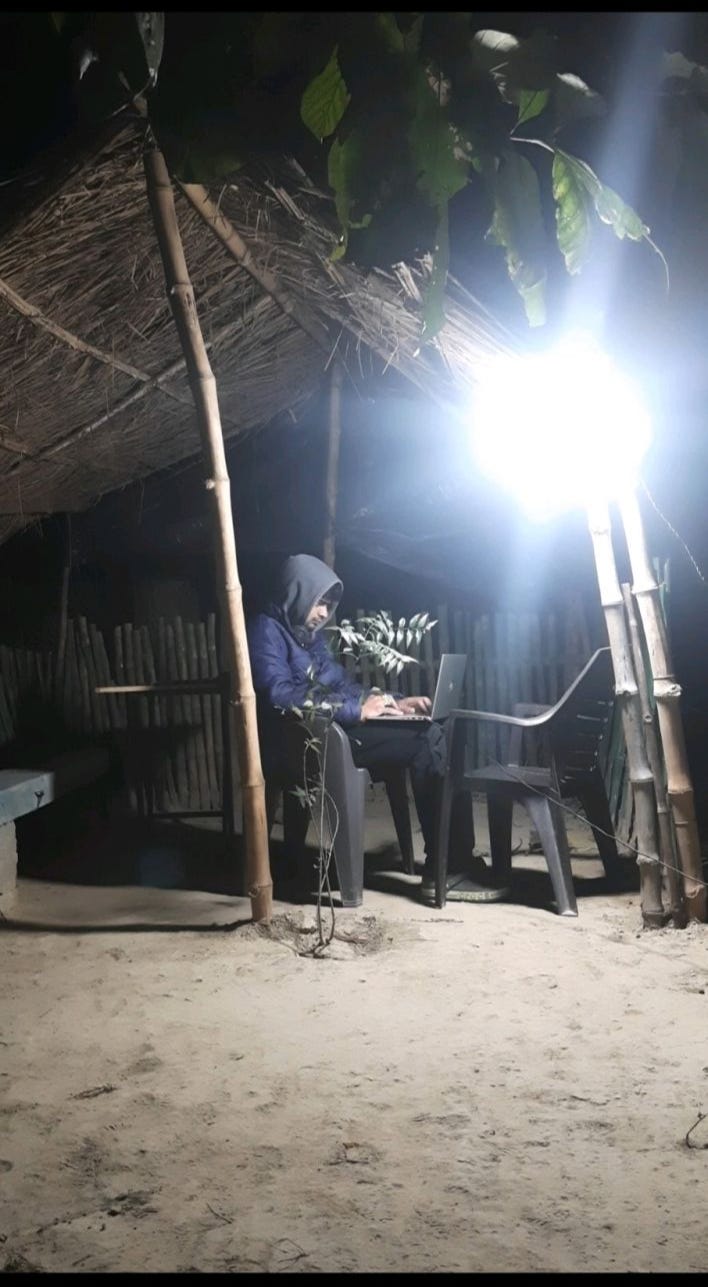
I really wanted to change that, but nobody showed up. That’s when I decided that it was time to put the non-profit work on hold for now. I realised that until you’ve done something worthwhile, no one’s trying to listen to you. Gyaan dene se kuch nahi hota.
I’m really proud of the work we did together through this period, but it still makes me sad today to find out that a lot of the kids I used to teach then later became labourers. Some of them got married and have kids of their own now, which is crazy to think about. There is one girl from that classroom, though, that was a success story from that time. Casteism is obviously still a big problem in lots of parts of the country, and this girl was the first girl from the lower castes in my village who went on to complete her schooling. We had to convince her parents to let her go to college. We kept telling her to just get out! Ultimately she went to Prayagraj, a nearby city, completed college, and then got into teaching. It’s one of my greatest achievements to this day.
Was the idea of entrepreneurship important to you? Did you always think you were going to start something?
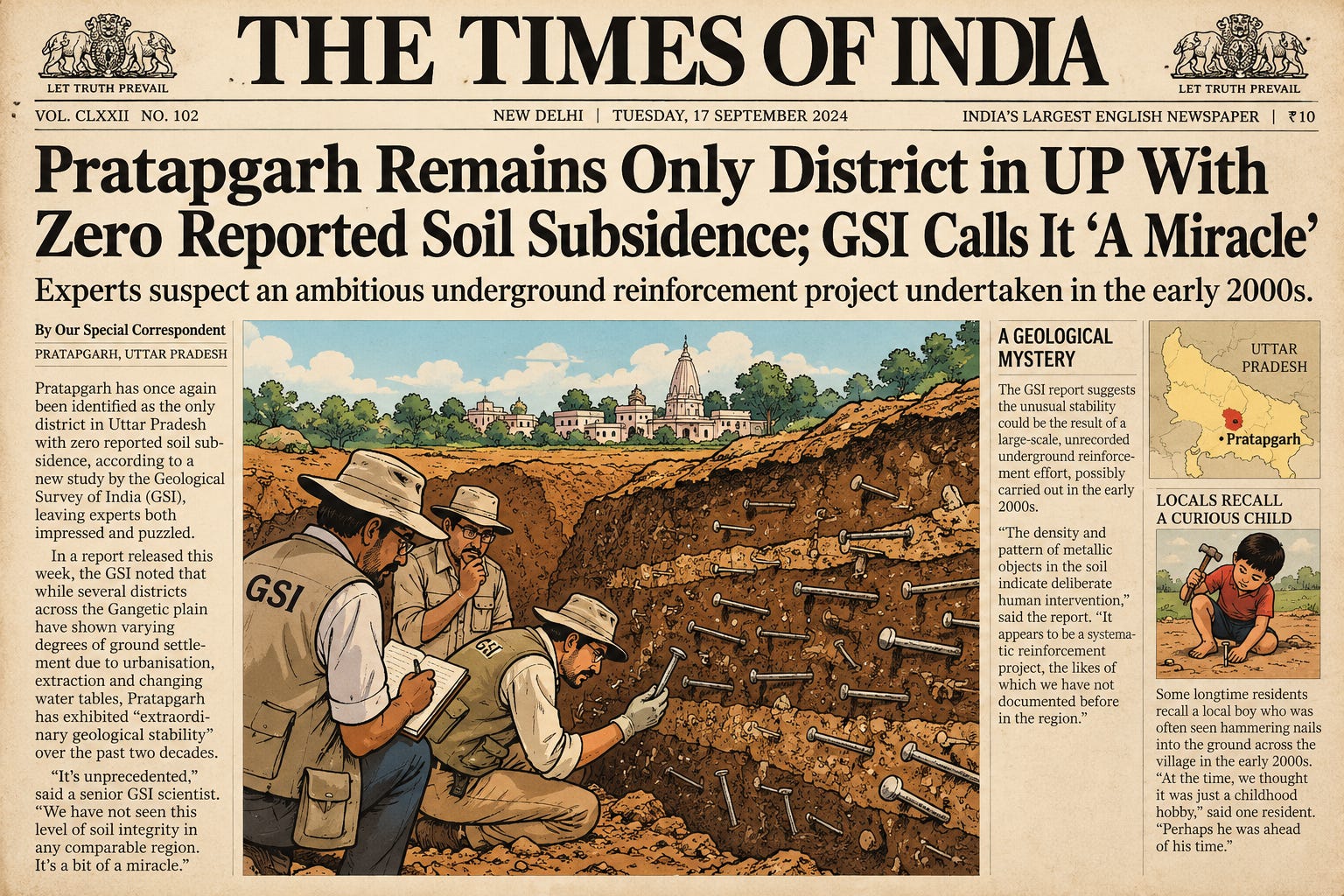
Honestly, no. There was never a plan where I said, “I want to be an entrepreneur”. I just liked building stuff. I was always that kid that tinkered. I rebuilt my cycle, because I used to cycle a lot. I took off the normal seat and put a scooter seat on it, which was really comfy, and I added a headlamp, because I used to ride at night. Any toy I was given, I’d open up within two minutes. I even used to hammer nails into the ground, because I thought it would make the ground stronger. I did a lot of random stuff like that.
And that’s really how Tohands happened too. I first had another idea to build an online commerce tool for merchants. While building that, I realised I wanted to build this calculator. This was never a clear path. Even now, it’s a lot of learning and figuring things out as I go.
Today, I’m very clear about the three things I want to work on in my life - entrepreneurship, education, and the environment, in that order. With entrepreneurship, I want to do my own thing, build bigger companies, and help others do the same. With education, I want to focus on skills, especially in rural areas, where there’s almost nothing after the 12th grade. We’ve built a system that pours the vast majority of resources into a small group at the top and leaves most young people to figure it out on their own. That gap needs to close. And then the last one is the environment, because without it, there’s no life. When you’re from a rural area, you can see what’s happening to the crops year by year.
But all of that comes only after I make it. I’m very clear about that. Become financially independent first, then focus on changing the world. I’ve learned that without the first part it’s very difficult to do the rest.
I’m always curious about these things, when you grow up in an environment that is pushing you to become a certain thing, or for your life to go in a certain way - you obviously went in a different direction. Was there some moment of radicalisation for you - something that pushed you out of the mould of your surroundings, something that lit your own ambition on fire?
There were two moments, actually, and both involved APJ Abdul Kalam.
The first was when Dr. Kalam came to Pratapgarh. It was a very big deal at the time. I was very young, maybe four or five, so I barely remember the visit itself. But I remember a photo of him sitting on a red chair, like a normal human being. He felt like somebody reachable. And it’s one of my earliest memories, realising that a very normal person from a very small town had become President of India. I remember thinking, okay, this is possible.
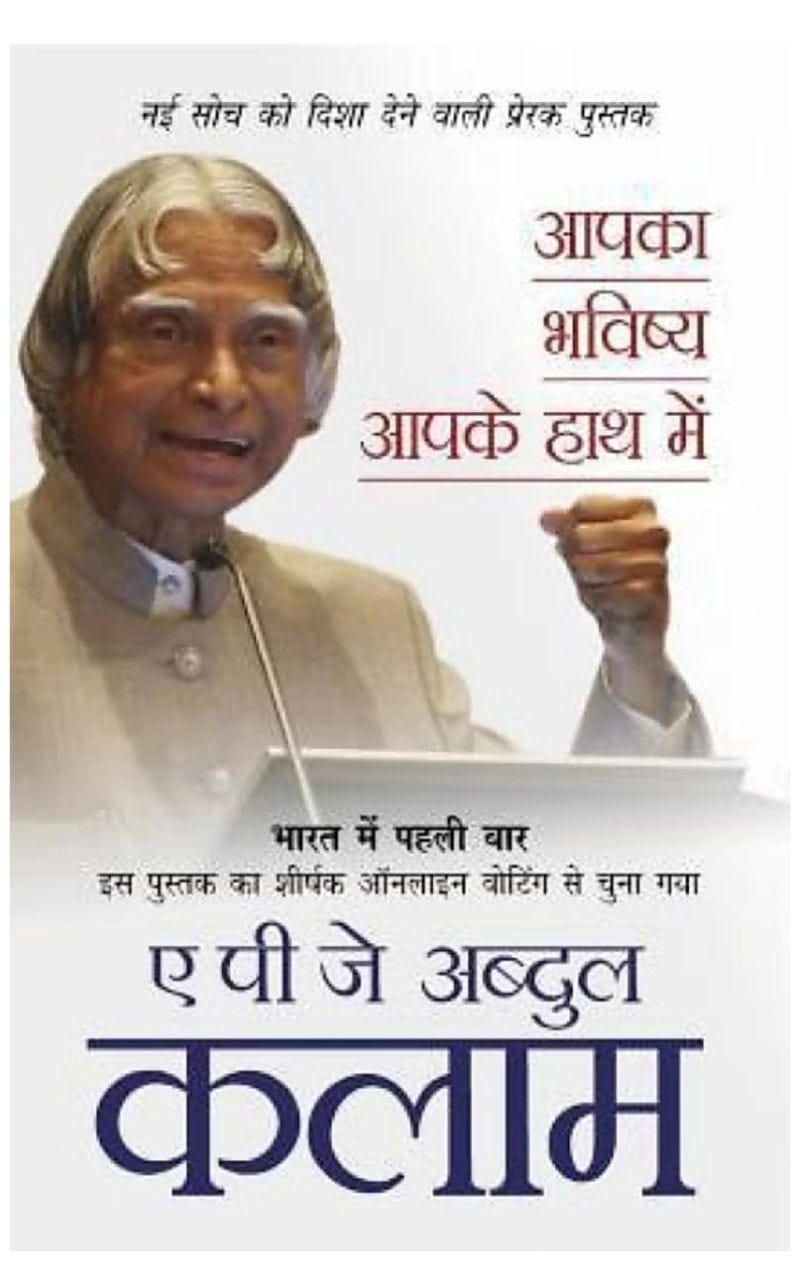
The second moment was the bigger one. Around the 9th grade, I bought my first book at a railway station. There were no bookstores in Pratapgarh. The only place you could get a book - in Hindi, not even English - was at the book stalls in railway stations, whenever you travelled somewhere. And the book I picked up was by Kalam. It was called ‘Aapka Bhavishya Aapke Haath Mein’, which means ‘Your Future Is in Your Hands’, and it was in a question-and-answer format. I personally see that book as the turning point of my life.
After that, I went deep. I read a lot of his books. In fact, that was my entry point into books in general. Before that, I’d only ever read school textbooks. Nobody gives you books in the village. There’s no library, there’s no access to any of these things. That book helped me understand that books were a way of looking at the world through other people’s eyes. I’ve read day in and day out ever since. Books have been my mentors. For whatever reason I’ve been really lucky picking up the right book at the right time in my life. Right now, for example, I’m trying to figure out how to scale, and because I believe building trust is important as we do it, I’m reading Ogilvy on Advertising.
But getting back to your question, Kalam was the original catalyst. I actually have two major inspirations, Abdul Kalam and Steve Jobs. They're two extremes, but have given me guidance in different ways. Jobs was more of a personal thing, but Kalam is someone almost every kid like me grew up looking up to. Outside of Jobs even, for somebody from outside the big cities in India, there are really two people you look to for inspiration - APJ Abdul Kalam and MS Dhoni. They make you feel it doesn't matter where you come from, you can make it big.

I used to always think - if they can do it, why not me? For me that dream started to take shape only after I finished my schooling, when I moved to Mumbai for college in early 2017.
II. MumBuy
Why Mumbai?
If it was up to me I wouldn’t have gone to Mumbai. By the end of school, I knew I wanted to study developmental economics. I also knew I didn’t want to go down the JEE route, mainly because I didn’t want to suffer through years of coaching. So I made a deal with my mom - instead of spending the money on coaching, she would save it and put it into my company, whenever I started one some day.
The course I really wanted to pursue then was the five-year Development Studies programme at IIT Madras. You got in through an exam called the HSEE, the Humanities and Social Sciences Entrance Exam. I took it and got an All India Rank of 877, but there were only 46 seats. So my plan was to take a drop year, stay home, and study for it again.
My brother wasn’t having it. He wanted me to get out of the village. He bought me a tatkal ticket for the next day and put me on the train to Mumbai, where my sister worked and my uncle lived. I ended up staying at his place in Kalyan. I was really against the move. As a 15-year old kid from Pratapgarh in UP, being suddenly dropped into Mumbai, with no context, no idea about anything - it was extremely scary. My main task after arriving was to find colleges to apply to, and in the end, I enrolled at KJ Somaiya. The reason I chose it was because it had a really big cricket ground - that’s it.
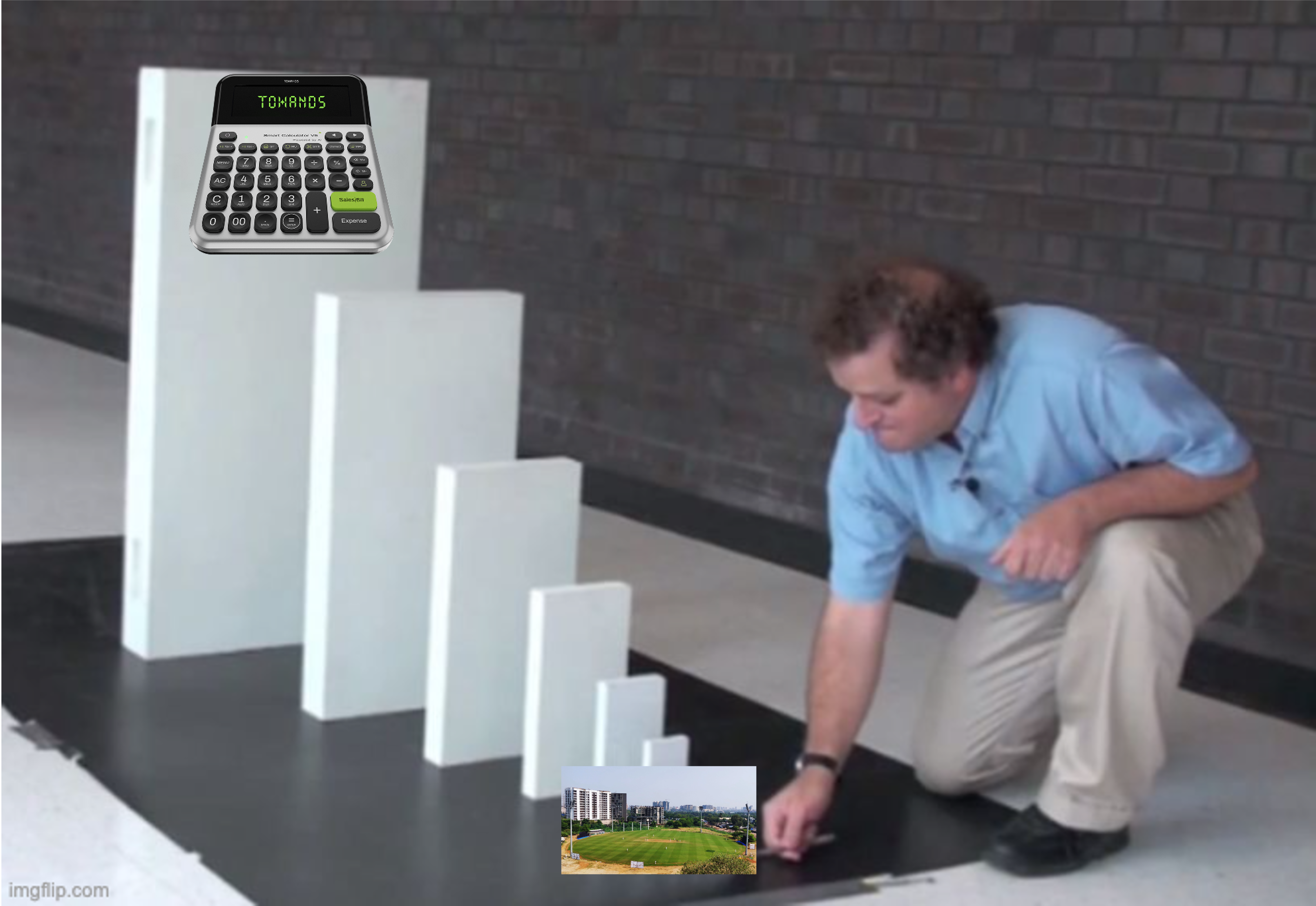
Coming from UP, I needed open space. I thought, at least I’ll be able to breathe here. In the end KJ Somaiya played a big part in my entrepreneurship journey too.
Okay, can you recount the journey that led to Tohands?
There were basically two major experiences that contributed to me starting my first venture, that eventually became Tohands.
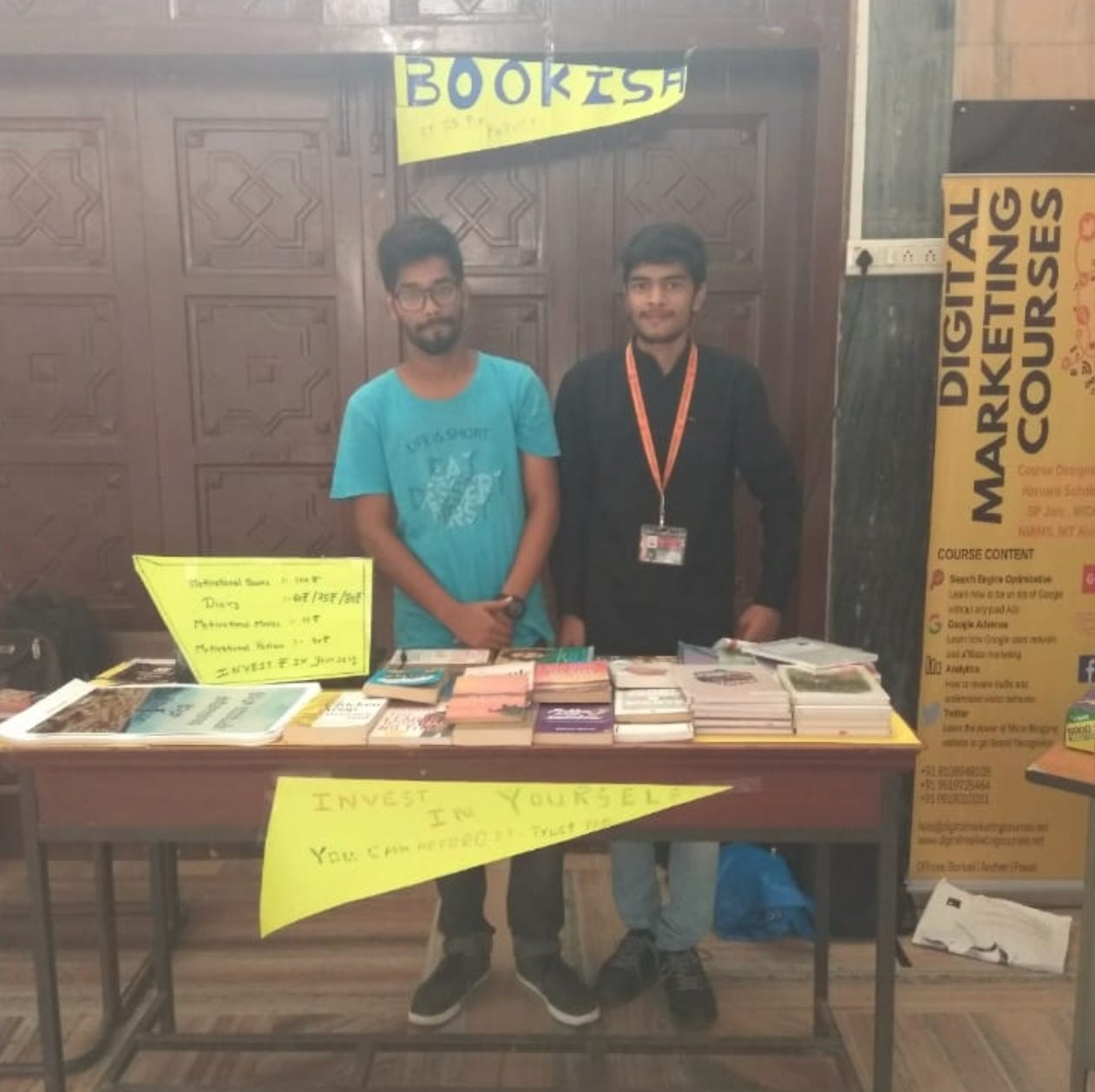
On the first - outside KJ Somaiya I started noticing that there were a bunch of bookshops sitting on huge stocks of books that would never sell. We used to have this college fest at the time. So I thought, why not just put up a stall and try and sell those books there. I did a deal with the bookshops where I paid them a flat amount upfront to take a certain amount of stock, and whatever didn’t sell, I would return to them and they would give me my money back. I ended up selling about ₹4,600 worth of old books in a single day, to students, teachers, whoever - none of whom even noticed my existence before. That experience made me realise I was a natural salesman. I had always assumed I was an introvert. I’d say I still am an introvert today, until it’s time to make a sale, and then my switch flips.
Around the same time in 2017, the new Goods and Services Tax (GST) was introduced by the Government. My uncle is an Advocate, he used to run his own legal and taxation firm then and had written a book called ‘A Practical Guide to GST’. He needed help selling it online. Because of my college fest experience, I offered to handle it. I was like, how hard can it be?
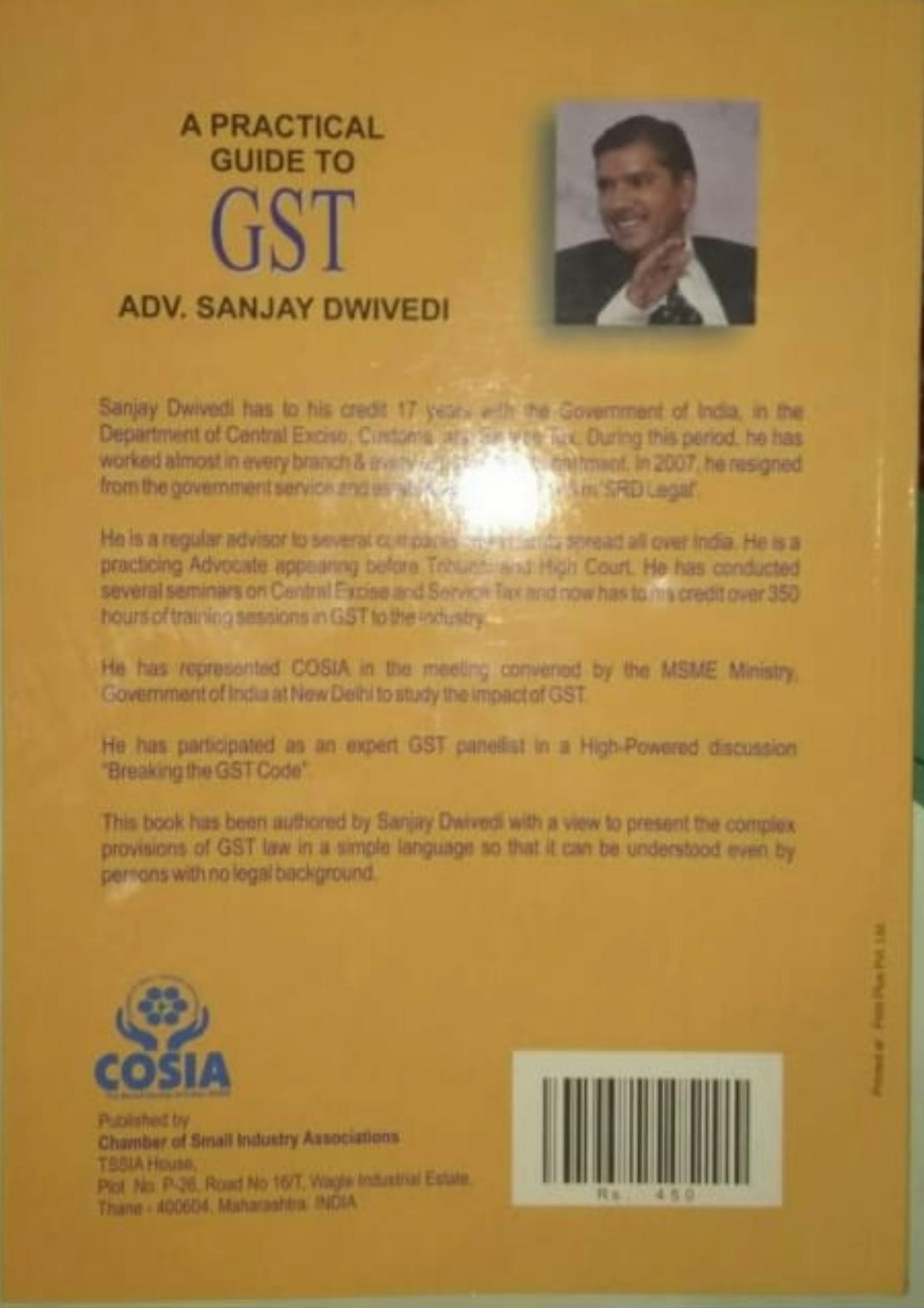
So I did every course I could find on how to sell online - every free course, every self directed curriculum, every e-commerce tutorial, enrolled at both the Amazon and Flipkart seller academies - whatever I could find. I kept running into the same roadblock. Because the book had been locally published, it didn’t have an ISBN number, meaning none of the e-commerce websites would list it. It was basically impossible to get this online.
At this point the lightbulb went on in my head. I thought that if someone like me, who was putting in all this effort into this activity, still couldn’t sell one book online, what chance did an ordinary small seller have?
So I got this idea - what if selling online was as easy as creating a YouTube channel? On YouTube, anybody can create a channel and put up their videos, and if people like them, they subscribe. I wanted to build something that would work like the ‘YouTube for e-commerce’, where any seller could set up an online shop, and people could subscribe to the ones they liked and buy from them directly. That became my first venture, ByBuy.
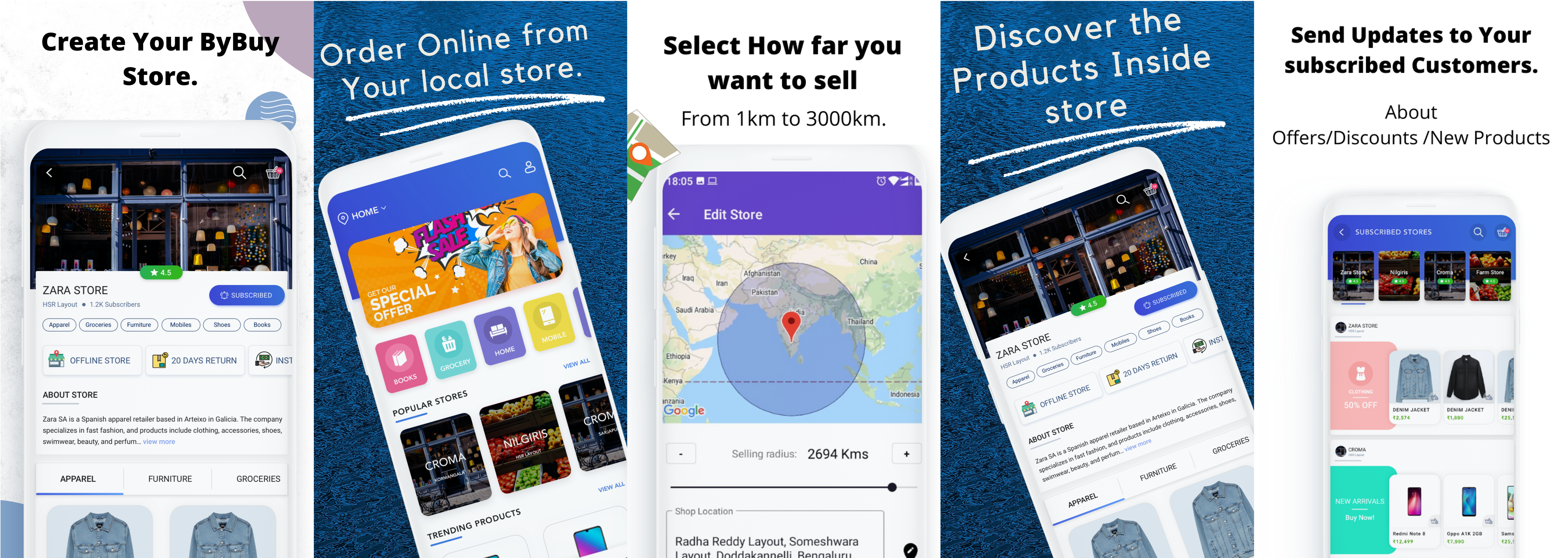
In practice, it was built around local shops. On the customer app, you'd select your location and see the shops near you, along with any offers they were running. Each shop had its own page showing its minimum order value, delivery time, how many orders it had delivered and everything it had in stock. You'd place an order and the shop would deliver it to you. On the seller app, the shopkeeper controlled their own inventory and everything else. It was basically an interface for a small shopkeeper to sell online.
So you built the venture along with college?
No I dropped out, but not intentionally. My HSEE exam (for the IIT Madras programme) and my college exam were on the same day. I had to pick one. I decided, fine, I won’t complete college. I took the HSEE and left Mumbai for Delhi.
My family was super angry. My sister, my uncle, my brother, my mom, everyone kind of wrote me off then thinking I had lost the plot. But I don’t think that college was for me, and I was more keen to keep building ByBuy anyway.
I picked Delhi because I thought it would be easier on the wallet. At the time I had no idea how tech worked, so I was simultaneously begging anyone and everyone who was technical to help me build this app.
It took me a year to find my co-founder Satyam. He was my sister’s classmate, and he was already working in a similar space, on an app called MyKirana, so we decided to join forces. While he built out the app, I educated myself on things like supply chain management, marketplace economics - things like that. By 2019, Satyam and I had built the first version of the app as an MVP, and we began testing it with store owners.
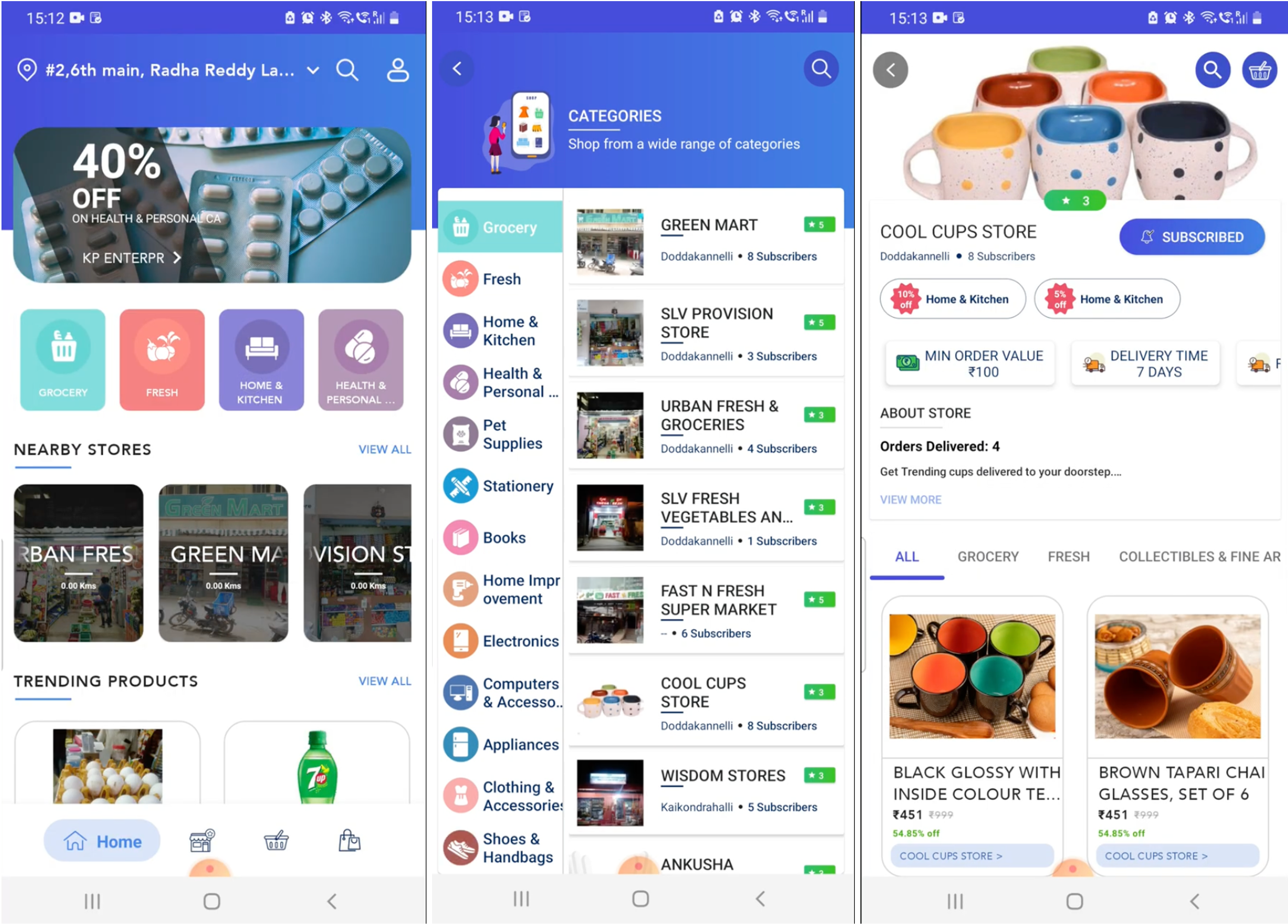
I was staying near IIT Delhi at the time, where a lot of students prepare for the Indian Engineering Services (IES) exam. It’s common practice for students to use pirated notes to prepare for these exams, which they buy from local stores around the campus. As a proof of concept, we approached these stores and convinced them to upload these notes on ByBuy so they could sell them online. That meant physically going to each shop, and doing this onboarding myself. This was the most basic version of the app and we managed to get a bunch of shops to start selling notes online. It showed us that the idea had legs.
How were you funding all this?
We weren’t, really. We had zero money. Satyam still had a job, so we weren’t doing it full time, and I was surviving on freelance work for other people’s Shopify stores and on my sister’s money. Then we needed to hire a back-end developer, and obviously we needed to pay him. So I tried to “raise” ₹3.5 lakh.
I went to every single teacher I had ever had and asked them for money. Everyone said no. So I went back to my mom for the ₹80,000 that had previously been saved for my JEE coaching expenses. I said “now is the time.” She gave me the ₹80,000. My uncle, the one who wrote the GST book, gave me ₹50,000. I couldn’t raise the rest. So my first “venture round” was ₹1.3 lakh at a ₹1 crore valuation, with my mom and my uncle on my cap table. With this, we decided to move to Bangalore for the next phase of the company.
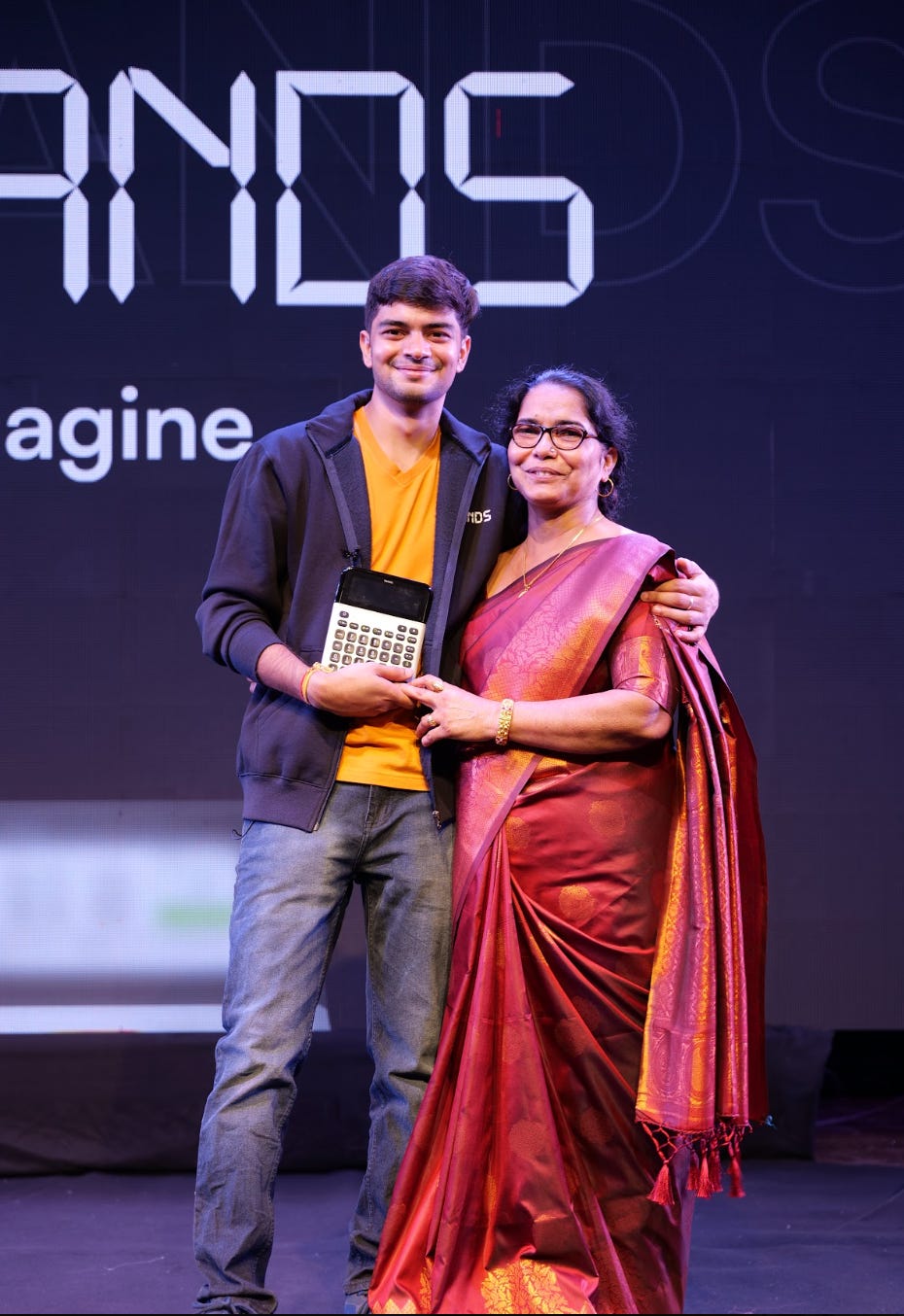
Around the same time, I was scrolling Twitter and found out about this grant programme called Emergent Ventures that’s supported by Tyler Cowen and George Mason University’s Mercatus Center. Shruti Rajagopalan runs its India arm. I applied on a whim, got rejected once, and then applied again. I honestly have zero memory of what I wrote in the application. I just remember Shruti calling out of the blue. Somehow I managed to convince her that we were for real, and she gave us about ₹3 lakh, roughly $4,000 at the time.
Tohands exists today because of that grant, there’s no question about it. Without it, there would have been no company. And it gave my family confidence for the first time. They thought, okay, somebody legitimate is putting money into this, so it’s a serious thing, it’s not kids’ stuff anymore. EV was a blessing, and the money for the grant came in just as we moved to Bangalore, on 8th March 2020.
III. Hello, Bangalore
What was the thinking behind the move to Bangalore, especially on the eve of the pandemic? Just to be closer to the tech ecosystem?
I actually have a theory about this. Every city in India is good for something different when you’re building a company.
Mumbai has money but no time. People there can invest in your solution - they’re happy to fund you - but they won’t use something that isn’t finished, because they don’t have the patience to put up with a half-baked product.
Delhi is the opposite. People are a bit more relaxed. There are a lot more people in general. It’s larger and generally cheaper than Mumbai too, so it’s a great place to build. But people tend not to be early adopters.
On the other hand Bangalore is where you find your initial users. People are more open in general, and they’re willing to try something new even if it isn’t perfect yet. So we’d built the first version of the app in Delhi, but what we needed next was our first real customers. So Bangalore was the obvious place to go. That was basically our rationale.
And what exactly was the ByBuy value proposition at the time?
It was very simple - we will help you sell online.
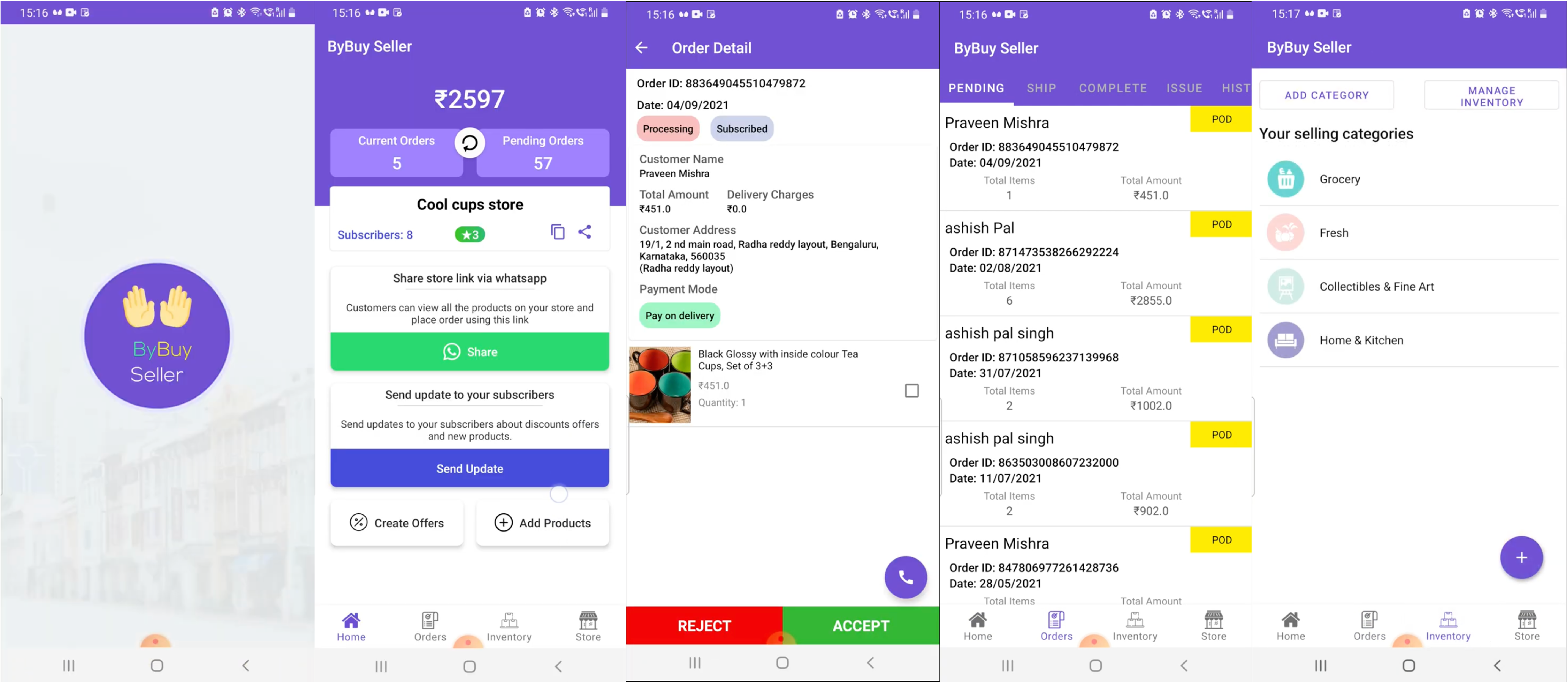
This was the middle of COVID. Everyone was locked in at home and shops had been shut down, so shopkeepers had no way of selling offline. A lot of them were desperately trying to figure out how to sell online instead, and ByBuy gave them a way to do that. A local shop could list its products on our app, share a WhatsApp link with its customers, and start taking orders. On the customer side, it worked like a marketplace. You'd open the app, see all the shops near you, and order from whichever one you wanted. We got some really good headway with this. At one point, we had around 7,000 shopkeepers on the app selling to their customers this way.
Of course, we weren’t the only ones. Everyone was trying to do this at the time. There was Dukaan, there was Bikayi, and there was KiranaKart, which later turned into Zepto. There were a bunch of these apps all trying to do similar things.
How did you actually onboard these guys given the lockdown?
In Bangalore, it was mostly me going to the shops around us and manually listing every item they had on our app. Outside Bangalore, I was on calls with shopkeepers, helping them get set up. But honestly, the majority of people were just figuring it out themselves. The urgency was so high at that time that there was a lot of inbound interest.
Most of our users found us through the Play Store because they were searching for something like “how to sell online”, and we’d show up as one of the top three apps in that listing. App store optimisation was key for us. The majority of the inbound was kirana stores. We had shopkeepers from other segments too, like clothing and so on, but kirana was the biggest by far.
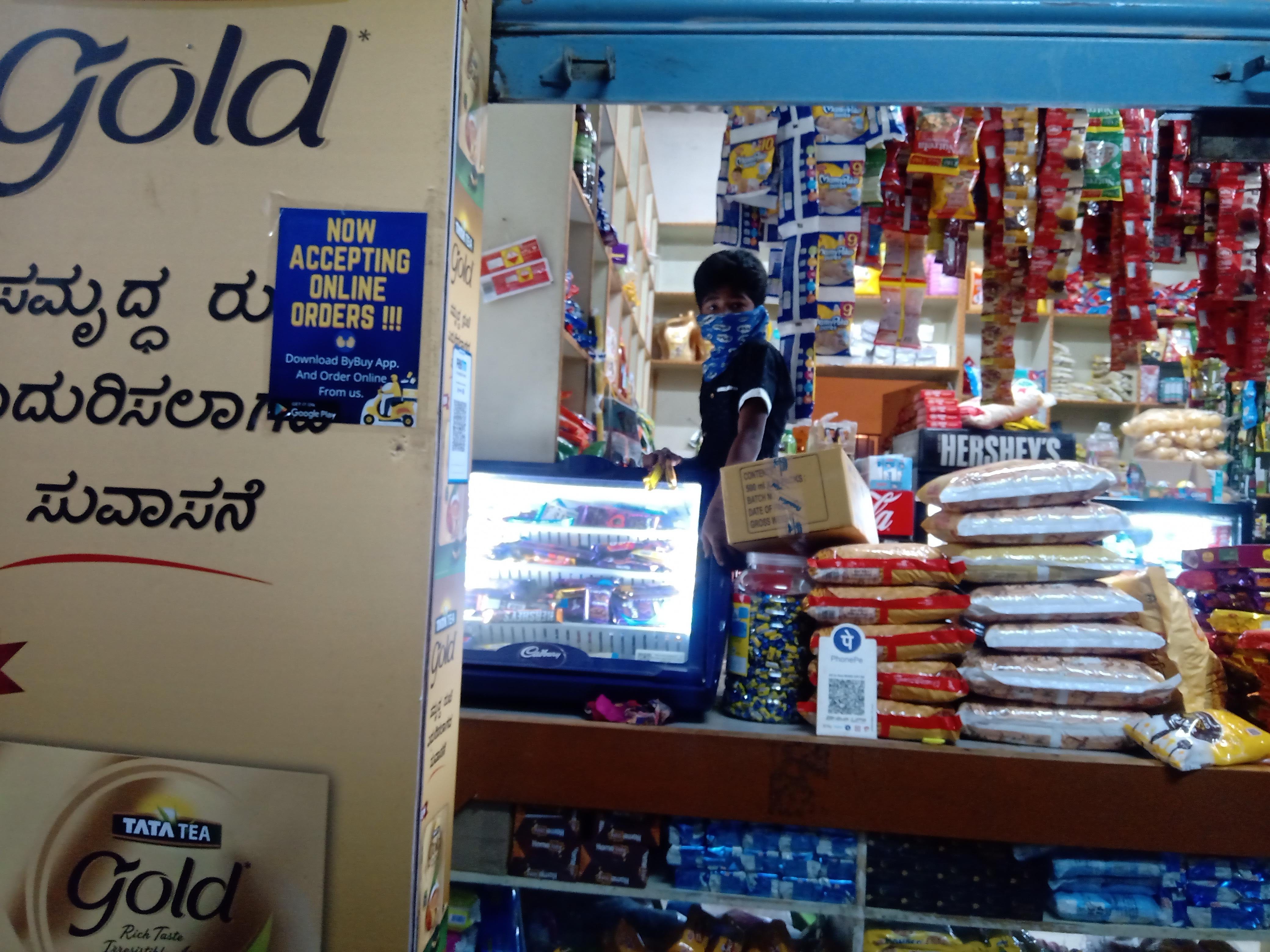
So my job was going to shops, listing their inventory and helping them sell online. I did that for a bunch of shops. But I also realised very quickly that this was not going to scale, and there were serious hindrances to the long term viability of our solution.
Like what?
There were three major issues we kept running into.
The first was the ‘marketplace’ problem. Let's say there are two shopkeepers in the same area, both listed on the app. Neither of them will bring their customers onto it because each one thinks, “if my customer comes onto this app, they'll see the other shop's prices right next to mine and buy from them instead”. So we had this interesting problem where we’d onboarded all the shops in an area, but none of the shopkeepers would actually share the link to buy from the app with their customers.
The second problem was around inventory. To sell online, you need to know exactly what’s in your shop, and you need to maintain a healthy fill rate, which is the percentage of customer orders you’re actually able to fulfil. If someone is looking to order Tata Salt on the app and you only have ITC salt in stock, that order will fail.
Most shops were lacking on both counts. Nobody was tracking inventory - there was no staff dedicated to doing this. Plus, the stock they maintained wasn’t based on what customers wanted in the first place. A shopkeeper stocks items based on what they get from their wholesaler. That’s what drives their inventory decisions for the most part. If a regular customer comes in and asks for something specific, they might start keeping it because of that personal relationship. But most of what’s on the shelf is there because a wholesaler pushed it, with an enticing commission attached. All this meant was that even when an order came in, there was a good chance the shop couldn’t fulfil it.
The third problem was that shopkeepers just weren’t familiar with the tech. They had never used software before in their operations. Running an online store means adding your inventory, accepting orders, packing and shipping them, and most shopkeepers didn’t know how to do any of it on an app.
The only real piece of tech they dealt with was their mobile phones. And if you look at a shopkeeper’s phone, they get something like a thousand notifications a day. The issue was that some order would come in somewhere in the middle of all that and get missed. Our app would send them orders, and they’d tell us they didn’t ship it because nobody had even seen it.
But at the core of it I sort of kept coming back to the same point. To sell online, you need to know your inventory. And the only way to know your inventory is to record every sale as it happens, as the items are passed over the counter, which means you need a device there. Shopkeepers didn’t have one. Their phone was in their pocket, buzzing with a thousand other things. The only things on the counter were a calculator and a notebook. And without something there capturing every sale, there was no way these shops could ever sell online.
That was the insight that led to ToHands?
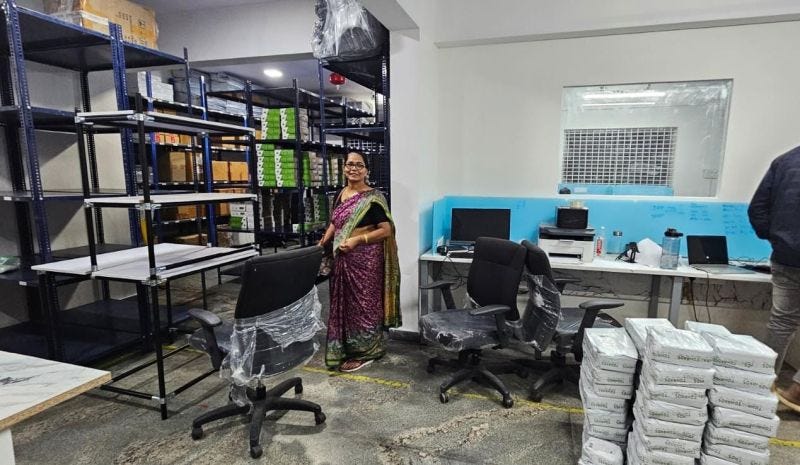
Pretty much, yes. But the actual moment came from one shop in particular. I was at a store in Sarjapur called SLV Provision Store, listing all their inventory on ByBuy. The lady running it had a calculator and a sheet of paper on the counter. Every time a sale happened, she would work out the amount on the calculator, and then write it down on the paper, along with whether the customer paid in cash or on UPI. At the end of the day, she would take the calculator again and add up everything she’d written on that paper.
And I thought, why all this effort? Why not just record it on the calculator itself? She was already punching in every sale. The calculator was the one device that was already at the counter, already part of every single transaction. If it could save what she was entering, you’d have a record of every sale, without asking her to change anything about how she worked.
That’s how we got the idea for the smart calculator.
IV. ToHands
Super interesting. So after you had this eureka moment, how did you recalibrate the roadmap?
Nothing changed at first. This idea had come in early 2021, but we hadn’t pivoted away from ByBuy at that point. Through most of 2021, we were still thinking of ourselves as a ByBuy company, and the calculator was a side project. We were like dekh lenge, let’s see where this goes.
At the time it was basically just two of us - me and Satyam - working on this. But Satyam still had a day job, so technically I was the only one working on it full time. And neither of us had any background in hardware, so we had no idea how we’d actually build it. But the idea was too interesting to drop.
We finally managed to find a freelancer that could build it for us, and he pulled together a really good prototype in less than seven days. The brief was to build a calculator-like device that could pass data to an app on the shopkeeper’s phone so they could look at what was happening in their business. It helped that the software side was already taken care of. We were repurposing the ByBuy seller app for this, so the calculator just had to pass its data to our existing app.
That first version of the device was basically a Raspberry Pi in a box with some buttons. There wasn’t even a proper circuit board. On top of the buttons, we’d stuck bits of paper that said ‘C’ for Credit and ‘D’ for Debit.
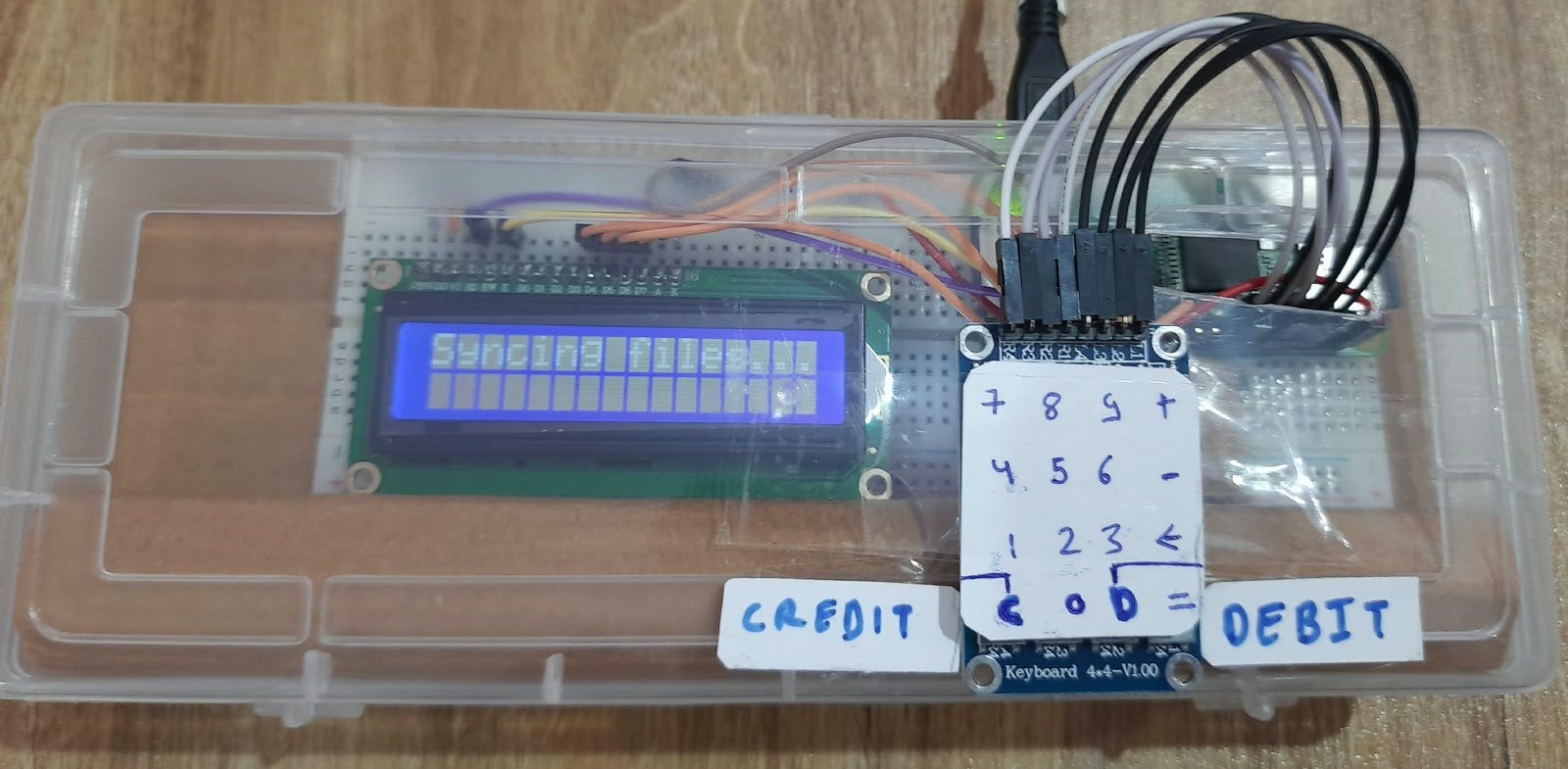
We called it the IoT Calculator, and the idea was very simple - take an offline calculator and put it online. You keep all the keys of a normal calculator and add two new buttons, Credit and Debit. Say you make a sale of ₹500. You punch in 500, press Credit, and it shows up in your app as ₹500 coming in. If you pay a vendor ₹600, you press Debit, and that gets recorded as money going out. That’s it.
On Version 1, it was literally just one click worth of effort. Now it’s a two-click flow. So today you enter the amount, press Sales, then choose the payment type - cash, UPI, card, customer credit etc - then press Enter to confirm. This second step also lets you correct mistakes if you make any. The long-term plan was to build an analytics engine on top of this, so that shopkeepers could see exactly how much money they were making and from whom.
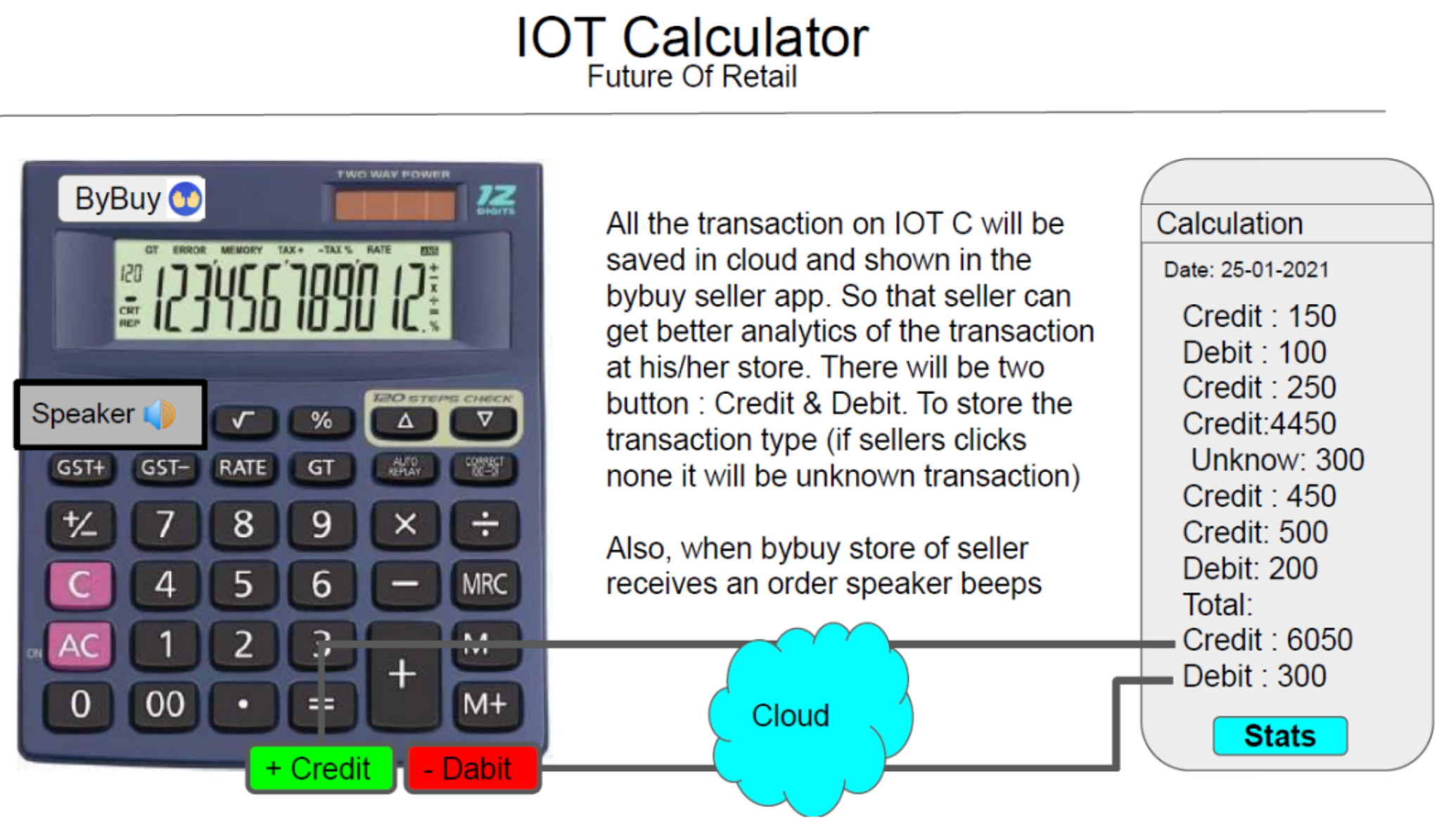
All of this was in the first PRD I created. I actually designed all the prototypes in Google Slides because I didn’t know anything about Figma back then.
Was there any kind of traction with this first prototype? Any real users?
Surprisingly, yes. I assembled these “boxes” myself, and we sold seven units for ₹2,000 each, which is roughly what the Raspberry Pi itself cost us at the time. So the first revenue we ever made from the calculator was ₹14,000.
Most of those buyers were shopkeepers near us who were already on ByBuy. I’d spent a lot of time in their shops trying to help them go online, so I had some credibility with them. I showed them the original design and said main yeh banaunga. I also showed them what the final vision was going to be, and asked if they would buy something like this. A handful of them said “yes, but only because you’ve worked so hard”. They paid the full ₹2,000 up front, and said give us the product whenever it’s ready.
The thing is these shopkeepers are very relationship-driven. If you build a good rapport with them, and they trust that you have their best interests at heart, they’re actually quite happy to support you.
What did you learn from this early experience? What was the early feedback?
The biggest takeaway was the importance of making sure it looked and worked exactly like a calculator. The shopkeepers I showed the prototype to all liked the idea. They thought it was really interesting. But V1 was nowhere close to how they actually used a calculator.
They told us straight up - “this is not a calculator, it doesn’t look like a calculator, I can’t punch in numbers on this, I won’t be able to use it. If you can make it like a calculator, then I’ll use it”.
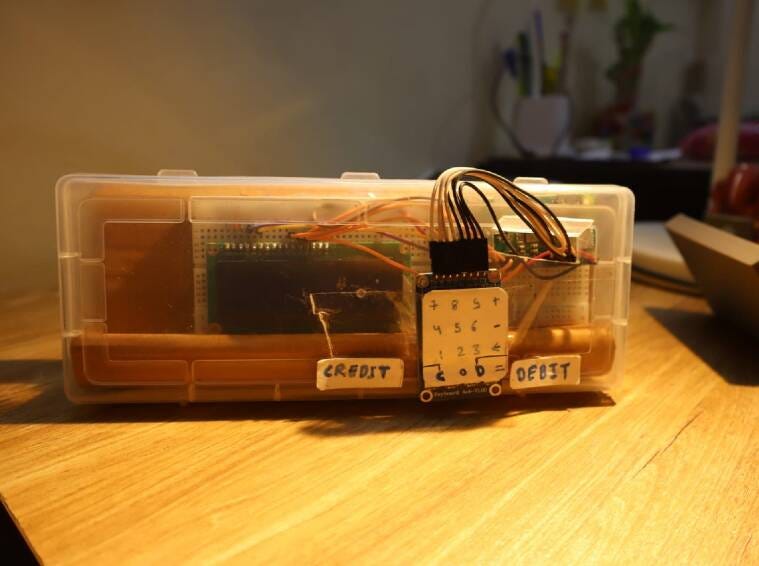
That reaction gave us a big learning, that shopkeepers’ habits are very fixed, and they don’t switch easily. And if you look at which products have actually stuck in this segment, there’s a clear pattern. I categorise these products in two buckets - touch and non-touch. A touch product is one where the shopkeeper has to actively do something. A non-touch product is one where they don’t. And historically, it’s the non-touch products that have won. The static QR code worked because the shopkeeper doesn’t have to touch anything. The Soundbox works for the same reason.
A touch product is much harder to get adopted. But if you do crack it, then you have something real on your hands. You don’t have to worry so much about churn once you’ve crossed this boundary because a new habit has set in. And the best example of a ‘touch’ product that has already cracked this segment is the calculator itself. Every single shopkeeper has one, whether it’s a kirana or a modern retail store. Along with the Soundbox, it’s the only device on the counter that’s crossed 20 million units. The calculator is probably well over 30 million. Other than that, there’s nothing else at the counter, except pen and paper.
So the shopkeepers had basically handed us the answer. If we were going to build a touch product, the smartest thing we could do was build it in the form of the one touch product they already used. They didn’t want to worry about a new learning curve.
The next step for us was to build this thing properly. A mutual friend introduced me to a hardware engineer. After some negotiation, he agreed to do the entire job - the enclosure, the electronics, the firmware, everything - for ₹40,000. That was the start of Version 2 (and that was also how I met my co-founder Shanmuga, who eventually joined us full time).
But going from that transparent box to something that looks and feels like a real calculator is a long journey. V2 alone took us more than a year to get right, and it eventually took us out of Bangalore too. In December of 2021, we applied and got into T-Hub, and shifted base to Hyderabad.
V. Evolution
For people that don’t know what T-Hub is, can you give our readers a quick overview?
T-Hub is basically Hyderabad’s startup hub. The Telangana government set it up back in 2015, and today it’s one of the biggest incubators in the country. When we got in, they were just about to move into their new campus, T-Hub 2.0. It’s this massive building that’s supposed to be the largest innovation campus in the world.

For a startup like ours, it was basically everything in one place - mentors, investors, corporates, government programmes, labs, maker spaces, equipment etc. And for a hardware company with no money, that kind of access was huge.
How did you guys get in?
My approach to all of these programmes is the same - apply first and think later, which is what we did with T-hub, and we were lucky to get selected. But the selection came with a fee - around ₹70,000 - and we didn’t have the money. So I negotiated an equity deal instead. I said, take 3% equity, let me do the programme for free, and whenever I want, I get to buy that equity back for ₹5 lakh. They were kind enough to agree. And we did buy it back, by the way, within two years.
And because I’d given them equity, I said I’m not doing this programme from Bangalore, even though we were still kind of in the pandemic. I wanted to shift to Hyderabad and live on site so we could get the most out of it. In early 2022 I made the move.
It turned out to be super important because T-hub was where we fully pivoted to hardware. By March or April of 2022, we were very clear that this was the new direction to bet on. Version 2 had been built by then. It still had paper labels on the credit and debit buttons, but it looked and felt like a calculator.
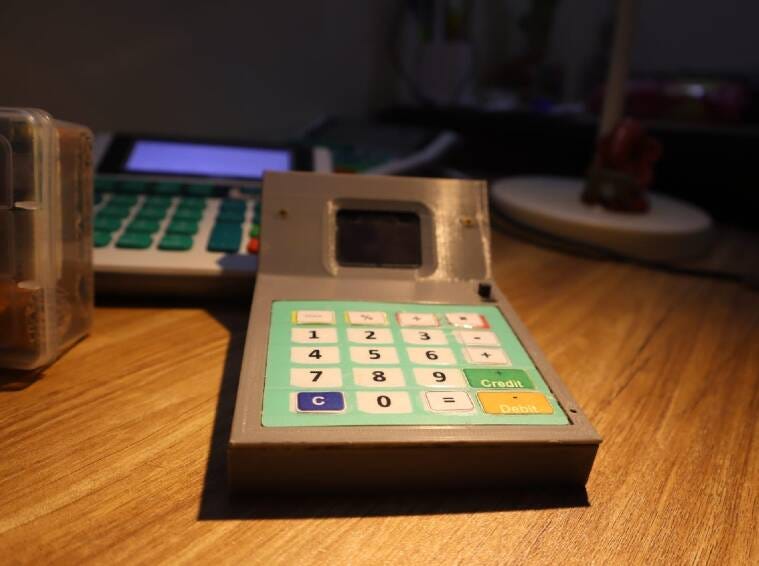
That’s when we officially shut down ByBuy. We said we’re going to focus only on the calculator. That’s how this new company was born.
What was the thinking behind the name?
It’s a funny story. I had a long list of names, but the MCA - the Ministry of Corporate Affairs, which approves company names - wouldn’t give us any of them.
The idea for the name we ended up with came from my mom. She once had a photo of her two hands printed out. I think it was for religious reasons or something like that. I had that photo with me, and I still have it in my office today.
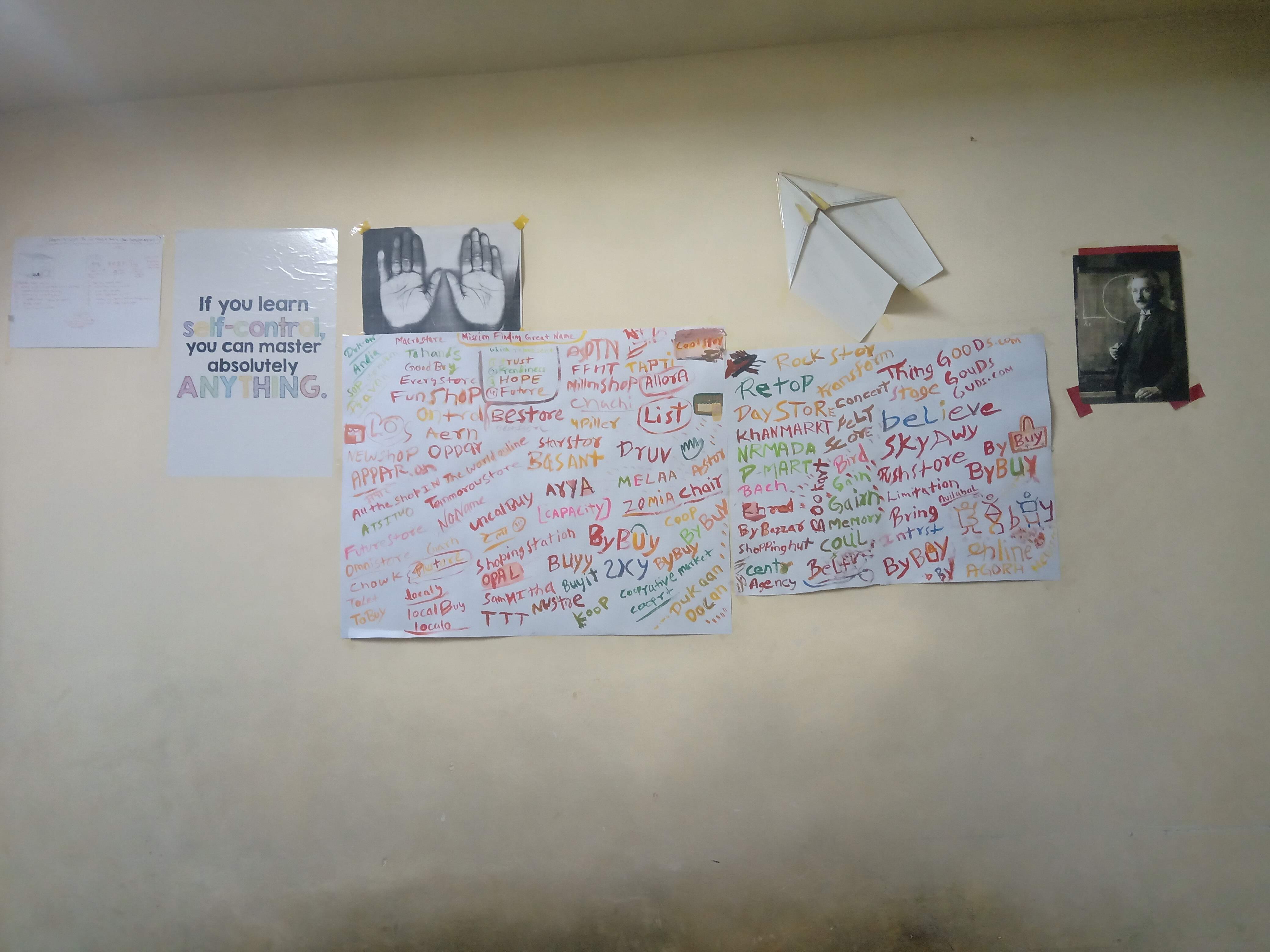
That image always gives me this feeling of calm and security. So that’s what inspired the name - my mother’s two hands.
But the MCA wouldn’t give us T-W-O-H-A-N-D-S either. So we applied for T-O-H-A-N-D-S instead, and that one got approved. That’s how the company got its name. Now we think of it as: “Tohands - your helping hands for customers and for businesses”.
Amazing. So now that you had this new direction, this new name, and a new version of the product, how did you proceed? Was V2 the product that made it into the hands of actual customers?
No, V2 was never in the market. It was just a prototype, to demonstrate what we wanted to build. And it taught us one very important thing - don’t change anything about the calculator. It should look like a calculator, and it should work exactly like one. V2 still wasn’t there.
One of my mentors gave me advice on this that influenced me in a major way. He told me, “Calculator se ek bhi button mat nikalna. Lagana hai toh laga dena, hatana mat.” Basically he said don’t remove anything on the calculator, just add. This is actually tricky because there are a lot of buttons on a calculator that most people never use - MRC, M+, M−, MU, GT - I’m sure you’ve also seen these and never used them.
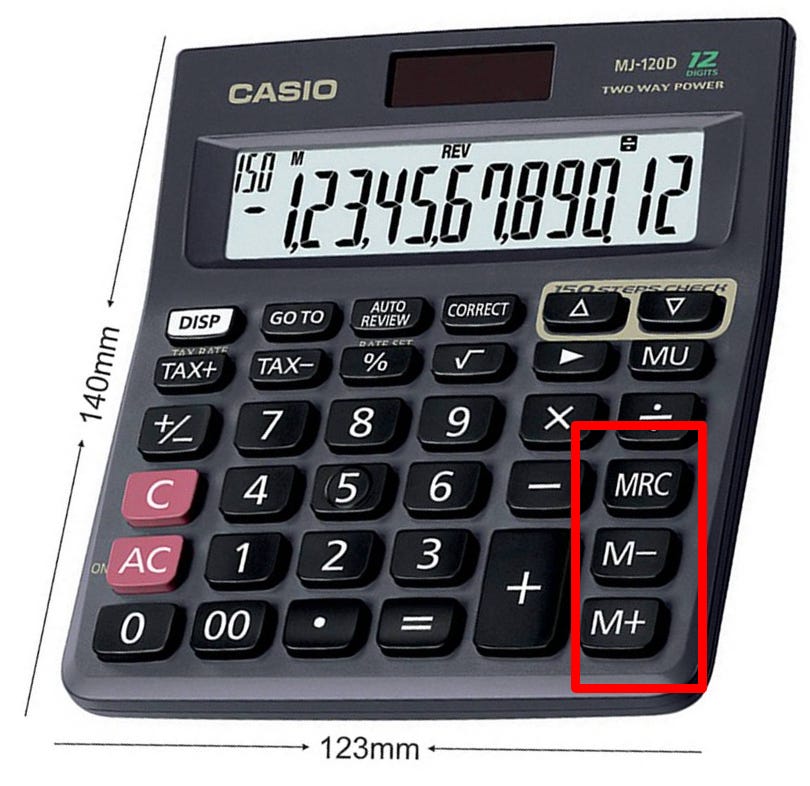
Even I didn’t know what some of them stood for. But shopkeepers are used to seeing them, so we kept the whole calculator intact and added just two new buttons, one for Sale and one for Expense. And I think that had a material impact on the reception to the product.
Later, I came across a design principle called MAYA, which has also become a key pillar in our product philosophy. MAYA stands for Most Advanced Yet Acceptable. It was coined by Raymond Loewy, the industrial designer behind a lot of iconic American products. The idea is that people are likelier to adopt something new if it feels familiar to them. You can make a product as advanced as you like, but only up to the point where the person using it still recognises it. Go beyond that, and they’ll reject it. That was exactly what we’d learned the hard way.
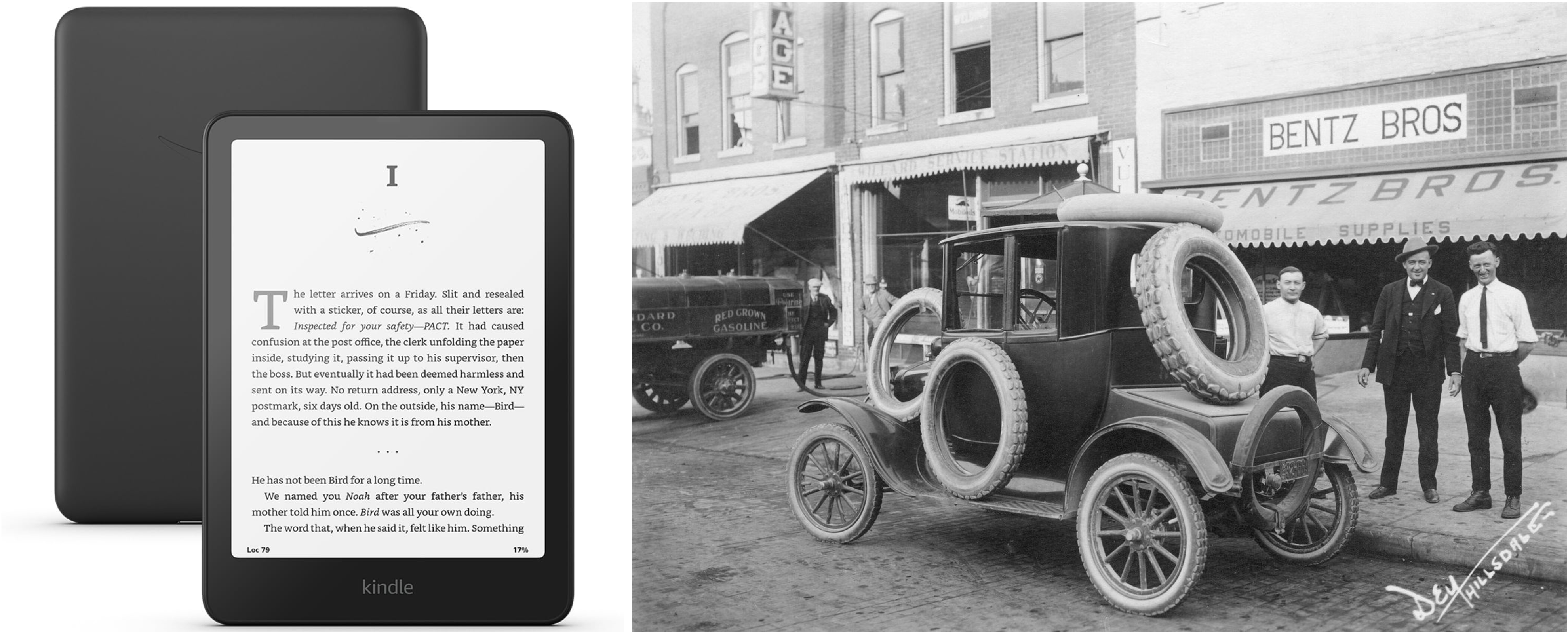
So from our perspective for Tohands, even if we could make the calculator do a lot more on the inside, on the outside it had to feel like the one already sitting on the counter. The technology has to adapt to the shopkeeper, not the other way around. So we were very clear that until we could make it look like a real calculator, we weren’t going to sell it.
That’s where Version 3 came in?
Yes, and this took some more money than we had on hand. Around this time - towards the end of 2022 - we managed to raise ₹50L from T-hub and the Startup India Seed fund. This was the first real funding we ever got. It came in tranches, which was quite annoying. I really hate tranches.

A huge chunk of it went into the cost of developing moulds. That was a major task. On top of that, we also had to design the PCB and write the firmware. Everything was custom built by us. And the moulds weren’t great. The buttons weren’t pressing properly. So we had to manually sand them down.
There are 36 buttons on every calculator, and I sanded every single one of them myself, one by one. If you look closely at a V3, you can still see the gaps.
And once V3 was ready, how did you find your first customers?
All the customers back then came via the content we were creating on social media, and they ordered the product directly from our website.
We weren’t running ads or anything. We didn’t have the money for it. Everything we’d raised had gone straight into manufacturing the devices, and we had to figure out how to manage everything else. Content marketing is still our main mode of acquiring users today.
We got lucky because V3 actually went viral on Instagram. In 2023, a channel called Brain Crypt posted a video about it, basically saying, this is a very cool calculator that can record your sales and expenses for ₹3,000. That video got 30 million views.
We ended up selling around 2,000 units of V3. That version cost us about ₹2,000 to make each one. Costs have gone up quite a bit since then as the product has gotten more advanced (and so has the price). What was good about this period is we got a lot of feedback. I was the one on customer support, so I heard all of it, good and bad.
What people loved was being able to use a normal calculator to record their sales and expenses. What they didn’t like was the hardware itself. There were gaps, the buttons weren’t pressing properly, there were reliability issues - all the problems you would expect from an early-stage hardware company.
What did the team look like at this point?
It was three of us - Shanmuga, Satyam and me. In 2023, after the stint at T-hub, we took our first office in Bangalore, which was a 1BHK in Koramangala. That’s where we started getting serious about the hardware and the assembly. Shanmuga and I assembled the first set of devices ourselves. We’d get all the components, put them together in the office, and ship them out to customers. I was also doing sales and support. Everything you can imagine in a business, other than tech, that was on me. But the priority was figuring out the tech.
Can you help us appreciate the complexity involved here? What was so difficult about what you guys were attempting to do?
Getting the button to press right, so it feels as good as a Casio. That was the hardest problem by far. To get the button to press right, you first need a mechanical mould with precisely enough clearance for the button to go down and come back up.
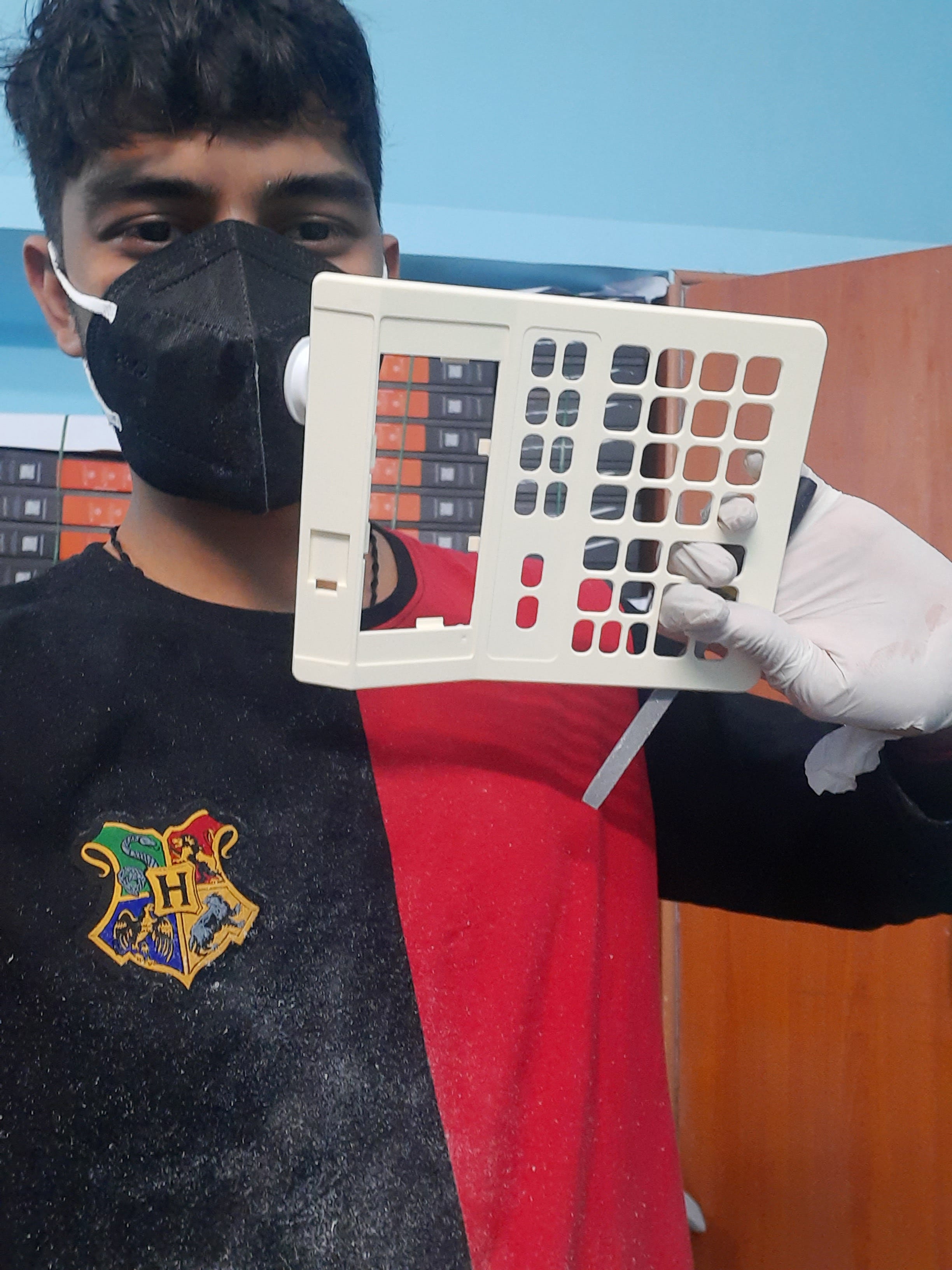
Then you need a silicone pad under it with just the right stiffness. Not so soft that you press it by mistake, and not so stiff that you have to push hard every time. And it has to survive at least 100,000 presses, otherwise the lifespan of the device suffers. Below that, you need a circuit board layer. When the carbon pad on the button touches the board, it sends a signal. Then that signal has to travel all the way to the display, so the number shows up on the screen.
The time between you pressing a key and the number appearing on the screen, and how smoothly it appears, is honestly the toughest thing for us even now. When we started, our display ran at 15 frames per second. Now it’s at 60. And that’s hard to do when you’re not using an off-the-shelf operating system like Android.
The software was the other big one. On V3, we were using something called an RTOS, a very lightweight operating system. It’s really easy to start with, but it isn’t reliable in the long run. For example, if the device switched off or the battery died in the middle of saving something, it could corrupt the memory, and the device would get stuck in a boot loop.
It would just keep restarting. That’s not an experience you want a shopkeeper to have. We also needed more robust memory management so the device could function offline - how do you protect against the loss of all that data? We knew we needed a slightly heavier processor and a more reliable operating system. That’s why on Versions 4 and 5, we use Linux.
The other thing was accessories (or as we call them - peripherals). Customers were asking, I want to connect a 2-inch printer, a 3-inch printer, a barcode scanner, and so on, and Version 3 had no way to support that. So we said, fine, we’ll do peripherals. That’s how we got to Version 4, which was the thing I’d always wanted to build, and from there we upgraded to Version 5, which is where we are now.
So V4 was where you started getting closer to your original vision?
Yes, Version 4 was where all the feedback from Version 3 got incorporated. We only made 800 units of those, which served as like a proto version of v5.
From a timeline perspective, in January last year, once all the stock from V3 was finished, we switched over completely to selling V4.
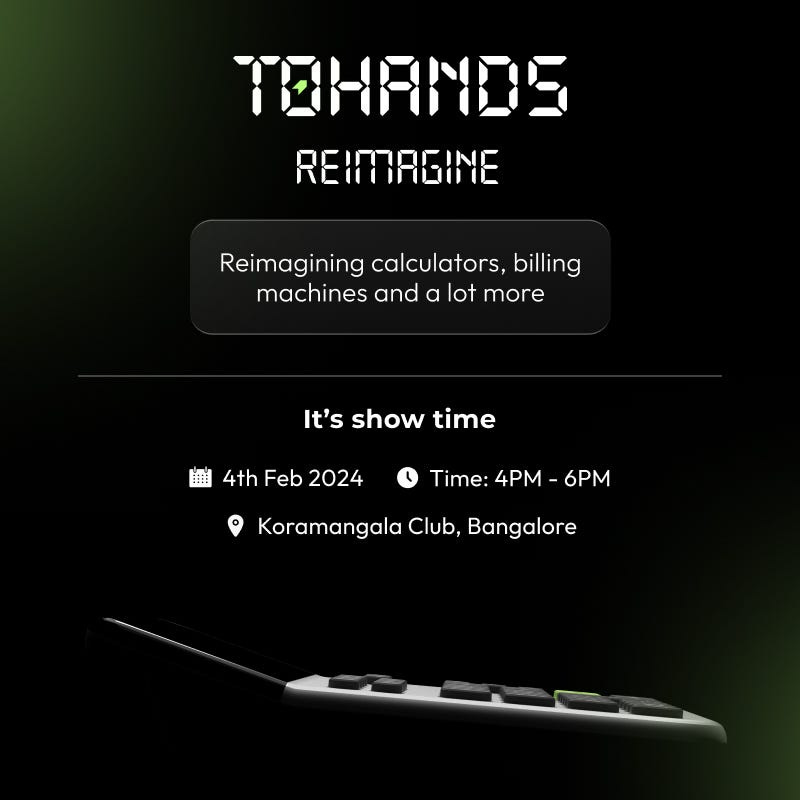
When we launched V4, we were again slightly unprepared in terms of knowing how the build will work and stuff like that. But this time we had a little bit of breathing room because of a funding round of around ₹3.5 cr from TurboStart.
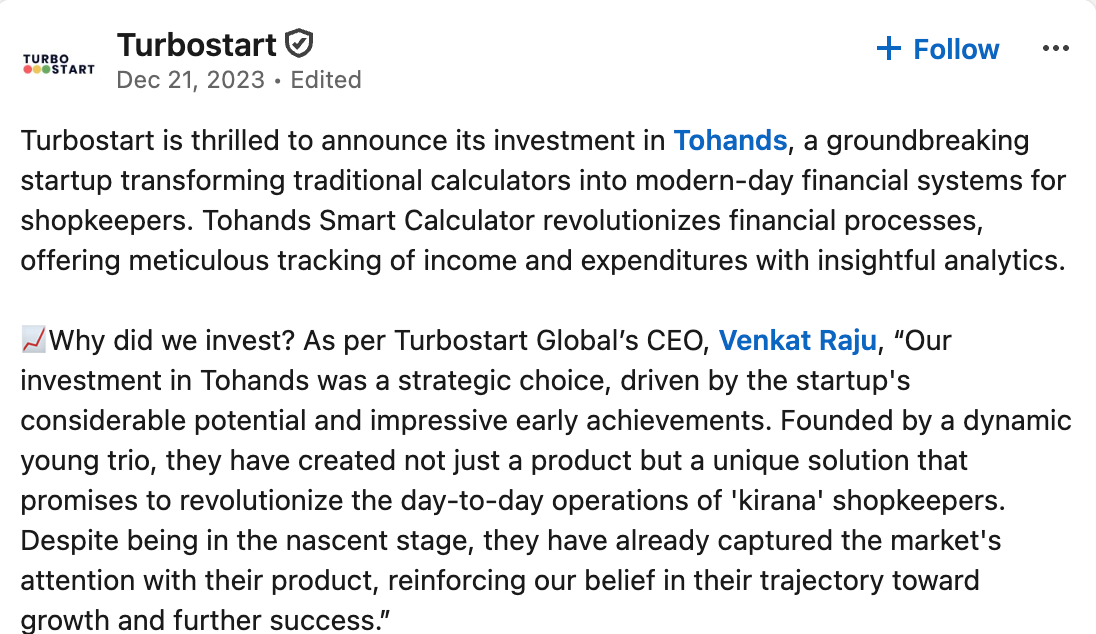
This was our pre-seed round. And Shark Tank followed not too long after that.
How did Shark Tank even happen? Maybe a stupid question at this point but did you guys just apply?
They found us, I think through the content we were posting. We didn’t apply this time. But once they find you, you still have to go through the whole process and apply formally.
Honestly, we weren’t prepared for it at all. I think we went on too soon. The episode was recorded in late 2023, when we were still very early, and it became the benchmark people judged us by, like, okay, this is what they do. We’ve had to work to change some of the perception over time but it’s fine. We got really lucky with the Sharks we ended up with, Varun Dua and Radhika Gupta. They’re amazing people, and they’ve been very helpful and supportive.
We raised ₹60L and the money came in around early to mid 2024, and we started aggressively building up Version 4. By October, we’d produced our first 1,000 units, and we sold all of them.
That’s when we realised that to produce at a much larger scale, we needed a Version 5, which was essentially a production-scale version of Version 4. So we placed an order for 20,000 units with our manufacturing partner. We launched V5 around April 15, 2025, and started delivering from May. To date, we’re approaching 20,000 deployments and are facilitating over 2.2 million transactions per month at last count.
VI. Product
Okay so to summarise this journey and bring us into the present day - for someone who’s never seen or experienced your product, how would you describe the Tohands calculator today?
Think of it as a smartphone that looks like a calculator. It has all the functionality of a smartphone, but it's purpose-built for a shop counter, so any normal shopkeeper can use it without changing their existing habits. Or as I like to put it - it’s a computer for the counter, at the price of a calculator.
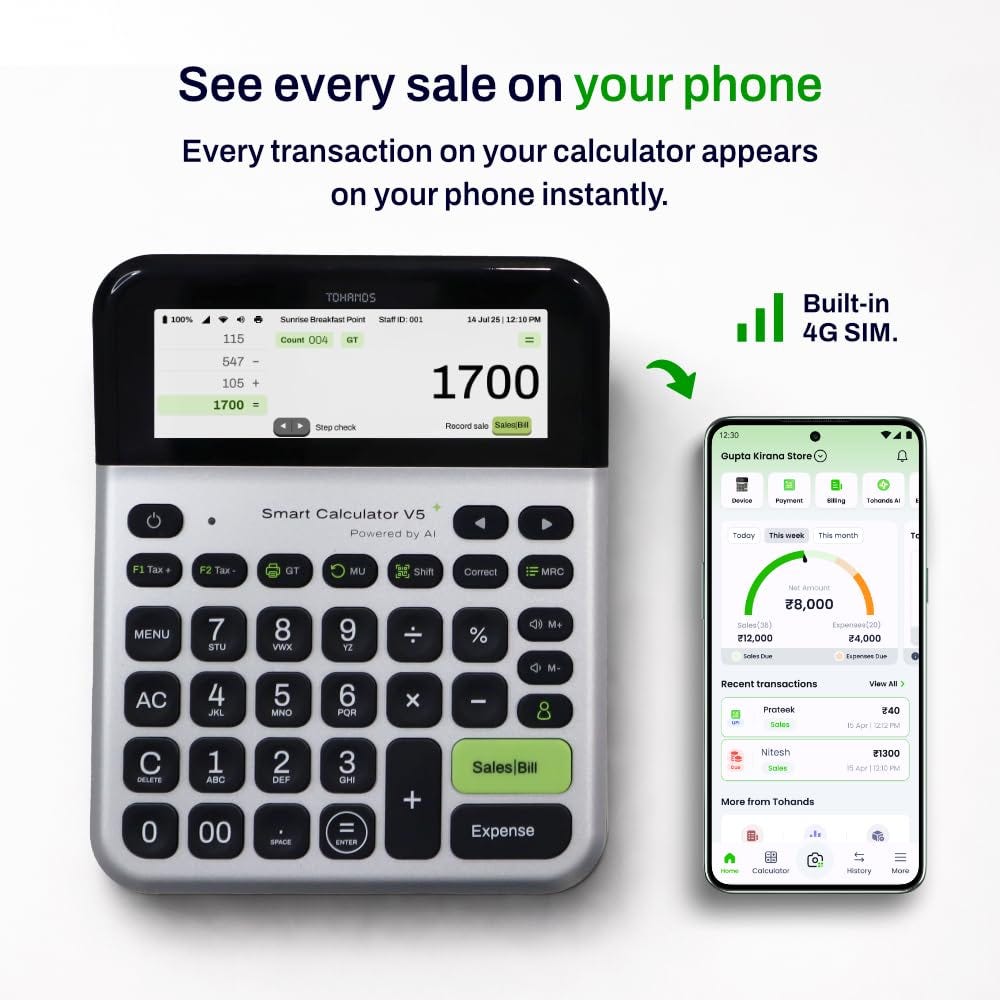
We built an over-the-air (OTA) update system from the start, so we can add features through software instead of making new hardware. Every single month, we send out firmware updates for Version 5.
And the device has come a long way through those updates. You can now do speech-to-text with a microphone, connect a keyboard, even run a spreadsheet on it. We’ve pushed the boundaries of the calculator so far that you can connect a barcode scanner, a bill printer, a label printer, a weighing scale. Pretty much any peripheral at the counter, and the data gets picked up and sent to the mobile app.
You've made the calculator the centre of everything at the counter. What do you unlock by having all of this functionality run through one device?
You first need to understand where we sit. Apart from pen and paper, the calculator is the most basic tool on a shop counter. Everything else sits on top of it. And we want to own that spot for the shopkeeper, because right now none of their tools are connected. They have a weighing scale that’s separate, a calculator that’s separate, a static QR code that’s separate. They might have a Soundbox linked to that QR code. Some have multiple QR codes and one Soundbox for each. And a shopkeeper can’t keep adding devices to the counter. There just isn’t that much space. They need one device that does it all.
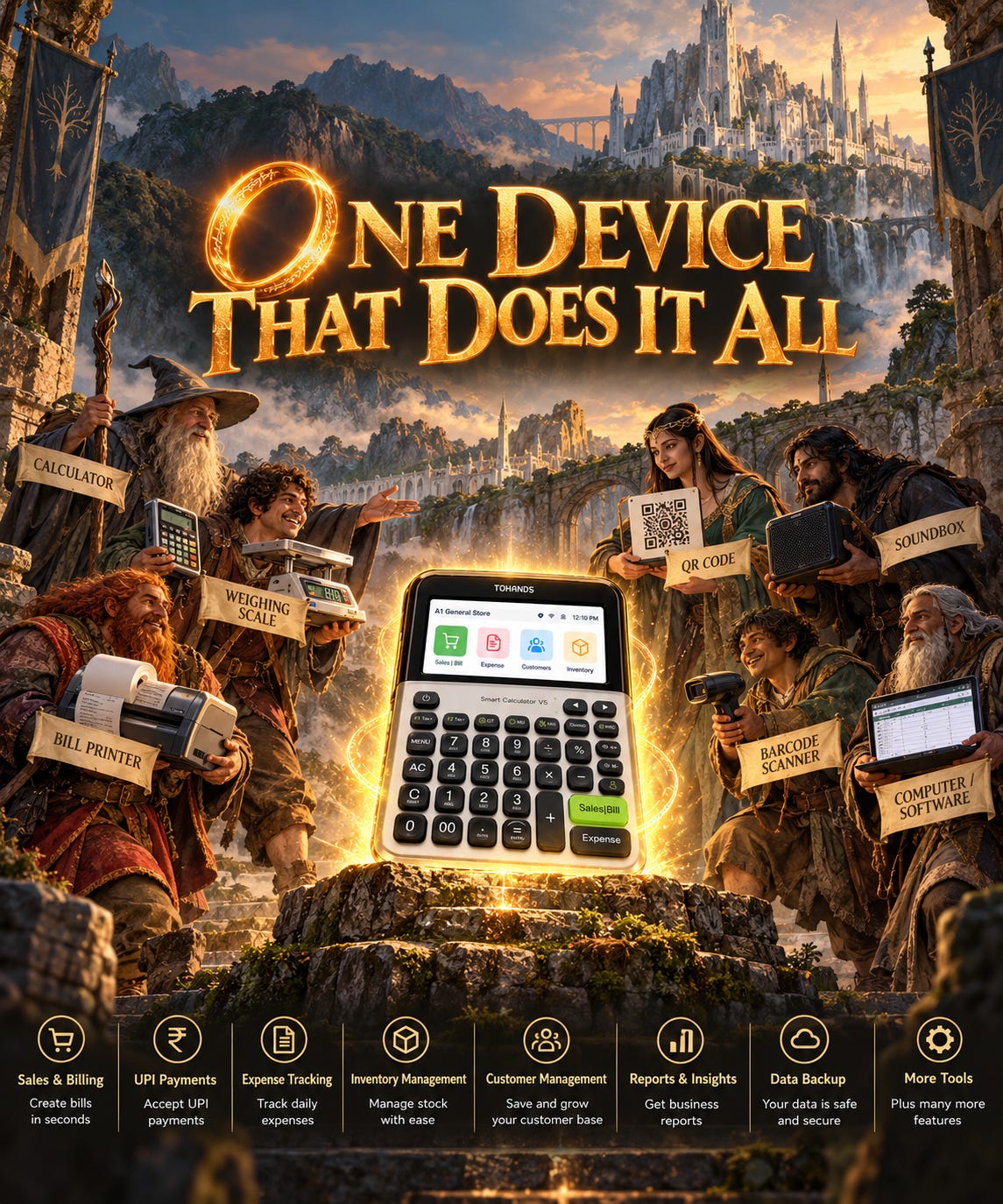
The other problem is that the solutions for this segment are often split into two halves. There’s the business side - billing, reconciliation, udhaar (which is the credit they give regular customers), marketing. And there’s the payments side - accepting money through UPI, QR codes and so on. Payment companies only solve for payments, and business software companies only solve for the business side. It’s all fragmented. There’s no integrated way of doing both.
So say you go to one of these offline shops and buy something. First of all, it’s common that they can’t give you a bill. And even if they do, you’re paying on a static QR code - literally a sticker - and there’s nothing linking that payment to the bill. The payment goes one place and the bill goes another. That’s why at restaurants, when you pay on a static QR, you’ll often see the staff take a photo of your payment screen. They take it back to the owner, or whoever does the accounts, to show that this payment was for that bill. Reconciliation becomes a whole job in itself.
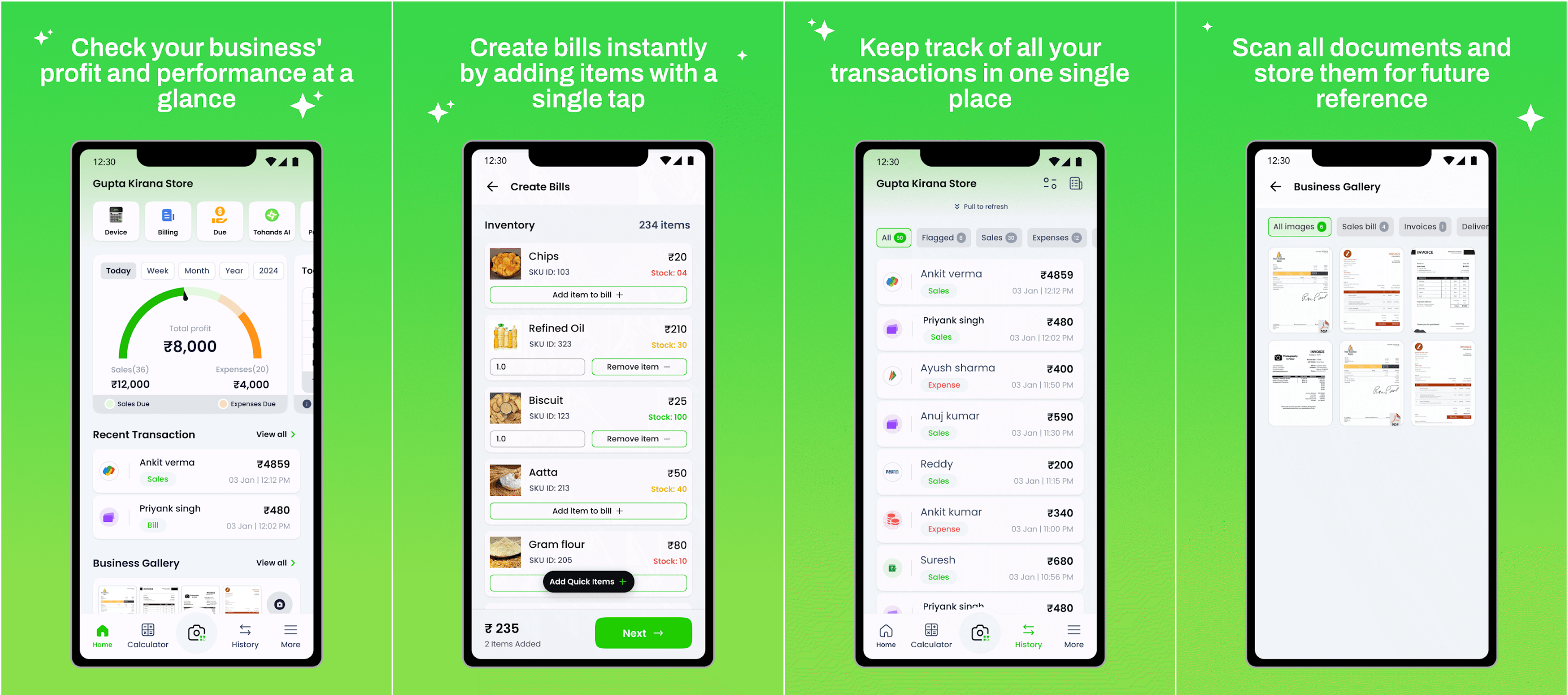
So we were very clear that we had to build an integrated device, so all the data sits together in one place. The hardware, the software, the firmware, the payments - everything has to be vertically integrated. We’ll never say, that’s not our job. We solve for the business end to end, with no half-baked solutions.
That’s why we think of what we’re building as an operating system for the business, not just a device for the shop. The device at the counter is only one part of it. There’s the mobile app for the owner, the staff side, payments, settlements, and the whole inventory piece. But all of it is enabled by the device at the counter. Until that device is there, you can’t do any of it.
Earlier we were discussing how there was a wave of “dukaan-tech” startups trying to digitise shopkeepers with mobile applications around 2020, most of whose theses haven’t really panned out to the level of expectation or funding. How did you guys manage to navigate this?
So when we started, everyone we talked to, every single investor, told us, “Mobile app bana lo”. They said hardware would be too difficult to crack and “You can do the same thing on a phone, why do you need a new device?”. Obviously hardware is tough, there’s no denying that, especially in the early stage. You’re bound to have issues, and we’re still early. Like, we’re not producing millions of units yet. But regardless of difficulty we were very clear that there was a need for custom-built hardware at the counter.
What you have to understand is that this segment doesn’t want outsiders coming in and telling them how to do business. They’ve been operating the same way more or less for many, many years. There is a fear of things going wrong, of being left in a bad situation. They want to clearly see the value of any solution before adopting it. I won’t lie we’ve seen all sides of this psychology also.
For example, what we’ve observed that’s helped the adoption of Tohands is that in this segment, the psychology of ‘replacement’ is much stronger than ‘addition’. Meaning that it’s much easier to make a case to “replace your old calculator with this new one that’s exactly the same but can do all these extra things too” instead of “get a new smartphone so you can use this app” or “download this new app and learn how to do calculations, make invoices, and run your business on it”.

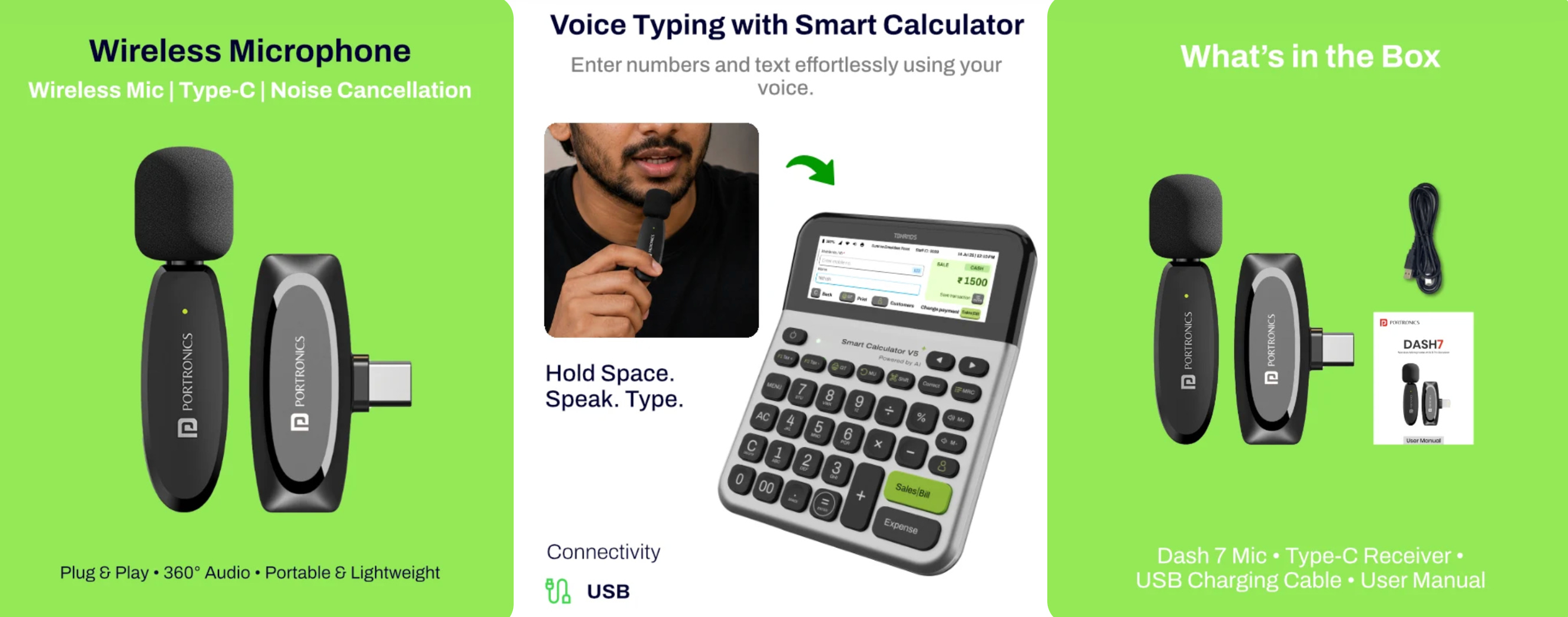
That’s why the calculator form factor has been so important. Not changing the look and feel of what they already use has helped us get adoption pretty quickly. It does come with limitations. Typing, for example, has been a big pain, like typing a customer’s name on a calculator keypad. That’s where AI comes in. Now you can use the microphone, speak, and it types for you. Of course, that brings its own complexity. A shop is a noisy place, and doing speech-to-text reliably in that environment is something we’re still figuring out.
At the end of the day if you put a phone and our calculator side by side and asked a shopkeeper which one they want on their counter, there's no way the phone wins. It just doesn't make sense to them. Because all they have to do to adopt the Tohands smart calculator is put it in the place of their old calculator and continue doing what they were doing before.
So there’s been no resistance at all to the Tohands solution?
There has, but in a counterintuitive way. So in theory, after they’ve bought our device, there's no reason to keep a normal calculator anymore, right? So our pitch becomes very simple - “Purana hatao, yeh wala laga do.”
But the hard part has been actually getting them to let go of it. The problem is that, in their heads, if the old calculator disappears from the counter, there's nothing to fall back on if something goes wrong. So they keep both.

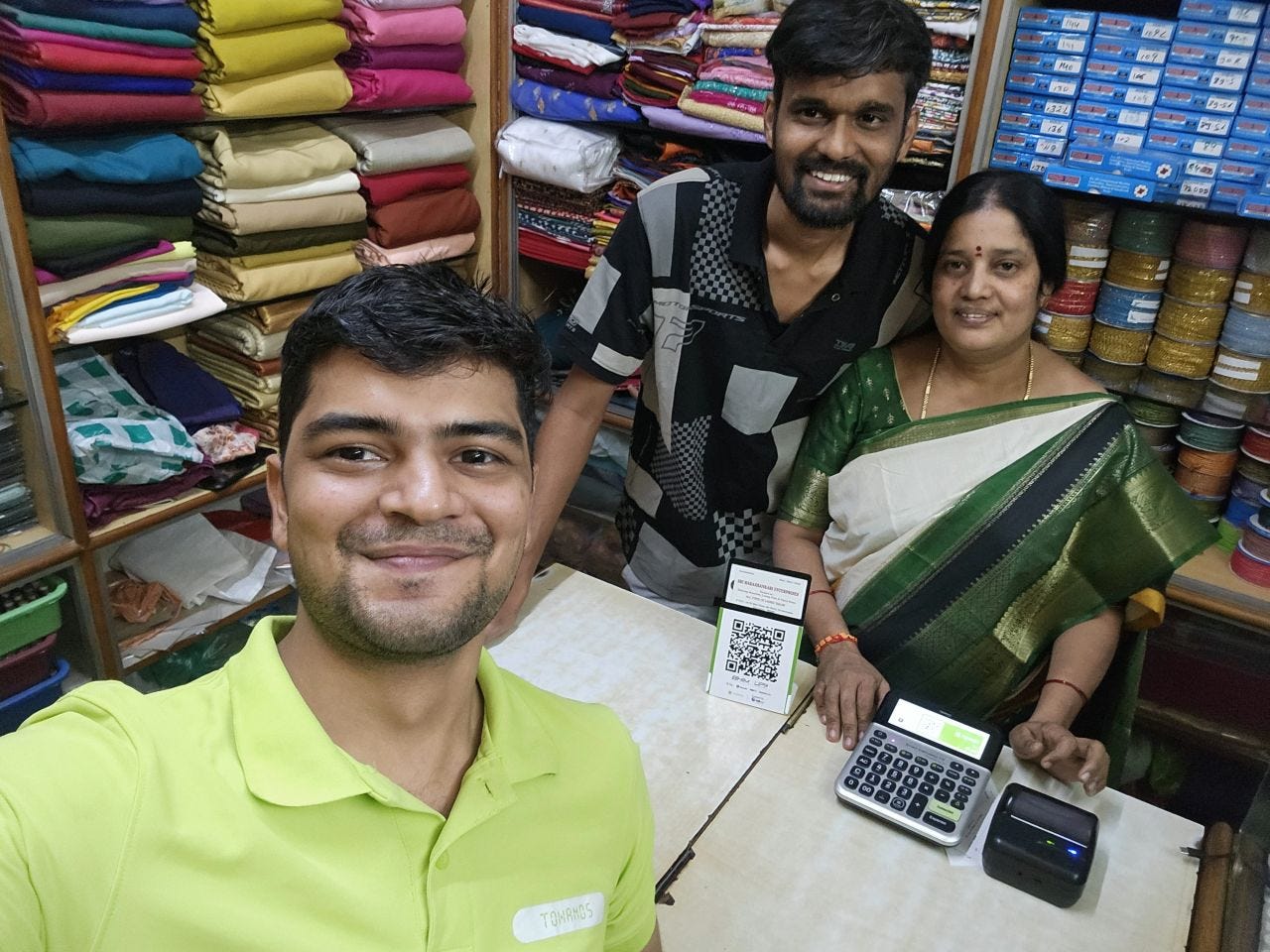
Very often, when a customer sends us a photo of our device on their counter, there’s a second calculator sitting right next to it. It’s just a habit. What we usually see is that, at first, people only use our device to record transactions. Only later do they start using it as their main calculator too. This cohort is very scared of making mistakes, so it takes time for them to get comfortable with a new device (even a calculator). That’s why training and support are such a big part of what we do, and it’s something we’re still learning.
There’s also a very practical reason they hold on to the old one. Shopkeepers often have more than one calculation going at the same time. Say you make a bill for ₹4,780 and the customer hands you ₹5,000. Now you need to work out the change. So they use the old calculator for calculating the change, and ours for recording the sale. And since a normal calculator can cost as little as ₹100 or ₹150, they don’t think twice about keeping one around.
So, honestly, most people don’t ditch their old devices completely - they usually use Tohands side by side - and I don’t think they will fully switch until we solve this parallel functionality thing. What we need is something like tabs on a laptop. You’d switch to another tab, work out the change, and jump straight back to the bill. We’re working on this for the new version.
But none of this changes my view that hardware was the right call. Once you have a device at the counter, everything else opens up. The simplest example is peripherals. Even if you’re billing using an app on a phone, you can’t connect your weighing scale to it. A phone just isn’t built for that kind of environment. And the alternative, a proper billing machine can cost anywhere from ₹10,000 to ₹25,000 and above.
Could you say a bit more about the peripherals? I imagine they weren’t part of the original plan but obviously now are a big part of your vision of Tohands as this connected ecosystem - this operating system for shopkeepers - as you describe it.
We kind of stumbled upon peripherals. We never had a formal plan. When we originally started designing the calculator, we saw that Casio had a printer calculator, so we looked at whether we could put a printer inside the device itself.
But then we realised every segment has a different need. Some want a 3-inch printer, some want a 2-inch printer, some want a label printer, some want a fast printer, and some don’t want a printer at all. There was no way we could build all of that into one device. Also, every time you build a peripheral into the device, the chances of breakage go up. If the device falls, the printer is likely to break as well. It’s much cheaper to replace just the peripheral than the whole device. So we decided not to build printers, or any other peripherals, into the device. We kept everything external.

We started with printers, because that was the biggest request we got after Version 3. People wanted to print their calculations and bills, so we added support for 3-inch printers. Then people started asking for barcode scanners, so we added those. After that came weighing scales. The jewellery segment has a very particular requirement there. Jewellers use one type of weighing scale and grocery stores use another, and we have to support both. Then came keyboards, because people wanted to type customer names, and that’s very hard to do on a calculator. A bigger display was another key ask, so we added that too. Now we also have label printers, and a microphone for speech-to-text, which is what eventually led us to voice billing. It’s kept progressing.
Ultimately we want to offer a connected setup at the counter, where all of these devices work together, because that’s when you start getting some very interesting data. A weighing scale, for example, can tell you the average weight of the items you’re selling. In a jewellery store, that means you can see which items sell the most, what their average weight is, and where customer demand is. Then you can buy stock based on that.
On the business side, we’ve taken a white-label approach. We don’t manufacture peripherals ourselves. We take them off the shelf, integrate them, and sell supported versions. And we only support the peripherals we sell. The core idea is not to add more devices to the shop. It’s to replace the old ones, connect them together, and unlock more data.
All of this goes back to one choice we made very early, when we picked the chip for the device. It was the only chip at our price point that could support all these peripherals, and it was very expensive. At the time, we didn’t have a single peripheral. But we still chose that chip so we could launch them later. That meant it took us about a year to unlock all the peripherals we support today.
Do the peripherals move the needle on revenue?
They do. Today, around 30% of our business comes from peripherals, and about 72% of orders include at least one. But my favourite example is actually the most boring one - paper rolls.
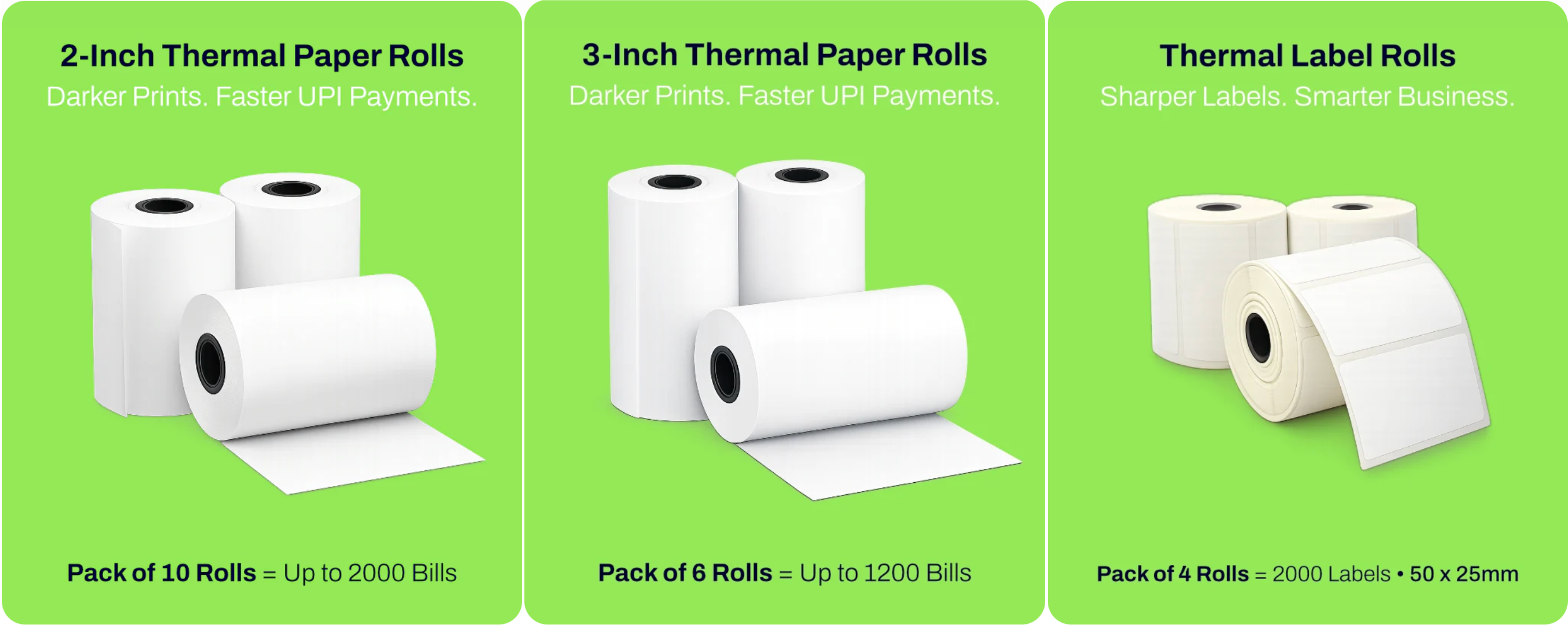
Here’s the thing that everyone who’s built for this segment knows - shopkeepers in India don’t like paying for subscriptions. Why? Because paying a monthly fee for software they can’t see or touch feels like paying for nothing. If they’re paying you every month, they expect to get something physical in return.
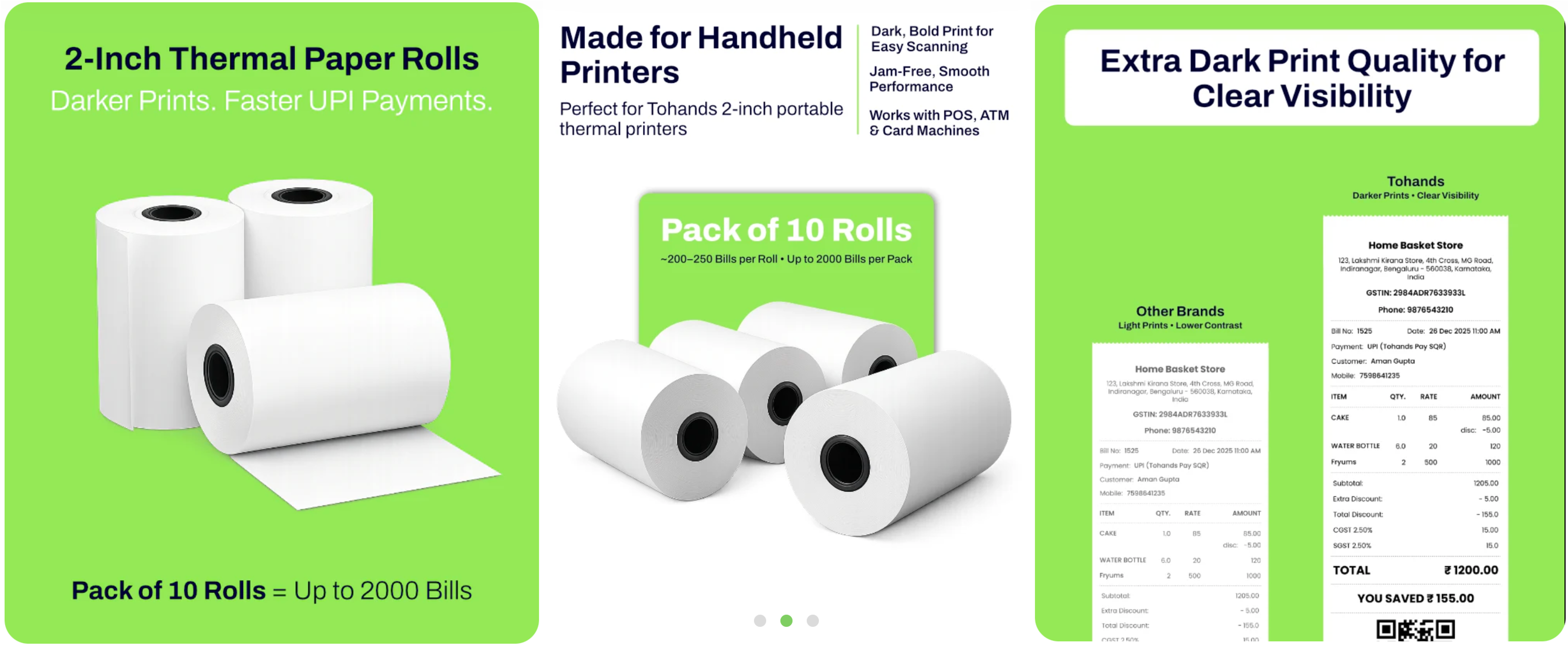
That’s where paper rolls come in. Every time a shopkeeper prints a bill, they use up paper. One roll only lasts for 40, 60 or 80 bills, depending on its length, so they’re constantly running out and buying more. Nobody has to be convinced to buy paper rolls.
So we put the two together. Instead of selling the subscription on its own, we sell it as a monthly package - the shopkeeper gets their paper rolls delivered every month, and the software subscription is included in the same payment. In the shopkeeper's mind, they're paying for the rolls, which they need anyway, and the software comes along with it. It's like, okay, I'm already getting these paper rolls, I'll take the subscription as well. That's what turns a hard sell into an easy one.
The subscription itself is still something we’re figuring out. We’re early in that journey. Right now it’s priced at ₹99 a month, which works out to about ₹3.30 a day.
Can you explain the business model a little bit? What does the subscription actually get you?
It’s pretty simple. Right now, shopkeepers buy the device outright. There are no EMIs, no rentals, nothing like that. Shopkeepers are like, what’s the point of an EMI for ₹4,700?
Once you’ve bought it, you can use the device for free, and we never limit how much you use it. We follow a Slack model. Just like Slack’s free plan, we’ll never cap how many transactions you record, how many customers you add, or how much inventory you put in. All of that is unlimited. The only thing we limit is how far back you can see your data. On the free plan, you can see the last 25 days. If you want more than that, that’s where the subscription comes in.
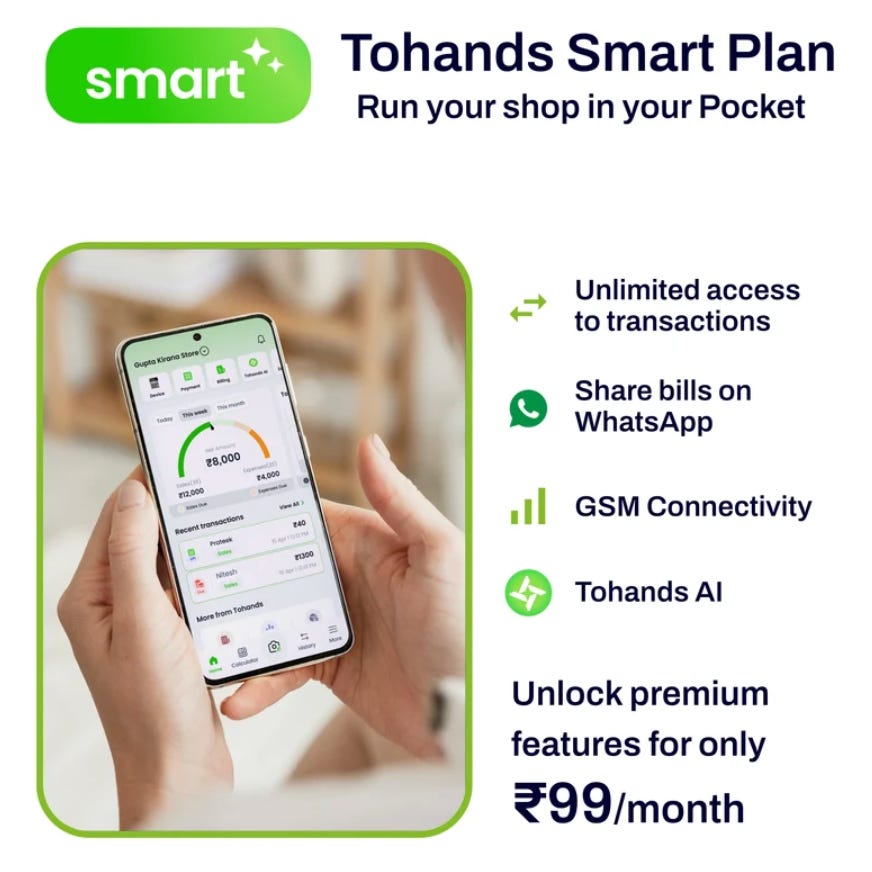
We think of the subscription in terms of two things - access and control. Access means being able to see your data beyond those 25 days, and getting internet connectivity through the SIM card inside the device. Control means being in charge of your counter even when you’re not standing at it. With the subscription, everything is real-time and live, so the owner can see exactly what’s happening at the shop from their phone.
If neither of those are meaningful enough for a user, that’s totally fine. They can keep using the device on the free plan as is.
The device sells for around ₹4,700, right? How did you arrive at that price?
The price is actually where a lot of the innovation sits. You could do what we do at ₹20,000, ₹30,000 or ₹40,000. Doing it for under ₹5,000 is what makes it interesting.
In general there are a few ways to price a product like this. Everyone we spoke to was very clear - sell the device at a subsidised rate, get it into the market, and make your money from recurring revenue. But we were very clear we wouldn’t do that until we had payments running through the device. In India, you can give away a lot of devices for free, but collecting the money back later is a pain, no matter what kind of device you build. It’s an unnecessary problem to have on your hands. Once you have payments, it’s different, because you can deduct what you’re owed from the money you settle to the shopkeeper.
That’s exactly what Paytm did with the Soundbox, and it’s unlocked a lot of revenue for them. There are now well over 20 million Soundboxes on shop counters across India, and Paytm has the biggest share, with around 15 million merchants paying for its devices. Shopkeepers typically pay a rental of around ₹125-₹150 a month, which adds up to well over ₹1,000 crore a year for Paytm alone. And the reason Paytm has the biggest share is that they solved the collection problem. On paper, it’s a subscription. In practice, the rental comes out of the money Paytm settles to the shopkeeper, which makes collection much easier. We didn’t have that capability, so we didn’t go down that route. Now that we’re close to running payments ourselves, that option opens up for us too.
Until now, our pricing has simply been about at least breaking even on every single device. We’re in a supply-constrained environment. We don’t have millions of units to sell. Our biggest order with our manufacturing partner so far has been 20,000 units. We priced our devices at a level where we wouldn't lose money, and we've seen enough demand at that price.
Scale is a different question, and in this segment, scale depends heavily on the price you enter at. If I could bring the price down, I think we'd see a 20 to 30x jump in sales. But that's not financially sustainable right now, because our costs are still high. So the sweet spot for us is getting to the right price, with the same form factor, so that it's a no brainer to completely replace the existing device on the counter. But so far, the model has been simple. The device breaks even, peripherals help us get our payback, and subscriptions are what make us profitable.
One worry must be that a Paytm or PhonePe decides to do the same thing. What’s stopping them?
If Paytm decided to do this tomorrow, with their offline sales capability, they could definitely go after our market. I would be lying if I said I didn’t worry about that at some level. But I also think we have a way to counter it.
The way I think about it is that their core business is payment processing. The reason they put QR codes in shops was so consumers would adopt Paytm and PhonePe and pay with them at those shops. They’ve cracked that. But everything is standardised. Every shopkeeper gets the same QR code and the same Soundbox. Both are non-touch products, sold through push-driven sales, with a lot of money to pump products into the market. That’s what they’re good at.
Ours is different. It’s a full ‘input’ device - a touch device - where it comes in a form factor the merchant is comfortable with but eventually nudges them to change their habits, and it’s non-standardised in every way you can think of. Every shop bills differently, tracks reconciliation differently, records its cash differently. Every segment needs different peripherals. It can get messy. The beauty of what we do is that we manage that mess in a way people don’t notice. It’s why from day zero, we’ve been a ‘pull’ company. Shopkeepers want the product, so we ship it to them, train them, and help them get their whole business running on it.
For Paytm or PhonePe to do this, they’d have to change their core business, from payment processing to building an operating system for merchants, and their whole sales team with it. They’d need people who are much more technical, not people whose job is to walk into a shop and stick up a QR code. A kirana store and a pani puri stall are not the same business. You can put the same QR code and the same Soundbox in both. But a kirana is far more complex.
At the same time, I have to be realistic. If they really want to do it, they can. But we have a big head start. Everything from the hardware up to the apps has been built by us, because what we were building didn’t exist. You can’t just go to China and buy a device like ours off the shelf, the way they originally did with Soundboxes and card machines. There’s no off-the-shelf calculator with the display we needed, or a chip that could do everything we wanted. You could take a mobile phone chip and run Android, but it would cost too much, and a phone can’t handle that many peripherals anyway. So you’d have to develop the hardware locally, build the firmware from scratch, and then build an app on top that handles all this complexity. While they’re doing all of that, we’ll keep innovating aggressively, so by the time they reach where we are today, we’ll be much further ahead. And we’re much closer to the shopkeeper.
The last piece is habit. Changing habits is the hard part of our business. But once a habit is built, people don’t switch. It’s like Tally, the accounting software. Once people get used to Tally, they don’t move. Our calculator is the same. If something goes wrong, our customers won’t take a refund, even though we offer it, and they don’t even want a new device. They want theirs fixed. And once that device is connected to their other devices, and holds their payments, their trust and all their data in one place, switching becomes nearly impossible. So the whole game is how fast we can deploy now that our product is stable.
We also believe there’s a brand that needs to be built here, one that’s genuinely focused on merchants and genuinely cares about them. Today, which company is truly focused on merchants? Paytm stumbled onto merchants; it was never the core of their business. BharatPe has some success here but they haven’t been able to deliver on their initial progress. Nobody is really solving for this segment right now. So there’s a very clear opening. It’s Paytm, PhonePe, and who’s number three? That’s the opportunity we’re going after.
Got it. Last one from a product perspective, how do you think about what’s next on the roadmap?
A lot of it comes straight from the customer. We don’t build anything the merchant isn’t asking for. And strangely, refunds have been one of the best drivers of what we build, because when people return the device, at least they tell you why. Our refund rate is around 8%, and obviously I’m incentivised to bring that down. So if you tell me you’re returning it because your staff can’t use it, or because you couldn’t set up the printer, that’s information we can act on.
But you can’t just build whatever they ask for either, or you end up with feature creep. So what I’ve always done, and still do, is go to shops and observe. Nothing fancy. Just see how people are buying and how their day actually goes.
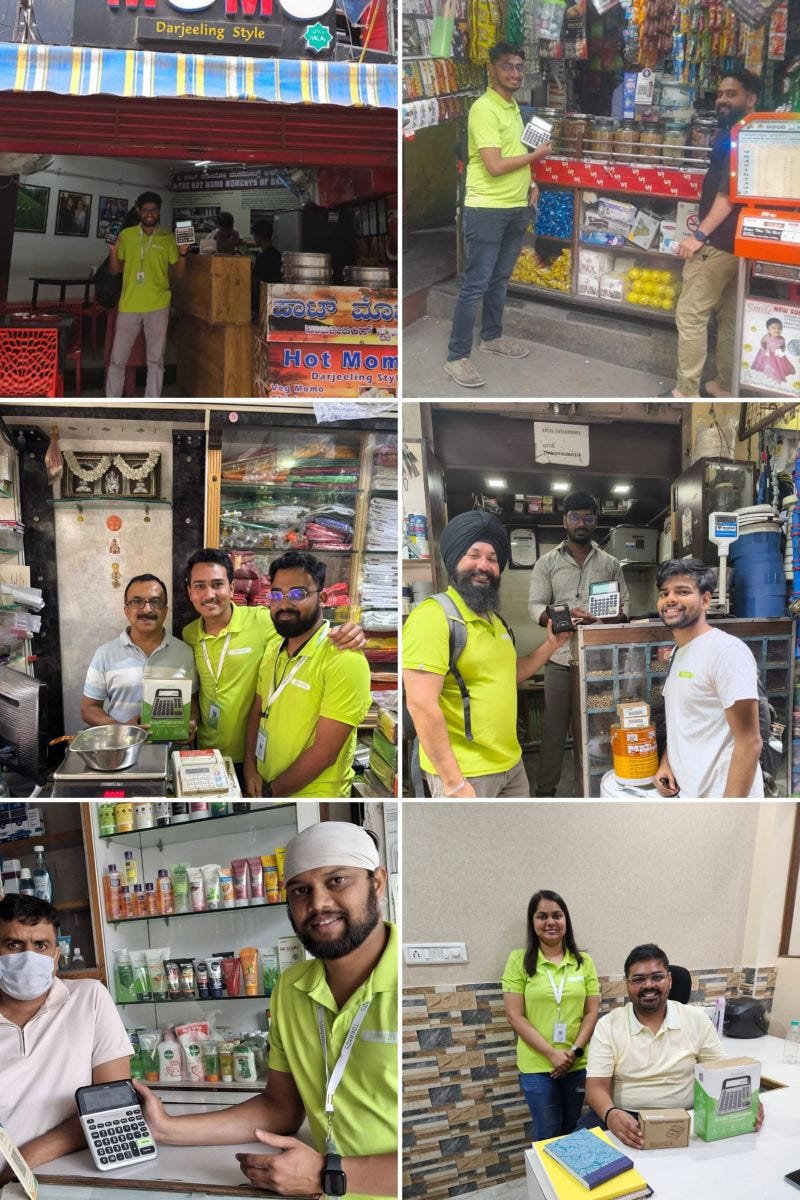
Being close to your community is how you learn where adoption is happening and where it isn’t. The whole touch vs non-touch idea came from watching what was getting used and what wasn’t.
It still shapes how we think about what’s next. One question I keep coming back to is what non-touch tools a shopkeeper already has. I’ll give you an example - cameras. Almost every shop has one CCTV pointed directly at the counter, but right now that footage mostly works as a deterrent, and theft still happens.
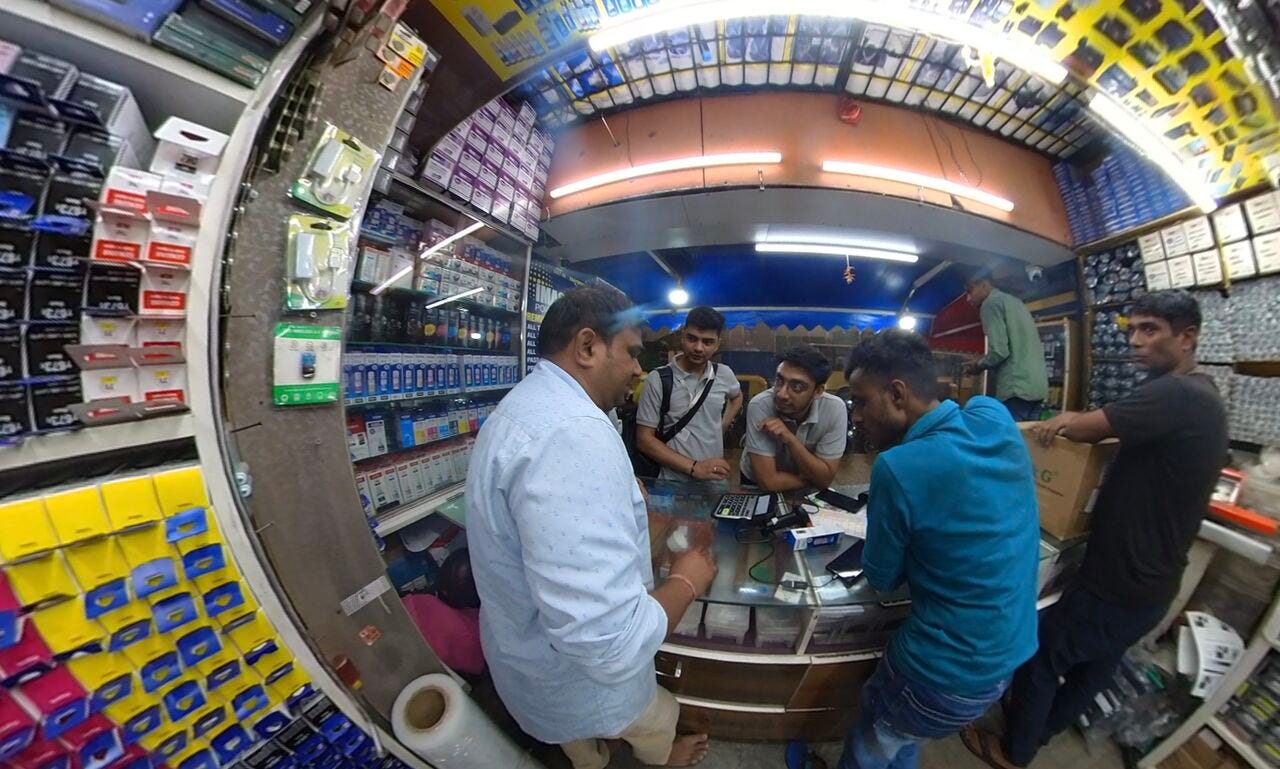
One time a friend and I went to a very well-known pharmacy chain, and when he asked for the QR code to pay, the staff member showed him his own personal one instead of the pharmacy’s. My friend scanned it and walked out, and the pharmacy lost that money right there, despite having POS machines, cameras, everything. It happens more than you'd think, because customers are trained to see a QR code, scan it and pay, without ever checking whose account the money is going into. And it's not just QR codes. When the owner isn't around, cash sales can go unrecorded too. The store camera captures all of it, but nobody's watching, so it doesn't actually prevent anything. The problem is that footage isn't very valuable on its own, but it becomes super valuable when it's linked to the transactions. That's the kind of problem we get excited about.
But we have to be careful. Every new peripheral changes the math of the business - the attach rate, the margins, the payback, how much inventory you’re holding. Do too much, and we turn into a hardware accessory company, which we never want to be.
The one place we do build ahead of what customers ask for is the hardware, because you can’t change it on the fly. For example, since we already had a SIM card in the device, we built in the Soundbox capability of announcing transactions before we even had payments enabled. As a hardware company, you have to think at least four or five years ahead. You can prototype almost anything in a month, but building something of good quality, something that’s durable, at production scale, takes at least three years.
So most of our time now goes into the next generation of devices. The calculator sits at such a low layer of the shop that everything else builds on top of it, and once a customer trusts us with it, they trust us with other things. The question is how we build a journey where shopkeepers who are growing can buy our other devices, and are never limited by the calculator form factor.
VII. Manufacturing
One of the things I want to get into is the supply chain part of all this. Hardware tends to be a humbling experience for even the most seasoned teams. You’ve come a long way from sanding down buttons of V3 yourself. What does it take to manufacture a product like Tohands in India?
A lot of money. And a lot of people who genuinely give a shit. If you don’t have people on your team who really care about the product, things can spiral very easily. We’ve been incredibly lucky to get people who genuinely care. It’s pointless to try and categorise them as “top talent” or “tier-one talent” or “A+ talent” - those labels are meaningless. What I can say without any doubt is we have a team of people who’ve put in the maximum amount of effort to pull this off. Honestly, what we’ve done shouldn’t have been humanly possible.
One thing I’ve learned to live by is - pay your designers well. If you get a good designer, your life becomes so much easier. In our case, that was Sushant Vohra, and we were incredibly lucky to get him as our industrial designer. Most of the cost and most of the headaches are saved just by getting the design right. Design is the core. It decides whether you’ll be able to scale or not, and that goes for the industrial design, the PCB, and the whole architecture of the device. So getting good designers across all of those is critical.
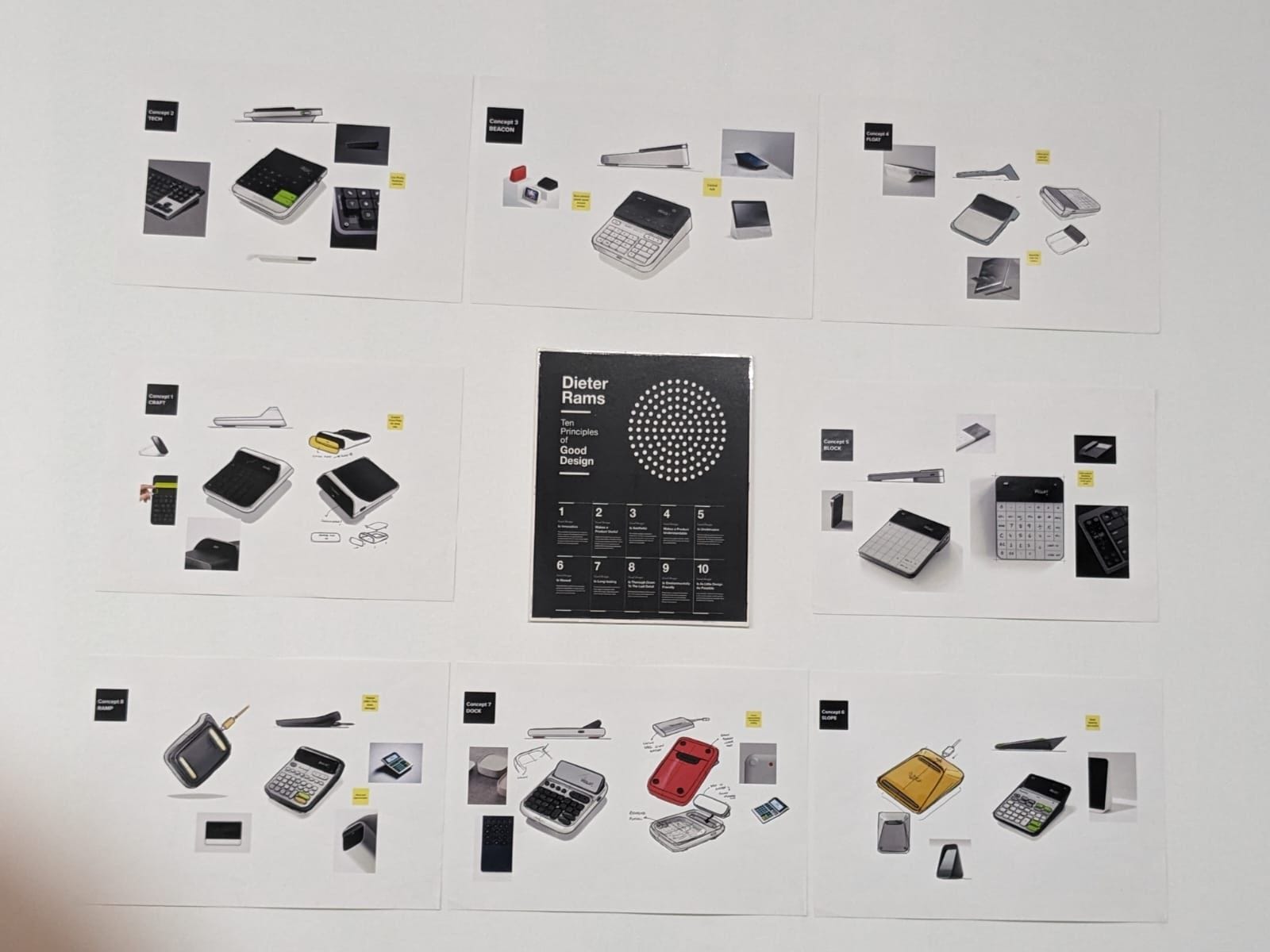
V3 was the first product we actually took to manufacturing - with the moulds, the design, everything - and it cost us around $50,000. Version 4 cost around $250,000 to build, and Version 5 was in the same range. So with very limited resources, we’ve had to build what is basically a new smartphone. And we’ve never compromised on quality. Quality has always been sacrosanct. Even if it hurts our profitability, we want to build the best-quality product out there.
That’s not to say we didn’t make a lot of mistakes - we did. But what was good for us is we made them early, on small batches, while iterating very, very fast. We’ve made mistakes on bigger batches too. But in the early days, the goal was to catch mistakes as early in the lifecycle as possible, ideally at the design stage.
And after design, the second most important thing I would say is your manufacturing partner, your OEM. That can be make or break too.
Can you say more about that? Who do you guys work with? And what lessons can you share for other aspiring hardware builders?
I’ve learned that, for a hardware startup, the choice of OEM can matter more than the investment you have. The thing is, in India, you can easily get 10 or 50 units of a product made if you wanted. And once you’re past 1 lakh units, there are a thousand manufacturers who’ll happily take your order. But anywhere between about 100 and 1 lakh units, you’re in the death valley. You’re too big for the small workshops and too small for the big manufacturers. At that stage, an OEM has to essentially take a bet on you.
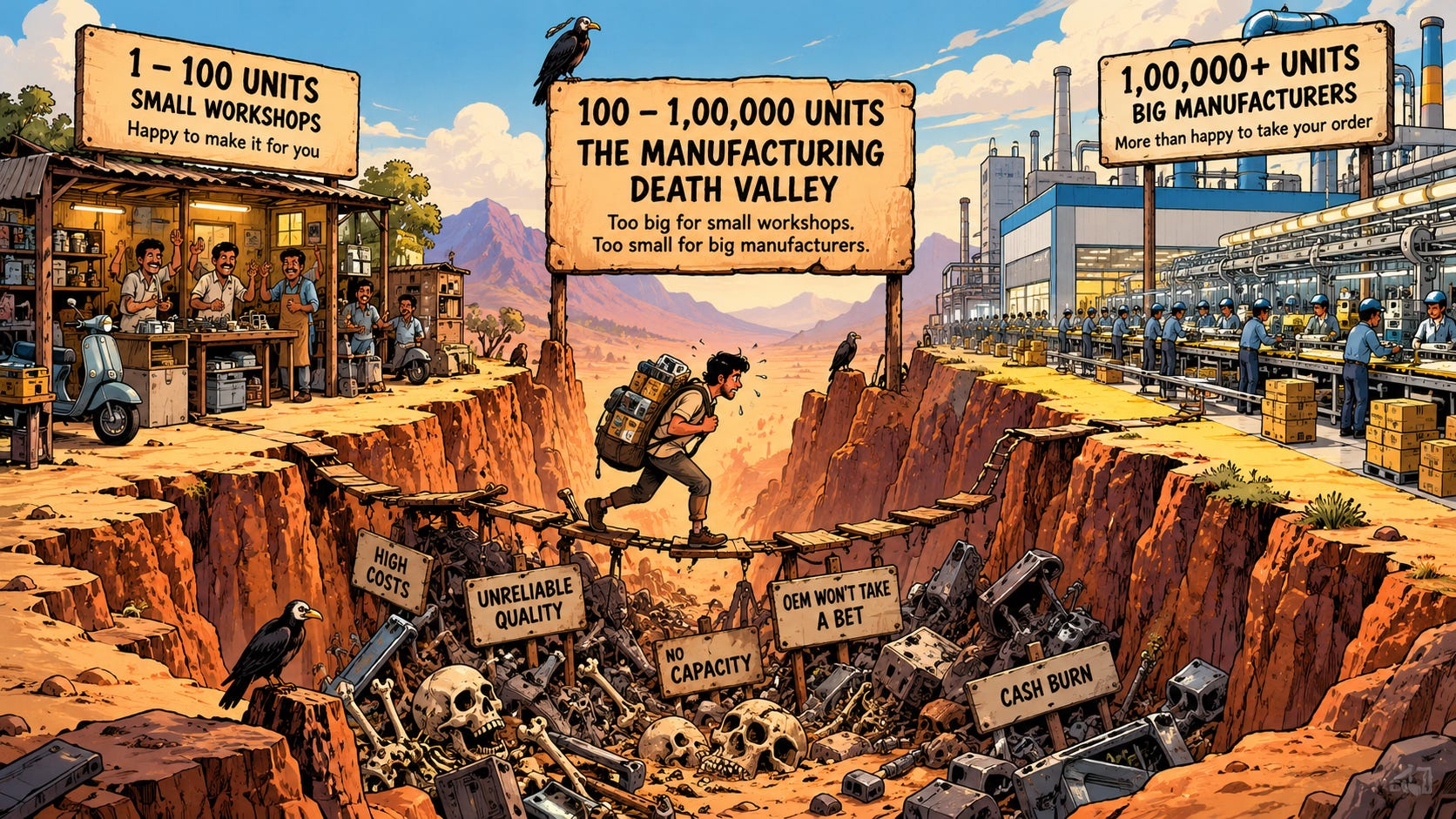
We work with Kaynes. And Kaynes took that bet when we had no proof and no product to show, for which I’ll always be grateful. Part of the reason, funnily enough, had to do with calculators. In the past, at some point Kaynes had apparently missed out on the chance to manufacture calculators for Casio. So when we came along, it was almost like, fine, here’s the chance to take a bet on this other calculator company.
How does that partnership actually work? Who does what?
Kaynes does the job-work, the actual manufacturing, and they help with financing. But we control everything else - the design, the sourcing, the components that go in, which vendors to buy from. The quality is on us, so we have to control every single part of it.
What a partner like Kaynes really gives you is the ability to scale. There are 148 components in our calculator. Tracking them, managing them, buying them, assembling them and testing them - at scale - while also running distribution, would be impossible on our own. You’d die of supply chain complexity. That’s where you rely on them.
That being said there are trade-offs you have to deal with regardless of who you end up partnering with. Working with a big OEM, for example, you lose a lot of flexibility. The kind of planning you need is very different. As a startup, you’re always aggressive with your numbers. But if you tell a big OEM you need 100,000 units made, they’ll actually make 100,000 units. And then you have to take all of them. If you’re unable to sell those units, you’re dead.
Fixing mistakes also takes a lot more time and effort. Kaynes comes from a world of large-scale, mature products. For example, a huge number of the energy meters you see in India are made by them. That’s a fixed process. You know the checks, you know the flow, and you just keep running it. No firmware updates, nothing changes. Copy-paste, copy-paste, copy-paste. They’re very good at that. But we’re constantly updating our product, and the moment you change anything, it’s a full cycle all over again. You’d better understand that cycle, otherwise it’s going to be painful.
But they’ve helped us scale, and they’ve taught us the process one step at a time - how to plan, how to procure, how to talk to vendors, how to build vendor lists and qualify them. A whole bunch of things we never used to care about. We’ve made mistakes, yes, and we’ve had our fair share of arguments with them. But I’ll never not give them credit for what they’ve done for us. Without Kaynes, we would not be manufacturing in India. I’m 100% sure about that.
Is the whole supply chain indigenised at this point?
Not entirely. Every component comes from a different geography. For certain components it is literally impossible to get these in India. So Taiwan is a major supplier for us. Our battery vendor is Indian, but the raw materials they use come from China. The OEM is Indian, so the assembly and the SMT (the mounting of the components onto the circuit boards), all happen in India. Overall, I’d say around 60 to 70% of the device is Indian.
Once the design and the partner are in place, where do things still go wrong?
Quality control. Getting the design and the partner right is only the start. After that, it’s all optimisation. How do you automate testing? How do you build the jigs? How do you check parts at the supplier’s end, check the device again at the manufacturer’s end, and check it once more when it reaches your warehouse? How do you collect all that data and keep everyone aligned? There are a whole bunch of processes involved, and honestly, India could do much better here just by having more software for them. Right now there’s still a lot of manual work.
So you have to make sure the partner builds exactly to your design, and then QC everything to the point where everyone is extremely careful. There has to be zero tolerance for mistakes. I might seem like a nice guy, but if you make a mistake, I can be horrible. Being nice doesn’t help you scale manufacturing.
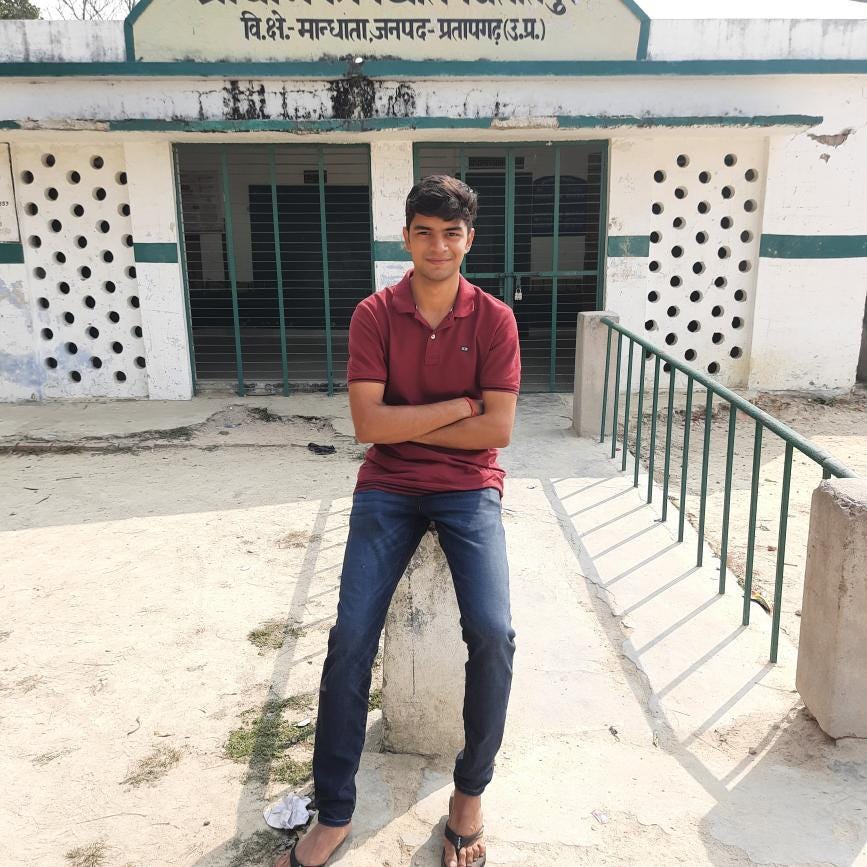
This is extra relevant because in India, everybody has an excuse. One time, our packaging boxes came in green instead of gold. We sent the entire batch back. That’s the kind of thing that happens. You do have to bend a little, because you’re a small player. As long as the customer isn’t affected, we allow some flexibility. But the moment something affects the customer, it’s a different story. We have a 30-day return policy, so if something isn’t working, customers will ask for a refund, and that hits us. And we give a three-year warranty. That responsibility is on me, not on the OEM. So with QC, the more you spend upfront, the more you save down the line.
One piece of advice I’d add for anyone building hardware here - go to China at least once. I’m not saying don’t build in India. I’m saying go and see what’s possible. I haven’t been myself yet, but my team has. You see things being done at a much bigger scale and on much faster timelines, and you come back inspired to build that way here. The reference point changes.
Closing the loop on this part. You’ve described the calculator as a smartphone and a laptop in different places, but obviously you’ve built this on a tiny fraction of the development budget. How have you managed that?
By being frugal with everything that isn’t the product. For example, everything in our office is second-hand. Every single thing - the tables, the chairs, everything. Our office is in a shady part of town, because the rent is lower. We’ll happily put a 30-rupee component into the device just to get a better reading. But we won’t spend that same ₹30 on the office.
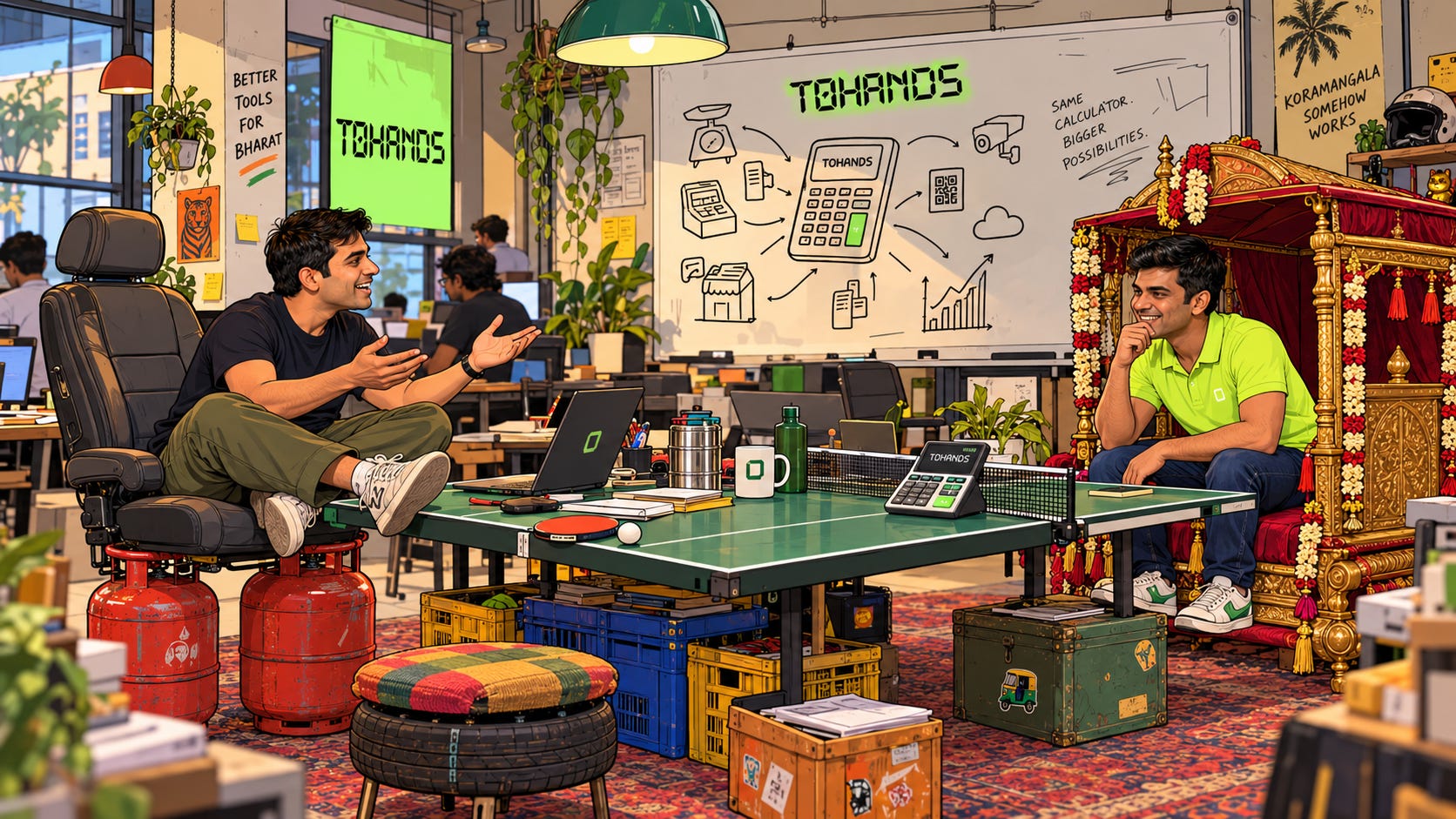
Part of that is because we never had the money for anything else. But it’s also become a core part of our culture. The more we spend on luxury, the higher our costs go, and then merchants can’t afford the product. The more optimised we are, the lower our costs, and the bigger our market share. That’s something we keep hammering into people across the company - do things at the lowest cost, while maintaining the best quality.
And that doesn’t mean compromising on quality. For example, with our display - Version 3 had a black-and-white dot matrix display, which cost around ₹300. A colour display costs around ₹700. And a colour display brings a lot of complexity with it. You need a separate display chip, a different interface, a whole graphics layer on top. But we made that choice because we knew that’s the direction we wanted to go, and we needed it to show things like dynamic QR codes and itemised bills. So we’re frugal about everything except the product. Like if we need a chipset, we’ll use the best one.
It’s the same thinking across the company. Paytm has around 44,000 salespeople. I want to do the same thing with fewer than 4,000. Can we be 10 times more efficient? Same with engineering - they have huge teams but can we do more with far less? So far, we’ve consistently shown that we can. For us, it’s always been simple - don’t waste money, get the best people and the best suppliers, and put as much as possible into the product.
You told me that your new stocks of devices often completely sell out within days. How do you actually plan production when demand keeps outrunning supply?
This comes down to your guts and your resolve. Essentially you have to put down a number - something you can get really excited about. Then you put the cost against it, and you get really scared.
So we’ve simplified it. Our unit of measurement is a single day. So essentially I ask myself - can I sell 5,000 units in a day? No. Let’s assume, on average, one salesperson sells about two units a day, which means I’d need 2,500 people to do that. Do I have 2,500 people? No. So the real questions are - how much can we sell today, how much capacity will we have in the future, and what else can push sales up non-linearly, whether that’s leads, pricing or marketing? And how much do those actually move the needle? You do that math, and you figure out how much you can realistically sell in a day.
Then you do the same for production. Can Kaynes make 5,000 units in a day? No. Can they make 50 or 200? Yes, but not as efficiently. Can they make 100 a day at an efficient rate, while we’re also selling 100 a day? That would be the sweet spot. You make 100, you sell 100, and you complete the whole cycle - making, selling and getting paid - within 60 days, because that’s the credit line we have from them. Also, you don’t want a thousand invoices coming from Kaynes. That gets really messy from a finance perspective. So we run it monthly. We take the stock in one go, sell it over the month, and pay them in one go.
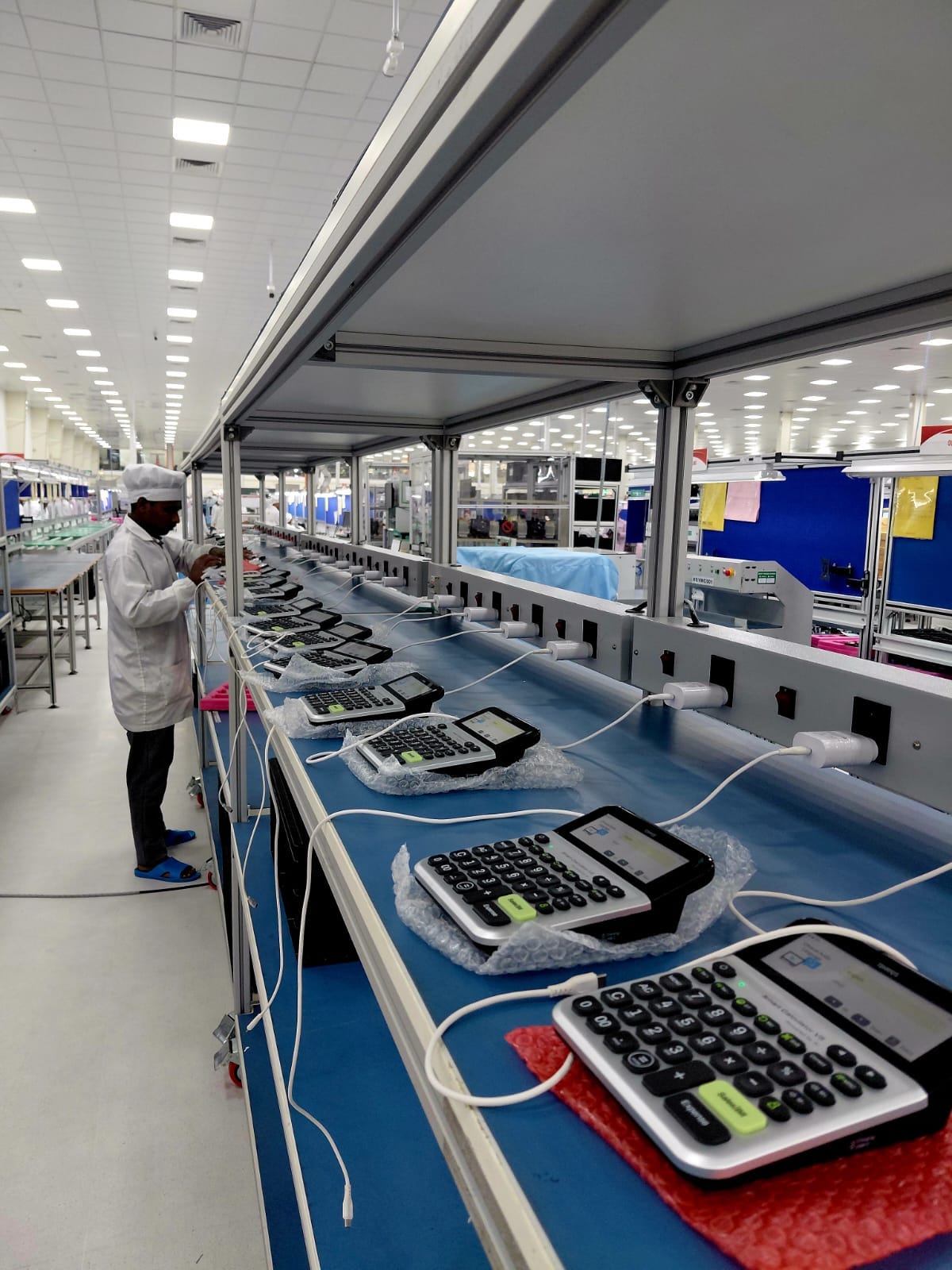
What we realised is that if you break everything down to the day, and control production that way, demand always stays slightly ahead and production is always catching up. We keep a buffer of 5% to 10%, and at least 1,000 units, so that if there’s a sudden spike, we can handle it. Even on a big day, you’re never going to sell 10,000 units. Maybe 1,000 or 2,000. The buffer takes care of that. Everything else is business as usual, and we measure it by the day. Actually, by the hour. I don’t want to call it micromanaging, but to be very frank, we do have to break every single thing down to the smallest piece.
Say we sell 100 units a day. Then Kaynes needs to make 100. Out of those, maybe two or three will have issues. And of the 100 we sell, around 8% get returned. Those units come back, get refurbished, and either go out as replacements or get sold again. All of that has to be calculated very carefully. If you get the math wrong, you die. We’ve gotten much better at it over time.
One good thing we’ve done is price the device so that it gives us a cash-flow advantage. We don’t have to burn money to make this work, so we’ve been very conservative with cash flow. But now we know the business well enough to get more aggressive. We know we can do 100 a day. So can we do 300? At 300 a day, that’s about 100,000 units a year. And to get to 3 million units over the next few years, we’d need to sell around 2,000 a day. That would take roughly $60 million in capital and around 1,000 people in offline sales.
I spend a lot of time building those models, breaking everything down to the last piece. And the whole thing hinges on one number. If each salesperson sells two units a day, everything works. If they only sell one, the whole model breaks. So it has to be two or more. Otherwise, the math just doesn’t work.
VIII. Marketing and Distribution
I would love to understand more about how you literally get the product in front of your users. I know that content is a big part of what you guys do and I know your website has also been your secret weapon here. Can you talk about your approach to both?
For us, content is a non-linear distribution channel. And honestly, we kind of grew up alongside Reels. I actually started making them myself back when I was at T-Hub. At an early stage, you can’t spend money on both manufacturing and distribution. You have to choose one. And every rupee we had was going into the hardware, so Reels and YouTube Shorts became how we reached our audience. Because I was personally such a prominent feature in all our early content, at one point, I had more followers than the company page, which I was very conscious of needing to change. I was very clear that I didn’t want to become an influencer - all attention needed to flow to the company and the product.
The best way to explain our approach to all this stuff is actually our website. There’s almost nothing on it. There’s barely any text and just two buttons.
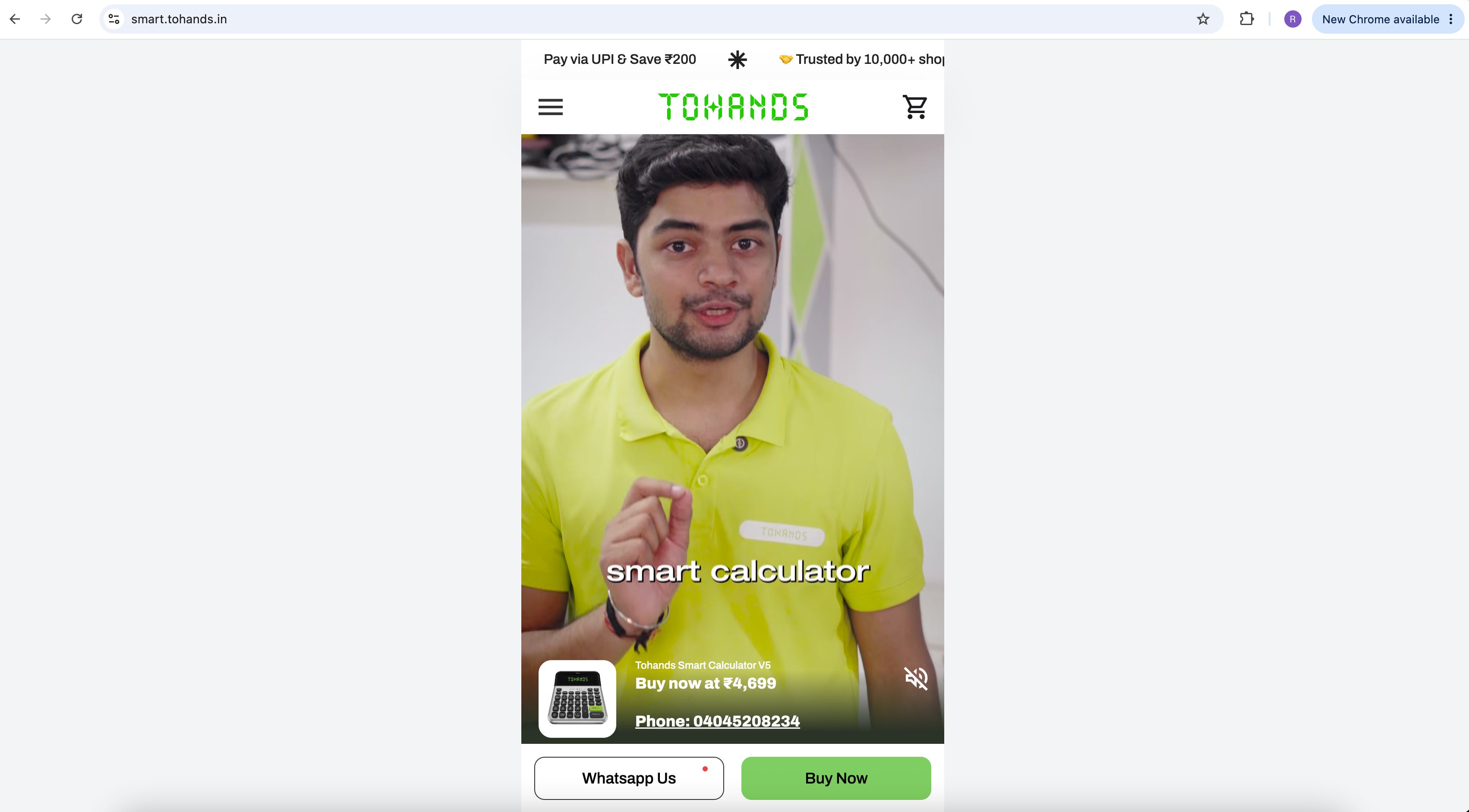
When I gave my product manager the task of building it, he came back and said, “Praveen, there’s no need to make a website, our customer base is never going to buy online. Don’t waste your time”. My response was that I didn’t need to sell a million units online. I just needed to sell around 100,000. That would buy me enough time to build out offline distribution. For perspective, there are around 30 million shops in India - 100,000 is about a third of a percent of them.
Then we realised something else about this segment, that they find the act of reading tiresome. Whatever you write, they’re not going to read it. So there was no point spending time on paragraphs of fancy copy. We decided to bet on videos instead. It’s why our whole website works like a giant Reel.
On the home page there are basically three videos you can scroll through, and no text. And then we figured, a customer either wants to talk to us or wants to buy. So there are only two buttons - WhatsApp us, or Buy Now. That’s it. There’s nothing else on the home page. We spent just ₹35,000 in total building this thing from start to finish on Shopify. That’s where the frugality shows up. And we’ve done more than ₹8 crore of sales through this website at this point.
The thesis behind the kind of content we do is the same. If our market doesn’t like to read, we’ll make sure they can watch instead. So we keep the content focused on showing a shopkeeper’s actual use case, building testimonials, and building reach. A lot of that reach comes through influencers. We piggyback on the audiences they already have, and then the ‘shares’ and ‘likes’ take it from there.
Now we’re going regional as well. We just launched Tohands Kerala, and the day before the launch, we posted our first reel on the Malayalam page.
No ads, nothing. It got 145,000 views, around 2,800 shares and 2,300 likes. And it wasn’t some famous influencer. The guy in the video is from our retention team. The funniest part is, he was originally standing next to his bike while making the video. I told him, stand on the bike, it’ll go viral. So he stood on the bike, and it went viral.
So you never had to do any performance marketing?
We got really lucky. For our first 5,000-plus customers, we never paid anything to acquire them. No CAC at all. At one point, we had a waiting list of 13,000 people. Almost every order we’ve done to date has come through the website. We are only just starting to think about offline.
The only paid marketing we really do is retargeting. If someone visits the website and leaves, we show them ads afterwards, because with this audience, you need multiple touchpoints before someone buys. As to how they find our website in the first place, it’s content. From a company point of view, content has been a very, very major unlock for us.
When it comes to content, what have you learned about what actually works with this audience?
Being seen as ‘real’ is what makes a difference. In my segment, AI-generated stuff kind of pisses people off. What connects is human stories - talking to shopkeepers, telling their stories, on-the-ground stuff.
Whenever we’ve sat in a studio and made a piece of content, it’s never worked. When we go to a customer’s shop and shoot it there, it works much better. Take that bike reel. We could have made it sitting in the office. There was no real reason to do it standing on a bike. But it works because people can see you’re out on the road. They can tell you know how things work on the ground because you’re literally outside your office on the ground.
Going regional is just as important. You can’t treat India as one market. Right now, most of our customers are Hindi-speaking, and that’s only because most of our content is in Hindi. That’s why we’ve started doing much more regional content, like the Kerala page.
Anything outside of content that drives attention or action?
Discounts! Shopkeepers care about ‘winning’ the deal. A shopkeeper will tell you, “if I like this, I’ll buy five units”. But what he’s really trying to do is discover the bulk price so he can then make a deal to buy that one unit at the discounted price. I can usually tell when a customer is just trying to fish for better price. In general we understand these things much better now.
But the bigger lesson is that without a discount, there’s no urgency. If you’re building a new category, where nobody has a fixed habit of buying the product, you have to create that impulse that makes your customer say, ‘okay, let’s try it’. You need to create some kind of pressure to take action immediately.
One more interesting thing I’ve learned is to attach discounts to certain behaviours - this really works well. So “I’ll give you a discount if you give me your old calculator back”, or “if you refer somebody, you’ll get a discount” or “if you buy the peripheral, you’ll get a better rate on the calculator”. There’s a sense of earning the discount that gives users satisfaction.
All super interesting. On content in general, do you think there’s a limit to how far it can take you?
Content is a very non-linear channel, but you still have to understand its limits. In my case, I’m 100% sure content can get us to around 100,000 shops, and that I can sell 100,000 calculators online. I know that because of our funnel. In the last year, we’ve had around a million people on the website. 800,000 of them spent more than 30 seconds there. 107,000 added the calculator to their cart. 30,000 got as far as the payment page, and around 18,000 ordered.
So I know we can sell 100,000 online. Could we push that to a million? Probably. But the question isn’t whether you can sell online. It’s whether you can retain those customers online. And I think you retain them much better offline. If you penetrate a market properly, you have a much denser customer base, and you can service them better.
Training our users and doing physical set up at their shop makes a huge difference. And you discover things you couldn’t even imagine about how people use your product, and what makes a difference to adoption.
Here’s an example - the position of the charging point in a shop decides how well we retain that customer. Because if the device isn’t near a charger, the battery drops around 5% an hour, or around 8% an hour with a printer connected. Our device has 12-plus hours of battery. But almost all our power users have one thing in common - they use it while it’s charging. The battery is basically their inverter for when the power goes. If you’re running the device on battery most of the time, performance drops, and when performance drops, retention goes for a toss. So if we can go into a shop, put a power socket near the counter where the device sits and connect the charger, retention goes up a lot.
And outside of any of this, the offline question may soon not even be an optional thing for us. Payments is going to be a big part of our roadmap - on the business and product side both. And once we launch payments, KYC becomes mandatory, and that includes physically verifying the shop, so you need people on the ground anyway. So we’re anticipating that offline will become a key battleground for us.
How do you build that offline presence without hiring an army of salespeople that messed up your economic calculus?
By doing it non-linearly. It can’t be, “I need X shops, so I need to hire X people”. That’s not going to work - we need to be smarter than that.
The way we think about it is that you can get around this problem partly because of how offline commerce in India works. There’s a strong ‘follow the leader’ mentality here, and it works lane by lane - not even pin code by pin code. Shops are in lanes. If you get 10 shops in a lane onboard, you can get the other hundred almost automatically. Usually there’s one very influential shop in the lane. The question is how you get to that shop and prove the worth of your solution. Once you reach around 10% market share in a lane, it spreads on its own, and you get to 35 to 45% coverage in no time. That’s the nature of this business. You go lane by lane, then pin code by pin code, city by city, state by state, and eventually country by country.
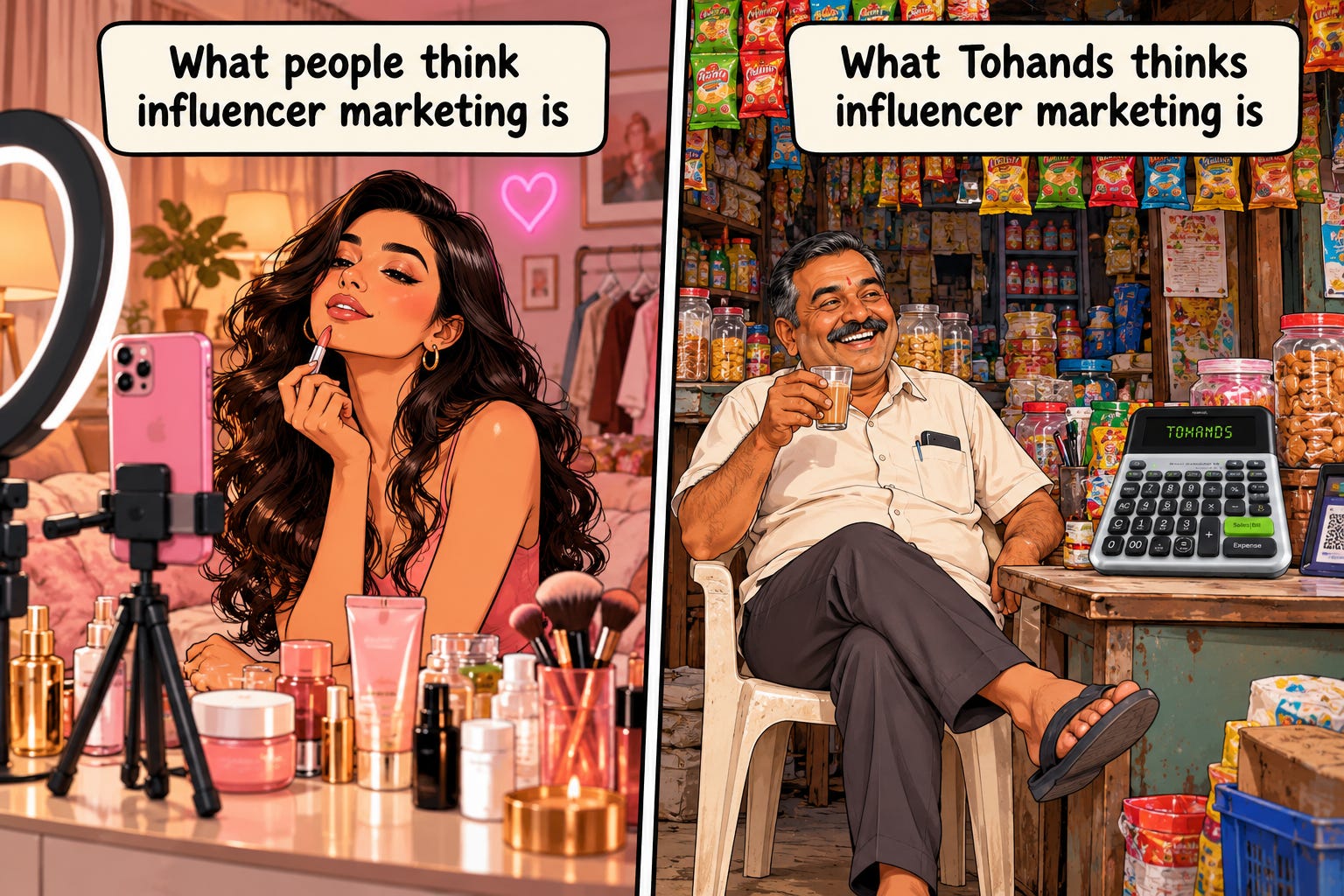
The other part is how we’ve set up our field team. We’re experimenting with a model where our field staff aren’t sellers. They’re deployers. The selling is done by partners we call authorised sellers and referral partners, who are incentivised to bring us customers. A referral partner gives us a lead, and our team goes and closes it. Our field staff handle everything after that - deploying the device, training the shopkeeper, retaining them, and eventually doing the KYC for payments.
We don’t call these partners distributors, and we’re deliberately not working with traditional distributors. We want to own the relationship with the customer directly. And we have a big advantage here - one, because there’s already pull in the market, and two, because we’re selling a calculator and not some regulated fintech product (yet). Paytm can’t sell a device without doing KYC first. Right now I don’t have to do KYC to sell a calculator.
If you get to a million devices, how do you support all those shops? Do you need a call centre?
The funny thing is, we already have more service people than salespeople. We’ve been very, very clear that support is the most important part. At this stage, we want to be as personally in touch with our customers as possible. We’ve even told our service team it’s okay to give customers their personal numbers. Just make sure you don’t get abused. And we run customer groups where we get feedback directly.
I don’t think we’ll need a typical call centre even later on. PhonePe has shown this can be done at scale. They manage billions of dollars with a support team of around a hundred people. For us, it’ll be a combination of things - content that shows people how to use the device, offline touchpoints for deployment and service, and on-device AI, where a shopkeeper can just ask, how do I do this, and get the answer right there instead of calling us. And support needs will come down naturally as the device matures. Most of it is a one-time setup. The better you do the setup, the less support someone needs later.
Maybe a bit orthogonal to this thread but if and when you guys do fintech, and you got more deeply into things like payments, do you have to recalibrate your messaging or operations around a different user psychology?
Yes, completely. Selling a device is a low-trust activity. Selling payments is a high-trust activity. They’re very different.
With the calculator, if something gets entered wrong, the worst case is you just delete the transaction. With payments, if something goes wrong, who do you hold accountable? If I’m a merchant, say I download an app, do the KYC, take money from my customer, and that money never reaches my account. What do I do then? Go to a consumer court? Start a fight? I don’t have that kind of time. Meanwhile, my shop is losing money.
So for a shopkeeper to trust you with payments is a completely different level of trust. They have to feel that this company actually cares about me, that if there’s a problem they’ll come and solve it, and that they won’t run away. Having a permanent location matters a lot. It’s much more reassuring for a shopkeeper if there’s a Tohands store in their city that isn’t going anywhere, and that if they have an issue they can just walk in and we’ll take care of it. That’s very different from saying, we’re an app, we’re a neobank, the rest is on you. So that’s something we’ll look at for sure.
In general, though, we don’t see payments as a ‘day-zero’ sell for us. They’re an upsell, once the shopkeeper is already using the device and we’re selling them the subscription. The pitch is simple - instead of paying Paytm ₹125 or ₹144 a month for your Soundbox, pay us ₹99. And we never ask them to leave Paytm altogether. Even on the device, a shopkeeper can add their Paytm or PhonePe UPI ID if they want. We never tell them not to use another service. Obviously, we want Tohands to be the primary one. But we leave the choice to them.
IX. The Indian Business Owner
For readers that might have trouble visualising, could you talk about who is the ideal Tohands customer? I think most people would picture a kirana store.
Most people do, but that’s actually not the case. In terms of size, only about 25% of our customers are kirana stores. The other 75% are a pretty diverse, and probably more mature type of business.
The way we define our ideal customer has nothing to do with what the shop sells. It comes down to four things - They do a turnover of ₹2 to ₹25 lakh a month; they do more than 40 transactions a day; they have at least one employee at the shop; and they don’t have any kind of billing machine at the counter right now. If a shop meets those four criteria, we go after them, whatever category they’re in.
So our customer base ends up being very horizontal. Around 23% of our customers are in FMCG, 20% are in quick-service restaurants (QSRs), 17% are in clothing and fashion, roughly 10% are in hardware and electronics, and 7% are in pharmacies. We do get a lot of demand from kirana stores, but they’re just one part of a much bigger picture.
Are there differences in how different segments use the product?
So there are really two ways to use the device. The simplest is just recording the total of a sale - you work out the amount, press Sales, press Enter, and it’s saved. The other is making a proper itemised bill, with each product listed. Right now, around 75% of the transactions on our devices are the simple kind, and about 25% are itemised bills.
But outside of that every segment has its own requirement, and the device has to fit it. Interestingly, for each segment we’ve ended up with one main use case.
Take a kirana store. A kirana has a huge range of products, often 1,000 or 2,000 different items, compared to a clothing shop that might have a few hundred. So billing every item in a kirana is very hard. What they really want is to record their cash sales, because there’s no other way to track cash, especially if an employee is running the counter while the owner’s away. So they calculate the amount, press Sales and Enter, and the transaction’s recorded. The other big use case for them is udhaar, keeping a ledger of what each customer owes. And if a customer’s been shopping for an hour, they can add the customer’s mobile number and send them the calculation on WhatsApp.
Pharmacies are similar. They mostly use it to record cash sales and track what they pay vendors. Expense tracking is actually one of our most consistently used features across every segment, because most shops have no easy way to record what they pay out. If a vendor comes in and you pay them, there’s usually no simple way to track that.
A QSR, a quick-service restaurant, is different. It might have fewer than 100 items, so itemised billing makes sense. Just like a cash register, you enter the item number for the tea, the coffee or the samosa, and the device generates a bill. At the end of the day, the owner can see which items sold the most, with detailed analytics on the app.
A clothing store with lots of products and printed barcode labels connects the calculator to a barcode scanner and a printer. You scan the item, the device knows what it is, and it generates a bill.
Hardware and electronics stores, and a lot of clothing stores too, deal with a lot of bargaining. So for them, the big use case is the dynamic QR. Say a customer buys three things, for ₹560, ₹235 and ₹896. That comes to ₹1,691. If the shop uses a static QR, the customer will say, I’m buying so much from you, I’ll just pay ₹1,600. With a dynamic QR, the device generates a code for exactly ₹1,691. The customer scans it, and there’s no rounding off. The bargaining is gone.
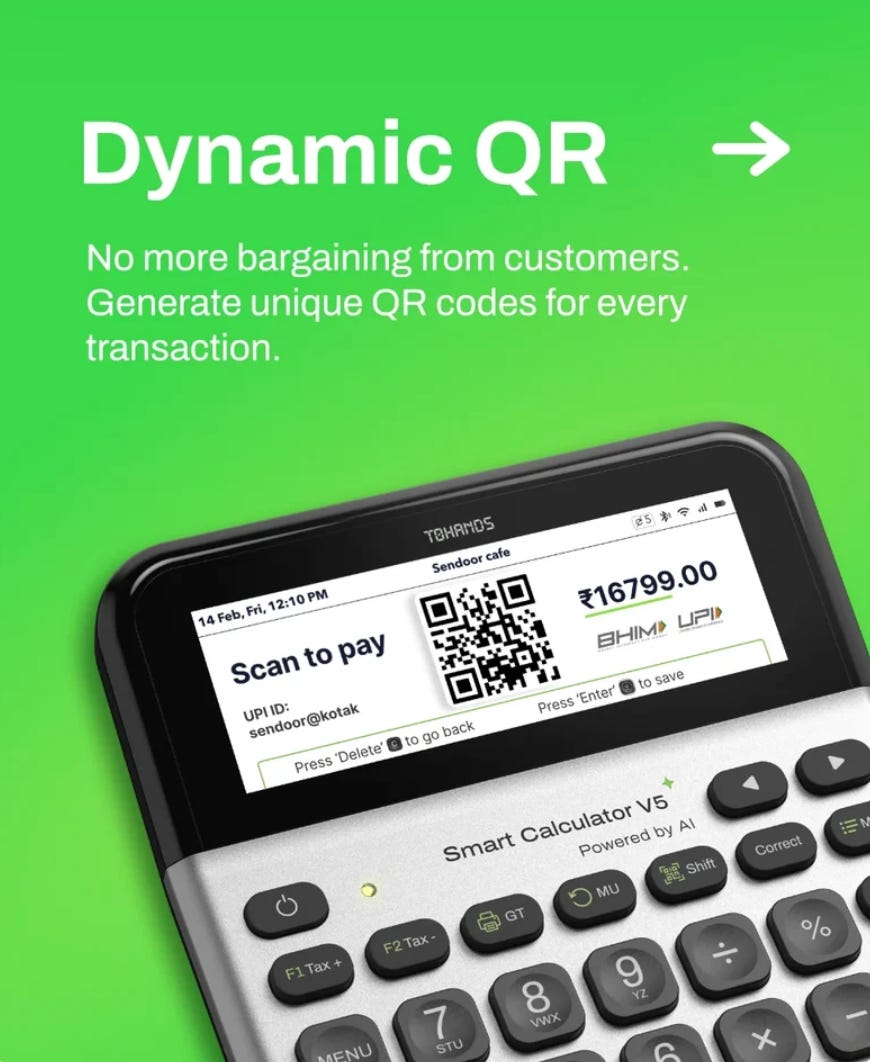
It helps in other ways too. When the owner isn’t around, customers tell the employee, I’m a regular, I’ll pay on the static QR, you just tell your boss. Now the employee can say, sorry, it only works if you pay this code. It also removes the awkward fights after the customer has paid. If you said ₹1,691 and they paid ₹1,600, the shopkeeper is upset about losing ₹91, and the customer thinks, if this is how he treats me, I’m not coming back. Both sides lose the relationship over a bit of haggling. The dynamic QR removes that, and it links the payment to the exact transaction, so you get the full picture.
So can the device also keep track of individual customers? Say I’m a regular and I pay on UPI. Does the shop know it’s me?
Not automatically, not yet. That will come once our payments are fully built out, and we’re working towards it. But that’s exactly what the new ‘Customer’ button on the device is for. It’s basically a CRM button. It lets you track a particular customer’s transactions, and what they owe you.
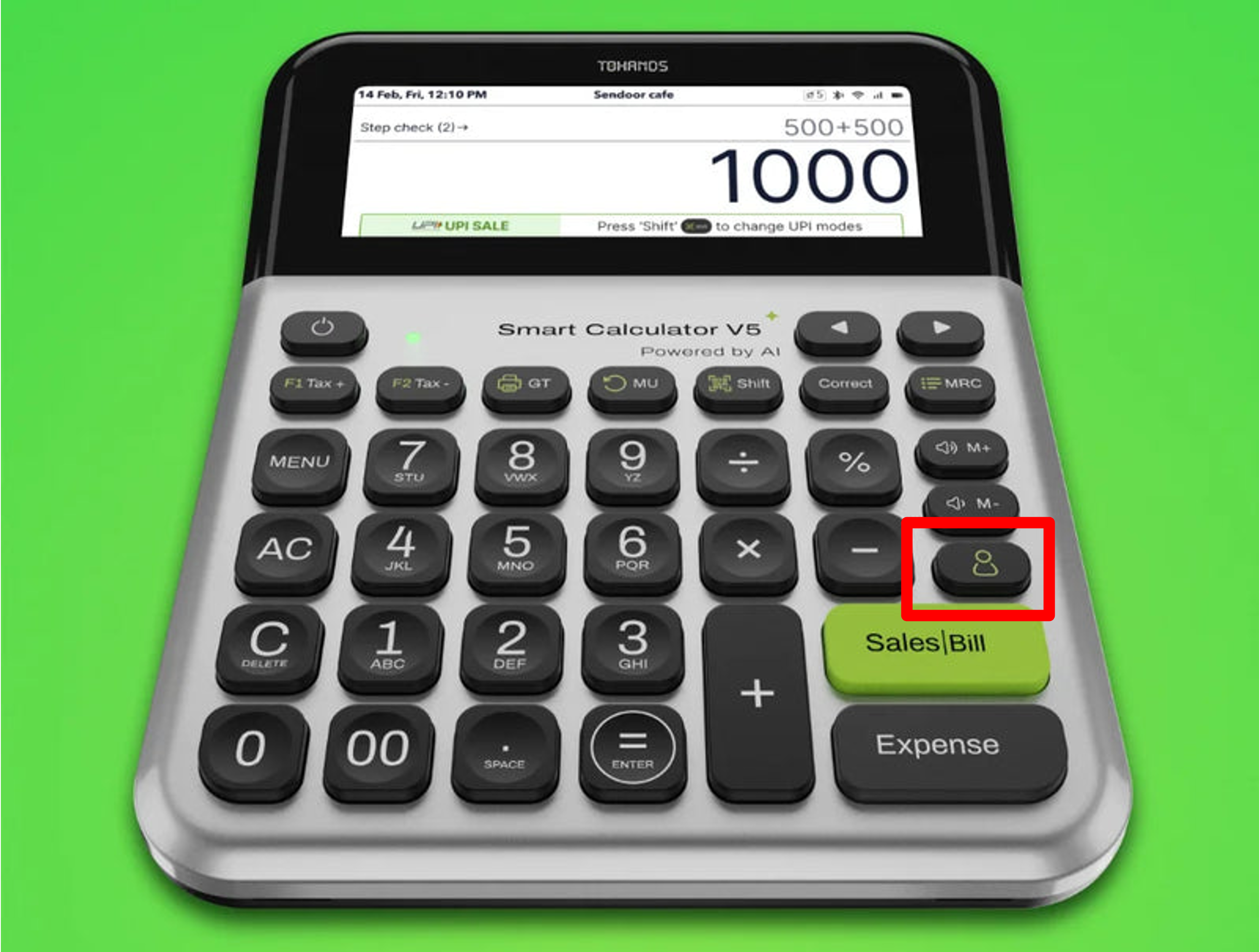
So when you’re making a sale, you press the Customer button and either type in the customer’s number or pick them from your customer list. The device immediately shows you how much they still owe. You can adjust the amount, say, if they’re paying off part of an old due, and then save the transaction. The customer gets the details on WhatsApp, and it’s saved to their ledger on the shopkeeper’s phone. For a lot of shops, especially kiranas, that’s what replaces the old udhaar notebook.
Makes sense. Have any current customers surprised you with how they use the calculator?
All the time. In fact, my landlord messaged me recently saying he wants a calculator. I asked him, “sir, what’s your use case?” He said “I want to track rent”. There are some very niche users like that, landlords, coaching classes, small clinics. They might not think of themselves as businesses in the typical sense, but they still have transactions they want to keep track of.
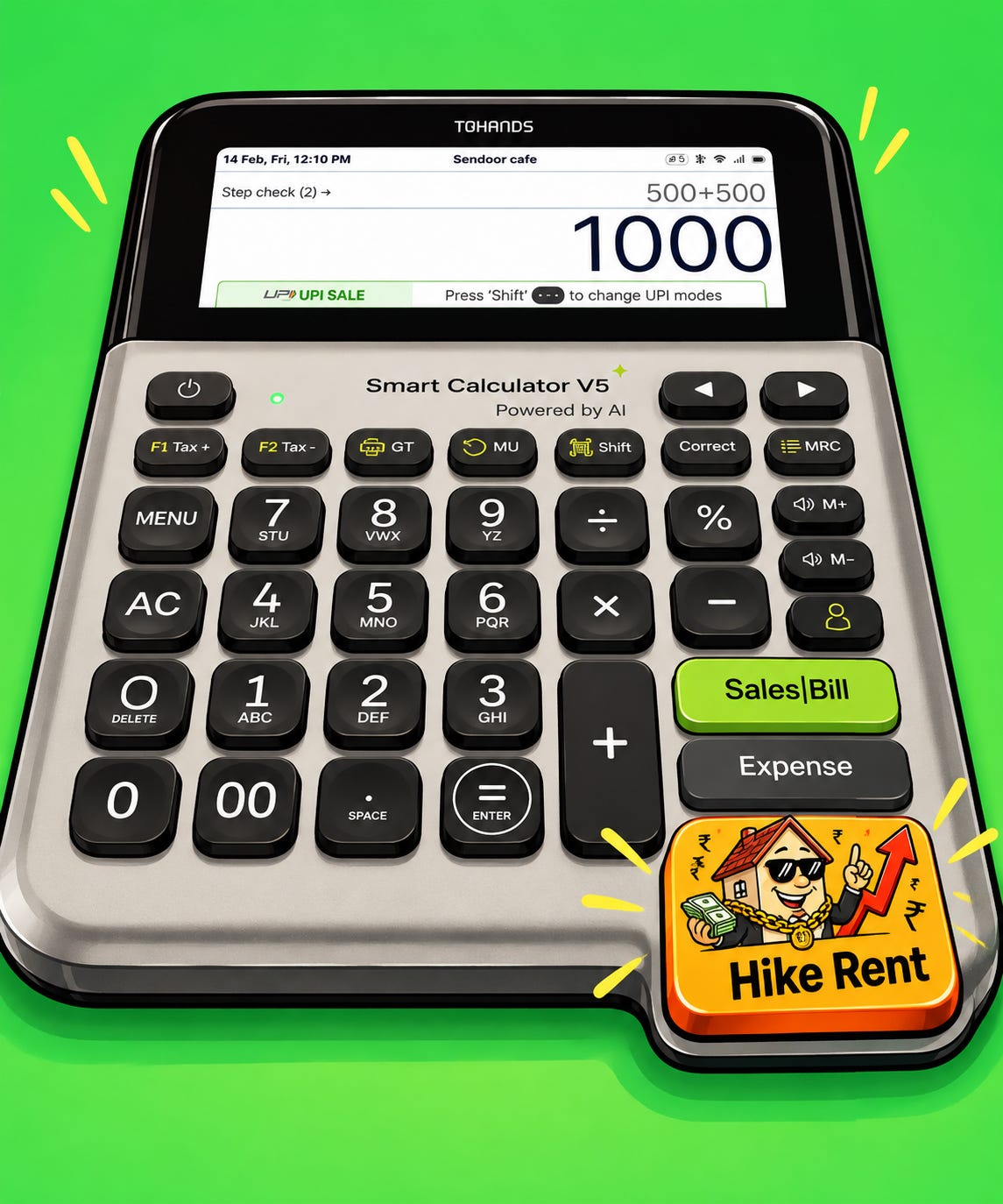
Then there are pop-ups. If you’re running a stall at a fest, it’s the easiest way to track sales. Instead of carrying a bulky billing system, you just take the calculator with you. Most pop-ups have fewer than 50 items, so you go, sell for the day, come back, and you have a record of every item you sold. That’s a full-circle moment for me, because that’s exactly how I started. There’s a business called Radhika Handloom that runs almost entirely through pop-ups, and at peak times she’s done over 2000 transactions a day on the device.
That’s a whole other segment for us - micro-entrepreneurs. They might not have a proper shop, but they’ve built great customer touchpoints of their own. And they use the device exactly the way they need to, with whatever peripherals they want.
Awesome. You told me the first time we met that ‘nobody’s really thinking about merchants’, and that’s why Tohands needs to exist. When you sit with these business owners, what is it they’re scared of over the next five or ten years? Is it quick commerce, is it taxation, is it something else?
Right now, businesses are being forced to get formalised. They’re being pushed into doing things they’re not necessarily ready to do, and as a consequence their businesses are getting more complex without any of the upside.
Take UPI. It brought digital payments, but it also made life more complicated for the shopkeeper. Now they’re managing multiple apps on top of cash. And it didn’t grow their sales. It’s not like a shop was doing ₹2 lakh a month before and is now doing ₹2.5 lakh because of UPI. But they have to adopt it, because they’ll lose customers if they don’t. That’s the reality. But having UPI doesn’t mean you sell more. It just means your business has become more complex.
GST is similar. It’s been around since 2017, and there are now around 16 million GST-registered businesses. In theory, it made things easier, because the tax you pay on your purchases can be offset against the tax on your sales. That’s called input tax credit. But for small shopkeepers, it rarely works that way. Many of them are on the composition scheme, where you can’t claim input credit at all. And even the ones who can often lose it, because they don’t get proper GST bills from their vendors, and there’s no accountant sitting at the shop to chase it. I have an accountant, I pay them a lot of money, and I still struggle with this.
Then, on top of that, there’s a new generation that isn’t really shopping the old way. I don’t think shops are losing customers because of it. But they’re losing order value. The basket size is shrinking. In the past, a shopkeeper used to supply everything a family needed for the whole month. Now you walk past a shop and pick up a packet of chips or a cold drink. Nobody walks in with a long list anymore.
And this isn’t because general trade is disappearing. If you look at the overall market, e-commerce is around 7%, quick commerce is around 2%, and modern trade is roughly 15%. About 75% is still general trade. That’s huge. So the role of the shop is changing, and that opens up new opportunities too. But this segment has to see that opportunity, and right now they’re struggling to.
Underneath all of this, they’re scared of getting organised in the first place. They’re worried about the tax authorities and things like that. They’re worried the next generation won’t want to take over the shop. And they just don’t feel like they’re being treated fairly. Talk to any shop owner, and that’s the feeling you’ll get.
The key realisation for me was that every small shopkeeper is paying a “poverty tax”. The poorer you are, the more you pay. You pay a higher interest rate on your loans. You pay your distributors higher margins. So the smaller the shop you run, the more it costs you to run it, and the harder it is to survive.
Across all these shops and millions of transactions per month, you’ve got a pretty unique telescope into offline Indian businesses. What are those transactions telling you that you didn’t know before?
The first thing is that you just cannot judge a shop by how it looks from the outside. It would be a very big mistake. I can show you some of the shadiest-looking shops that make more revenue than my own company! These shopkeepers have optimised the hell out of their businesses. They don’t care about how the shop looks. They care about moving money, and they’re very good at it. So one thing I’ve learned is to never look at a shop and decide, this one is likely to buy and this one isn’t. Look at the data as much as possible.
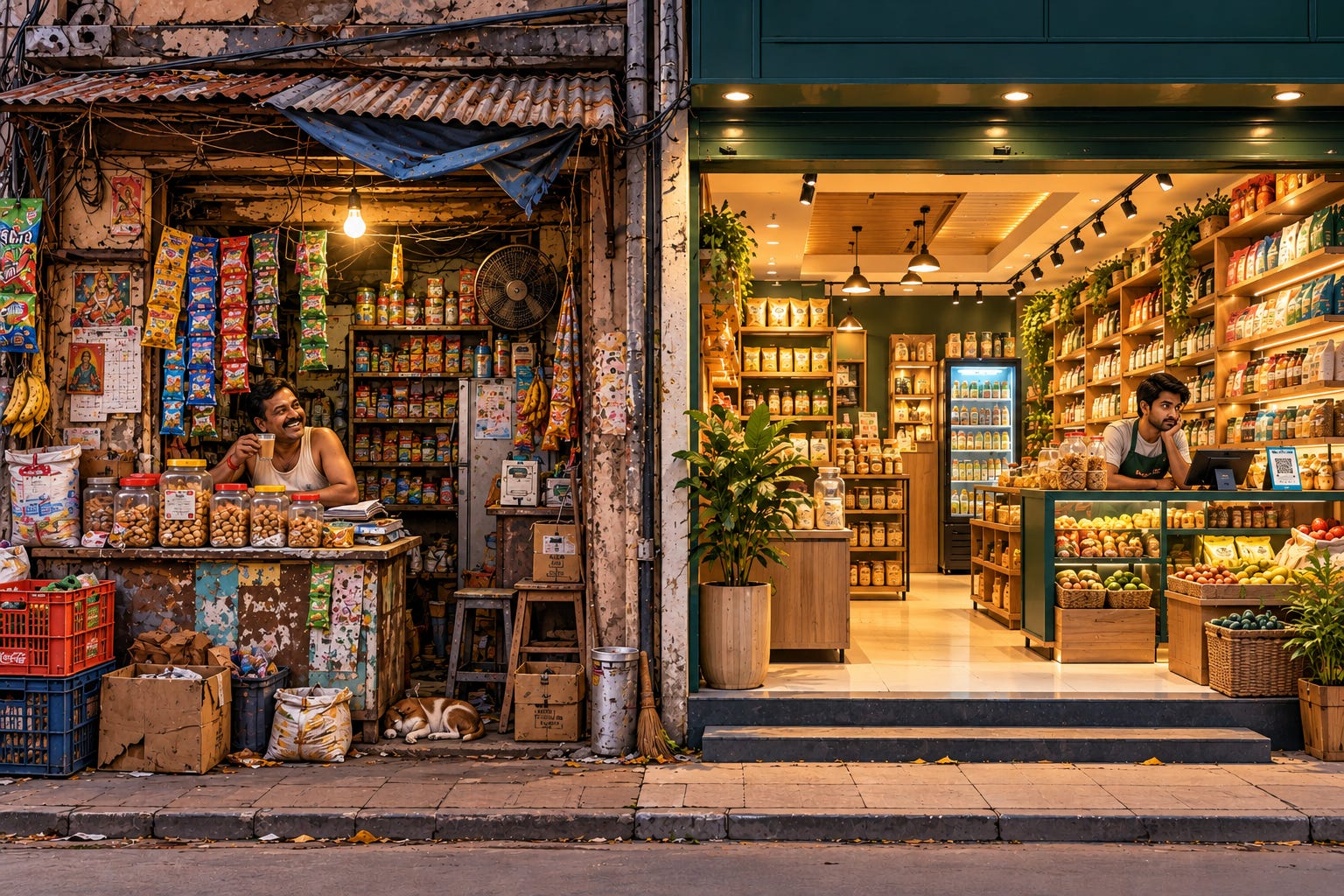
Another thing we found was that local shops tend to do better on the weekend than on weekdays. And this is inversely correlated to the performance of quick commerce apps, where activity dips on Saturday and Sunday. Why? Because on the weekends people have more time. And the more free time people have, the more they go out, and when they go out, they buy from shops nearby. So weekends are actually a strong time for local shops.
One more pleasant surprise was around how new entrepreneurs are using our product. What we’re seeing happening is that a younger generation is coming into business, and they’re building new kinds of companies that you didn’t really see in India a few years ago. For example, my neighbour works at a big EV company, but he’s also just opened a matcha shop because that’s his passion, and the whole shop is managed from our calculator - the entire operation runs on Tohands. People like him are as tech-forward as a person can be, but they still love the calculator.
That’s because when you’re starting a new business, you don’t know what the return is going to be. So instead of buying a ₹40,000 billing system, it makes much more sense to spend ₹4,000 and see if the business works first. A tool isn’t going to change your business. It’s going to help you track it, and you want to do that as cheaply as possible. Later, once the business is running, you can get a bigger, better tool. That’s fine.
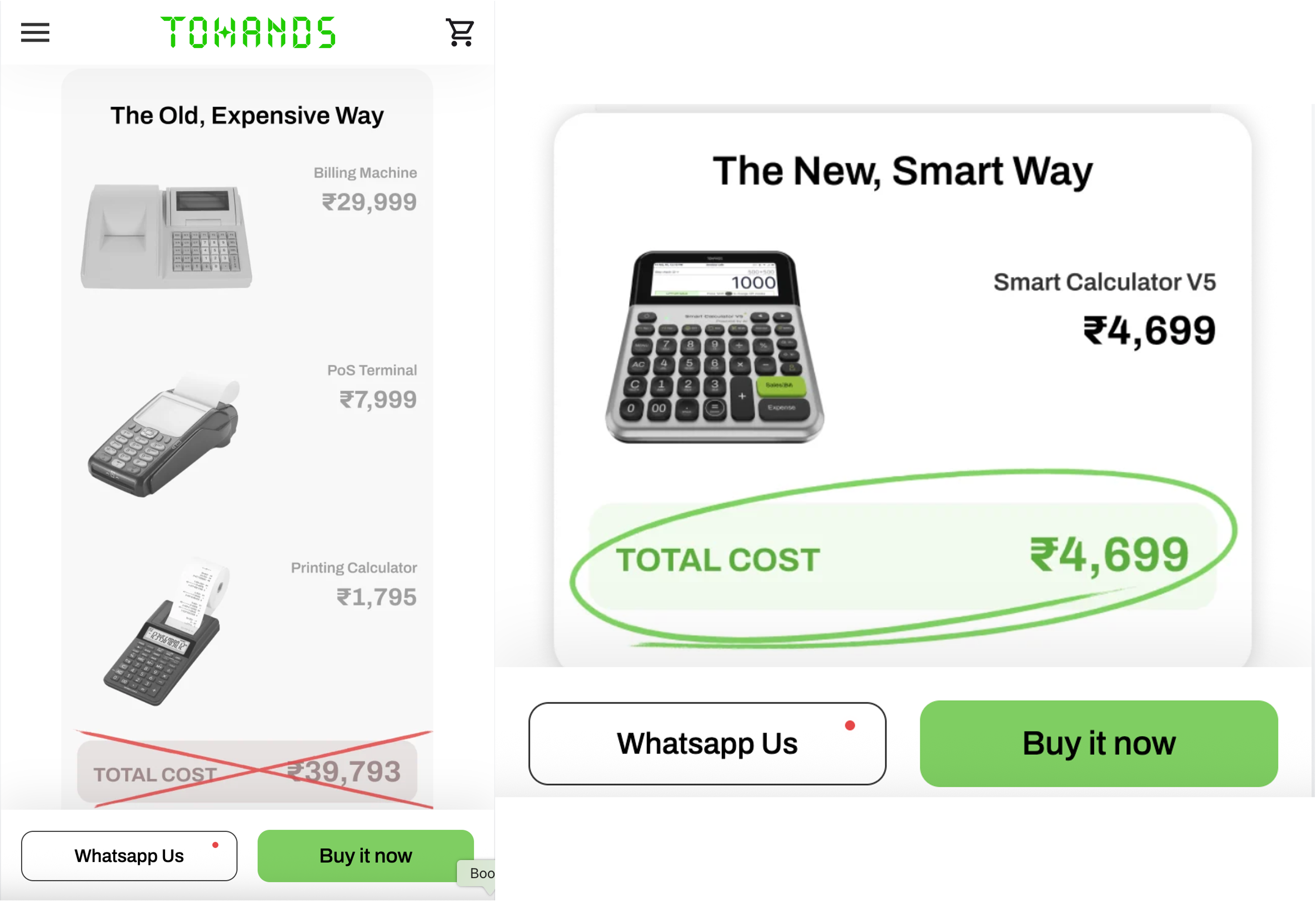
So for this whole new wave of experimental businesses, a lot of it in the experience economy, affordability becomes our entry point. India will never have enough jobs for its youth, so it’s great to see people turn to entrepreneurship, and it’s great that we can play some small role here. New businesses are actually one of our biggest customer segments now. If someone’s opening a new shop, we’re the best tool on the market.
And honestly, we haven’t even scratched the surface of how deep and diverse this market is. So we kind of learn new things about Indian businesses and entrepreneurs everyday.
What typically leads to the most dissatisfied reactions? When do users get angry?
Sometimes it starts before someone’s even a user. Price is a funny one for us. Some people tell us our price is too low, others say it’s too high, and both will be happening in the same pin code. We’re left wondering, what is going on? Recently, someone from our team went to a church function in a very rural part of Bangalore and took the calculator with him. He showed it to a shopkeeper there, and the shopkeeper got angry with him: 4,000 rupaye mein calculator kaun bechta hai? But then there are enough people who will tell us that we are undercharging because of all the things our calculator allows them to do, so it varies.
With actual customers, battery has been a pain for us. Getting the battery life right has been hard, which is why getting the charger set up at the counter matters so much.
Training the staff is another pain. A lot of the time, it’s not the owner using the device, it’s the employee at the counter, and getting them to adopt it is something we’re still learning. That’s going to be a very key thing for us in unlocking scale over the long term.
But what really makes shopkeepers angry is surprises. You can’t just change things on them. There was one time we removed the WhatsApp icon from the app, and I started getting emails saying “I paid you all this money, I built my workflows around your device, and now you’ve changed it!”. We were like, sorry, sir. We put it back within two days.
That’s why we have one fundamental rule for all our devices - it should take two button clicks to record a transaction. If anyone wants to add a third click, that has to go through me. Anything that adds more complexity than that messes with the business. Add an extra click, make something harder, or change a workflow people have already built, and they get pissed. It doesn’t matter if you’re making it better.
We learned that the hard way around December and January, when we put out a major update that changed the whole flow. We also moved from wired printers to wireless ones. It was painful from a support point of view. Eventually people adopted it and started liking the new features. But it taught us that changing user behaviour is very hard. And once you’ve changed it, changing it again is even harder.
The first time we met, you said that when a merchant engages in 100 transactions using your product - when they cross that 100 transaction milestone - something shifts in psychology, and that’s when the habit starts to build. Can you say more about that mark, why’s it so important?
People always talk about the aha moment. But one thing we’ve realised is that for us, it’s not about the big moments. The moment that matters is when a shopkeeper starts trusting the device, and that’s not the same as the aha moment. A shopkeeper can have the aha moment, think, wow, this is cool, and then just put the device to one side. The aha doesn’t get you the trust.
The trust comes when they see the output. Like, “earlier, I couldn’t see all my cash sales. Now I can, because I used this calculator for a day”. “Earlier, I couldn’t keep track of my dues. Now I can”. “People used to bargain at my shop. Now the device shows a QR code for the exact amount, so I’m saving ₹7 or ₹8 on every transaction”. “And because I’m giving customers a proper bill, they’re ordering more and adding more items”. That’s when it clicks - this is actually helping their business.
It takes around 100 transactions to see the full potential of the device. Within that, they really understand the system. Because you can’t make 100 transactions by mistake. You can make 10 by mistake. To get to 100, you need intent. So once someone has put in that intent and seen the outcome, they trust the device. They make it the main device at the shop like, yes, now I can run my business on this. Of the merchants who get to this mark, close to 90% are still using it six months later. So we realised 100 transactions is that sweet spot.
And once that trust is there, they are more likely to then buy anything we sell next. That’s how my customers are. Ya toh trust nahi karenge, agar karenge, toh poora karenge.
You’ve mentioned that Nandi Traders is one of your power users, right? If someone from the West, or even someone from India who isn't aware of Tohands, walked in to Nandi Traders to observe how your device plus all the peripherals are being used to run this business, what would surprise them?
I think you’d be surprised by how you can’t tell the difference. It’s not obvious at all that he’s using something different. You go to the shop like a normal customer, buy something, make a payment, and walk out. There’s no pause, nothing different about how he bills you. You’d come out thinking, yeah, he’s running a normal shop, he did something on the calculator, that’s it.
But in that time, he’s built up all this data on his business. That’s the important part. The idea is not to change anything at the shop that the customer can see, while changing everything for the shop owner.
Obviously, the device looks a lot nicer on the counter, at least at first. What’s surprised me is how dirty it gets, every single day. I’ll show you a photo from today. They bought this device in May last year, and every single button has worn off. There’s no plus button anymore. The Enter button is gone. The GT button is gone. All the numbers are gone. The roughness of usage is just so high.
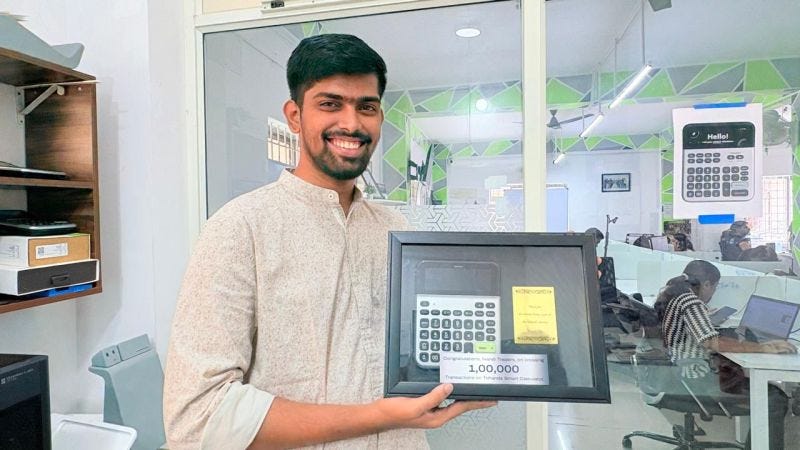
And that makes me both proud and worried. Proud, because getting to that point is a big deal. Worried, because of the warranty cost.
How long does a device actually last?
We give a three-year warranty. But we don’t really think about the warranty in terms of the device. We think about it in terms of how long we expect the customer to use it. The device itself is very sturdy. Without the battery, it can run for five-plus years. The battery we’ve tested for 1,000 charge cycles, which works out to around three and a half years.
Got it. You mentioned ‘make a payment’ there. One thing that’s still prevalent in India despite all the developments around UPI and digital payments is the use of cash. Does the use of cash to make payments affect the adoption or usefulness or accuracy of the calculator?
If anything, cash is a big part of why the calculator is useful. A UPI payment at least leaves a trail. A cash sale leaves nothing behind unless someone writes it down. For a lot of our shopkeepers, the calculator is the first proper record of their cash sales they’ve ever had.
And cash isn’t going anywhere, because for a shopkeeper, cash is an instant settlement tool. To understand why, you have to understand how the business actually runs. A small shopkeeper deals with a lot of vendors, and they have to pay those vendors the same day. They can’t wait until tomorrow. And most vendors won’t take UPI. They want cash, or a cheque. But when a customer pays the shopkeeper on UPI, that money only reaches their account the next day. So they need cash in hand to pay the vendor in the meantime. Paying in cash also gives them more room to negotiate with vendors and get credit lines.
I see the same thing in my own business. When we sell a calculator online, it takes about 25 days for the money to reach our account - around a week for delivery, and then a settlement cycle on top of that. If someone pays me in cash, I have the money in my hand immediately. So I’d happily give them a discount for paying in cash, because I have vendors to pay too. Shopkeepers make that trade-off every day. They’ll choose cash flow over margin. If you told a shopkeeper that from tomorrow, every customer would pay them in cash but only at a better price, they’d happily take it.
So the majority of businesses still run that way. Around 60% of transactions in India are in cash, and it’s much higher in Tier 2 and Tier 3 towns. On Tohands devices, it’s even higher. That’s partly because most of our customers are in smaller towns. Around 80% of them are from what we call “Zone D”. And even in Bangalore, which is a very digital city, there are shops in Koramangala, right next to the Accel office, that run almost entirely on cash.

There’s much more cash in this economy than people imagine, and the reason is because cash gives shopkeepers more control over their cash flow.
I have to ask here, does cash also make it easy to keep some sales off the books for these users? Does that affect how shopkeepers use the calculator, or how accurate the numbers are?
The way we think of ourselves in this context is like a Google Sheet. You can do calculations on a Google Sheet, and you can have a sheet for anything. We’re a sheet for the shopkeeper. If a kid comes and types a very long number into it, that doesn’t mean your turnover is that much.

So what’s on the device is a record for the shopkeeper, not an official account of the business. We give them the tools to do their calculations and keep track of things. We don’t do invoicing right now. We only do simple cash bills.
But most of our customers are actually GST-registered, and what we’ve seen is that they want to do proper GST invoicing. The current tools just aren’t friendly enough for them to adopt. So for me, the question isn’t whether they’re doing business on the books or off them. The question is, why aren’t they able to do everything on the books?
Because right now, they’re losing money by not doing it. When a shopkeeper buys stock from a vendor, they pay GST on it, anywhere from 5 to 18% depending on the item. If they have proper GST bills from their vendors and file their returns properly, they can claim that tax back as input credit. But most of them don’t have those bills, and there’s no accountant sitting at the shop to chase them. So they never claim it. That’s money they’ve already paid, which they’re entitled to get back, and they just lose it.
I guess maybe the overarching question to all of this is, could this product or idea have worked anywhere else? Like, is there something about the Indian context that anchors the Tohands story?
I think yes. A big part of it is UPI. The dynamic QR, the payment confirmations, a lot of what makes the device useful sits on top of UPI. And more importantly, the economics only work because of it. It’s the digital public infrastructure that stitches everything together, and without payments running through the device, there’s no real recurring revenue.
For comparison, China won’t build something like this, because they’re already ahead - their shops went digital a long time ago. The West has no incentive, because shops there already have proper POS and billing systems. And in Africa, there’s nothing quite like UPI yet, and it’s much more cash-oriented, so you don’t get that recurring revenue.
So India is really the only country where this makes financial sense to do at scale. You have hundreds of millions of digital payments happening at shops every day, and almost none of those shops have a proper system at the counter.
Second part of the question. Could this product be successful outside of India?
We’re already seeing signs of it. We have customers in Bangladesh, and even one in Pakistan. I honestly don’t know how they got the device. We have a bunch of customers in Dubai, and I think a few in the Philippines as well. We actually even found that someone from Kerala moved to Dubai and took the device with them.
So I don’t think the question is whether there’s scope outside India. The question is prioritisation. Do we want to take on those complexities right now? For at least the next year or two, we’ll be very focused on India before we start putting our heads into international markets.
India is such a big market. Instead of going abroad and trying to figure out whether we can succeed there, we’re very sure we’ll succeed here just by deploying more devices. So the financial math tells me to focus on India and get to around 3 million devices over the next three to four years. I think Soundboxes in India will grow to around 40 million devices over that time, and I want to be around 8-9% of that. That’s really how I see it - replacing the Soundbox with a smart calculator. At around 3 million devices, we’d be at roughly $125 million in ARR.
That doesn’t mean we’re saying no to international. We’re exploring ways to sell abroad without putting feet on the ground ourselves, by shipping through partners, the way Bambu Lab and some other companies do it. But our focus is India, and Indian merchants, because they’re the most marginalised and they’re the ones we understand best right now.
X. Future
Looking ahead now, can you give us a snapshot of where you guys are currently at, and how you’re positioning yourself for the future?
We are approaching 20K deployments and we’re now facilitating over 2.2 million transactions a month. And we have two major payment partnerships we’re going to go live with in the next few weeks that you will probably see in the news. I’m very excited for that.
But the thing I’m most bullish about right now is voice AI, because it’s something we’ve finally been able to crack. For the first time, a merchant can just speak, stay in their flow, and get a bill.
This is relevant because billing has always been a source of ‘input’ friction. For a merchant to make a bill, they have to change their behaviour completely. They have to add their inventory, search for the item, select it, and only then create the bill. It takes a lot of time. With a voice interface, all of that goes away. You just speak to the calculator, it adds the items, creates the bill and prints it for the customer.
And we can do it pretty fast now. Under the hood, we use a combination of Sarvam, Gemini, Cerebras and Gemma, and with that we’ve been able to bring the cost down to about half a paisa per bill, while still getting the merchant the outcome they need. We’ve started rolling it out to some customers, the feedback has been good, and now we’re scaling it up. So we’re betting a lot on voice.
We’ve also made progress on the camera side. As a company, we’re really betting on voice and vision together, because those are the two things that will let us actually help a merchant run their business.
But the main idea hasn’t changed - a computer for the counter, at the price of a calculator. I believe every single shopkeeper needs a computer system, but they can’t afford one. So if we can make something that’s affordable, that’s just as smart as a computer, we’ve got a chance of winning this game.
So obviously one piece of your future is this ‘computer for the counter’ vision. But the other large pieces of your future roadmap are fintech and AI, like you mentioned. Can you talk about those?
Let’s start with fintech, and specifically payments, because that’s where the biggest gap is.
UPI solved how money moves in India. What it didn’t solve is the record of what that money was for - what was bought, by whom, and how it was paid. In other words - itemised data. I call this the ‘order’ layer, and in general trade, it’s almost completely missing.
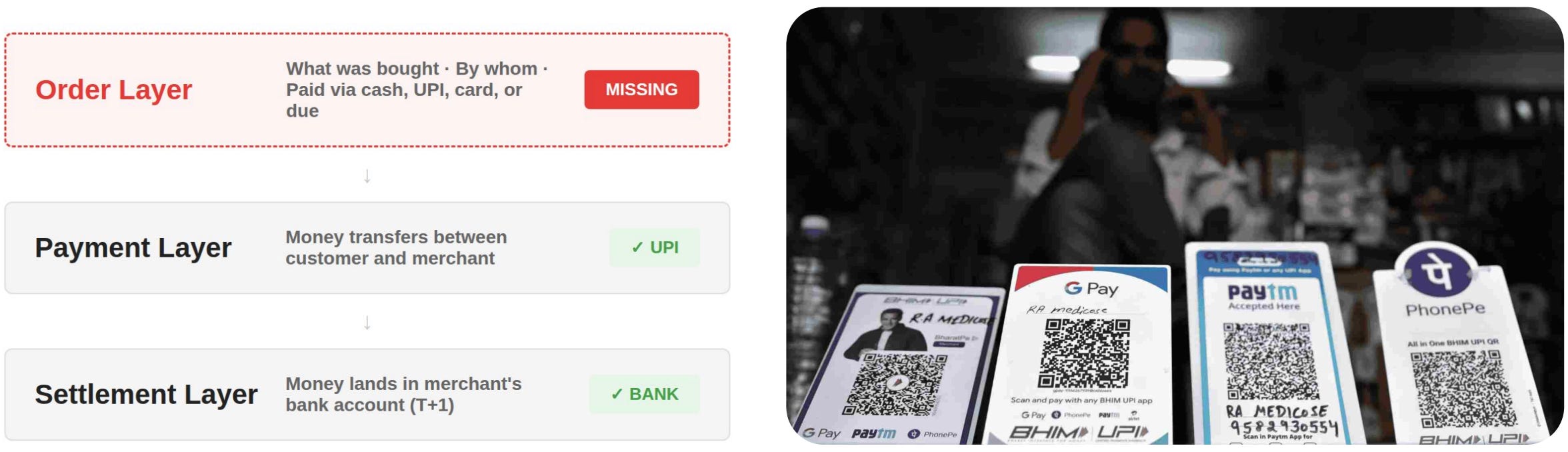
If you shop at a modern trade store, you get a proper invoice. If you shop online, you get an order history. But walk into a general trade store, and you’ll almost never get a bill. That’s a problem for both sides. The customer doesn’t know exactly what they’ve paid for. And the shopkeeper doesn’t know what they’ve sold, or what their employee sold while they were away. Without bills, they can’t file GST properly either.
Here’s what that looks like in practice. When a customer pays on a static QR, all the shopkeeper sees is - ‘₹200 received from Ravi’. With Tohands, they see that Ravi, a regular customer, bought two kilos of basmati rice. The shop makes a 25% margin on that rice, Ravi got a 5% discount, so the shop made 20% on the sale. He paid on UPI, and the money will land in the account tomorrow. Same payment, but now you know exactly what happened.
People say India has gone digital with payments. But almost all of it runs on static QR codes, which are just stickers on the counter. Roughly $3.5 trillion flows through UPI payments annually, of which a big chunk goes through static QR codes, with no record of what any of it was for. That’s also why fraud is such a problem, and why KYC norms are so tight.
The way I see it, the first 10 years of digital payments in India were about access - getting everyone onto UPI. The next 10 years will be about context - knowing what every payment was actually for.
So my bet is that payments in India will move from stickers to screens - from static QR codes to devices at the counter. You might pay by scanning a QR that appears on the device's screen with the exact amount, or by tapping your phone, the way you would with Apple Pay. Either way, there has to be a device at the counter. Today, Indian shopkeepers don't have one. That's what we're building. The end goal is that in 10 years, any shop you walk into - general trade, modern trade, whatever - will have a Tohands device at the counter, helping them run the whole business. And you won't see a static QR sticker anywhere in India, because everything will run through a device.
Can you add some colour for our readers on why that matters so much for credit?
Because today lending to these shopkeepers is based on a bureau check, and the bureau only looks at bank data - how much money came in, how much went out, what loans you took and how you repaid them. It can’t see the actual business. So these shopkeepers end up paying 30 to 35% interest. That’s not necessarily because they’re risky, but because they have no records and no additional data that could give comfort to a lender.
Now think about Ravi’s basmati rice. A lender who can see that sale beyond the payment layer can now examine the shop’s margins too, and the health of the business by extension. That’s a very big unlock, because it means the shopkeeper has a different view of the business they can present to a lender, meaning they can borrow at a much lower rate.
And once that's possible, you get a loop. The shopkeeper takes a loan to buy inventory, sells it, and the loan gets repaid straight out of the incoming payments. Then they do it again. And because they can now see which items sell, they can say, okay, this item is selling a lot, I'll keep it in stock. So there's much less wastage. And because they have access to capital, they can actually keep their shelves properly stocked. When a customer walks in and finds what they want every time, they keep coming back. That's how you build customer loyalty.
And where does AI come in?
AI is going to become the shopkeeper’s assistant, the way businesses used to have a munim to keep their accounts. I was reading something from Ribbit Capital that made a point I really liked - you have to build AI for the people who can’t build it for themselves. That’s exactly this segment. They’re never going to build AI tools on their own, so we have to build them for them.
Voice billing is the first step. Instead of teaching shopkeepers to click here and go there, we give them an assistant they can just talk to, in their own language. They can say, this customer owes me money, send him a reminder, and it’s done.
From there, it goes further. The assistant should be able to tell a shopkeeper what to stock, based on what’s actually selling, and suggest something to upsell to the customer standing at the counter.
All sounds super cool. Maybe taking a step back, how do you envision Tohands actually making money from all of this?
Our thinking is simple - help the shopkeeper make more money, and take a small share of it. We’re not trying to squeeze more out of them. If they get more orders, we make more money. So our incentives will always be aligned with theirs.
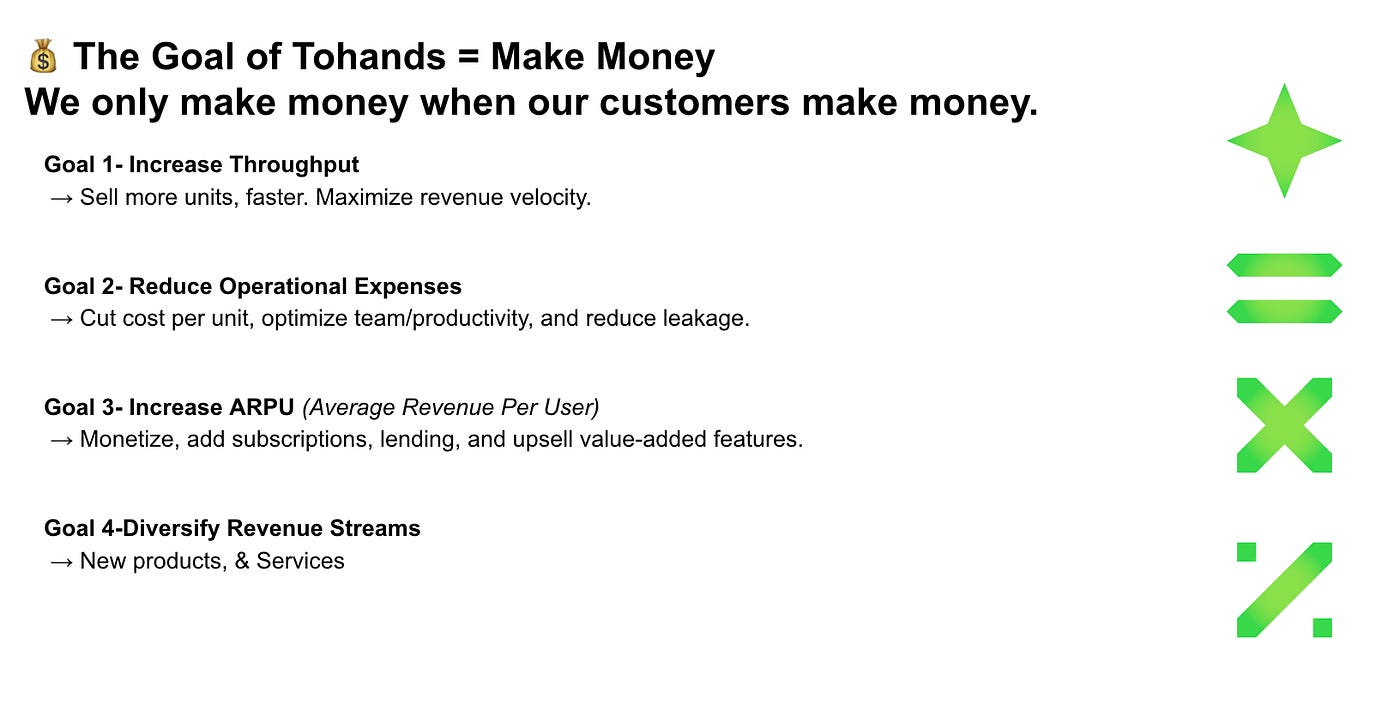
Commerce is one big way to do that. Take that idea of telling a shopkeeper what to stock. Eventually, we should be able to order it for them, arrange a loan to pay for it, and help them sell it through targeted offers to the right customers. When the payments come in, the loan gets repaid, and we earn a margin along the way. And we want to do this through partners, without running our own warehouses or delivery.
We can also bring new orders to the shop. I tried this before with ByBuy, so I know it isn’t easy. But this time the order lands on the device at the counter and prints out on the printer, instead of getting lost in a phone full of notifications. Someone at the shop packs it, and it goes out for delivery. None of that works without the device, because without it there’s no inventory and no record of anything. The device unlocks the data, and the data lets us bring payments, credit and everything else to the shop. Device, data, distribution. That's what we've been building towards from the start.
Then there’s advertising. Our next generation of device will have a screen right where the payment QR appears, and every customer looks at it when they pay. So a brand can show an offer there, say, buy one get one free on a particular product, and pay for that spot. If a counter brings in ₹300 a month from ads, the shopkeeper keeps ₹250 and we take ₹50. We’re fine with that.
India has more than 30 million retail merchants, and its retail market is expected to grow from roughly $1 trillion today to about $1.7 trillion by 2030. In the US, Square built a roughly $55 billion company doing something similar. I think there’s room to build a $10 billion company in this segment in India over the next decade. That’s what we’re going after. It’s really hard. But if we crack it, the opportunity is there.
So if someone were to walk into Nandi Traders in five years, what would they see, in terms of the Tohands suite helping to orchestrate their operations?
In five years, I’d like them to have two or three more shops, with the owner able to sit at home and relax. The systems will already be in place, his staff will be incentivised to follow them, and every shop will run the way it should. We’ll handle the complexity of the business for him, and he’ll pay us for it.
For his customers, very little will change, and that’s the point. They’ll pick up what they want and tap their phone on the device to pay. The screen might show an offer, and they might say, okay, give me that one too. The shop makes an extra sale, the brand pays for the promotion, and Nandi Traders gets a share of that too.
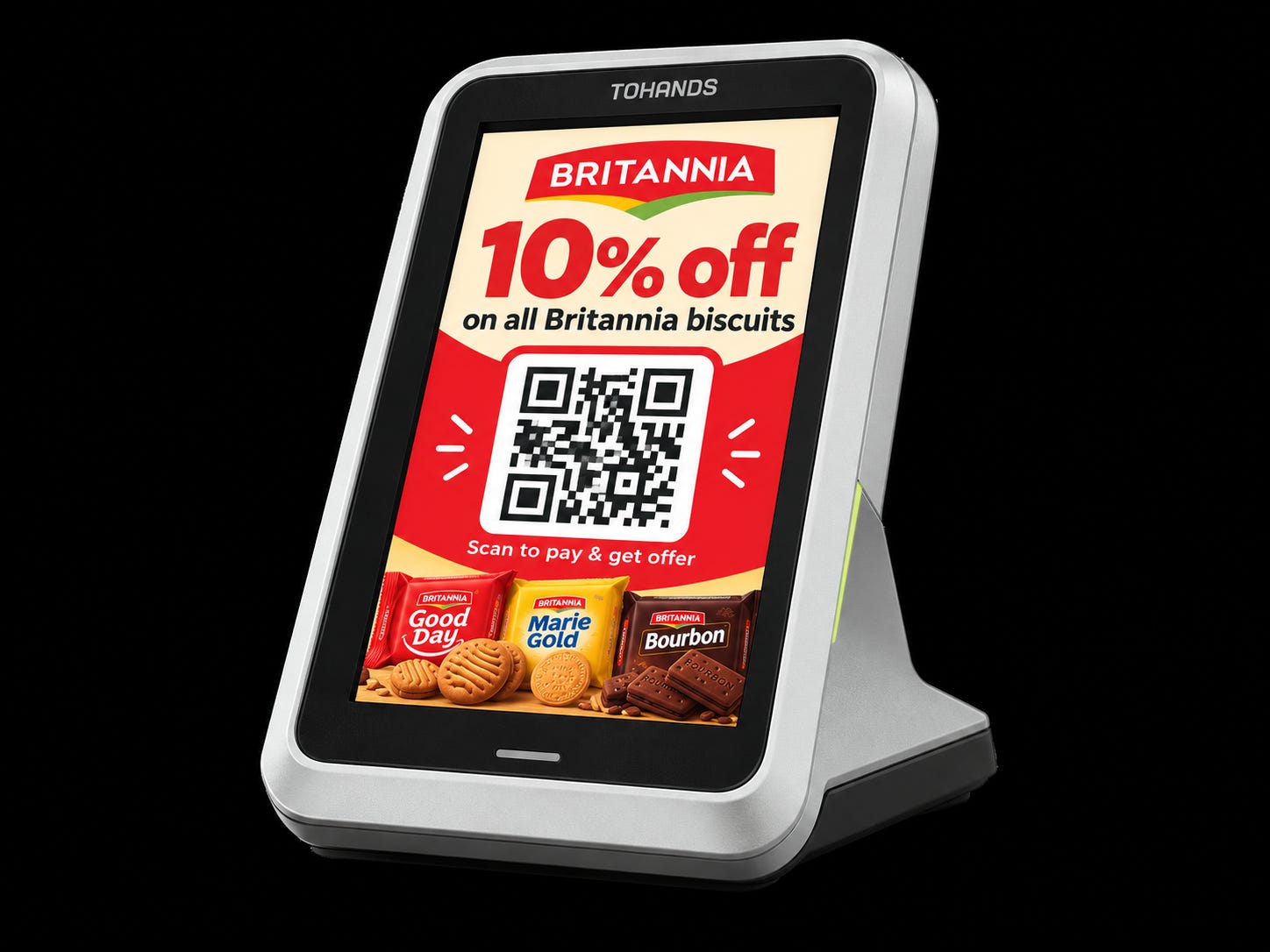
What matters most is that the device never slows anything down. The transaction comes first. Nobody should hear, wait, let me open the app, or wait, let me make the bill. Nobody buying a five-rupee item should be standing in a queue for half an hour.
And in the background, part of that payment might be going to repay the loan the shop took to stock its shelves. Today, a shop like that probably borrows at around 35%. We think we can bring that down to somewhere between 18 and 25%, because the loan will be based on the shop’s actual margins, not just money coming in and out of its bank account.
How exactly would you bring the interest rate down that much?
So the easiest way to think about it is that any interest rate is really made up of three things. There’s the cost of the money itself, the cost of getting the loan to the borrower and collecting it back, and the cost of risk. Let me take them one by one and I’ll explain how we'll be able to influence this in the right direction for merchants.
First, the money itself. In India, the cost of capital usually sits somewhere between 8 and 14%. Honestly, nobody can really solve that part. I can’t solve it either. Whenever we lend, we’ll also have to borrow at that rate.
Then there’s distribution. Most lenders don’t reach these shops directly. They go through a third party, what’s called a lending service provider, and they have to pay for collections on top of that. All of those operations and logistics add another 4 to 5% to the interest rate.
And then there’s risk, which is the big one. The riskier a lender thinks you are, the more they’ll charge you. If they see a shop as high risk, they’ll charge around 2% a month. If they think it’s even riskier, it goes up to 3% a month. That’s how a small shopkeeper ends up paying around 35% a year. That’s the poverty tax I was talking about.
Now, out of those three, we can bring two of them down almost to zero. Because we can see the shop’s actual margins, we know far more about the business than a bureau ever will, so that risk comes down significantly (and in the best case trends towards zero). And because we’re the ones lending directly, there’s no third party distributor sitting in between taking a cut. That leaves just the cost of the money. And as we grow, we’ll have more leverage with the banks, so hopefully we can borrow closer to 8%. So even after keeping 8 to 10% for ourselves, we can still lend at around 18%.
To be very frank, though, lending has been one of the easiest ways for companies in this space to die. We’ve seen it happen. So we don’t want to get into it until we’re mature enough to do it properly. But we know how we’re going to do it. And we know shopkeepers will care, because they’ll want the best rates they can get. If you’re paying 18% instead of 35%, you won’t want to lose that. If you mess up your Tohands loan, you know you’ll never get that rate again. So that’s the habit I want to build: I’ll repay this loan, because I want to keep getting loans this cheap.
We are not naive enough to think that things can’t or won’t go wrong. Sometimes shops run into trouble, sometimes they make losses, sometimes unforeseen things happen. But in all those cases, our mission will be to help the shopkeeper out in whatever way we can. As we’ve always done and will continue to do, we’ll take a merchant-first approach to our company, and be an ally to India’s shopkeepers.
Right. Just closing a loop on this - it’s been more than five years since you started doing this and five iterations of your product so far. Has your opinion changed on this segment in ways you didn’t anticipate? Do you think about building for this cohort any differently than you did before?
A few things have really surprised me. I was always really scared that raising our price would kill demand. Some part of me still believes we could crack this market much faster if we priced closer to a normal calculator. But I’ve been constantly surprised by how much shopkeepers are willing to pay us. We’ve gone from ₹3,000 to ₹4,000 to ₹5,000, and today our average order value is around ₹9,000, once you include peripherals. We’ve kept increasing the price, and people have kept paying. From my point of view, that’s a weird thing.
I think part of the reason is that nobody else is really building for this segment. There have been invoicing companies, payments companies, reconciliation companies, hardware companies. But name one company that’s actually on the ground, innovating for these businesses. Most of the devices that reach these shops are made in China. Companies buy them off the shelf, dump them in the market, and expect shopkeepers to adopt them. We designed and built ours in-house, specifically for this segment, from the ground up, and merchants can tell. We’ve also been lucky with the merchants we have. They’ve been really generous with feedback, and happy to help us improve it.

But the biggest change in how I think is this - I used to think in ‘features’. I could make you a very long list of features, and keep building them forever. But this segment isn’t really about features. It’s about the problem they’re facing, and right now, the shopkeeper’s problem is, what do the next 10 years look like for my shop? Will there even be shopkeepers? How do I make sure my business survives?
They know they need visibility. They don’t know how to add revenue streams. They know they need to upgrade their operations. They don’t know where their money is going, how much customers still owe them, or what they’re spending. But they can’t just buy a laptop or hire an accountant. And they’re up against much bigger players with so many advantages on them. How is that shop supposed to compete?
So the question for us has shifted. It’s no longer, what can we build? It’s, how do we actually help this business succeed, and keep succeeding? Because it won’t matter what we or anyone else builds if these shops aren’t around in 10 years. That goes back to the idea behind our name - it’s our job to be a helping hand for the shop owners.
XI. Closing
You said earlier that your two idols growing up were Dr. Kalam and Steve Jobs. The Kalam part is clear, but why Jobs?
A few reasons. The first is that I like building things that are physical - things I can see, touch and feel, and really be proud of. That was Steve Jobs to me. The calculator might be a very small thing for other people, but for me it’s a very big thing. Seeing one of our calculators at a shop gives me more happiness than any material outcome could ever give me.
Jobs’ story was also interesting to me because he didn’t come from a conventional background. He didn’t come out of an Ivy League, he didn’t have the conventional pedigree of some of his peers. But what I really liked was his willingness to make counterintuitive bets. It’s the same in our segment. If I had asked a customer what they wanted in 2018, nobody would have said they wanted a smart calculator. They would have said they wanted a bigger billing machine or something else. Making those counterintuitive bets, and then building great products on top of them, is something I really enjoy.
Where I also want to emulate Apple, is in how the craft and quality of a product reflect the decisions you’ve made as a company. When you look at your product, with all its strengths, flaws and compromises, it tells a story. The good things are there because you cared about them. The bad things are there because you didn’t care enough, or because you made a choice thinking you’d iterate on it later.
If you look at the curved button on our calculator, that idea came from one of Apple’s keyboards, which had a curved button. They cared enough to curve that one button. We looked at that and thought, if they’re thinking about something this small, then we’re going to care about something this small too. It made our lives hell because of the moulding process. We don’t have Apple-level resources, but we wanted to make Apple-level decisions anyway. Eventually we figured it out, and now we’re very proud of those details. It also helps when you love what you’re doing and can see that reflected in the product.
And finally I think it comes down to impact. I remember seeing the reactions of people when Steve Jobs passed away. There was this outpouring of emotion and sadness. People were talking about how he had changed their lives. It was so striking that people could care so much about a founder and the company he’d built. You don’t see that for normal company CEOs, but that reaction reflected Jobs’ impact on the world.
All this being said, I know I’m a very different kind of person from what I’ve read about Jobs. My background and value system is different. That’s where the Dr. Kalam side comes in. Together, it’s a great combination to emulate.
What are you most proud of when you look at the Tohands journey so far?
I think the thing I’m most proud of is the team. I don’t think either I or we would’ve gotten here without the team we have. It is a scrappy group. Lots of people in their first jobs, not what you would describe as “proven talent”, but that’s not what we look for as a priority. Our focus is finding people who are obsessed with our users and solving their problems.
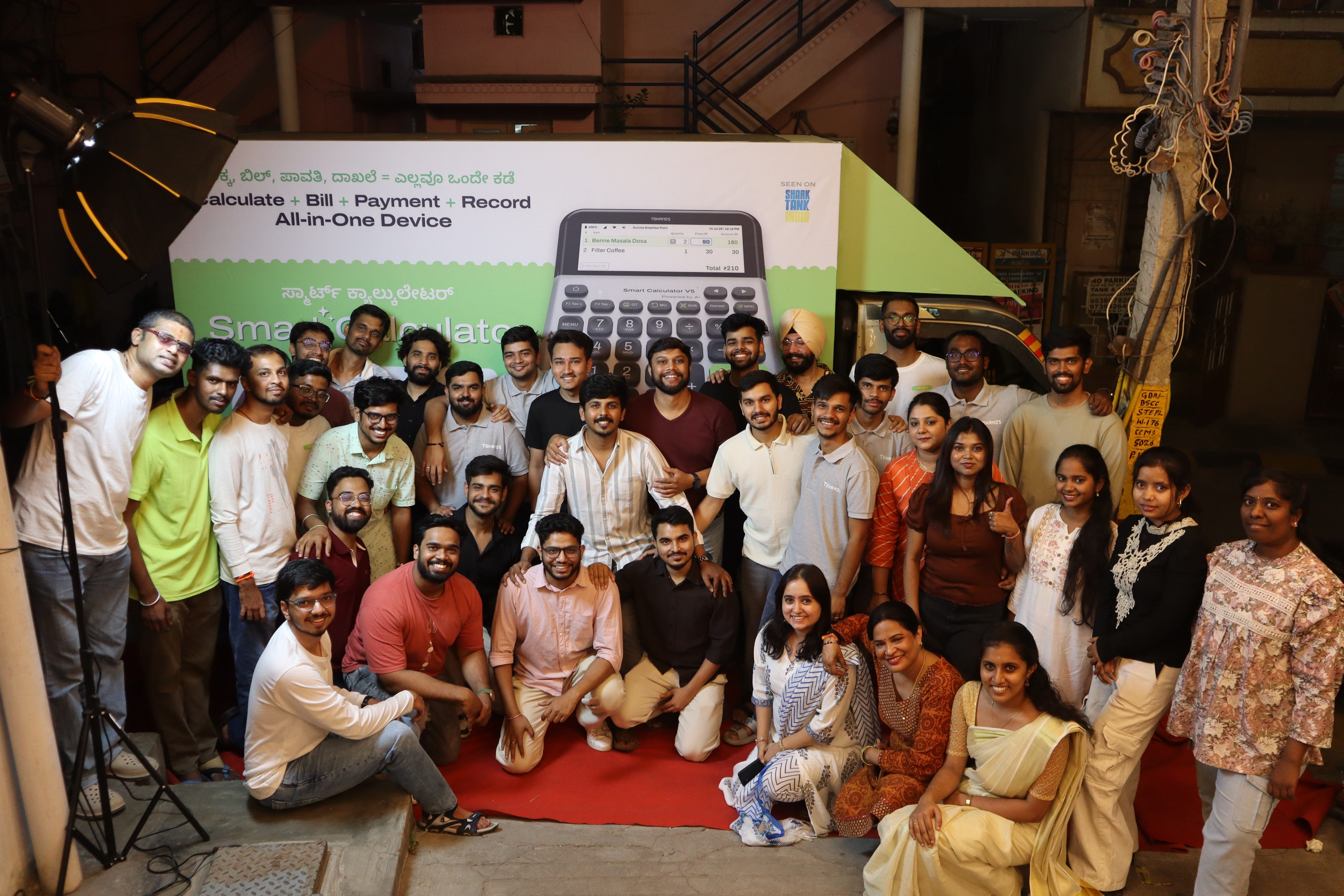
The core line of our culture is - “ordinary people building extraordinary things together”. You take ordinary people, put them in a group, and the group produces something extraordinary. We obviously do look for people who are truly extraordinary at what they do. But they have to care about the customer. If you’re at the very top of your field but you don’t care about the customer, we will never hire you, no matter what. If you’re extraordinary and you care about the customer, we’ll hire you in a snap.
One random fact is that 60% of our team comes from some kind of a shopkeeper background. We literally ask candidates in every interview - does anyone in your family run a shop? Your father, an uncle, some distant relative, anyone? That’s the part we care about. And I think that’s exactly what some of the more high profile ‘dukaan tech’ players missed. They brought in a lot of really smart, polished, accomplished people who said, “we’ll solve this segment’s problems”. But this segment is a little different. You can’t try and solve their problems from a distance. It works much better to find people from within the same segment and give them the resources to solve their own problems. Ride their understanding of their own issues.
That actually happens all the time with us. Our backend engineer built a whole barcode system because his own family’s shop needed barcodes. Another guy on the team goes to a gym that needed a calculator with staff logins, so he built staff logins, because he wanted to sell it to his gym owner. Even our customers get pulled in. The Sheets feature on the calculator came from a jewellery shopkeeper who wanted to calculate wastage, carats and so on. We told him we couldn’t do it. So he went and made a mock-up himself, brought it to me, and said, please make this. So we did, and he was really, really excited.
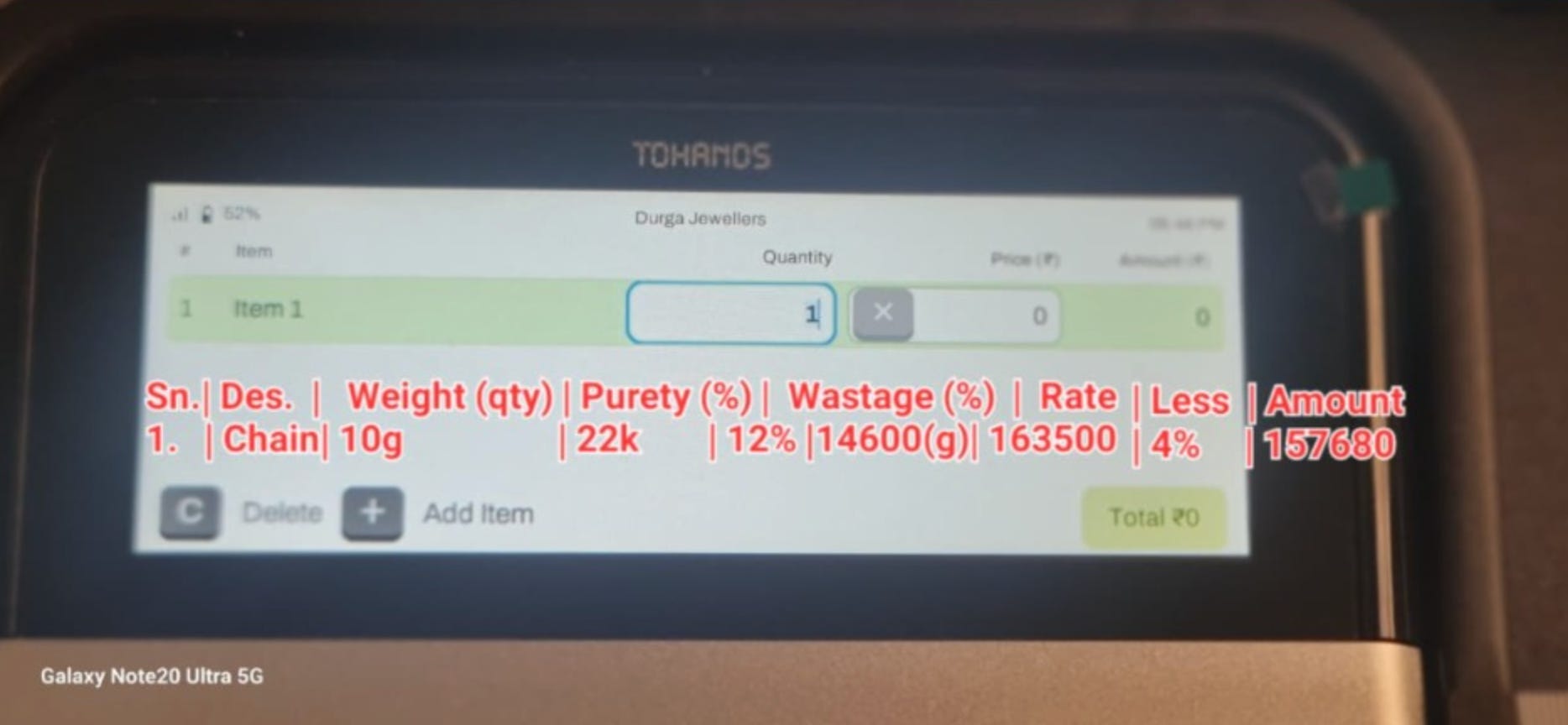
Bringing the customer inside the team, inside the discussions, inside everything, is the key for me.
The other thing I’m proud of today is the product. To be very frank, a lot of the time I have to keep my distance from the product function, because I am too emotionally attached. But when I see customer stories, or the shopkeepers around our office using the device, I do feel proud. And when I’m really down, or something’s not going right, which is 90% of the time, I just open our dashboard and look at the transaction count.
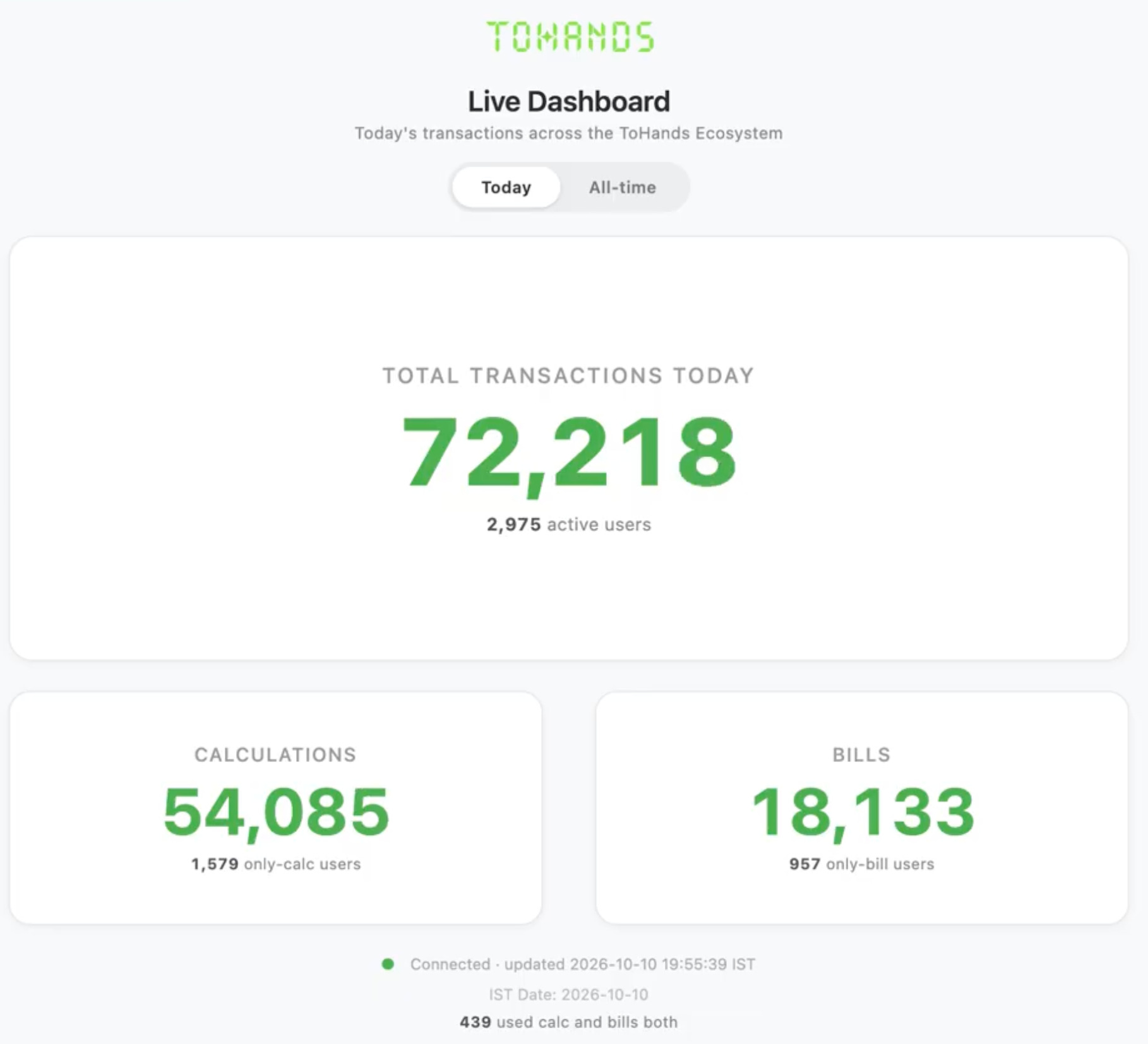
These are real people doing real transactions. I just look at that counter, and I feel like, at least what we’re making, people are using it. Those numbers put things in perspective, because running a hardware company is not the easiest thing you can do. I actually have this screenshot of what I call our ‘life choices’.
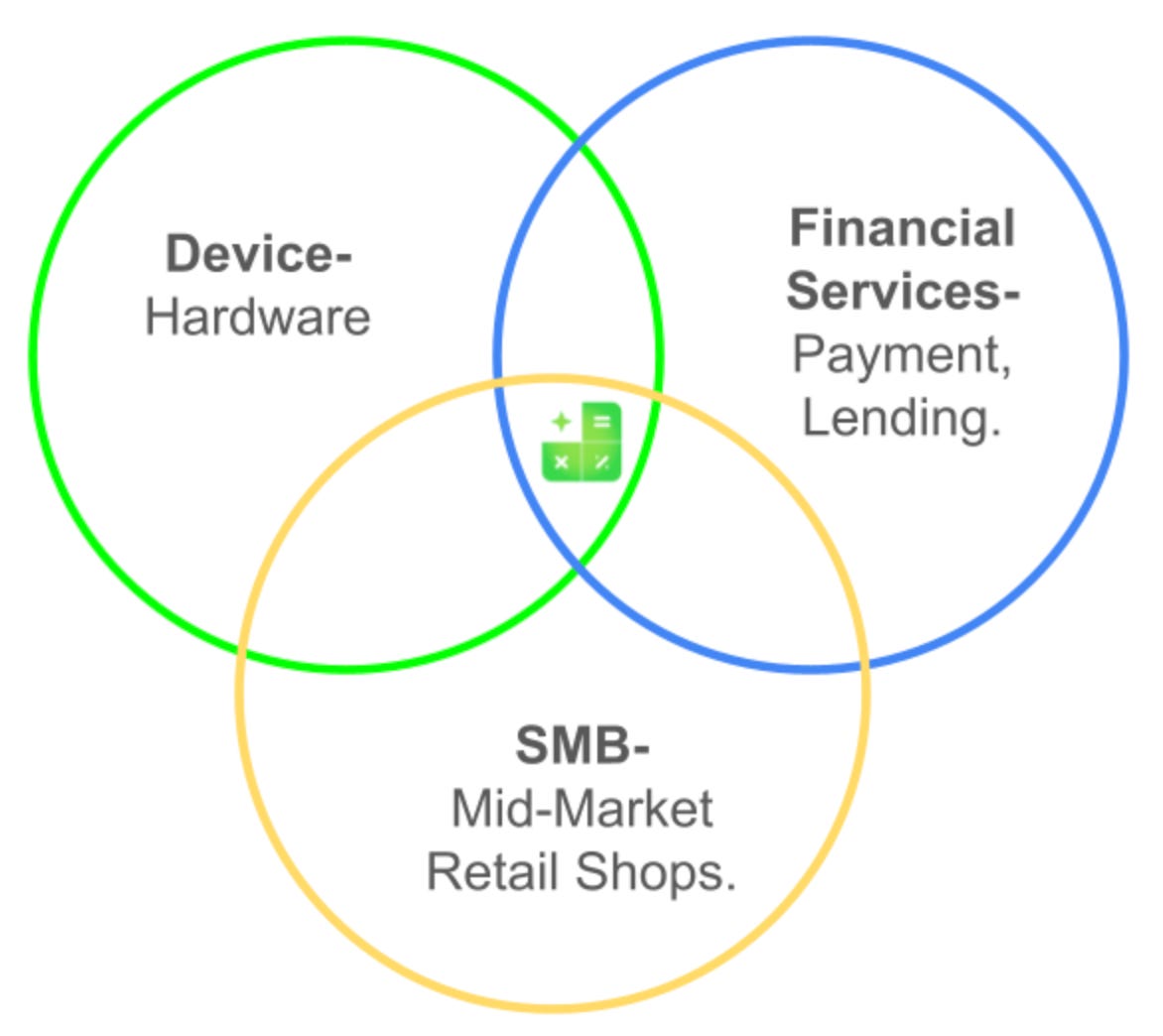
It’s got three choices - hardware, small businesses and financial services. And we’re right in the middle of all three. Not the easiest life choices to make, for sure. Travis Kalanick has this great quote about selling business-to-business (B2B) to small and medium-sized businesses (SMBs). He describes it as “life in hard mode”. Yeah, that’s our story in a nutshell.
Last one - when you look 10 years ahead, what does this world of offline commerce look like to you? Where are we headed here?
A lot of people think that by 2035, there won’t be any shops on your street. Just dark stores, and hundreds of delivery boys waiting outside them to get you your order in ten minutes. I don’t believe that. Quick commerce will be maybe 10-15% of the future. The other 85% will still happen in person, at a shop.
There’s a very simple reason for that. A shop is the cheapest way to serve people who buy small amounts every day. Most shops run from the family’s own front room, so there’s no rent. The family sits at the counter, so there are hardly any salaries. That’s why a shop can sell you a ₹10 sachet or 500 grams of dal and still make money. This is not some nostalgia thing. I’m only speaking about economics. Quick commerce works the other way round - it needs dense neighbourhoods and lots of big orders to pay for the dark stores and the delivery riders. In any case there are more than 20,000 pin codes in India where ten-minute delivery will never make sense anyway.
But forget about economics for a second. For a lot of Indians, the shop is a third place. Outside of your home or your office or workplace, it’s somewhere people know you. The hardware store in a small town knows when your house is being built, and lets your workers take material on credit. Your mom calls the kirana to place an order, or stops there on her way to the temple. A dark store can’t do that. So general trade isn’t going anywhere. It’s still around $880 billion today, and it’s growing.
The problem is that almost nothing in these shops gets recorded. Online commerce has spent twenty years perfecting the checkout experience. One click and you’re done. Offline is still awaiting that upgrade, despite the arrival of QR codes. Most shops can’t afford a proper billing system, so the shopkeeper uses a Casio, writes the bill on paper, and spends an hour every night matching cash and UPI. Brands are guessing what’s selling, lenders can’t see the business, and if you ask the owner what he made last month, he can’t tell you. Offline retail in India does more than 800 million transactions a day, and almost none of them are recorded. It’s like the biggest dark pool of commerce left in the world.
Imagine if all of that was recorded. The shopkeeper would know exactly what he made, a lender could give him credit at a fair rate instead of 35%, and brands would finally know what’s actually selling. That’s what I’m betting on. I want the Tohands device on every single shop counter, powering their business.
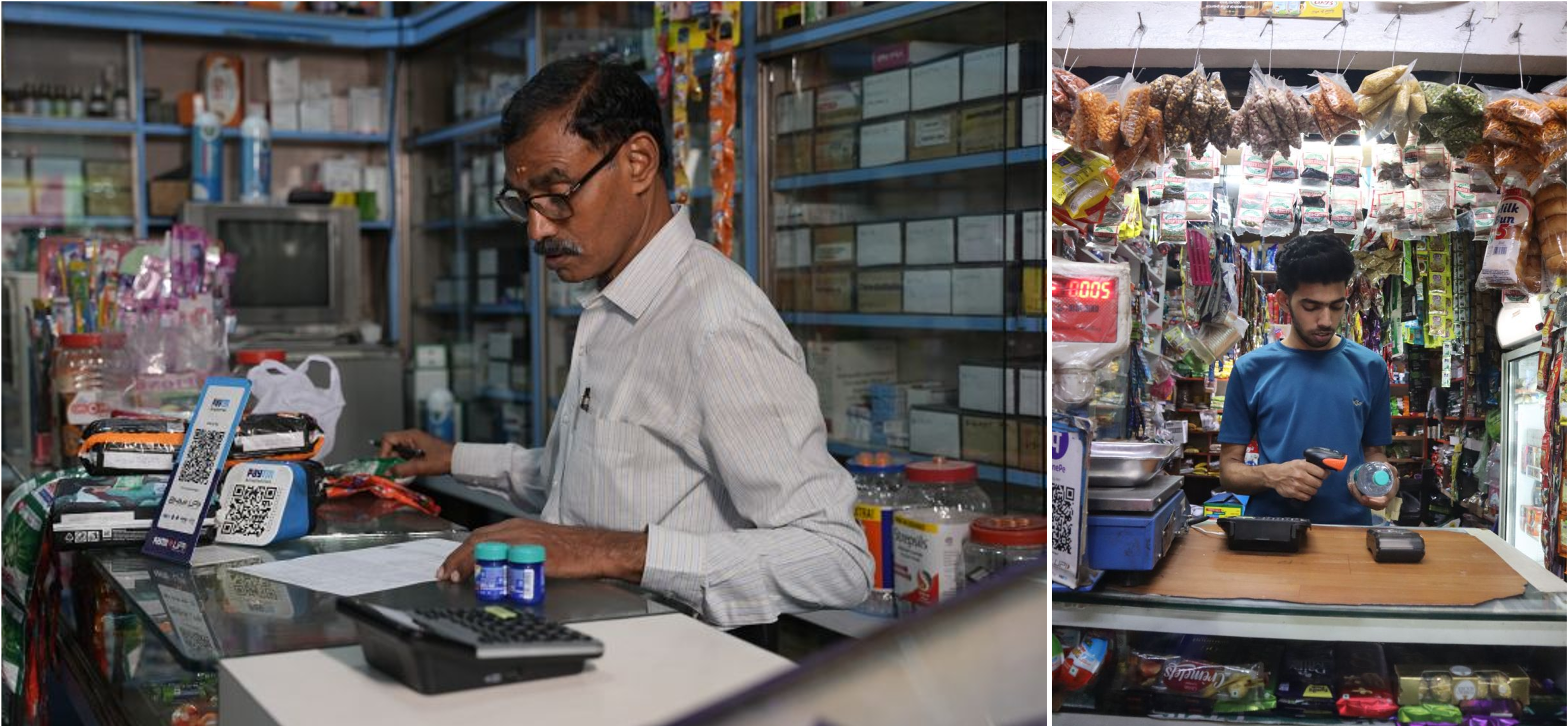
Our mission is very simple - help merchants make money, so that we can have happy and vibrant neighbourhoods. I don’t want to live in a world filled with dark stores and warehouses. I want to live in a world filled with small shops, cafes, boutiques, salons, run by people who know you. That’s the world we’re building for at Tohands. And honestly, I’m more excited about it today than I’ve ever been.
ACKNOWLEDGEMENTS
A big thank you to Praveen for spending several hours in conversation with me to put together this piece, and to Prithvi Pudhiarkar from our team for the heavy lift on the editing.
As always, if you made it all the way here and you thought this was a good use of your time, it would mean a lot to us if you took a second to share this post.
