

Hey folks👋
A warm welcome to the 1676 new Tigerfeathers subscribers who’ve joined since our last piece.
It has also incidentally been 1676 days since our last piece (that’s what it feels like anyway). Thank you for your patience - all we’ll say is that it’ll be a busier end to the year than the start in these parts👀
Tigerfeathers is presented by…Wispr Flow

In the six years that we’ve been doing this, my partner and I have become something akin to Substack drug dealers, convincing more people, startups and funds in India to start their own mini media fiefdoms on this platform.
The advice for anyone starting to write for the first time, is usually always the same i.e. don’t worry about trying to make your writing sound like ~Writing~, just speak out your first drafts into a voice recorder and use that as the foundation for your work.
It’s the easiest and most literal way to preserve your ‘voice’ in text, and a much better alternative to asking an AI tool to spit out some generic slop-flavoured word abomination. For the last couple of years our tool of choice for this activity has been Wispr Flow.
Why? Because you talk and it writes - and that’s basically it. It cleans up the ‘ums’ and false starts as you go, so what actually lands on the page already sounds like a real sentence and not a raw transcript you now have to go fix after. It works everywhere you'd normally type like Gmail, Whatsapp, Notion and Slack, and even your bathroom so you don’t have to dictate somewhere else and copy-paste it in. It’s become a fixture in my personal workflow and it’s where a lot of the fragments of thoughts and ideas for essays usually start (including this one).
Which is why we’re excited to welcome Wispr Flow on board as long term title partners at Tigerfeathers. The Wispr India team has been longtime fans of what we do, and we’re grateful they’ve decided to throw their lot in with us for the rest of this year as they ramp up their work in India post their last funding round.
You’ll be seeing more of them around these parts but for now feel free to use the link below to try Wispr for free -
By the way, as users of the product ourselves we’re trying to help them improve the tool for Indian users in general. So if you have suggestions for the team feel free to send them our way and we’ll pass it on.
Given the general lack level of intellect in these parts, it should come as no surprise that some our best ideas have come from somewhere else.
Namely, we’re constantly canvassing our friends and co-inhabitants from the Indian tech ecosystem for signals and stories that have escaped the attention of our mainstream media.
Every once in a while, we’ll get really lucky, and someone will point us in the direction of a rock we’d never think to look under. That’s the genesis of today’s piece.
On a trip to Bangalore in early 2024 I caught up with 3one4 Capital’s Pranav Pai, and asked the same question that’s since become the centrepiece of our Tigerfeathers year-end review, which is: what should more people in India be paying attention to?
Pranav suggested that we should be taking a serious look at the sea change underway in the ‘specialty chemicals’ industry (which is a domain far outside the neighbourhood of my own interests - I didn’t even know there was a next level after ‘basic’ chemicals).
Specifically, this world of speciality chemicals was apparently in the midst of a generational reset, prompted by rapid technological churn, decades of macro-economic whiplash, a geopolitical scramble to de-risk supply chains away from China, and the unprecedented expiry of hundreds of billions of dollars of global patents within a single 5-7 year window, which had presented Indian founders (both old and new) with a historic opportunity to stake a claim on intellectual property at a scale they’d never really had access to before.
Pranav’s insights had come courtesy of a young startup called Scimplify, that 3one4 Capital had backed in a seed round in late 2023.
Founded by Sachin Santhosh, Salil Srivastava and Dheeraj Dhingra, Scimplify was then attempting to solve a grizzly problem that had long-plagued the Indian speciality chemicals industry i.e. that despite India's considerable scientific talent and manufacturing infrastructure, there was no foolproof way for a global buyer to find a reliable Indian factory and verify its capabilities.
Their solution was to create a brand that could become the “trusted face” of Indian chemical manufacturing - a single company that a global buyer could call, one that would take full responsibility for orchestrating the scientific R&D for a new molecule, plus manage the quality control, the tech transfer, the customer relationship, and the delivery of speciality chemicals without owning any of the underlying factories themselves. The trio were betting on an ‘asset light’ approach to manufacturing and a clever alignment of stakeholder incentives, along with a belief that the real bottleneck holding back India’s speciality chemical industry wasn’t a lack of capacity but a lack of trust.
(If you squinted at those last few paragraphs like they were written in Sanskrit, don’t worry, stick around for like 3 more minutes and we’ll explain what all those terms mean.)
Anyway, despite being only shortly removed from their official incorporation in mid-2023, Scimplify was apparently on a tear, having already crossed $10 million in ARR only a few months after going live and showing no signs of stopping down (spoiler alert - they still haven’t slowed down).
From our perspective, all of this added up to classic Tigerfeathers bait. You had a story that appeared to span Indian history and Indian enterprise, that featured an innovative Indian startup with a unique business model that was already making a dent on the global stage (within one of the world’s largest industries as it underwent a generational upheaval), that also presented us with an excuse to learn about a space we knew nothing about.
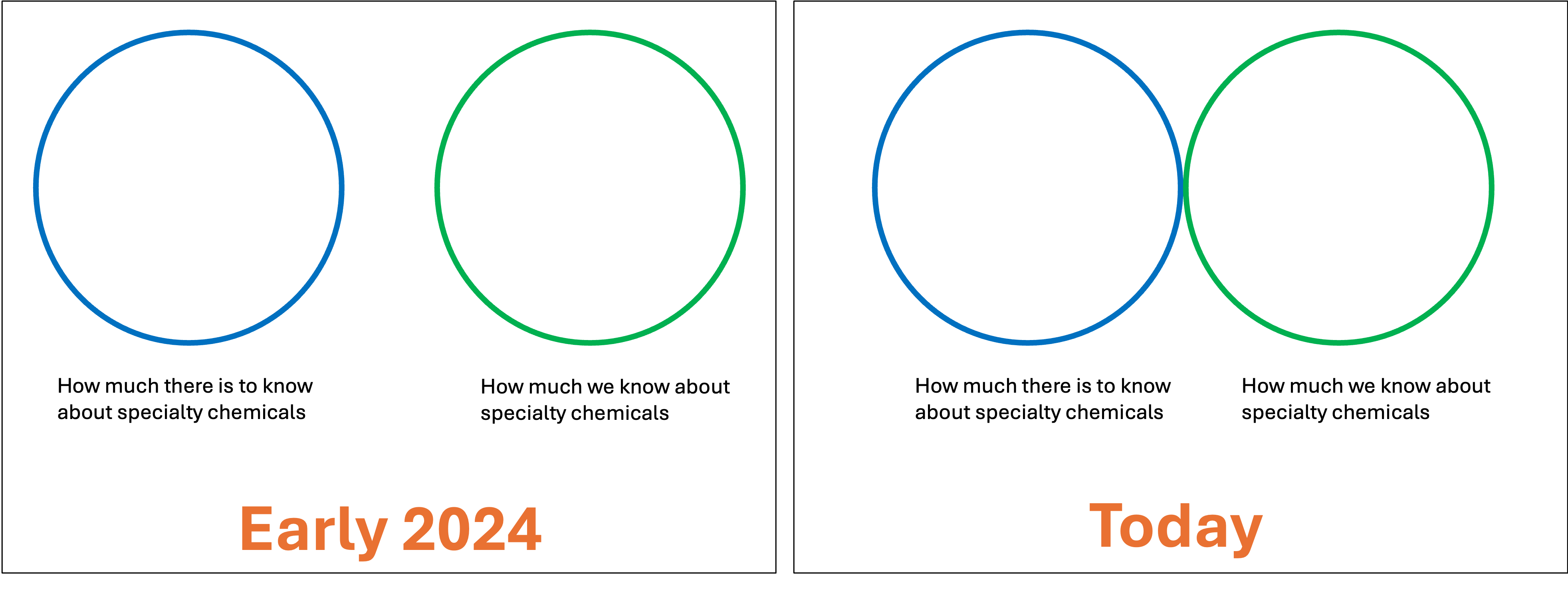
TLDR: Scimplify seemed like an obvious candidate for an immediate deep dive.
But as it tends to happen with these things, we filed it away on a ‘to write about at some point’ list, where it’s sat for almost three years (as our essay-per-year count has dropped and our words-per-essay has ballooned out of control). At various points we’ve tried to kick the tyres here, opening and closing several abysmally titled Substack drafts on ‘The Indian IP Opportunity’, ‘Simplifying Scimplify’, ‘2 Cool 2 Chemical’ among others that never made it past the intro. But as it also tends to happen with these things, the timing eventually worked itself out.
This week, Scimplify celebrates its third anniversary, marking a frenetic three years where they’ve already positioned themselves to be one of the fulcrums around which the global material science industry turns. As you read this, they’re also gearing up to announce a new strategic round of funding that will see several of their biggest global customers and partners join their cap table. This milestone comes less than a year after their $40 million Series B round led by Accel and Bertelsmann India, validating their standing as a company that has become integral to both the functioning and future of their chosen industry.
In fact, in the years since, Scimplify has broken out of the confines of their original mandate. Today they describe themselves as an ‘advanced materials and specialty chemicals company’, one built to take basically any kind of product - a pharmaceutical ingredient, a rare earth compound, a recombinant protein, a defence-grade alloy, a cathode input etc - from lab formula to full-scale commercial manufacturing.
Chances are, though, that unless you’re in the venture capital scene in India or your work requires you to be somewhat educated about the global material science value chain, you probably haven’t heard of Scimplify.
To rectify that, Scimplify co-founder Sachin Santhosh was misguided kind enough to join us for a series of long-form interviews that took place over the past month (he was also kind enough to invite me to spend half a day at their newly inaugurated lab in the outskirts of Bangalore). Over the course of our conversations - that we’ve Tigerfeatherised below - Sachin explains:
what the hell a specialty chemical is, and why this industry is so vital to how the world works (and to how every other industry in the world works)
why India (accidentally) finds itself sitting on a multi-billion dollar opportunity to re-architect the global material science value chain, one exacerbated by the ticking time bomb of several decades worth of patents expiring all at once
the strange market dynamic that sees chronically underutilised chemical factories in India sitting alongside a mountain of unmet global demand (that is desperately seeking an alternative to China), with almost nothing connecting the two
the Scimplify origin story, which stems from one of the most astute diagnoses of a market problem you’ll ever come across
what it means to be an ‘asset light’ manufacturer, and why their model has become a template for how the advanced material industry is future-proofing itself
how a molecule is really made, and the web of scientists, specialists, engineers, and factories that all have to work in lockstep to pull it off
where this sector (and Scimplify) goes next, and what new founders should build if they want to break into this industry
Should you make it to the end of today’s piece, you will realise, as we have, that the Scimplify story is not your typical folksy early stage startup tale. Rather, it is a masterclass in reading a market correctly, and having the operational nerve to build the machine that captures it. The side effect of learning about Scimplify is that it’ll change how you look at literally everything around you, since it turns out most of it started somewhere in a lab just like theirs.
Anyway, enough blathering from our end. We’re excited to finally share our almost-three-year old excitement with you. Let’s get straight to it.
I. Backdrop
Easy one to start. I remember seeing one of your earlier fundraising decks and you had this opening slide that was intended to help investors appreciate the space you were operating in. So for our readers now, can you help us understand why people should care about chemicals at all?
I’d actually say it’s the other way around - it’s hard not to care about chemicals once you really think about it. We take this for granted, but 99% of the things you touch, feel, smell, taste - even right now in this room - have some sort of specialty chemical ingredient in them. The clothes you’re wearing, the toothpaste you used this morning, the mattress you sleep on, your TV or laptop screen - all these things that make up your everyday life are the outcome of precise chemistry, the direct result of certain chemicals engineered for a specific purpose.
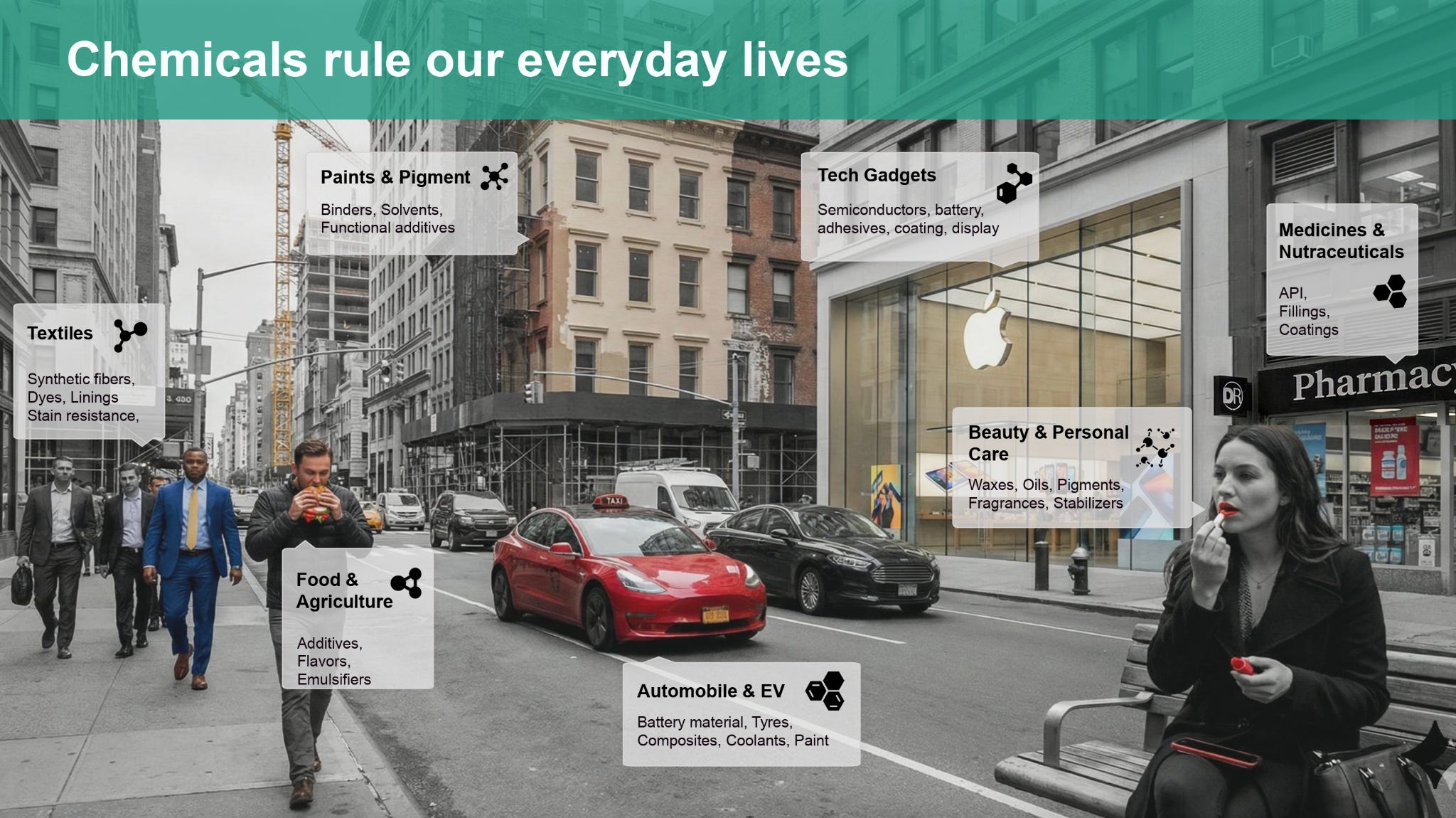
Take something as basic as a plain sheet of white paper - it only comes out white because of a specific combination of bleach, a thickener, and a dye, roughly six to eight different chemicals, just to turn brownish pulp into something you can write on. Another specific chemical is the reason McDonalds french fries are perfectly crispy. Another makes your yoga pants stretchy. Others are the reason your orange juice has a specific flavour, texture and smell. A different set is what allows your body to absorb the supplements you take at night.
Then there’s more complex stuff, like the processors or materials that go into your phone or laptop, or the wiring and energy infrastructure that supports our world today. Almost nothing you rely on exists without a chemical component somewhere in the chain. So it’s not some niche industry, you can think of it almost like the substrate underneath every other industry.
One realisation we’ve had over the course of building this business, though, is that even this deck version of that story undersells it. What I mean is, that we originally started with offering customers a handful of chemical products, which helped us get a foot in the door and earn the right to play in this market, but the more we talk to customers, the more we realise the real direction, for us and for them, is a broader universe we now call material science.
Okay before we move ahead, let me hit you with the first of many questions I could have just Googled. What is a specialty chemical?
A chemical, at the most basic level, is just any substance with a defined composition, built from a specific combination of elements - something we’ve all seen in a school lab, like hydrochloric acid, sodium chloride or sulphuric acid. From a commercial perspective, most chemicals like that are commodities - made in bulk, sold cheap, useful mainly as a raw material for something else down the line, the way flour is a raw material for bread.
A specialty chemical, in very simple industrial terms, is the thing that does the actual work inside a product. It’s what people in the industry refer to as an “active” ingredient i.e. the specific component that’s actually doing the job it’s designed to do, as opposed to everything else in there that’s just carrier, filler, or packaging.

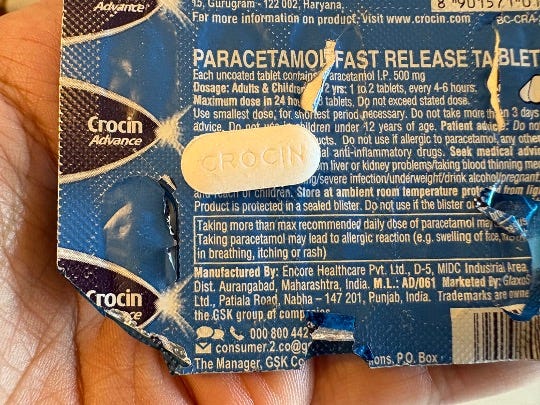
If you consider a Crocin or a Tylenol, those tablets have an active ingredient called paracetamol, probably 500 milligrams in it - that’s the part actually bringing your fever down. The rest of the tablet is just binding it together. That’s an example of a specialty chemical - anything super functional, aimed directly at solving a particular problem, made in smaller volumes than a commodity chemical but worth far more per kilogram because of what it does.
In terms of active chemicals and the process of turning them into a branded product, can you do a 101 on how these pharmaceutical drugs and therapeutics are designed? What are the typical steps here and the terms we’re likely to encounter through this conversation?
Sure, I’ll draw it out for you.
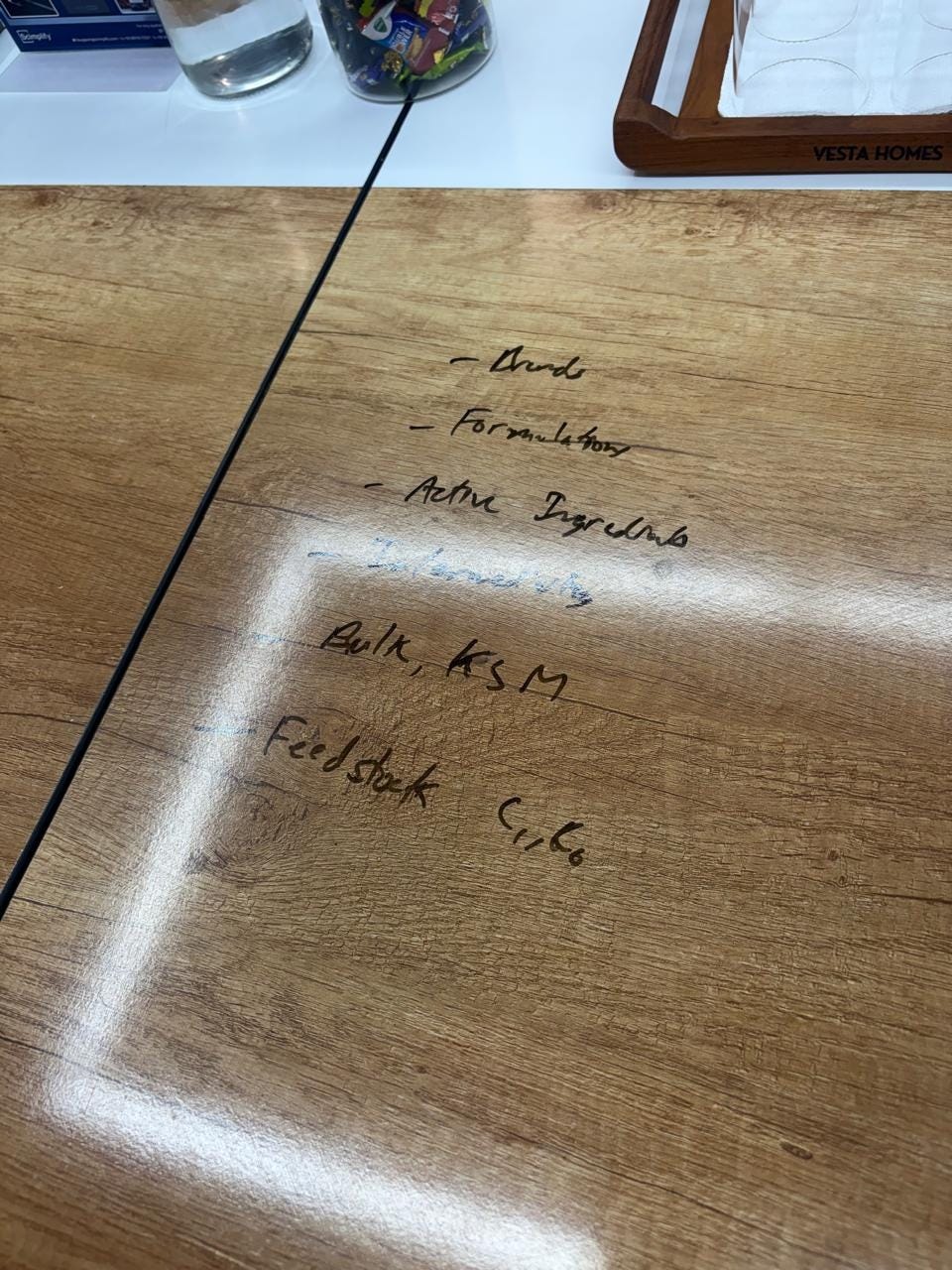
Think of it as an assembly line with six stations, and every product in this industry, whether it’s a painkiller or a pesticide, passes through some version of it.
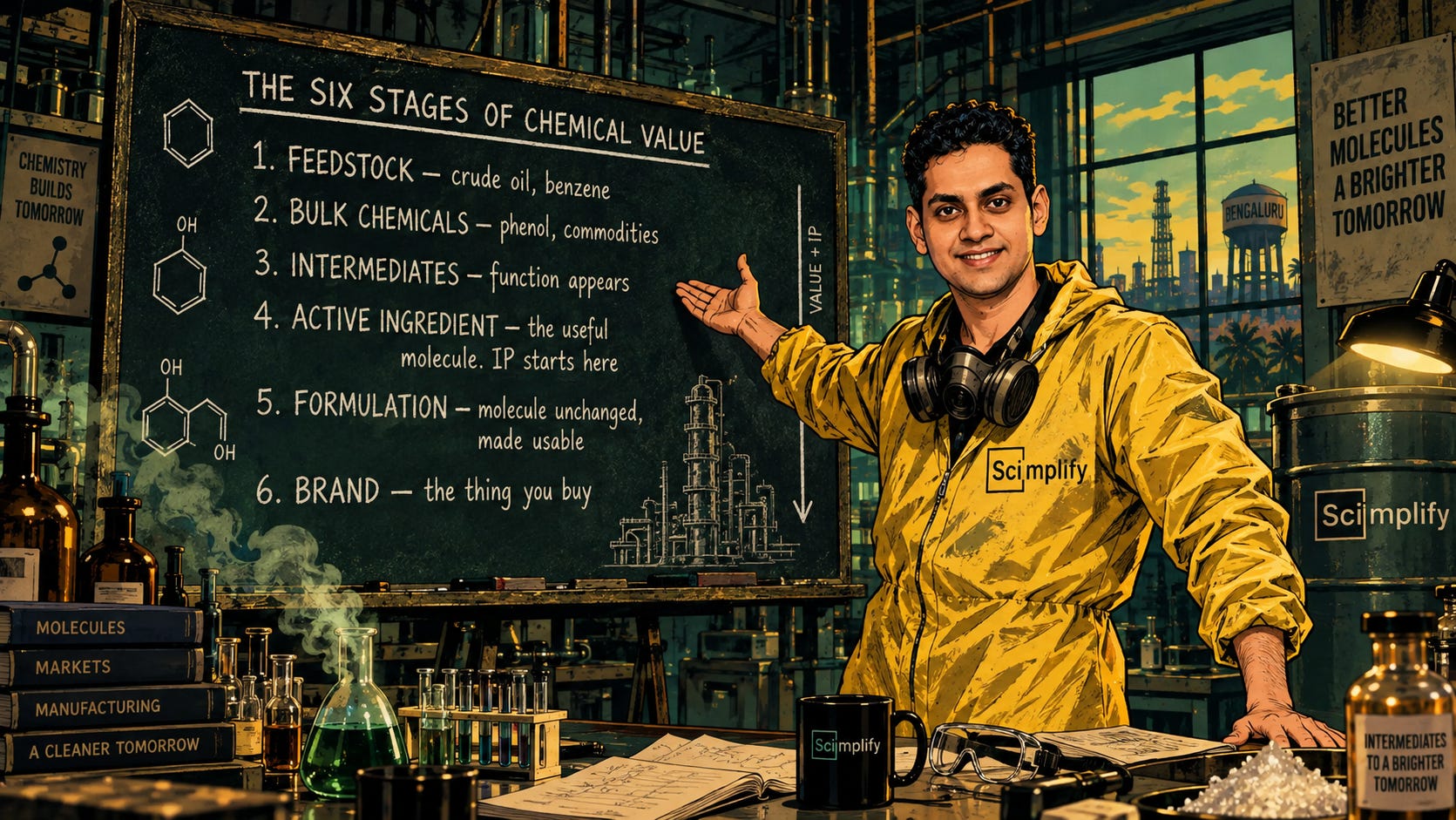
Everything starts with what’s called a feedstock - this is the unprocessed raw material that gets fed into a manufacturing process to be converted into something else. It hasn’t been chemically transformed yet. It’s the starting point, before any reaction or refining has happened to it.
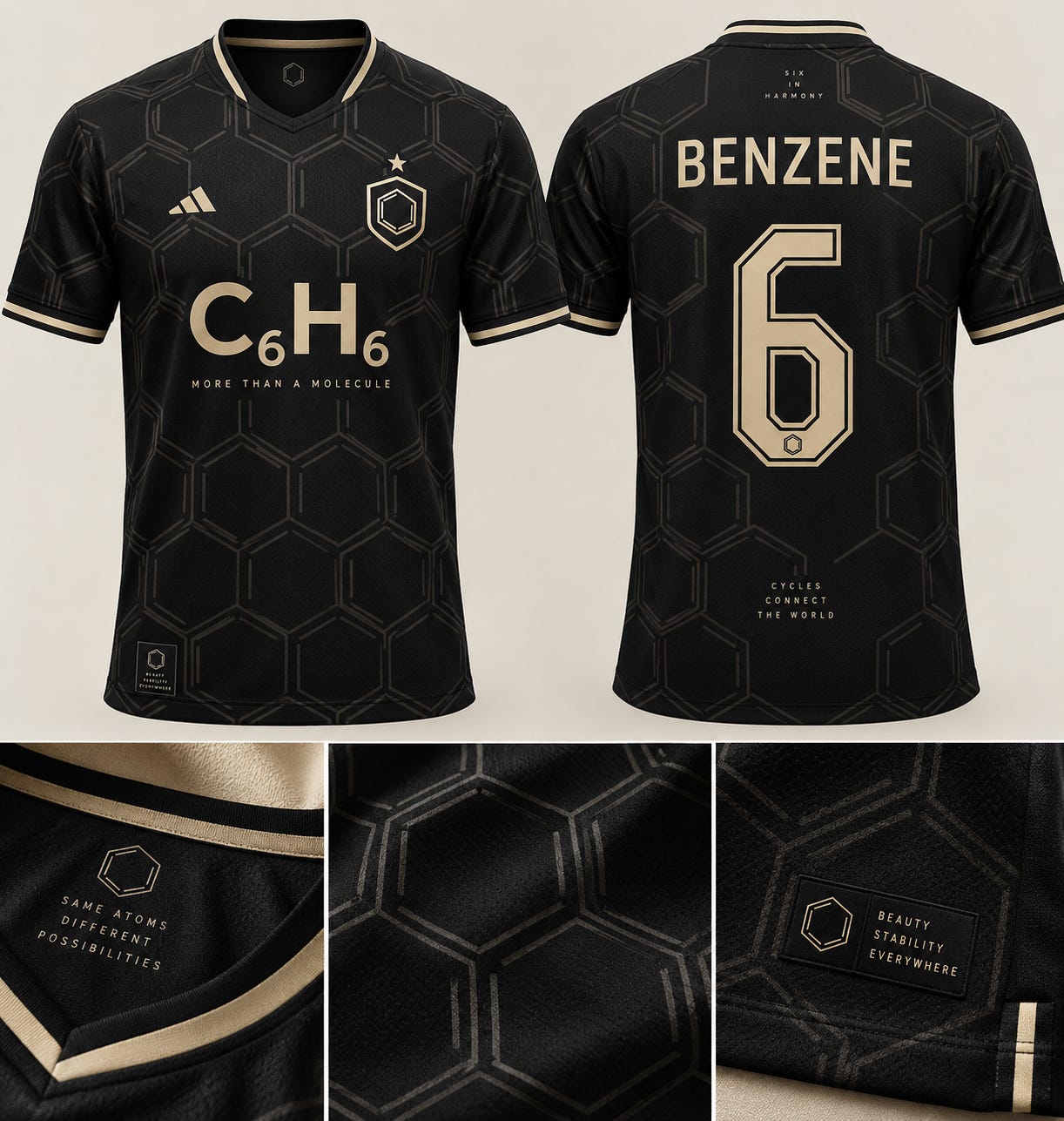
A lot of what we’re going to talk about starts as a carbon derivative, essentially a petrochemical derivative, and you get chains of that - C1, C6, and so on. The number just refers to how many carbon atoms are linked together in the molecule - C1 is the simplest, a single carbon, and it gets more complex from there. C6 is the most popular. That’s benzene, a ring of six carbon atoms, and it’s the starting point for an enormous share of everything this industry makes, the way crude oil is the starting point for an enormous share of what a refinery makes.
From there you go to what are called bulk chemicals. From benzene you go to phenol, nitro, and so on - also known as key starting materials, or KSMs. At this stage, nobody’s trying to solve a specific problem yet, you’re just converting one basic chemical into another basic chemical as cheaply and reliably as possible, at a massive volume.
From there you go to intermediates, somewhere in the middle of the stack. That’s where the names start getting complex, something like 2,3-para-phenol. This is where more functional properties start to appear. Up to this point, none of it is functional. It’s all about bulk production and cost efficiency. Intermediates are the first stage where you start talking about functional-level intervention, where real R&D is required and you can keep optimising the process indefinitely. Before this point, you can’t. It’s still just a manufacturing process vs a design problem.
Then you get to active ingredients, or ‘AIs’. This is the stage that actually does something to the person, plant, or surface it’s used on - in pharma it’s called an ‘API’, an active pharmaceutical ingredient.
Agrochemicals have their own version, dyes have their own, pigments have their own, and so on. This is also the stage where the real intellectual property usually sits - a company can patent the exact molecule, or the specific process used to make it, and everything below this point in the stack is generally treated as commodity manufacturing with far less legal protection around it.
The active ingredients then go into what’s called formulations. This is where an API like paracetamol powder actually turns into something you’d recognise - a tablet, a syrup, a cream. The process shifts from a chemical reaction to a physical mix and then a blend, so you’re no longer changing the molecule itself, instead you’re combining it with binders, coatings, flavouring, and whatever else to get it into a usable, swallowable, sprayable form. The formulations are then sold as brands. Crocin, in our earlier example, is a brand built on top of one specific formulation of paracetamol.
That’s the entire stack - six stages, from a barrel of petrochemical feedstock to a tablet in your medicine cabinet, each stage super fascinating in its own way once you drill down into it.
Given that this is probably the first time most readers are engaging with this subject material, I would love to know what you personally find most interesting about the specialty chemicals field? And also, when you speak to people - friends, investors etc - about it for the first time, what typically lights their eyes up when you explain what you do? What takes them by surprise?
For me personally, what’s most interesting is that you never run out of things to unpack in this space. I’m the kind of person who gets bored easily. Right out of college I did an investment banking job, which got boring very quickly, crunching the same numbers over and over for several years.
So I said, okay, what I actually want to do is build my own business some day, how can I start working towards that. That led me to joining an early stage startup called OfBusiness, that helps small and mid sized manufacturers procure raw materials more cheaply and reliably, essentially a B2B supply chain business. My focus was on the steel segment.
I remember my boss at the time, the CEO of the company, gave me a one day crash course on steel early in my tenure - he essentially taught me everything there is to know about it.
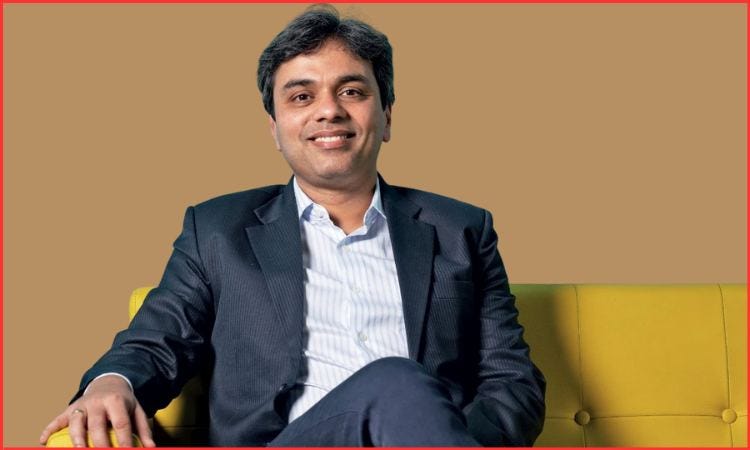
I’m a metallurgical engineer myself, I studied material science at IIT Madras, so I already had a lot of that background and context. But I still remember that one day so vividly, because that’s the most practical knowledge I’ve acquired on steel - or anything really - in one sitting in my entire life.
What I realised after was that once you learn the fundamentals of the steel business, the marginal additions to your learning are limited thereafter. There’s only so much to it. There’s iron, there’s carbon, you throw in some chromium, and boom you get stainless steel. That’s pretty much it. You can make it into 50 different physical forms, but you’re essentially repeating the same thing over and over, which for someone like me can get a bit monotonous.

I’ve had various past experiences in my professional life - packaging, textiles etc - all of these have very limited depth. But when it comes to chemicals or material science, this industry is bottomless. I’ve met 60 year olds who’ve spent their entire life understanding animal pharma and don’t know a thing about human pharma. It takes an entire lifetime to unpack one industry. The chemistry of it, the applications of it, it’s a never ending rabbit hole. That’s what makes it exciting for me personally.
But when I explain this to people outside the industry, the reaction tends to be of two kinds. One set finds it very boring. Manufacturing, in general, is the most unsexy thing you can tell an average 25 year old to do (that’s how it used to be anyway, not sure about now). These typical ambitious types would rather do something in AI, tech, or consumer brands. But when you talk about the role frontier technologies play in this industry, this cohort gets excited. Why? Because a frontier technology only proves itself against a genuinely hard problem, and this industry hands you the hardest problem available. It’s got layers of complexity stacked on top of each other, from the raw chemistry all the way up to how the final product actually gets used. I think that part is exciting once you peel off the first two or three layers.
The other type of people we interact with are the financial guys, the investors. I used to be one of them myself. My first exposure to this industry was just by following the money. Random fact, if you look at India’s wealthiest people by sector, pharmaceuticals and chemicals consistently produce more billionaires than almost any other industry.
Anyway, that’s just a cash metric. If you look past the personal wealth and at where the actual value sits, chemicals and pharmaceuticals are consistently among the biggest drivers of stock market value in India, alongside IT services and banking. It’s also the highest margin business. So if you follow the money in manufacturing, you’ll eventually end up here.
Okay awesome. I’m sorry to put this burden on you here but I’ll ask, when did humans start figuring this stuff out? When did we realise we could synthetically manufacture these specialty chemicals? How old is this industry, how did it emerge?
I think this has been going on since the beginning of time. If you go back to the origins, even what Ayurveda figured out thousands of years ago is basically some form of taking a natural product and converting it into a functional active ingredient.
But the industry as we know it today, when we actually figured out that petrochemicals could be used to make these things, that whole conversion started about 150–160 years ago. The Rockefeller Foundation had a big role to play - they were obviously big on petrochemicals, and there’s a narrative, or an accusation, that they pushed this into our everyday lives, though I’m not an expert on that.

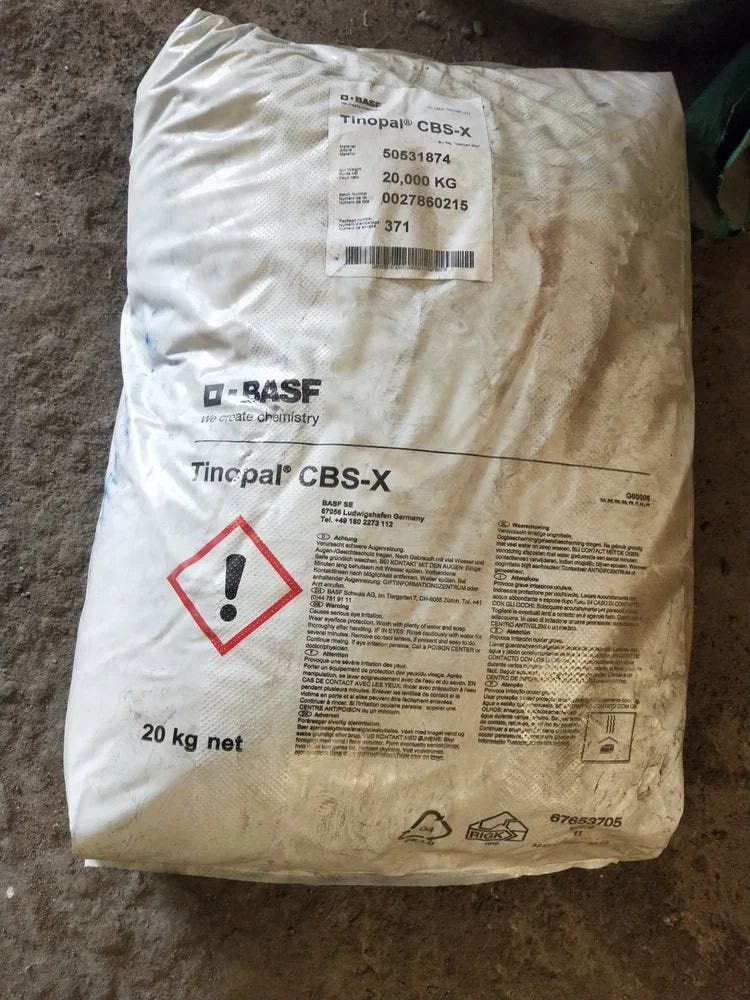
But if you look at who actually set up bulk plants, that largely originated in Europe, over a century ago. Europe was the first to double down on this. BASF - the German company that’s the world's largest chemical company by revenue - apparently started out making synthetic dyes, using coal tar as a raw material. Alongside that, they also made soda ash, one of the most basic commodity chemicals there is. The rest is history, as they say. Today, they do around 70 billion dollars in annual sales.
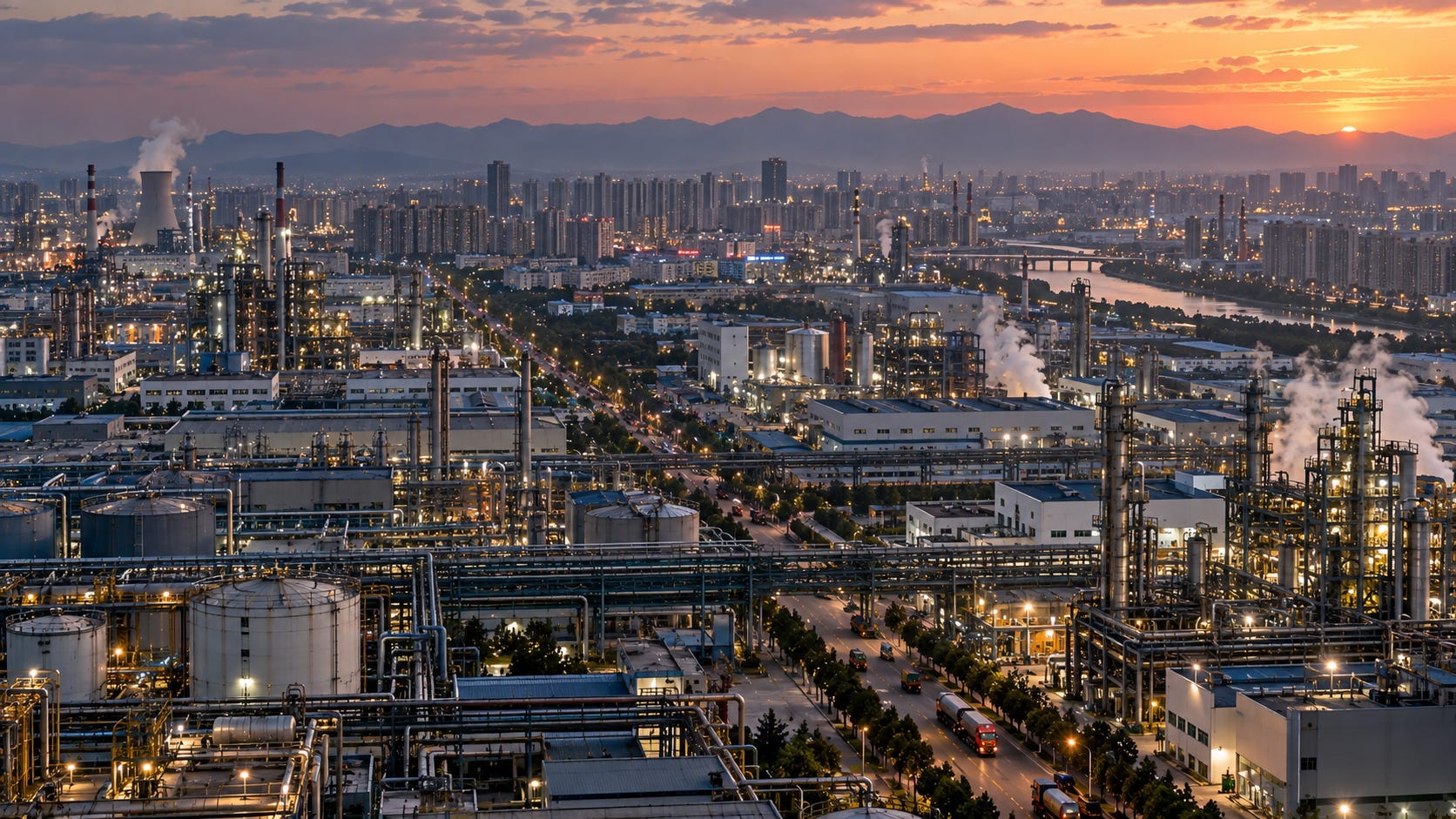
That was the genesis of the industry. Europe dominated it for all of the 20th century. It’s only at the beginning of the 21st century that China woke up and said, okay, this looks like it’s going to be a big deal, and then they dominated for almost 20 years. Today, 50% of the world’s production happens in China.
Why has China done so well here? How have they made up this ground so fast?
One common trend across everything China does well - semiconductors, rockets, aircraft, whatever - is that they control the entire supply chain. They get a hold of the technology and the process. As kids we thought, oh, China just makes cheap toys. But that was very surface level. Even back then, China invested heavily wherever there was an element of technology, an element of R&D.
Generic pharma is an obvious example. India is also very strong in it, but the back end - the active ingredients - is where China decided there was R&D optimisation to be done. They caught on very strongly. They got the best scientists, poached them from all over the world, and had very cheap land, labour, and capital available. So they set up giga factories, and that’s what gave them a big leg up.
A specific story to illustrate this is penicillin. Until 2004, all American penicillin was made in the US, at a single plant in New York state. Today, virtually none of it is made there anymore, and China produces the vast majority of the world’s supply. It just became a cost structure that made sense to outsource to China over the years. But now there’s a big realisation that we’ve outsourced something life saving to another country, and we’re dependent on them for it. That’s why you’ll see that narrative coming back - around sovereignty - in rare earth minerals, in critical metals, in chemicals, where people are signing contracts and investing to get it made locally.
What people today tend to forget is that India actually held this position first. In the early 1990s, India was among the world’s leading API producers, self sufficient in most of what we needed ourselves. We lost that ground over the following decade, not because we suddenly got worse at the chemistry, but because China was pouring state backed investment into subsidised industrial clusters at exactly the same moment India’s own regulations tightened and margins shrank. So this isn’t really a story of China always being ahead, it’s a story of India losing a lead it once actually held. And of course we’re trying to make up the ground and do our part so India can retake the lead again.
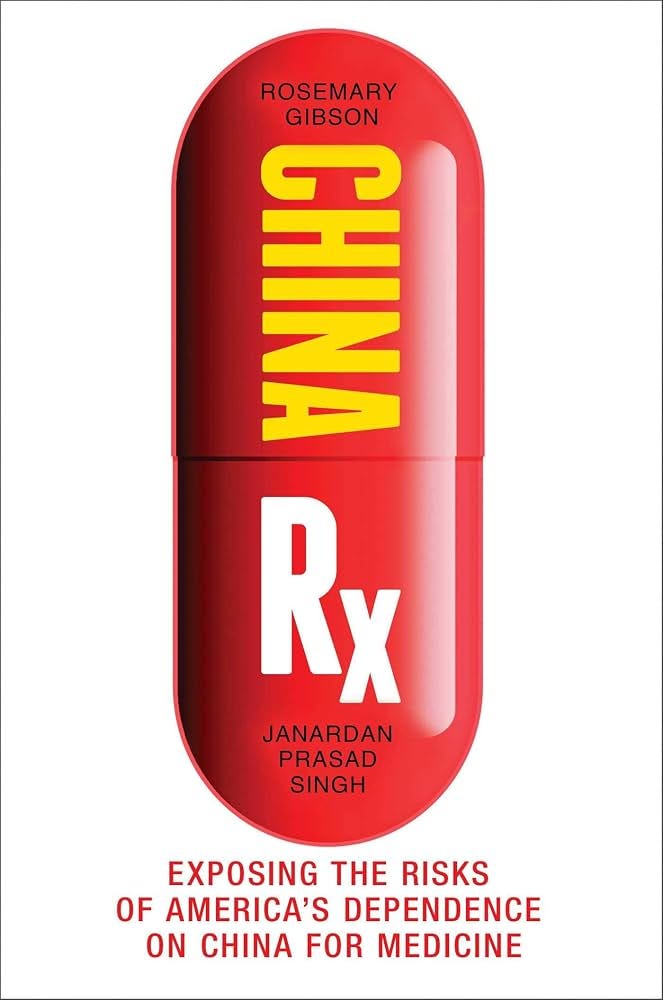
By the way there’s a good book called China Rx. It talks about the pharmaceutical industry and China’s role in it, if you’re interested in going deeper.
A couple of follow-ups on that. When it comes to R&D optimisation, is that related to specific techniques?, or does this involve some advanced new machines? What is the correct way to think about proficiency in this value chain - what is everyone trying to optimise for?
So, machines are a small part of it. If you and I set out today with a couple hundred million dollars, we could set up a plant. It’s very easy to build a textile plant, a polymers or plastics plant, or a fabrication unit. You don’t need scientific experts or engineers, just a machine that converts A to B, and that machine itself is fairly standardised.
The real difficulty comes in optimising the process. The challenge in chemicals is that if I take A and want to convert it to B, if I get it wrong it’s possible that the entire thing evaporates and there’s nothing left. You can literally destroy value if you don’t do the process right. And that’s before you even account for the commercial pressure sitting on top of it. Most of these chemistries have to work at the scale of thousands of metric tonnes, and you’re often trying to hit a price as tight as 10 to 15 dollars per kilogram for it to make any commercial sense at all. So you’re not just trying to get the reaction right, you’re trying to get it right at a scale and a price point that leaves almost no room for waste.
That’s why the two numbers everyone in this industry obsesses over are yield and impurity. Yield is simply how much of your finished product you actually end up with, compared to the theoretical maximum the reaction should give you. Impurity is how much unwanted material is mixed in with it that shouldn’t be there.
If you want to get a little nerdy about it, purity in specialty chemicals actually gets measured in what we call nines, the number of 9s in the purity figure. A typical industrial chemical might be four nines, 99.99 percent. In semiconductor grade materials, you’re often talking six, seven, or more nines, 99.9999 percent and up. The highest grades some suppliers chase are around twelve nines, though that level’s usually claimed for specific impurities rather than the total composition. That’s the kind of precision and cleanliness this space demands, tougher than a typical pharma product.
Fun fact, that’s also part of why, as chip nodes get smaller - from 7 nanometres down toward 3 and beyond - the purity and particle constraints tighten so dramatically. Semiconductor fabrication runs through many repeated cycles of lithography, etching, deposition, and cleaning, and etching and thin film deposition are the two stages most directly dependent on ultra pure chemicals. That’s genuinely the environment we’re trying to build toward.
And what about the R&D side? What levers are there to pull on this front?
I’d say there’s three main parameters we play with here.
The first is chemical R&D. This is about picking the right starting material, one that gets you to the same end product, but cheaper or more reliably than the obvious choice. For example, to make sodium chloride, you can start with sodium hydroxide or sodium sulphate, different input raw materials, same output. That’s chemical R&D.
The second, and honestly the one where most of the real work in this industry actually happens, is process R&D. Once you’ve picked your starting material, process R&D is about everything that happens in between, the kinetics of the reaction, meaning how fast it runs and under what conditions, the temperature, the pressure, the solvent, the catalyst, the surrounding environment, and impurity control. We even look at things like how many times you can recycle a catalyst, the substance that speeds up the reaction without getting consumed by it, which saves a lot of cost. That’s actually the biggest thing we do. Chemical R&D matters, but the published literature on it has caught up so much that it’s reached a point of diminishing returns i.e. there’s not many huge leaps to be taken forward or material gains to be extracted. Process R&D has infinite room to grow because nothing about it is set in stone. You can always keep innovating.
The third is analytical R&D, and it’s the least visible of the three, even though it actually comes first. It involves machines that measure purity and product profiles, and computational methods, almost literally like machine learning, that can tell you what input gives you what output. This precedes both the chemical and process R&D, you first have to arrive at a method of analysis, almost like a simulation, before you can even know whether a change you’ve made to the chemistry or the process actually worked. I’m oversimplifying here, but that’s basically the analytical part of it.
What is India’s role in all this? Historically, how have we participated?
India today actually dominates a specific part of this chain - formulations. Remember from our stack earlier, this is the last stage before a product becomes a brand, where an active ingredient gets turned into an actual pill, cream, or syrup. In generic pharma, more than 50% of the medicines consumed in the US at any pharmacy come from India. Dr. GV Prasad mentioned on a podcast recently that it’s closer to 70 to 80% now. All the big companies you’ve heard of, Sun Pharma, Dr. Reddy’s, have done a phenomenal job there. They basically run the American pharma market.
Active ingredients is where India’s really catching on now. It’s not a market share you can put a single number on. It’s more like a thousand different pie charts, because a paracetamol market is very different from a naproxen market, which is different again from a cetirizine market.
One of my favourite examples here is a company called Divi’s Labs, which has been contract manufacturing for Pfizer for many years. If you’ve had a painkiller called Naproxen, Divi’s has an 80% market share globally for that product. They operate in 90 different countries and do $200 million a year on it, with phenomenal financials. Nobody can touch Divi’s because their process R&D goes so deep that reverse engineering it would take years, and by that time they’d have built an even bigger lead.

Three years ago, China was doing about $50 billion in this space and India was at about $5 billion. Those numbers might appear bleak but a 10% shake off year for China from this point on effectively doubles our market every year. My personal opinion is that India will end up dominating in active ingredients.
Feedstock, going back to the very base of the stack, is a trickier case. It comes from all over the place, and how much of it any country has depends heavily on what's happening geopolitically at the time. India has certain reserves, China has certain reserves, but that's not really a game anyone's actively trying to win, at least not in this context. What matters more here is the same three things China has always had an edge on - labour, capital, and real estate, and I don't think India has a structural advantage on any of them. There are companies that have done well regardless, Deepak Nitrite, Aarti Industries among them, but structurally, as a country, I don't think we have a real edge at this end of the chain.
You talked about penicillin and how China eventually ended up making basically 100% of US penicillin. Was that literally just a cost advantage?
Initially, yes. The US realised penicillin was going to be more widely used given it’s a life saving drug, and so they wanted it to be more accessible and affordable, which could only be solved with lower input costs. That’s why they started outsourcing it. People ask me this question a lot - why would India suddenly have an advantage, has China just been sleeping at the wheel? The reality is China has much bigger fish to fry now. With this whole chip revolution, semiconductors, the AI wave, they’re throwing their biggest talent on all of that instead. So while this industry is what set them on the global map, their ambitions are now on something much bigger. Maybe that lack of focus is an advantage for us.
II. Making A Molecule
Okay I’d like to start building up to what Scimplify does because I know you guys help to aggregate and supercharge the supply side of this market, but first it would be great if you can actually help us understand the status quo regarding how this ecosystem actually functions and why a company like Scimplify is even required.
Maybe a good place to start is what actually happens when someone wants to order or buy a chemical? And maybe you could also touch on how this happens in China vs other places like India.
I’ll give you a real example. We were talking to a Japanese company, I won’t name them. They came to us saying they’d been looking for somebody who could manufacture a particular product at scale. Earlier they were getting it from China and they wanted to switch over for obvious reasons. There was too much dependence on them, they wanted alternative supply chains, and when it comes down to it India is the only other place that’s economically viable if you’re already buying from China - that’s fairly well accepted (we’ll get into the details here in a moment).
Anyway here’s roughly how that search actually plays out. The first question this Japanese buyer asks is, is there a factory in India that’s manufacturing what I want? You go and ask an average Indian person operating somewhere in the chemicals ecosystem, and 500 people will put their hands up saying yes, I can manufacture this. Very Indian thing to do ki haan kar denge, regardless of whether that’s actually true in that present moment.
But the Japanese buyer can’t just take that at face value. His next question is ‘how can I trust you’. Typically there will be no fancy brand or website or digital presence - these are not those kinds of companies. There’s also no overarching point of contact or trusted node for the Indian chemicals ecosystem, unlike China where you call a guy who knows a guy who knows a guy and someone or the other will guide you to the right factory.
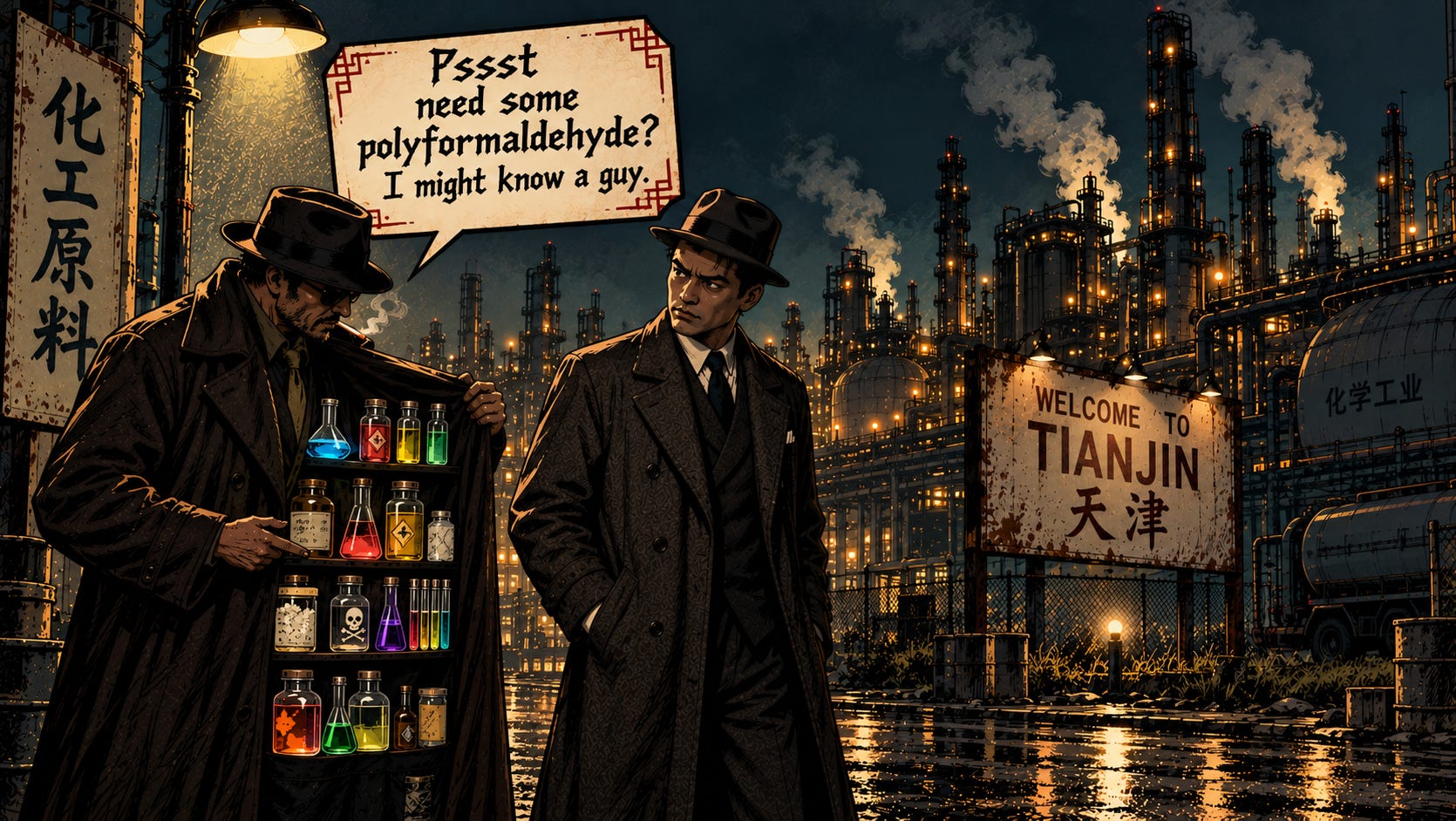
In this case what that meant was that this Japanese buyer was struggling for two years to find an access point for India. So they sent someone over to scout factories on the ground, someone who spent two years at it, wrote very detailed reports, and found several glaring problems with otherwise credible-seeming factories once they saw things firsthand. By the end of that process, they’d managed to narrow the field down to five or six factories that looked capable of doing the job.
But looking capable on paper is a different question from actually being capable. Do they actually understand the chemistry involved at a deep level, meaning the specific reaction pathway that gets you from raw input to finished product, as opposed to just the process conditions around it. Can they control impurity, match the right yield, hit the right cost? Do they have the right personnel?
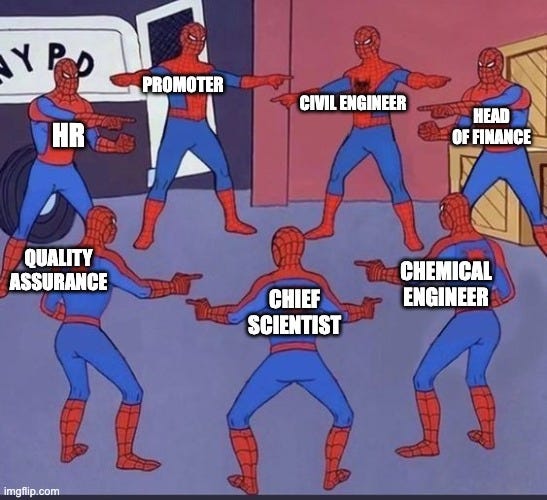
The factory here is typically a hundred crore outfit, meaning somewhere around ten to fifteen million dollars in scale, typically an old school legacy business where the promoter is the scientist, the finance guy, the civil engineer, everything. They have a limited bandwidth for how much they can invest in the chemistry itself.
So even after finding a real factory, for a foreign client the actual work of making the product happen is still entirely ahead of them, and it happens in stages.
Stage one, the Japanese company has to bring their own expertise into the room. They send their own R&D guy over to hand hold the whole process, which in turn takes him away from the work they’re doing in Tokyo or wherever.
Stage two, that R&D guy still can’t do this alone, because he needs a separate Indian scientist to work closely with him, someone who actually knows the specific chemistry involved. That search alone means talking to a hundred different scientists to find someone who’s done work in that specific chemistry. Have they worked in lithium before? Do they understand the problems that come with lithium? The average scientist won’t.
Stage three, once that scientist is found, the two of them have to prove the technology actually works, by replicating what the Tokyo team has done, inside an Indian lab, at a small scale. This proves you have something you can repeat batch after batch, not just a process that worked once on paper in Japan.
Stage four, and this is where things typically get hard, is scaling that lab result up to something you can actually sell. Making a hundred grams of something in a lab and making one metric ton of it in a factory are two completely different problems. That’s a jump of roughly ten thousand times in volume, and everything that behaved predictably in a beaker can behave completely differently in a giant reactor. That whole process of moving from lab to full scale is called a tech transfer in our industry parlance.
So you’re essentially jumping from lab test to full scale in a single step?
No, in between the two, there’s usually a middle step involving a ‘pilot facility’, where you work with a couple hundred kilos of material. Think of it as a baby pool before you go into the swimming pool. You’re testing whether the process holds up at a slightly bigger scale before betting an entire commercial batch on it.
These pilot facilities are sometimes independent entities set up by people who focus just on this business, sitting in between a lab and a full factory, serving whoever needs to test a process at that in-between-scale. Sometimes large manufacturers also maintain their own private pilot facilities - these are usually the really big plants. A typical 100-crore outfit won’t have one of their own. So there’s a variety in how this pilot step is usually carried out depending on who you are, what chemical you’re working with etc.
The first handover is lab to pilot facility. You need what’s called a tech transfer engineer, someone whose entire job is taking a process that’s only ever worked in small lab quantities and making it work at pilot scale, a few hundred kilos instead of a few hundred grams. Once that engineer gets it working reliably at the pilot facility, a sample goes back to the customer, in this case Tokyo, for approval, along with what’s called a ‘tech pack’, a single document that carries the quality specs, the exact recipe, the effluent treatment plan, the safety and cleaning procedures, and data on the material’s stability. That’s the paper trail every later stage gets checked against, if the tech pack isn’t right at this point, nothing downstream is going to hold up either.
The second handover is pilot facility to full manufacturing plant, and it needs a tech transfer engineer again, though not necessarily the same person. This time the job is proving the process holds up at full commercial volume, inside a real factory, using that factory’s actual equipment. The plant has to match what the pilot facility already proved out, meaning the same yield and the same impurity profile the sample in Tokyo was approved on. If either of those drifts once you’re at full scale, you’re not done, you have to go back and fix it.
Finding this kind of engineer itself is a separate problem altogether. It can’t be a Japanese engineer sent over from Tokyo, because he won’t understand how an Indian factory actually runs day to day, its equipment, its workers, its quirks. It has to be an Indian engineer. But the Indian factory you’ve found usually doesn’t already have someone on staff with this specific tech transfer experience. It’s a separate specialist you have to go out and find, on top of everyone else already involved.

Maybe a stupid question but why is this all on the Japanese client to figure out? Don’t we have some kind of established domestic scientist database - like don’t the Indian labs or manufacturers help their clients navigate all this on the ground? Don’t they have their own network of scientists?
Because nobody in this chain actually owns the whole problem. Every player only does their own narrow piece of it, and stitching those pieces together is left to whoever’s placing the order, which in this story is the Japanese client.
Take the lab. Their job is to make 100 grams of the product and prove the chemistry works. That’s it. They’re not equipped to take it further, and they don’t try to. Scimplify hasn’t tried to change that either, we’ve built around it rather than fixing it. There are amazing, world class scientists in these labs, but their job ends there. Put a scientist in a pilot plant and they’ll tell you themselves, go get me a tech transfer guy. That’s a completely different skill. And to be fair, tech transfer specialists do exist as a profession, working as independent consultants or employed by bigger companies. But only the very big manufacturing companies actually have one on staff.
Companies like Dr. Reddy’s are the exception, they own the full stack, meaning the lab, the tech transfer, the plant, and the quality function all sit inside one company. But even that doesn’t solve the problem, because a full stack company can only be full stack in the chemistries it already specialises in.
There may be a gigantic pharma MNC that produces hundreds of APIs and medicines, but doesn’t do much work in lithium. So the moment one of their customers needs a lithium product specifically, that company has to first check if it even has the right compliance and capacity for lithium chemistry. Usually it won’t. Which means even a company with every function under one roof still can’t serve every customer. Each piece stays fragmented, chemistry by chemistry, customer by customer.
But let’s say you’ve found your engineer anyway, and gotten the product made at full plant scale. You send out the first commercial batch, a full metric ton, to Japan. They might come back and say this doesn’t match the quality we expected, because the factory’s method of testing it is different from theirs. Think of it like school chemistry.
You can check something’s acidity with litmus paper or with titration, both measure the same thing, but they don’t always agree down to the decimal, and the customer decides which method counts. You can’t tell them, ‘well I used titration, why are you insisting on litmus’. It doesn’t work that way. Whatever method they specify, you have to match it, and if you can’t, you go back and start over.
This is exactly why quality control has to be built in from day one, not bolted on at the end. Your method of analysis and your quality checks need to be part of the process from the very first batch, not something you figure out once Japan already has a problem with what you sent. And that’s yet another separate person entirely - a quality engineer - someone who isn’t the scientist, isn’t the tech transfer specialist, and isn’t the plant engineer. That’s a fourth specialist role you have to find and coordinate, on top of the three you already needed.
Assuming all of that goes right, there’s still one more thing that can stop you cold. The regulatory body in Japan could simply say this product can’t be imported. You need the actual paperwork and clearances sorted, which can take months on its own. So that’s a thought process that has to start on day one too, not after the product is already sitting on a dock somewhere.
That’s just an overview by the way. I’m probably not even getting into the more complex parts to spare you here.
Well, if we’re going to do this we may as well go all the way. What typically complicates this further?
So, that’s just one product, and what I just described is actually a fairly simple, one step reaction. Some products, depending on complexity, need as many as 13 to 20 separate reaction steps strung together. Every single step is its own point of failure. There are cases today, even at advanced companies, where they’ve nailed the first five steps and are completely stuck on the sixth. We have products sitting in our own lab exactly like that.
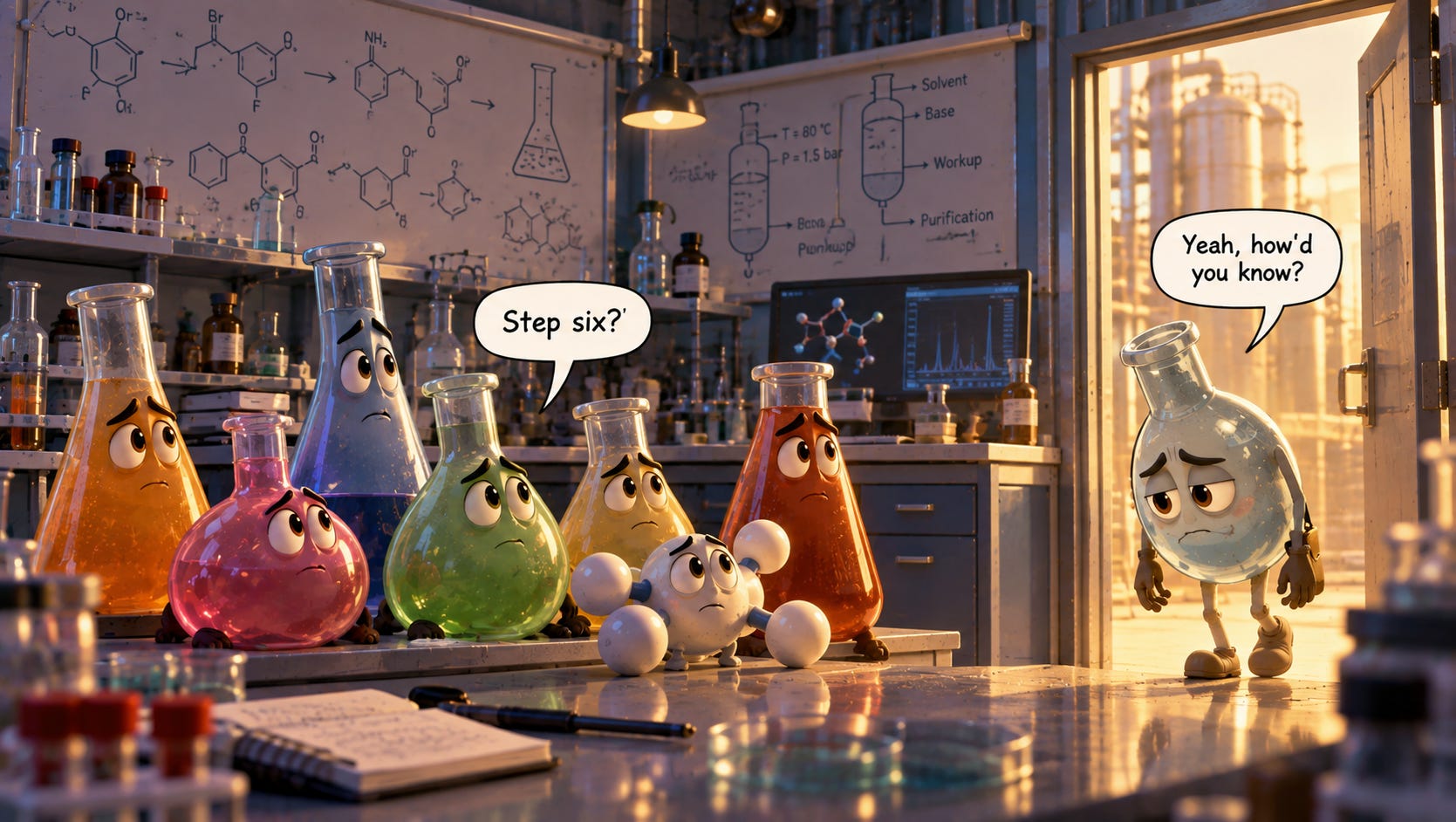
Let me give you a simplified example, and please ignore the specifics here, this is just to illustrate the shape of the problem. Manufacturing paracetamol is a fairly simple process, at least by this industry’s standards, but it still isn’t one step, it’s a chain.
You start with benzene. A company like Aarti Industries converts that benzene into phenol. From there, a company like Deepak Phenolics or Deepak Nitrite runs a nitration reaction on that phenol, which gives you para-nitrophenol. That para-nitrophenol then goes through a reduction step, which converts that nitro group into an amine group instead, and that gives you the actual precursor to paracetamol, a compound called para-aminophenol.
So to make one tablet’s worth of paracetamol, you’ve gone through seven or eight distinct chemical steps, all the way back from benzene, through a phenol reaction, a nitration reaction, and a reduction reaction, before you’ve even reached the compound paracetamol is finally made from.
And here’s the catch, each of these - the phenol step, the nitration step, the reduction step - needs completely different equipment and a completely different specialised team to run it safely and efficiently. You cannot run all of them in the same plant. So it ends up being different plants, different people, for every single step along the way. The more steps a product needs, the more these separate dependencies stack up, and the whole chain becomes hostage to whichever link is weakest.
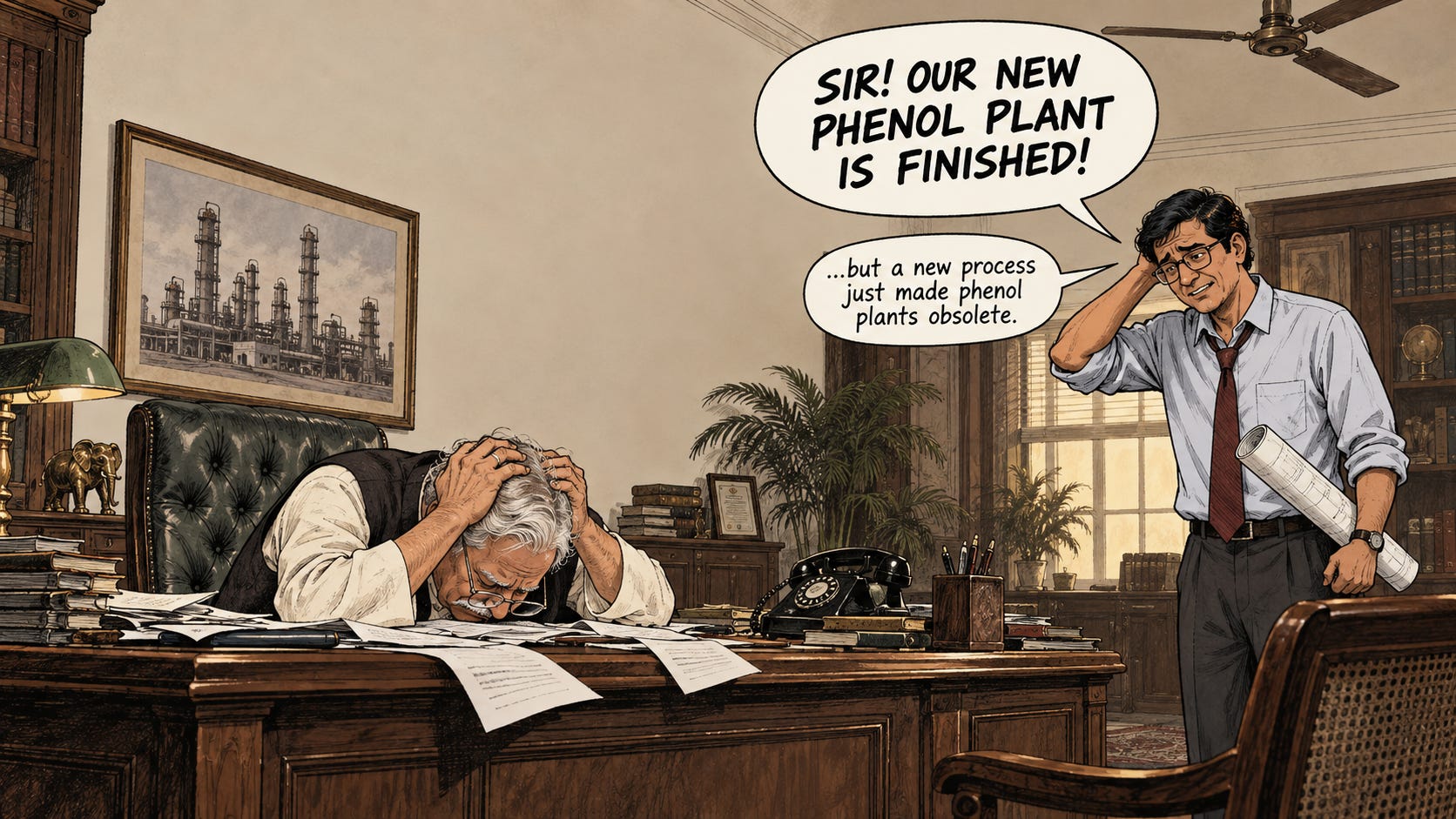
That dependency also makes it risky to try and control the whole thing yourself. Even if you wanted to build every one of these steps in house, under one roof, you’d be betting that none of the underlying chemistry ever changes. And it does change. If someone works out a route tomorrow that skips the phenol step entirely, jumping straight from some other starting material to an amine or straight to para-nitrophenol, then everyone who built out that phenol dependent capacity is suddenly sitting on equipment nobody needs anymore.
Ok that’s interesting. How often does that happen in practice?
All the time. We see this across a lot of products. I’ll give you a real example. There’s one product we offer on our platform called chlorantraniliprole (CTPR). It’s an agrochemical, an insecticide.
The process changed almost overnight for us. It was under patent until 2024 by FMC, which is a large American agrochemical company that develops and patents crop protection chemicals like this one. Then the underlying product itself went off patent. But one of the specific manufacturing processes for making it was still under patent until late 2025. So from 2024 to 2025, we had a great run with this product in collaboration with one of our partner manufacturers, using a process route that wasn’t covered by that remaining patent.
Then, almost overnight in 2025, that other process patent expired too, and the cost of making the product suddenly dropped by 40%. How did that happen? Well, the thing was that the newly available process used a completely different starting material and intermediate, called K-Acid, instead of the older route, which ran through a compound called ADPA.
The K-Acid route is about 40% cheaper to run, which sounds like a lot, but sometimes the jump is even more dramatic than that, sometimes you can skip an entire starting material altogether. You can go straight to a compound called para-nitrophenol, which you can get very cheaply out of China. At that point, why would you even bother setting up a dedicated plant for the older route? So all of a sudden the economic calculus of a successful product completely changes.
In general, China undercutting one of our factories outright is also always a live possibility. This happens all the time too, and it gets to the core of the problem we’re solving for.
Which is?
The problem, is that everything Europe built, and everything China built, over the last hundred years, was based on the assumption that you’d get to run a factory the same way for at least the next 20 years before you were required to make any material change to your operation. That’s not talking about the physical lifespan of the equipment, which might run another 10 to 20 years beyond that. It’s about how long that factory remains the optimal way to make that particular product - i.e. whether its processes retain their efficiency and effectiveness and competitiveness over time. Today, you don’t get that 20 year luxury anymore. You probably get about five years of it. In that context, would you still go build a dedicated factory around one specific process? Would you still find the comfort to make that investment? Probably not.
Got it. I want to circle back on the India stuff here for a minute. With respect to your original Japanese client example - why would someone look at India now if they’re trying to diversify their supply chain and reduce geopolitical risk? Why is India in this position at all as the alternative to China?
The simple answer is, if you remember the pandemic, there was this city that suddenly became very relevant globally, called Wuhan.

It became infamous as the epicentre of the virus itself, but Wuhan also happens to be one of the largest pharmaceutical manufacturing hubs in the world, home to the largest API manufacturing site in the world. So suddenly, with the lockdown, the first thing that got cut off in supply was medicines.
Every medicine became super expensive. Forget expensive, people were willing to pay through their nose for it, but it just wasn’t available. Literally, life saving drugs were not available. And I think that was a big wake up call for people. You just can’t afford to depend on a single country for something this critical.
Medicine is one thing, and maybe that was already a fairly mature, well established supply chain. But today, if you suddenly say semiconductors, or EV batteries, or chemicals used in defence applications are going to go off supply, people are going to panic. I think that wake up call happened with the lockdown, and it’s even more obvious now that we can’t afford these kinds of shocks, at least for critical industries. Sure, nobody’s losing sleep over children’s toys and things like that, but for these mission critical applications, you want real alternatives in place.
There’s also a simpler, more physical reason India specifically benefits, and it’s really just geography. What’s happening globally right now is often called ‘front shoring’ - companies moving their supply closer to home rather than halfway around the world. Take Japan as an example, we’re simply closer to them than an American supplier would ever be, which is part of why Japanese companies are increasingly bringing their own in house technology into supply chains here rather than elsewhere. On top of that, within 30 to 35 days we can reach Europe, Japan, and the US, which puts India in a strategically advantageous position.
III. The Window
Makes sense. There’s one more thing on this opportunity front that I wanted to ask you about. The original reason I wanted to do this piece was because one of your investors pointed me towards this generational opportunity window that was opening up because of the expiry of patents for several chemicals and drugs all at the same time, meaning that India’s role in this universe would now come into prominence. Can you add some colour to this? What’s really happening here?
Sure. So the thing to understand is that India’s business is built on generic products, as we call them. China and India are both generic markets for that matter. All the R&D India does is on process and optimisation. We don’t make new products ourselves, what’s called an NCE, a ‘new chemical entity’, meaning a molecule that’s never existed before and had to be discovered from scratch.
Take COVID as an example. Creating a vaccine that kills the virus, that’s a new entity. We don’t make that [yet]. The real innovators are spread out around the world, but the US and Japan account for most of this activity. They’re the ones filing new chemical entities. They then outsource the manufacturing side of their supply chain to China or India, while keeping ownership of the underlying intellectual property (IP) themselves.
The play India and China have always had, in general, is waiting for a patent to come off. That’s typically a 20 year life cycle in pharma, varying by industry. Once that window is about to close, people pre-empt it by moving early. The big example right now is Ozempic. It’s coming off patent, so everybody’s going after the same product, from Dr. Reddy’s to Zydus.
The same thing plays out across every product with an expiring patent. India jumps on whatever’s next. What's interesting now - and this has never happened before - is that in a five to seven year window, there’s roughly $200 billion worth of products coming off patent. Historically this kind of window has only been worth like $10 or $50 billion at a time at most. There’s no clear picture yet of what the next window looks like, post 2030. We’re in the middle of this wave right now, and there’s real competition over who captures the biggest share of it. It started around 2023, and it’ll play out over the next five to seven years.
The opportunity is that you can latch onto a product early and hold that supply chain for the next 20 years. You can also patent the process itself, not the product, but the specific way it’s made, which lets you own real IP around how something gets manufactured even after the original patent expires. So the stakes here are very high.
Why is this historical quirk happening - what happened 15–20 years ago that made this time suddenly fertile for patents expiring?
Honestly, I don’t know the exact answer to that. I think it’s just that the amount of fuel that’s gone into research and new product development over the last 25 years or so has been crazy.
It’s not like it’s slowed down now either. And I’m not just talking about pharma here. Even in semiconductor chemicals, a relatively new sector, the lab level proof of concepts, the early blueprints for new products, are at an all time high. We’ve actually looked at data on this ourselves, and new product development has been continuously trending up across the board. In pharma specifically, the pipeline keeps growing, but FDA approvals have basically stayed flat, and that’s the real bottleneck.
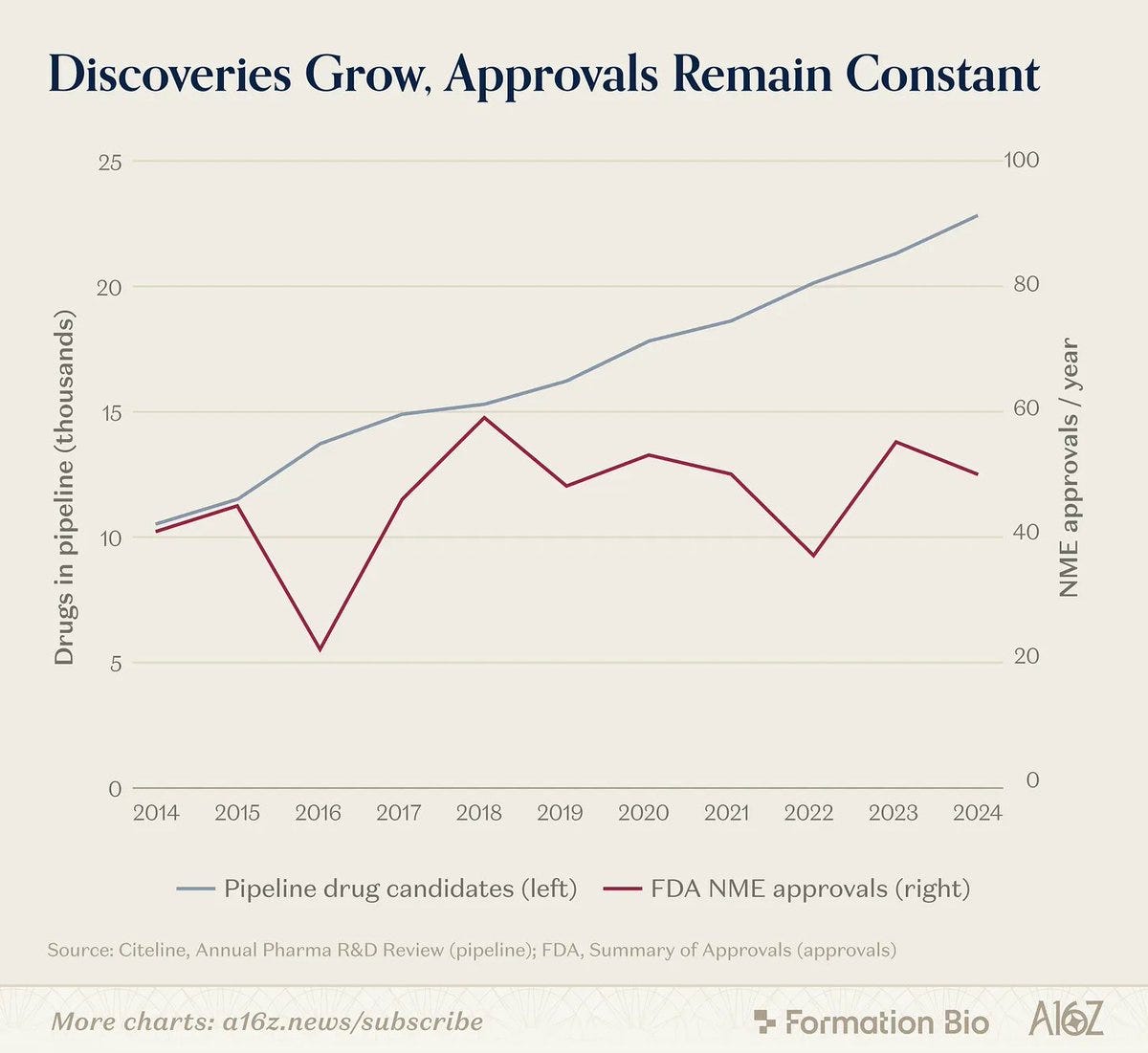
It’s not that things stopped getting discovered, if anything more is getting discovered than ever before. It’s that the approval process hasn’t kept pace with all of it. And the same pattern holds outside pharma too. The ability to bring any of this up to commercial scale is very flat, because nobody’s setting up new factories. Existing factories are barely able to keep up as it is. So honestly, I don’t know if there’s something specific that happened 15 to 20 years ago that explains the timing.
Does that have anything to do with the fact that AI is now a prominent part of the drug discovery process?
That definitely has a big role to play. But to get a drug approved, AI can only get you through the first part of it. It can help identify a promising molecule far faster than before, but the clinical trials, the government approvals, the FDA approvals, AI doesn’t have a role to play in any of that yet. Those are still years long, human run processes. So I don’t think that’s the only reason for the pipeline growing the way it has. It’s just that the world over, people have been able to dedicate more time, bandwidth, and resources to this problem, and everyone’s realised this is the area to focus on.
You also mentioned factories are another bottleneck. New chemical discovery has gone up but factories aren’t keeping up with demand. Why isn’t the market responding to that?
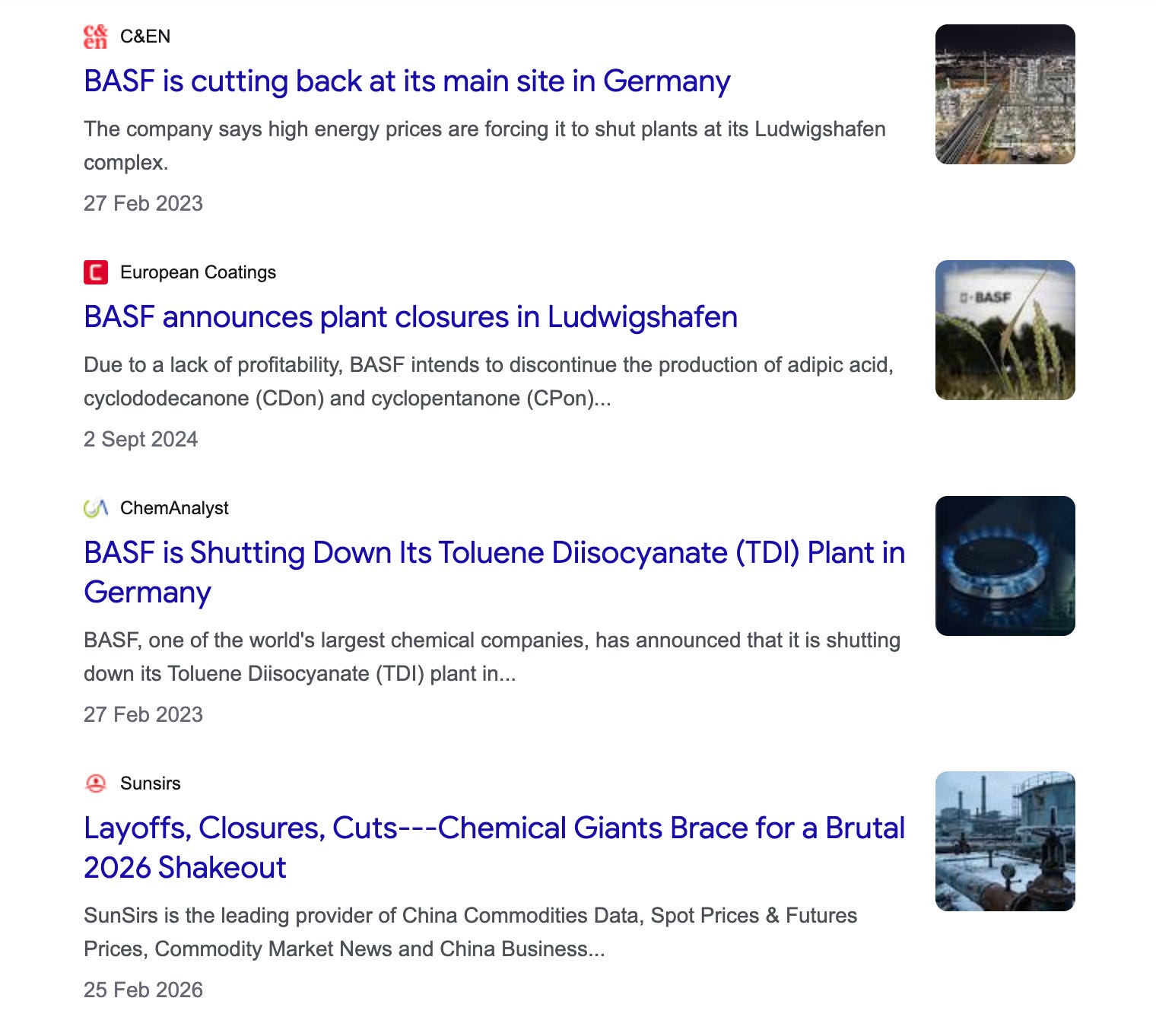
Great question. So there are a few major reasons nobody’s rushing to build. First, there’s already a huge amount of idle capacity sitting around, so why would anyone add more to it? You’ve got factories sitting idle all over the world right now. Europe is an extreme case, even the biggest of the big companies are shutting down factories there. China has factories shutting down too. And India has a bunch of idle capacity of its own. Before you even ask whether a new factory makes sense, you have to ask why you’d build one at all when so much existing capacity isn’t even being used.
Second, even if you did land a new product worth manufacturing, do you actually have any visibility that you’ll still be making it 15 or 20 years from now. Going back to the paracetamol example, you can’t just decide to build a dedicated factory around one product and commit to running it for the next 10 or 20 years, because that kind of capex only makes sense if you have clear visibility that demand will hold up or keep growing over that whole period. That’s just not a bet anyone can confidently make anymore. The honest answer to whether you can see that far ahead is probably not.
And lastly, even if you were fairly confident about that, can you be sure that this specific product remains the most attractive thing you could be making? Say five years from now somebody invents some incredible new AI data centre chemical that changes the world, and you could be making 500% margins on that instead - would you really not switch?
So you’re saying it makes no economic or rational sense to set up a factory right now?
Not across the board, there are obviously exceptions. But by and large, for these kinds of chemicals, I don’t think it makes sense to set up a new factory right now. And the biggest companies have realised this too. Someone like a BASF or a Mitsui, companies that have been around for a hundred years and do tens of billions of dollars in revenue, have entire teams now dedicated to outsourced manufacturing, and even outsourced research to a large extent. This idea of paying someone else to do your research for you, rather than running it entirely in house, is called contract research, and it’s become an industry of its own, exploding over the last 20 years.
Okay, so one of the reasons you wouldn’t want to build a factory today is that there’s no visibility on 20 year demand. But these older Indian chemical giants clearly made exactly that kind of long term bet, decades ago, without any guarantee either. How did that actually work back then?
I don’t think there was ever really a guaranteed 20 year contract, even back then. What actually happened is that the founders of companies you’ve probably heard of, Navin Fluorine, Vinati Organics, Divi’s, Dr. Reddy’s, were technologists first. Dr. Reddy, for example, went to the US, studied chemistry, came back, and decided he wanted to build this in his home country. He knew he was getting into an industry that was about to explode, but I doubt even he imagined it would reach this scale.
His actual bet was simpler than that. He figured if he could just get the ball rolling, he’d eventually be able to capture something like a thousand crore market. In the 1980s, a thousand crore was an almost unimaginable size for an Indian business to aim for. Looking back now, that bet looks incredibly safe, the same way nobody today asks whether a new data centre will actually get used in the future. But at the time, it was a punt on a market that barely existed yet.
What made that kind of bet possible was that almost nobody else had the information to see the opportunity coming. Founders like this were taking a leap of faith on an obscure corner of chemistry before anyone else had spotted it, and that same pattern played out again and again in different verticals. For example, Navin Fluorine caught onto fluorination decades before it was fashionable, back when almost nobody in India was paying attention to that specific chemistry.

Today fluorination is one of the hottest niches in Indian chemicals, and Navin Fluorine is a market darling because of it. That’s what a genuinely forward looking bet from that era actually looked like.
The problem today is that the specific kind of edge Navin Fluorine had back then has basically disappeared. Back then, knowing that fluorination was about to matter was prized knowledge. You had to go to a university to study this stuff or find your way into the operations of one of the global leaders. Most people hadn’t even heard of these things, so getting there early meant something. Today, the moment any chemistry starts looking promising, that information reaches everyone at roughly the same time, through the internet, industry conferences, analyst reports, whatever. Nobody gets a meaningful head start on knowing what’s coming next. So the honest answer to ‘what’s the next fluorination’ is that nobody knows, and more importantly, nobody’s really in a position to take meaningful advantage of it before anyone else does.
Capital used to help close that gap too, since it took real money and relationships just to set up a plant at all, but capital is cheap and available enough now that it isn’t much of a barrier either. Losing both of those, the ability to know something before others do, and the ability to out spend others, is what makes this kind of long horizon bet so much harder to make today than it was back then.
Quick sidebar here. You mentioned a few company names there that I wasn’t familiar with before. And this goes back to your earlier point that our stock market is littered with names of companies and promoters that made it big in the chemicals industry - they probably don’t attract the glitz of the biggest startups in India but I would imagine are giant companies materially affecting our GDP numbers, export numbers etc. Can you talk about some of the legacy companies in this space you admire and help people appreciate how crucial they are to our economy, and maybe what makes them great businesses?
Sure, so I already mentioned a couple of names in pharma. Let me go into some non pharma stuff. All the air conditioners we use run on refrigerant gases, cooling gases, and the chemicals that go into those are produced by three companies, Navin Fluorine, SRF, and GFL, who dominate this space completely. They’re the technology leaders by a mile, and they still pull something like 30% EBITDA margins on it. That’s pretty remarkable, considering how widely used the product is. In something that ubiquitous, they still dominate the entire market.
There’s also a small company in Gujarat - I won’t say the name here - that makes indigo, the dye, with something like a 90% market share globally. This is a dye used every single day, and it all comes out of one company in Gujarat. Dyes and pigments are actually one of India’s largest chemical exports. The red colour on a Mercedes, famously, comes from a company in Gujarat too, and only that company makes it. The Gujarat and Bombay belt together dominate India’s dyes and pigments industry.

India is also the second largest crop protection market in the world, pesticides and the like. Vinati Organics is a company I really admire, they have about 80% global market share in a product called ATBS, which goes into multiple applications, and they’re the outright world leaders in it. Sudarshan Chemical is another big one, in pigments and colours. I was at a trade show in the US last month, and Sudarshan’s name was everywhere. Americans can barely even pronounce the name, but it’s remarkable how dominant they are globally.
What makes all of these such high-margin businesses comes down to one thing - they’re exceedingly tough to get into. I think people overthink how margin actually works. Strip it down and it’s simply demand and supply. In this case, demand is basically a given, these are products the world needs regardless. But supply stays constrained, because very few companies can actually do this well. And you have to keep your economics running while you do it, and by that I don’t mean profitability specifically, I mean cash flow, which is a real problem for smaller factories. If you can keep your cash flow healthy while everyone else struggles to, the margins are there for the taking.
*interviewer takes break to open Zerodha terminal to search for company names*
Okay getting back to our original thread - you mentioned that this IP window is now open for five to seven years. What are the early signs, either of new companies forming or existing ones refashioning themselves, in response to that window being open?
That’s a great question, actually. Remember how I said earlier, if a Japanese buyer comes and asks can you do this, 500 people put their hands up. I’d say there are a few things happening in response to this window right now.
Probably the buzziest thing is the proliferation of CDMOs, Contract Development and Manufacturing Organisations. A CDMO is a company that takes on the entire job of turning a proven idea into an actual manufactured product, the development, the scaling, the technology, everything. Say I’m a Pfizer or a Tesla. I’ve already proven that a specific product (a chemical or a material) can perform a specific function and deliver a specific outcome. I’m now telling a CDMO, you figure out how to actually scale this and manufacture it end to end. Everything I described about the complexities earlier, the tech transfer, the pilot facility, the quality function, all of it, that’s the job a CDMO takes on.
There are some great CDMO companies in India - Neuland and Aragen are two of the bigger ones. But everyone’s latched onto that positioning now. I was at a pharma trade show in the US recently, called CPHI, and it felt like every single company there was calling itself a CDMO. The problem is it’s very hard to actually do well, because being a good CDMO requires real depth in a specific chemistry. You can’t credibly claim to be a CDMO for everything at once. If you’re telling a customer you understand fluorination, you’d genuinely better be the best in the world at it, able to hold your own with the foremost experts anywhere.
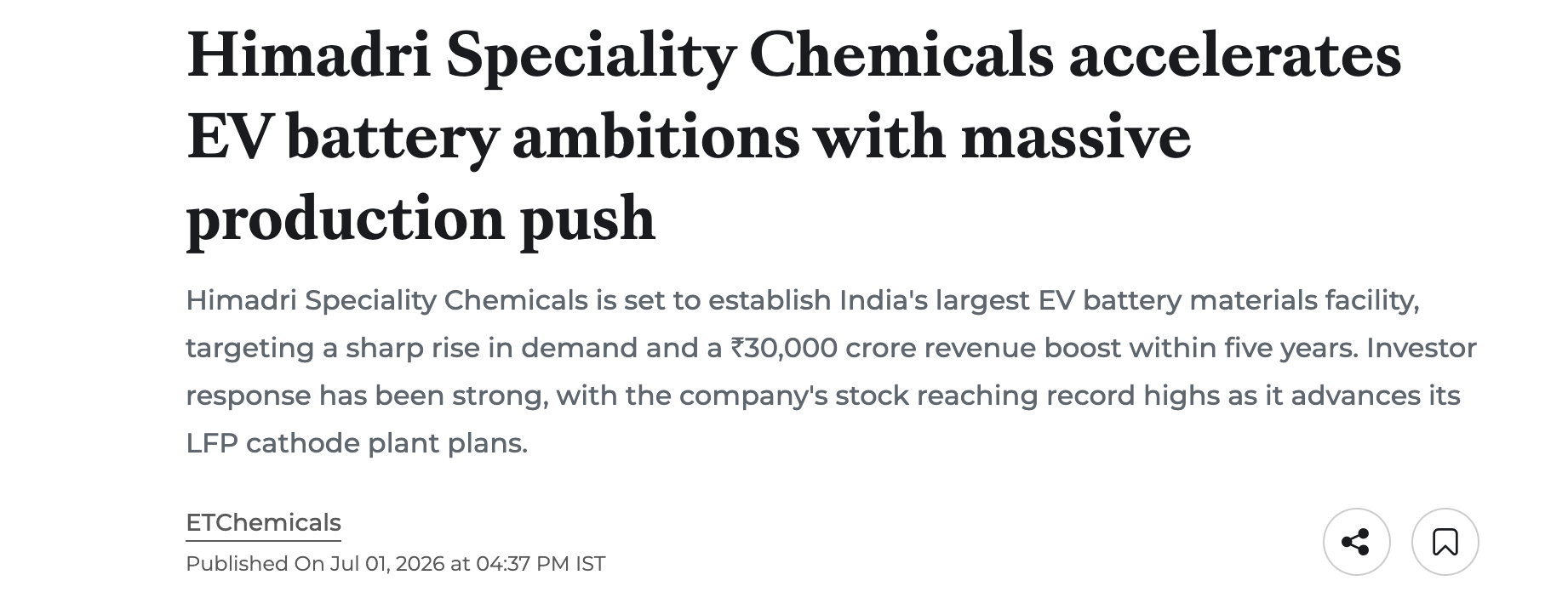
Beyond CDMOs specifically though, there are two other patterns worth knowing about. One is joint ventures and long term contracts. In the last three to five years, there have been at least seven or eight joint ventures between Japanese and Indian companies, mostly betting on lithium, setting up gigafactories for EV batteries and things like that. You’ll see the bigger companies announce this kind of capex directly. Himadri did one recently for EV batteries, for example.
The other pattern is smaller companies taking a picks and shovels approach instead, meaning rather than trying to make the final product itself, they focus on supplying the intermediates or input raw materials that everyone chasing that final product will need. Ami Organics has done this really well, they got in early on exactly the intermediates this window was going to require, well before the demand actually showed up.
So for people who aren’t in the know about this stuff (i.e. me) say a patent is expiring in two or three years. What actually happens in the lead up? At what point does some company, or some entrepreneur or some promoter say ‘okay, we’ve got to get moving on this’?
Let’s go back to the Ozempic example. It’s been widely known for the last five or six years now that it’s going to go off patent in 2026, at least in markets like India and China, even though the US patent itself runs later into the early 2030s. Not just Ozempic, I’m using that as shorthand for the whole semaglutide category, including Mounjaro, Wegovy, and the rest of them. It was a known fact that this window was coming in 2026, so people decided, let’s start figuring out the technology for it now, well ahead of time.
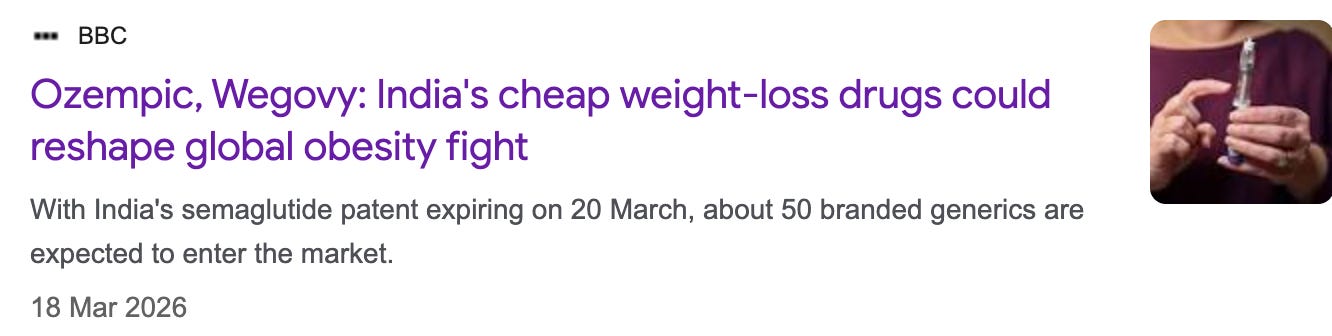
The fine print here is that you’re not allowed to sell the product before the patent expires, but you are allowed to make it experimentally. You can run a lab experiment, a pilot batch, send out samples, all of that groundwork. So companies actually start doing that work years in advance, long before they’re legally allowed to sell a single unit.
Now, the original innovator here, Novo Nordisk in this case, knows exactly what’s coming too. They know they’re going to lose their exclusive hold on this market the moment the patent lapses, so they move first to respond to the new market reality. Their logic is that they already have the customer relationships and the brand, what they need now is a much cheaper way to actually make the product given the flood of supply that’s coming. That’s their priority to stay alive. So say they’re currently making it for 20 rupees and selling it for 100. The moment the patent expires, someone else is going to find a way to make it for 5 rupees and undercut them. So Novo Nordisk’s move is to get there first, find whoever can make it that cheaply, before a competitor does, and then leverage their brand name and better economics to maintain market position to the best of their abilities. Not always an easy task.
That’s why Novo Nordisk is usually the first one to quietly put out feelers in the market, asking, hey can anyone make this for 5 rupees. Manufacturers then put in bids, often three to four years before the patent actually expires - like here’s my sample, here’s my process, here’s my factory, I can hit that price, give me the contract. And that’s where it all starts, years before the product is even legally sellable.
Okay so what does Novo Nordisk’s post-patent reality look like?
They have the demand, and they have the brand. Ozempic is the brand name, the actual product itself is called semaglutide. As a consumer, if you go to a pharmacy, you’re likely to ask for Ozempic by name, so you’re already hooked onto that brand without necessarily even knowing the underlying molecule’s real name.
Most customers won’t admit this but what they actually want is the cheaper product that does the exact same thing. The moment the original drug goes off patent, nobody’s going to keep paying the same 100 rupees if somebody else is selling the same thing for 50 or even 20 rupees. But I still trust the brand, so I’ll keep asking for Ozempic specifically, as long as it’s priced reasonably. Because if Ozempic itself drops to 20 rupees, why would I go out of my way to buy a Zydus version instead at the same or similar price?
So Novo Nordisk’s game is this. They still own the brand. Sure, maybe its worth only 50-80% of what it used to be, in terms of pure pricing power. But the volumes are still there. In fact, once the price comes down and far more people can actually afford it, those volumes will explode, meaning that in a strange way they could even come out of this situation better off than before.
IV. Origin
Cool. I think we’ve got a good foundation now. I would love to know how exactly you and your co-founders zeroed in on this opportunity? What’s the origin story here, personally and collectively?
I’ll talk about myself first, then about my co-founders. For me personally, it was always about doing something in manufacturing, B2B, and the export side of things. Right from the time I was a kid, that’s what we had the most exposure to. Growing up in the 90s and 2000s, you didn’t see tech or consumer brands in a big way. Manufacturing and export was the bread and butter of building a big business out of India. India, I like to say, is still very much a country of Tatas, Ambanis, and Birlas, not a country of Sundar Pichais and Mark Zuckerbergs - not yet anyway. At the moment we’re still a manufacturing-driven, big-output sort of country.
So that was the initial inspiration, I wanted to work in this industry. I got the opportunity after the investment banking stint, when I joined OfBusiness, which was a pioneer in this space, essentially helping small manufacturers and small businesses be more successful, helping them with procurement, financing, all those kinds of things. This was 2015, when our mobile data bills were still something like 2,000 rupees a month, so a long time ago. Naturally much of our operation was also very, very offline. My actual job was to go door to door to small factories across the country and sell them steel plates and bars sourced through OfBusiness.
The learning I got was that something as basic as steel turned out to be more complicated to sell than I expected. I’d walk into a factory that was doing maybe 20 crore in annual turnover, roughly two to three million dollars, and tell the owner ‘look, the price of chromium’s gone up, so the price of stainless steel has gone up too’. And he’d just give me a blank look, like, what are you even talking about. These were serious manufacturers, but they weren’t tracking global input costs the way you’d expect, they were used to whatever their local supplier quoted them, take it or leave it. So anyway that complexity was something I was drawn to, and I kept chasing that throughout my early career.
What came next?
OfBusiness was one story. After that, I wanted to explore more of the manufacturing side in general. I told myself, let me find something that touches every aspect of manufacturing, almost like a one year crash course in whatever there is to learn about how things actually get made. I got lucky again and found a company doing exactly that, through packaging.
There was a startup called Bizongo, building packaging for B2B manufacturing businesses. In that one year, I basically saw everything being manufactured in India. Amazon and Swiggy in Bangalore were customers, but so was a mustard oil company in Agra, a soap company in Raipur, a poultry feed company in Karnataka. Anything that got processed or manufactured, we touched some part of it.
Chemicals came into the picture there, at first just from a packaging component angle, then later through distribution arrangements for that industry too. That year gave me a distinct sense of where the real money was and where it wasn’t. I learned that there’s only so much money in making soap. But chemicals were a different scale of complexity, a much deeper set of process problems to solve and profit pools to tap into. For instance, I kept running into small Indian factories in specialty chemicals sitting on outsized margins, right next to a huge amount of capacity elsewhere going completely underutilised. That gap, real value sitting beside idle capacity, was something I kept at the back of my mind as something that didn’t add up. Again I just chose to follow the complexity.
I left Bizongo after a couple of years to try to build something on my own. I knew I wanted to be involved in the manufacturing universe in some way. But the other realisation I had along the way was that this new opportunity had to be an export business as well. Why? Because while the opportunity to manufacture definitely exists in India, if India is your only customer then you’re capping your ambitions. We’re still a relatively poor country in terms of consumption so I wanted to mitigate against this market risk.
The US was the obvious answer here, the largest consumption market in the world. So I took a one way ticket and went to figure out what actually worked there, and what was missing in the value chain.
That’s when the pieces fell into place?
Yes, so, based on initial customer feedback, I toyed around with a few ideas on the software side first. That idea eventually fizzled out. As I continued to speak to more people, what stood out far more than any demand for software was the strength of real demand for physical products and inputs. I kept encountering the same Japanese case study I was telling you about earlier. Customers kept saying ‘hey we want this specific product, how do we get it made in India?’. They knew a factory existed in India somewhere that made it, but they just didn’t trust it, and had no confidence the whole process would actually get orchestrated properly. That was a compelling insight.
I came back to India and ended up speaking to a friend, Srinath, the founder of Zetwerk, who I’d been colleagues with back at OfBusiness. Zetwerk was also trying to address some of these same pain points regarding manufacturing in India. I told him that I was exploring opportunities in the manufacturing sphere too, and also that I thought the chemicals space was super intriguing.
He told me I should talk to Salil, who was running the chemicals vertical inside Zetwerk at the time but had already decided to leave the company. Srinath connected the two of us. Zetwerk had only dipped its toes into chemicals - it hadn’t gone deep but had seen the opportunity the space presented. Salil already knew he wanted to build something of his own in the same space and knew it would need a bespoke focus and operations.
By the way Zetwerk itself never rebuilt that business after he left, because it turned out to be far too vast and complex to do justice to without the kind of investment we were about to put into it ourselves. Once Salil and I started talking, it became clear we should build that together.
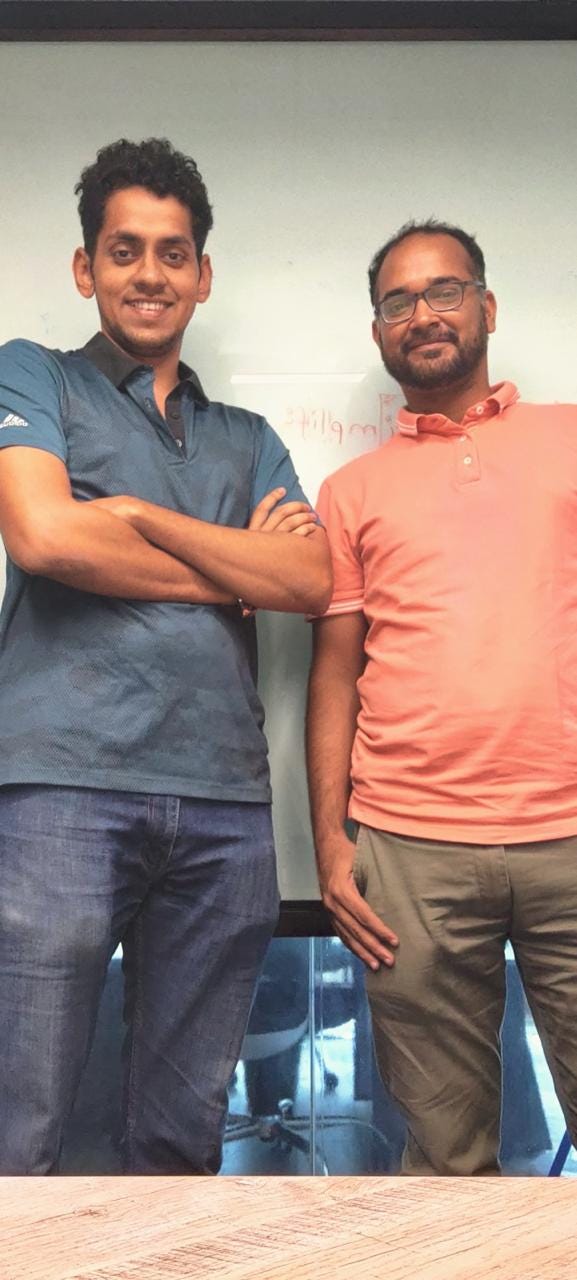
A few months into our brief journey Dheeraj joined us as a third co-founder. Salil and Dheeraj had been colleagues at Zetwerk and they went even further back, having also worked together several years prior at ITC. This was all in late 2022, early 2023. We formally incorporated the company in September 2023.
Do you remember the exact moment you landed on the name - whose idea was it, and what does it even mean?
Salil actually came up with it. It means ‘science simplified’ - as simple as that. There’s a funnier story behind how we got there, though. Early on in our journey we had an investor ready to go. We’d received an offer, but the company didn’t even have a name yet. So the first term sheet was literally written out to ‘Sachin and Salil’. As these things go we went through dozens of iterations, and nothing stuck. We knew we wanted something global, not distinctly Indian, because the international angle was the whole point. It also had to be simple.
And of course as these things also go, the elephant in the room was the domain name. ‘Scimplify.com’ wasn’t available - it would’ve cost us several lakhs to buy it off whoever held it. So we did a deliberate misspelling instead: S-C-I-M-P-L-I-F-I, an ‘I’ where the ‘Y’ should be. That’s how we started out.
We sat on that spelling for close to six months, being genuinely chindi about it. We really didn’t want to spend that kind of money on a domain name before the business was proven. It was only after we closed our Series A that we said, okay, let’s actually fix this. That’s when we became the name that you see today. If you type ‘Scimplifi’ with an ‘i’ into a browser now, it still redirects you to our site.
So how did you guys go about drilling down to the actual configuration of Scimplify? What were the insights you weighed more than others?
We were clear about chemicals. And we thought India should have a bigger say in the global chemical ecosystem. Honestly it kept coming back to China, and the feedback I got from my US trip, talking to folks that were doing business with Chinese manufacturers. What I kept noticing was how that whole relationship actually worked in practice.
Like I told you earlier, it’s usually a case of you call a guy, who knows a guy, who knows another guy, and once you’re a few guys in, you’ve mapped out the entire ecosystem and you know the right person to target. In China, the reason you have to go through all these intermediaries is because of the language-barrier. The people actually running the factories in China mostly don’t speak English, so someone has to sit in between and mediate. If you speak English you probably have a big advantage.
India has the opposite problem. We’re the second-largest English speaking population in the world. So every Gujarati, every Hyderabadi, every Marwari is already sitting in the US saying, I can do it, directly, no trader needed. Which sounds like an advantage, but it actually creates a different problem - it’s tough to ascertain who and what is for real. Anybody can spin up a website, anybody can pull out a nice business card, anybody can show up at a conference in Philadelphia.
To someone in the US who needs a product, how do you actually separate fluff from reality? How do you even begin penetrating this ecosystem?
That’s the specific insight that mattered most to us, that in conditions of information blindness or information obscurity, where buyers cannot tell what’s credible, that’s usually where a trusted brand carries the most utility, where it commands the most value.
So our thinking was, if someone could build a company that could function as the ‘trusted face’ of Indian manufacturing - specifically for chemicals, in our case - they would be the first port of call for global buyers looking to get some chemical or component manufactured in India.
We hadn’t worked out anything about the specifics - which chemicals, which sub-verticals etc - but this idea was the eureka moment for us.
So essentially, you guys wanted to build a trusted window for the world to peer into the Indian chemicals industry, to solve for the ‘low trust’ element that often characterises different spheres of Indian industry and Indian society. You wanted to be the equivalent of ‘the guy that calls the guy that calls the guy’ but for India?
Yeah, exactly. What you want, essentially, is a trusted brand - that’s literally how I think about it. Today, the ‘face of Indian manufacturing’ doesn’t really exist. There are companies doing phenomenally well individually - Dr. Reddy’s is a known name in the US, Sun Pharma is a known name in the US, even Jubilant is a known name in the US. People know these specific companies can reliably do a limited range of products. But by and large, the manufacturing of R&D driven chemicals in India, or materials more broadly, isn’t something with a recognisable face behind it.

It’s worth adding a clarification here that we didn’t want to just be a connector in that chain, we didn’t want to be just another ‘guy’. In China these intermediaries at the end of the day are just middlemen, they don’t actually do anything to the product themselves. That’s exactly the trap we wanted to avoid. If all we did was point a global buyer toward a good Indian factory, the buyer would eventually just deal with that factory directly and cut us out, the same way traders in China get cut out once a relationship is established. So the ambition had to be bigger than connecting people. You need to own the full stack yourself, define the quality standards, define the regulatory work, define the factory relationship, run the actual R&D, and manage the entire tech transfer process from lab to plant.
The R&D and the scientific part specifically is what we chose to keep in house ourselves because that puts us at the same table as the R&D team on the customer’s side, and gives them comfort that we really know what we’re talking about.
Makes total sense. So once you had these insights, what did you actually decide to build? What was the first step of this vision?
The first MVP was very simple. We knew we wanted to build an asset light model for pharma manufacturing. Meaning we wouldn’t own any factories ourselves, we’d orchestrate everything around factories other people already owned.
Step one was setting up our own lab, in Hyderabad, which is a very talent dense area for chemistry specifically. We had our own scientists developing products in that lab, and a handful of partner factories lined up where we could actually scale that production up once our formulations worked. Then we’d take those finished products out and offer them to the market.
Our first set of products were all generic products, meaning nobody was asking us to make these specifically (why would they anyway, we didn’t exist as a company yet). So instead, we chose to focus on certain generic products based on our own market research that were already being used in a variety of use cases. By then we had a fairly solid read on the market, built entirely from our own research and intelligence and industry experience.
Once we were satisfied with quality, we then took these products to the world, meaning that we went to a hundred different customers (some we knew from before, some who were new entirely), one after another, saying try our product, try our product, try our product.
Our initial pitch was just that ‘we can set up a reliable manufacturing supply chain for you’.
This first roster of products, was it like one product or several?
We had seven or eight products in that first batch.
Was there a specific logic you guys applied in this first selection? Was there some power law you were adhering to? Some strategic thesis?
There was actually a real method to it, even back then. At the top level, we looked at demand and supply to make sure it wasn’t a dying product. There were plenty of products in the world getting phased out for regulatory or commercial reasons, and we didn’t want to be anywhere near that segment, we wanted something with strong growth prospects instead. On the demand side specifically, we wanted pricing that wasn’t too volatile, and a reasonable quality of customer, not purely commodity buyers who’d switch suppliers over a rupee difference.
Then we looked at the supply side. Was there a massive factory in China that could just steamroll this product the moment they noticed us. Were the existing players small and fragmented instead. Who actually controlled this market at the time. After that came a feasibility check, okay, demand’s growing and supply’s fragmented, but can we actually make this, were our plants set up for it, were our scientists equipped for it. Then there was the regulatory side, we had a separate team check whether all the paperwork and requirements for that specific market were actually in order. And if all of that cleared, we finally looked at the money, anything short of a 10 to 15% margin was an automatic pass for us.
That was roughly the high level structure back then, though honestly the picture’s shifted a lot since. In the very beginning, we’d take even a 10 crore per product opportunity seriously. That felt like a big deal at the time, because if one product could do 10 crore, ten products could get us to 100 crore, and we’d be off the ground. Today, we only look at products with at least a 1,000 crore global market, where even capturing 10% of that gives us a 100 crore product, which is a decent size now. So that’s how the bar’s evolved, and it’ll keep moving.
Could you go into some detail about one of these first products?
The first product we ever sold, which actually inspired our office Wi-Fi password now, is called 1,3-propanediol.

It’s used as an ingredient in personal care and cosmetic products, things like moisturisers and skin creams, where it helps other ingredients blend together smoothly. It never really took off commercially for us, it was just the first product we happened to do.
One of these first products that did take off at scale is an insecticide that goes into agrochemicals, used to kill crop pests. That one did really well. A lot the biggest agrochemical companies in the world became customers of ours because of it.
Got it. To clarify here, was the value proposition centred on price, or quality, or reliability?
All three, to be honest. But initially, the bigger hook was actually trust. We were saying ‘You’re getting this product from China right now, and we both know that’s a dicey, black box situation, you have no real visibility into who’s actually making it or how’. We were telling customers exactly where we manufacture, here’s the process, come visit the factory whenever you want, full transparency, nothing hidden. That was the initial hook, and people were willing to bet on us because of it.
What was the initial traction with this first set of products and customers?
In our first month of operations we did around ₹2 crore in revenue, and we stayed consistently between ₹2-3 crore in the initial months.
That’s pretty impressive to do right out of the gate. Probably comforting validation that you’d nailed the problem statement.
We really hit the ground running, I’m not going to lie. Salil had already been running the chemicals vertical at Zetwerk, so there were a bunch of customers we were already in touch with from that world. We incorporated the company in September 2023. December was our first official month of business, but even in that gap between September and December, we were constantly out there, staying in touch with people, validating what we were hearing. I should say we also raised our seed round from 3One4 Capital and Beenext in this period.
One more clarification in the interest of transparency, not all of our early business was actually manufactured by us. Some of this revenue came from off the shelf products that our manufacturing partners already had sitting in their catalogue, and we were just good enough at selling them to move volume from day one. It was all revenue to us in those days and we were happy to satisfy the requirements of our buyers if we could.
Got it. But for your ‘core’ products, how were you making money?
It’s simple, we invoice the whole product to the customer. Say it’s a 100 rupee product. Out of that 100 rupees, the raw material cost gets subtracted, then there’s a conversion or manufacturing fee that goes to the manufacturer, then the cost of logistics, operations, packaging, and warehousing gets accounted for. Whatever’s left over after all of that, the gap between the selling price and our total cost, is our margin.
V. Scimple Set Up
It would be great if we could get into the weeds a bit here in terms of how you actually set up your operations and how that’s evolved. So as far as I understand, in your early days, you set up your own lab to devise your own formulations and products. And alongside this you established this network of factories or manufacturers who would scale the products your in house scientists devised. And then ultimately you were responsible for the delivery of these products to the end customers, and it was your brand of products they were buying.
My first question is, in those early days, who was actually the harder sell, the customer buying the product, or the factory agreeing to make it for you?
The harder sell was the factory, by a wide margin. When we raised our Series A, Mark Kahn from Omnivore VC (who led that round), hit us with this really clarifying statement. He said, “Sachin, your customer isn’t really your customer right now. Your real customer right now is the factory”.
Convincing a buyer to purchase the product was never really the hard part. The hard part was convincing a factory owner to work with us in the first place. We were just a couple of guys claiming we’d build the technology to make this all work. The factory owner we’d be pitching to, on the other hand, already had a real business, a plant worth 50 to 100 crore, up and running and generating revenue without us. He doesn’t think he needs us. Why would he take a bet on some unproven founders with no track record instead of just continuing to run his factory the way he already did.
For perspective on how this has evolved, our very first fundraising deck had 30 manufacturing partners listed on it. Today, for context, we have over 500. We get plenty more applying now, and we can afford to be selective, but in those early days, we genuinely had to beg and plead just to get factories and scientists to take a chance on us.
It’s unclear to me still, as to why exactly these scientists and factories agreed to work with you. Like what was the pitch?
Just to be clear, when I talk about scientists here, I mean the people we actually hired directly into Scimplify, not people working inside our partner factories. The scientific side of it is actually the easier answer, and it comes down to ambition. If you’re a scientist working inside a big company, you’re heavily constrained by what management wants from you. Say you’re at a place like Pfizer, your boss is telling you, make this product, and get me a 5% cost reduction on it. So you come into work every day just tightening a few nuts and bolts, so to speak, not actually doing any real process innovation of your own.
One of our scientists put this well. He’d spent thirty years in the industry before joining us, and the way he described it stuck with me. Before, whenever he came up with a new idea, he was limited by his own capital, or by whatever single plant he happened to be tied to at the time. If management wasn’t willing to invest, the project simply died, so his own thinking was constrained before he’d even properly started, since there was no point dreaming up something he’d never get to actually build. Here, he told me, he’s only limited by finding the right factory somewhere in our network, and that alone widens what he’s willing to think about in the first place. He also gave me a concrete example of what that actually means in practice. A client had asked for a reaction he’d have quoted at twice the cost back at his old factory. Working with us, he was able to deliver it at half that instead, purely because the right technology already existed elsewhere in our network for him to adapt, rather than having to make that investment himself from scratch.
Almost all the scientists who joined us early are still with us today, touch wood. They were the ones who came to us and said, this specific product has a real opportunity, I know the process for it, I know how to actually make it work. In other cases it was like, I know how to make this process better. For them it was the realisation that they finally had the freedom to put their own ingenuity out into the world, instead of just optimising someone else’s products. And of course, there were real financial incentives in it for them too, we brought them on payroll directly, not as outside consultants.
Looking back, I think about this talent piece a bit like where software developers stood in India fifteen years ago, meaning there’s this huge, highly skilled and knowledgeable pool of experts that would not be apparent to people outside of this industry. A lot of these folks are now actively moving back from abroad, PhDs included because there are finally enough landing spots for them in India that match their talents.
Understood. And what about the factories themselves?
That was a completely different pitch. Factory owners weren’t out looking for something like this, they weren’t sitting around hoping a startup would show up and be the solution to their problems. They’re the guys running the financial P&L every single day, and their overriding concern is just keeping the lights on.
What made this work was that the initial cohort of factories we scouted were heavily underutilised at the time. Remember I talked about how this is actually quite a common problem these days. And the math on this is worse than you think. If you’re running at something like 30% capacity utilisation, you’re effectively paying out of pocket just to keep the lights on, because you’re not generating enough cash flow to cover your fixed costs. So for factory owners, this was purely about filling unused capacity. We were saying ‘hey we’ve got these pools of demand’, we want to direct some of this your way. All you have to do is become part of our partner network.
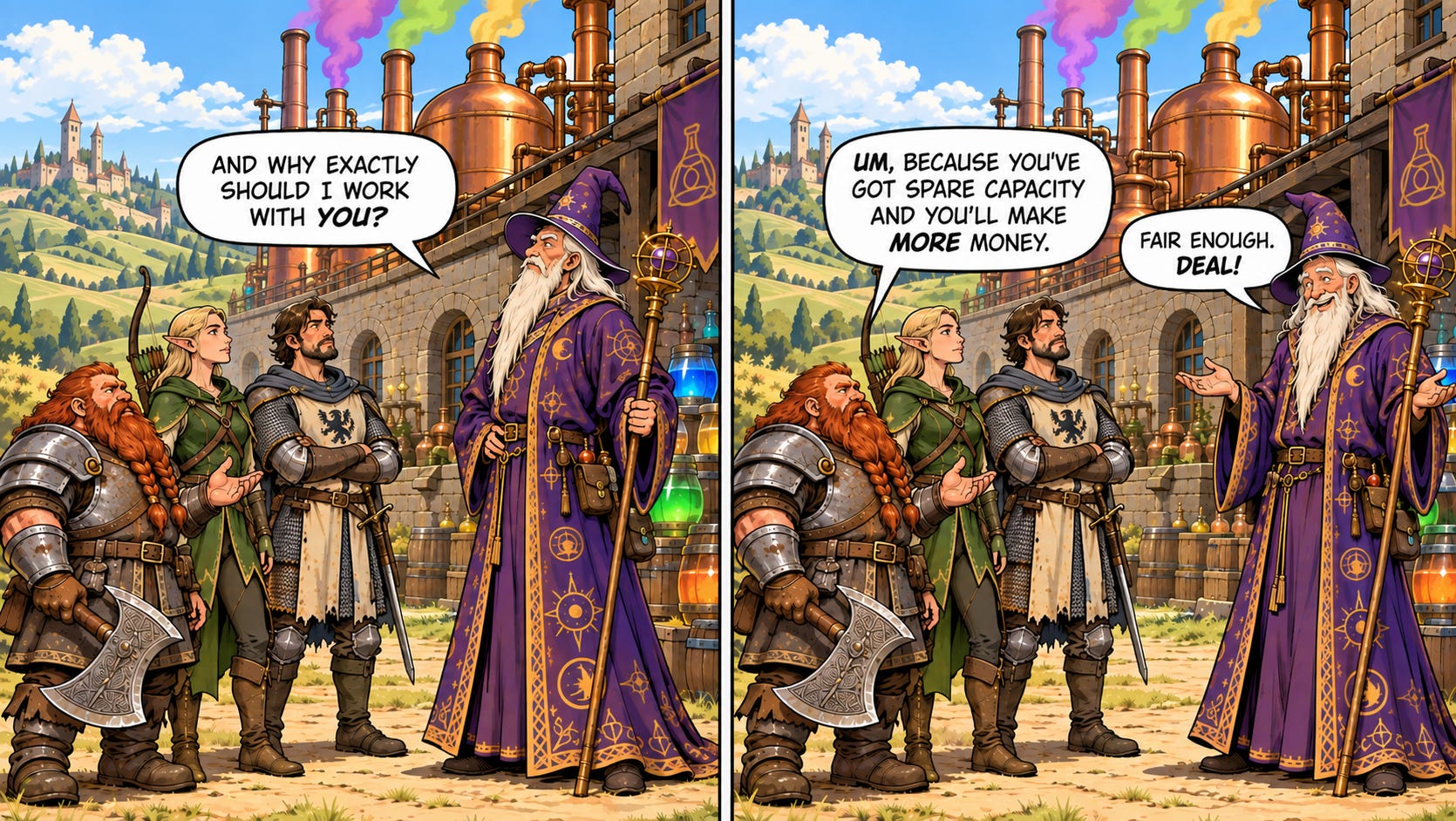
What also helped is that we were doing this the right way. Because it’s not like they’d let just anyone walk in and start playing around with their equipment. You needed real scientists behind you to even start that conversation, to establish legitimacy.
So these early days were a chicken and egg problem in a lot of ways. Having established scientists on our side let us convince a factory owner that there was genuine credence behind what we were proposing. And having a factory relationship already in place let us convince established scientists that we could actually scale whatever they’d developed, not just leave it stuck at the lab bench.
Right. So chronologically, you started out, and the first thing you did was find factories with idle capacity, which weren’t hard to find because of the macro changes in the chemicals manufacturing industry.
You already knew, from your prior work experience, there was certain demand in the market for certain chemicals, and certain customers to go to.
You convinced scientists to work with you by appealing to their sense of ownership and ambition. These scientists devised new products or better quality versions of existing products.
And you went to the factory owners and said - hey, you have spare capacity, why don’t you use some of it to make things per our specifications for our customers. You will have to adhere to our standards and requirements and processes, but you will get additional revenue, and we will manage the entire customer relationship at the other end.
Is that basically it, or am I missing anything?
That’s basically correct. Any revenue you generate at that level of spare capacity goes almost directly to your bottom line, since your fixed costs are already covered whether you use that capacity or not. That’s what made it such an easy sell.
And that’s still true today. For most factories, underutilised capacity remains their single biggest pain point, so that’s exactly how we pitch it, and it’s why they come to us in the first place. We now get factories from Japan, Thailand, and Indonesia reaching out saying, ‘can you do this for us?’. From the US, we have factories telling us, ‘Sachin, can you just pick this up and run it for us?’.
When it comes to the demand side of this, what was the pitch there? Was it literally just - hey man supply chains are dicey, we’re not that far removed from COVID, why don’t you buy from India - you can trust it more, see it, touch it, meet the people, speak the language? Do these customers then just turn around and tell their Chinese partners, ‘Sorry boss, I found an alternative. Thanks I’ll see you later’?
It’s not usually about cutting China out entirely, that’s exactly why the strategy is called China+1, not China minus one. Companies always want to keep an alternative running alongside China, not necessarily replace it. Even the best run global companies would typically keep 70 to 80% of their volumes in China, and want maybe 20 to 30% shifted to an alternative like India. That’s the vein of the demand we were tapping into.
It’s more of a hedge than a wholesale switch. But keep in mind the scale we were starting from as a brand new company. Even a modest 20 to 30% slice of someone’s global volume was a double or triple of our entire business at that stage.
Random question. Does the existence of Scimplify give your customers the ability to go back to their Chinese partners and negotiate on price? Does it give them leverage here?
Maybe, but I don’t think that’s the main play here. I don’t think buyers are doing this purely to go back and squeeze better pricing out of their Chinese supplier. The real issue is more basic than negotiating leverage. You can push a single supplier as hard as you want on price, but if that supplier is genuinely your only option, what leverage do you actually have? Having a real alternative isn’t just about having some kind of bargaining chip. You can think of it more like insurance almost. It’s literally what you’ll fall back on if your main supplier lets you down.
Could you say more about how you described the first version of Scimplify - were you basically a marketplace?
No, not at all, we were never a marketplace. There are a lot of words people reach for to describe us, but the bottom line is that a customer looks at us like a supplier of products. As far as a customer is concerned, they are buying from Scimplify, the manufacturer.
The only difference between us and any other ‘manufacturer’ is that we don’t own the actual steel and the brick in the ground. Short of that, we do everything a real manufacturer does - the development work, the process control, the quality checks, the delivery, all the paperwork. So ‘an asset light manufacturer’ is probably the cleanest way to describe what we actually are.
But increasingly, we’ve started thinking about ourselves as something even bigger than that - as a company building the intelligence and orchestration layer behind any material or chemical product that needs to get made, not just running our own version of a manufacturer’s playbook. And honestly, the definition of what a manufacturer even is has been shifting underneath the whole industry too, not just for us.
We were looking through annual reports from companies like BASF and Evonik recently, and their whole portfolio language has changed. Ten years ago, a company’s annual report, Indian or European, would say something like, we’re announcing a new factory in Gujarat, or in Belgium, wherever. In the last five years, that same report will instead say, “we’re entering the lithium value chain”, or the EV value chain, or the fluorine value chain. The entire framing has moved from the factory to the product.
What that phrase, “entering a value chain”, actually means in practice is left deliberately vague. These companies won’t come out and say there’s a factory involved at all. They’ll say they have a “technology partner” instead. Going back to those Japan-India joint ventures I mentioned earlier, that’s usually the real structure underneath it, a technology partner supplying the science, quietly setting up a factory behind the scenes, and together that combination is what actually produces the product.
Read between the lines and the reason will become apparent. Telling investors “I’m building a factory” doesn’t sound exciting anymore. To a stock market investor today, that’s actually read as a negative signal. Which is exactly the gap we sit in. We’re the technology partner these companies would rather be able to point to, instead of admitting there’s a factory involved at all.
When you were initially starting out, what was critical to get right?
I think the most important thing was the whole manufacturing and product side of it. Given our background, we already knew we could sell things. If you can sell a bar of steel door-to-door, you can sell just about anything. Factory identification was never really the hard part either. The real challenge was actually executing the whole thing end to end, hand holding the technology transfer, making sure things didn’t fall apart somewhere in the process. And a lot of things did go wrong. What you’re seeing now, the version of Scimplify sitting in front of you, is really just the things that ended up going right.
The technology piece is where things actually go wrong, and in the pilot stage in particular. A huge amount can fail at that stage, because it’s the first time a process steps outside the lab into something untested at even a modest scale. It’s a bit like moving a plant out of a nursery, where the conditions are controlled and forgiving, into open soil, where they’re not.
That’s where it fails, more often than people realise. So getting that specific stage right was the first real thing we had to solve for.
What did you get wrong? Like, what mistakes did you make that you wish you hadn’t? What dumb things did you guys do?
Honestly, there isn’t a single clean answer to that. A better way to ask it might be, what do I actually regret, because we did plenty of dumb things, but very few of them weren’t regrets exactly, most were just necessary steps we had no way of knowing about in advance.
Take something like mother liquor. There was a stretch early on where that phrase alone would make us nervous. It’s part of the standard process, you feed a batch of raw materials into a large reactor, something like 10,000 litres, and once the actual product crystallises out of the solution, what’s left behind is called the mother liquor.
![BUY] Old Monk Supreme Dark Rum at CaskCartel.com](https://substackcdn.com/image/fetch/$s_!mL5q!,f_auto,q_auto:good,fl_progressive:steep/https%3A%2F%2Fsubstack-post-media.s3.amazonaws.com%2Fpublic%2Fimages%2F6ff3b684-9011-4323-b360-a41721f46b09_450x600.jpeg "BUY] Old Monk Supreme Dark Rum at CaskCartel.com")
With two or three of our early products, that mother liquor simply wasn’t forming the way it was supposed to, and we had no idea why. It turned out to be a complicated step to get right, and we only learned what to actually watch for by getting it wrong first. Thankfully none of these were expensive mistakes, nothing that put a real dent in the business, but we made plenty like it.
The bigger, more consequential one was around our own scientific bandwidth. We started out with literally three senior scientists, plus a handful of chemists, all based out of Hyderabad, people we’d pulled in from places like Sai Life Sciences and Tata Steel. We didn’t know any of them personally beforehand, we found them purely through the process of building the company, we effectively sold them on joining us. Dr. Prem was one of those very early scientists, and he still runs our entire Hyderabad operation today.
The problem was that three scientists couldn’t come close to handling the volume of demand we were already getting. So we started outsourcing overflow work to individual scientists outside the company, and that’s where we learned a hard lesson about how this actually works in India. You’d bring someone on for a specific piece of work, almost like hiring an outside contract researcher, and you’d get people, often retired scientists, confidently telling you, beta main kar lunga, insisting they were the foremost expert in the world on whatever the chemistry was. A lot of that talk went nowhere.
It’s the same problem I described earlier with that Japanese company auditing Indian factories. A claimed reputation is hard to translate into actual, repeatable output, and there’s no way to fully verify it in advance. Even with Scimplify today, we can’t guarantee every outcome perfectly. But we’ve gotten better at it over time, and because we now have an actual reputation of our own to protect, we’re far more careful about not overpromising and then failing to deliver. I think that’s exactly where the value of building a real brand comes back in.
So when did you actually know you had something real? When did you realise this was working?
That’s actually tough to answer, because I don’t think we ever really knew, not in a single clean moment. Not that it was a shot in the dark either, I’d done versions of this before, in different forms. We never really went into this wondering whether it would work at all. The real question was always how big it could become. So let me split this into two parts - the first is when we knew the model itself worked, i.e. the asset light manufacturing approach. That much was clear from day one.
The second part is knowing how many people would actually need this at scale. Early on, when we were about three months old as a company, I remember a VC pitch that went pretty badly, in hindsight. At three months old, we were already doing almost 10 million dollars annualised, which by any measure is a strong number for a company that age. But I went and pitched this VC, and the feedback that came back afterward was, yaar, tune na bahut chota outcome bataya. I didn’t know what I’d said wrong. It turned out I’d pitched a billion dollar outcome, that we’d take this from 10 million dollars to a billion dollars and eventually IPO. They’d apparently read that billion dollar figure as a founder who couldn’t think big enough. In hindsight, I was the one who was wrong. We now know a billion dollars is actually a fairly conservative outcome for this business. I just didn’t know that yet when I started the company.
The real scale of it, though, we only understood much later. Just last week, I was at TDK’s headquarters in Japan, a beautiful office, and they told us they were very happy with the level of impurity control we’d achieved for them.
I didn’t imagine hearing that from a company like theirs, only two and a half years into this. We couldn’t have forseen that there’d be a hundred year old company willing to say - here are 1,300 of our products, go figure out what you can actually do with them. That level of openness from global companies like this surprised us.
I think we only really understood the actual scale of what we’d built in mid 2025, almost two years in, when companies like BASF started calling us directly, asking, can you do this for us too. That’s when it really hit us how valuable this solution was.
You didn’t think that was going to be the case when you started?
Honestly, no. In fact, I’ll go one step further and say it’s probably the thing that’s surprised us most over the last three years - this whole idea of orchestration - that we’d end up filling such a crucial role in this supply chain with our specific solution.
The global innovators are genuinely struggling with this in a way I never appreciated before we started - I simply wasn’t in the room to see it. Today, the fact that hundred year old companies doing 25 billion dollars in revenue are telling us, here’s a new hair colour we’ve developed, and we have no way to actually scale it up. That’s a strange thing to consider. I had no idea that was even a real problem for companies at that scale. And it says something that they’re willing to trust a two and a half, three year old company to solve it for them. It’s something we’re very proud of.
[6] Orchestration
Let’s get into that. So if we could just reset the table for everyone, what is Scimplify today? What do you guys do?
We call ourselves a science first, asset light manufacturer for advanced materials and specialty chemicals. In practice, that means we work with innovative companies as our customers to make sure the whole journey from a lab discovery to reliable, commercial scale production actually happens, faster, cheaper, and more sustainably than it would otherwise. We started the company in September 2023, so we’ve just crossed our three year mark.
Today we operate majorly across four industries, pharmaceuticals, agrochemicals, flavours and fragrances, and industrial chemicals. The fastest growing piece of that portfolio right now is energy and infrastructure, materials that improve conductivity on a semiconductor, etchants used in fabrication, cathode active materials that go into batteries, a lot of which we’re still co-developing directly with our customers. Behind all of that sits our own R&D operation, three labs now, two in Hyderabad and a newer one in Bangalore, with around 60 scientists working full time across them, and a network of more than 500 manufacturing partners who take that science and actually scale it into real, sellable volume.
On the demand side, we now serve customers in more than 40 countries, each with its own regulatory quirks to navigate. On the supply side, manufacturing is still centred in India, but that’s expanding too, we already have partners across Southeast Asia and the Middle East, and we’re actively evaluating our own manufacturing footprint in the US and Japan as well.
So in a nutshell, we act as an alternate, technical, science first supplier for our customers, one that owns the entire journey from development all the way through to commercial manufacturing, without ourselves owning the factories that final production actually happens in.
Before we drill down on the individual pillars of your operation, could you actually take us through a real case study to bring some of this stuff to life?
Sure. I’ll talk about some of our work with Coromandel, which is one of India’s largest agrochemical companies. We’d actually been engaging with Coromandel right from day one of the business, and they formally came on board as a customer about seven months in.

Their problem was simple enough on the surface. They were using a product sprayed across fields as an insecticide, bought in powdered form and mixed with a solvent before spraying. But the product had a real physical problem. It wasn’t dissolving properly, it kept coagulating and forming lumps instead, and that had become a recurring, unsolved issue for them.
Most of their supply was coming from small manufacturers in India who simply didn’t have much incentive to fix it. They knew Coromandel had no real alternative, and going all the way to China wasn’t worth the investment for a product at this scale. So the problem just never got solved, and Coromandel had effectively learned to live with it.
So they asked us to take a stab at it. In the context of everything else this industry deals with, it was actually a fairly simple fix. We ended up adding in a specific additive to help it dissolve smoothly instead of clumping. We cracked it.
The sample we handed back had great dispersion and solubility, and they liked it immediately. We started production with a single manufacturer in Gurgaon, then expanded to five or six more doing the same thing, and today we have an entire dedicated factory in Gujarat built around this one product alone. Beyond delivering consistently for Coromandel, we ended up securing more than ten other customers for that exact same product along the way.
If it was relatively simple, why aren’t there more people doing this?
Because that mindset is genuinely missing in most of the industry. The factory Coromandel was originally buying from is probably a 40-50 crore outfit that’s been running for 10 to 15 years. Coromandel’s clearly an important customer for them, but going back, finding a scientist to actually fix the problem, demoing the new process, stopping the production line, fixing it all over again, none of that is easy. And it’s not just a mindset problem either, there’s a real financial cost sitting behind it. You have to pay a scientist upfront, with no guarantee it actually works out.
We’ve got plenty of products ourselves that haven’t worked out, where I’ve paid a scientist’s salary and nothing usable came out of it. Chemicals might be the one industry in the world where you can put A and B together in a machine, and the whole thing just evaporates, leaving you with literally nothing to show for it. With most other kinds of work, you can usually salvage something from a failed attempt. Here, you often can’t. So there’s a real concrete cost built into trying, and that’s exactly why most people don’t want to invest it upfront.
Right. All makes sense. And makes sense why you guys were able to make a dent in the market so quickly. On that note, from the sounds of it, you guys were unusually quick out of the gate on the business front. What have been the major milestones from September 2023 till September 2026?
I think, and this has changed quite rapidly for us, every six months there’s a new goalpost, purely because of the scale of the business, not because the underlying model itself ever changed. The first six months were entirely about getting the right set of factories in place. You don’t want factories lying to you, cutting corners on compliance, that kind of thing. We made real mistakes there early on, and we got just as quick at kicking partners out as we’d been at onboarding them in the first place. So those first six months were all about getting supply right, since the customer side was never really in question, demand was in overwhelming excess from the start.
The next six months were about stabilising operations, making sure the whole engine actually worked repeatably rather than just once. That’s the first point where we started genuinely investing in our own tech and process, our internal workflows. This was 2024, and we did about 100 crore of business that year, with decent margins already.
2025 was entirely about international expansion. Once we knew the engine actually worked, the plan had always been to take it from India out to the rest of the world. That’s when we put serious, sustained effort into growing that side of things. All of those entities I mentioned earlier, in the US, Japan, and elsewhere, got formally set up during this stretch. We even did a small acquisition in Japan, hired local teams across all these markets, and started seeing real demand come in.
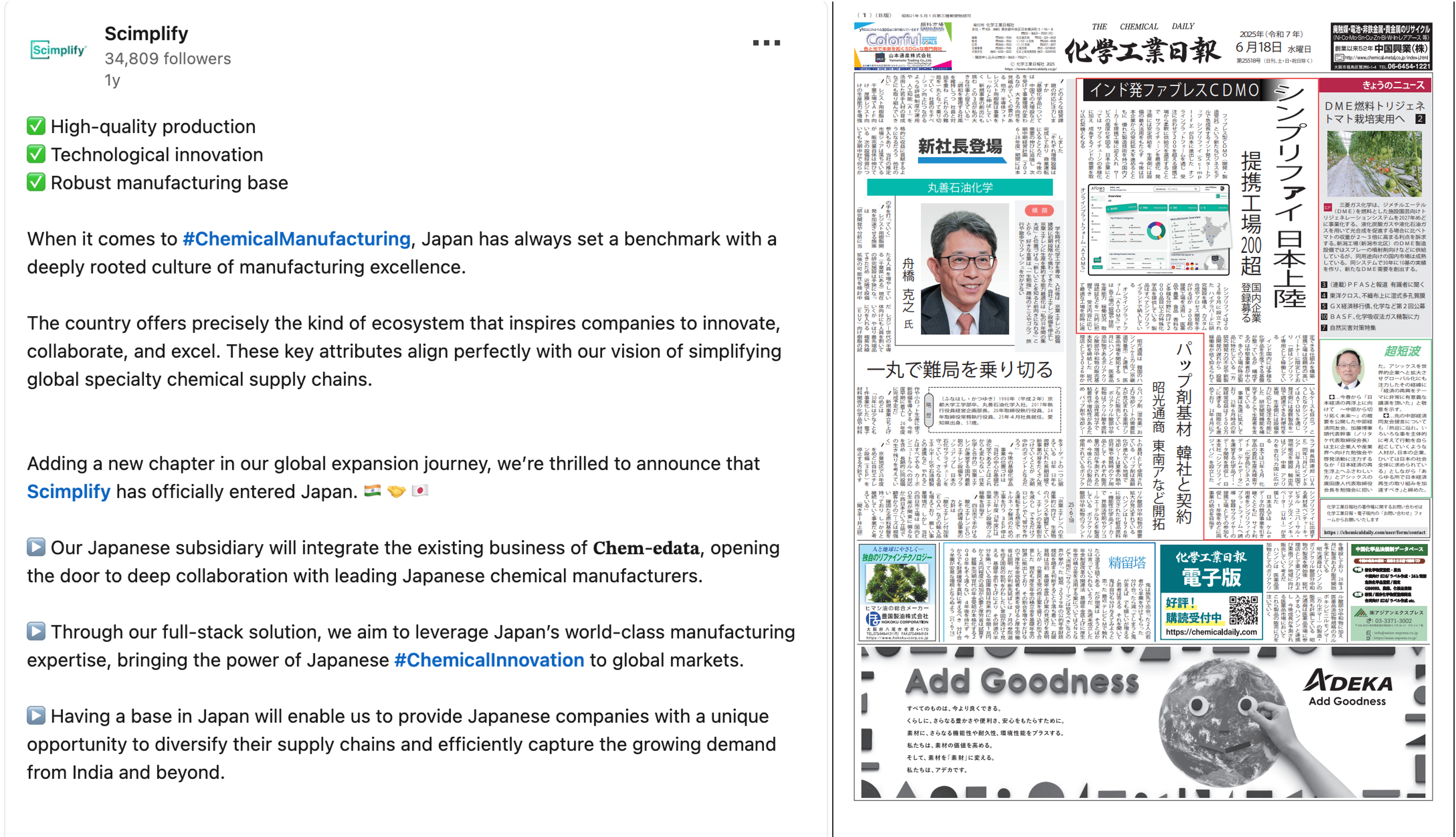
I personally spent a lot of time on the ground in these countries myself, getting that initial zero-to-one moment going in each one. That focus paid off, we ended up with 25 countries contributing a meaningful share of our revenue.
And that global demand was instant?
Demand was always instant, honestly. In this industry, if you actually have the product and the capabilities behind it, demand is a no brainer. If you’re even a half decent salesperson and you walk into the US saying, I have this high quality specialty chemical, demand shows up immediately.
The real problem was never demand, it was execution - actually being able to deliver on what you’d promised. So 2025 was really about building the base to handle that.
Now, for 2026 - and we literally just had a board meeting on exactly this the day before yesterday - the way demand comes in has changed. It used to be us going out and asking, will you take this, will you take this. Today it’s mostly the reverse, these big customers are coming directly to us, inbound, or through references from other companies who’ve already worked with us. TDK, for example, came to us saying, we’re looking to build out our entire value chain in India, can you do this for us. BASF is a customer now. We’re onboarding a couple of major European companies as we speak. In Japan, we count the likes of Sumitomo and some other heavyweights among our customers, along with a number of semiconductor companies too.
All of them are essentially saying the same thing, ‘we understand that asset light is the future’. It’s not just large incumbents either, we’ve had an early stage startup out of Japan come to us too, telling us they’d spent ten years perfecting a specific technology but couldn’t commercialise it at home because the costs didn’t work, and needed a partner in India who could run the whole process for them end to end.
None of this trust gets built long distance. Every month, without fail, customers from Japan or the US fly out and walk our labs and factories in person, to satisfy themselves that the technical depth we’ve built matches the seriousness of the innovation work they’re doing back home. That’s the industry we’re building toward now, and these are the products we want to be developing.
If we were to borrow an analogy from the semiconductor world, you could think of us like Intel, meaning we’re the ones actually designing the process and owning the intelligence behind the product, while the factories we work with function more like the fab, the ones physically running it at scale.
You mentioned you’re very selective about which factories you bring on now - how does that vetting and onboarding process actually work in practice? Are you inspecting sites, assessing capabilities, doing quality checks? How do you actually onboard these guys? And why do they actually come on board to you?
We have a dedicated team for all of this - it’s called the IM team, short for Integrated Manufacturing, and their work is largely divided into four main jobs.
The first is factory identification and onboarding. By now we already have a very good map of the factories that exist, so even if we don’t have a specific one in our network yet, it’s usually just two phone calls away. The pitch to them is - we’ll take care of sourcing the raw material, we’ll take care of getting the right technology in place, we’ll bring in the engineers, you just manufacture.
The IM team’s job is to make that pitch and gather their details, and then a separate audit team runs a very detailed quality audit on top of that across more than 200 parameters, covering what chemistry they can actually handle, what equipment they have, what paperwork and compliance they carry, ISO, GMP, all of it. We’re not harsh about this, if you’re not the single best FDA audited factory in the world, that doesn’t automatically disqualify you. It’s a spectrum. There’s a hard cutoff, and then there’s everything above it. The cutoff is basic, you need consent to operate, environmental clearances, you’re actually filing your tax returns, that kind of baseline. Beyond that, where you land is a spectrum, depending on the quality of the factory and which specific compliances you already meet.
The second job is production itself. We have engineers who’ve each spent 20 to 25 years working deeply in one specific chemistry. Say we want to bring on a new phosphorus based product, I’ll call my phosphorus specialist and tell him there’s a new phosphorus product we’re commercialising at this particular factory. He’ll then go camp out at that factory for maybe a month, making sure the initial production batches are actually running properly before we trust it to run on its own.
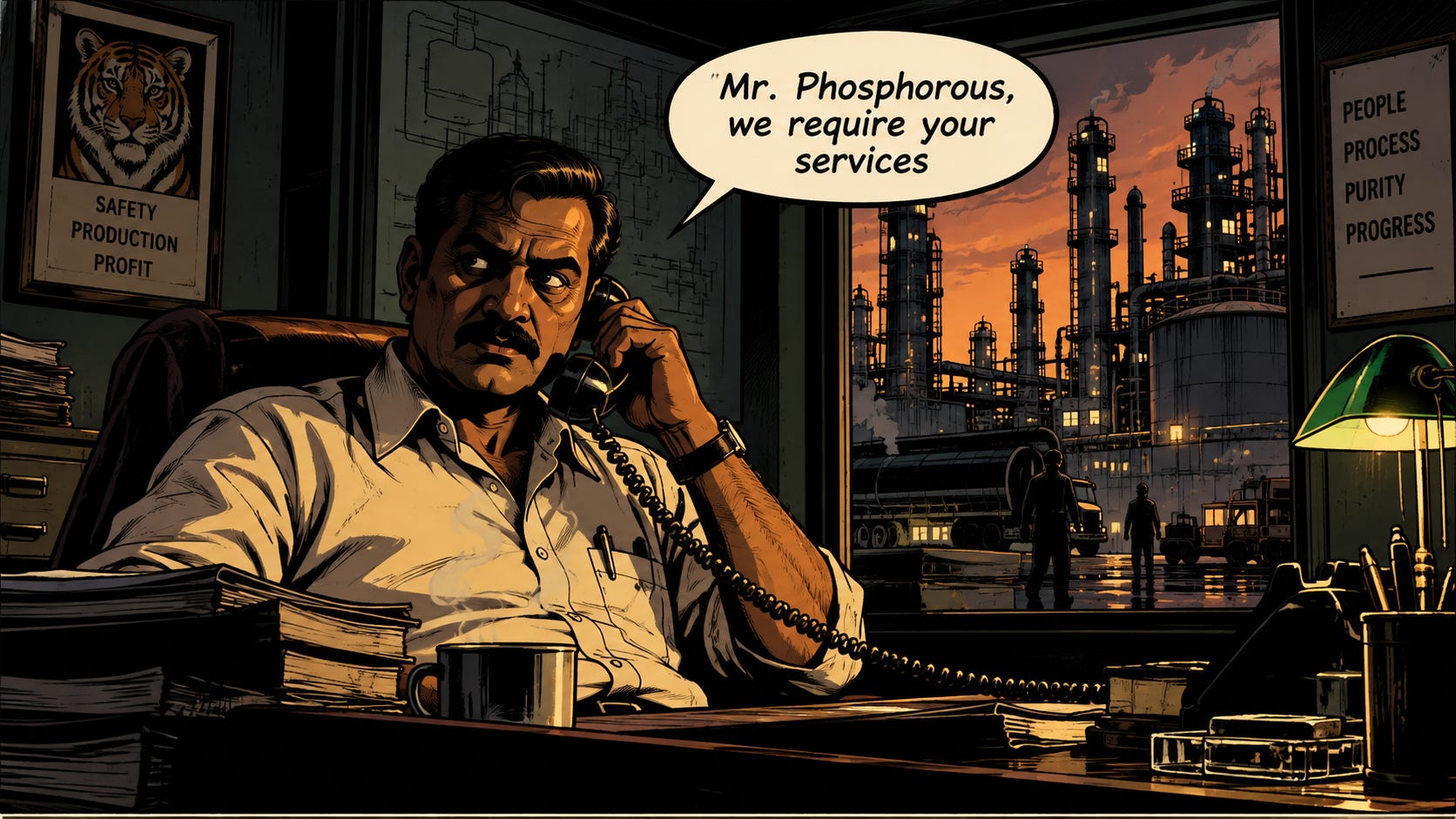
The third is quality. We have a 15 member quality team today, and in our world, QC and QA actually mean two different things. Quality check is what you’d have seen in the lab itself, the machines, the testing equipment, and so on. Quality assurance is more about process, is this specific step being done by hand, or is there a fully automated machine doing it instead, that kind of distinction.
The fourth function, which technically isn’t an IM responsibility but we’ve folded under that team anyway, is technology, specifically how we improve factory productivity using AI. Across two of our factories today, we’ve got IoT enabled devices plugged directly into the equipment, giving us very deep, real time information. This is the factory, this is the specific reactor, and inside that reactor, this particular pipe has pressure fluctuating by such and such amount. If I controlled that pressure more tightly, how exactly would my yield actually change.
We don’t build any of these devices ourselves, to be clear, we source them out of China. They’ve been a total commodity for years now. In any case the genuinely hard part isn’t the hardware at all, it’s getting an AI system to actually generate a useful prediction from all that data. I was listening to a Travis Kalanick podcast recently, on TBPN, and he made a point that’s really stuck with me since. Today, if you ask an AI to write software, it’s relatively easy, because there are trillions of lines of existing code on the internet for it to learn from. But ask that same AI to design a physical machine for a factory floor, and it genuinely can’t do it, it can’t even conceptualise what that machine should look like, let alone actually build one. Physical AI is years behind software AI in that sense, and it’s exactly the kind of gap we want to start investing in early.
What does a typical factory in the network actually look like, in terms of scale?
It varies, to be honest. Some of our partner factories are mid scale, with maybe three or four reactors. A reactor, for context, is essentially the vessel where the actual chemical reaction happens - raw materials go in one end, product comes out the other - so the number of reactors a factory has is a rough proxy for how much it can physically run at once.
Other factories are ‘single technology’ outfits running what’s called continuous flow, meaning material moves through the reactor in a constant stream rather than being processed in separate batches, which tends to suit factories built around one specific product rather than a wide range. Those tend to be mid scale too.
Then there are larger factories with real depth of capability but not full utilisation, which is exactly where we come in. Take a factory with something like 10 to 15 reactors and around 250 kilolitres of total capacity, that’s a fairly typical example of what we work with. So we sit across that whole range, mid scale through large scale, but we’re not yet at the very top end of the industry. Something like Jubilant’s Gajraula facility runs at 400 kilolitres, we’re not there yet.
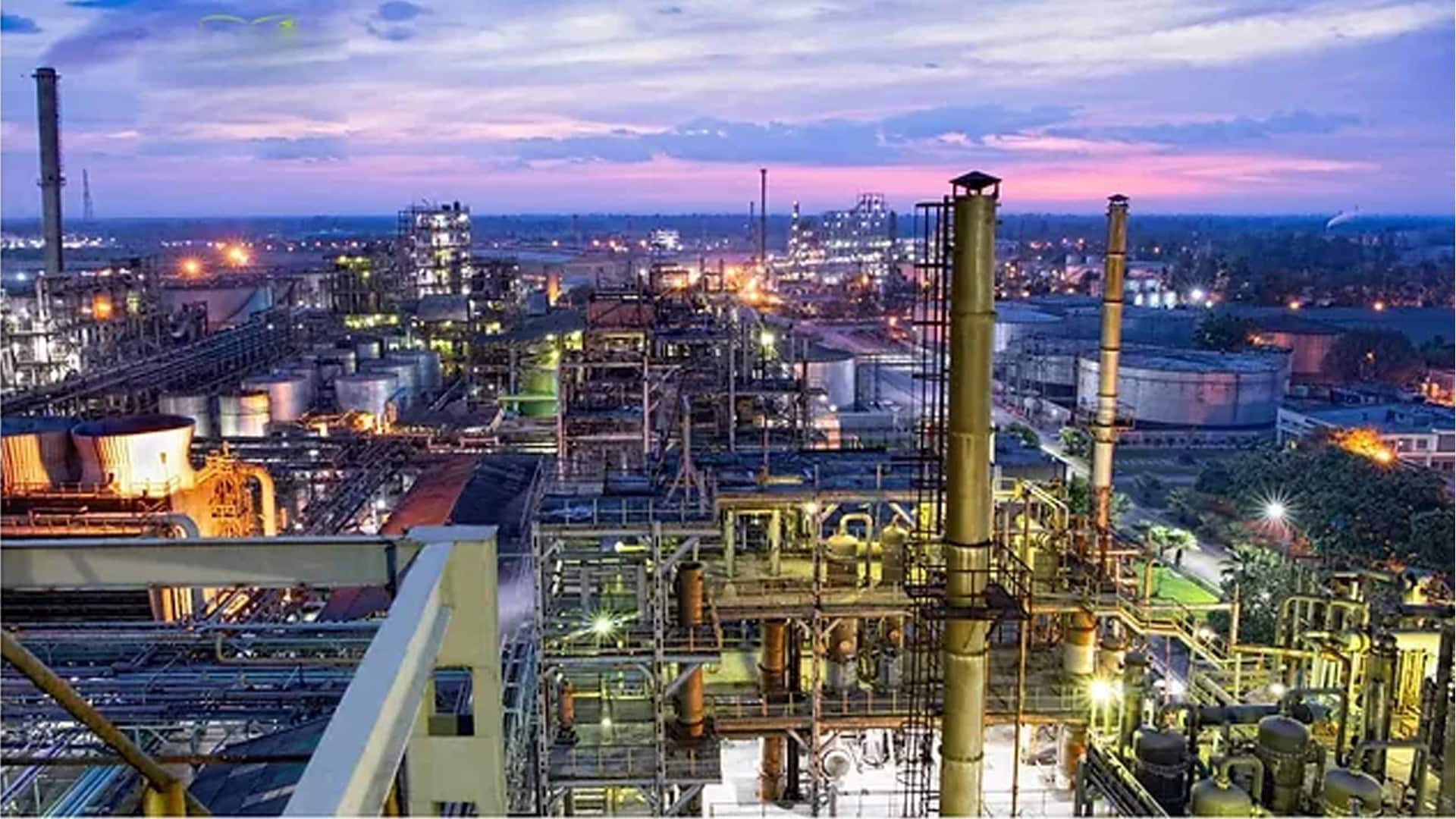
When you were talking about the rationale behind the ‘full stack’ approach vs just lead generation, you said it was because you didn’t want to be cut out from the value chain in a way that often happens with traders in China. What stops a manufacturer from doing that to you today? Why wouldn’t they just go direct to the customer?
I could give you a hundred reasons involving contracts and legalese and all of that, but the real answer is much simpler than any of it. If you’re literally handing a factory brand new technology, cutting you out would mean killing the goose that’s laying their golden egg. Now, if it were a one and done relationship, a single product, a single deal, sure, they’d have every incentive to bypass us, there’d be no real game to protect.
But that’s not how the majority of our relationships actually work. Out of our 500 factories, there are about 70 or so that we work with regularly, every single quarter, and with each of those, we’re typically running four or five different products at once. So if a factory decided to cut us out on one product with one customer, they wouldn’t just be risking that single deal, they’d be jeopardising three or four other products running through the same relationship. And for what, an extra 15% margin one time on a single transaction?
And what happens if something goes wrong. If a quality or safety issue reaches your final end customer, who actually takes the liability?
That’s what’s called a ‘latent defect’ in the industry parlance. Say we supply something to Tesla, it goes into a Cybertruck, and months later a driver says their battery’s failing. That’s not on us - we’ve already verified the quality on our end before it left the factory. So generally, we don’t sign up for liability on latent defects, though there are specific cases where we’ll take responsibility for a time-bound window - three to six months, say.

It’s different, though, if the issue surfaces before it gets that far, like if our direct customer rejects a batch on quality, that comes straight back to us, and it goes back to the factory. The chain works like this - the factory in Gujarat manufactures and does its own quality check first. Before we ship anything out, we run our own third-party testing - we work with around 50 labs for this, spread across India, with a few now in the US too. Plus we run our own tests in our labs. Sometimes the customer joins that testing round directly, to confirm quality themselves. Only then does it ship.
The customer then runs their own check again before it enters their production line. In the Tesla example, that’s the point where they’d test it before it goes into an actual vehicle. So by the time a batch reaches production, the chain of custody is fully established. If Tesla develops an issue at that stage, that’s on us, and we push it back to the factory. But once it’s passed Tesla’s own check and gone into the vehicle, neither we nor the factory carry the liability anymore.
Makes sense. On this notion of ‘asset light’ in general - that’s not 100% true right, in that you guys do have labs - three of them now - that you’re operating yourself. I just visited your new one in the outskirts of Bangalore yesterday - low key Breaking Bad vibes (sorry). Can you help us understand why you have labs at all?
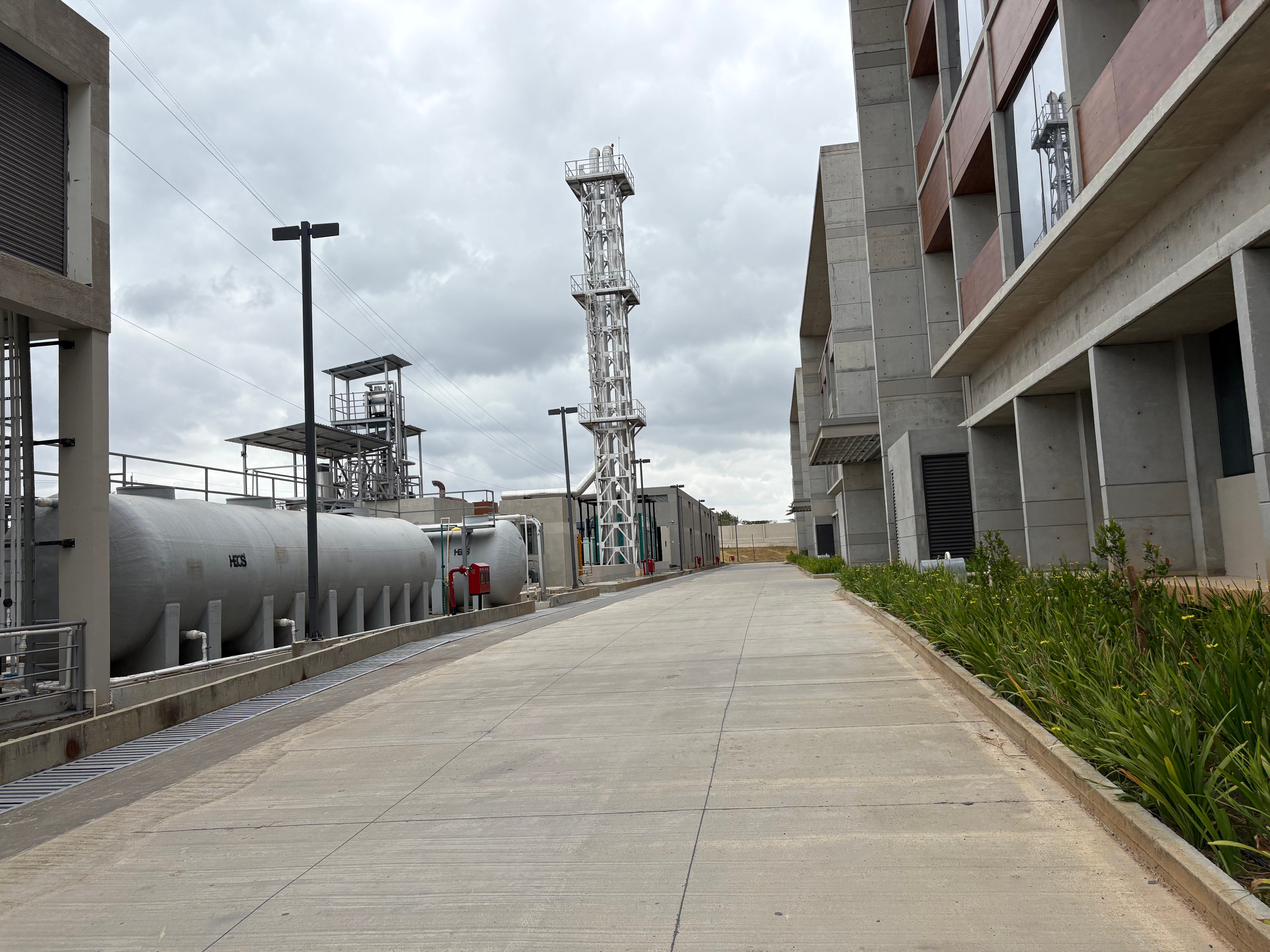
Quick aside on that new Bangalore lab specifically, it’s indexed toward material science R&D - the ultra high purity and advanced materials work - whereas our two Hyderabad labs still lean more pharma and agro. There are a couple of major reasons why we keep our own labs at all.
One is that a lab acts as the hook, the actual foot in the door. Otherwise why would a serious customer even bother talking to us in the first place. If BASF or TDK is talking to me about some new cathode active material, sure, I’m a material science engineer myself, I can hold my own in that conversation for a while. However the moment it gets into specifics - like how exactly are you going to control the impurity profile of the lithium hexafluorophosphate - that discussion jumps to a different level of expertise. That’s the level of conversation and problem solving required. And no single person on earth can cover every chemistry there is, so you need subject matter experts in each one who can hold that conversation properly. That’s the scientific talent piece.
It’s also worth saying, the person across the table is often just as technical as we are. A lot of the promoters running these large Indian chemical companies are scientists or chemical engineers themselves, not career salespeople, so a surface level pitch doesn’t get very far with them.
Beyond our own in-house scientists, we also lean on a scientific advisory board of senior veterans spread across seven countries, people like Professor G D Yadav, a Padma Shri awardee here in India, and Professor Dong-Soo Shin in South Korea, who help us make long term bets on which chemistry to go deep on next, semiconductor chemicals being a good current example, given how many new fabs are being set up in India right now.
Once you’ve said your piece and sound credible, the next step is ‘okay, you sound smart, now prove it’. That first proof, at the gram or kilogram scale, happens in the lab. It’s the first point of comfort for a customer, and it doubles as a marketing tool too.
Okay so that’s the talent part. Essentially demonstrating that you’re a safe pair of hands to your partners and you can get the job done. What’s the other reason for having labs?
The more important reason for lab operation has to do with ownership. If you’ve set up an entire supply chain and you’re doing something like a million dollars of business with a customer on a single product, the real question becomes, who actually owns the process itself?
The factory is the one physically converting A into B, and there are various other people handling other pieces of it. But with the customer, you have to constantly be two steps ahead of them, telling them ‘here’s what’s actually changing in the industry before they even ask’.
The analogy I’d use is from the software world. Why does a company like Anthropic have a real advantage over competitors. It’s because they’re two steps ahead, they already know which direction the underlying technology is shifting, and they’ve already built the frontier models for where it’s heading. It’s the same logic in chemicals. You stay two steps ahead of the customer, telling them, I already know this product’s volumes are about to increase, I’ve already worked out how to cut costs on it, here’s the new process. That way, even if a factory tried to bypass us, we’re still two steps ahead. If one factory tries to cut us out, we simply find another one to work with, because we’re the ones who actually own the better process.
Is there a world where you eventually go further downstream and actually own factories too?
Building factories for everything would go against the whole fabric of why we started this company, so no, not as a general rule. But there are pockets where I think it’ll happen. The newer segments we’re moving into, ultra high purity processing for semiconductors, for instance, or recycling, don’t have the same problem the rest of our business solves for. There isn’t much existing, underutilised capacity sitting around in those areas yet, so the asset light playbook doesn’t quite work the same way. We’re evaluating those on a case by case basis, including whether it makes sense to build capacity outside India too, in the US or Europe, partly for diversification, partly for economic security on the customer’s side. It won’t be a large part of the company overall, but I do see us owning a few factories a few years out.
Double clicking on that, on the IP side, you said earlier you could patent the process rather than the product. Is that what you’re actually doing here?
Yes, we’re patenting processes specifically. We have about eight patents so far, with five more currently being granted, filed, or accepted through the pipeline. But it’s a double edged sword. The moment you patent a process, you’re literally publishing exactly how it works for the whole world to see, and unlike a product patent, where a competitor still has to reverse engineer how you actually made the thing, a process patent hands them the method itself. Worse, that protection only lasts about 20 years anyway, then it’s basically open season for anyone.
The example I like to give is Coca Cola. They never formally patented their formula, they kept it a trade secret instead. If they had patented it, you’d have far more knockoffs out there today, each one legally free to use that exact formula the moment the patent ran out.
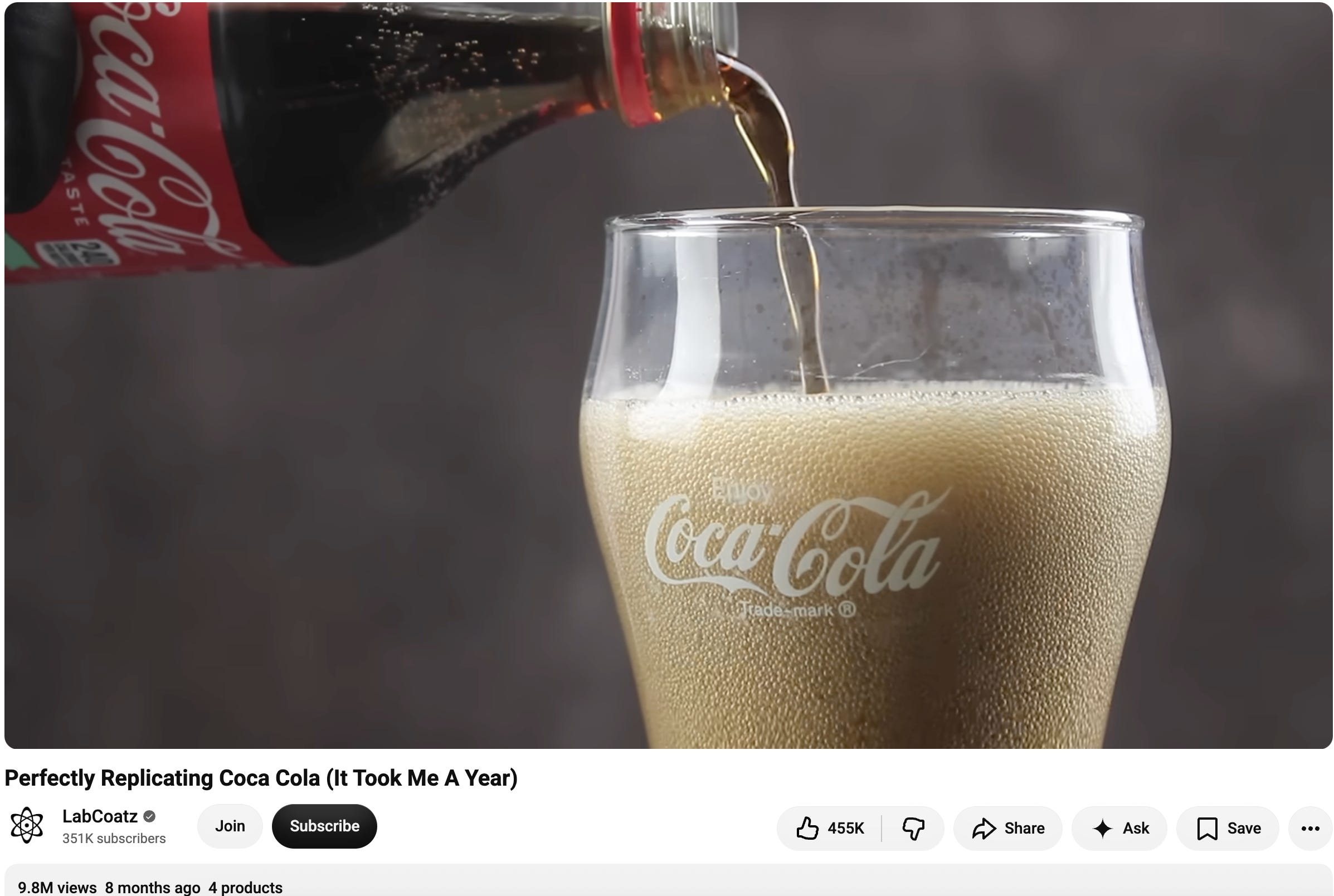
So in practice, this comes down to trade secret versus patent, and you don’t want to formally patent something unless you’re sitting on a genuinely disproportionate advantage already. All eight patents we’ve filed fall into one of two categories. Either we want to be shouting it from the rooftops, like look at this amazing cancer curing product we’ve come up with (one of them, for instance, is literally an API that goes into an oncology drug and we want the world to know that). Or, our advantage is so disproportionate that we know it won’t get meaningfully copied even once it’s out there publicly.
This actually reflects a broader pattern across India, not just us. Almost all of the patenting that happens in this country is process patents, we’re barely present when it comes to product patents, the genuinely new molecules themselves. Part of the reason is that product patents require a completely different scale of upfront investment and patience than most Indian companies have historically been willing to commit to.
One of our own scientists actually lived through this twice - once at Piramal, where he took a cancer drug all the way through Phase 3 trials before the company chose to sell the asset rather than commercialise it themselves, and again at Jubilant, where a different drug got all the way through Phase 1 before the same thing happened. The honest reason, more often than not, is that a full drug lifecycle can run ten to fifteen years, and it’s a lot easier to sell out after two years for a few million dollars than to wait that long for the bigger outcome.
Got it. And for our readers who haven’t been to your lab - can you actually walk us through what literally happens there? Is it mainly to test new molecules you want to eventually seed with manufacturing partners, or is it to do QA for what’s already being made in your partner factories? Something else?
Sure, there are really three things that happen there. The first two are our own proprietary testing, and quality checks on our manufacturers’ output. The third is testing customer hypotheses that come to us from outside.
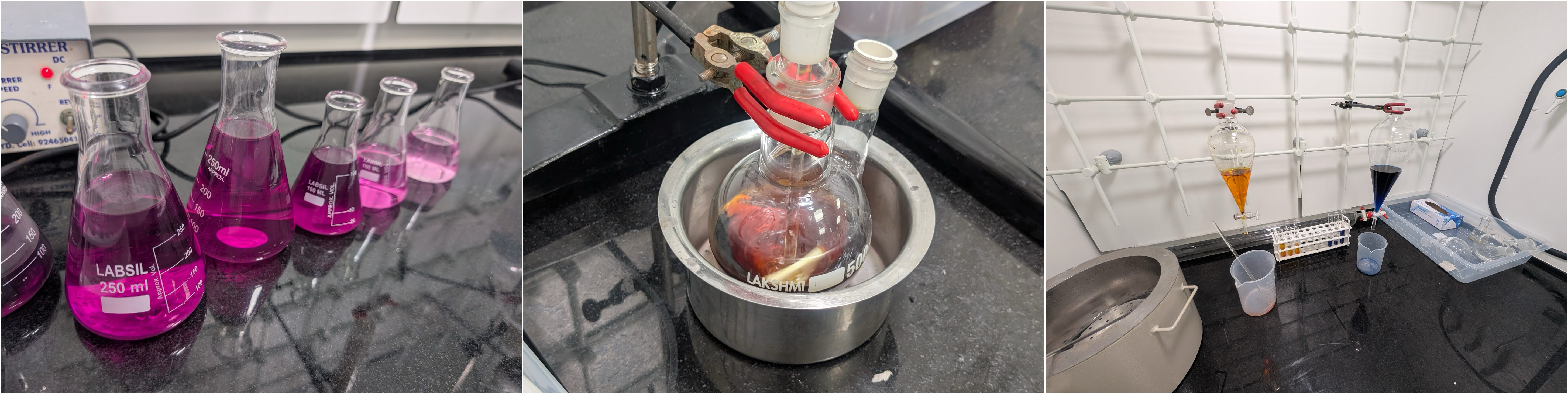
All three, at the end of the day, are different flavours of the same thing - research - which at the most basic level means taking a raw material - either petroleum based or natural - from a plant or a microbe, and pushing it through a few stages of chemical transformation until it becomes the active ingredient we’re actually trying to build, checking constantly along the way for impurities and confirming the exact structure of what we’ve made.
Physically, when you walk in, on the right you’ll find a few conference rooms and the analytical lab. That’s where the actual detective work happens. We have machines like HPLC (High Performance Liquid Chromatography) and GC (Gas Chromatography) that measure purity and composition.
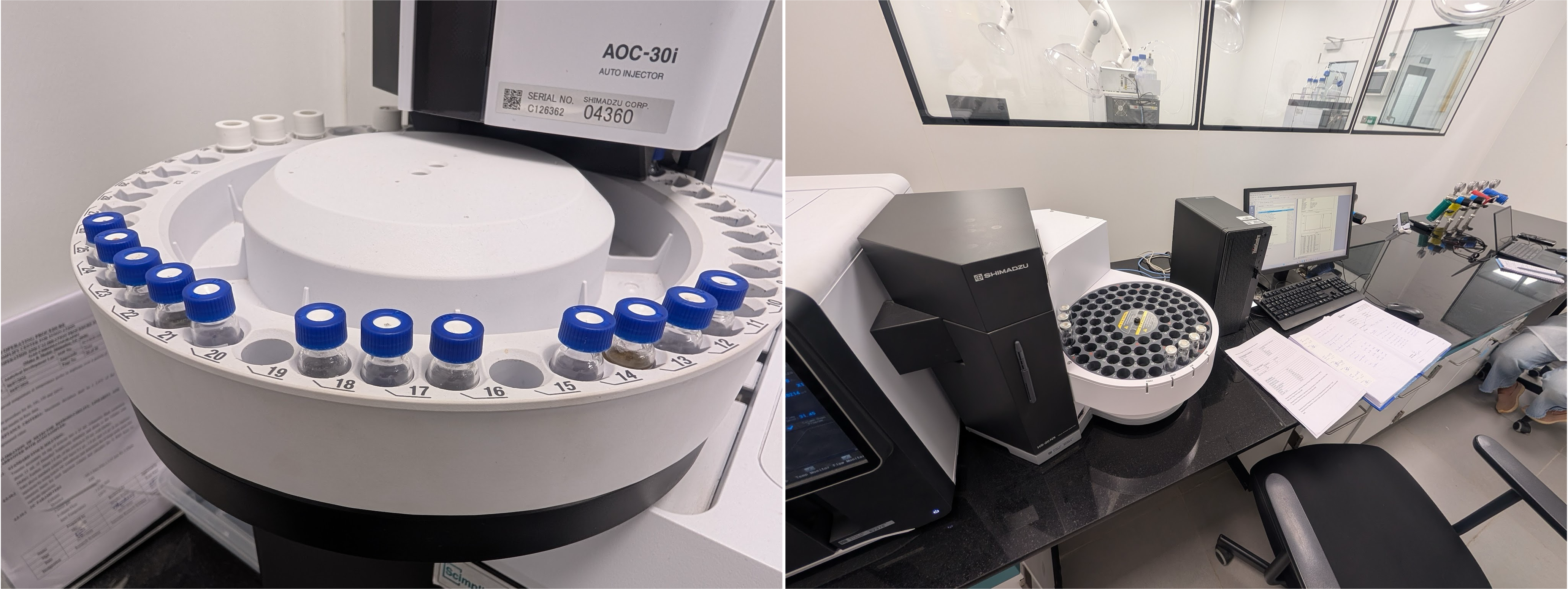
We’ve also got equipment like ICP-MS (Inductively Coupled Plasma Mass Spectrometry), which can detect trace metal contamination down to a few parts per million, and a hot lab specifically for checking ash content, since even something as small as a stray metal trace can be a problem in a pharma product. We use all of it both for quality testing and for what we call analytical R&D.

Walking further left, you’ll find fume hoods, chambers with chimneys that safely vent everything out of the room. They’re built with their own safety layer too, oxygen and hydrogen monitors watching the air, since pulling fumes out through an extractor can shift the oxygen level in the room without you noticing. That’s where the actual experimental work happens.
Say you want to make paracetamol. The published literature tells you to take para nitrophenol, run an amination reaction on it, converting one chemical group into an amine group, and you get para aminophenol. Simple enough on paper, but you still have to physically do it, under real conditions, a set time, a set temperature, a chosen solvent and catalyst. Our scientists go in with a hypothesis, if we changed one variable here, would the yield actually change, work it out on paper first, then test it to see if reality agrees.
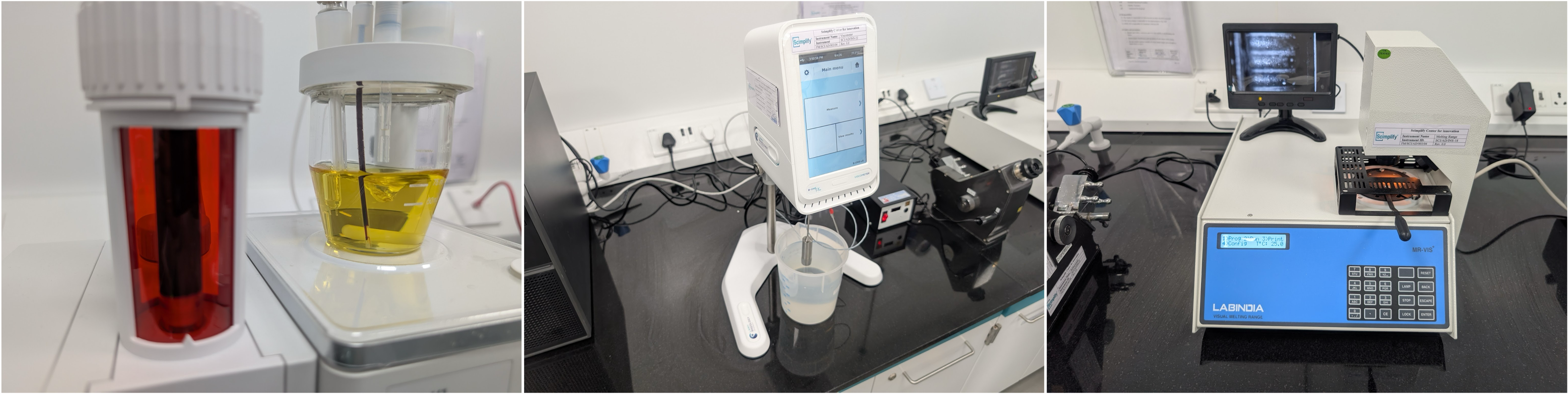
Once you get a yield, you run the sample back through the analytical tools. If it holds up, you run three back to back batches to rule out a fluke, confirming it’s genuinely repeatable. Only then do you actually have a real process improvement.
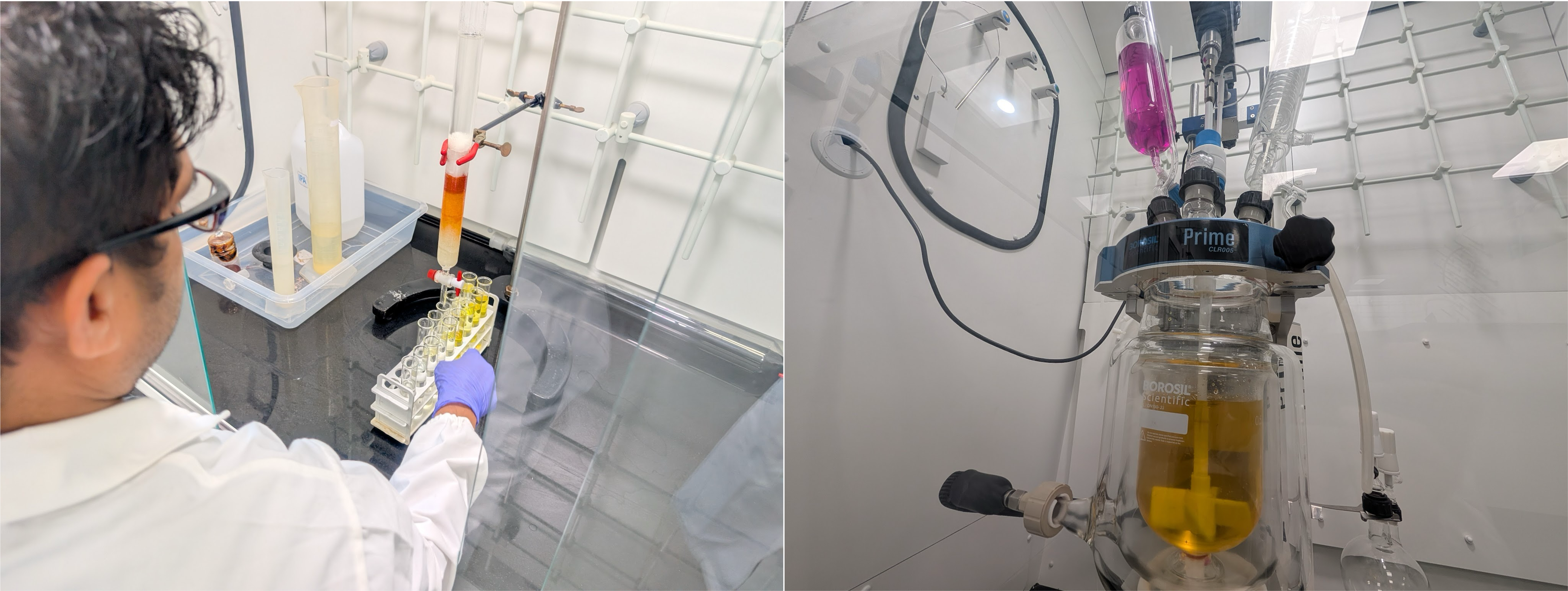
Really, we’re just working on process improvements constantly. The literature tells you A plus B gives you C, but if you’re only getting a 70% yield of C, can you push it higher. Maybe you don’t need B at all, could an oxide of B work instead, and be cheaper too. Most of it targets cost directly, some of it targets alternative raw materials, in cases where China’s blocked supply of something, or more sustainable inputs, or lower energy use, which usually loops back to cost anyway.
That’s one half of the lab, developing our own products. The other half is a customer telling us, I want to make this, the Coromandel product being a good example, where the customer’s already proven the chemistry in their own lab but has nobody who can scale it. So we sit with them, understand what they’ve done, replicate it ourselves, and push it further from there.
When it comes to technology more broadly - how do you think about inserting tech into your workflows. Specifically on AI, how has it impacted your operations?
The workflow, as you’d expect, is decently complex. With regards to AI, I think we are beneficiaries of serendipity to some extent here. When we started the business, AI was very, very nascent. It was 2023, ChatGPT had just launched, you could basically get it to write you an email, that was about it.
But over the last three years, as the business has scaled, the entire thought process behind what our quality process should look like, how the regulatory process should run, which precursors to actually take for R&D, which kinetics to test, what temperature to optimise for, whether we can run useful simulations, all of that is now being done with AI in the loop.
If I had to put it in two buckets, it’s discovery and matchmaking on one side, mapping hundreds of data points per factory so we know which one actually fits a product, and transparency on the other, tracing a batch’s yield and quality all the way from what left the factory back to what we originally formulated in the lab.
A meaningful amount of what used to be pure human work is being handled by AI today. Of course, you still need a human in the loop at every single step, it’s genuinely not foolproof yet. There’s a lot of noise out there right now about AI eventually building chemicals on its own while humans sit on a beach somewhere, I don’t buy that, if it were actually possible today, it would already be happening.

You’re only ever as good as the guardrails you put in place yourself, whatever can go wrong in this industry eventually will go wrong. So those guardrails have to be built by the individual or the company using the tool, ChatGPT itself isn’t going to build them for you.
We use the same foundational models everyone else in the world has access to, obviously, there’s nothing proprietary about the base model itself. But every single experiment we run, every batch that comes out of a factory, every method of analysis we develop, every mother liquor that comes out the other end, all of it is training our own internal ecosystem on top of that base model. We genuinely believe even companies the size of BASF aren’t training their own systems on this kind of operational data yet. Which means we’re actually in the best position of almost anyone to have the highest possible throughput of real world data running through our own algorithm, training it faster than most competitors realistically can.
One piece of your tech I did get to play around with is your website, which I’d describe as a rabbit hole unto itself. It’s super detailed and there’s like an endless number of sections and subsections to explore. It feels like you can do a hundred different things on there. How important is the website to inbound leads?
To be honest, we’ve taken a very Ship-of-Theseus approach to building it out so far, which means we’ve kept adding to it rather than looking at or reimagining it from end to end. That’s on the agenda for this year.
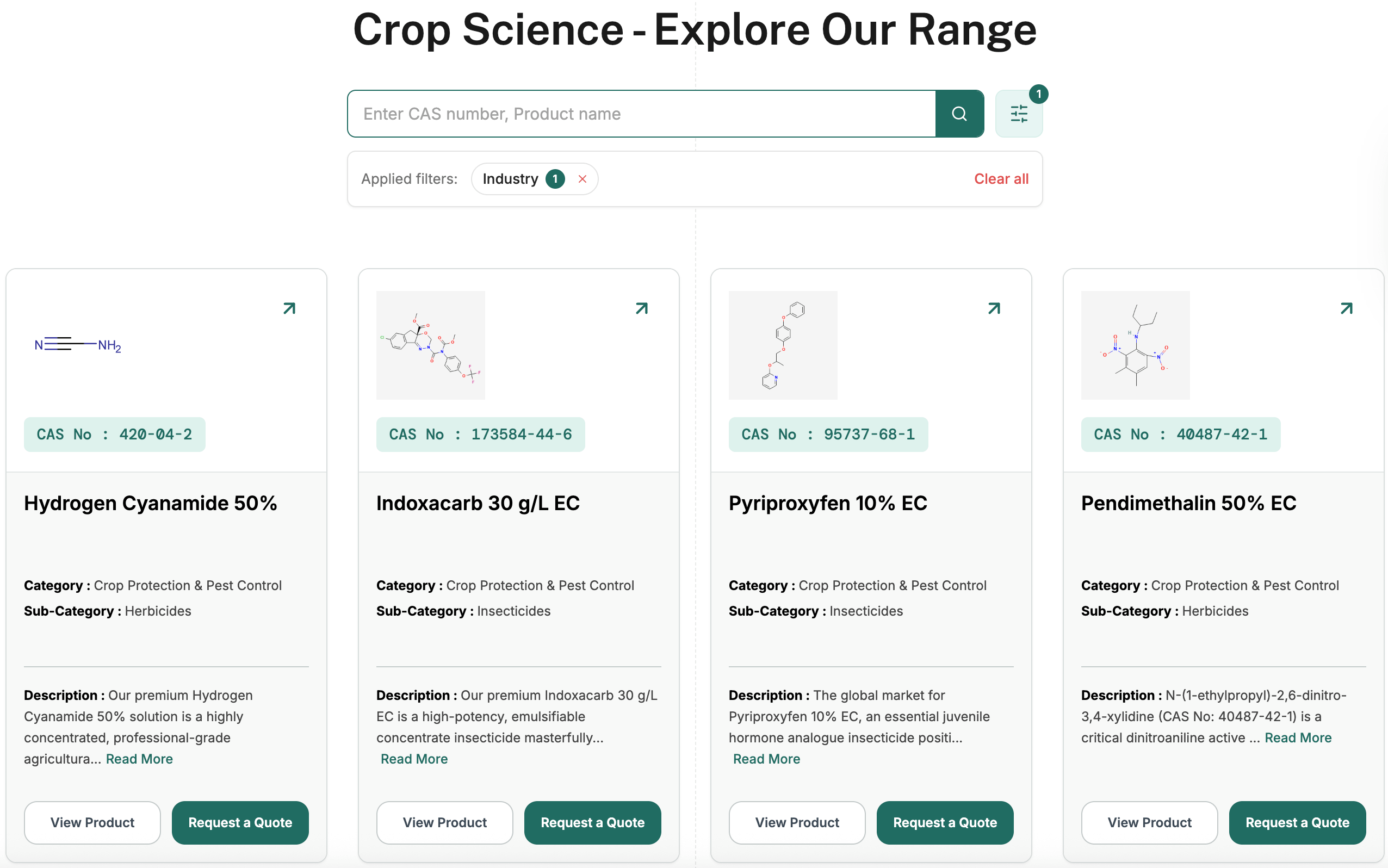
In general yes do get a lot of leads from the website. We get tons of enquiries every month through it, and there’s also a number that interested parties can call directly. We have an inside sales team that takes those calls, qualifies whether it’s a real deal worth pursuing, and then passes it along to sales.
A lot of inbound is also word of mouth like I said earlier. I was in Japan recently, and this trading company had just heard about us somehow, and called our own representative in Japan asking, can we meet you. It’s actually a pretty small industry once you’re inside it, it might look like there are thousands of customers out there, but within that world, everyone’s genuinely close to everyone else. Tesla and TDK, for example, know each other’s supply chains well. If some solution works well for Tesla (like Scimplify), word of that will reach TDK too.
I’d love to understand what actually happens once the inbound lead comes in, but before that could you help us understand the kinds of projects you guys work on?
Yeah, so it breaks down into three broad types of projects, depending on where the work originates. The first is straightforwardly customer driven, this is our version of the CDMO work I mentioned earlier. A customer already knows what they want, a purchase order comes in, and we go forward based on whether we have the capability. Most of this comes in through the website, either directly or through our own bespoke platform (which I’ll get to in a minute).
By the way when a customer approaches us they usually specify three things they want - quality, quantity and price. From there we build a proof of concept - i.e. can we actually make this, and can we hit that quality bar. Then comes process development, where we optimise for cost, scale, solvent, and effluent, with process safety built in at the same stage, making sure it’ll be safe to run and safe to hand off elsewhere later. Once that’s all locked in, we put together the tech pack, and we’re off. After that, there’s usually a demonstration batch we prepare, then a validation batch at a slightly larger quantity, then a pilot scale, and only then does it move to commercialisation. That’s the overall typical batch cycle, and it applies to any product.
So that’s a typical customer-driven project. The second type is what we’d call a ‘strategic’ project, where we identify an emerging area ourselves - semiconductor chemicals being a good current example - and build up real capability in it proactively, well before any specific customer has asked for it. There’s no immediate payoff there, it’s a bet on where things are heading before anyone’s actually asked for it.
The third is what you could call a ‘cost run’, where an existing product is facing cost overruns or a market shock, and the goal becomes specifically finding a cheaper, India based alternative to reduce dependency on Chinese supply.
This third category, as it turns out, is way more of a global phenomenon for us than a domestic one. Within India itself, it’s relatively more difficult to convince people to trust you over an established Chinese supplier. Globally, that mentality is shifting faster, mainly because import costs keep climbing and companies are increasingly willing to bet on an Indian source instead.
Got it. So let’s take the first one for instance. Once the enquiry comes in, how do you actually source that demand into your partner labs or factories. Are factories bidding on the work, or are you allocating it directly?
It’s a fairly detailed process. Let me give you a real example, Henkel out of Germany recently gave us a project to work on.
This is roughly how it plays out today. It starts with our R&D lead. When Henkel initially wants something developed, this R&D person is the first one actually interfacing with them directly. Then, say a follow up question comes up - if we crack this in the lab, where are we actually going to scale it up. The R&D lead knows to call our IM lead, short for Integrated Manufacturing, the team responsible for our whole factory network, who in turn knows which factory can realistically handle it. The IM lead will then call around to each of the relevant regional clusters, our Gujarat contact, our Bombay contact, and so on, come back with a shortlist of viable factories, and we pick from there. Then whichever other teams are actually needed step in - a quality team if the product calls for it, a production team if required, and so on.
What that looks like in practice is the IM team pulling together details on each shortlisted factory - their reactor capacity, their specific capabilities, their pricing etc, and then evaluating that shortlist internally to land on the best fit. It’s a filtering process we run ourselves, not an open bidding war between factories. Once we’ve made that pick and a batch is actually produced, our own quality team tests it first, and a separate QA team is the one that formally signs off and releases it, only after that does it move on to shipment and logistics.
And that shipment and logistics piece is ours too. We handle it end to end, from the factory all the way to the customer’s door. That ranges anywhere from a small sample going out by regular courier, to a full container load of thousands of metric tonnes shipped internationally. Everything’s also classified before it moves, as non-dangerous goods, dangerous goods, or combustible material, and that classification decides whether it goes by air, by sea, or even on a passenger aircraft.
In any case where I see all of this heading in the future is reflected in our own platform, Scinode.
Everything I just described is honestly how this entire industry has worked since the beginning of time, there’s nothing genuinely new in any of it. Scinode, as a tool, is what actually changes that. You can find it via our website. Anyone can see it but you need devoted login details to access it, which we reserve for our customers and partners, because it could otherwise be misused.
Can you say a bit more about how it works?
Anything and everything a customer needs, they just enter it there. Say, right now, I want to manufacture high purity ammonia. All the context that would normally live across the company, the R&D lead, the manufacturing lead, regulatory, the quality lead, the sales lead, all of that information now sits inside a single AI enabled system.
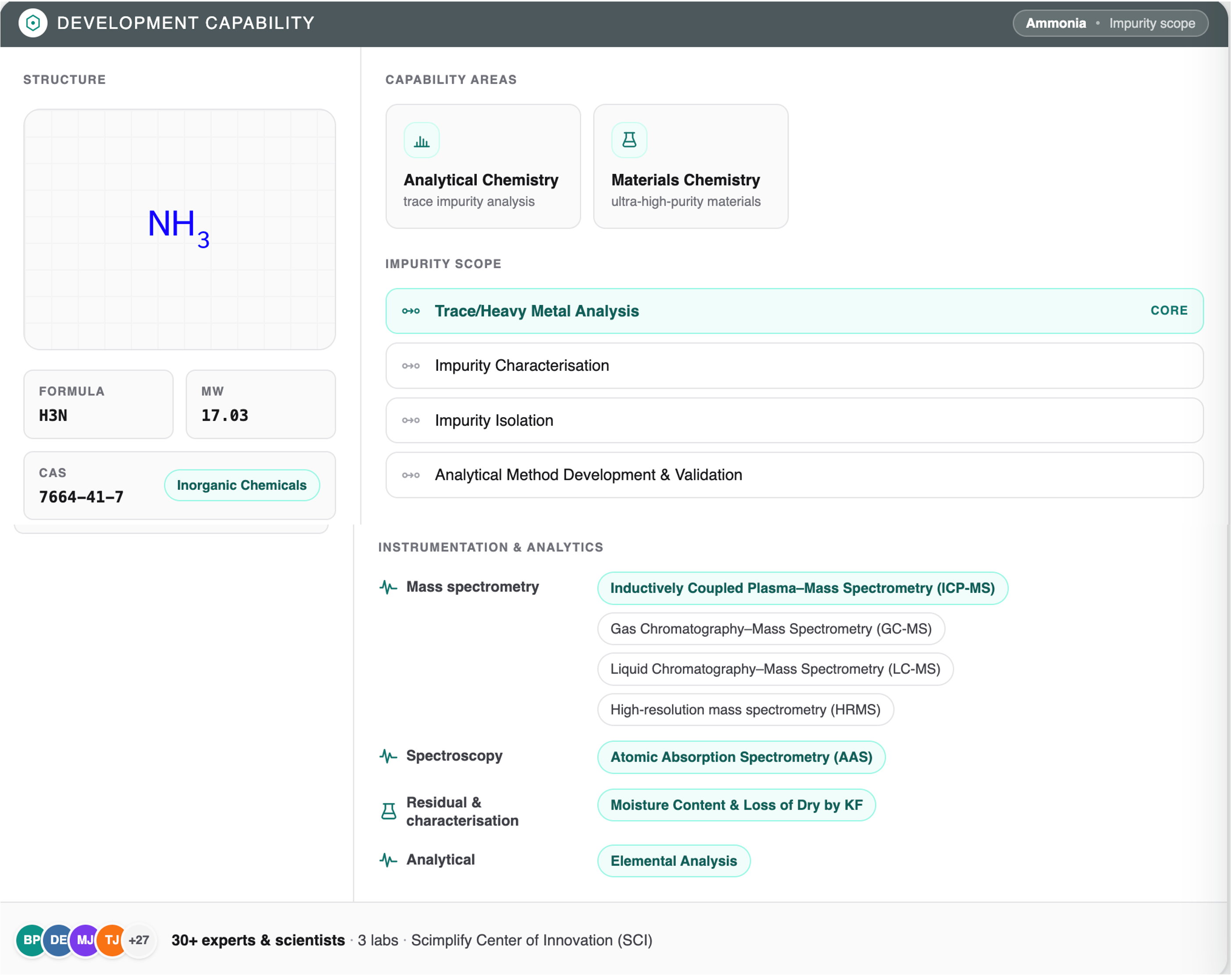
That system fetches the relevant information from all the right internal sources and tells the customer directly, here’s what we can do, here’s why, and here’s exactly who you need to talk to. It’ll surface a direct match if one exists, or show similar products along with an expert you can speak to within 24 hours.
So a process that used to take three to four days of calling around to find the match is now essentially instantaneous.
The base layer of it is just the context the system already has access to. But you can go as deep as you want from there. Take our current example of ammonia, say I select electronic grade and confirm it, it’ll then walk me through the entire route of synthesis, the actual process by which it’s made.
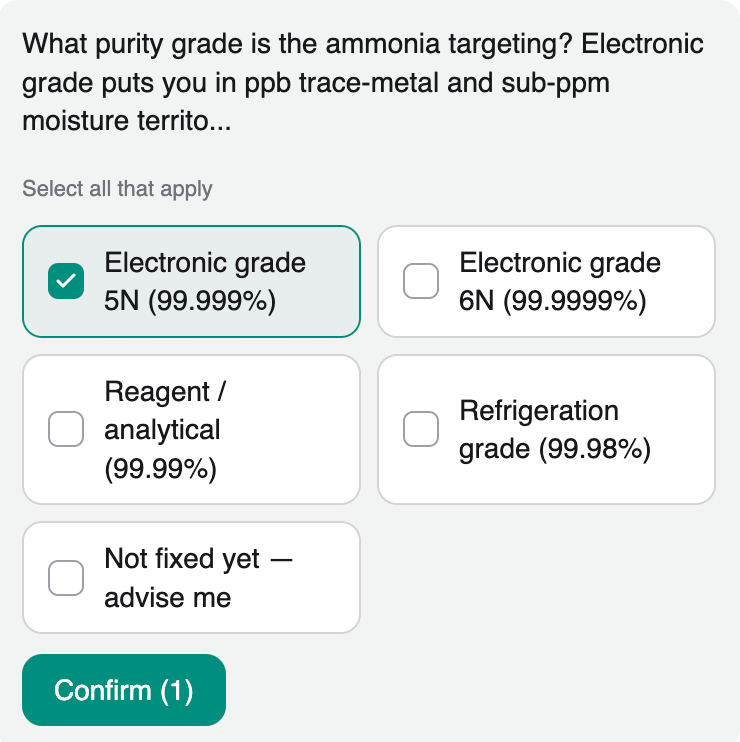
A lot of that draws on published literature, with guardrails in place to prevent hallucination. From there I can ask something like, what regulatory requirements apply if I want to export this into the European market, and it’ll pull that up too. The European market specifically requires 3-batch and 5-batch analysis, along with metal limits and REACH registration. And if a factory doesn’t already have this, they can actually click a button and say, ‘do the registration for me’.
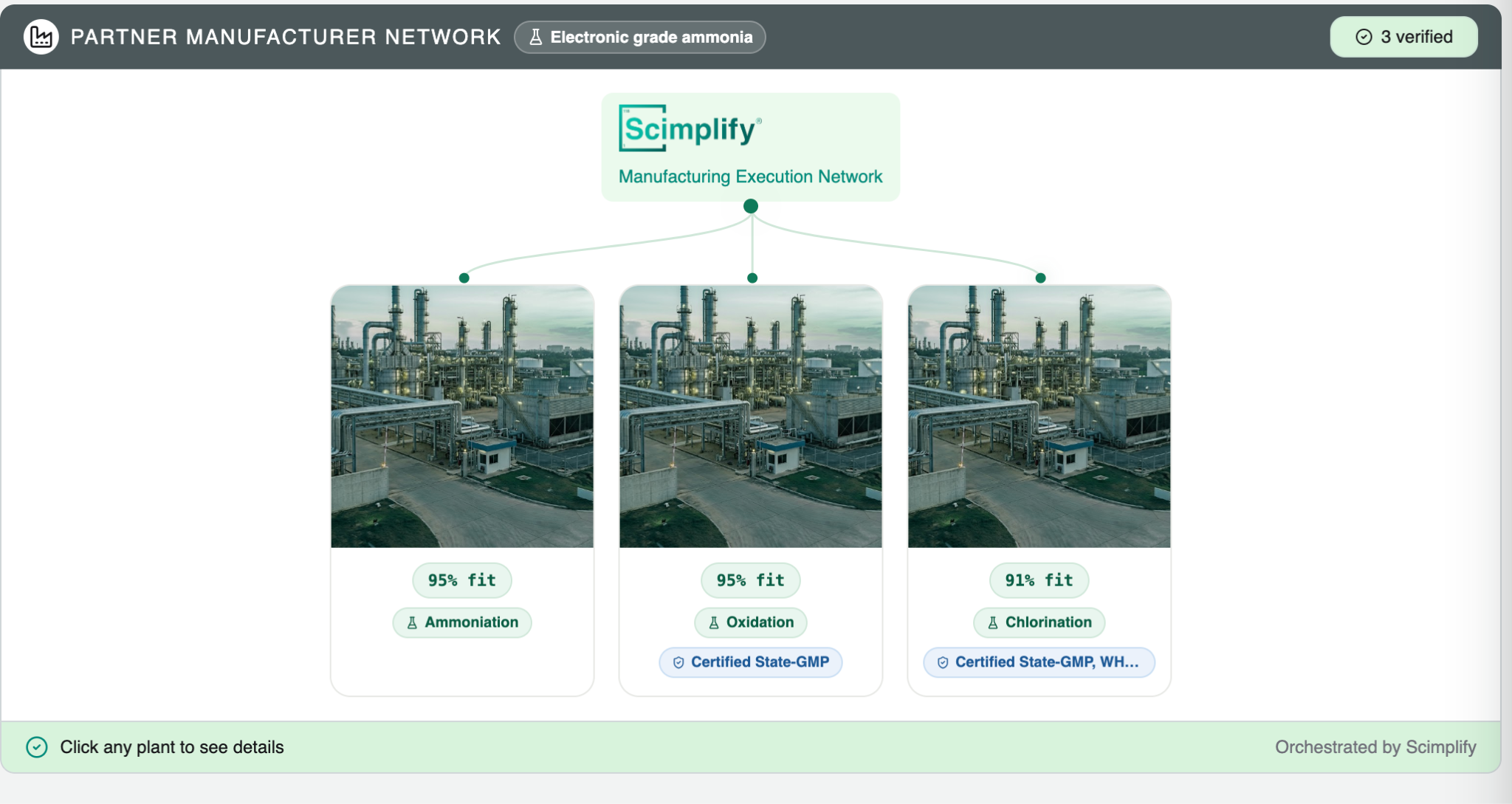
All of this is a big deal for the average person running, say, a 40 crore factory in Gujarat, because they‘d never have the resources to handle something like that on their own otherwise. Sure, they could try using ChatGPT directly, but it won’t give them anything close to that level of actual hand holding.
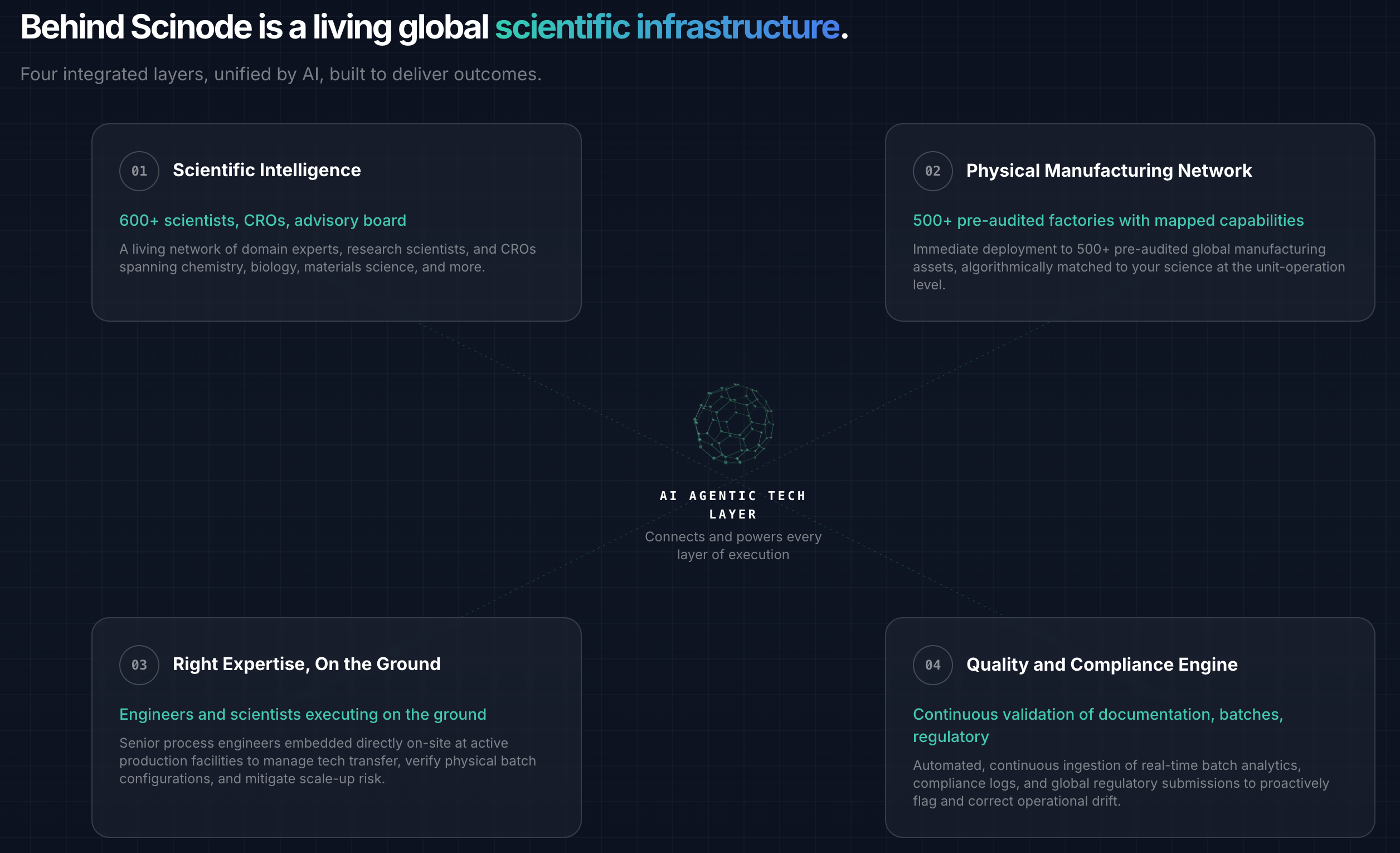
And it’s not just the software either, there’s a real team and real work happening behind the scenes, on the ground, to actually make all of this true. There’s also a version of Scinode for manufacturers, and one for researchers too, where independent labs can put proposals up themselves. If we decide we don’t want to take on a specific project ourselves, we can open it up to the network instead, and we’ve got more than a hundred partners on it who can submit for it.
VII. The Industry
Could you paint a picture of what the Indian chemical ecosystem looked like before Scimplify, versus now? How are people now interfacing with the Indian chemical sector? Is it markedly different than it was before you guys set up shop three years ago?
Yes and no. The manufacturing landscape itself hasn’t markedly changed. It’s not like factories can just relocate or transform overnight. That Gujarat to Bombay belt is still the dominant cluster, Hyderabad and Vizag are the other big hubs. New hubs are emerging too, Karnataka, Indore, Coimbatore, partly because of government incentives around land, and partly because scientific talent is more dispersed now, with a lot of it returning from the US and Europe.
What’s genuinely changed is what’s been happening through 2026 - these massive customers coming directly to us and saying, we want to do this. To be very frank, we did not see that coming in 2023. We knew it would happen eventually, but we assumed it would take five to seven years to get there, and until then we’d keep the product business running, staying cash flow positive, building steadily toward these bigger relationships over time. The fact that it’s arriving sooner than expected is a realisation happening on their end too. Some of these companies have now even joined our cap table directly.
They’re realising this asset heavy model isn’t sustainable for them either, that their real edge lies in spotting and latching onto the next big product wave, not in owning the factory itself. If BASF announced tomorrow that they were entering the semiconductor chemical space, their stock would almost certainly run up on the news alone. This actually happened with a Japanese company recently, they make coolants for data centres, a chemical product. The moment it became widely known that they were in that business, their stock shot up dramatically because of the current narrative around booming data centre businesses.

So these companies are increasingly realising that this exact combination, an asset light model plus real orchestration, meaning boots on the ground in India close to the actual manufacturing networks, combined with genuine scientific talent, combined with the technology and AI layer to actually run the whole thing, that combination is the real game now. That’s what’s meaningfully changed.
Would you say you have competition globally?
Yes, but not really in the exact model we run. I haven’t come across anyone doing all the things we do, together, under one roof. What Scimplify is actually built on is three layers stacked on top of each other. First, the physical infrastructure - meaning the factories and partnerships, and in some cases dedicated capacity that’s been specifically blocked out just for us.
Second, genuine scientific talent and R&D depth sitting behind that infrastructure. And third, an AI and technology orchestration layer running on top of both. I don’t think anyone else is doing all three of those together. In isolated pieces, sure, there are plenty of players. But nobody’s stacking the physical network, the science, and the orchestration technology into one company the way we are.
Our real competition, honestly, is factories themselves, not other companies like us. Chinese factories, small time Gujarat outfits, they’re seriously competitive, and they’re the ones actually fighting for the same business we are.
Is the factory ecosystem fully aware that you guys exist for sure? How have they typically responded? Are most people willing to be partners, or wanting to be on the platform?
Absolutely. Like I said, when we started, we literally had to beg and plead people to work with us. Today, the 500 factories we’ve onboarded are cherry picked. We get applications every single day for more to join, and there’s an entire team here whose only job is filtering and onboarding factories. It’s a rigorous process, starting with basic KYC, have you actually filed your income tax, that sort of baseline check, then we move into the regulatory side.
At a high level we call it the three Cs, chemistry, compliance, and capacity. Once you actually get into each of those, there are more than 200 individual data points, on top of assessing excess capacity and other capabilities. By and large, I’d say factories are broadly aware of us now, though I wouldn’t claim a hundred percent, that’s an area we could still do a lot more work on.
And what about the regulators? Would you say the Indian regulatory regime helps or hinders our chemicals sector?
I wouldn’t say it hinders us. There’s red tape, for sure, just like there is in most large scale industries in India, but there are also real incentives in place, production linked incentives being one example. The government’s also recently launched something called the RDI scheme - short for Research, Development, and Innovation - a roughly 11.5 billion dollar government fund specifically meant to back private sector R&D in sunrise sectors, pharmaceuticals included.
As a company, over the last three years, I don’t think we’ve ever hit a situation where the regulatory side was actually what stopped us from doing a product. Is there room for improvement? A hundred percent. Right now these incentives mostly get captured by the largest manufacturers, we don’t get access to them, and neither do our smaller manufacturing partners. Easy access to something like the RDI scheme as an actual investment tool for a company our size just isn’t really there yet. So the access exists, but mostly at the top of the industry, it hasn’t properly trickled down.
VIII. The Org
Okay I want to switch gears now as we bring this one home. Scimplify, from the sounds of it, is authoring a very compelling story as far as Indian industry goes. The product, the operations, and the business all seem to be in a healthy place. I’m curious did you ever have any specific intent regarding the culture you wanted to inculcate here?
Well, I’ve been through two or three startups before this one, and from the very first one, what kept me going was a sense of scale, speed, and ownership. So that’s exactly what we wanted to pass on to everybody here. If there’s one thing we try to translate through the entire company, it’s a culture of genuine ownership.
It’s funny, because that can get confused with individualism, and it’s not that at all. We’re not encouraging people to go off and just do their own thing. It’s closer to this - if you personally owned this company, all 200 to 300 employees of it, how would you actually run it? So if someone’s working on M&A, that’s their baby. They decide the path themselves. If someone in marketing is running one of our offline events, their attitude has to be, if this were my own booth, how would I actually set it up?
That’s the specific culture we index heavily on, which is also why it can look like we’re micromanaging at times, because we’ll absolutely ask you detailed questions about your own work. But the whole point of asking isn’t control, it’s to get you thinking like an owner too, to have you see yourself the exact same way we see ourselves.
How big is the team today, and what are most people upto?
We’ve got about 300 people on payroll - that’s the core team. Because a lot of our manufacturing partners run committed capacity specifically for us, we’re effectively coordinating close to double that number of people, even though they’re not on our books.
Of that 300, the largest group by far is R&D and manufacturing combined - scientists, engineers, quality - that’s the technical backbone. The second-biggest constituency is sales and business development, which is actually a bit more spread out than R&D. We’ve got a good mix of industry veterans and startup generalists there.
In our more mature businesses - life sciences, crop science - we run what we call a ‘two-in-a-box’ model - one person from the industry and one startup generalist, paired together, so you get both the technical depth and the speed when it comes to executing together.
Beyond that, there’s always a newer segment or geography we’re experimenting into, and that team sits alongside this too. Everything else - marketing, tech, finance - is the central functions layer.
Could you give us a sense of scale of the business too?
Happy to share because these are largely public filing figures. To give you some perspective, our first year, FY24, was really just three months, and we did around 18 to 20 crore of business in that stretch. FY25, we did 230 crore. FY26, 750 crore. And this year, we’re tracking toward roughly 2.5 times that.
Tell me about you guys as founders - what’s the dynamic between you guys? What are all your superpowers?
Salil owns the entire commerce side - manufacturing and operations for all of India - that’s his big strength. He’s the one building the playbook for every new segment we enter. If we’re going into semiconductor chemicals, for instance, he’s the one figuring out what the investment looks like, what revenue to forecast, how to sequence that spend over time. He’s world class at that stuff.
Dheeraj’s superpower is the customer conversation - building trust, closing relationships. He’s just moved to New York with his family, and he’s building out our US business now, at least for the foreseeable future. He’s someone who adapts to a completely new environment very well. He’s built businesses in India in his earlier avatar too. Before he joined Scimplify, he was doing the same for Zetwerk in Dubai. And now he’s doing it for Scimplify in the US.
As for me, I don’t love talking about my own strengths, but if I had to name one, it’s the sales instinct. I like the process of getting someone on board with an idea, whether that’s an investor or a customer. Opening up a new geography is also something I particularly enjoy, that’s why you’ll find me spending a lot of time in Japan or Europe right now, since the revenue there isn’t where we want it yet. It’s not just about landing customers either, you’re building the whole ecosystem around it - researchers, government bodies, everyone. Beyond that, honestly, you’d have to ask my team what my superpower actually is.
There’s also a fourth name worth mentioning here - Hersh Manek, who’s been elevated to ‘co-founder’ this month. He’s been with us since day one, an IIT Bombay chemical engineer who spent ten years at Bizongo before this, where he and I first worked together. So he actually takes care of the entire manufacturing part. He can get very deep technically - he’s a Gujju also which is a bonus, because he spends a lot of time in the key chemicals manufacturing belt of India. So that I guess is one of the superpowers.
What’s the coolest part about working at Scimplify?
I think this would look different depending on whether you asked me or an employee, but I’ll answer it for myself. The coolest part is exactly what I told you earlier, the sheer global reach and touch that Scimplify has makes it a special place to work. We’ve literally had 24 year olds join us, work here for six months, and then, at the drop of a hat, hop a flight to Uzbekistan, or Korea, or the US, and get that level of global exposure while actually helping build our business. When I was 24, just for comparison, I spent most of my time in Pimpri Chinchwad.
Does anything stress you out about the business? You seem pretty chilled in general, like you’ve got a good handle on everything happening here.
I really wouldn’t say that. I’m not saying I don’t have a handle on things generally, but there’s plenty of stuff that stresses me out.
What really keeps us up at night is the sheer amount of demand we’re seeing. This past weekend, my call with my co-founder was entirely about needing to hire something like five more people just in Japan. I’d literally just come back from Japan myself and had to cancel one of the meetings while there, there’s only so many places I can physically be at once, and customers genuinely want to engage. They’re often amazed that this kind of facility, this kind of opportunity, even exists at all.
So the questions we’re constantly asking ourselves now are, can we actually take on more projects, are we hiring the right people, are we investing enough in our own capabilities. Take Japan as an example, they’re very bullish on India’s semiconductor market being a big deal by 2030, so are we investing enough right now to make sure we’re capturing a real chunk of that market when it arrives. These are, I guess, the things that actually worry us.
We also worry about building the right kind of organisation, especially now that we have a lot of young people here with genuine ambitions. We work six days a week, by the way, and that’s an automatic filter for anyone just looking for a typical job. We tell people upfront, if that’s what you want, Scimplify’s probably not the right place for you.
I can imagine that leads to a lot of butting heads with younger members of the workforce?
You’d be surprised actually, we have plenty of Gen Z team members. One thing we’ve done is, while we do work six days, we don’t actually clock attendance at all. We don’t ask people when they come in, or even whether they come in physically, we just expect them to be available. So we don’t micromanage that part of it, but the expectation of six days helps us filter for missionaries specifically. It’s basically us saying, if you’re looking for a job and want your weekends entirely to yourself, this probably isn’t the right place for you. And that’s okay.
Everyone who’s come here wants to prove something to the world, or achieve something special. I think we owe them a real platform for that ambition.
On ambition - we’re going to be publishing this ahead of your new fundraise. What does this specific round say about where you guys are at?
The interesting thing about this round is that it isn’t really solving for capital, and it isn’t solving for investor optics either. What it’s actually solving for is getting the right customers locked in.
This round came in almost entirely as inbound interest. It started small with a handful of customers wanting a strategic foothold, and then it kept growing. For us it’s incredibly encouraging that some of the largest materials companies in the world want to join our cap table.
For companies at that scale, the actual return on a few million dollars they invest here barely moves the needle financially. What they’re really betting on is deepening the supply chain relationship, opening up new products, diversifying where they source from. That’s the real motivation. Because of that, we took zero growth capital this round - no new VC money, only our existing investors.
What the money’s actually going toward is deepening our footprint around these customers specifically. Europe’s become a real focus for us now. We’re going deeper in Japan too - more people on the ground, more manufacturing capacity. There’s also a new American manufacturing facility that we’ll now be running in the same asset-light way we do everything else - we don’t own it, we operate it. And a lot of the money will also go into giving the Bangalore lab a real upgrade. We’re looking at roughly doubling its capacity over the next year, adding more space and more people.
And I’m curious to know, given your original lead investor is a big reason why I heard about you guys in the first place. How has fundraising been for you generally - has the process been easier or harder that you envisioned?
Interestingly, we never actually had to go out into the market to raise money in the traditional sense. We’ve spoken to plenty of investors - you’ll find we’ve done initial calls and intros with most of the ecosystem - but we never really got to the point of running a formal process. The last real fundraise we did was our Series B. We announced a $40 million round around March last year, and that round was actually signed four to five months before it was even announced publicly. Even that one came in inbound - Accel already knew us from before, Bertelsmann already knew us from before too. So we’ve never gone through the experience of struggling to raise money.
I honestly can’t say we’ve given fundraising a completely fair test, in the sense of knowing whether it would have been hard or easy for us if we’d had to fight for it. But fundraising hasn’t been our biggest challenge either way, there’s real capital out there for a space like this. What’s actually shifted is the amount of focus now on fundamentals, and on what the business looks like by the time it reaches an IPO.
One thing I can say clearly is that what fundraising looked like five or six years ago is very different from today. Back then, it was mostly a question of speed, can you triple in a year, can you go global in a year. That's not really what investors ask anymore. Nobody particularly cares whether you're growing 4X or 2X, there's no real premium for it past a certain point. What actually matters now is what the business looks like at the moment of IPO. Indian IPO markets are brutal, they won't make room for fluff, especially in a business like manufacturing. That's where the focus has moved.
On timing in general, it seems like you guys have honed an intuitive sense for commercial timing. You’ve got a knack for how/when to time the market. How has timing played a role in your success so far?
With respect to AI, definitely. But I’d say that’s true in several other regards too. With AI, we were lucky to be at the right place at the right time, and we deliberately didn’t over position ourselves as an AI company. Everyone we spoke to understood clearly this is a business that’s going to get enabled by AI, and we are the kinds of founders who can embrace that as is, rather than build a false narrative around it.
The other piece of timing was funding. 2023, as you know, was the peak of the funding winter. People say the best time to build is during a winter, so in that sense, we were forced to be very frugal. We never knew if the next round was coming, so we never built for anything on the assumption that it would arrive. There’s still no guarantee even now that there’ll be a next round, tomorrow there could be some AI valuation correction that sends us straight back into another winter. I think what helped us was never treating funding as a crutch, which wasn’t the case for a lot of founders in 2023.

The third piece of timing was purely geopolitical, Trump getting elected, tariffs coming in, China shutting things down. China shutting things down isn’t new, it’s always happened, but I think the world reacts to it far more sharply now, in a post COVID, more openly conflict driven world. Economic security becomes genuinely important in that context. So these are some of the positives, at least in terms of timing.
IX. The Future
Looking ahead, the next five to ten years - is there a sci-fi version of this industry’s future that you envision?
I think most of it eventually gets automated out of human hands entirely. Wherever there’s human decision making today - which product to make, what the best chemistry actually is - AI either sharpens it or takes it over completely. A customer sitting anywhere in the world just says, I want X, and an entire invisible network snaps awake around that one sentence. An R&D lead in Hyderabad instantly knows someone in Japan wants X, a manufacturer in Gujarat lights up and gets pulled in, and the whole system works out the rest on its own, in real time. Eventually you won’t need a human anywhere in that chain at all, a robot runs the actual experiment, and a factory runs itself, start to finish, with nobody on the floor.
China’s already living a version of this future today, by the way. A lot of the factories we visit, we’re literally not allowed to walk inside, you just stand there watching a screen, knowing that whatever’s flashing across it is real, happening right now, with not a single person in the building.
Right now, you still need a human as the one guy who tracks down the right factory for you, but once you’re actually inside one of these places, the shop floor itself is often empty. You’ve seen the footage of Tesla’s gigafactories, not even one human hand tightening a single bolt. It’ll be exactly the same story here. In the full sci-fi version, a customer drops in a requirement, submits a commercial proposal, and robots work out the yield, then robots manufacture the product and ship it at scale, with no human ever touching it.
I mean, it’s very difficult to do, the challenge in physical AI is very, very different, but eventually it’ll get solved just like we solved digitising of payments and digitising of logistics (in many ways). Digitising of manufacturing hasn’t really moved but its coming. Companies like IndiaMART are a step in that direction but still fall short of real digitisation. You’d be surprised at how much of the manufacturing base is still not on there. And how restricted you are for order quantities still. If you want a hundred tons of paracetamol, you’re not going to be able to do that online. So there’s still many steps to go.
Knowing what you know, via your position at the centre of this ecosystem, if young founders are reading this and thinking about how to plug themselves in opportunistically into this world, where would you suggest they look? Coming up with products, filling intermediary roles, something else entirely?
I think there’s a big opportunity here. All said and done, we’re a fast growing, high throughput company that’s very profitability focused, very much a dhanda mindset. But for people who can take a bet three to five years out, look at where the puck is going, and build backwards from there, there’s a lot of work to be done setting up new R&D ecosystems.
I’m very bullish, for instance, on the whole biologics and fermentation space. There’s a huge amount of work still to be done there. The underlying theory is that a lot of conventional chemicals will eventually get replaced by enzymes and fermentation based products instead - all natural, no synthetic chemistry involved. The technology’s still in its early days though. We’re doing some work in it ourselves, but our angle isn’t to go deep on the actual R&D, that’s not our strength. I think there are people who should take that up specifically. We’ve met some amazing founders already doing exactly that, we’re partnering with a few of them, and if young people want to get into it, they could partner with us too.
Within bio specifically, the hardest part is actually building the decision making engine itself - this is how you design the reaction, this is how you find the right enzyme, this is how you grow it at scale, and so on. Call it a machine learning model, or just the underlying data that feeds one, there’s a lot of scope there still. If I had to summarise the opportunity in one phrase, it’d be ‘simulate a real factory’. That’s a big opportunity, if you can build simulations or mock ups with accuracy behind them. Right now it’s mostly junk in, junk out.
Beyond biologics, there’s opportunity in a few other directions, particularly in the pieces we’re not tapping into ourselves. While we’re busy building the engine that commercialises all of this, there’s still enough opportunity sitting inside each individual chemistry on its own.
The other big opportunity is around rare earths and advanced materials. Ever since the war, and everything that’s followed from it, there’s been a renewed push around these materials specifically, and a renewed focus on corridors like US-India and Japan-India. These are the materials of the future, ultra high purity elements that go into defence applications, permanent magnets, aerospace components. Take critical metals like tungsten, bismuth, or antimony, historically almost all of it gets mined and processed out of China.

The capability to build any of this at scale barely exists in India today, outside a handful of smaller players and some academic and government institutions we’re already working with directly. The actual commerce side of that is something we’ll handle ourselves, but there’s a huge amount of R&D talent and manufacturing talent that could come in around it. Capex isn’t in excess yet in these industries, so there’s room to set up factories in the sunrise sectors that feed into semiconductors, AI infrastructure, and so on. R&D talent is moving back from the US and Europe right now too, and there’s an opportunity to build organisations that own that IP for decades.
There’s also an opening in AI based workflow enablement for chemical companies generally. Even the giants, multi-billion-dollar companies, still don’t have a clean way to integrate AI into their own workflows yet. Anyone starting fresh today would start with three years of AI advantage baked in from day one, which is a long time in AI terms.
Given the industry itself is shifting toward bio manufacturing, how are you future-proofing your own company?
We’re actually leaning into it directly. A significant part of our own portfolio now has bio based products in it, and a lot of our European customers specifically ask us for bio based alternatives. Even for basic commodity products like ethanol or acetone, people increasingly want the green, bio based version, and we’re leaning into that demand. It comes at a real premium though, the cost hasn’t caught up to conventional chemicals yet. So there’s a spectrum of buyers, someone will pay a dollar for a product, someone else will happily pay fifty, and our model lets both of those customers coexist on the same platform.
What’s interesting is that for that fifty dollar alternative, factory excess capacity doesn’t really exist yet, which is part of why it costs fifty dollars in the first place. The whole thesis behind the one dollar version of this business is that there’s so much excess capacity sitting around that bringing in the right technology gets you welcomed with open arms. That’s just not true yet for bio based products, capex there is still limited. It’s early days, but with all the investment currently flowing in, you’re going to see this blow up over the next decade or so, the same way it’s already starting to happen in the US.
So we’re working closely with government bodies and some factory owners to see if we can help put additional capex into that space. We’re also co-investing ourselves directly, to actually show them we have skin in the game.
Last one, what does Scimplify look like in ten years? A public company, and what else?
A public company, hopefully well before then. I’ll answer this both in business terms and outside of that. In business terms, probably something like 10 billion dollars in revenue, and profitable at that scale - a billion dollars in profit, let’s say.
There’s a nearer term marker on the way to that too. Within five years specifically, I want us to have real depth across at least fifty distinct chemistries, working with something like five hundred customers globally, known as the default name for a few hundred specific products.
There’s also a bigger industry level ambition underneath all of this. For the last twenty years or so, both India and China have really only innovated on process, not the product itself, we’ve never been the ones inventing genuinely new chemical entities. China’s actually started shifting toward real product innovation over the last five years, new drugs, new biologics. India’s only showing very early green shoots of that same shift. Getting there, actually inventing new molecules and new cures, not just manufacturing other people’s, is where I think this industry, and Scimplify specifically, eventually needs to go.
But more importantly, when it comes to working with these innovative companies, take my meeting with TDK as an example, they’re very big in mobile phone batteries today, but now they want to move into residential batteries, automotive batteries too. And they’ve told us directly that actually commercialising that technology just isn’t moving fast enough for them. We probably won’t end up making the battery itself, that’s a whole different business entirely, but the piece that’s actually missing is the electrolytes, the cathode active materials, and everything around them. Why should a company like that have to sit around waiting on that innovation? Scimplify should be the first name that comes to mind instead, like, you don’t worry about the material, just go find the customer, we’ll figure the rest out. If you want a great phone today, you already know Apple will sort it out for you somehow. That’s what we want to be, for materials.
On the non-business side, my personal aspiration is that we build a real global company, an actual multinational, out of India, one that shows what this combination of technology and orchestration can do. Manufacturing itself is one part of that, I still don’t think it’ll ever be entirely India based, it’ll be majority India, but also spread across Southeast Asia, Japan, maybe Europe and the US too. That kind of global footprint is something I want.
For me personally, that’s actually been the unsolved piece all along. I’ve worked at OfBusiness, at Bizongo, companies where we built large commerce outcomes, but entirely within India. I’ve always had this itch though, why not go solve this for a European or American customer directly, why can’t they look at us as the company enabling all of this for them. Plenty of people in India have tried this. I don’t think a truly large brand has come out of it yet though, at least not on the manufacturing side, not in the startup world specifically. There are traditional companies I look up to, of course, but in the startup world, you could say Zetwerk’s done a good job of it, Captain Fresh is doing a good job of building that kind of global mark too. Maybe a couple of others I’m probably forgetting. But very few companies, I’d say, actually thought global from day one.
I’d like to believe we did, which is exactly why we’ve kept going deeper into our own industry, and the markets have reciprocated. If we can keep executing the way we have, I see no reason why that can’t continue in the years to come.
More reading/watching/listening
The Next Battle Ground: Formula to Win in the $1Tn Specialty Chemicals Market by Redseer
India: The next chemicals manufacturing hub by McKinsey
Scimplify: Engineering Chemicals for the World | Decoding Manufacturing
Chemicals, Policy and Robots | Stream 134
The Future of Chemical Manufacturing Isn’t What You Think | Molecule Makers
Rethinking India’s Role in Chemical Supply Chains | Episode 5 | Molecule Makers | Scimplify
How three founders built Scimplify to fill India’s chemical supply gap
India’s Trillion Dollar Materials Decade Has Begun
All the microbes you can’t have by Works in Progress
ACKNOWLEDGEMENTS
A big thank you to Sachin for taking the time to do this and to Suchet Kumar for helping to make this piece happen. Thank you also to Scimplify VP of R&D Ramasubramanian Shanmuganathan for the tour around their newly inaugurated lab.
A shoutout also to my partners Aaryaman.Vir for some crucial meme input and to Caleb Friesen for the extra images from the Scimplify lab, and to Prithvi Pudhiarkar from our team for the heavy lifting on the edit for this piece.
As always, if you made it all the way here and you thought this was a good use of your time, it would mean a lot to us if you took a second to share this post.
Also if you did make it all the way to the end, please join us in a little celebratory jig courtesy the musical stylings of…The Chemical Brothers.
